Graham Allison, a professor at Harvard University, has maintained his optimistic outlook on U.S.-China relations, believing the bilateral relationship could be more stable and beneficial than many expect.
Allison, who previously predicted a more positive trajectory for the relationship, spoke with China Global Television Network (CGTN) in Munich on Saturday, reflecting on Trump's campaign rhetoric.
He noted that Trump's approach to U.S.-China relations differs from Biden's and the bipartisan mainstream, instead viewing it as a business-like dynamic of competition and cooperation.
"I think if you look at what President Trump said last year during the campaign, I think he has a very different conception of how the U.S. and China may relate to each other than Biden did, and certainly very much different from the mainstream Republican or mainstream bipartisan view. So he thinks the U.S. and China, I believe, can work together like businesses work together. So they can compete in some areas, and they can have disagreements, but on the other hand, they can find themselves agreeing," he said.
Allison, the originator of the term "Thucydides Trap" -- which describes a potential conflict pattern between a rising power and an existing power -- argued that Trump's approach to U.S.-China relations could be a stabilizing factor, aligning with Beijing's stated goals.
"I think the biggest check factor for change on the chessboard in 2025 will be Trump himself. President Xi said there are three things that he wanted from the U.S.: he wanted mutual respect, peaceful coexistence, and win-win outcomes. I think Trump checks all three boxes," the professor said.
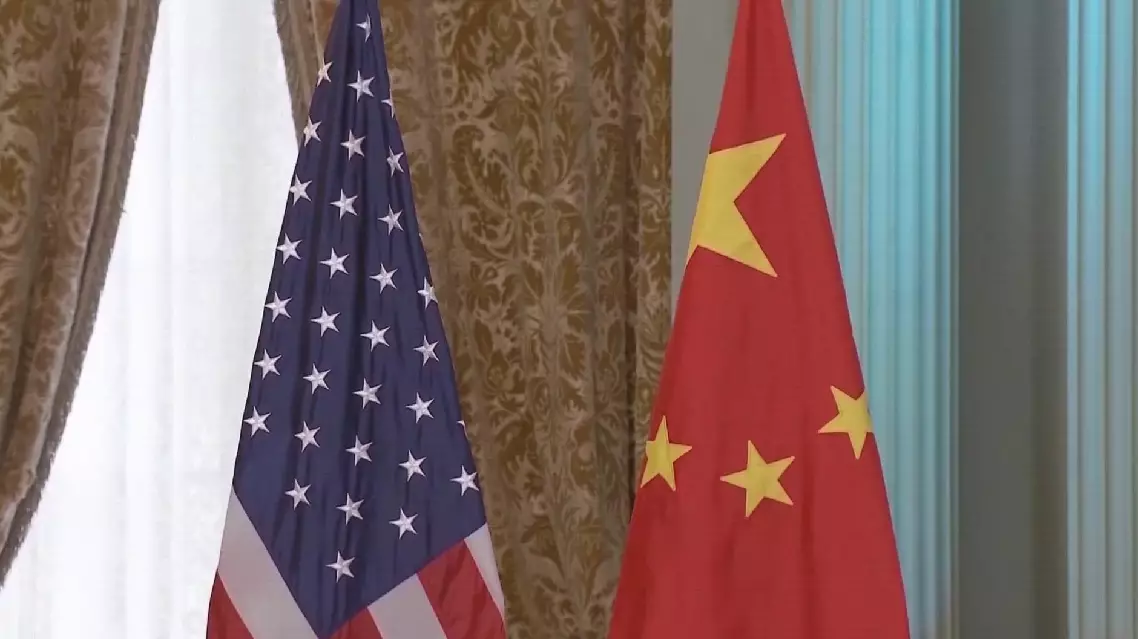
Harvard professor remains optimistic about US-China relations
Nauru's President David Adeang returned to his ancestral home in Jiangmen, Guangdong Province this week, not only to honor family heritage but also to explore renewable energy collaboration and deepen people-to-people ties between the Pacific island nation and China.
He arrived in the province on Sunday for a five-day homecoming visit, marking his second trip to the southern Chinese city in just seven months.
Adeang and his family were welcomed back to Jiangmen as they traced their roots. His great-grandfather's ancestral home stands in the ancient town of Chikan, where more than a century ago his forefathers left for Southeast Asia in search of a livelihood before eventually settling in Nauru.
"I feel like I'm not a stranger anymore, I feel like family. Bilateral relationships can be strengthened through people-to-people exchanges and who better to promote that than the president of my country. That's me," Adeang said.
In a heartfelt ceremony on Wednesday, the president joined local villagers in a traditional ancestral worship ritual, receiving blessings and symbolic gifts from a community elder. Together, they wrote Spring Festival couplets, made rice cakes, shared a warm reunion meal, and distributed red envelopes.
Just a day before this emotional reunion, the president visited a solar panel factory in Jiangmen to explore ways to make full use of Nauru's abundant sunlight.
"The technology is of course world class. And I feel like we are wasting the sunlight that we have in Nauru, but maybe we can, through cooperation with the government, we can develop a project that will take us to 100-percent renewable," Adeang said.
The president also met Jiangmen native Ma Enduo, founder and chairman of Amos, one of China's major candy producers. Struck by an instant bond, Ma pledged to send an entire container of sweets to the people of Nauru.
Adeang thanked Ma for his generous gift to the people of Nauru, highlighting the bond he felt with his ancestral hometown.
"And he is from Jiangmen, my hometown. We are brothers," he said.
Adeang also stressed that the visit bridged heritage and future, adding a sweet note to the deepening Nauru-China ties.
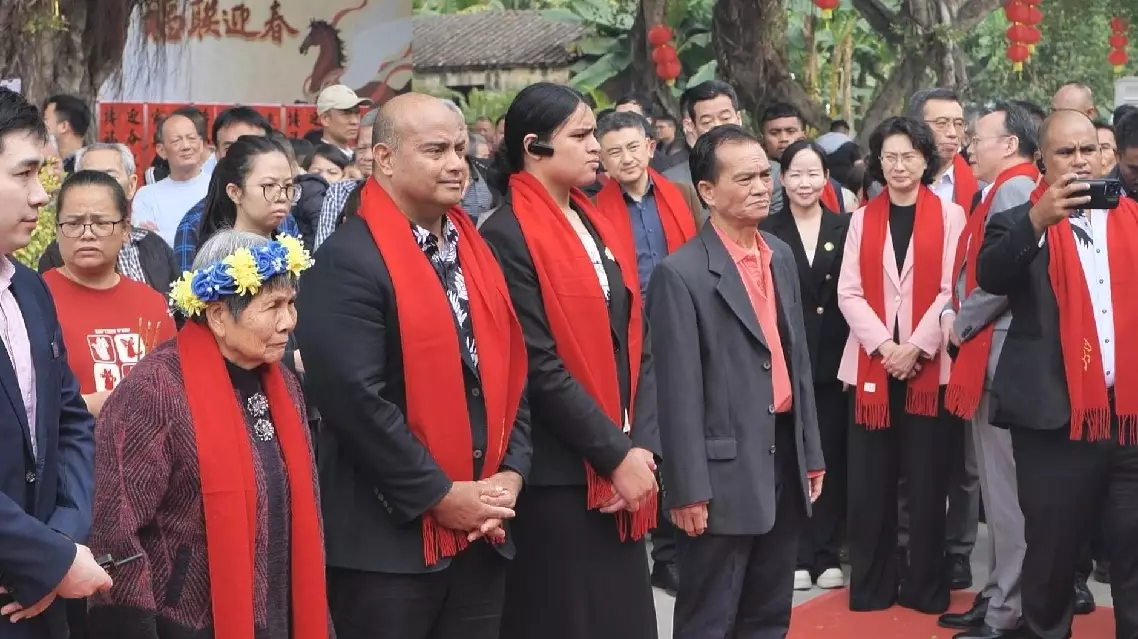
Nauru's president returns to China, strengthening cultural, trade ties