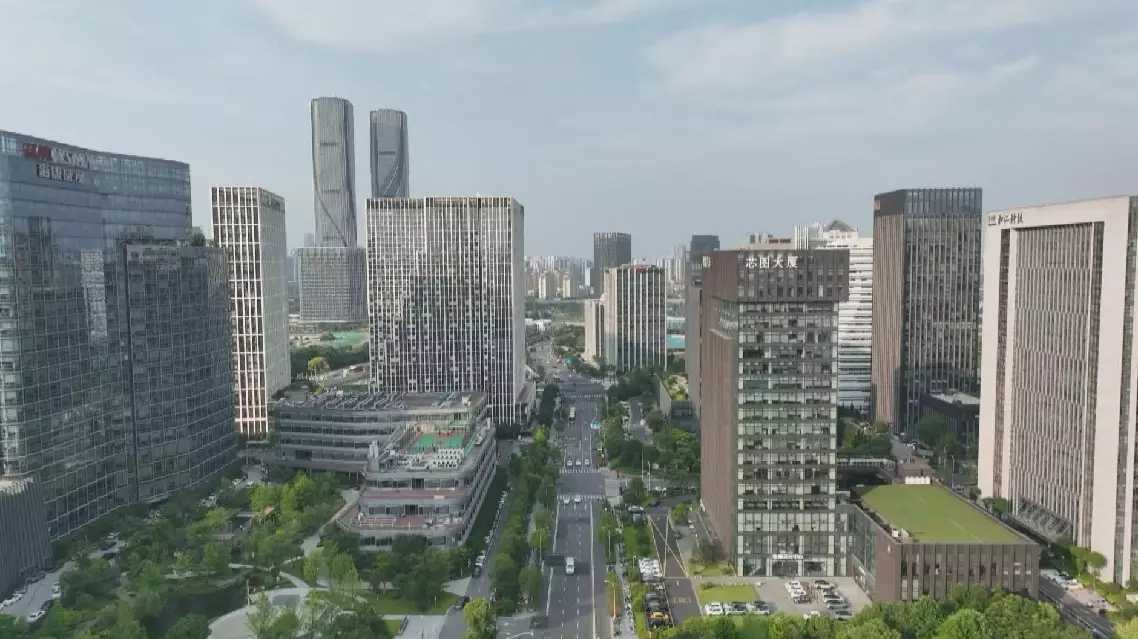
The eastern Chinese tech city of Hangzhou, home to e-commerce giant Alibaba and rising AI star DeepSeek, has been boosting vitality in its sci-tech sector through innovations.
As a pioneer in developing robot industry, Hangzhou, the capital of east China's Zhejiang Province, has now emerged as an important hub of AI industry.
By establishing the Zhejiang Lab, Hangzhou has been actively advancing cutting-edge projects involving brain-inspired computing, brain-computer integration, new types of chips, and open-source AI platforms.
In addition, Hangzhou has rolled out a series of favorable measures to improve its business environment to attract more companies to settle there.
According to the latest data, since the beginning of this year, Hangzhou has seen an average of over 280 new businesses registered daily there, with more than 70 patents granted, and nearly 17 million yuan invested in tech startups.
The development path of Hangzhou can be traced back to 2003, when Chinese President Xi Jinping, then secretary of the Communist Party of China Zhejiang Provincial Committee, put forward the "Digital Zhejiang" strategy, which has proven to be farsighted.
However, the strategy left many people puzzled at that time given that fewer than two out of every 100 households in Hangzhou had internet-connected computers.
"He mentioned databases, which people didn’t understand at the time. They were familiar with warehouses for goods and materials but couldn't grasp how data could be turned into a warehouse. In response to their doubts, Xi smiled and said, 'You don't understand databases now, but you will in the future. Economic and social development will rely on them, and they will involve everyone.' I think Xi has a very strategic mindset and is highly forward-thinking," said Zhou Yongnan, a then reporter for Zhejiang Daily.
President Xi has conducted multiple inspections in Zhejiang, emphasizing the importance of seizing the opportunities brought by industrial digitalization.
Hangzhou has now developed itself as an important hub in the internet and tech industries, driving advancements in e-commerce, AI and digital transformation.
Additionally, Hangzhou plans to launch an "AI+" initiative to promote the integration and application of AI across industries. It will also introduce a reform related to the application of technological achievements, encouraging universities and research institutions to license their technological fruits to SMEs under a "use first, pay later" model.
The favorable business environment in Hangzhou has attracted many companies to set up business there, including Game Science, whose team in Hangzhou developed the action role-playing game Black Myth: Wukong, which became an instant hit upon its release.
"Achieving such accomplishments requires a considerable amount of time, even though it does not guarantee success. In such circumstances, if a city can always assure people that they can eventually secure a stable life and fulfilling job here despite the ups and downs in life, I believe it would be a major attractiveness of that city," said Feng Ji, founder and CEO of Game Science.
Hangzhou has also taken other well-targeted steps to vigorously develop emerging industries, further elevating its status as a high-level innovation hub.
With an aim to increase support for future industries such as general AI and humanoid robots, and nurture more innovative companies like DeepSeek, the city has specifically allocated 15 percent of the industrial policy funds to focus on the development of new quality productive forces.
Meanwhile, Hangzhou has continued to cultivate an innovative ecosystem by centering on university-based technological innovation platforms, with enterprises taking the lead or participating in no less than 80 percent of major municipal-level science and technology projects.
Moreover, Zhejiang Province has further proposed to strengthen the deep integration of scientific and technological innovation and industrial innovation as the key path to accelerate the construction of an "Innovative Zhejiang".
"Hangzhou's innovativeness has thrived under the attention and the personal guidance from General Secretary Xi. We have been working on various goals and tasks of constructing an 'Innovative Zhejiang' as required by General Secretary Xi, while focusing on addressing the bottlenecks in the deep integration of scientific and technological innovation and industrial innovation, so as to make Hangzhou the most dynamic fertile soil for innovation and entrepreneurship," said Fang Yi, deputy mayor of Hangzhou.
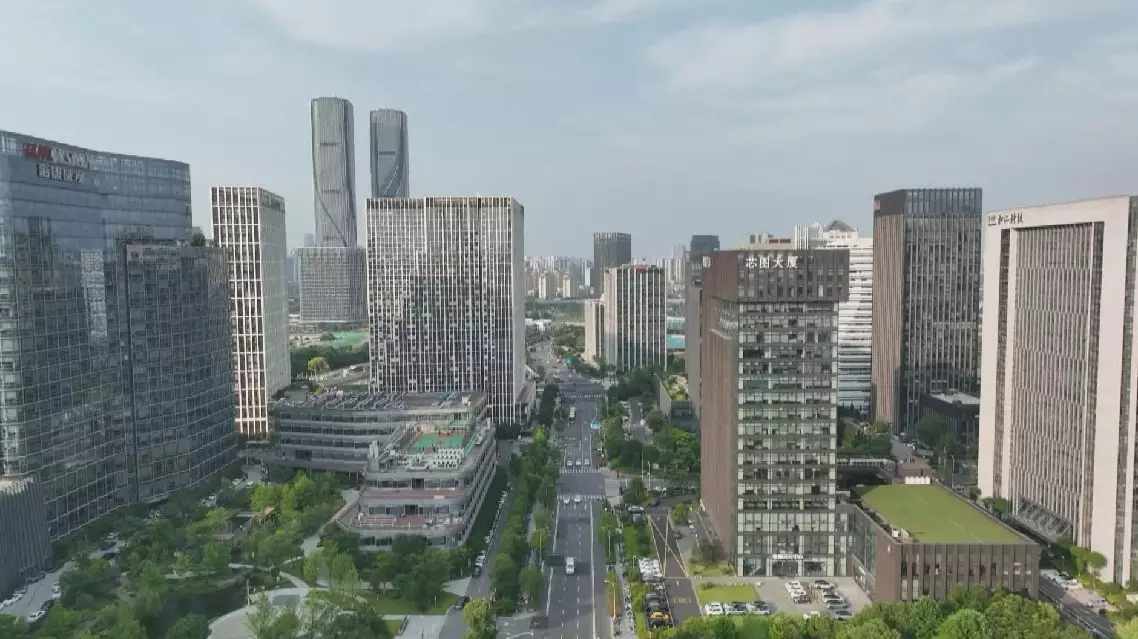
China's Hangzhou drives vitality in sci-tech sector via innovations
China's Hangzhou drives vitality in sci-tech sector via innovations