RENO, Nev.--(BUSINESS WIRE)--Feb 18, 2025--
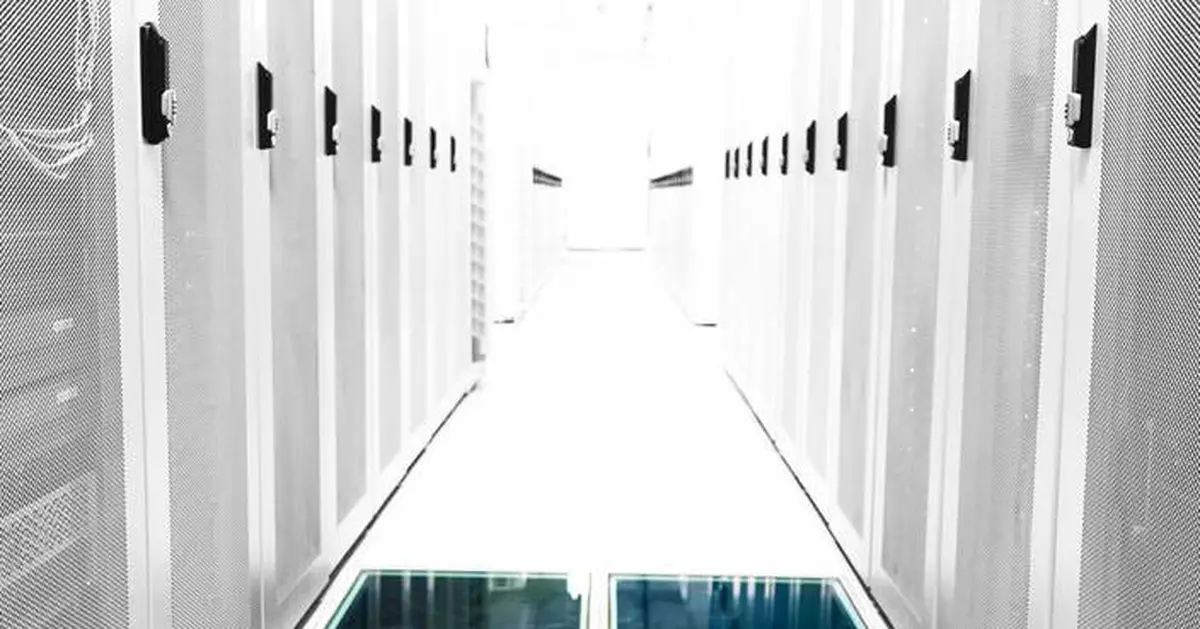
Colovore, a proven leader in high-density, liquid cooling colocation solutions, breaks ground on its newest data center in Reno, NV (RNO01). The buildings will expand the much needed high-density, liquid-cooled colocation inventory, and have the ability to support the existing and next generation of AI accelerator systems with expected rack densities approaching 250kW each. Like all Colovore data centers, each cabinet will be delivered with a primary liquid loop connection, making it easy to deploy advanced AI/ML systems at enterprise scale.
This press release features multimedia. View the full release here: https://www.businesswire.com/news/home/20250212105205/en/
RNO01 shares all the standard Colovore features including liquid-cooling, big power circuits for large contiguous enterprise deployments, with committed power provided by Nevada Energy.
The ubiquitous rise in AI compute for training and inference workloads has put a strain on traditional, air-cooled data center designs both mechanically and financially, a reality predicted by Colovore’s founders Sean Holzknecht and Peter Harrison, over a decade ago. Colovore’s innovative approach is to deliver infrastructure that is compute agnostic and can support the most advanced direct-to-chip cooling systems and traditional IT infrastructure simultaneously, with little impact on the customer. The Colovore design delivers the power and cooling needed to support advanced AI hardware without costly retrofits, a unique feature set that is very important to anyone designing enterprise or consumer AI products.
"Colovore was built on the philosophy of staying ahead of customer needs, ensuring that infrastructure never becomes a bottleneck," said President and Co-Founder Sean Holzknecht. "Our Silicon Valley-adjacent Reno data center continues that mission, providing seamless scalability for the most demanding and high-performance workloads."
"RNO01 eliminates the constraints that have traditionally hindered AI deployments—whether cooling, density, or cost. By making high-performance compute deployment frictionless and cost-effective, we're enabling enterprises to scale AI faster and more efficiently than ever before," added chief technology officer and co-founder Peter Harrison.
RNO01 is the latest in a growing list of Colovore data centers across the United States spurred by the recent King Street Capital Management, ("King Street") acquisition.
For more information, visit: www.colovore.com.
About Colovore
Colovore is a high-density, liquid-cooled data center developer and operator founded in 2012. Colovore data centers deliver large power circuits and liquid-cooling to each cabinet on the data center floor, a unique feature in the world of colocation that has set them apart with the onset of enterprise artificial intelligence and machine learning. While initially utilized by companies deploying high performance compute, Colovore has become the data center of choice for general enterprise AI applications.
About King Street Capital Management
King Street is a global alternative investment firm founded in 1995 that manages more than $27 billion in assets across public and private markets. The firm marries rigorous fundamental research with tactical trading and differentiated sourcing capabilities to identify dislocations and mispriced investment opportunities across asset classes, up and down the capital structure.
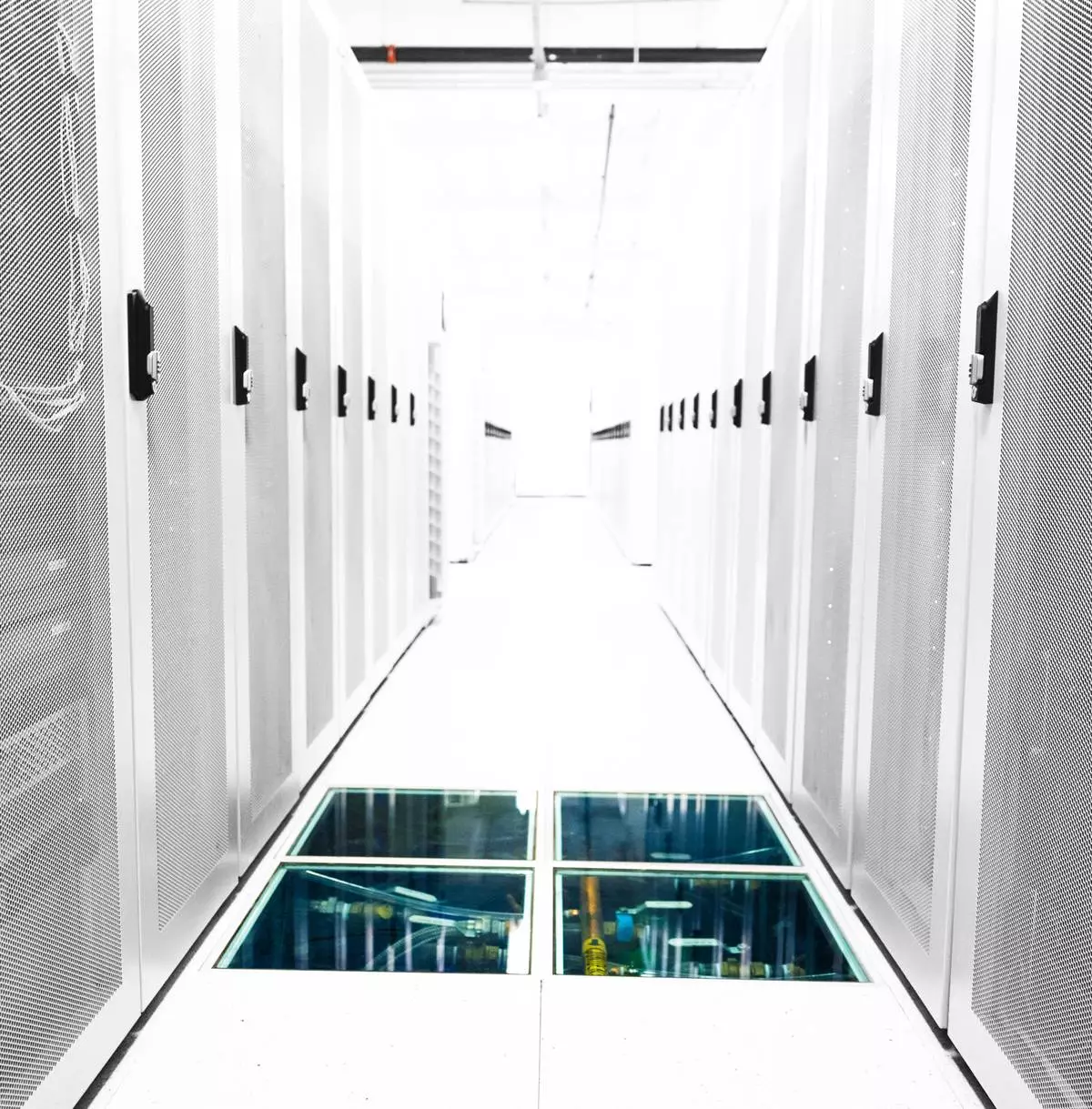
Colovore data center aisle showcasing the robust underlying cooling infrastructure unique to the platform. (Photo: Business Wire)
Iran's top judge hinted at fast trials and executions for those who were detained in nationwide protests against the country's theocracy, even as activists said Wednesday that the death toll rose to levels unseen in decades with at least 2,572 people killed so far.
Iran’s judiciary chief Gholamhossein Mohseni-Ejei made the comments about trials and executions in a video Tuesday, despite a warning from U.S. President Donald Trump that he would “take very strong action” if executions take place.
The U.S.-based Human Rights Activists News Agency said the number of dead climbed to at least 2,571 early Wednesday. The figure dwarfs the death toll from any other round of protest or unrest in Iran in decades and recalls the chaos surrounding the country’s 1979 Islamic Revolution.
After Trump was informed on the number of deaths, he warned Iran's leaders that he was terminating any negotiations and would “act accordingly.”
Details of the crackdown began emerging Tuesday as Iranians made phone calls abroad for the first time in days after authorities severed communications countrywide when the protests broke out.
Here is the latest:
Major Middle East governments were discouraging the Trump administration from waging a war with Iran, fearing “unprecedented consequences” in the volatile region, an Arab Gulf diplomat said Wednesday.
The Cairo-based diplomat, who was given anonymity because he wasn't authorized to speak to the media, said major governments in the region including Turkey, Egypt, Saudi Arabai and Pakistan have been “in constant contact” with the U.S. administration over a potential American strike on Iran that could explode into a “full-blown war.”
Such a war will “certainly” have dire repercussions “not only on the Middle East but also on the global economy," he said.
Samy Magdy contributed from Cairo.
Iranian state television said Wednesday’s mass funeral in Tehran would include 300 bodies of security force members and civilians. The funeral is expected to take place at Tehran University under heavy security.
The Human Rights Activists News Agency, which is tracking the death toll, said more than 2,550 people have been killed, 2,403 protesters and 147 government-affiliated.
Twelve children were killed, along with nine civilians it said were not taking part in protests. More than 18,100 people have been detained, the group said.
Gauging the demonstrations and the death toll from abroad has grown more difficult and The Associated Press has been unable to independently assess the toll given the communications being disrupted in the country.
Melanie Lidman contributed from Jerusalem.
Trump’s decision to impose a 25% tariff on countries that trade with Iran could impact India, an expert said, as New Delhi already faces existing 50% U.S. trade levies due its purchases of Russian oil.
Abhijit Mukhopadhyay, a senior economist at the Chintan Research Foundation in New Delhi, said the bigger risk is not India-Iran trade, but India’s access to the U.S. market as its exports to Iran are modest.
India mainly exports rice, tea, sugar, pharmaceuticals and electrical machinery to Iran, while importing dry fruits and chemical products. Textiles and garments, gems and jewelry and engineering goods are likely to be the most vulnerable sectors, he said.
Trump’s latest move also could affect India’s investments in Iran including the strategically important Chabahar port, which gives India a trade route to Afghanistan, Central Asia and Europe while bypassing Pakistan, Mukhopadhyay said.
Iran’s judiciary chief signals fast trials and executions for those detained in nationwide protests.
Gholamhossein Mohseni-Ejei made the comment in a video shared by Iranian state television on Wednesday.
He emphasized the need for swift action, saying delays would lessen the impact.
His remarks challenge Trump, who warned Iran about executions in an interview aired Tuesday.
Trump stated the U.S. would take strong action if Iran proceeded with executions. The situation highlights escalating tensions between the two countries over the handling of the protests.
Dozens of Pakistani students studying in Iran have returned home through a remote southwestern border crossing, a Pakistani immigration official said Wednesday.
Federal Investigation Agency spokesperson in Quetta city, Samina Raisani, said about 60 students crossed into Pakistan on Tuesday through Gabd border in Balochistan province with valid travel documents.
More students were expected to return through the same crossing later Wednesday, she said.
Mudassir Tipu, Pakistan’s ambassador to Iran, said Tuesday that Iranian universities had rescheduled exams and permitted international students to leave the country.
The satellite internet provider Starlink now offers free service in to people Iran who have access to the company's receivers, activists said Wednesday.
Mehdi Yahyanejad, a Los Angeles-based activist who helped get the units into Iran, told The Associated Press that the free service had started. Other activists also confirmed in messages online that the service was free.
Starlink has been the only way for Iranians to communicate with the outside world since authorities shut down the internet Thursday night as nationwide protests swelled and they began a bloody crackdown against demonstrators.
Starlink did not immediately acknowledge the decision.

This frame grab from videos taken between Jan. 9 and Jan. 11, 2026, and circulating on social media purportedly shows images from a morgue with dozens of bodies and mourners after crackdown on the outskirts of Iran's capital, in Kahrizak, Tehran Province. (UGC via AP)