Skip to Content Facebook Feature Image

Chicago Metro Area has Highest Concentration of Risk for Severe Hail, Winds and Tornadoes: CoreLogic

News

Chicago Metro Area has Highest Concentration of Risk for Severe Hail, Winds and Tornadoes: CoreLogic
News

News

Chicago Metro Area has Highest Concentration of Risk for Severe Hail, Winds and Tornadoes: CoreLogic

2025-02-19 00:00 Last Updated At:00:12

IRVINE, Calif.--(BUSINESS WIRE)--Feb 18, 2025--

CoreLogic®, a leader in global property information, analytics and data-enabled solutions, released its 2025 Severe Convective Storm Risk Report aimed to guide risk management decisions across the insurance ecosystem including the underwriting, claims and restoration industries. The report highlights trends and patterns in frequency, severity and geographic distribution of severe convective storm (SCS) activity over the last year and into 2025. This year’s report also leverages CoreLogic’s Climate Risk Analytics solutions to detail how and where climate resilient buildings need to be developed.

This press release features multimedia. View the full release here: https://www.businesswire.com/news/home/20250218356982/en/

The analysis highlights an important trend for insurance carriers to recognize: the shift to “outbreak-type” severe weather days—intense but concentrated events—rather than prolonged stretches of severe weather. An example of this kind of highly concentrated outbreak occurred in Denton, Texas, and St. Charles, Mo., where damaging hail (2” in diameter or greater) fell on nearly 60,000 homes in a single day (March 12, 2024). These outbreak-type events can lead to surges in insurance claims, creating an extreme and immediate demand on claim adjusters and reconstruction resources.

The report details hail, tornado wind and straight-line wind risk by state and metro area. The Chicago metro area has the largest concentration of risk for all three with nearly three million homes at risk of damage from hail, and more than three million homes at risk of tornado or straight-line wind damage. These homes have a combined $1.4 billion in reconstruction costs value, highlighting how much potential exists to be damaged.

“Severe convective storms spotlight the significant and evolving challenges that arise at the intersection of hazard and property. It is a problem which both insurers and homeowners will have to grapple with,” said Jon Schneyer, research & content director at CoreLogic. “The big swings we’re seeing in intense storms are impacting different parts of the country where development is highest. This means everyone should take steps to increase their home's resilience. Preventative actions, regular maintenance and awareness are essential to storm preparedness.”

The report also highlights potential scenarios for future SCS activity, based on three different climate scenarios, leveraging CoreLogic’s proprietary Climate Risk Analytics solution. The analysis found the most significant changes in SCS risk are in the South and the Midwest U.S., regions that are likely to face disproportionately higher impacts from large hail, powerful winds, and tornadoes.

These kinds of analyses and tools provide a critical backdrop for risk and resilience planning. By preparing for the dynamic impacts of changing weather patterns, insurers can manage losses effectively, maintain financial stability, and contribute to the resilience of communities facing increased SCS risks. Similarly, by educating themselves on the changing nature of SCS activity, consumers can take actions to protect their homes, property, and communities, which can also potentially impact insurance premiums. These protective actions can include maintaining a home’s building envelope, anchoring outdoor furniture or installing an impact resistant roof.  

To learn more and read the full 2025 CoreLogic Severe Convective Storm Risk Report, visit the CoreLogic website.

About CoreLogic

CoreLogic is a leading provider of property insights and innovative solutions, working to transform the property industry by putting people first. Using its network, scale, connectivity and technology, CoreLogic delivers faster, smarter, more human-centered experiences, that build better relationships, strengthen businesses, and ultimately create a more resilient society. For more information, please visit www.corelogic.com.

©2025 CoreLogic, Inc. All rights reserved. The statements and information in this article may not be reproduced or used without express accreditation to CoreLogic as the source of the information. While all the CoreLogic statements and information are believed to be accurate, CoreLogic makes no representation or warranty as to the completeness or accuracy of the statements and information in this article, and CoreLogic assumes no responsibility whatsoever for any reliance on the information and statements herein. CoreLogic® is the registered trademark of CoreLogic, Inc. or one of its subsidiaries or affiliates.
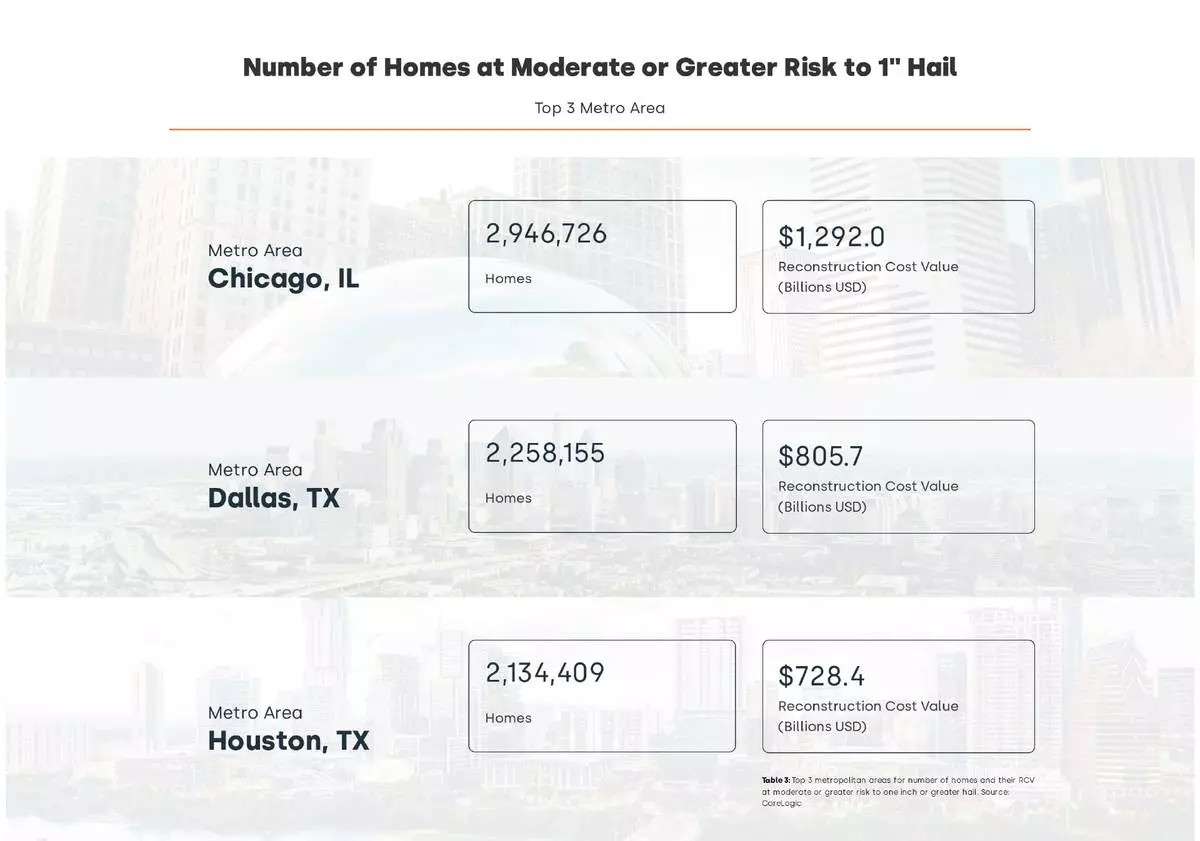
Number of homes at moderate or greater risk to 1" hail (Graphic: Business Wire)
Number of homes at moderate or greater risk to 1" hail (Graphic: Business Wire)
HONG KONG (AP) — Fireworks are typically a celebratory centerpiece of Hong Kong's New Year celebrations. Not this year.

The territory will ring in 2026 without spectacular and colorful explosions in the sky over its iconic Victoria Harbor after a massive fire in November that killed at least 161 people.

The city’s tourism board will instead host a music show Wednesday night featuring soft rock duo Air Supply and other singers in Central, a business district that also is home to the famous nightlife hub Lan Kwai Fong. The facades of eight landmarks will turn into giant countdown clocks presenting a three-minute light show at midnight.

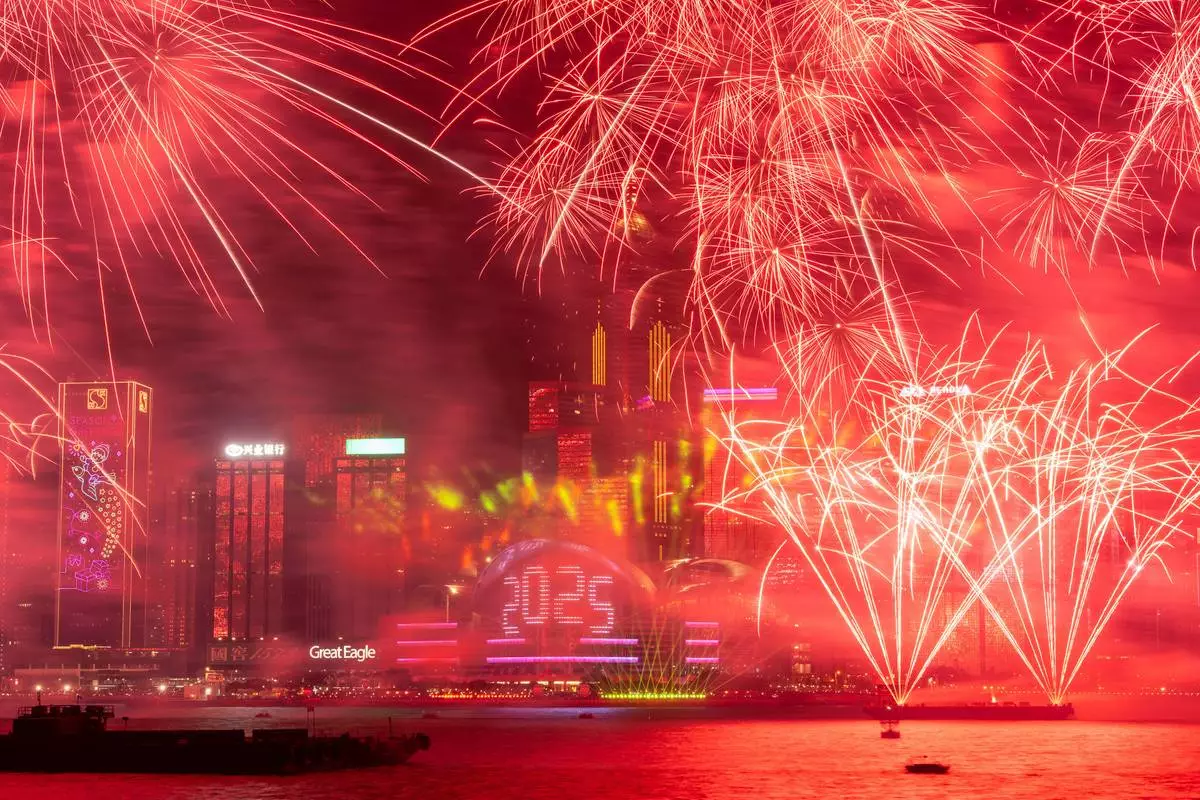
Fireworks have long been part of the city’s celebrations for the New Year, Lunar New Year and National Day. The pyrotechnic displays against Hong Kong’s world-famous skyline of skyscrapers typically draw hundreds of thousands of people including many tourists to both sides of the promenade.

Rosanna Law, the territory's secretary for culture, sports and tourism, acknowledged Tuesday that having no fireworks would affect some hotel and restaurant businesses.

The financial hub’s worst blaze since 1948 broke out at Wang Fuk Court, in the northern suburban district of Tai Po, in late November. The apartment complex was undergoing a monthslong renovation project with buildings covered by bamboo scaffolding and green netting.

Authorities have pointed to the substandard netting and foam boards installed on windows as contributing factors in the fire’s rapid spread. Thousands of affected residents have moved to transitional homes, hotels and youth hostels, struggling to recover from the loss of lives and homes that took them years to buy. The casualties pained many residents across the city.

Past tragedies in Hong Kong have forced similar cancellations of fireworks. They include the 2013 National Day festivities following a vessel collision that killed 39 people on Oct. 1, 2012, and the 2018 Lunar New Year celebration after a bus crash that left 19 dead. During the 2019 anti-government protests and the COVID-19 pandemic, multiple displays also were scrapped.

The origin of fireworks is believed to date to China in the second century B.C., when someone discovered bamboo stalks exploded with loud bangs when thrown into fire, creating the first natural “firecrackers,” according to the American Pyrotechnics Association, a U.S. trade group.

The Guinness World Records organization says the first accurately documented firework, the Chinese firecracker, was created by Li Tian, a monk from China’s Tang dynasty dating to around 618 to 907 C.E. Li discovered that putting gunpowder in enclosed hollow bamboo stems created loud explosions and bound crackers together to create the traditional New Year firecrackers to drive out evil spirits, Guinness said.

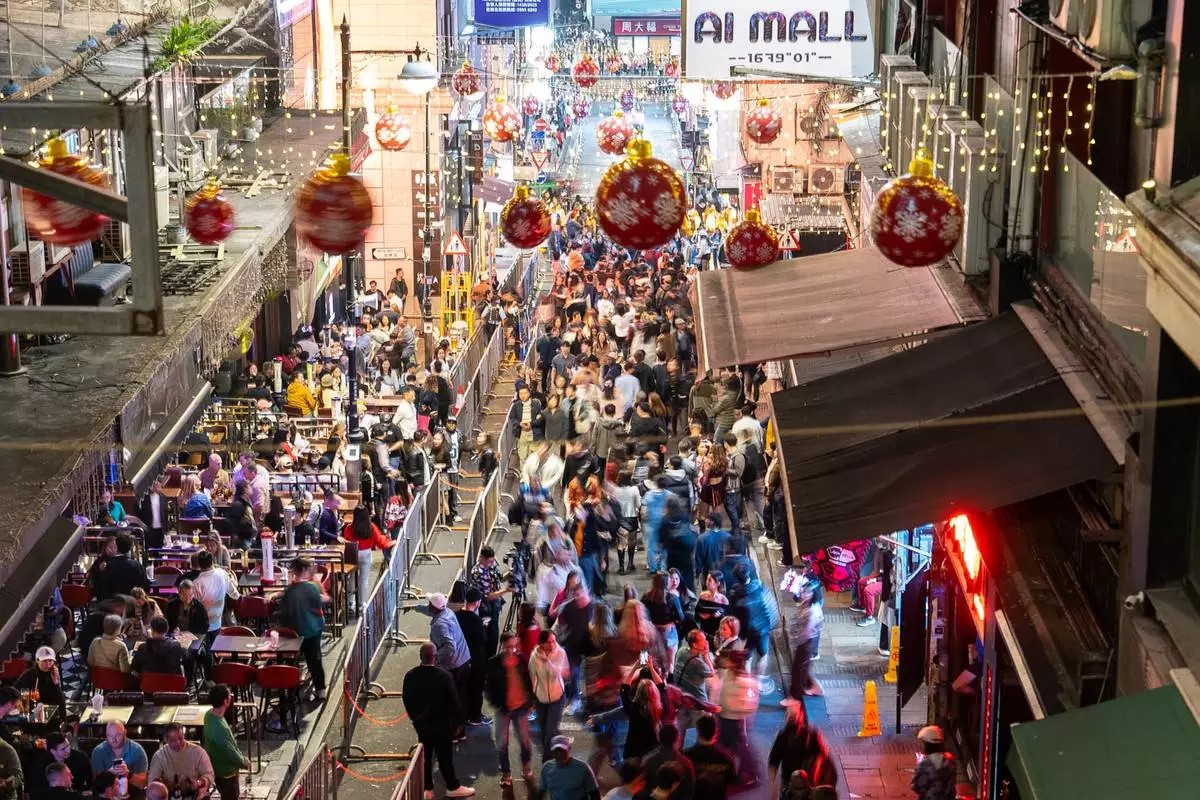
People gather at Lan Kwai Fong to celebrate the start of 2026 in the Central district of Hong Kong, Wednesday, Dec. 31, 2025. (AP Photo/Chan Long Hei)

People gather at Lan Kwai Fong to celebrate the start of 2026 in the Central district of Hong Kong, Wednesday, Dec. 31, 2025. (AP Photo/Chan Long Hei)

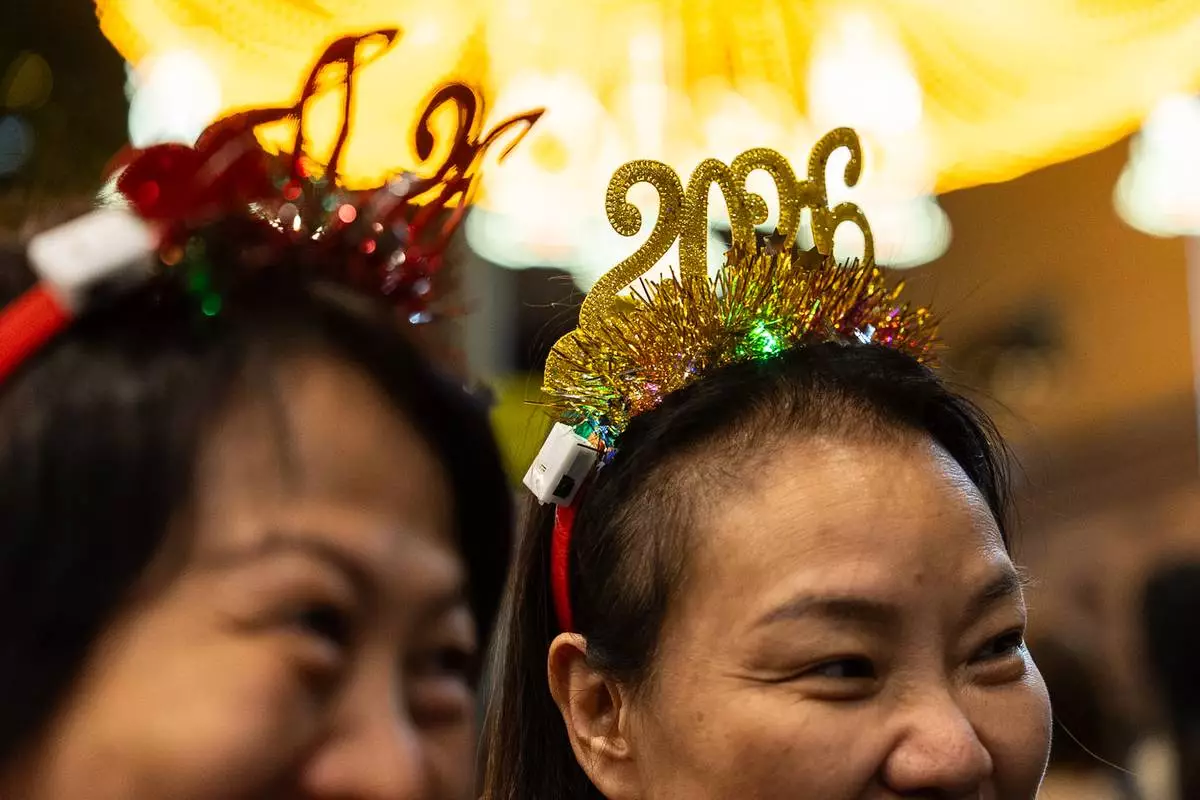
People attend the New Year countdown event to celebrate the start of 2026 in the Central district of Hong Kong, on Wednesday, Dec. 31, 2025. (AP Photo/Chan Long Hei)

People attend the New Year countdown event to celebrate the start of 2026 in the Central district of Hong Kong, on Wednesday, Dec. 31, 2025. (AP Photo/Chan Long Hei)

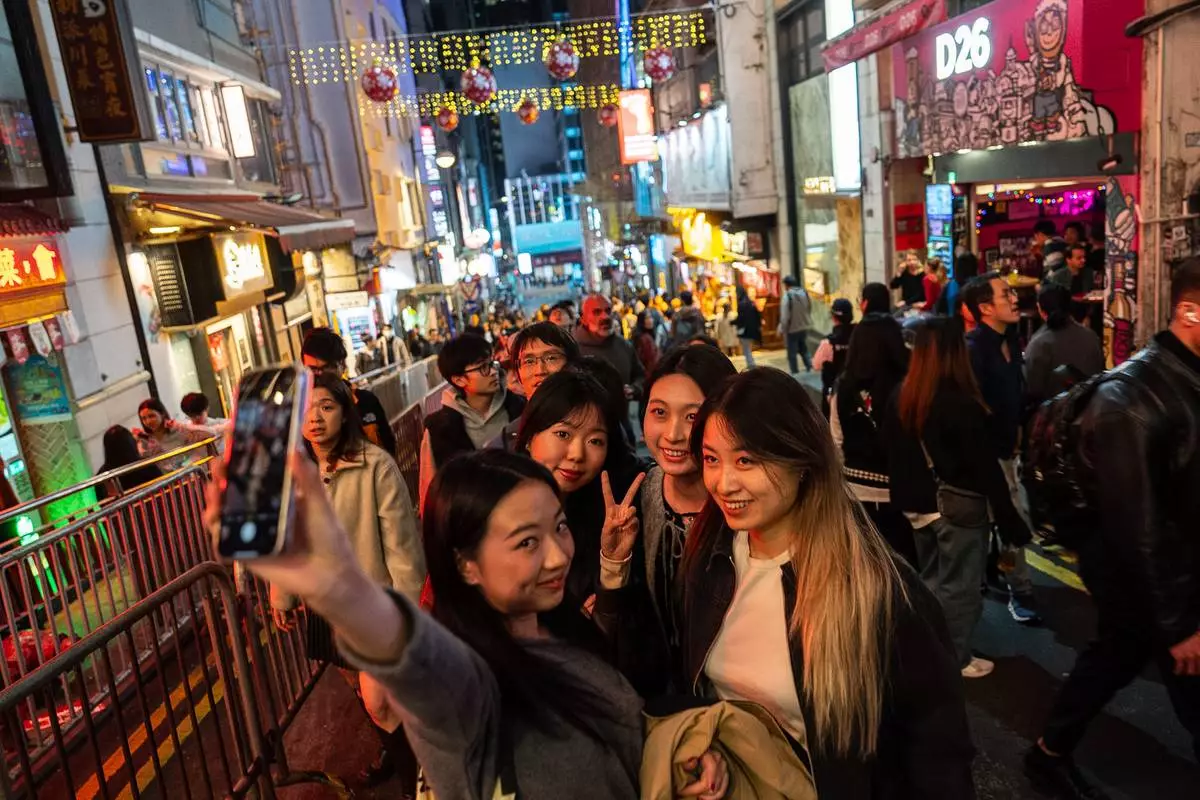
People take selfies at Lan Kwai Fong to celebrate the start of 2026 in the Central district of Hong Kong, on Wednesday, Dec. 31, 2025. (AP Photo/Chan Long Hei)

People take selfies at Lan Kwai Fong to celebrate the start of 2026 in the Central district of Hong Kong, on Wednesday, Dec. 31, 2025. (AP Photo/Chan Long Hei)

People pose for photographs at Lan Kwai Fong to celebrate the start of 2026 in the Central district of Hong Kong, on Wednesday, Dec. 31, 2025. (AP Photo/Chan Long Hei)

People pose for photographs at Lan Kwai Fong to celebrate the start of 2026 in the Central district of Hong Kong, on Wednesday, Dec. 31, 2025. (AP Photo/Chan Long Hei)

FILE - Fireworks explode over Victoria Harbour to celebrate the start of 2025 at Tsim Sha Tsui in Hong Kong, Jan. 1, 2025. (AP Photo/Chan Long Hei, File)

FILE - Fireworks explode over Victoria Harbour to celebrate the start of 2025 at Tsim Sha Tsui in Hong Kong, Jan. 1, 2025. (AP Photo/Chan Long Hei, File)

Recommended Articles