WARSAW, Poland (AP) — Marian Turski, a Holocaust survivor who became a journalist and historian in postwar Poland and co-founded Warsaw's landmark Jewish history museum, died on Tuesday. He was 98.
The POLIN Museum of the History of Polish Jews announced his death, describing him as a person of exceptional moral and intellectual qualities who always stood on the side “of minorities, the excluded, the wronged.”
“An authority of global importance, an advocate of Polish-Jewish understanding, a publicist, a historian. A Polish Jew. A person without whom our museum would not exist,” the museum director, Zygmunt Stępiński, wrote in a statement.
Turski survived the Lodz ghetto, where he and his family were forced to live, two death marches and imprisonment at the Nazi German concentration camps Buchenwald and Auschwitz-Birkenau, which was in German-occupied Poland. In all, he lost 39 relatives in the Holocaust.
Unlike many Jewish survivors who left postwar Poland, Turski chose to remain. He was on the political left his entire life, and was a member of the communist party. While on a scholarship to the United States in 1956, he marched from Selma to Montgomery with Martin Luther King Jr. in support of civil rights for Black Americans.
Turski was among a dwindling number of Holocaust survivors and spoke during observances last month marking the 80th anniversary of the liberation of the Auschwitz-Birkenau death camp.
It was a stark warning about the dangers of indifference at the 75th anniversary that brought him international attention and raised his moral profile among his supporters. Turski said at the time that the Holocaust did not “fall from the sky” all at once but took hold step by step as society’s acceptance of small acts of discrimination eventually led to ghettos and extermination camps.
With world leaders in the audience, Turski called on people to not remain indifferent when minorities are discriminated against, when history is distorted and when “any authority violates the existing social contract.”
Many in Poland interpreted his words as a critique of the right-wing government in power at the time. Some who felt targeted criticized him for using the Auschwitz anniversary to comment on the political situation, or suggested that Turski lacked the moral authority for such a warning because of his past support for communism.
Citing the words of another survivor, Roman Kent, Turski described what should be the Eleventh Commandment of the Bible: “Though shalt not be indifferent.”
“Because if you are indifferent, before you know it, another Auschwitz will come out of the blue for you or your descendants,” he warned.
Poland's chief rabbi, Michael Schudrich, said members of the Jewish community would miss him greatly.
“Marian was our teacher, he was our moral voice and mentor. He was steeped in Jewish wisdom and used it to guide us on how to face today's problems. We are so blessed that we had Marian with us for so many years,” Schudrich said.
Polish Prime Minister Donald Tusk said Tuesday after Turski's death that those words had become “a motto for us," adding on X: "The 11th Commandment for these difficult times."
Poland’s conservative President Andrzej Duda also paid tribute to Turski, saying: “He consistently spoke about the need to cultivate sensitivity to evil. May his memory be honored!”
Turski was born on June 26, 1926, as Mosze Turbowicz and spent his childhood and teenage years in Lodz, where he attended a Hebrew language school.
In 1944, his parents and brother were deported to the German Nazi camp Auschwitz, and he arrived there two weeks later in one of the last transports.
His father and brother died in the gas chambers, while his mother was sent to work at the Bergen Belsen camp in northern Germany, and Turski was dispatched to work on roads in the Auschwitz-Birkenau area before being sent on two death marches. He was liberated at Terezin, close to death from exhaustion and typhus.
In September 1945, he returned to Poland, a committed communist who rejected an offer to go to the West and wanted to help build a socialist Poland. When a communist official recommended that he change his name to adopt one that didn't sound Jewish, he complied, a biography published by the POLIN museum said.
He used his last time on the stage at last month's Auschwitz anniversary observance to warn of the dangers of hatred and to recall that the number of those murdered was always far greater than the smaller group of survivors.
“We have always been a tiny minority,” Turski said. “And now only a handful remain.”
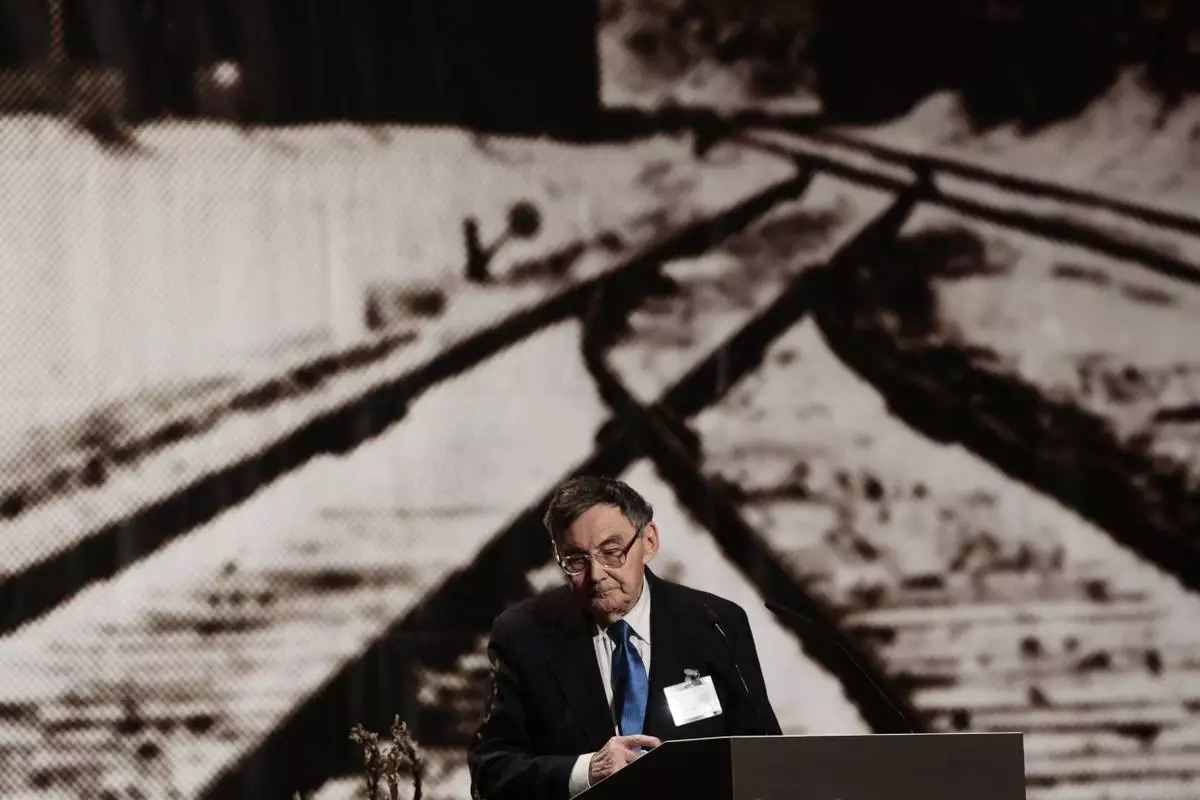
FILE - Auschwitz survivor Marian Turski speaks at an event of the International Auschwitz Committee to commemorate the 70th anniversary of the liberation of the Auschwitz Nazi death camp in Berlin, Jan. 26, 2015. On Jan. 27, 1945 the Red Army liberated the Auschwitz camp. (AP Photo/Markus Schreiber, File)
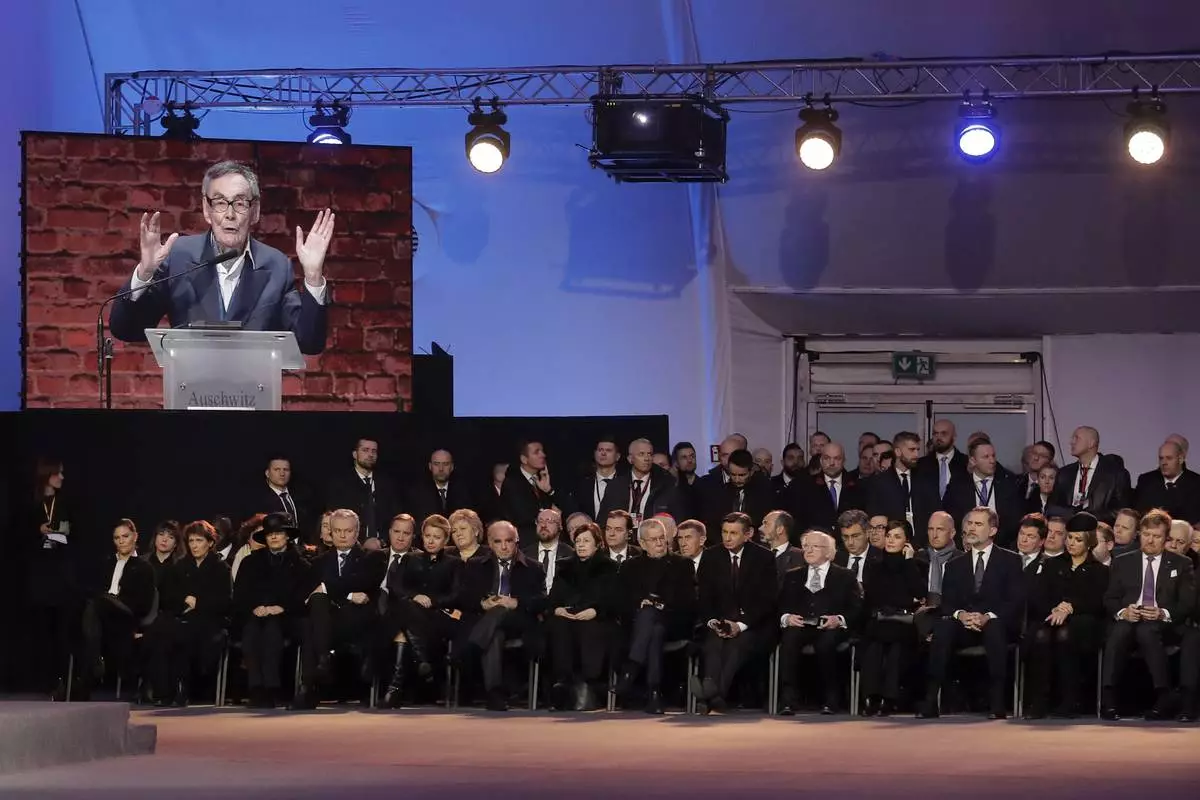
FILE - Heads of State listen to Auschwitz survivor Marian Turski, on the video screen, during a ceremony at the Auschwitz-Birkenau Nazi death camp in Oswiecim, Poland, Jan. 27, 2020. Heads of State and survivors of the Auschwitz-Birkenau death camp gathered Monday for commemorations marking the 75th anniversary of the Soviet army's liberation of the camp, using the testimony of survivors to warn about the signs of rising anti-Semitism and hatred in the world today. (AP Photo/Markus Schreiber, File)
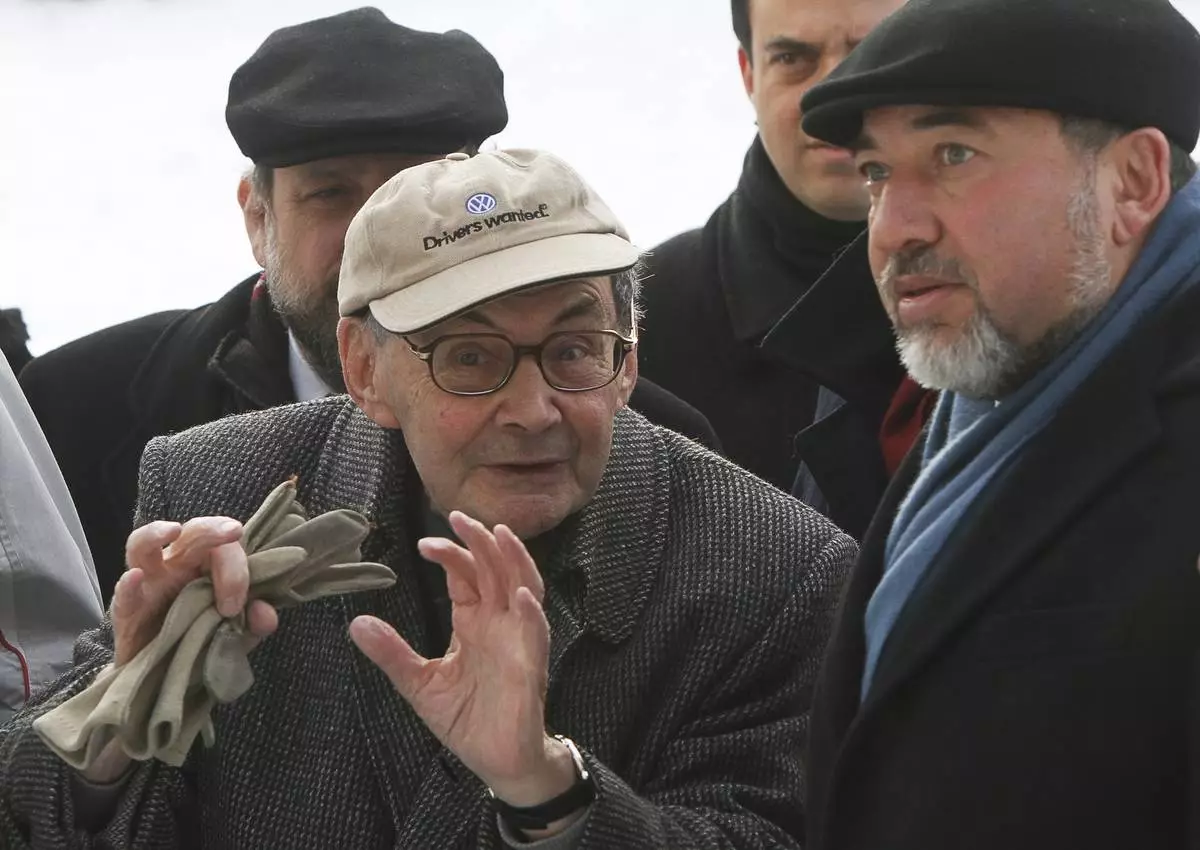
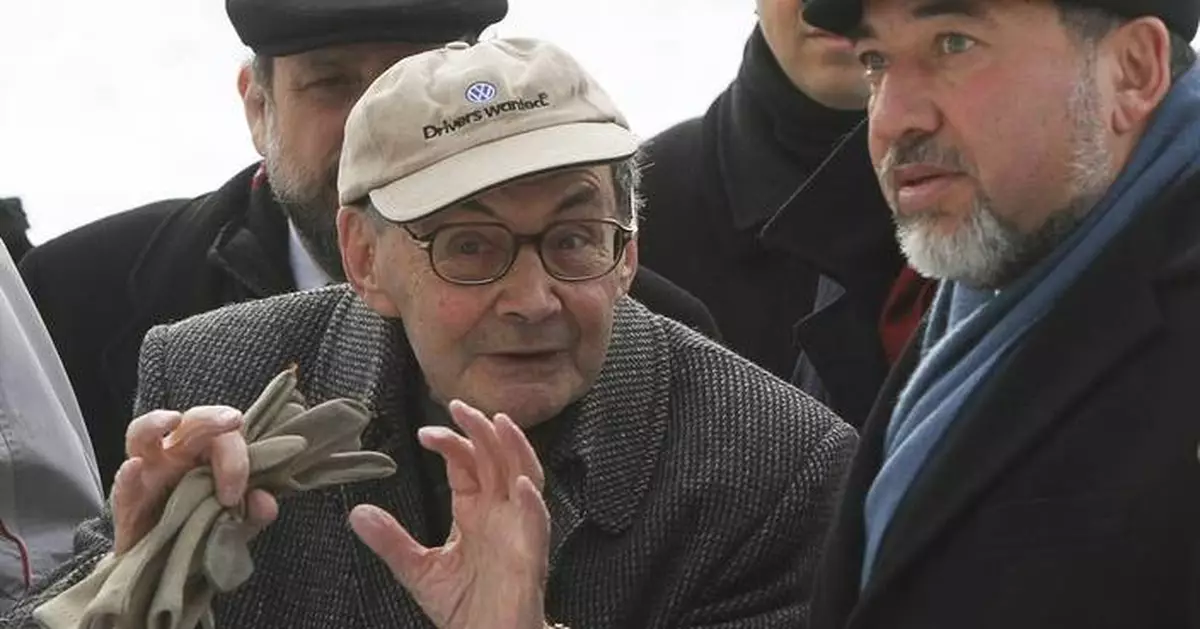
FILE - Israeli Foreign Minister Avigdor Liberman, right,, talks with Marian Turski, a Jewish journalist, after laying a wreath at the Monument to the Fighters of the Warsaw Ghetto in Warsaw, Poland, Jan. 15, 2012. (AP Photo/Czarek Sokolowski, File)
MINNEAPOLIS (AP) — Federal agents carrying out immigration arrests in Minnesota's Twin Cities region already shaken by the fatal shooting of a woman rammed the door of one home Sunday and pushed their way inside, part of what the Department of Homeland Security has called its largest enforcement operation ever.
In a dramatic scene similar to those playing out across Minneapolis, agents captured a man in the home just minutes after pepper spraying protesters outside who had confronted the heavily armed federal agents. Along the residential street, protesters honked car horns, banged on drums and blew whistles in attempts to disrupt the operation.
Video of the clash taken by The Associated Press showed some agents pushing back protesters while a distraught woman later emerged from the house with a document that federal agents presented to arrest the man. Signed by an immigration officer, the document — unlike a warrant signed by a judge — does not authorize forced entry into a private residence. A warrant signed by an immigration officer only authorizes arrest in a public area.
Immigrant advocacy groups have conducted extensive “know-your-rights” campaigns urging people not to open their doors unless agents have a court order signed by a judge.
But within minutes of ramming the door in a neighborhood filled with single-family homes, the handcuffed man was led away.
More than 2,000 immigration arrests have been made in Minnesota since the enforcement operation began at the beginning of December, said Homeland Security spokesperson Tricia McLaughlin.
Homeland Security Secretary Kristi Noem told Fox News on Sunday that the administration would send additional federal agents to Minnesota to protect immigration officers and continue enforcement.
The Twin Cities — the latest target in President Donald Trump’s immigration enforcement campaign — is bracing for what is next after 37-year-old Renee Good was shot and killed by an immigration officer on Wednesday.
“We’re seeing a lot of immigration enforcement across Minneapolis and across the state, federal agents just swarming around our neighborhoods,” said Jason Chavez, a Minneapolis city councilmember. “They’ve definitely been out here.”
Chavez, the son of Mexican immigrants who represents an area with a growing immigrant population, said he is closely monitoring information from chat groups about where residents are seeing agents operating.
People holding whistles positioned themselves in freezing temperatures on street corners Sunday in the neighborhood where Good was killed, watching for any signs of federal agents.
More than 20,000 people have taken part in a variety of trainings to become “observers” of enforcement activities in Minnesota since the 2024 election, said Luis Argueta, a spokesperson for Unidos MN, a local human rights organization .
“It’s a role that people choose to take on voluntarily, because they choose to look out for their neighbors,” Argueta said.
The protests have been largely peaceful, but residents remained anxious. On Monday, Minneapolis public schools will start offering remote learning for the next month in response to concerns that children might feel unsafe venturing out while tensions remain high.
Many schools closed last week after Good’s shooting and the upheaval that followed.
While the enforcement activity continues, two of the state’s leading Democrats said that the investigation into Good's shooting death should not be overseen solely by the federal government.
Minneapolis Mayor Jacob Frey and U.S. Sen. Tina Smith said in separate interviews Sunday that state authorities should be included in the investigation because the federal government has already made clear what it believes happened.
“How can we trust the federal government to do an objective, unbiased investigation, without prejudice, when at the beginning of that investigation they have already announced exactly what they saw — what they think happened," Smith said on ABC’s "This Week."
The Trump administration has defended the officer who shot Good in her car, saying he was protecting himself and fellow agents and that Good had “weaponized” her vehicle.
Todd Lyons, acting director of U.S. Immigration and Customs Enforcement, defended the officer on Fox News Channel’s “The Sunday Briefing.”
"That law enforcement officer had milliseconds, if not short time to make a decision to save his life and his other fellow agents,” he said.
Lyons also said the administration’s enforcement operations in Minnesota wouldn't be needed “if local jurisdictions worked with us to turn over these criminally illegal aliens once they are already considered a public safety threat by the locals.”
The killing of Good by an ICE officer and the shooting of two people by federal agents in Portland, Oregon, led to dozens of protests in cities across the country over the weekend, including New York, Los Angeles, Washington D.C. and Oakland, California.
Contributing were Associated Press journalists Giovanna Dell’Orto in Minneapolis; Thomas Strong in Washington; Bill Barrow in Atlanta; Christopher Weber in Los Angeles; and John Seewer in Toledo, Ohio.
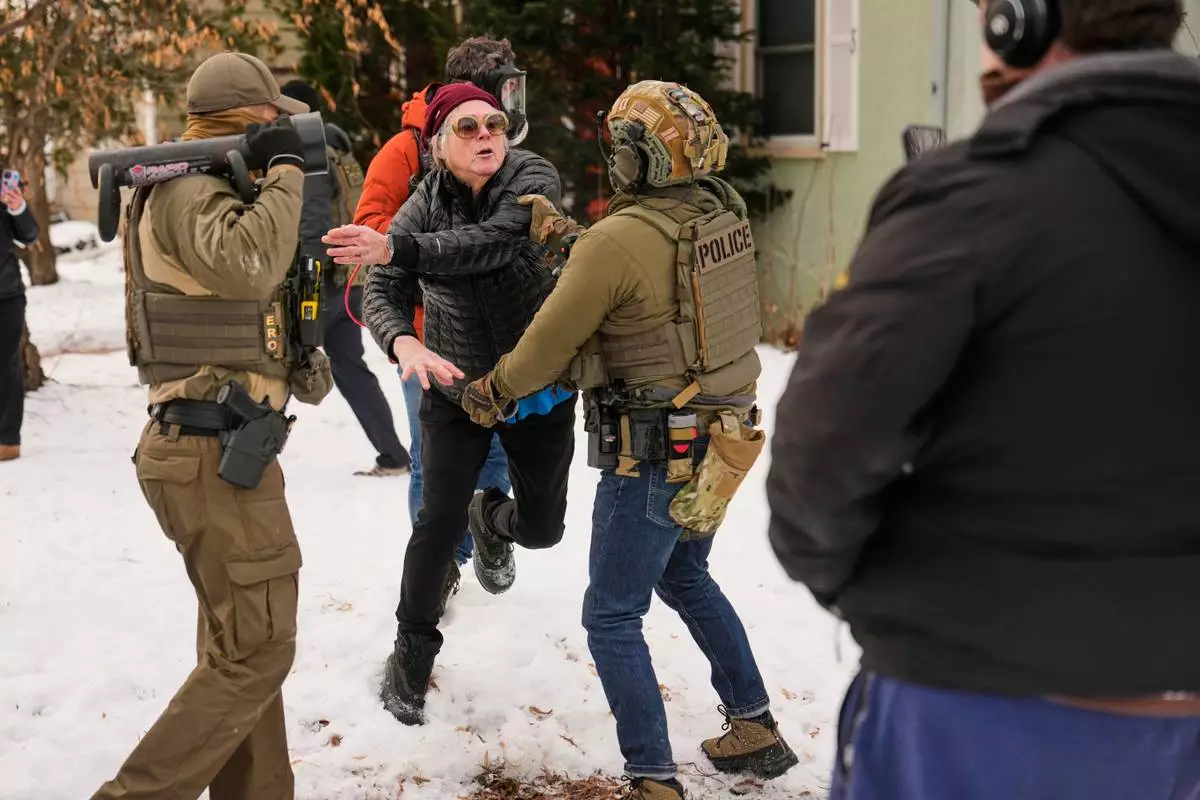
A woman gets into an altercation with a federal immigration officer as officers make an arrest Sunday, Jan. 11, 2026, in Minneapolis. (AP Photo/John Locher)
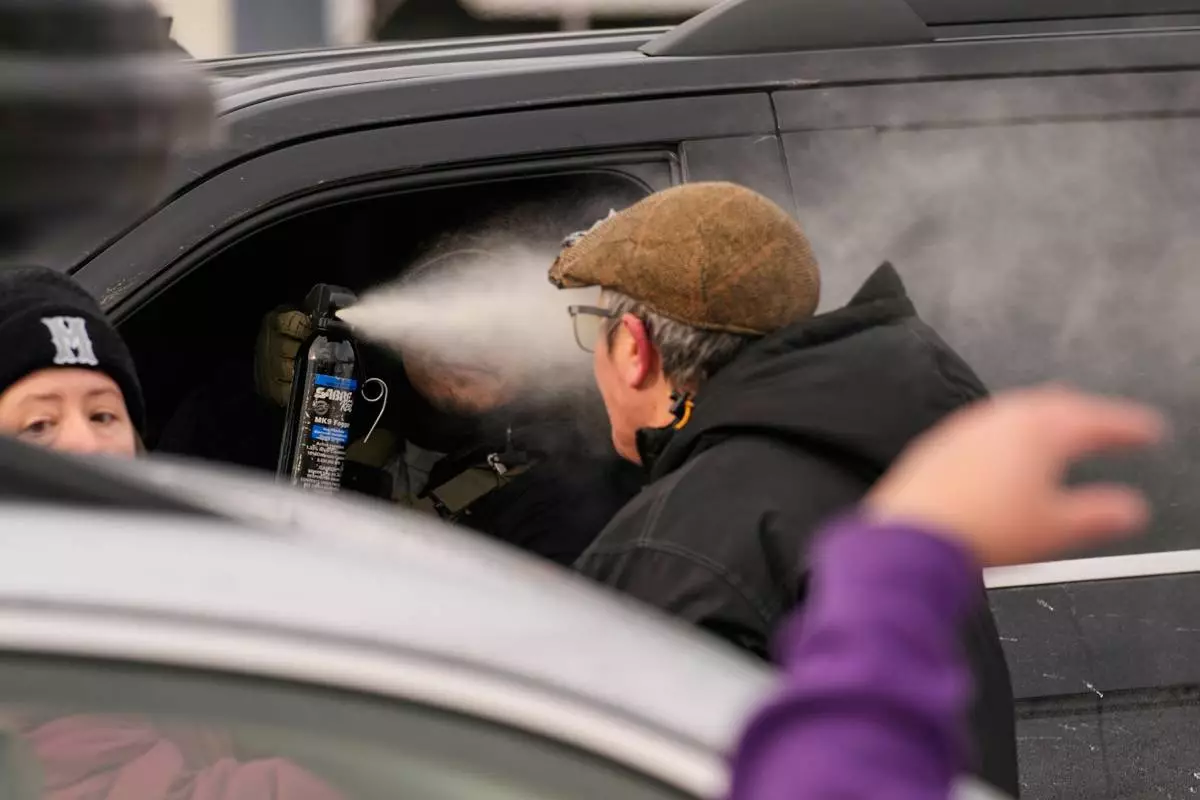
A federal immigration officer deploys pepper spray as officers make an arrest Sunday, Jan. 11, 2026, in Minneapolis. (AP Photo/John Locher)
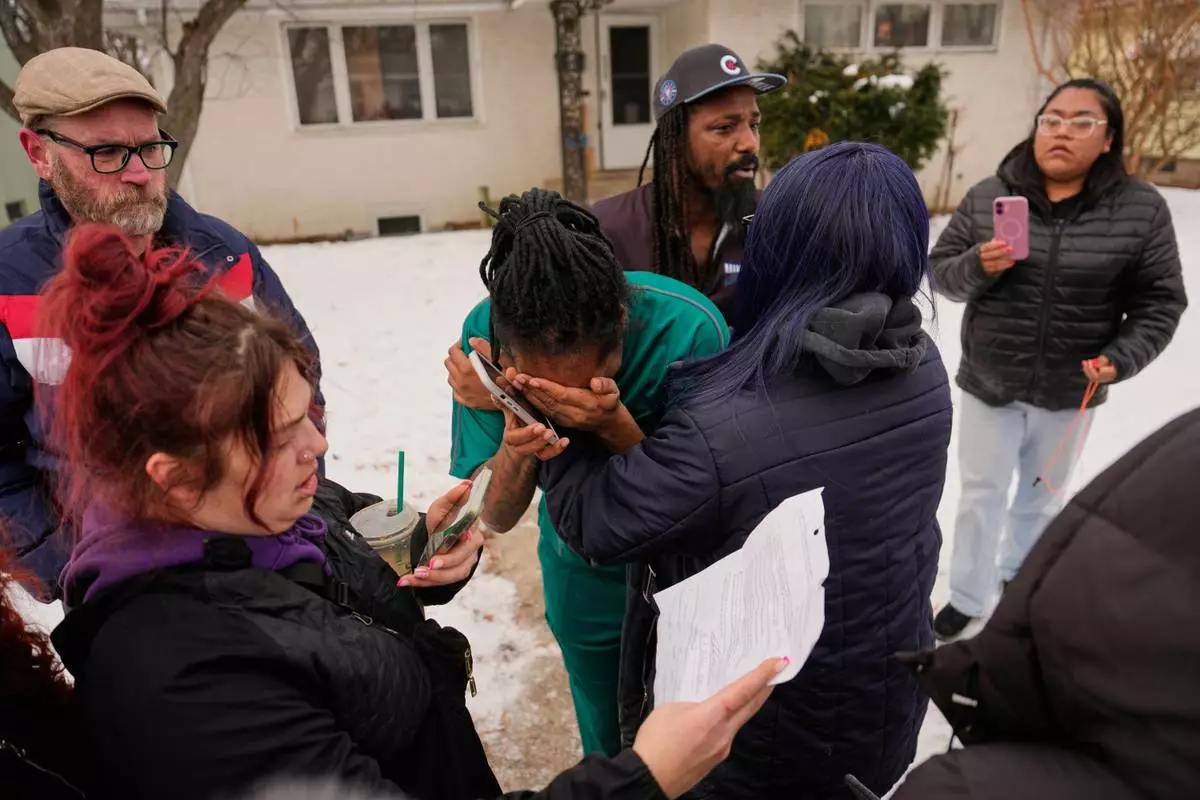
A family member, center, reacts after federal immigration officers make an arrest Sunday, Jan. 11, 2026, in Minneapolis. (AP Photo/John Locher)
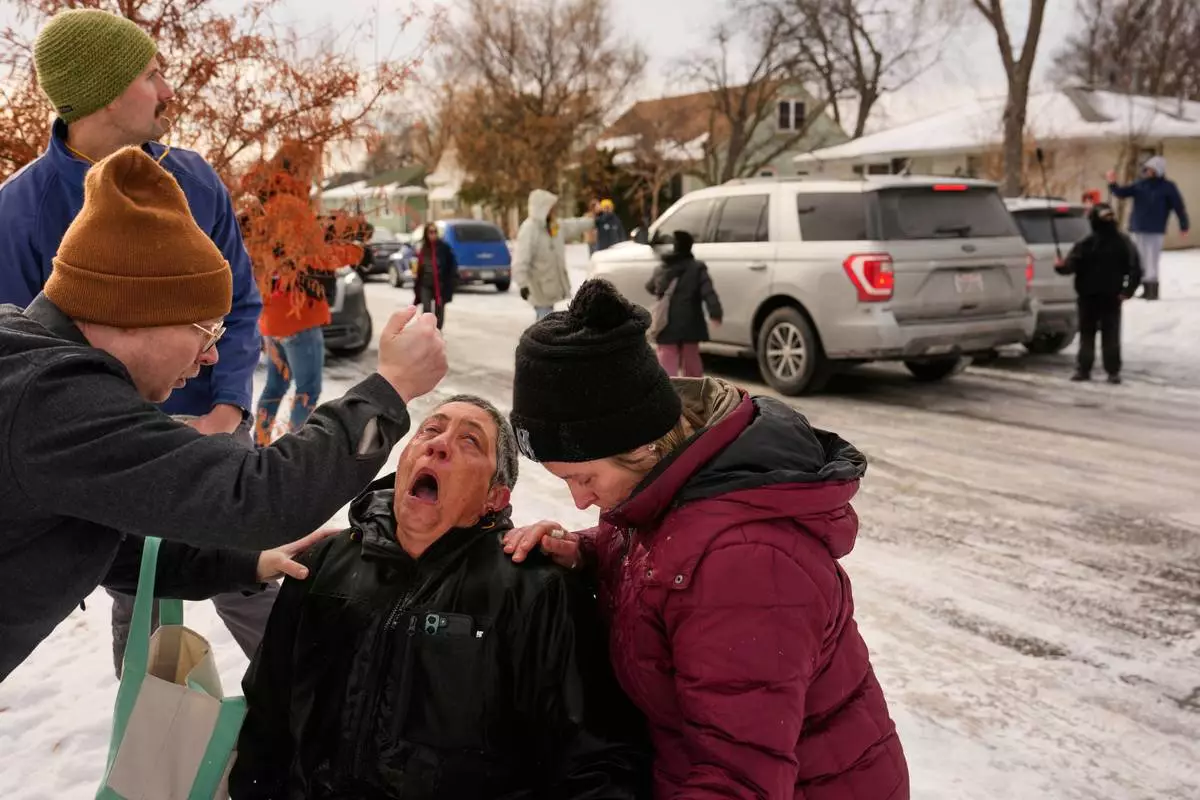
Bystanders are treated after being pepper sprayed as federal immigration officers make an arrest Sunday, Jan. 11, 2026, in Minneapolis. (AP Photo/John Locher)
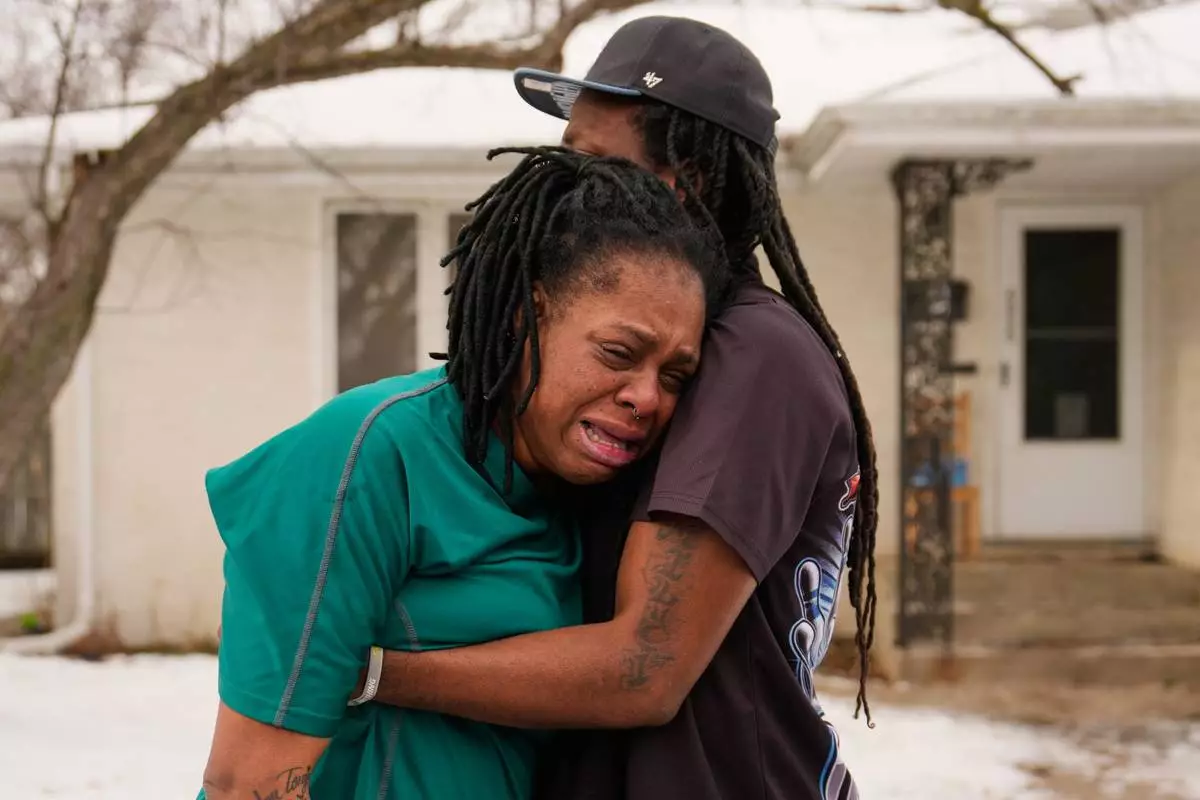
A family member reacts after federal immigration officers make an arrest Sunday, Jan. 11, 2026, in Minneapolis. (AP Photo/John Locher)
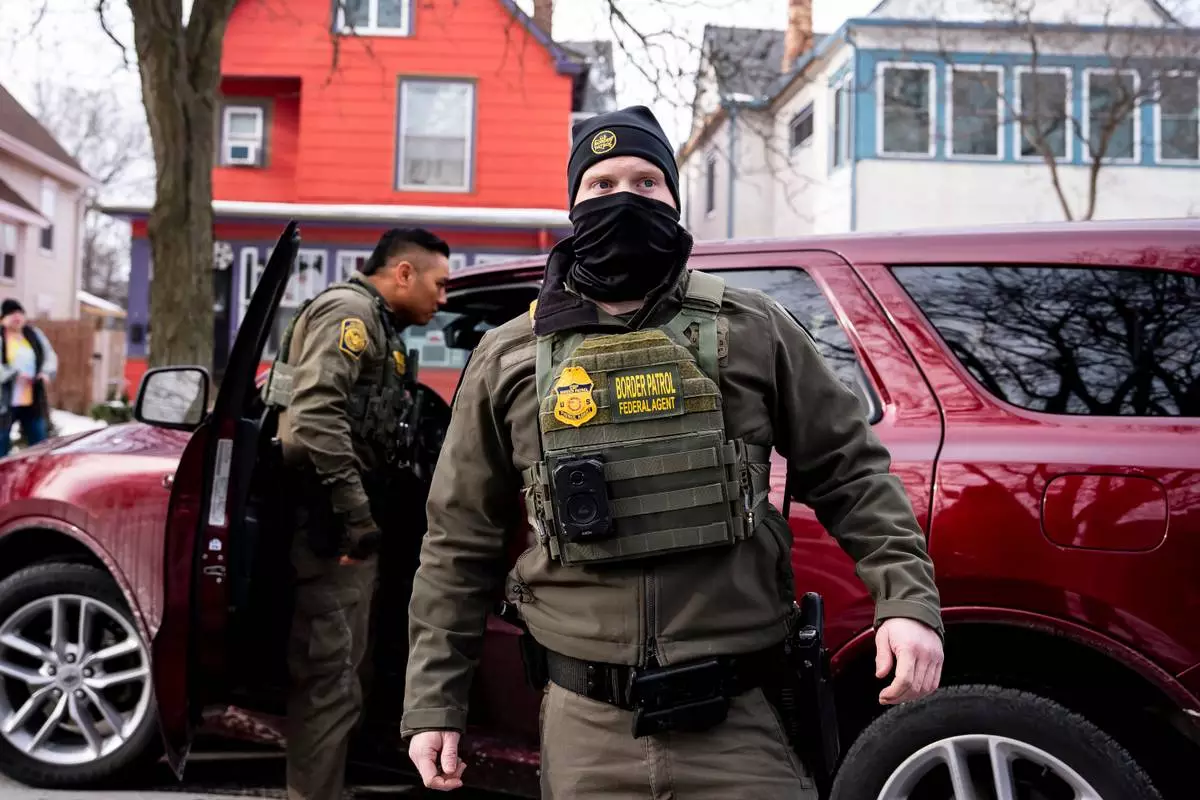
Federal agents look on after detaining a person during a patrol in Minneapolis, Minn., Sunday, Jan. 11, 2026. (Christopher Katsarov/The Canadian Press via AP)
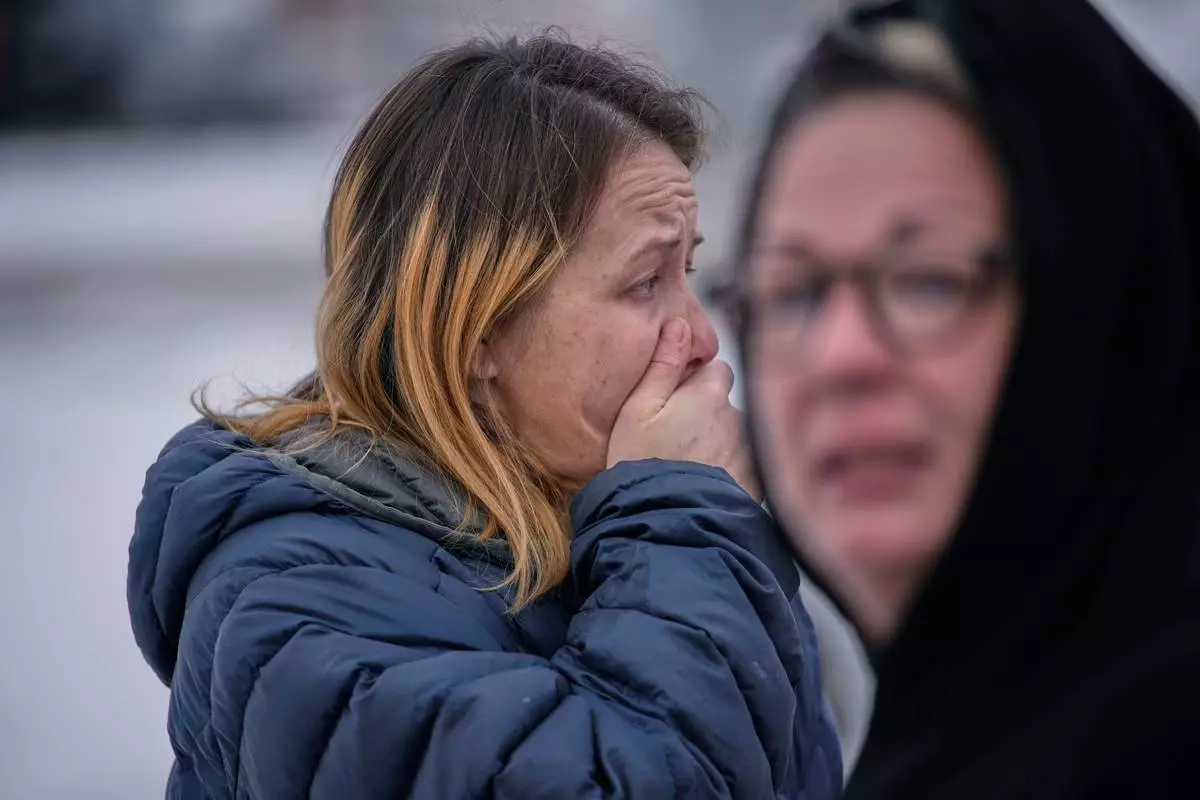
Bystanders react after a man was detained by Immigration and Customs Enforcement (ICE) agents during a traffic stop, Sunday, Jan. 11, 2026, in Robbinsdale, Minn. (AP Photo/John Locher)
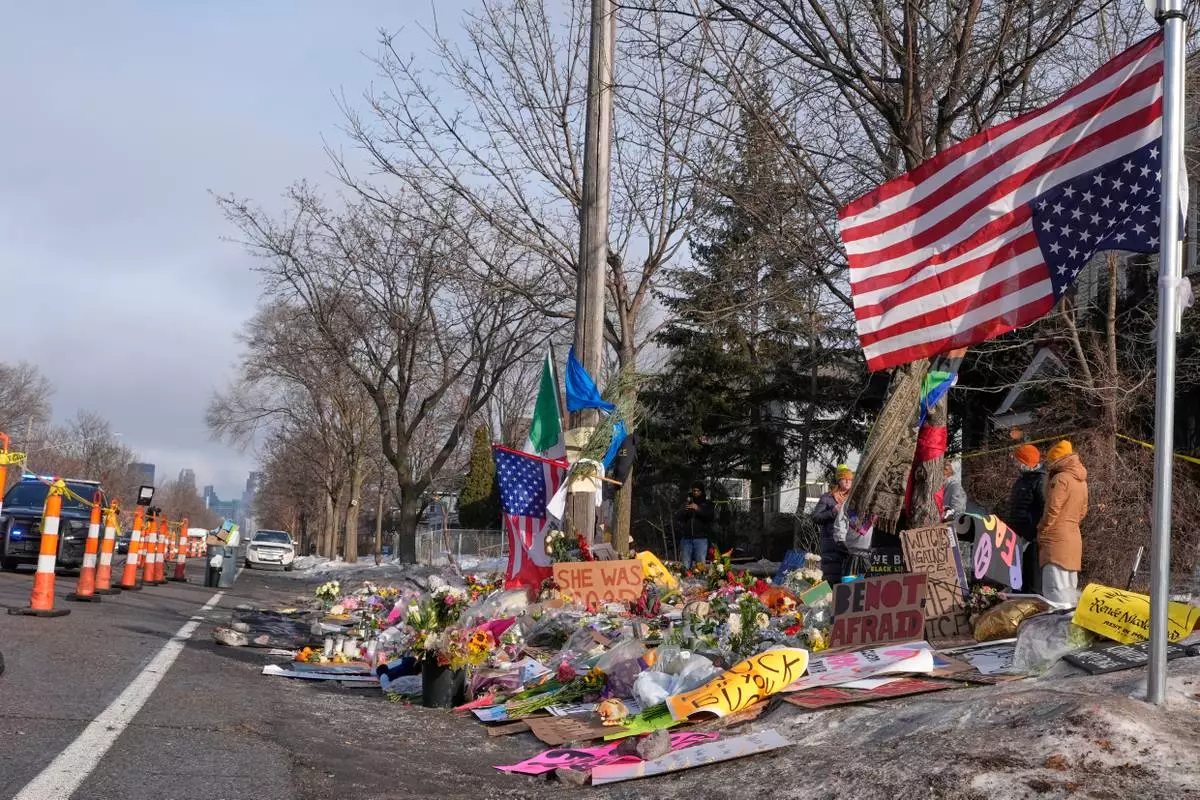
People stand near a memorial at the site where Renee Good was fatally shot by an ICE agent, Sunday, Jan. 11, 2026, in Minneapolis. (AP Photo/Jen Golbeck)
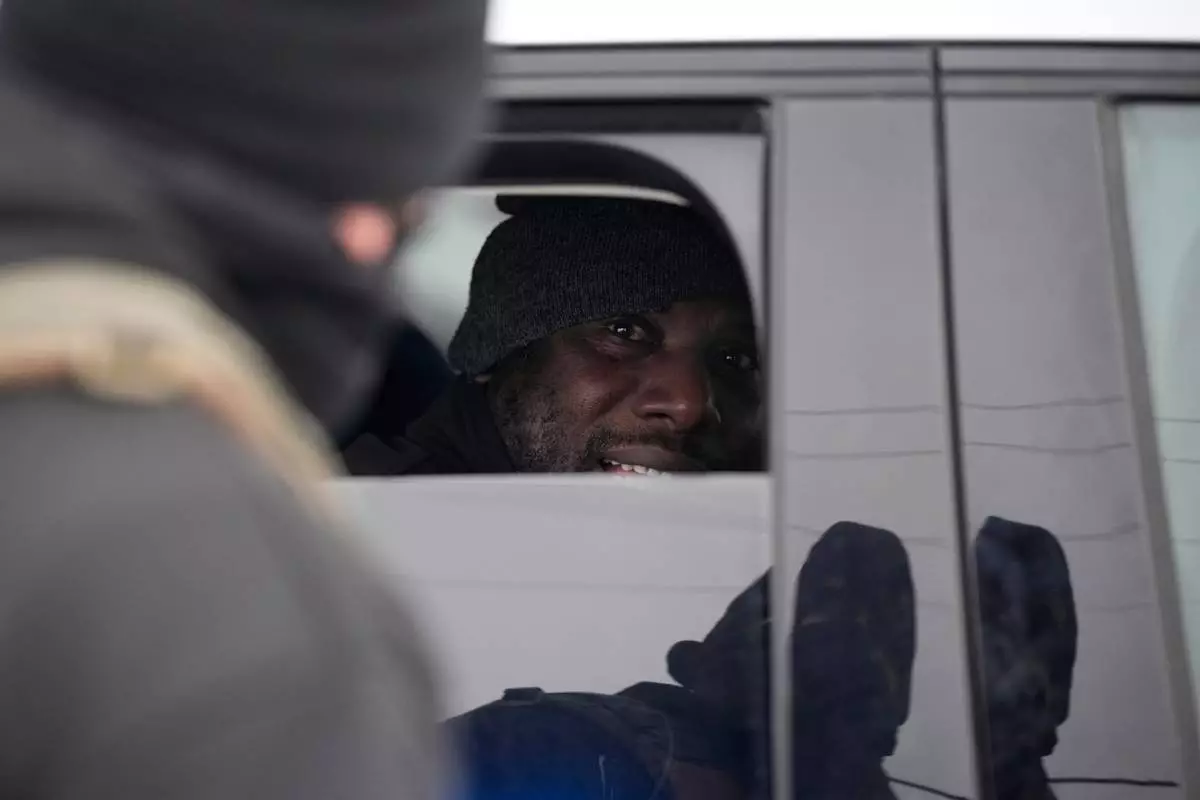
A man looks out of a car window after being detained by Immigration and Customs Enforcement (ICE) agents during a traffic stop, Sunday, Jan. 11, 2026, in Robbinsdale, Minn. (AP Photo/John Locher)
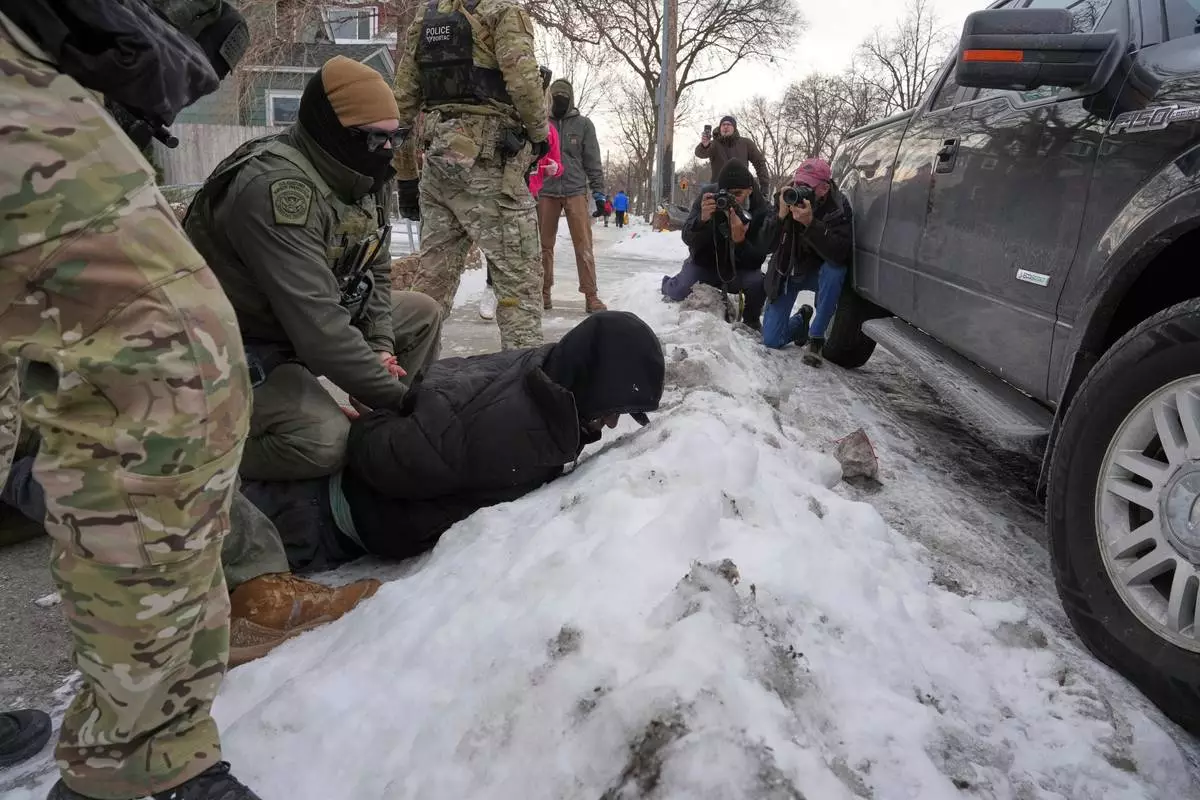
Border Patrol agents detain a man, Sunday, Jan. 11, 2026, in Minneapolis. (AP Photo/Adam Gray)
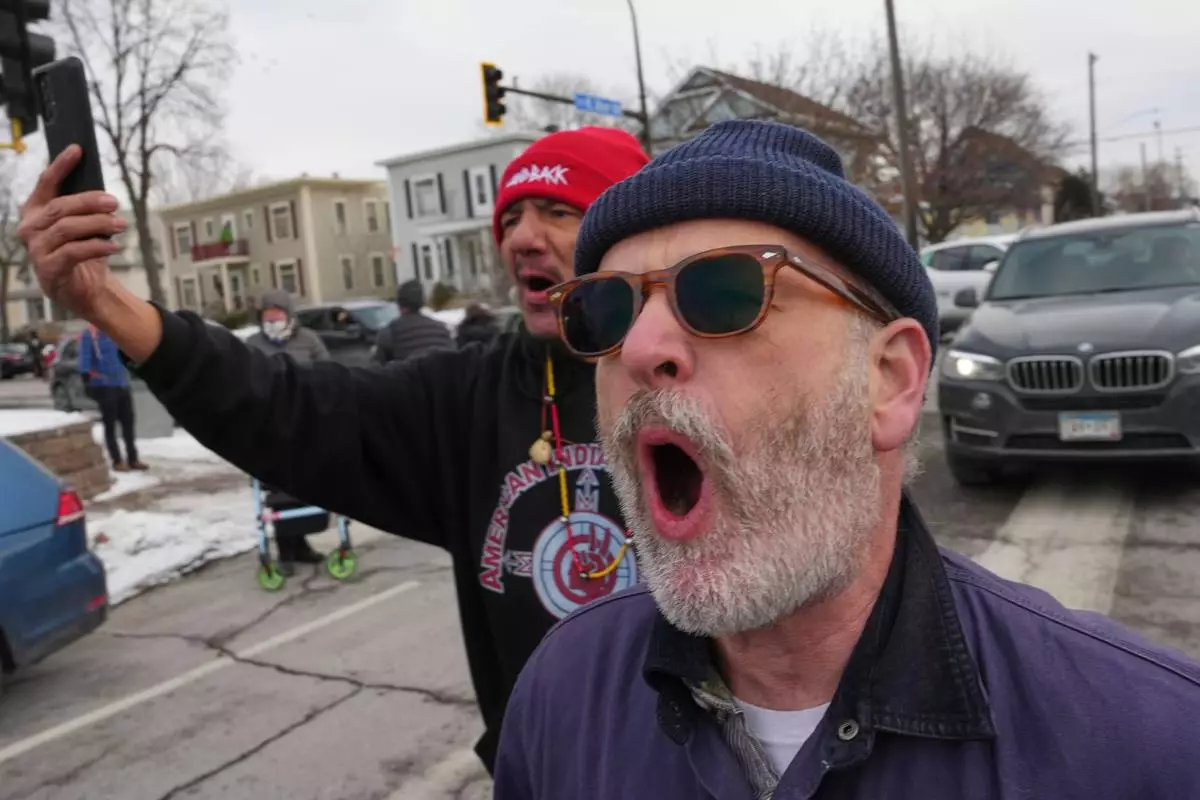
People shout toward Border Patrol agents making an arrest, Sunday, Jan. 11, 2026, in Minneapolis. (AP Photo/Adam Gray)
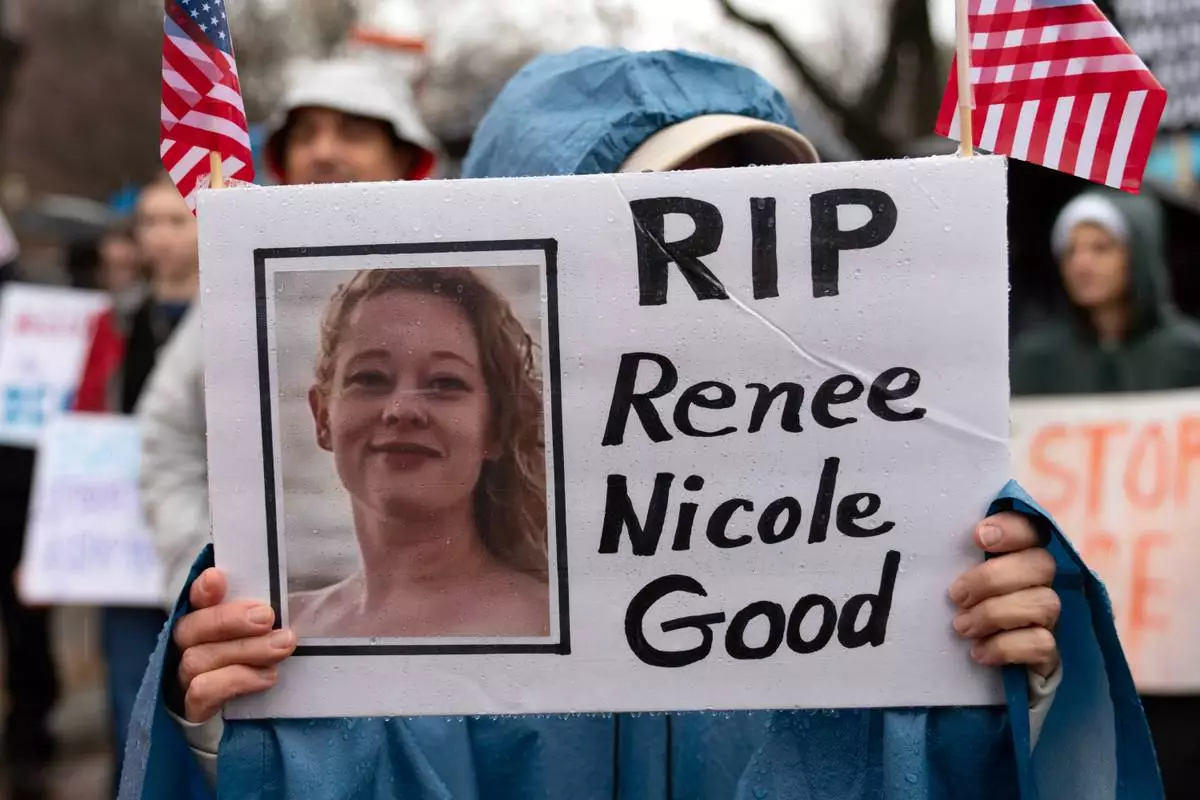
Demonstrators protest outside the White House in Washington, Saturday, Jan. 10, 2026, against the Immigration and Customs Enforcement agent who fatally shot Renee Good in Minneapolis. (AP Photo/Jose Luis Magana)
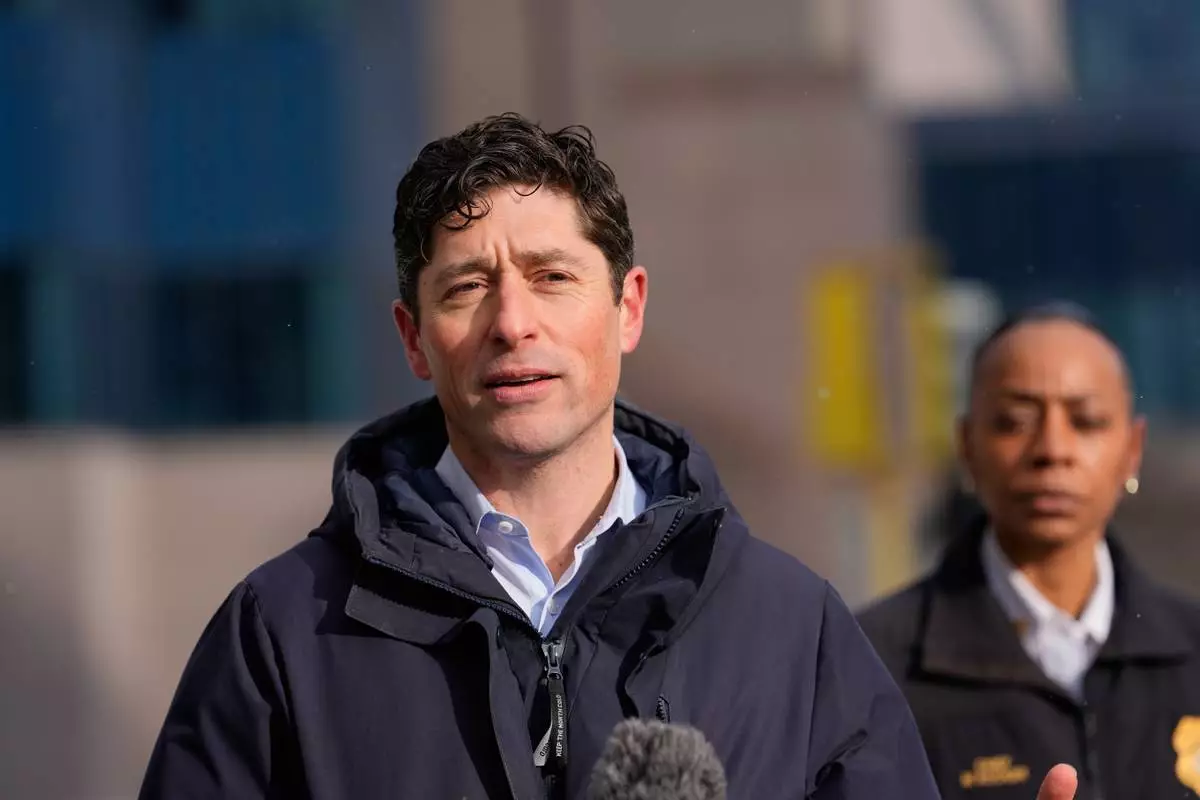
Minneapolis Mayor Jacob Frey holds a news conference on Saturday, Jan. 10, 2026, in Minneapolis. (AP Photo/Jen Golbeck)
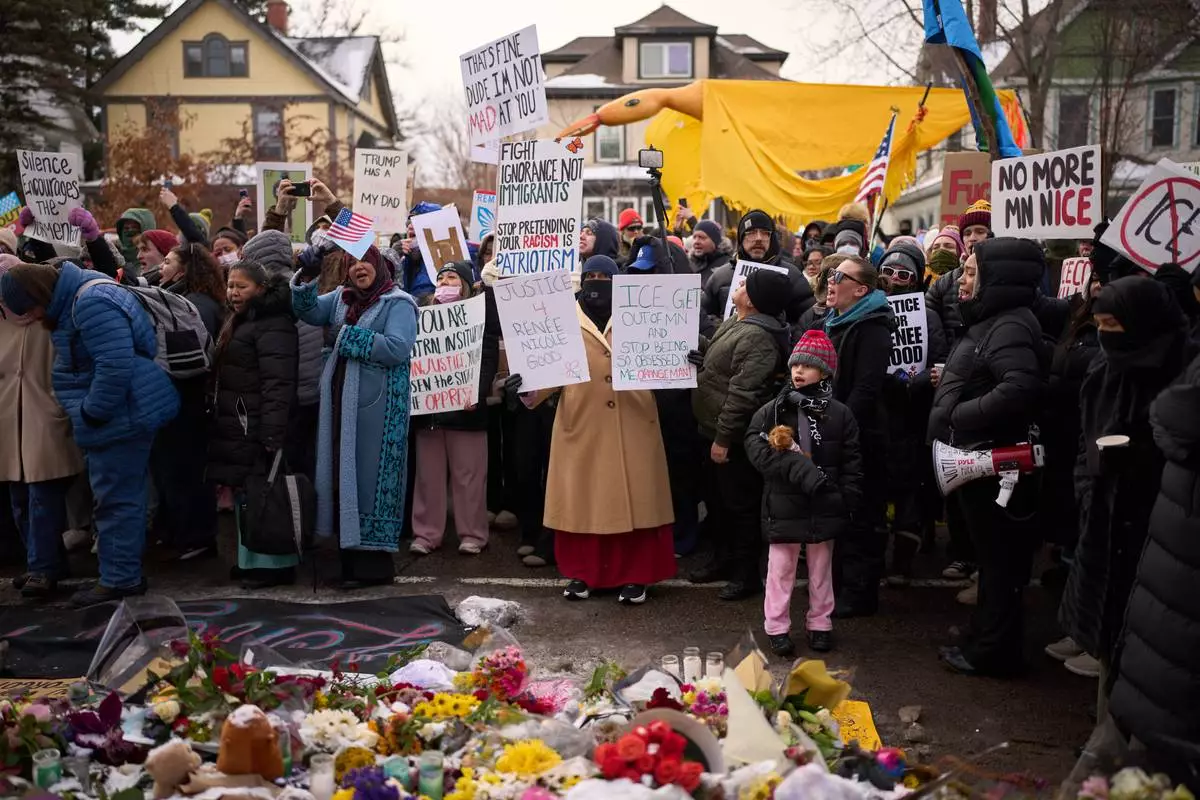
Protesters react as they visit a makeshift memorial during a rally for Renee Good, who was fatally shot by an ICE officer earlier in the week, Saturday, Jan. 10, 2026, in Minneapolis. (AP Photo/John Locher)