Humanoid robots have emerged as a key focal point for tech giants and startups driving industry advancements in the city of Shenzhen, China's innovation hub.
Shenzhen's unique ecosystem, boasting top hardware and software providers, serves as a testing ground for these cutting-edge robots, making huge leaps in both movement capabilities and intelligence thanks to AI-driven growth.
Yao Aiwen, chief marketing officer of Shenzhen EngineAI Robotics Technology, said that achieving natural walking gait in their robot models was no easy task.
"We use end-to-end neural network skill and we use a deep reinforcement learning [system]. In stage one, when we design robotics, then we leverage everything that we need from the joint side and also from the motion side. Then they can converge together much more easily," said Yao.
By making their technology open-source, the company believes they can speed up progress by getting more players involved.
"The SE 01, from day one that we launched, we tell everybody this is open source from the learning process, from the deep reinforcement learning coding, and also from the deployment coding. The reason why is we wanted to like lower the cost for all the institutions and universities. For EngineAI, we wanted to open the fundamental coding for their future development use," said Yao.
EngineAI is not alone in this venture. Ubtech, another Shenzhen-based firm, has also been making significant strides, showcasing their flagship robots during their IPO in late 2023.
Despite this progress, industry experts said that hurdles remain, such as the need for standardized regulations to integrate humanoid robots into existing systems, as well as securing capital and top engineering talents to maintain a competitive edge.
"After ChatGPT, humanoid robots are the next big breakthrough. They're already integrating into small-scale production and daily life," said Cao Zhongxiong, assistant president of the China Development Institute and the director of the Digital Strategy and Economic Research Center.
He added that key challenges remain, like solving core algorithms and improving critical components, and those are the bottlenecks we need to break through.
Much of the success of companies like EngineAI and Ubtech comes from Shenzhen's thriving tech ecosystem. Some of the world's biggest tech firms are just blocks away, making it easy to team up and get things done fast. That proximity also helps cut down on research and development costs -- a key advantage in such a competitive field.
"Shenzhen and the Greater Bay Area are leading China's humanoid robotics industry and making a global impact. In the production process, we're even ahead of the world," said Cao.
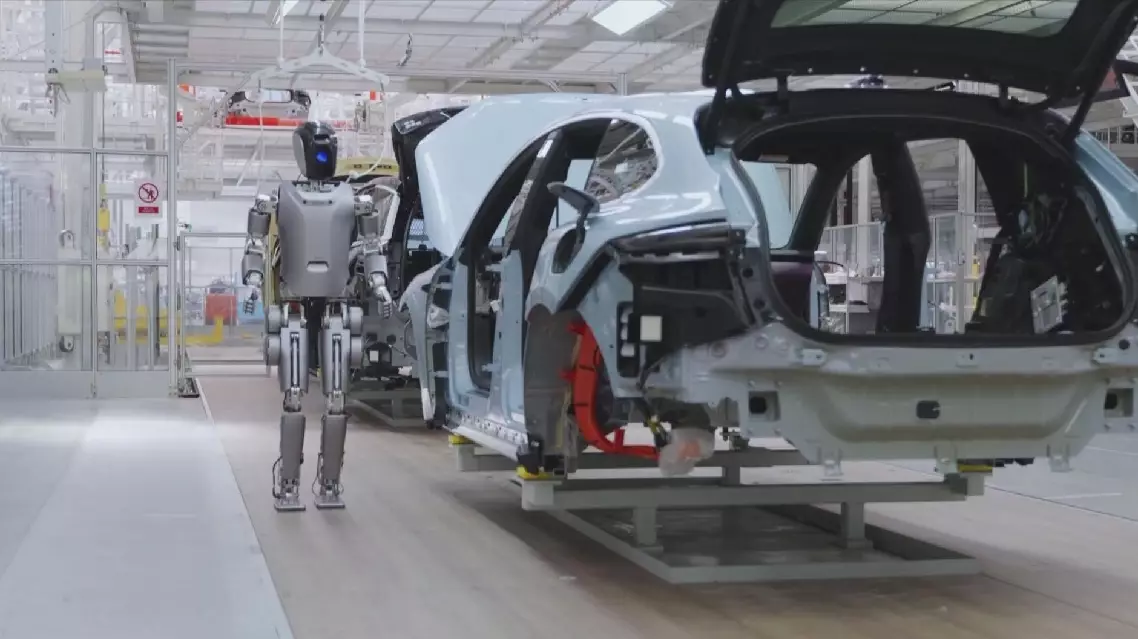
Humanoid robots flourish in Shenzhen's AI-driven tech ecosystem