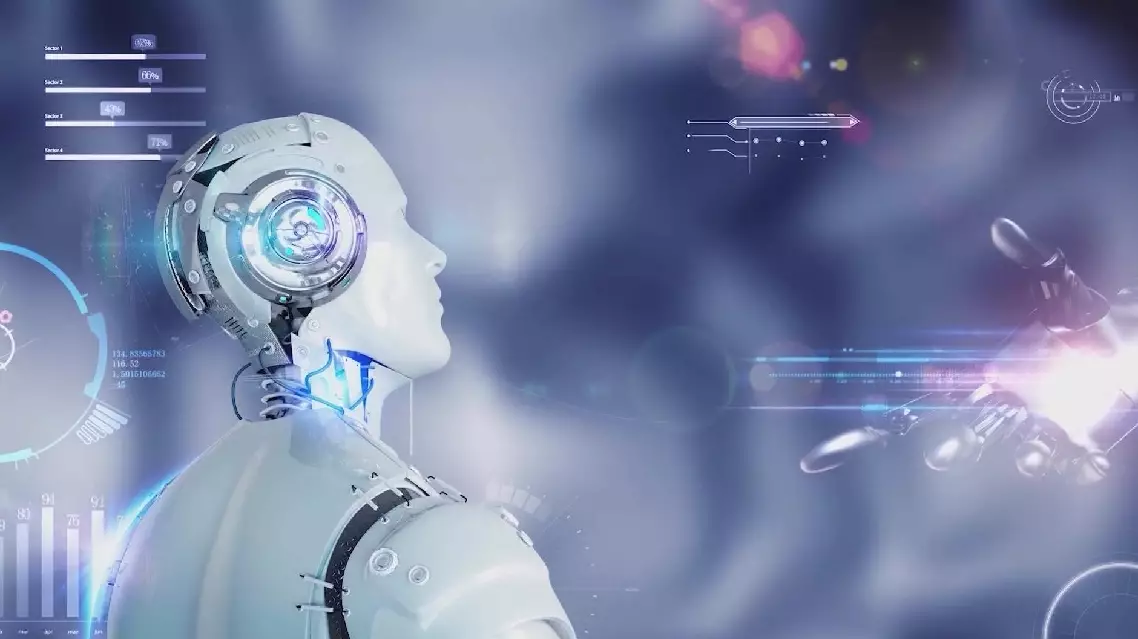
In a major push to boost efficiency, south China's Shenzhen City on Sunday began offering DeepSeek-powered services to all government departments, with the city's downtown Futian District leading the way by introducing the first 70 AI-driven "digital workers" in local government offices.
At the Futian Bureau of Government Services and Data Management, the new AI workers are already up and running. Each workstation has been equipped with a DeepSeek-based AI office system tailored to assist employees in a variety of government functions. The first batch of 70 "digital intelligent workers" are equipped not only with general AI capabilities but also with personalized smart assistants designed to support the specific processes of various departments. These AI systems are able to handle up to 240 service scenarios.
"Digital intelligent workers are a concept of AI agents, serving as assistants to help with a range of tasks from public services and community governance to investment management and document writing. This human-AI collaboration aims to ease the workload at the grassroots level," said Gao Zeng, deputy director of the Futian Bureau of Government Services and Data Management.
The introduction of these AI workers has dramatically boosted operational efficiency within government offices. The accuracy of document formatting has exceeded 95 percent, approval times have been slashed by 90 percent, and error rates have been kept under five percent. In public service, the accuracy of issue distribution has been lifted from 70 percent to 95 percent, and in attracting investment, the efficiency of enterprise screening has risen by 30 percent.
However, the presence of AI workers does not mean replacing human employees outright. Futian District has rolled out innovative management measures that define AI as an assistant, not a replacement for human labor. A "guardian" system is in place where each AI worker is overseen by a designated human supervisor who addresses possible risks and ensures that the AI operates properly.
"We have set clear ethical guidelines and technical standards. Every digital worker has a designated guardian responsible for guiding its operations. If any problems arise with the digital worker, the guardian must take responsibility for what happened," said Gao.
Shenzhen is not alone in revolutionizing the government work with AI tools. Cities across China, including Beijing, Guangzhou, Nanjing, and Zhengzhou, have also announced plans to integrate DeepSeek into government services and explore more AI-powered applications.
Shenzhen deploys AI-powered virtual employees in government services