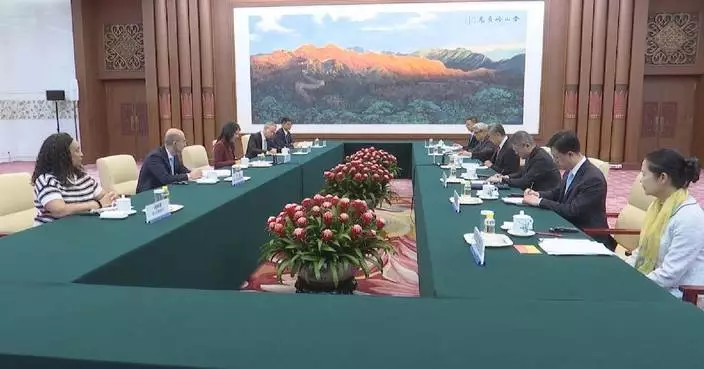
Villagers in south China's Guangxi Zhuang Autonomous Region have been observing traditional rituals calling for a bountiful harvest as local farmers prepare for the year's labor as they usher in the spring.
One of the rituals, known as "leading the spring ox" or "Shuachunniu" in Chinese, is held in different regions across China around the second solar term, known as "Rain Water", in the traditional Chinese lunar calendar.
Also known as "Yu Shui" in Chinese, the second solar term sees temperatures gradually rise, snow and ice beginning to melt, and an increase in rain fall.
In Fuxi Village, in Fuchuan Yao Autonomous County in Guangxi, "Shuachunniu" was observed by locals who danced and sang joyous songs in the small village square while imitating activities like plowing and farming.
The "spring ox" used in the ceremony is made from bamboo frames covered in cowhide and palm leaves.
After performing in the square, the participants led the "spring ox" from door to door, bringing new year blessings to every household in the village.
"The spring ox is a symbol of the spring and the plowing season. It reminds us of the beginning of the spring. We should start laboring and sowing seeds in the field," said villager Zhou Xiuwen.
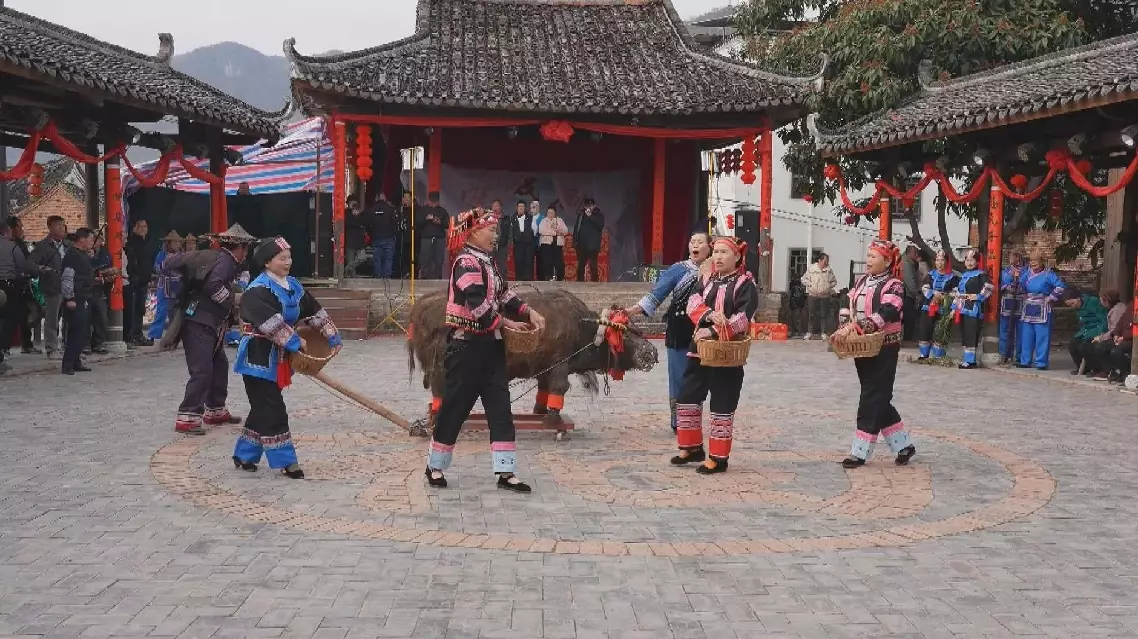
Guangxi villagers observe traditional spring rituals for bountiful harvest
Iran on Tuesday warned it would deliver a stern response to any new aggression, after U.S. President Donald Trump ordering preparations for a prolonged naval blockade of the country.
Trump has instructed his administration to prepare for an extended blockade of Iran as the ceasefire remains in place amid stalled talks, The Wall Street Journal reported on Tuesday, citing U.S. officials.
In recent meetings, including a Monday discussion with top security officials in the White House, Trump opted to continue squeezing Iran's economy and oil exports by preventing shipping to and from its ports, said the report.
The president assessed that the blockade, "a high-risk bid" to compel Tehran's nuclear capitulation, carries less risk than other options -- resume bombing or walk away from the conflict, the officials were quoted as saying.
Iranian government spokesperson Fatemeh Mohajerani stated the same day that Tehran has completed "all necessary arrangements" to counter the U.S. naval blockade.
She noted that Iran's primary strategy focuses on maximizing its geographical advantages through effective tactical maneuvers.
Also on Tuesday, Iranian army spokesman Mohammad Akraminia declared that the military considers the current situation a state of war.
Akraminia added that Iran has fully updated its target lists and operational equipment, promising a "stern response" to any further aggression.
Mujtaba Ferdosipour, head of Iran's Interests Section in Cairo, told the IRNA news agency on Wednesday that U.S. attempts to force unilateral demands through a naval blockade are ineffective. He stressed that Iran's extensive land borders with neighboring countries provide viable alternatives to bypass the maritime restrictions.
Ferdosipour reiterated that the Strait of Hormuz is closed only to vessels linked to Israel and the United States. He asserted that Iran has the right to manage security in the strait, maintaining that this position does not violate international conventions.
The envoy further stated that Iran does not trust the United States and has no desire for direct negotiations. He emphasized that Tehran can employ all available means to defend itself against attacks.
According to the latest data from the UN Trade and Development (UNCTAD), ship transits through the Strait of Hormuz have plummeted by 95.3 percent since Feb 27. The disruption has caused global food prices to rise by approximately six percent, while crude oil prices in European markets have surged by nearly 50 percent.
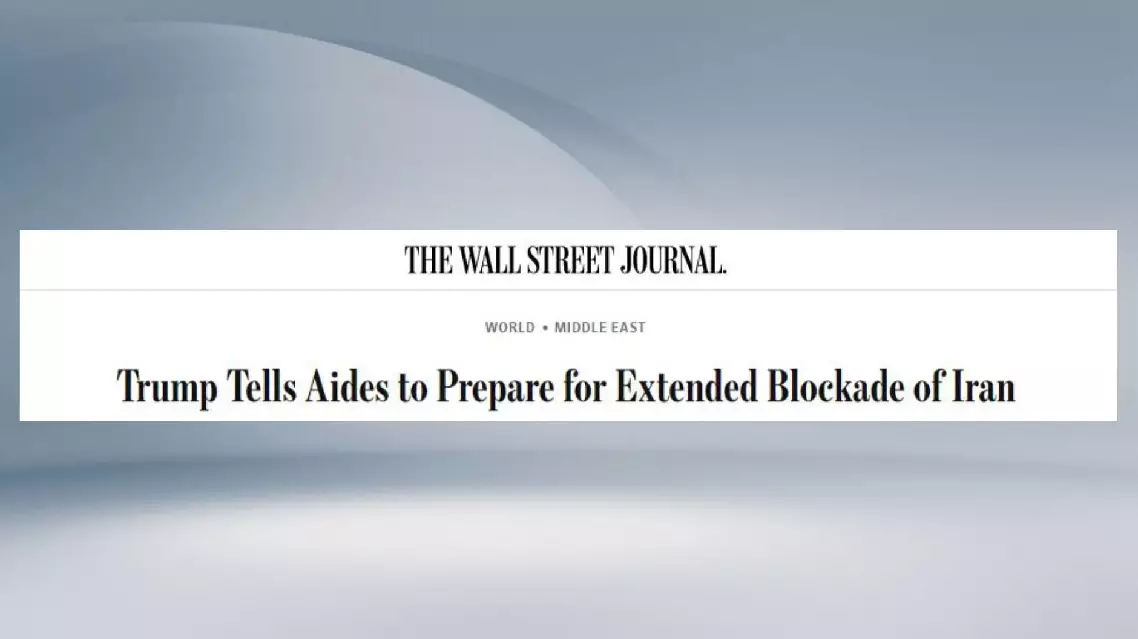
Iran warns of stern response as US plans prolonged blockade