Skip to Content Facebook Feature Image

China's 1st airborne electromagnetic detection system completes geological survey

China

China

China

China's 1st airborne electromagnetic detection system completes geological survey

2025-02-19 12:07 Last Updated At:12:57

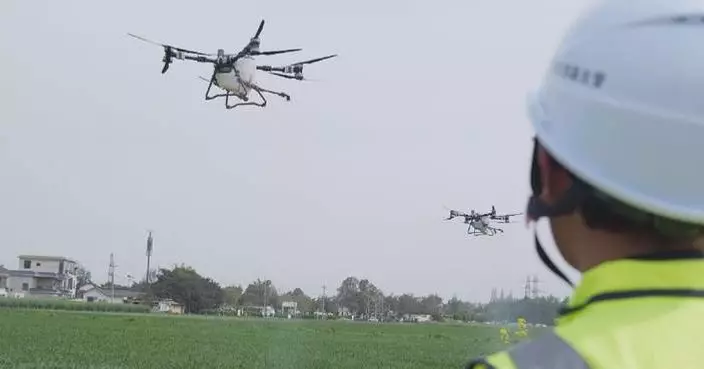
China has successfully completed a high-altitude geological survey using its first helicopter airborne electromagnetic detection system, designed by the Aerospace Information Research Institute under the Chinese Academy of Sciences.

The system integrates key technologies such as high-sensitivity magnetic field sensors, wide-dynamic signal reception, and a stable airborne pod platform. It enables precise mapping of underground faults, fractures, groundwater, and mineral resources while identifying potential geological hazards.

During the two-month survey, research teams operated in extreme high-altitude and frigid conditions, conducting over 30 flight missions and covering more than 5,000 kilometers.

The system achieved a maximum detection depth of over 3,000 meters, providing critical data for the planning and construction of major national projects.

The airborne electromagnetic method (AEM) provides a rapid assessment of geological conditions as they relate to electrical conductivity or electrical resistivity. AEM uses a specialized transmitter to drive a time-varying current into a transmitter loop on an airborne platform. The transmitter loop generates an EM wave that propagates into the subsurface. As this energy encounters different subsurface layers or materials, it induces eddy currents that generate secondary EM fields. Secondary EM fields are detected by a receiver loop or magnetic antenna as the induced energy diffuses into the ground. The rate of diffusion indicates the resistivity of the subsurface materials.

Experts said that the system can play a vital role in supporting resource exploration and major infrastructure development.
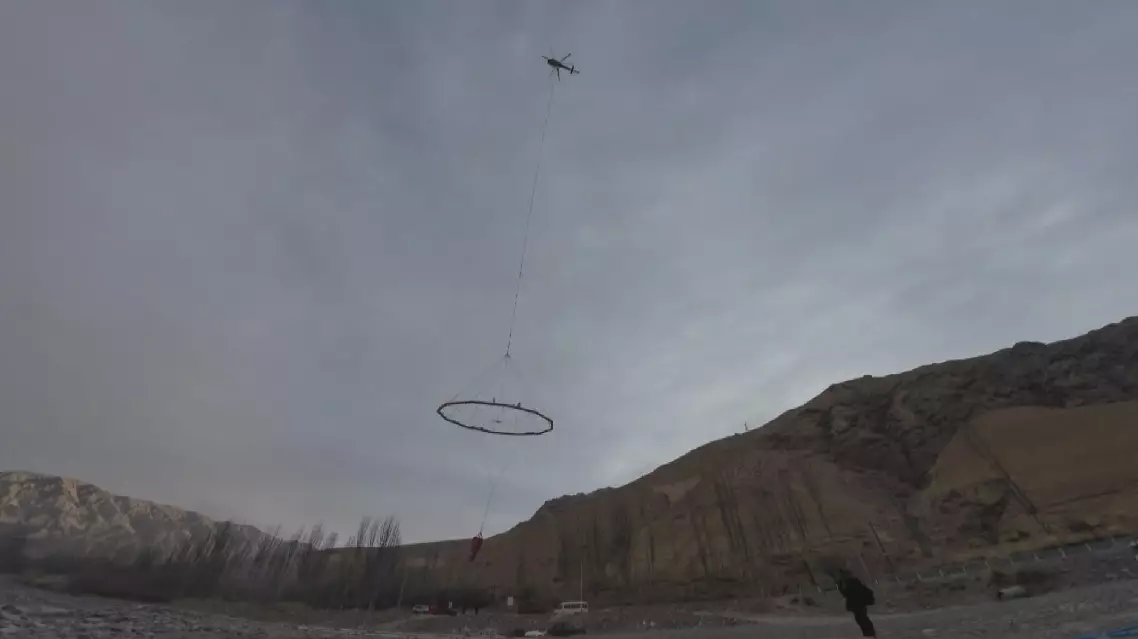
China's 1st airborne electromagnetic detection system completes geological survey
China's 1st airborne electromagnetic detection system completes geological survey
Wang Huning, chairman of the National Committee of the Chinese People's Political Consultative Conference, on Thursday extended Spring Festival greetings to religious leaders and believers across China.

Wang, also a member of the Standing Committee of the Political Bureau of the Communist Party of China (CPC) Central Committee, met with leaders of national religious groups ahead of the Chinese New Year. Heads of the Buddhist Association of China, the Taoist Association of China, the China Islamic Association, the Chinese Catholic Patriotic Association and the National Committee of the Three-Self Patriotic Movement of the Protestant Churches in China were present at the meeting and delivered speeches.

Wang spoke highly of the work of the religious groups in 2025, urging systematic efforts to ensure that religions in China are Chinese in orientation and ensure law-based management of religious affairs, with the aim of contributing to the realization of Chinese modernization.

He called on the national religious groups to guide religious figures and believers to develop an accurate understanding of country, history, ethnicity, culture and religion, unite more closely around the CPC and the Chinese government, and help religions in China integrate with fine traditional Chinese culture and adapt to the socialist society.

Wang also stressed the importance of strengthening the law-based governance of religious affairs.

Senior official extends Spring Festival greetings to religious groups

Senior official extends Spring Festival greetings to religious groups

Recommended Articles