JERUSALEM (AP) — Until the end, the Bibas family refused to lose hope that their loved ones held captive in Gaza — Shiri, a young mother, and her two red-headed boys — would return home to Israel alive.
Even when Hamas said the three had been killed in an airstrike in November 2023, even when Israel's military expressed “serious concern” for them — and even as coffins labeled with their names were trucked back to Israel — they held on. The family asked the public to “refrain from eulogizing our loved ones" until a government autopsy was completed.
Click to Gallery

People react at the so-called 'Hostages Square' in Tel Aviv, Israel, Thursday, Feb. 20, 2025, as the bodies of four Israeli hostages, including a mother and her two children, are handed over by Hamas to the Red Cross in Gaza. (AP Photo/Oded Balilty)
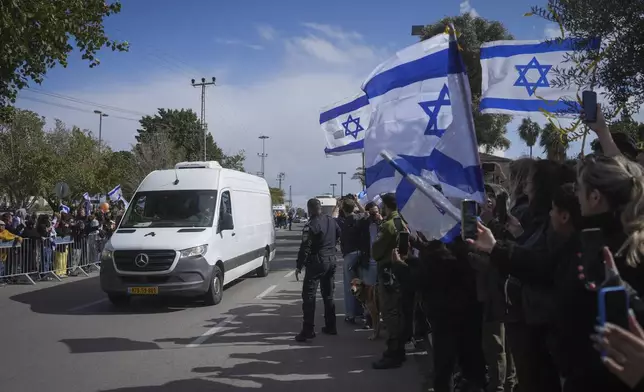
The convoy carrying the coffins of four Israeli hostages, including a mother and her two children, arrives at the Abu Kabir Forensic Institute in Tel Aviv, Israel, Thursday Feb. 20, 2025 after they were handed over by Palestinian militant groups in Gaza.(AP Photo/Ohad Zwigenberg)

A convoy carrying the coffins containing the bodies of four Israeli hostages, including a mother and her two children, handed over by Palestinian militant groups in Gaza, drives by a road near Kibbutz Reim, southern Israel, Thursday, Feb. 20, 2025.(AP Photo/Ariel Schalit)
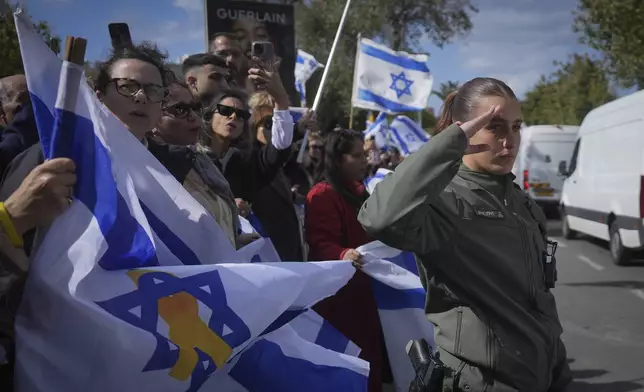
An Israeli border policewoman salutes as a convoy carrying the coffins of four Israeli hostages, including a mother and her two children, arrives at the Abu Kabir Forensic Institute in Tel Aviv, Israel, Thursday Feb. 20, 2025 after the bodies were handed over by Palestinian militant groups in Gaza.(AP Photo/Ohad Zwigenberg)
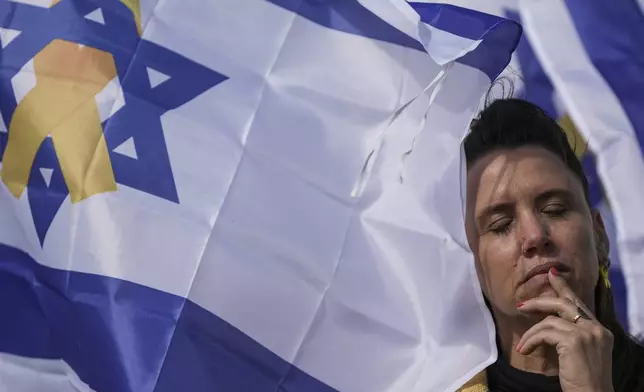
A woman reacts at the so-called 'Hostages Square' in Tel Aviv, Israel, Thursday, Feb. 20, 2025, as the bodies of four Israeli hostages, including a mother and her two children, are handed over by Hamas to the Red Cross in Gaza. (AP Photo/Oded Balilty)
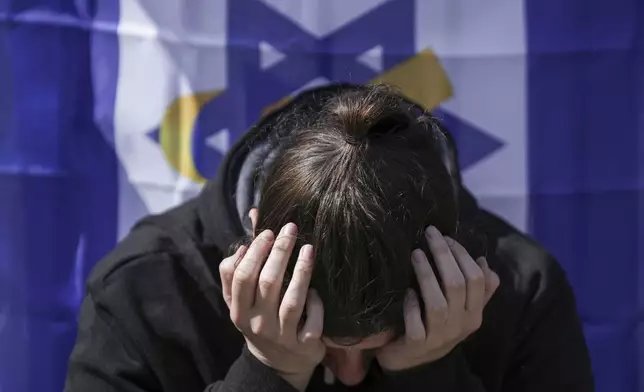
A woman reacts at the so-called 'Hostages Square' in Tel Aviv, Israel, Thursday, Feb. 20, 2025, as the bodies of four Israeli hostages, including a mother and her two children, are handed over by Hamas to the Red Cross in Gaza. (AP Photo/Oded Balilty)
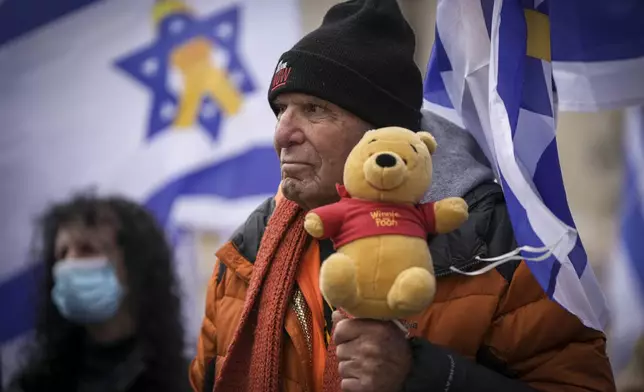
A man holds a teddy bear at the so-called 'Hostages Square' in Tel Aviv, Israel, Thursday, Feb. 20, 2025, after the bodies of four Israeli hostages, including a mother and her two children, were handed over by Palestinian militant groups to the Red Cross in Gaza. (AP Photo/Oded Balilty)
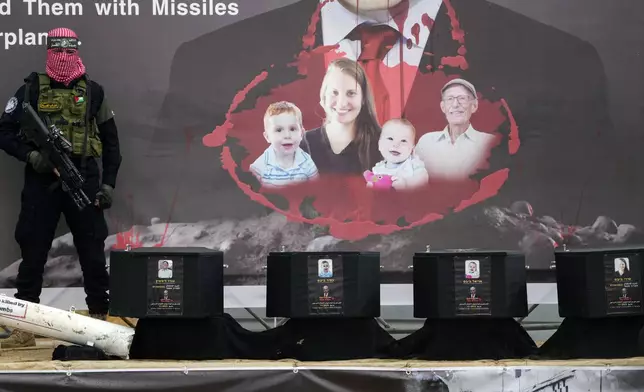
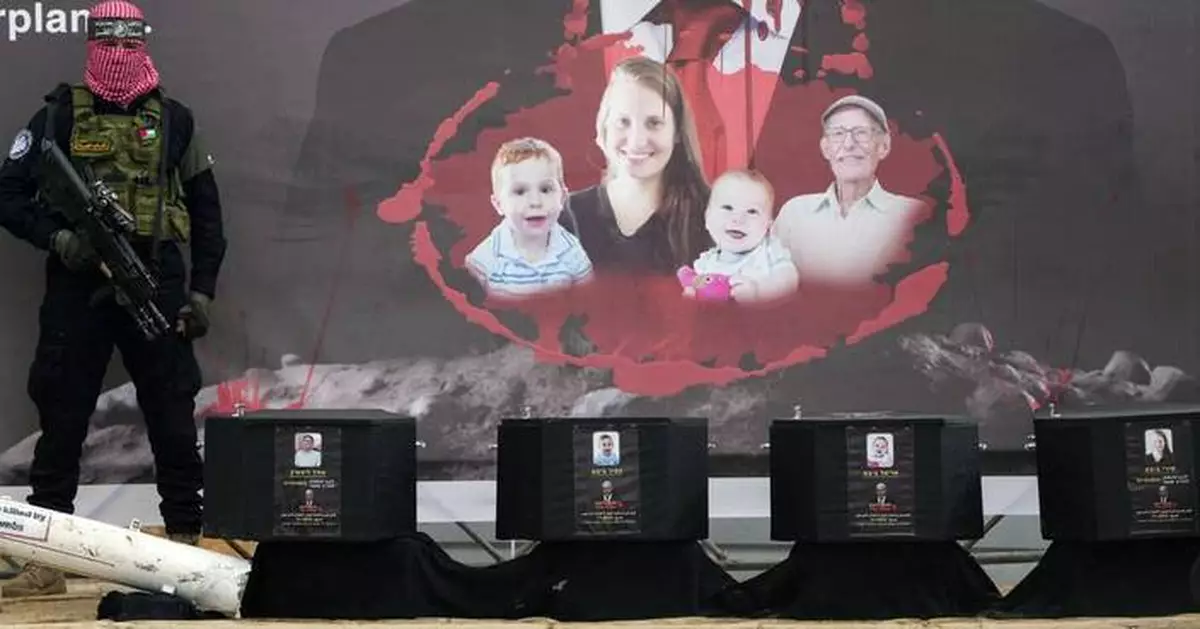
A militant stands next to the coffins containing the bodies of hostages, from right to left, Shiri Bibas, her two children, Ariel and Kfir and Oded Lifshitz, who was 83 when he was abducted before their are handed over to the Red Cross in Khan Younis, southern Gaza Strip, Thursday, Feb. 20, 2025. (AP Photo/Abdel Kareem Hana)
Then, on Friday, came two crushing pieces of news: The boys were dead, their remains identified through DNA at Israel’s forensic institute; and Shiri’s body was nowhere to be found. Inside the coffin labeled with her name was a Palestinian woman from Gaza, Prime Minister Benjamin Netanyahu said.
To Israelis desperate for the hostage crisis to end, the announcement was a gut punch. It triggered fresh anxiety for the Bibas family and for the families of some 60 remaining hostages who are unsure if their loved ones — or their remains — will ever make it out. Netanyahu's vow Friday to avenge the Bibas family's deaths only heightened those concerns.
“We waited for certainty, but it brings no comfort — only profound grief,” Ofri Bibas Levy, the boys' aunt, said. “For Ariel and Kfir’s sake, and for (their father) Yarden’s sake, we are not seeking revenge right now. We are asking for Shiri.”
The image of Shiri Bibas, from a video taken during Hamas' Oct. 7, 2023, attack on Israel, is seared into the country's collective memory as one of the most haunting of that day: A look of terror on her face, she clutches her two sons — Ariel, 4, and Kfir, 9 months old — as armed militants cart them away to Gaza.
Some 1,200 people in Israel were killed in the attack, and 251 were taken hostage, igniting the devastating war in Gaza.
On Thursday, over 16 months later, Hamas militants displayed coffins on a stage labeled with Shiri's name and those of her two boys. Behind them hung a panel where their pictures hovered beneath a cartoon of a vampiric-looking Netanyahu.
Hamas says the three were killed in an Israeli airstrike in November 2023, while Israel says they were killed by their captors, though neither side has yet produced evidence to support their claim.
In response to Israel's conclusion that the body of Shiri was not returned, Hamas said it was looking into the matter and suggested there may have been a mix-up of remains in the aftermath of Israeli bombardment of the building where Shiri, Kfir and Ariel were being held.
“We have no interest in retaining any bodies,” Hamas said in a statement. “We have demonstrated full compliance with the agreement in recent days and remain committed to all its terms.”
The 42-day ceasefire that began on Jan. 19 calls on Hamas to free 33 hostages, in exchange for nearly 2,000 Palestinians imprisoned by Israel. Six more living hostages are set to be released on Saturday. (Five Thai nationals taken from Israel were released last month as part of a separate agreement.)
The Bibas family, while mourning Ariel and Kfir, is now once again in limbo, awaiting conclusive evidence about what happened to Shiri.
Yarden Bibas, the boys' father who was held separately by Hamas, was released on Feb. 1. Following his release, he wrote: “My light is still there, and as long as they’re there, everything here is dark.”
Throughout the war, the Bibas family’s struggle has been a rallying cry for protesters demanding the hostages be freed.
On Thursday, thousands of Israelis lined the roads from southern Israel to the National Forensic Institute in Tel Aviv. They stood silently, sometimes in pouring rain, holding flags. As the convoy passed, many wiped away tears and quietly sang Israel’s national anthem. Along with the Bibas boys, the body of Oded Lifshitz, who was 83 when he was abducted, was also released.
Concern for the Bibas' well-being emerged during a November 2023 ceasefire, when roughly 100 hostages — most of the women and children — were freed. It intensified in recent weeks as more living women hostages were freed.
Kfir was the youngest of about 30 children taken hostage Oct. 7. The infant with red hair and a toothless smile became an icon across Israel and his ordeal was raised by Israeli leaders on podiums around the world.
The extended Bibas family has been active at protests, branding the color orange as the symbol of their fight for the “ginger babies.” They marked Kfir Bibas’ first birthday with a release of orange balloons and lobbied world leaders for support.
Family photos aired on TV and posted across social media created a national bond with the two boys and made them familiar faces. Israelis learned of Ariel Bibas’ love for Batman and photos from a happier time showed the entire family dressed up as the character.
The Hostages Families Forum said there were more hostages in Gaza whose lives could still be saved, and called for an extension to the ceasefire.
“There is no more time to waste,” it said in a statement.
For much of the war, the lack of information about Shiri Bibas and her children created uncertainty and ambiguity, including among their relatives.
Shiri Bibas’ sister, Dana Silberman-Sitton, has said she did not believe her sister or the children were still alive. She told Israeli news site Ynet that she decided to tell her children in December 2023 that Aunt Shiri and their cousins had died, after Hamas claimed they were killed by Israeli airstrikes.
“I created a defense mechanism for myself: Because I cannot live with uncertainty anymore, I live with the knowledge that Shiri and the kids are dead,” she told Ynet in September.
Silberman-Sitton’s parents, Yossi and Margit Silberman, were also killed during the Oct. 7 attack, at Kibbutz Nir Oz.
Yarden Bibas’ sister, Ofri Bibas Levy, took the opposite approach: She insisted that Shiri and the children were still alive, traveled abroad on missions and gave numerous interviews to ensure their story was constantly being mentioned.
The story of the family captured Israel’s attention and much of the world because it encapsulated many of the worst aspects of Hamas’ attack, explained Ruth Pat-Horenczyk, a professor at the Hebrew University school of social work who specializes in trauma.
“The graphic scene of the mother trying to protect the two babies was burned into the mind in the country,” she said.
“Everything together created a kind of capsulated example of pain that really became the most dramatic symbol of Oct. 7.”
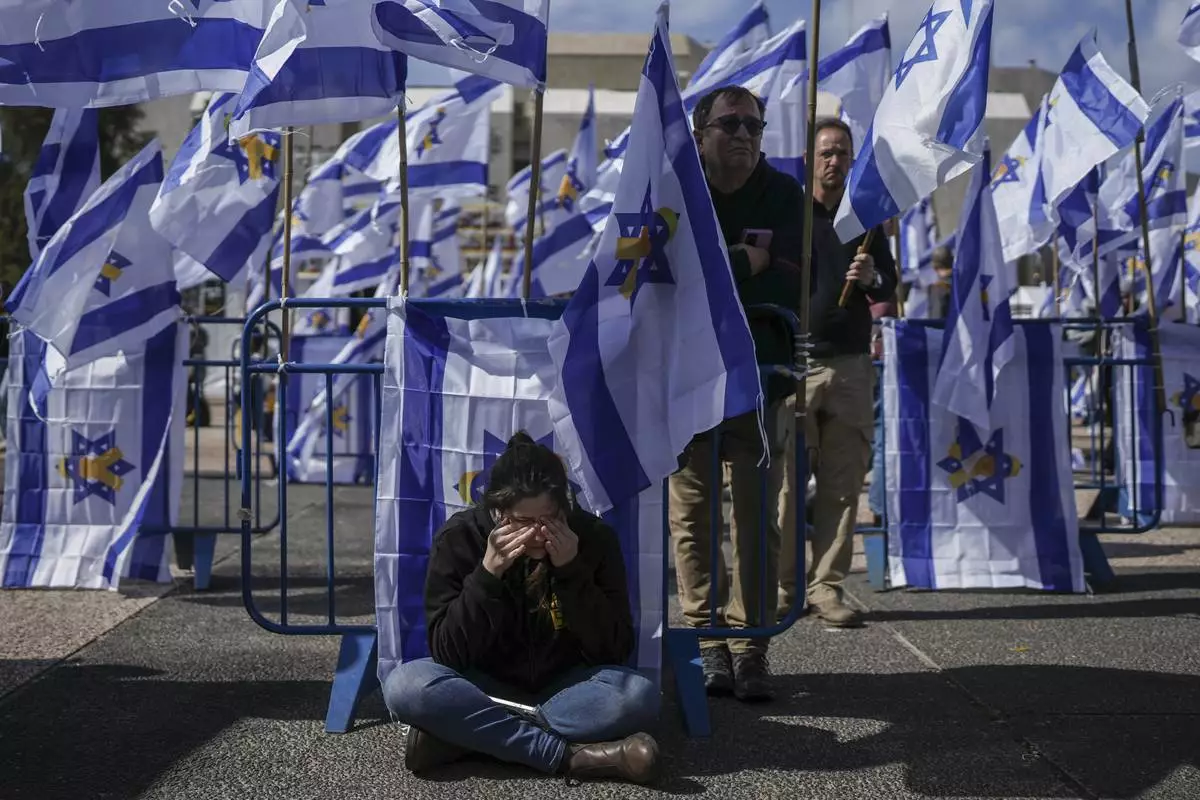
People react at the so-called 'Hostages Square' in Tel Aviv, Israel, Thursday, Feb. 20, 2025, as the bodies of four Israeli hostages, including a mother and her two children, are handed over by Hamas to the Red Cross in Gaza. (AP Photo/Oded Balilty)
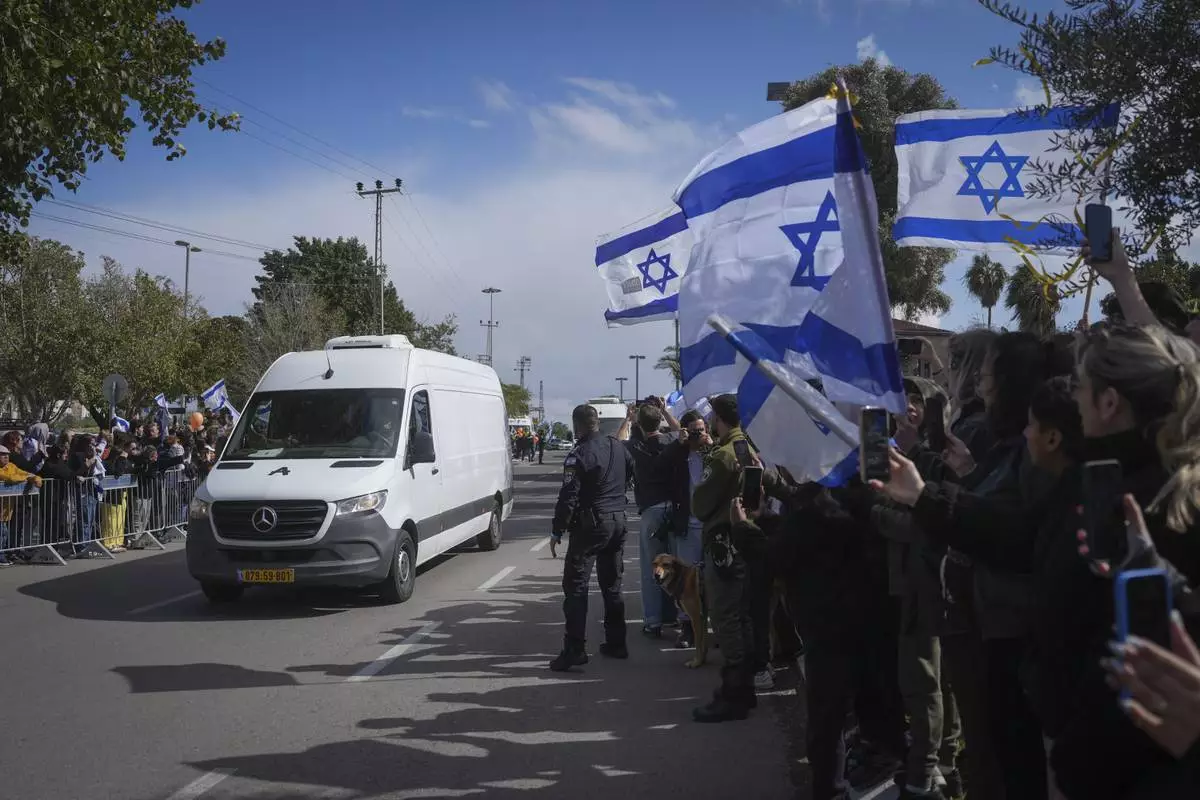
The convoy carrying the coffins of four Israeli hostages, including a mother and her two children, arrives at the Abu Kabir Forensic Institute in Tel Aviv, Israel, Thursday Feb. 20, 2025 after they were handed over by Palestinian militant groups in Gaza.(AP Photo/Ohad Zwigenberg)

A convoy carrying the coffins containing the bodies of four Israeli hostages, including a mother and her two children, handed over by Palestinian militant groups in Gaza, drives by a road near Kibbutz Reim, southern Israel, Thursday, Feb. 20, 2025.(AP Photo/Ariel Schalit)
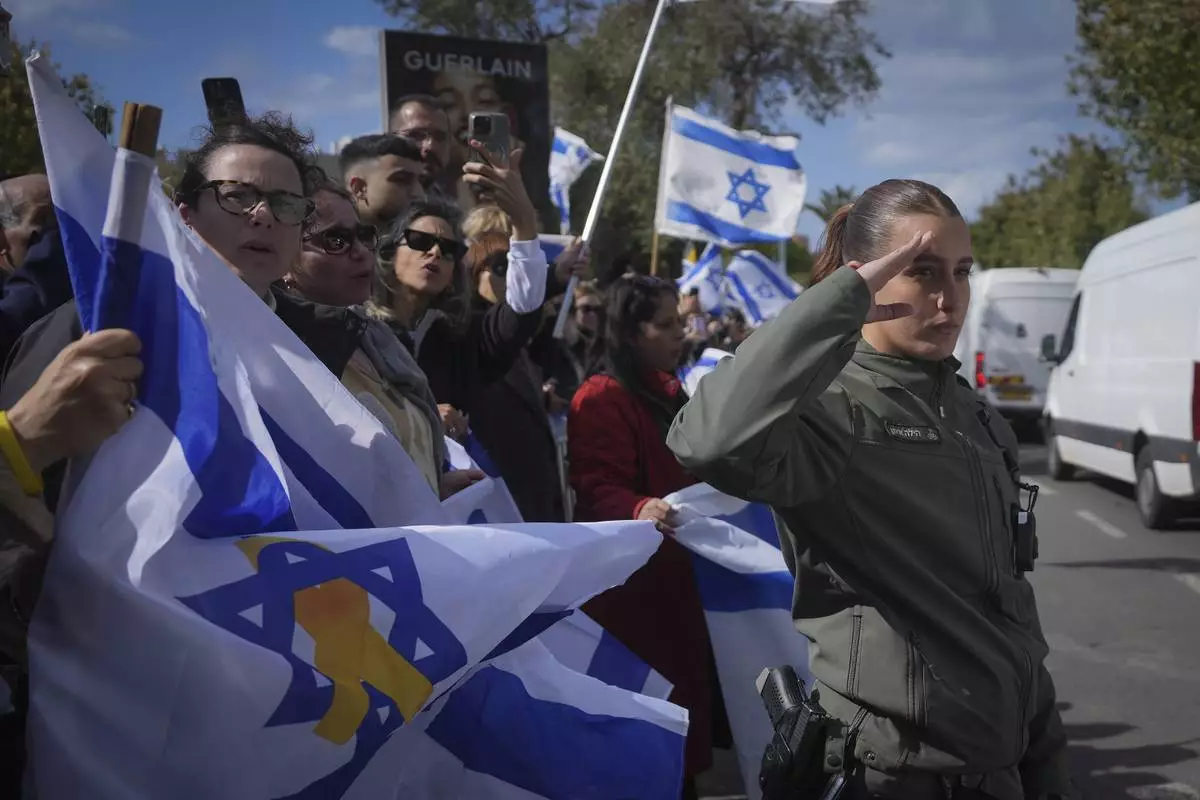
An Israeli border policewoman salutes as a convoy carrying the coffins of four Israeli hostages, including a mother and her two children, arrives at the Abu Kabir Forensic Institute in Tel Aviv, Israel, Thursday Feb. 20, 2025 after the bodies were handed over by Palestinian militant groups in Gaza.(AP Photo/Ohad Zwigenberg)
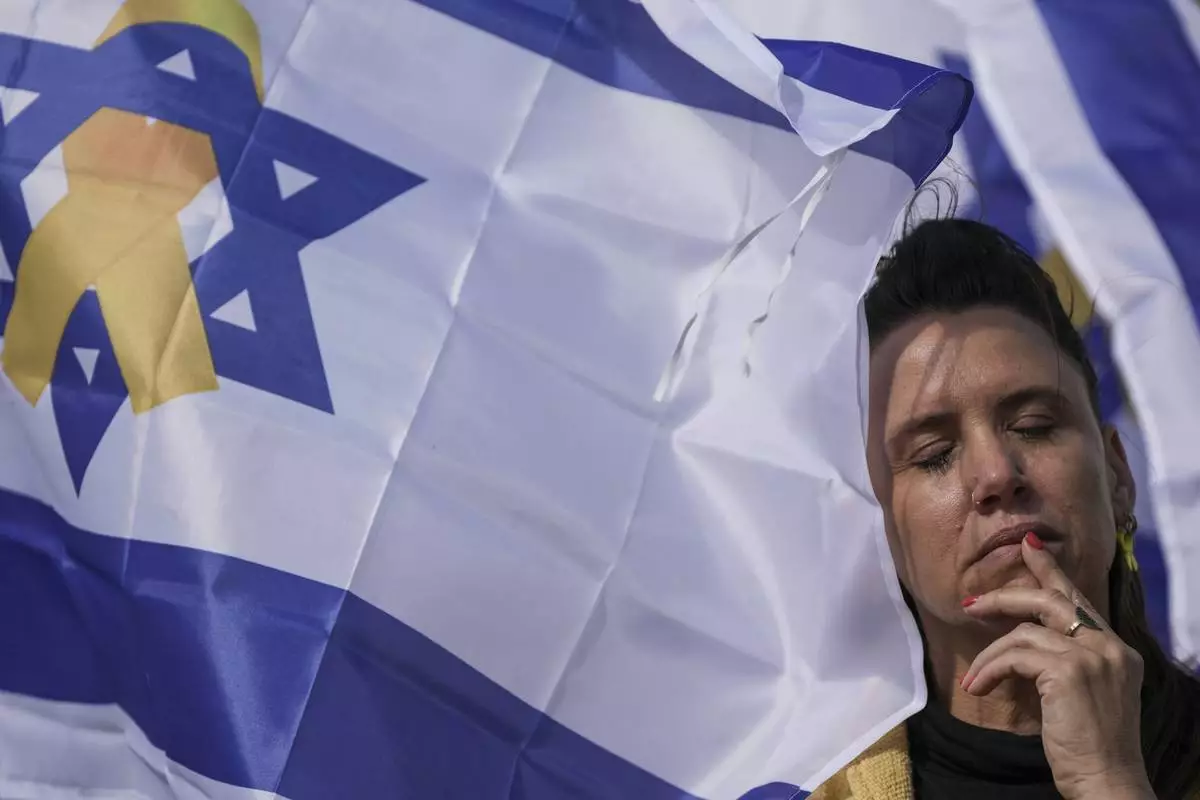
A woman reacts at the so-called 'Hostages Square' in Tel Aviv, Israel, Thursday, Feb. 20, 2025, as the bodies of four Israeli hostages, including a mother and her two children, are handed over by Hamas to the Red Cross in Gaza. (AP Photo/Oded Balilty)
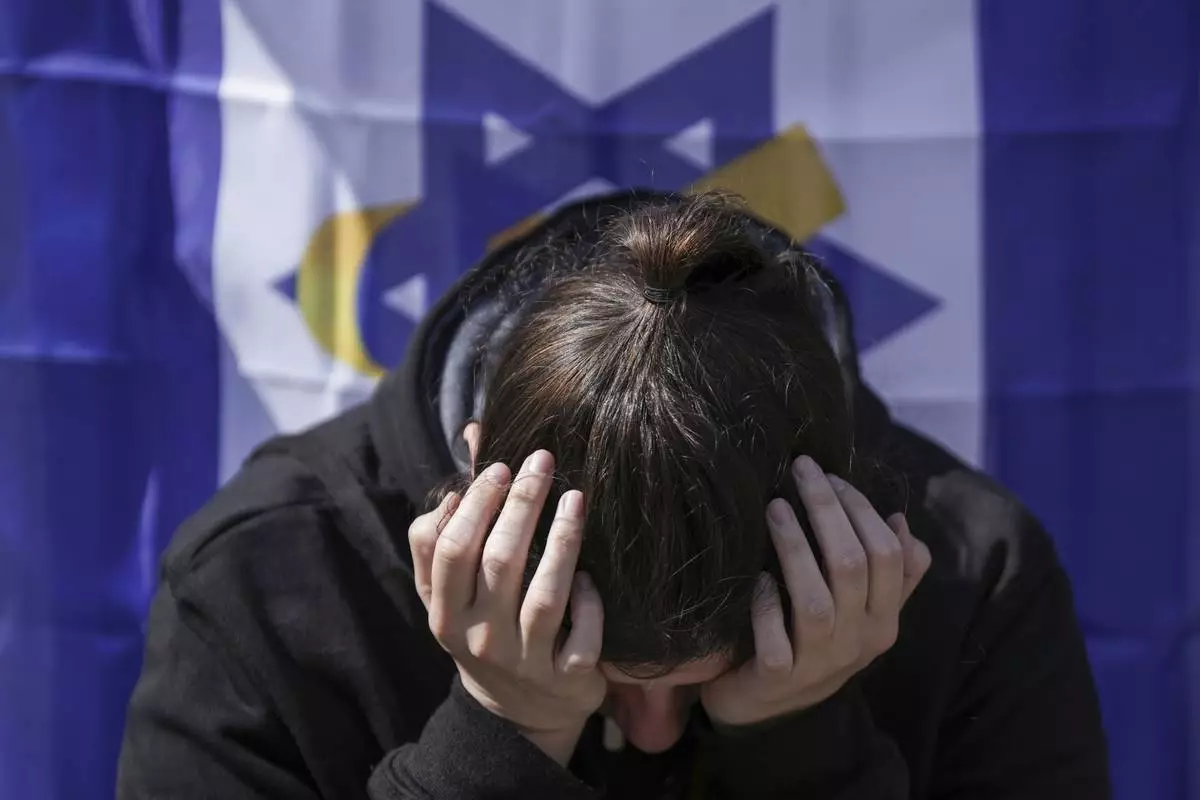
A woman reacts at the so-called 'Hostages Square' in Tel Aviv, Israel, Thursday, Feb. 20, 2025, as the bodies of four Israeli hostages, including a mother and her two children, are handed over by Hamas to the Red Cross in Gaza. (AP Photo/Oded Balilty)
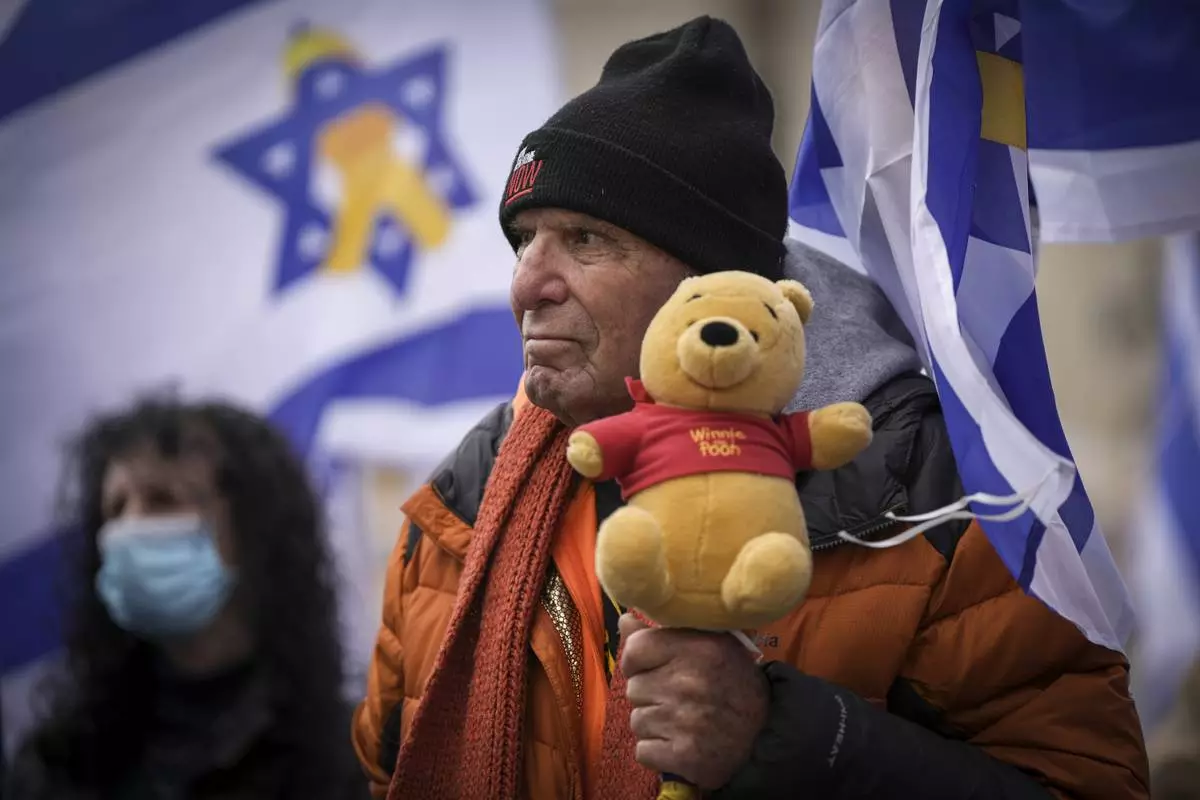
A man holds a teddy bear at the so-called 'Hostages Square' in Tel Aviv, Israel, Thursday, Feb. 20, 2025, after the bodies of four Israeli hostages, including a mother and her two children, were handed over by Palestinian militant groups to the Red Cross in Gaza. (AP Photo/Oded Balilty)
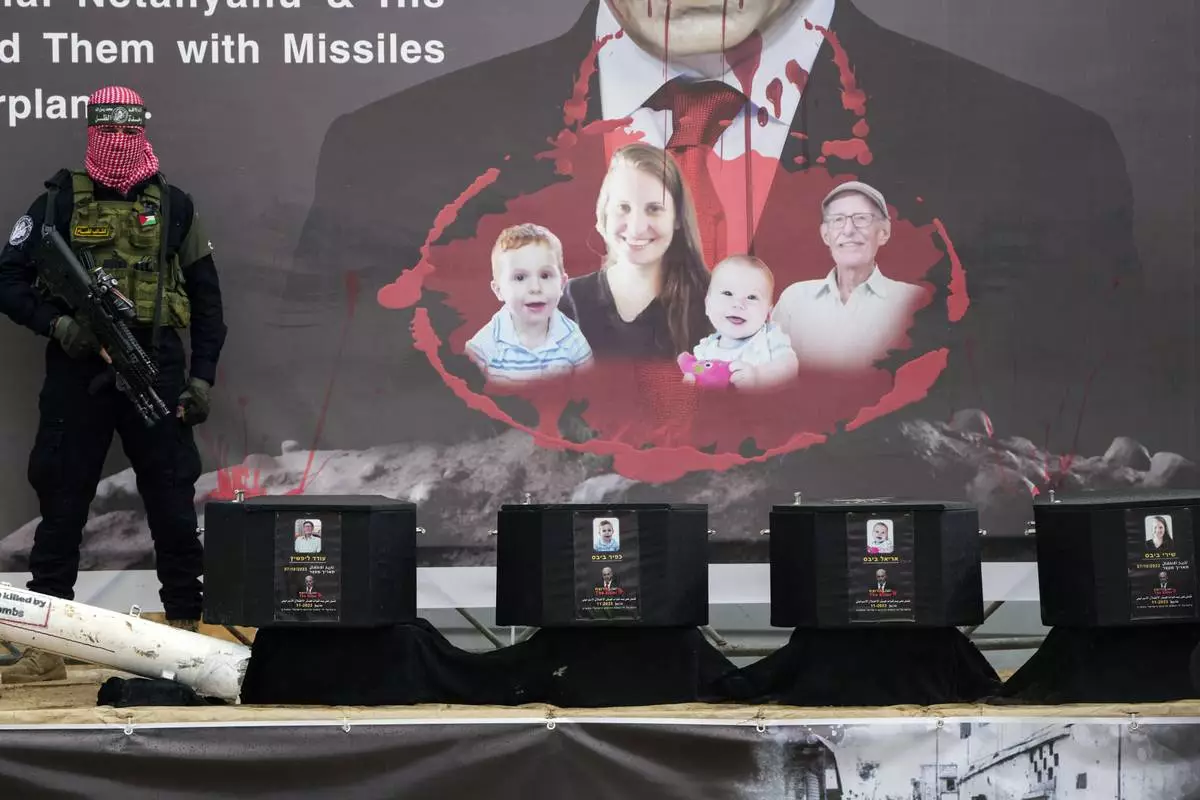
A militant stands next to the coffins containing the bodies of hostages, from right to left, Shiri Bibas, her two children, Ariel and Kfir and Oded Lifshitz, who was 83 when he was abducted before their are handed over to the Red Cross in Khan Younis, southern Gaza Strip, Thursday, Feb. 20, 2025. (AP Photo/Abdel Kareem Hana)