China has successfully resettled more than 9.6 million impoverished people as part of its extensive poverty elimination campaign, enabling them to bid farewell to hardship and embrace better lives with new homes and improved employment and services.
By the end of 2020, China achieved its ambitious poverty reduction goals, lifting 98.99 million rural residents in 832 counties and 128,000 villages out of poverty.
As the nation embarks on a new journey of rural revitalization, local governments are intensifying efforts in job creation, monitoring and preventing relapse into poverty, and enhancing public services to ensure residents enjoy happier, more fulfilling lives.
In Jinping Community, a resettlement community in Ankang City, northwest China's Shaanxi Province, the community's factory workshops are bustling with activity.
This community, nestled in the Qinba Mountains, is now home to over 1,300 resettled households.
In recent years, local authorities have renovated or built facilities to house five community factories and developed high-standard tea gardens to provide job opportunities for villagers. By 2020, all registered poor households in the community had escaped poverty.
"I've been working here for five or six years, and my income is stable. I even bought a car a few years ago. Life is getting more promising and happier," said Zhang Juan, a resettled resident of Jinping Community.
To prevent large-scale relapse into poverty, a regular monitoring mechanism has been established for resettled residents. Households at risk are categorized and supported through tailored measures, including industrial and employment assistance, and basic welfare guarantees. The community has also created a "15-minute service circle", ensuring access to schools, hospitals, supermarkets, and other essential amenities are within easy reach .
"When I lived in the mountains before moving here, I couldn't have imagined this. Conditions have improved so much, and development has been fast. We'll keep working hard to make our lives even better," said Chen Diquan, another resettled resident.
Fangcheng New Village in Datong City, north China's Shanxi Province, has clean roads and neatly arranged houses for resettled villagers. Previously, villagers in the area relied solely on farming corn to eke out a living but in 2018, thanks to the resettlement program, they were able to move into new homes nearer workplaces that could offer them jobs.
One such workplace is a nursery and factory growing and processing daylilies, which has allowed villagers to work close to home, with per capita income reaching 21,600 yuan (about 2,965 U.S. dollars) in 2024.
The horticulture industry has filled villagers' wallets, while efforts to address inadequacies in public wellbeing have continued. Elderly residents now enjoy comfortable nursing homes, and children attend free kindergartens, further enhancing residents' sense of progress and happiness.
"We have built the daylily industry park and expanded the industrial chain, creating numerous jobs. Rural infrastructure has also improved. Now, everyone's life is more hopeful, the path ahead is wider, and days are getting sweeter," said Chen Juwen, the village's first Party secretary.
In Niluping, a resettlement site in Zhenxiong County, southwest China's Yunnan Province, 14,000 residents have been settled into two communities. Local authorities have introduced industries like textile factories and established employment service stations to help residents find jobs or start businesses near home.
"Resettlement brought us to the city. With the elderly and children at home, my husband and I can work outside. This hasn't just changed my life, but it has changed my children's future," said Xu Li, a resident of Peizeyuan Community.
The community provides targeted services to prevent relapse into poverty, promptly identifying and addressing risks. Alongside schools and community hospitals, amenities like elderly canteens, activity centers, and child care facilities have been established to better meet residents' needs.
"We will prioritize serving and supporting resettled residents in all our work, preventing large-scale poverty relapse, promoting industries and jobs, and enriching their wallets," said Wu Daoyuan, deputy director of the Zhenxiong County Resettlement and Resettlement Bureau.
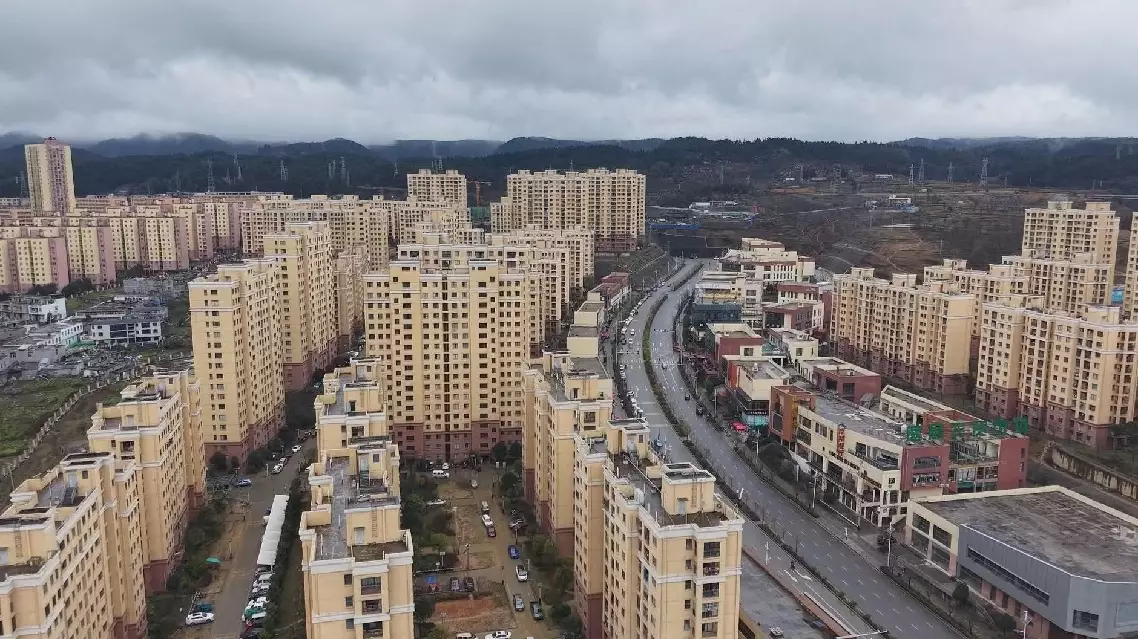
Over 9.6 million impoverished people in China resettled to improve lives