SUSONO, Japan (AP) — Woven City near Mount Fuji is where Japanese automaker Toyota plans to test everyday living with robotics, artificial intelligence and autonomous zero-emissions transportation.
Daisuke Toyoda, an executive in charge of the project from the automaker's founding family, stressed it’s not “a smart city.”
“We’re making a test course for mobility so that’s a little bit different. We’re not a real estate developer,” he said Saturday during a tour of the facility, where the first phase of construction was completed.
The Associated Press was the first foreign media to get a preview of the $10 billion Woven City.
The first phase spans 47,000 square meters (506,000 square feet), roughly the size of about five baseball fields. When completed, it will be 294,000 square meters (3.1 million square feet).
Built on the grounds of a shuttered Toyota Motor Corp. auto plant, it’s meant to be a place where researchers and startups come together to share ideas, according to Toyoda.
Ambitious plans for futuristic cities have sputtered or are unfinished, including one proposed by Google’s parent company Alphabet in Toronto; “Neom” in Saudi Arabia; a project near San Francisco, spearheaded by a former Goldman Sachs trader, and Masdar City next to Abu Dhabi’s airport.
Woven City’s construction began in 2021. All the buildings are connected by underground passageways, where autonomous vehicles will scuttle around collecting garbage and making deliveries.
No one is living there yet. The first residents will total just 100 people.
Called “weavers,” they’re workers at Toyota and partner companies, including instant noodle maker Nissin and Daikin, which manufactures air-conditioners. Coffee maker UCC was serving hot drinks from an autonomous-drive bus, parked in a square surrounded by still-empty apartment complexes.
The city’s name honors Toyota’s beginnings as a maker of automatic textile looms. Sakichi Toyoda, Daisuke Toyoda’s great-great-grandfather, just wanted to make life easier for his mother, who toiled on a manual loom.
There was little talk of using electric vehicles, an area where Toyota has lagged. While Tesla and Byd emerged as big EV players, Toyota has been pushing hydrogen, the energy of choice in Woven City.
Toyota officials acknowledged it doesn’t expect to make money from Woven City, at least not for years.
Keisuke Konishi, auto analyst at Quick Corporate Valuation Research Center, believes Toyota wants to work on robotic rides to rival Google’s Waymo — even if it means building an entire complex.
“Toyota has the money to do all that,” he said.
Yuri Kageyama is on Threads: https://www.threads.net/@yurikageyama
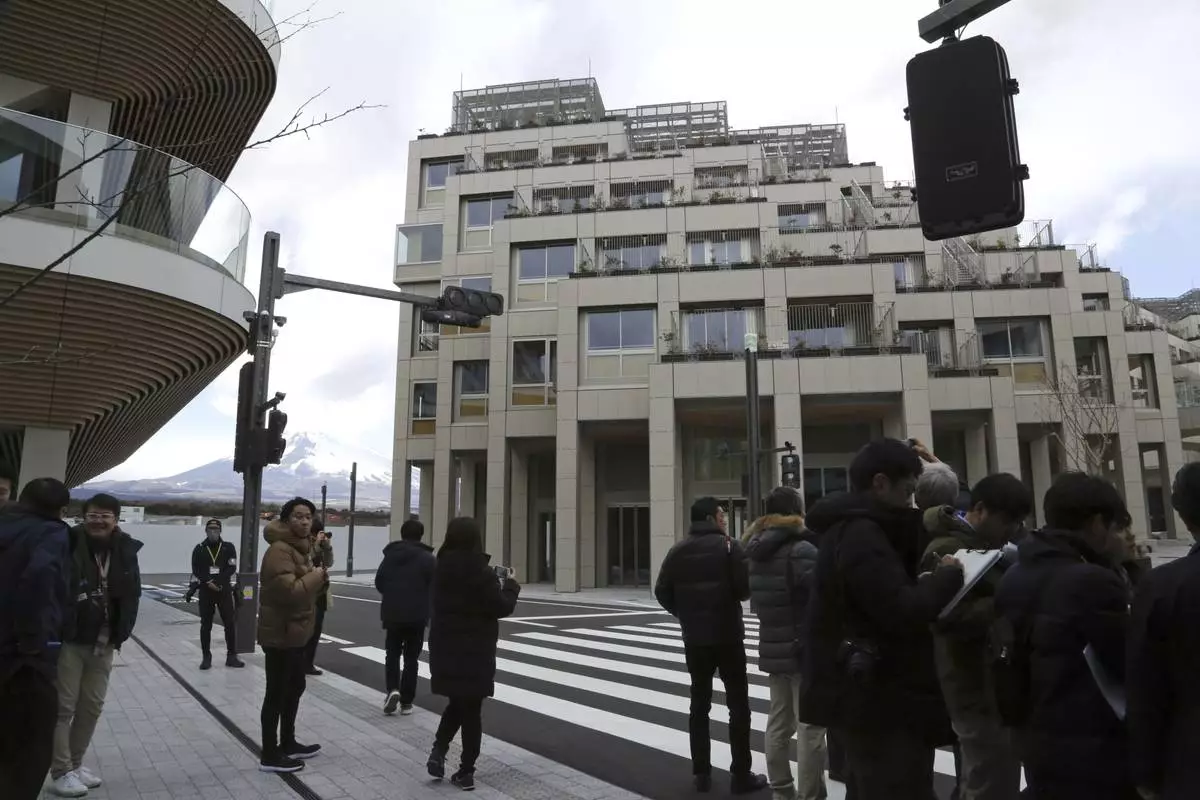
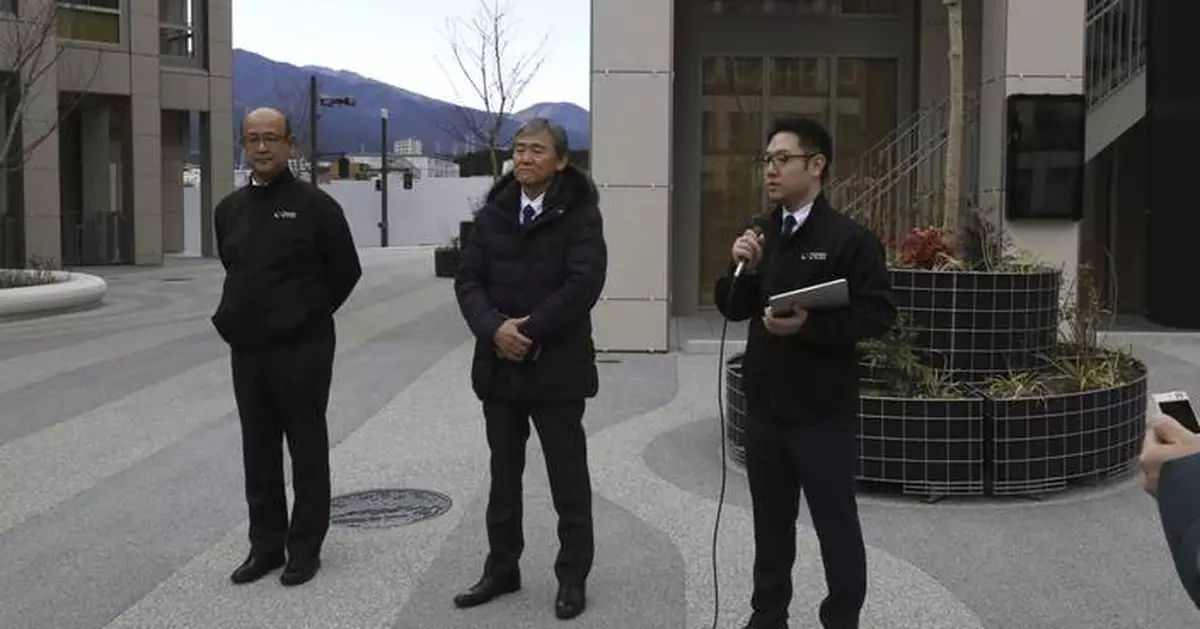
Reports see the apartment complexes and the roads where a mobility will be tested at Toyota’s Woven City during a tour in Susono, Shizuoka prefecture, Saturday, Feb. 22, 2025. (AP Photo/Yuri Kageyama)
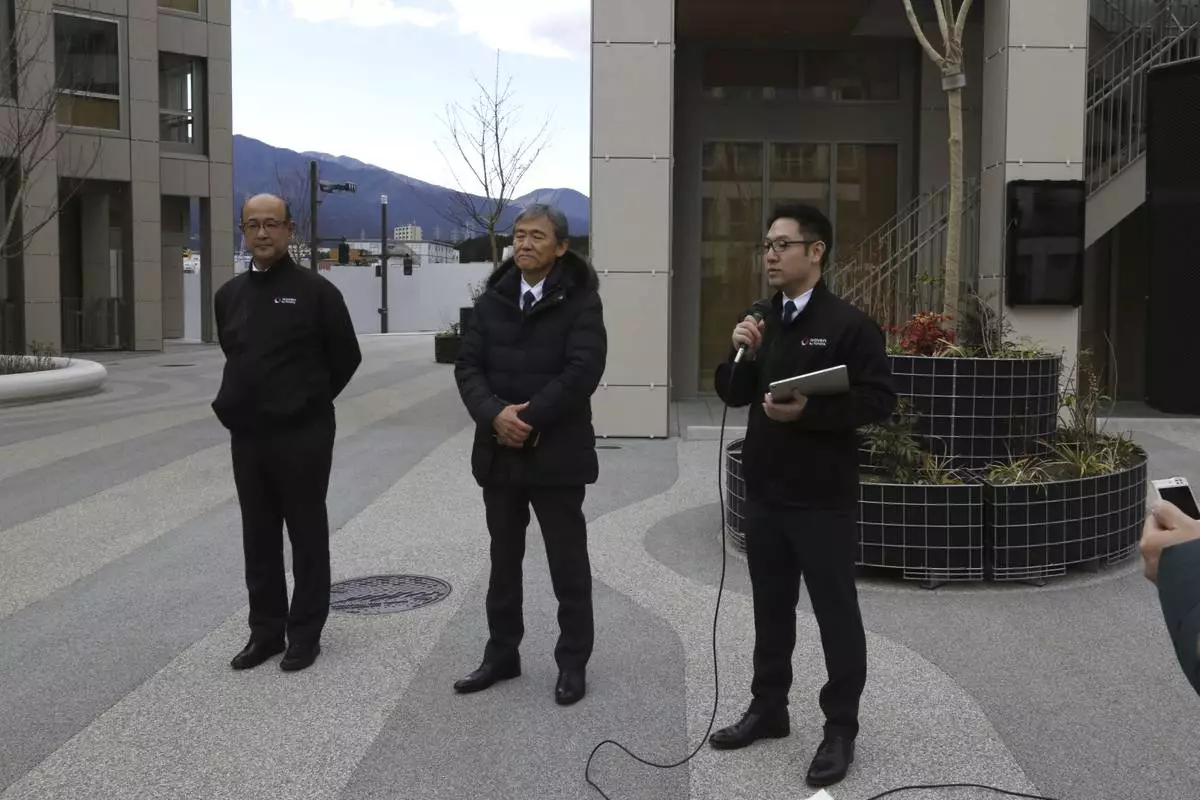
Toyota executives in charge of Woven City, from left to right, Woven by Toyota CFO Kenta Kon, CEO Hajime Kumabe and Head of Woven City Management Daisuke Toyoda speak to reporters about the first phase construction of the project in Susono, Japan Feb. 22, 2025. (AP Photo/Yuri Kageyama)
WELLINGTON, New Zealand (AP) — New All Blacks coach Dave Rennie has chosen five-test flyhalf Ruben Love in his starting lineup for New Zealand's Nations Championship opener against France at Christchurch.
In his first All Blacks lineup as head coach, Rennie preferred Love at No. 10 over veterans Beauden Barrett and Damian McKenzie. Love outplayed both of those players during the recent Super Rugby playoffs and offers a point of difference in his playing style.
The 25-year-old Love's instinct to take on the defensive line differs from the 145-test veteran Barrett, who tends to hand off or kick before the defensive line, and 74-test McKenzie, who often runs laterally before straightening to test the defense.
Love will combine in the inside backs on Saturday with his Hurricanes teammates Cam Roigard at scrumhalf and Jordie Barrett at inside center, as Rennie retains a tested grouping. McKenzie is at fullback and Beauden Barrett has not made the match 23.
The only uncapped players in the squad — Hurricanes prop Xavier Numia and winger Fehi Fineanganofo — will make their All Blacks debuts from the bench. Fineanganofo was the leading try-scorer in Super Rugby this year with 17.
Ardie Savea will captain the team from the back of the scrum. Luke Jacobson will start on the open side and Peter Lakai on the blindside.
“We have selected an exciting blend of experience and youth, with a powerful bench that will add impact,” Rennie said. “We know we will be facing a formidable French side with a strong set piece, kicking game and ability to keep the ball alive so we will need to be physical, accurate and alert.
“We’ve worked hard and connected well over the past nine days. That clarity will give us the opportunity to express ourselves.”
Codie Taylor will play his 107th test at hooker, with powerful Hurricanes hooker Asafo Aumua will start on the bench. Rennie has retained last year's propping combination of Ethan de Groot and Fletcher Newell with Numia and Tyrel Lomax to come off the bench.
Josh Lord and Sam Darry will combine in the second row in the absence of former captain Scott Barrett, who is injured.
With McKenzie at fullback, Will Jordan will start on the right wing and Caleb Clarke on the left. Quinn Tupaea will partner Jordie Barrett in midfield.
Saturday's match is the first in the new 12-team Nations Championship. Other matches in the first round will take place in Tokyo, where Japan will play Italy, Sydney, where Australia will play Ireland, Johannesburg, where South Africa will play England, Cardiff, where Fiji will play Wales, and Cordoba, where Argentina will play Scotland.
New Zealand: Damian McKenzie, Will Jordan, Quinn Tupaea, Jordie Barrett, Caleb Clarke, Ruben Love, Cam Roigard; Ardie Savea (captain), Luke Jacobson, Peter Lakai, Sam Darry, Josh Lord, Fletcher Newell, Codie Taylor, Ethan de Groot. Reserves: Asafo Aumua, Xavier Numia, Tyrel Lomax, Patrick Tuipulotu, Wallace Sititi, Cortez Ratima, Billy Proctor, Fehi Fineanganofo.
AP rugby: https://apnews.com/hub/rugby

FILE - New Zealand's Ardie Savea poses, Oct. 29, 2023, in Paris. (AP Photo/Thomas Padilla, File)
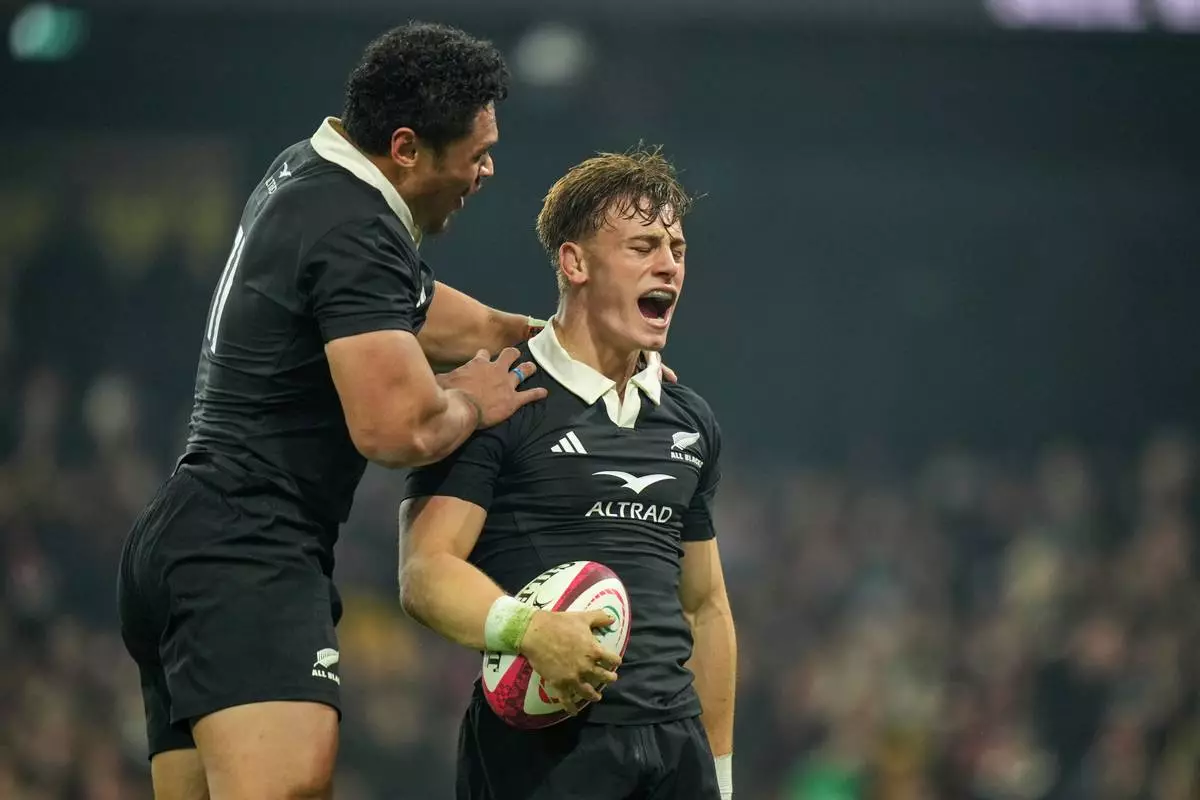
FILE -New Zealand's Ruben Love, right, celebrates after scoring a try during the Nation's Series rugby union international between Wales and New Zealand in Cardiff, Wales, Nov. 22, 2025. (AP Photo/Alastair Grant, File)