The humanitarian crisis in the east of the Democratic Republic of the Congo (DRC) is fast deteriorating as violence intensifies, forcing tens of thousands to flee to neighboring countries, the United Nations High Commissioner for Refugees (UNHCR) reported on Friday.
According to the UNHCR, over 40,000 Congolese nationals -- the majority women and children -- have arrived in Burundi since February, seeking international protection.
The UN refugee agency and its partners are scaling up efforts to provide food and shelter to the new arrivals.
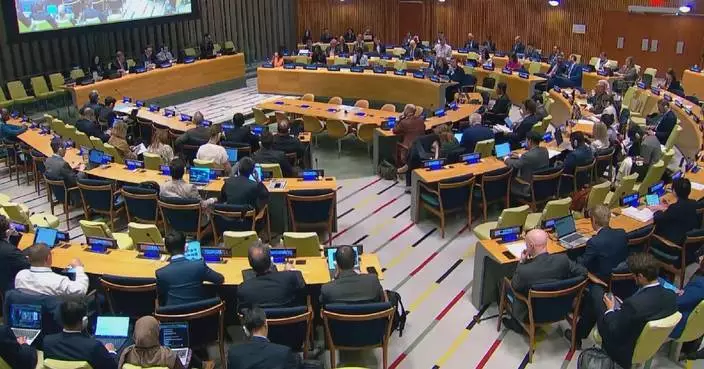
At a Security Council meeting on Wednesday, Bintou Keita, Special Representative and Head of the United Nations Organization Stabilization Mission in the DRC (MONUSCO), highlighted the severe impacts of the March 23 Movement (M23) armed group offensives in North and South Kivu on civilian safety and security.
"The M23 offensives in north Kivu and south Kivu have increased the vulnerability of girls and women to conflict sexual violence. Mass displacement, the influx of combatants and prisoners, and the proliferation of weapons have considerately exacerbated the risks. At the same time, logistical and security constraints continue to hamper the United Nations' ability to verify reported cases," said Keita.
In the midst of troubling news, a sliver of hope has appeared.
According to the DRC Ministry of Health, the World Health Organization has been granted permission to deliver humanitarian supplies to Goma via Kenya and Rwanda.
Traffic on Lake Kivu between Bukavu and Goma, two provincial capitals in the eastern DRC, resumed on Tuesday after weeks of suspension due to clashes in Goma. A ferry arrived in Goma, bringing much-needed supplies.
"It's unbelievable, but the ferry between the two cities is finally operational. We've made it to Goma," said Fabrice Kulimushi, a passenger.
"We are facing many challenges. The situation is very unstable, but luckily, medical staff are still providing treatment in medical facilities," said Alexis Bulonza, a local humanitarian agent.
Bruno Lemarquis, the U.N. Humanitarian Coordinator in the DRC, has called for the resumption of humanitarian flights to expedite the delivery of aid to those affected by the conflict.
The ongoing conflict between the M23 and the DRC government is deeply rooted in the aftermath of the 1994 Rwandan genocide and long-standing ethnic tensions between the Tutsi and Hutu communities. The DRC accuses Rwanda of supporting the M23, while Rwanda alleges that the DRC army has allied with the Democratic Forces for the Liberation of Rwanda, a rebel group accused of participating in the genocide against the Tutsi.
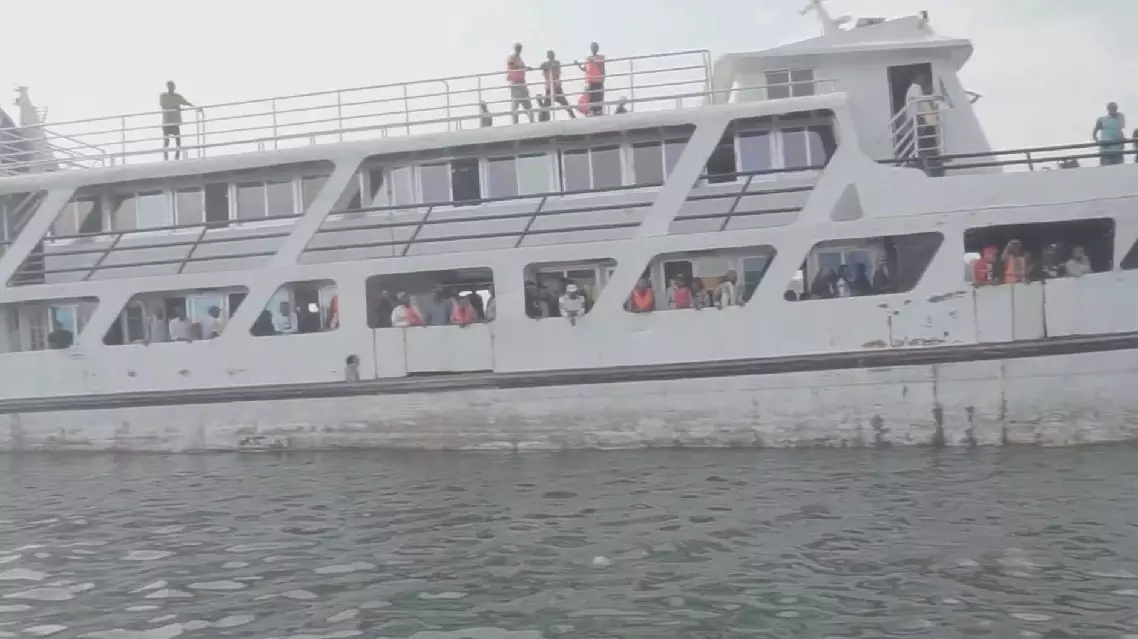
Humanitarian crisis deepens as violence escalates in DRC
The international community on Thursday continued to lash out at Israeli National Security Minister Ben-Gvir for releasing a video which mocks the participants of the Global Sumud Flotilla.
On Thursday local time, the Israeli Foreign Ministry issued a statement saying that all foreign activists who had recently participated in the flotilla had been expelled from the country, and that Israel would not tolerate any violations of the maritime blockade of the Gaza Strip.
Hundreds of members from a Gaza-bound aid flotilla were brought to Israel's Ashdod Port on Wednesday, as Ben-Gvir released the video showing some of them shackled and forced to the ground.
In the video, released by Ben-Gvir on his social media channels, dozens of activists are shown kneeling on the floor, bent forward with their heads down and hands bound behind their backs with zip ties, as the Israeli national anthem is played loudly over speakers.
Organizers of the Global Sumud Flotilla said Israeli naval vessels intercepted all ships in the convoy in international waters, about 250 nautical miles off the coast of Gaza. According to the organizers, 428 activists were "kidnapped" by Israel after the interception began on Monday morning.
On Thursday, the British government issued a statement saying that the Britain had summoned the charge d'affaires of the Israeli Embassy that day to express strong denunciation of the video released by Ben-Gvir on Wednesday.
Britain accused the relevant actions of violating the most basic principles of respect for human dignity and demanded that the Israeli government provide an explanation regarding the detention.
Italian Deputy Prime Minister and Minister of Foreign Affairs and International Cooperation Antonio Tajani on Thursday said on social media that he had requested the European Union (EU) to impose sanctions on Ben-Gvir.
Tajani said that the Israeli side detained activists in international waters and subjected them to harassment and humiliation, describing such actions as "unacceptable" and "a violation of the most basic human rights."
On the same day, the Polish foreign affairs ministry issued a statement saying that Poland had summoned the charge d'affaires of the Israeli Embassy in Poland, demanding that Israel launch an investigation into the detention and issue an official apology to the detained activists.
Earlier that day, Polish Deputy Prime Minister and Foreign Minister Radoslaw Sikorski decided to seek a ban on Ben-Gvir's entry into Poland.
On Thursday, Polish Minister of Interior and Administration Marcin Kierwinski also said that he had ordered the initiation of formal procedures to designate Ben-Gvir as a persona non grata.
Additionally, on Thursday, Danilo Della Valle, a member of the European Parliament, said that he had written to European Council President Antonio Costa, calling on the EU to impose sanctions on Ben-Gvir. The letter was co-signed by nearly 30 members of the European Parliament.
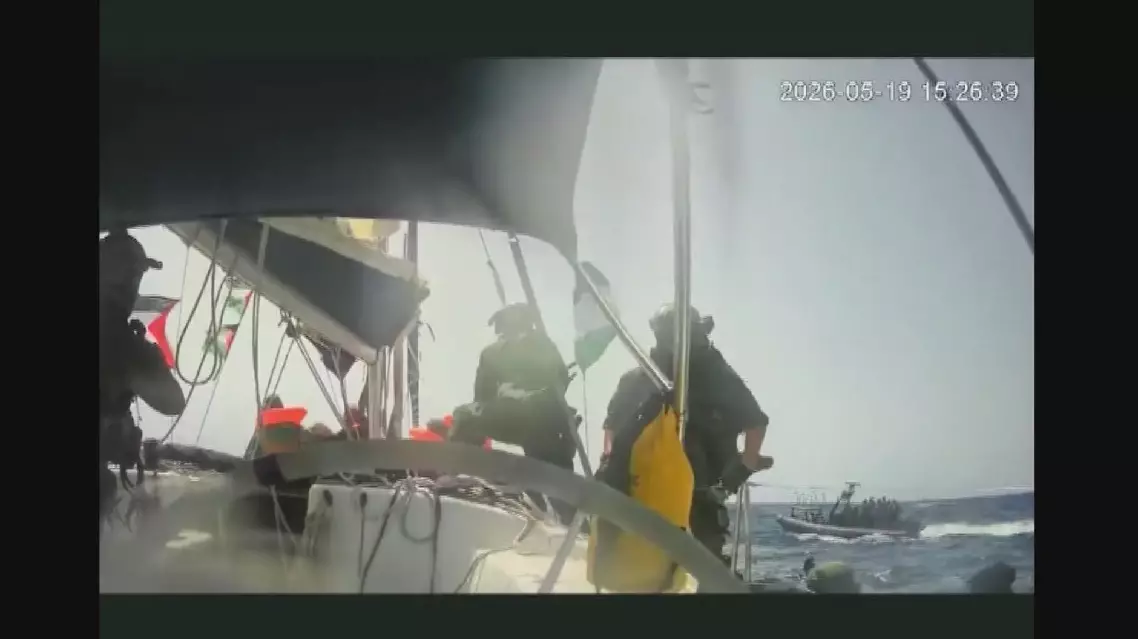
Int'l community continues to slam Israel for maltreating Gaza aid flotilla members