China's first AI incubation hub in Shanghai has become a key driver for the city's thriving AI industry, which surpassed 450 billion yuan (about 62 billion U.S. dollars) in 2024. Since its establishment in September 2023, Mosu, or Model Speed Space, has brought together 250 companies specializing in computing power, data, and application development, creating a unique environment where businesses in the same building often form upstream and downstream partnerships.
"We can quickly understand the needs and directional adjustments of upstream partners. It also allows us to stay updated on the latest technological trends and demands," said Lu Changlu, head of a company based in Mosu.
Mosu not only facilitates collaboration among AI enterprises but also provides tailored support for startups through a combination of policies and services.
"Beyond rent subsidies, we provide computing power subsidies, filing subsidies, and talent policy support. We also offer guidance on regulatory filings. Essentially, we identify the pain points of enterprises and provide solutions based on their needs," said Yang Jingjing, president of Shanghai Large Model Ecological Development, the operator of Mosu.
The hub's success is a testament to Shanghai's broader AI ambitions. In 2024, the city's AI industry grew by over 7.8 percent, with 60 large AI models approved by the Cyberspace Administration of China through a regulatory process that ensures compliance with national standards.
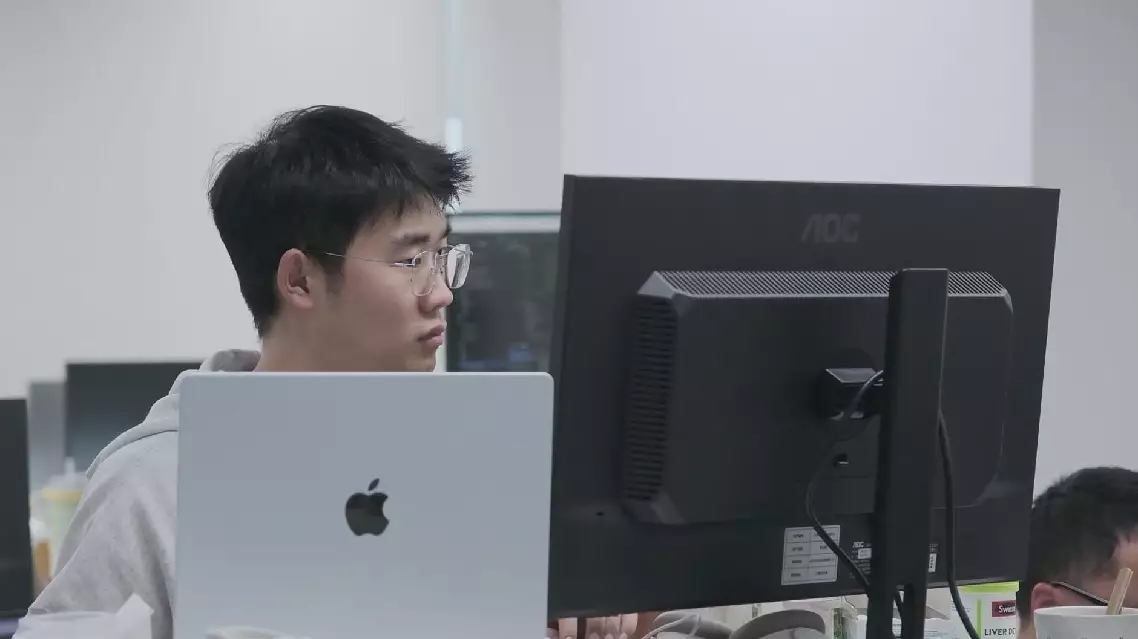
Shanghai's AI incubation hub drives AI innovation with robust ecosystem and policy support
China attaches great importance to the development of China-Singapore relations, and is willing to maintain the momentum of high-level exchanges, promote practical cooperation in various fields, and enhance people-to-people exchanges with Singapore, Chinese Foreign Minister Wang Yi said on Monday.
Wang, also a member of the Political Bureau of the Communist Party of China Central Committee, made the remarks when holding talks with Singaporean Foreign Minister Vivian Balakrishnan in Beijing.
Noting that over the past year, under the strategic guidance of leaders of the two countries and joint efforts of both sides, the all-round high-quality and future-oriented partnership between China and Singapore has maintained a good momentum, Wang urged the two countries to continue to enhance strategic communication, increase mutual trust, jointly address the ever-emerging global challenges at present, and safeguard the overall situation of regional peace and stability.
Wang said that maintaining the security of global industrial and supply chains and the smooth flow of maritime navigation is in the common interests of the international community, and China is willing to continue to make efforts to this end.
Noting that Singapore is an important ASEAN member and will assume ASEAN's rotating presidency next year, Wang said China expects the Singaporean side to continue playing an active role in promoting China-ASEAN cooperation.
Balakrishnan said Singapore highly values its relations with China, adheres to the one-China policy, and firmly opposes "Taiwan independence."
Singapore is willing to maintain close high-level exchanges with China, promote practical cooperation in various fields, carry out key cooperation projects of both sides, and promote regional connectivity, he said.
Singapore is ready to promote greater progress in ASEAN-China comprehensive strategic partnership, support the Global Development Initiative, and uphold multilateralism and free trade, and is willing to work with China to make joint efforts in promoting world peace, development and prosperity, he added.
China ready to promote practical cooperation with Singapore: Chinese FM