SYDNEY--(BUSINESS WIRE)--Feb 23, 2025--
Cabot Properties, a leading global investor, developer and operator of logistics properties throughout the United States, Europe and Asia Pacific, announced today that Dominic Ambriano has joined the firm as Director, Head of Asset Management in Australia. Based in Sydney, Ambriano will oversee asset management operations across the firm’s expanding Australian portfolio, working to maximize value and furthering Cabot’s vertically integrated investment and development strategy in the region.
This press release features multimedia. View the full release here: https://www.businesswire.com/news/home/20250223065621/en/
“Dominic’s expansive track record in real estate investment and asset management makes him an ideal choice to advance Cabot’s strategic growth in Australia,” said Sally Box, Managing Director and Head of Asia Pacific for Cabot Properties. “His deep knowledge of the Australian logistics market, coupled with his expertise in capital management and sustainable asset repositioning, will bolster our team’s ability to execute on our investment strategy and continue to scale our platform in one of the APAC region’s key logistics markets.”
Ambriano brings nearly 20 years of investment management experience in Australia’s industrial and logistics real estate sector, with deep expertise in portfolio management, leasing, capital management, development and ESG. Prior to joining Cabot, Ambriano managed more than AUD$8 billion of industrial real estate across both the east and west coasts of Australia. Most recently, he served as Investment Manager, Logistics at Lendlease, where he played a pivotal role in the firm’s capital raising, leasing, asset repositioning, customer engagement and sustainability strategies, advancing Lendlease’s logistics platform across the country. Ambriano has also held various management roles with LOGOS Property and AMP Capital Real Estate.
About Cabot Properties Inc.
Cabot Properties is an international private equity real estate firm focused on the logistics sector. Founded in 1986, Cabot was one of the first real estate firms to provide institutional investors with access to the industrial property sector and has invested over $15 billion in logistics real estate, served over 4,200 tenants, and operated over 1,600 buildings totaling more than 230 million square feet. Cabot is headquartered in Boston with offices in Atlanta, Chicago, Dallas, Los Angeles, London, Amsterdam, Sydney, Tokyo, Munich and New York. For more information, visit www.cabotprop.com.

Dominic Ambriano, Head of Asset Management, Australia, Cabot Properties (Photo: Business Wire)
CHARLOTTE, N.C. (AP) — The Carolina Panthers have placed starting cornerbacks Jaycee Horn and Mike Jackson on injured reserve ahead of Sunday night's game against the Detroit Lions.
Horn injured his quadriceps during a 21-18 loss to the Cleveland Browns last weekend while Jackson left with a groin injury. Both players will miss a minimum of four games, although Horn's injury could keep him out significantly longer.
Panthers coach Dave Canales wouldn’t confirm a report on Monday that Horn tore his quadriceps muscle and would miss six to 12 weeks. He told reporters that the team was seeking multiple medical opinions on Horn regarding the timeline of the injury.
Canales is expected to provided an update on the injuries after Wednesday's practice.
The injury was significant enough that Horn, a two-time Pro Bowl selection, took to social media to post, “Injuries have held me back from reaching my full potential for too long, and that (stuff) hurts deep down to my core more than words could ever explain.”
Horn went on to say: “I love this game. I love my brothers. And I’m not done. I’ll be back.”
The injuries are particularly concerning given this week’s opponent. The Lions, led by quarterback Jared Goff, rank eighth in the league in passing and third in scoring through three weeks.
The good news for the Panthers is they have a bye in Week 5, which would allow them some time to regroup in the secondary.
Akayleb Evans and rookie Will Lee III are expected to start at cornerback moving forward, while Chau Smith-Wade would be the nickel back.
Evans had 15 starts for the Minnesota Vikings in 2023 but has only two since. It would be the first NFL start for Lee, the team’s fourth-round draft pick.
In corresponding moves, the Panthers signed veteran wide receiver David Moore and running back Anthony Tyus III from the practice squad to fill out the 53-man roster.
Carolina also signed cornerback Robert Rochell to the practice squad.
Moore has appeared in 22 games with seven starts since joining the Panthers in 2024.
Moore could give the Panthers another option at wide receiver if Jalen Coker is unable to play against the Lions. Coker left last weekend's game with a quadriceps injury.
Tyus spent the first three weeks of the 2026 season on the Panthers’ practice squad and was elevated for the team’s Week 3 game against Cleveland. He returned two kickoffs for 47 yards.
See AP’s full NFL coverage here
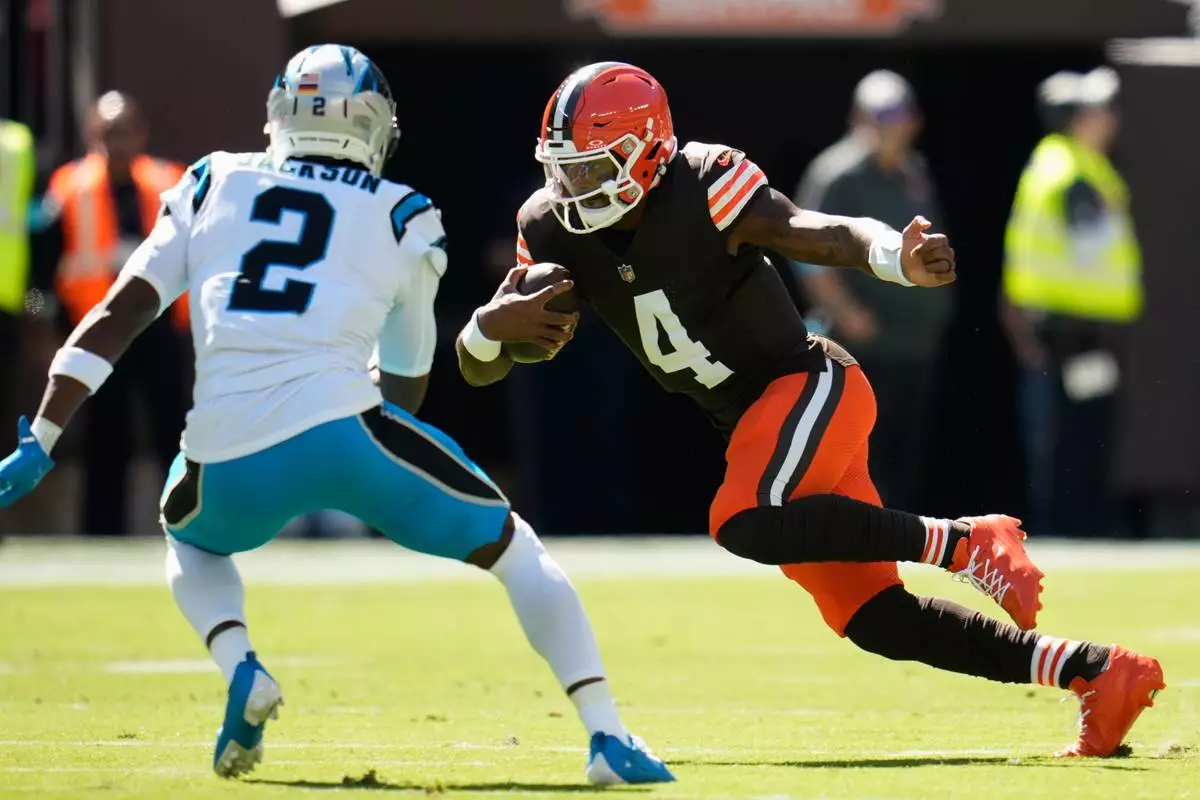
Cleveland Browns quarterback Deshaun Watson (4) runs with the ball against Carolina Panthers cornerback Mike Jackson (2) during the first half of an NFL football game in Cleveland, Thursday, Aug. 27, 2026. (AP Photo/Sue Ogrocki)
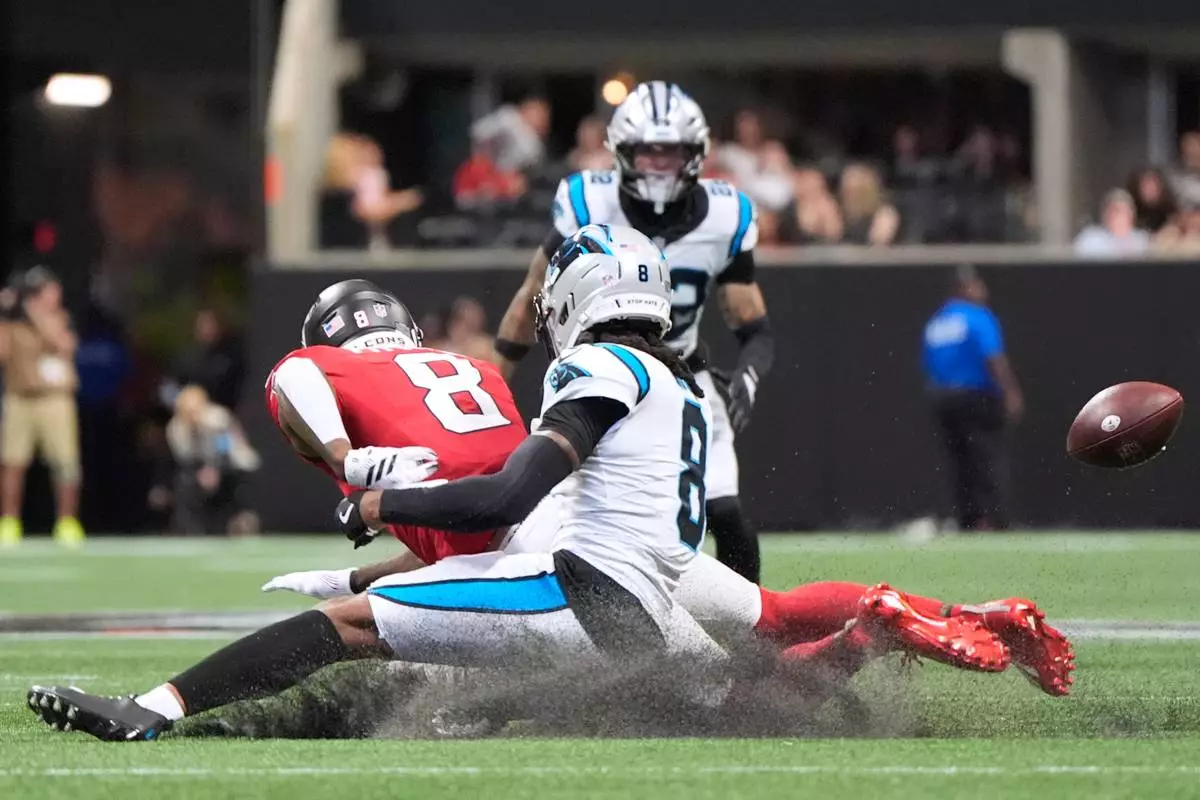
Atlanta Falcons tight end Kyle Pitts (8) drops the ball against Carolina Panthers cornerback Jaycee Horn (8) during an NFL football game in Atlanta, Sunday, Sept. 20, 2026. (AP Photo/Mike Stewart)