Tech companies in the tech hub of Hangzhou City in east China's Zhejiang Province have kept increasing their investment in research and development in the field of artificial intelligence (AI) over recent years, building on their previous achievements and striving to get ahead in future product development.
Hangzhou, known as China's tech city, is an important hub in the internet and tech industries and has been driving advancements in e-commerce, AI and digital transformation.
Home to e-commerce giant Alibaba and AI star DeepSeek, the city has recently become a trending topic for its rising tech startups the "Six Little Dragons".
The nickname refers to the six enterprises of Game Science, DeepSeek, Unitree Robotics, DEEP Robotics, BrainCo and Manycore Tech — all tech upstarts that have risen to prominence in Hangzhou over the past two years, and that hold significant influence within their respective industries.
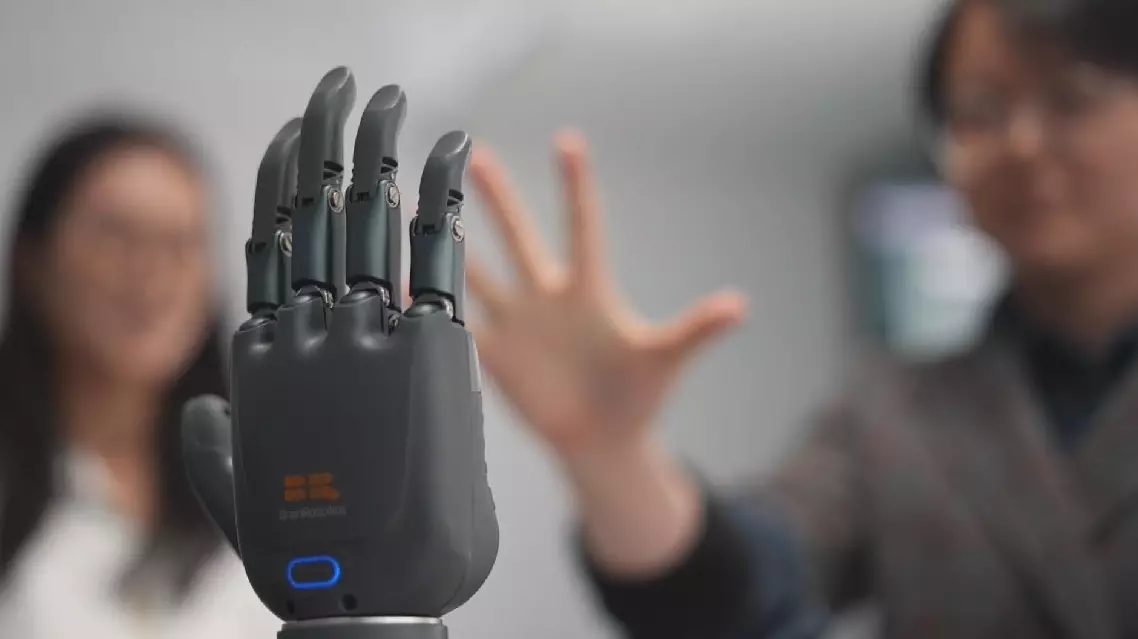
The bionic hand developed by BrainCo uses a super sensor to monitor deep brain signals, making it possible for the highly advanced star product to catch the signals precisely, decode it, and reasoning about the intentions behind users' movement.
Currently, the bionic hand has seen many updates, with multiple new products to be put into mass production this year.
BrainCo now has just above 200 employees, with over half of them being research and development personnel.
"Basically, we have been focusing on one thing over the past decade, which is decoding the brain signal. Over the past period of time, our algorithm has been developing and upgrading really rapidly, and the users have achieved over 70 percent greater control sensitivity than before in operating the bionic hand through brain signals," Han said.
The "World Simulator" developed by Manycore Tech is capable of generating a 3D floor plan and a home decoration plan within 10 seconds based on a 2D floor plan.
Zhu Hao, founder of Manycore Tech, said that since 2017 the startup has been putting over 50 percent of its revenue in research and development, much higher than the average level of 20 percent among its software industry peers.
"The most extreme case happened in 2020, when we had to invest 90 percent of our revenue in research and development, which was really high and would definitely make the company unprofitable, but we believe that we have to invest enough in research and development to attract as many talents as we need," Zhu said.
According to the latest official data, Hangzhou's society-wide research and development expense as a share of GDP rose from 3.57 percent in 2021 to 3.92 percent in 2024, with the expense made by enterprises representing over 70 percent of the total.
Tech companies in east China's Hangzhou invest heavily in AI research, development