 |
Higher Salaries, Strong Internship-to-Employment Pipeline, and Industry Demand Drive Graduate Success
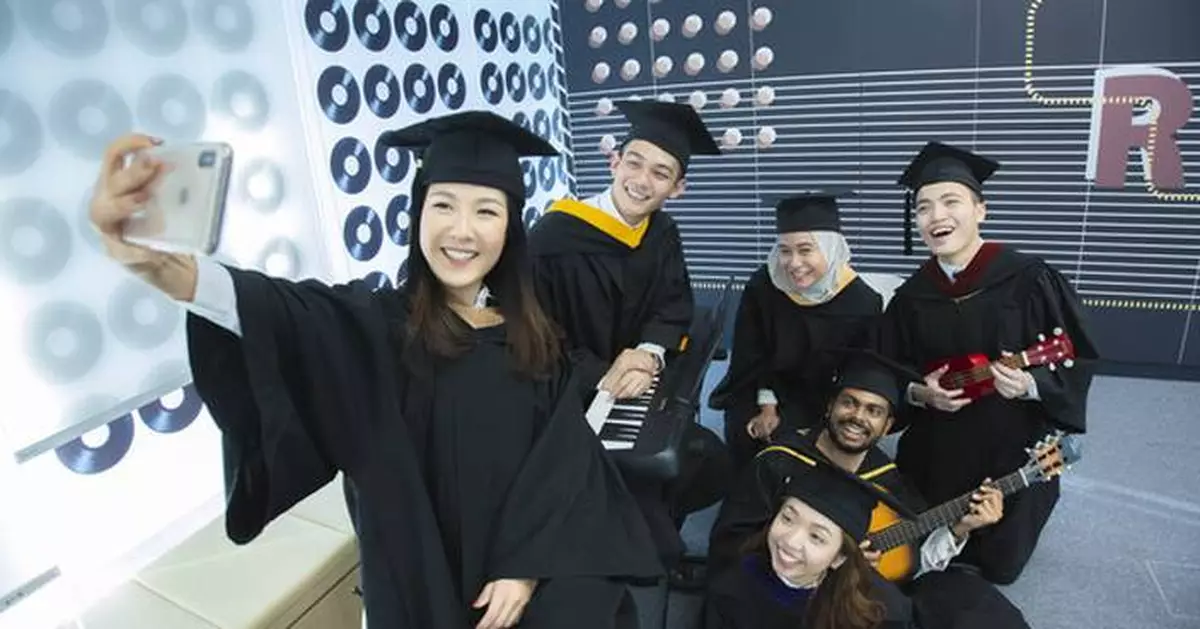
SINGAPORE, Feb. 24, 2025 /PRNewswire/ -- The latest Graduate Employment Survey (GES) 2024 underscores Singapore Management University's (SMU) enduring appeal to employers, amidst lower hiring demand. With an 89.8% overall employment rate, SMU graduates remain in high demand, with their salaries continuing an upward trajectory across key industries. The results were revealed in the annual Joint Autonomous Universities Graduate Employment Survey (JAUGES), jointly conducted by SMU and the other Autonomous Universities. Of the 2,300-strong graduating cohort, 1,742 students (75.7%) participated in the survey, offering a snapshot of employment trends that reflect both resilience and adaptation in an evolving economic landscape.
Strong Graduate Employability
SMU continues to achieve strong overall employment rates (89.8%) and full-time permanent employment rates (83.4%).
Graduates Command Higher Salaries
SMU graduates are also commanding higher wages, with the average gross monthly salary rising to $5,057, a 3.4% increase from last year. The median gross salary of SMU graduates also increased from $4,500 to $4,600 (see Annex A for more details)
Internships Cement Career Pathways
A hallmark of SMU's industry-centric education, the university's mandatory internship programme has played a pivotal role in preparing students for the workforce.
- 79.9% of graduates completed more than one internship, with an average of 2.8 internships per student, ensuring they enter the job market with real-world experience.
- 31.6% of graduates who found full-time permanent employment had secured roles at the companies they interned with, underscoring SMU's strong industry linkages.
SMU graduates remain highly sought after in Finance & Insurance, Legal, Accounting & Auditing, and Information & Communication, reflecting sustained employer demand across key industries. More than 60% secured employment before graduation, demonstrating the strong market confidence in SMU's talent pipeline and the university's emphasis on experiential learning and industry-aligned education, where students are challenged to use their disciplinary knowledge to tackle real world issues through interdisciplinary approaches.
Through collaborations within the SMU community and with external stakeholders, opportunities are provided for students to establish valuable new contacts for securing future internships and/or employment locally and globally.
SMU Graduates Credit University for Personal and Professional Growth 98% of graduates reported that their time at SMU had a positive influence on their personal growth. Beyond academics, SMU's distinctive education approach has equipped graduates with essential life and career skills. A strong 97.1% credited the university with enhancing their interpersonal and collaboration skills, while 97.5% felt they had significantly improved in communication and engagement. Additionally, 96% of graduates stated that SMU had effectively prepared them with critical thinking capabilities and a strong sense of personal development ownership.
These findings underscore SMU's commitment to developing well-rounded, future-ready leaders equipped to thrive in a rapidly evolving world.
SMU's Commitment to Future-Ready Education
SMU's high employment rates stem from its distinctive experiential learning model, which integrates academia with real-world application. The SMU-X programme connects students with industry leaders to tackle live business challenges, while its mandatory internships, community service and global exposure requirements ensure graduates develop adaptability, cross-cultural fluency, and a sense of social responsibility—attributes highly valued in today's evolving job market.
SMU Provost, Professor Timothy Clark, remarked: "SMU's graduate success is no accident—it is the result of an education model designed for relevance and lifelong impact. Our emphasis on interdisciplinary learning, experiential internships, and close industry collaboration ensures our graduates are not just job-ready, but future-ready. The strong employment outcomes reaffirm SMU's role as a university that produces distinctive, adaptable, purpose-driven, high-calibre talent, well-prepared to navigate a rapidly evolving global economy."
As Singapore navigates a rapidly transforming economic landscape, SMU remains committed to equipping students with the skills, agility, and industry experience to lead and succeed.
About SMU's Dato' Kho Hui Meng Career Centre (DKHMCC)
DKHMCC offers a range of comprehensive services, programmes, and resources for SMU students to chart their career directions and empowers them with the necessary skills to realise their potential and goals.
Each student is assigned a career coach upon matriculation to support him/her in career planning through his/her four-year journey at SMU. These certified coaches from DKHMCC come from diverse backgrounds and are in tune with industry developments and trends. They administer personality/career profiling tools, critique cover letters and resumes, facilitate job searches, and hone students' interview skills.
In addition, DKHMCC offers a suite of internship readiness modules and career readiness workshops from the freshman year as part of SMU's pioneering Finishing Touch programme. The programme equips SMU undergraduates with career planning and transferable skills, geared towards enhancing their employment prospects and fulfilling their career goals progressively throughout the four-year course of study. Every year, DKHMCC organises more than 400 events which include career and industry talks, employability clinics, career fairs, as well as networking events, for our students.
Recognising the importance and value of having real-world and career-relevant work experience for its students, SMU is the first university in Singapore to make internships compulsory for all students. Students are provided opportunities via DKHMCC, which works closely with industry to ensure successful placements in internships and jobs. The DKHMCC's close and regular contact with employers is vital in helping SMU students be market-relevant and career-ready. Students also have access to a 24/7 web-based portal (OnTRAC) to search for internships and career opportunities.
DKHMCC also continues to support graduates up to three years after their graduation, with continued access to the jobs portal, employability clinics and personalised assistance by individual career coaches, should they require further guidance.
About SMU
A premier university in Asia, SMU is internationally recognised for its world-class research and distinguished teaching. Established in 2000, SMU's mission is to generate leading-edge research with global impact and to produce broad-based, creative, and entrepreneurial leaders for the knowledge-based economy. SMU's education is known for its highly interactive, collaborative, and project-based approach to learning.
Home to over 13,000 students across undergraduate, postgraduate professional and postgraduate research programmes, SMU comprises eight schools: School of Accountancy, Lee Kong Chian School of Business, School of Economics, School of Computing and Information Systems, Yong Pung How School of Law, School of Social Sciences, College of Integrative Studies, and College of Graduate Research Studies. SMU offers a wide range of bachelors', masters', and PhD degree programmes in the disciplinary areas associated with its schools, as well as in multidisciplinary combinations of these areas.
SMU emphasises rigorous, high-impact, multi- and interdisciplinary research that addresses Asian issues of global relevance. SMU faculty members collaborate with leading international researchers and universities around the world, as well as with partners in the business community and public sector. SMU's city campus is a modern facility located in the heart of downtown Singapore, fostering strategic linkages with business, government, and the wider community. www.smu.edu.sg
SMU celebrates its 25 years of meaningful impact this year, and remains committed to its vision of driving innovation, transcending boundaries and transforming lives.
ANNEX
SMU's 2024 graduates across all eight of the University degree programmes enjoyed competitive monthly salaries
Computer Science graduates earned a mean gross monthly salary of $6,245, as compared to the 2023 cohort's $6,120. The median gross monthly salary is $6,000 as compared to $5,800 in 2023. Those with Cum Laude or better earned a higher median gross monthly salary of $6,400 as compared to $6,250.
Economics graduates earned a mean gross monthly salary of $5,069, up from $4,937 in 2023. The median gross monthly salary was $4,753, an increase from $4,500 in 2023. Those with Cum Laude or better earned a mean gross monthly salary of $5,523, while the median gross monthly salary was $5,000, an increase in the previous year's $4,833.
Business Management graduates earned a mean gross monthly salary of $5,007, as compared to last year's $4,795. The median gross monthly salary was $4,500, up from $4,436 in 2023. Those with Cum Laude or better earned a higher mean gross monthly salary of $5,323, while the median gross monthly salary was $4,825.
Accountancy graduates earned a mean gross monthly salary of $4,755 as compared to $4,463 in 2023. The median gross monthly salary is $4,350, up from $3,900 in 2023. Those with Cum Laude or better earned a mean gross monthly salary of $5,074 while the median gross monthly salary was $4,500.
Social Sciences graduates earned a mean gross monthly salary of $4,553 as compared to $4,330 in 2023. The median gross monthly salary is $4,334, an increase from last year's $4,000. Those with Cum Laude or better earned a mean gross monthly salary of $4,823, higher than last year's $4,547. The median gross monthly salary was $4,500.
Information Systems graduates earned a mean gross monthly salary of $5,362, as compared to the 2023 cohort's $5,530. The median gross monthly salary is $5,000. Those with Cum Laude or better earned a mean gross monthly salary of $5,954 and a median gross monthly salary of $5,549.
The follow-up survey[1] on SMU Law graduates showed that overall employment rate stood at 97.6%. The mean and median gross monthly salaries of Law graduates in full-time permanent employment were $6,585 and $7,000 respectively. Those who attained a Cum Laude and above had a mean gross monthly salary of $6,775 and median gross monthly salary of $7,000.
Please refer to attached table ANNEX A for the detailed figures.
Explanatory Note: Cum Laude and Merit Awards
SMU uses the cumulative Grade Point Average (GPA) criteria to identify degree candidates with academic excellence in the following award categories: Summa Cum Laude, Magna Cum Laude and Cum Laude. These are Latin awards adopted from the American system, and can be translated as with Highest Distinction, with High Distinction and with Distinction, respectively.
They do not equate to the various classes of degree honours conferred by universities that follow the British system of academic honours. A graduate needs a GPA of at least 3.40 out of 4.00 to be awarded Cum Laude. All SMU bachelor degrees are four-year full-time programmes.
Cumulative GPA | Awards |
≥ 3.80 | Summa Cum Laude |
3.60 to 3.79 | Magna Cum Laude |
3.40 to 3.59 | Cum Laude |
3.20 to 3.39 | High Merit |
3.00 to 3.19 | Merit |
[1] SMU's Law graduates Class of 2023 were surveyed in JAUGES 2024 to allow for those who choose to continue with pupillage in the first six months after their graduation to complete their practical training. |
Higher Salaries, Strong Internship-to-Employment Pipeline, and Industry Demand Drive Graduate Success
SINGAPORE, Feb. 24, 2025 /PRNewswire/ -- The latest Graduate Employment Survey (GES) 2024 underscores Singapore Management University's (SMU) enduring appeal to employers, amidst lower hiring demand. With an 89.8% overall employment rate, SMU graduates remain in high demand, with their salaries continuing an upward trajectory across key industries. The results were revealed in the annual Joint Autonomous Universities Graduate Employment Survey (JAUGES), jointly conducted by SMU and the other Autonomous Universities. Of the 2,300-strong graduating cohort, 1,742 students (75.7%) participated in the survey, offering a snapshot of employment trends that reflect both resilience and adaptation in an evolving economic landscape.
Strong Graduate Employability
SMU continues to achieve strong overall employment rates (89.8%) and full-time permanent employment rates (83.4%).
Graduates Command Higher Salaries
SMU graduates are also commanding higher wages, with the average gross monthly salary rising to $5,057, a 3.4% increase from last year. The median gross salary of SMU graduates also increased from $4,500 to $4,600 (see Annex A for more details)
Internships Cement Career Pathways
A hallmark of SMU's industry-centric education, the university's mandatory internship programme has played a pivotal role in preparing students for the workforce.
- 79.9% of graduates completed more than one internship, with an average of 2.8 internships per student, ensuring they enter the job market with real-world experience.
- 31.6% of graduates who found full-time permanent employment had secured roles at the companies they interned with, underscoring SMU's strong industry linkages.
SMU graduates remain highly sought after in Finance & Insurance, Legal, Accounting & Auditing, and Information & Communication, reflecting sustained employer demand across key industries. More than 60% secured employment before graduation, demonstrating the strong market confidence in SMU's talent pipeline and the university's emphasis on experiential learning and industry-aligned education, where students are challenged to use their disciplinary knowledge to tackle real world issues through interdisciplinary approaches.
Through collaborations within the SMU community and with external stakeholders, opportunities are provided for students to establish valuable new contacts for securing future internships and/or employment locally and globally.
SMU Graduates Credit University for Personal and Professional Growth 98% of graduates reported that their time at SMU had a positive influence on their personal growth. Beyond academics, SMU's distinctive education approach has equipped graduates with essential life and career skills. A strong 97.1% credited the university with enhancing their interpersonal and collaboration skills, while 97.5% felt they had significantly improved in communication and engagement. Additionally, 96% of graduates stated that SMU had effectively prepared them with critical thinking capabilities and a strong sense of personal development ownership.
These findings underscore SMU's commitment to developing well-rounded, future-ready leaders equipped to thrive in a rapidly evolving world.
SMU's Commitment to Future-Ready Education
SMU's high employment rates stem from its distinctive experiential learning model, which integrates academia with real-world application. The SMU-X programme connects students with industry leaders to tackle live business challenges, while its mandatory internships, community service and global exposure requirements ensure graduates develop adaptability, cross-cultural fluency, and a sense of social responsibility—attributes highly valued in today's evolving job market.
SMU Provost, Professor Timothy Clark, remarked: "SMU's graduate success is no accident—it is the result of an education model designed for relevance and lifelong impact. Our emphasis on interdisciplinary learning, experiential internships, and close industry collaboration ensures our graduates are not just job-ready, but future-ready. The strong employment outcomes reaffirm SMU's role as a university that produces distinctive, adaptable, purpose-driven, high-calibre talent, well-prepared to navigate a rapidly evolving global economy."
As Singapore navigates a rapidly transforming economic landscape, SMU remains committed to equipping students with the skills, agility, and industry experience to lead and succeed.
About SMU's Dato' Kho Hui Meng Career Centre (DKHMCC)
DKHMCC offers a range of comprehensive services, programmes, and resources for SMU students to chart their career directions and empowers them with the necessary skills to realise their potential and goals.
Each student is assigned a career coach upon matriculation to support him/her in career planning through his/her four-year journey at SMU. These certified coaches from DKHMCC come from diverse backgrounds and are in tune with industry developments and trends. They administer personality/career profiling tools, critique cover letters and resumes, facilitate job searches, and hone students' interview skills.
In addition, DKHMCC offers a suite of internship readiness modules and career readiness workshops from the freshman year as part of SMU's pioneering Finishing Touch programme. The programme equips SMU undergraduates with career planning and transferable skills, geared towards enhancing their employment prospects and fulfilling their career goals progressively throughout the four-year course of study. Every year, DKHMCC organises more than 400 events which include career and industry talks, employability clinics, career fairs, as well as networking events, for our students.
Recognising the importance and value of having real-world and career-relevant work experience for its students, SMU is the first university in Singapore to make internships compulsory for all students. Students are provided opportunities via DKHMCC, which works closely with industry to ensure successful placements in internships and jobs. The DKHMCC's close and regular contact with employers is vital in helping SMU students be market-relevant and career-ready. Students also have access to a 24/7 web-based portal (OnTRAC) to search for internships and career opportunities.
DKHMCC also continues to support graduates up to three years after their graduation, with continued access to the jobs portal, employability clinics and personalised assistance by individual career coaches, should they require further guidance.
About SMU
A premier university in Asia, SMU is internationally recognised for its world-class research and distinguished teaching. Established in 2000, SMU's mission is to generate leading-edge research with global impact and to produce broad-based, creative, and entrepreneurial leaders for the knowledge-based economy. SMU's education is known for its highly interactive, collaborative, and project-based approach to learning.
Home to over 13,000 students across undergraduate, postgraduate professional and postgraduate research programmes, SMU comprises eight schools: School of Accountancy, Lee Kong Chian School of Business, School of Economics, School of Computing and Information Systems, Yong Pung How School of Law, School of Social Sciences, College of Integrative Studies, and College of Graduate Research Studies. SMU offers a wide range of bachelors', masters', and PhD degree programmes in the disciplinary areas associated with its schools, as well as in multidisciplinary combinations of these areas.
SMU emphasises rigorous, high-impact, multi- and interdisciplinary research that addresses Asian issues of global relevance. SMU faculty members collaborate with leading international researchers and universities around the world, as well as with partners in the business community and public sector. SMU's city campus is a modern facility located in the heart of downtown Singapore, fostering strategic linkages with business, government, and the wider community. www.smu.edu.sg
SMU celebrates its 25 years of meaningful impact this year, and remains committed to its vision of driving innovation, transcending boundaries and transforming lives.
ANNEX
SMU's 2024 graduates across all eight of the University degree programmes enjoyed competitive monthly salaries
Computer Science graduates earned a mean gross monthly salary of $6,245, as compared to the 2023 cohort's $6,120. The median gross monthly salary is $6,000 as compared to $5,800 in 2023. Those with Cum Laude or better earned a higher median gross monthly salary of $6,400 as compared to $6,250.
Economics graduates earned a mean gross monthly salary of $5,069, up from $4,937 in 2023. The median gross monthly salary was $4,753, an increase from $4,500 in 2023. Those with Cum Laude or better earned a mean gross monthly salary of $5,523, while the median gross monthly salary was $5,000, an increase in the previous year's $4,833.
Business Management graduates earned a mean gross monthly salary of $5,007, as compared to last year's $4,795. The median gross monthly salary was $4,500, up from $4,436 in 2023. Those with Cum Laude or better earned a higher mean gross monthly salary of $5,323, while the median gross monthly salary was $4,825.
Accountancy graduates earned a mean gross monthly salary of $4,755 as compared to $4,463 in 2023. The median gross monthly salary is $4,350, up from $3,900 in 2023. Those with Cum Laude or better earned a mean gross monthly salary of $5,074 while the median gross monthly salary was $4,500.
Social Sciences graduates earned a mean gross monthly salary of $4,553 as compared to $4,330 in 2023. The median gross monthly salary is $4,334, an increase from last year's $4,000. Those with Cum Laude or better earned a mean gross monthly salary of $4,823, higher than last year's $4,547. The median gross monthly salary was $4,500.
Information Systems graduates earned a mean gross monthly salary of $5,362, as compared to the 2023 cohort's $5,530. The median gross monthly salary is $5,000. Those with Cum Laude or better earned a mean gross monthly salary of $5,954 and a median gross monthly salary of $5,549.
The follow-up survey[1] on SMU Law graduates showed that overall employment rate stood at 97.6%. The mean and median gross monthly salaries of Law graduates in full-time permanent employment were $6,585 and $7,000 respectively. Those who attained a Cum Laude and above had a mean gross monthly salary of $6,775 and median gross monthly salary of $7,000.
Please refer to attached table ANNEX A for the detailed figures.
Explanatory Note: Cum Laude and Merit Awards
SMU uses the cumulative Grade Point Average (GPA) criteria to identify degree candidates with academic excellence in the following award categories: Summa Cum Laude, Magna Cum Laude and Cum Laude. These are Latin awards adopted from the American system, and can be translated as with Highest Distinction, with High Distinction and with Distinction, respectively.
They do not equate to the various classes of degree honours conferred by universities that follow the British system of academic honours. A graduate needs a GPA of at least 3.40 out of 4.00 to be awarded Cum Laude. All SMU bachelor degrees are four-year full-time programmes.
Cumulative GPA
Awards
≥ 3.80
Summa Cum Laude
3.60 to 3.79
Magna Cum Laude
3.40 to 3.59
Cum Laude
3.20 to 3.39
High Merit
3.00 to 3.19
Merit
[1] SMU's Law graduates Class of 2023 were surveyed in JAUGES 2024 to allow for those who choose to continue with pupillage in the first six months after their graduation to complete their practical training. |
[1] SMU's Law graduates Class of 2023 were surveyed in JAUGES 2024 to allow for those who choose to continue with pupillage in the first six months after their graduation to complete their practical training.
** The press release content is from PR Newswire. Bastille Post is not involved in its creation. **
SMU GRADUATES REMAIN HIGHLY EMPLOYABLE AMID CHANGING JOB MARKET

DUBAI, UAE, Jan. 15, 2026 /PRNewswire/ -- Mantle, the high-performance distribution and liquidity layer bridging traditional finance (TradFi), real-world assets (RWAs) and on-chain liquidity, today announced the integration of Infinex, a comprehensive cross-chain DeFi aggregation platform featuring a passkey-first wallet, unified portfolio management, and integrated trading capabilities.
The deployment of Infinex on Mantle significantly enhances access to Mantle-based assets and decentralized applications, offering users a streamlined, intuitive interface to discover liquidity, manage portfolios, and execute DeFi strategies seamlessly across multiple blockchain networks.
By expanding its presence on Infinex's marketplace, Mantle continues to advance its mission of making decentralized finance (DeFi) more accessible, efficient, and scalable, further empowering developers, traders, and liquidity providers with frictionless access to a growing on-chain ecosystem.
Why This Integration Matters
Infinex aggregates liquidity from multiple protocols and simplifies advanced DeFi actions, including swaps, bridging, and yield opportunities all into a single, unified experience. This removes the need for users to navigate fragmented interfaces, making it easier to engage with Mantle-native assets and applications.
The integration strengthens Mantle's on-chain reach and interoperability, supporting broader ecosystem adoption as users increasingly seek seamless, cross-protocol access to DeFi services.
A Unified Trading Experience on Mantle
As Mantle continues to develop its modular Layer-2 ecosystem designed to unlock capital efficiency and institutional-grade utility for DeFi while making real-world finance flow seamlessly, integrations like Infinex delivers immediate, real-world value to users and partners alike.
Through Infinex, users can now discover, access, and deploy Mantle-native assets alongside a wide range of DeFi capabilities, including:
- Seamless Swaps: Executing token exchanges with optimized routing for the best available prices and minimal slippage.
- Integrated Bridging: Facilitating cross-chain asset transfers directly within the platform, removing the need for users to navigate separate, often confusing, bridging interfaces.
- Optimized Yield Opportunities: Presenting and automating access to various yield-generating strategies, including staking, lending, and liquidity provision, all from a single dashboard.
This unified experience lowers barriers to participation while enhancing liquidity flow and user engagement across Mantle's growing DeFi landscape.
Strategic Importance for Mantle's Ecosystem
The Infinex integration expands Mantle's visibility beyond its native ecosystem and facilitates deeper, more efficient liquidity flows across chains. As Mantle continues to attract a diverse range of DeFi builders, from decentralized exchanges and autonomous yield tools to AI-powered interfaces and RWA platforms, broader access through cross-chain aggregators plays a key role in driving on-chain activity, volume, and user adoption.
This milestone supports Mantle's long-term strategy to build a robust, accessible, and high-performance ecosystem that serves both sophisticated DeFi users and the next wave of mainstream participants.
About Mantle
Mantle positions itself as the premier distribution layer and gateway for institutions and TradFi to connect with on-chain liquidity and access real-world assets, powering how real-world finance flows.
With over $4B+ in community-owned assets, Mantle combines credibility, liquidity and scalability with institutional-grade infrastructure to support large-scale adoption. The ecosystem is anchored by $MNT within Bybit, and built out through core ecosystem projects like mETH, fBTC, MI4 and more. This is complemented by Mantle Network's partnerships with leading issuers and protocols such as Ethena USDe, Ondo USDY, OP-Succinct and EigenLayer.
For more information about Mantle, please visit: mantle.xyz
For more social updates, please follow: Mantle Official X & Mantle Community Channel
For media enquiries, please contact: contact@mantle.xyz
About Infinex
Infinex is a crypto superapp that combines the best aspects of multichain wallets, DEX aggregation, perps trading, and much more. Through seamless UX, support for 20+ chains and passkey technology, Infinex provides the safest and easiest way to get onchain. Follow Infinex on X, and set up an account today at Infinex.xyz
** The press release content is from PR Newswire. Bastille Post is not involved in its creation. **
Mantle Expands Global DeFi Access through Infinex Integration