More than a decade of unremitting ecological restoration efforts have transformed Changting County, a once barren and desolate region in east China's Fujian Province, into a vibrant place with fruit-laden trees, free-ranging chickens and a booming ecological economy.
Changting was once one of the counties with the most serious soil erosion in the red soil region in southeastern China.
Data have shown that since 2012, Changting County has taken comprehensive measures to control the soil erosion of a total area of over 97,800 hectares, and the area of soil erosion has dropped from 31,793 hectares at the end of 2011 to 21,013 hectares at the end of 2020, with the soil erosion rate dropping to 6.78 percent, which is lower than the provincial average.
According to Yue Hui, director of Changting County Soil and Water Conservation Center, the region's tough situation resulted from waves of migration generations ago, depleting forest resources due to the rapacious need for timber, fuel and farming.
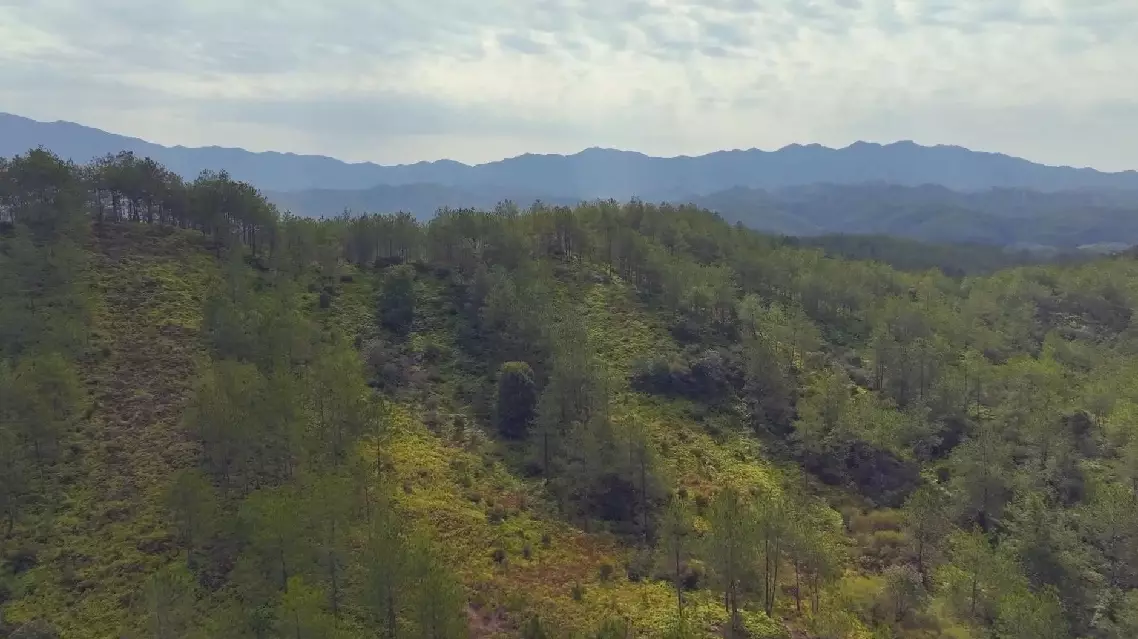
However, reforested hills emerged one after another after 12 years of hard work, according to Yue.
"After restoration, the entire tree species structure has changed. You can see some broad-leaved trees here, as well as the original masson pines, and there's much more vegetation covering the ground. So the ecological environment has also improved," said Yue.
In December 2023, China's first carbon sink trade agreement for soil and water conservation projects was signed in Fujian Province. Valued at 1.8 million yuan (about 248,000 U.S. dollars), the trade involved a total of 100,000 tons of carbon sink for comprehensive management of soil and water conservation in the Luodi River watershed, according to China's Ministry of Water Resources.
Soil and water conservation carbon sink refers to the process or ability of generating carbon sink following the adoption of measures to prevent and control soil erosion caused by natural factors and human activities.
"Now, the bigger challenge is figuring out how to turn these lucid waters and lush mountains into economic benefits for the local people and to support the local socioeconomic development," said Yue.
Apart from the successful reforestation, farms are also thriving in the county, such as the Fengying Eco-farm in the region's Sanzhou Village, where planting and poultry industries have flourished in recent years.
According to Shen Shuchao, the farm's operator, the ecological restoration progress has effectively boosted local employment.
"Normally, there are about 50 to 80 people, and at the busiest times, there are over 200 people [working in my farm]," he said.
Remarkable efforts have also increased income for local residents. In the 1980s, people struggled to have enough food, and by the 2000s, the economy saw significant growth, according to villager Li Jian.
"By 2010, villagers' average yearly incomes have risen from 2,000 to 3,000 yuan to 7,000 to 8,000 yuan, with some even exceeding 10,000 yuan," said Li.
By the end of 2023, the annual per capita disposable income of urban and rural residents in Changting had increased to 34,996 yuan and 23,852 yuan, respectively, according to the county government.
Recommended by the Ministry of Water Resources, Changting's transformation in comprehensive control of soil and water loss was selected as a typical case of ecological restoration at the phase-one meeting of the 15th Conference of the Parties to the United Nations Convention on Biological Diversity (COP15), which was held in Kunming of southwest China's Yunnan Province in 2021.
Ecological restoration turns desolate township in Fujian into fertile region