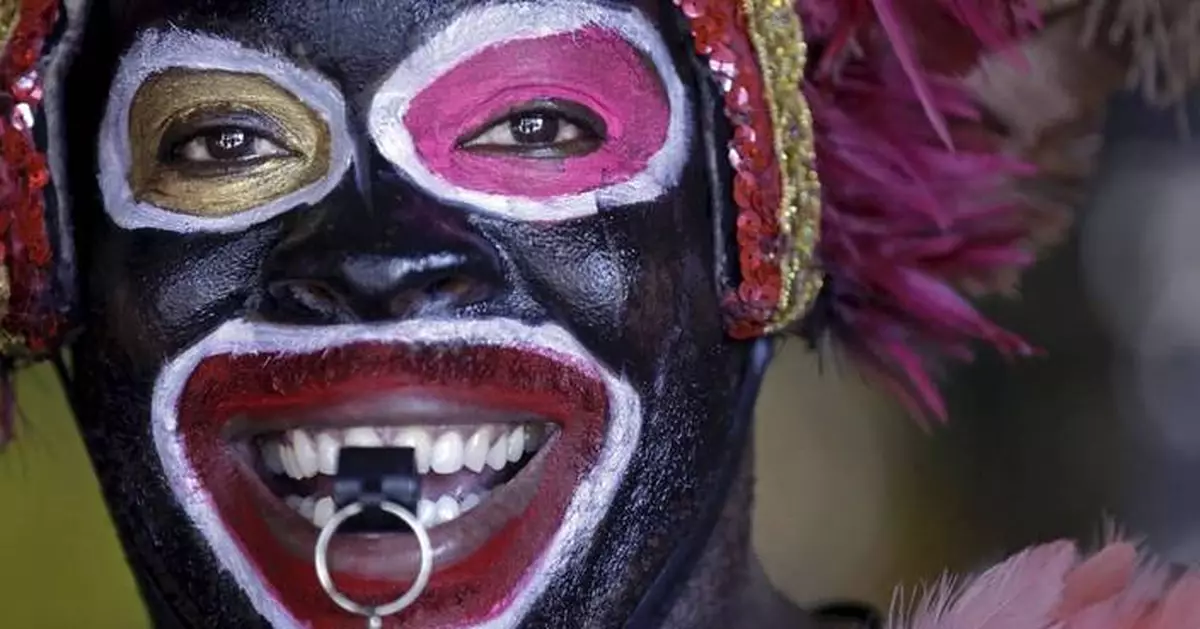
NEW ORLEANS (AP) — Carnival season 2025 is approaching its climax in New Orleans and across the Gulf Coast, with big parades rolling down the main routes as some revelers get fancied up for formal balls while others dress in costume to poke fun and make merry.
Three parades will roll Thursday night in New Orleans with scores of masked riders on colorful floats. More processions will continue every day through Mardi Gras, or Fat Tuesday. Costumed revelers will jam the French Quarter as more parades roll in New Orleans' suburbs, other Louisiana cities, and all along the Mississippi and Alabama coasts.
Click to Gallery
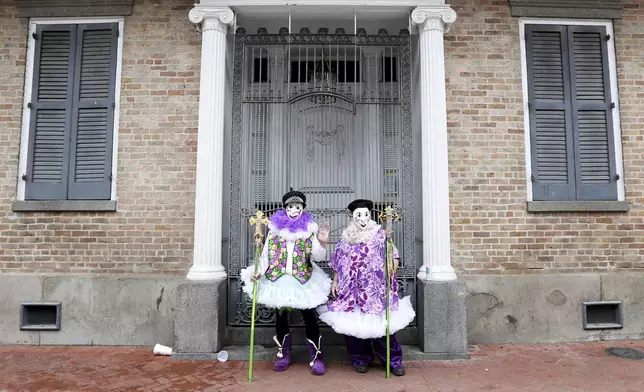
FILE - Jeff Thomas and Shelton Pollet find a rare peaceful spot on Bourbon Street during Mardi Gras festivities in New Orleans, Feb. 25, 2020. (AP Photo/Rusty Costanza, File)
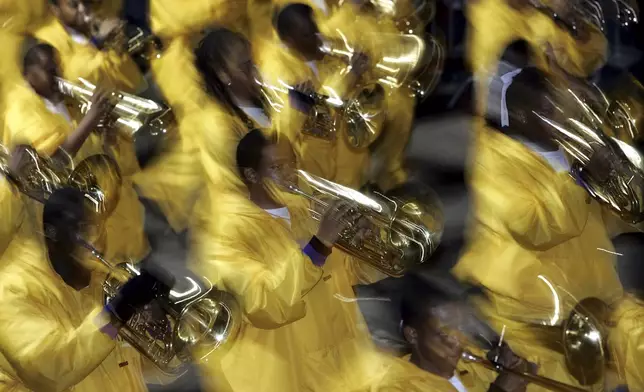
FILE - The brass section of the MAX high school band marches during the Hermes Parade on St. Charles Ave., in New Orleans, Feb. 24, 2006. (AP Photo/Carolyn Kaster, File)
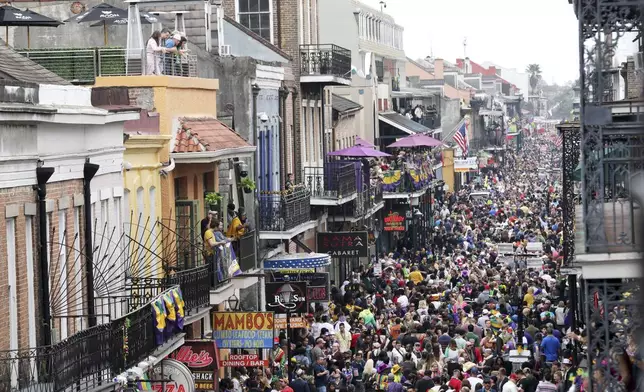
FILE - Revelers fill Bourbon Street on Mardi Gras day in New Orleans, Feb. 25, 2020. (AP Photo/Rusty Costanza, File)
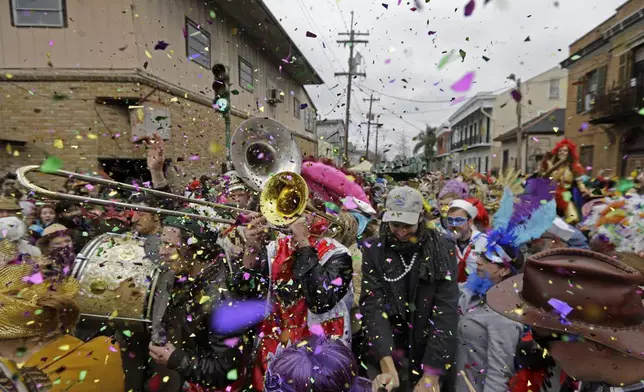
FILE - Revelers play brass band music as they begin the march of the Society of Saint Anne Mardi Gras parade in New Orleans, Feb. 17, 2015. (AP Photo/Gerald Herbert, File)
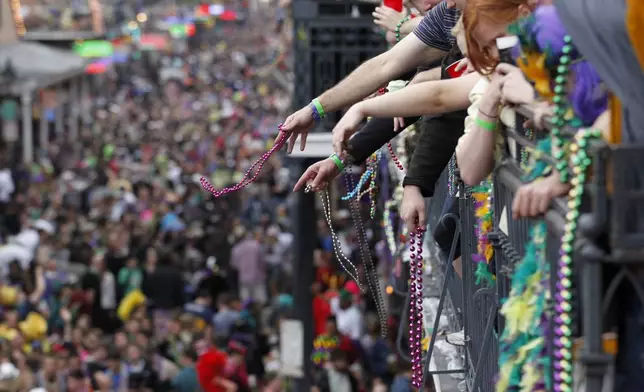
FILE - Revelers throw beads from the balcony of the Royal Sonesta Hotel onto crowds on Bourbon Street during Mardi Gras festivities in the French Quarter in New Orleans, March 8, 2011. (AP Photo/Gerald Herbert, File)
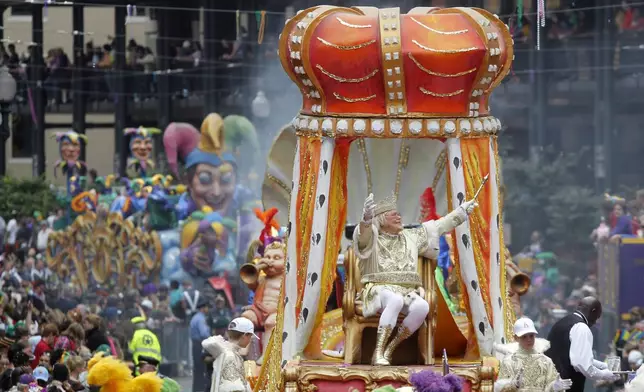
FILE - Rex, the King of Carnival, rides in the Krewe of Rex as he arrives at Canal St. on Mardi Gras day in New Orleans, March 8, 2011. (AP Photo/Gerald Herbert, File)
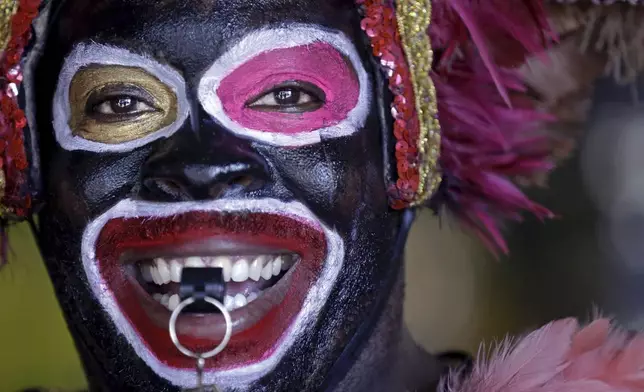
FILE - Maurice Lightfoot, a member of 'The Tramps,' the oldest unit of the Zulu Social Aid and Pleasure Club, a historic New Orleans Mardi Gras krewe, participates in King's Day festivities in New Orleans, Jan. 6, 2015. (AP Photo/Gerald Herbert, File)
Carnival in New Orleans and around the world is rooted in Christian and Roman Catholic traditions. The season begins on Jan. 6, the 12th day after Christmas, and continues until Mardi Gras, which is the final day of feasting, drinking and revelry before Ash Wednesday and the fasting associated with Lent, the Christian season of preparation for Easter.
Carnival celebrations have become thoroughly secularized in New Orleans, where the largest and best-known celebrations in the U.S. include street parties, fancy balls and boisterous parades. Some of the parades are high-tech extravaganzas that feature massive floats laden with flashing lights and giant moving figures.
“It’s all about family. It’s like a six-mile-long block party and nothing could be more fun. It’s for everyone,” said Virginia Saussy of the Krewe of Muses, which is set to parade Thursday night. "You got to come experience it to understand.”
On Mardi Gras in southwest Louisiana, some people will take part in the Cajun French tradition of the Courir de Mardi Gras, or Fat Tuesday Run. These rural processions, with links to rituals from medieval France, feature masked and costumed riders, with stops where participants perform and beg for goods. Inebriated maskers often chase live chickens to include in a communal gumbo at the end of the day.
In New Orleans, some African Americans mask in elaborate beaded and feathered Mardi Gras Indian suits, roving the city to sing, dance, drum and perform. The tradition, a central part of the Black Carnival experience in New Orleans since at least the late 1800s, is believed to have started in part as a way to pay homage to area Native Americans for their assistance to Black people and runaway slaves. It also developed at a time when segregation barred Black residents from taking part in whites-only parades.
Following the Jan. 1 truck attack that killed 14 people in the heart of New Orleans, the Department of Homeland Security upgraded Mardi Gras to its highest risk rating. This means there will be significantly more law enforcement officers present than in prior years, said Eric DeLaune, who is leading Mardi Gras security as special agent in charge of Homeland Security Investigations in New Orleans.
The city hosted the Super Bowl in early February and will employ many of the same security measures: SWAT teams on standby, armored vehicles along street corners, helicopters circling overhead and plainclothes agents mingling in crowds. The city will deploy 600 police officers, along with hundreds more from state and local agencies.
“We’ve made an effort to make carnival season as safe as we possibly can without intruding on the historical and cultural context of Mardi Gras,” said DeLaune, a Louisiana native who grew up attending the parades. “We didn’t want to change the feel of Mardi Gras.”
Thousands of revelers will gather along the city’s oak and mansion-lined St. Charles Avenue to watch towering floats, marching bands and celebrities parade. To protect them, a “serpentine” layout of heavy barricades has been arranged on the road's opposite side to bar fast-moving vehicles while still allowing traffic.
“You’re going to weave it like a snake,” New Orleans Police Department Superintendent Anne Kirkpatrick told reporters at a February press conference. “That will slow anybody down who thinks they are going to use a vehicle as a weapon.”
Drones are banned, she added. Ice chests and coolers — which had been used to plant explosives during the Jan. 1 attack -- will remain barred from the busiest section of the city’s historic French Quarter, said Louisiana State Police Superintendent Robert Hodges.
Because it’s linked to Easter, the date of Mardi Gras can fall anywhere between Feb. 3 and March 9. That’s because Easter falls on the first Sunday after the first full moon after the beginning of spring in the Northern Hemisphere.
This year’s date of March 4 is one of the latest possible. That means warmer temperatures are likely along the Gulf Coast rather than the often cool and clammy weather of February. However, there’s a chance of rain on Tuesday in the region.
“Throw” is a noun used to describe the trinkets that float riders in parades and walking members of carnival clubs — known as krewes — give to spectators. Shimmery strings of plastic beads are ubiquitous, although some krewes are exploring alternatives out of environmental concerns. Participants in the parade of New Orleans' Zulu Social Aid and Pleasure Club hand out highly sought-after painted coconuts.
At Thursday's Muses parade, glittery hand-decorated shoes are the prize souvenir.
“The first year we created a bead that was a stiletto shoe and it was just to be a commemorative bead — but it took off,” said Saussy, who is the chairwoman of Muses' theme and floats. "People love shoes, who knew?”
Amy reported from Atlanta.
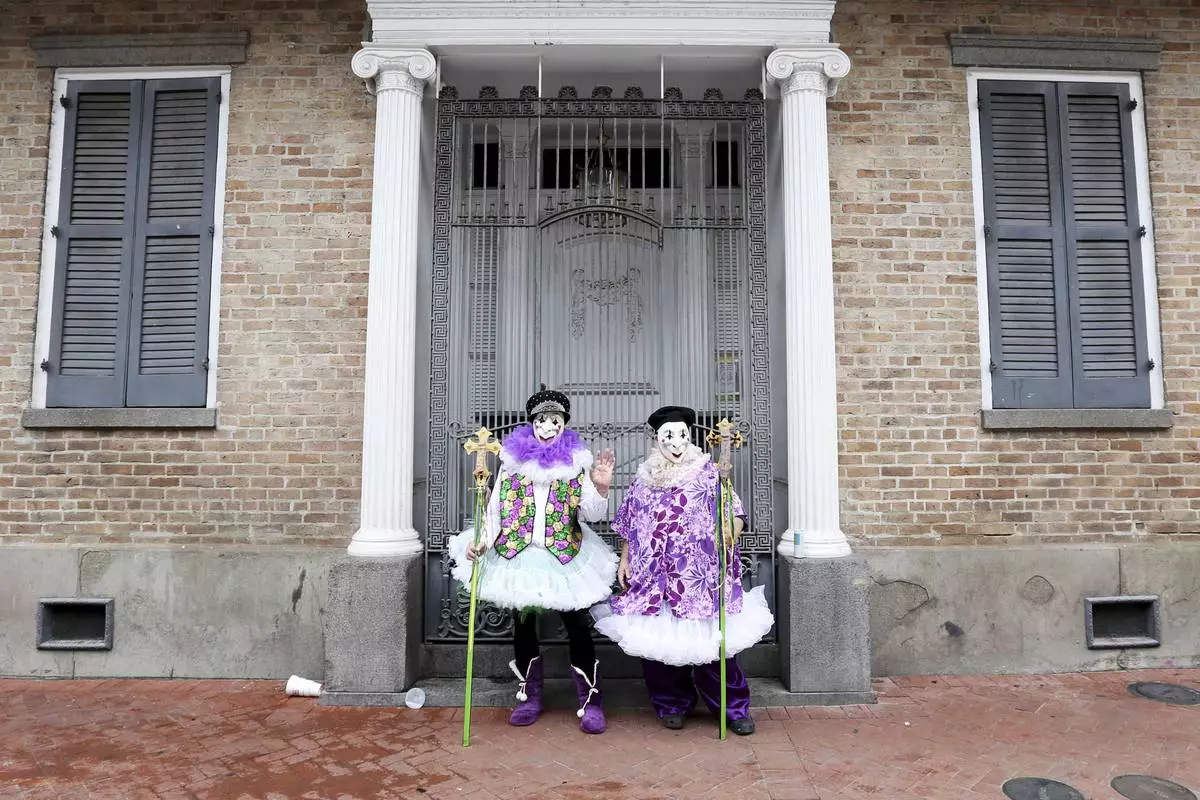
FILE - Jeff Thomas and Shelton Pollet find a rare peaceful spot on Bourbon Street during Mardi Gras festivities in New Orleans, Feb. 25, 2020. (AP Photo/Rusty Costanza, File)
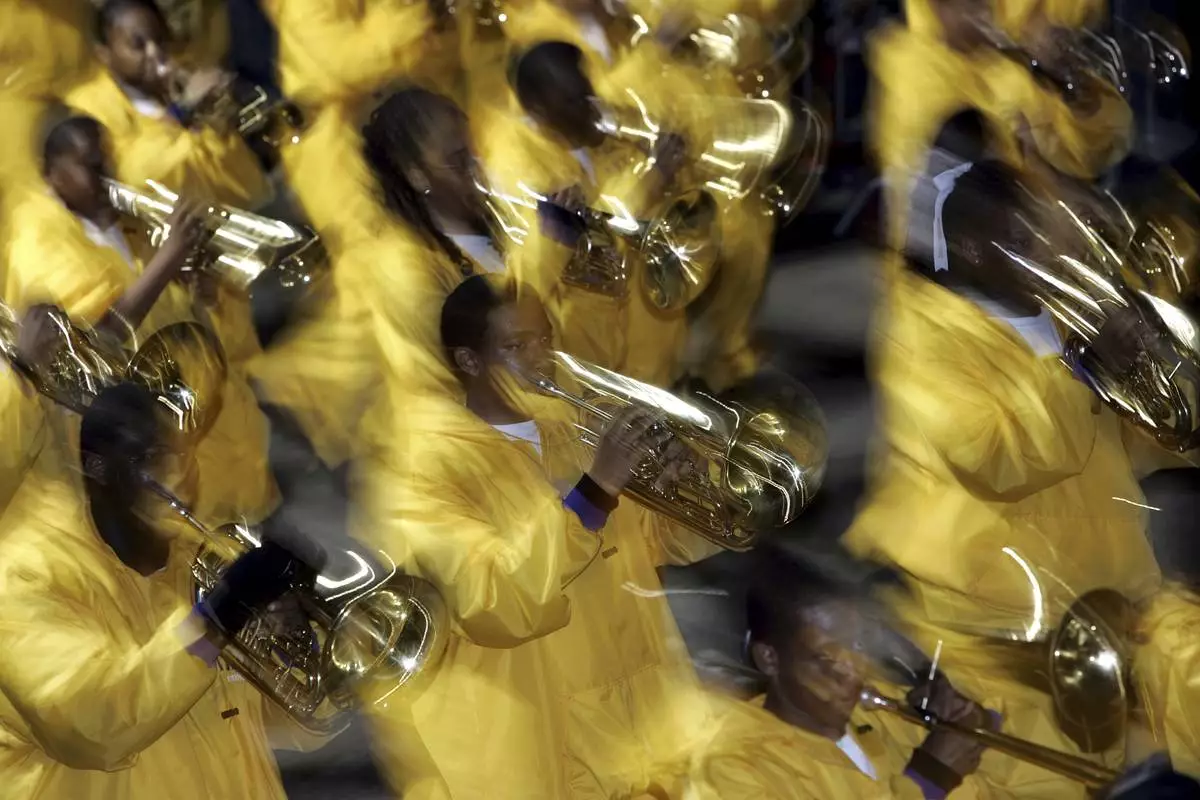
FILE - The brass section of the MAX high school band marches during the Hermes Parade on St. Charles Ave., in New Orleans, Feb. 24, 2006. (AP Photo/Carolyn Kaster, File)
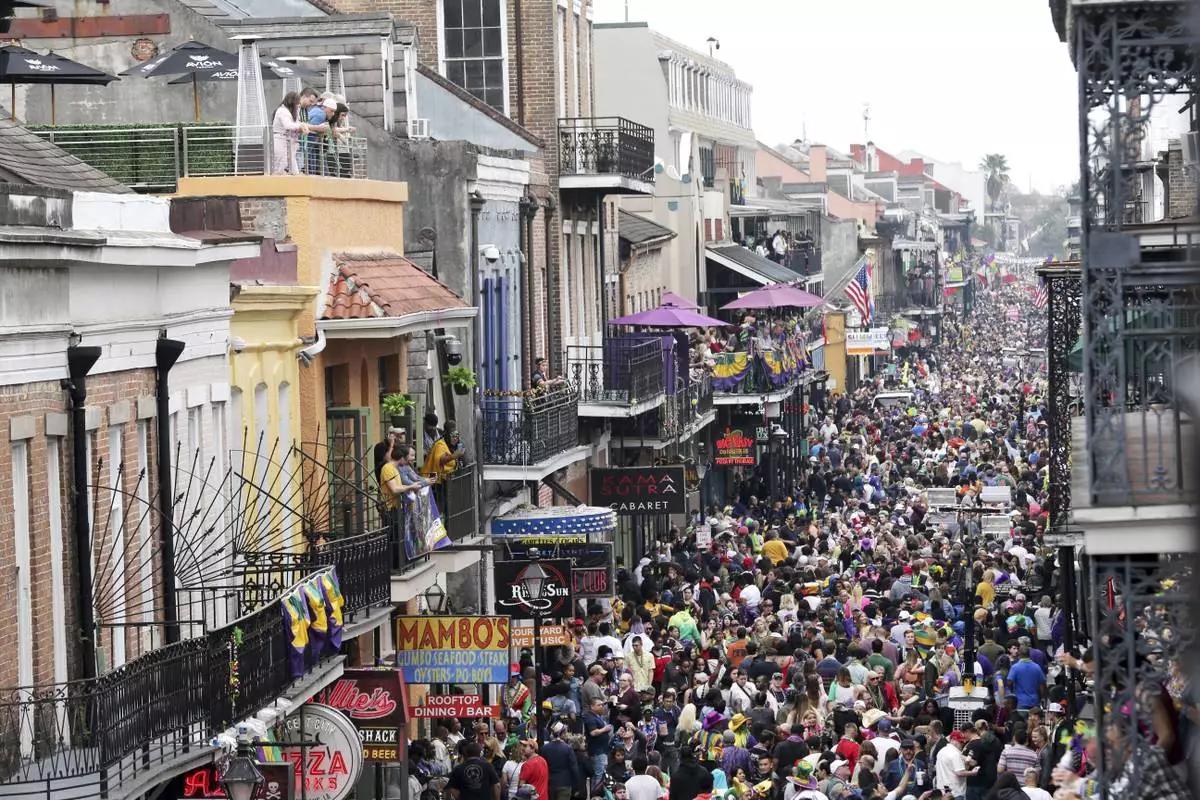
FILE - Revelers fill Bourbon Street on Mardi Gras day in New Orleans, Feb. 25, 2020. (AP Photo/Rusty Costanza, File)
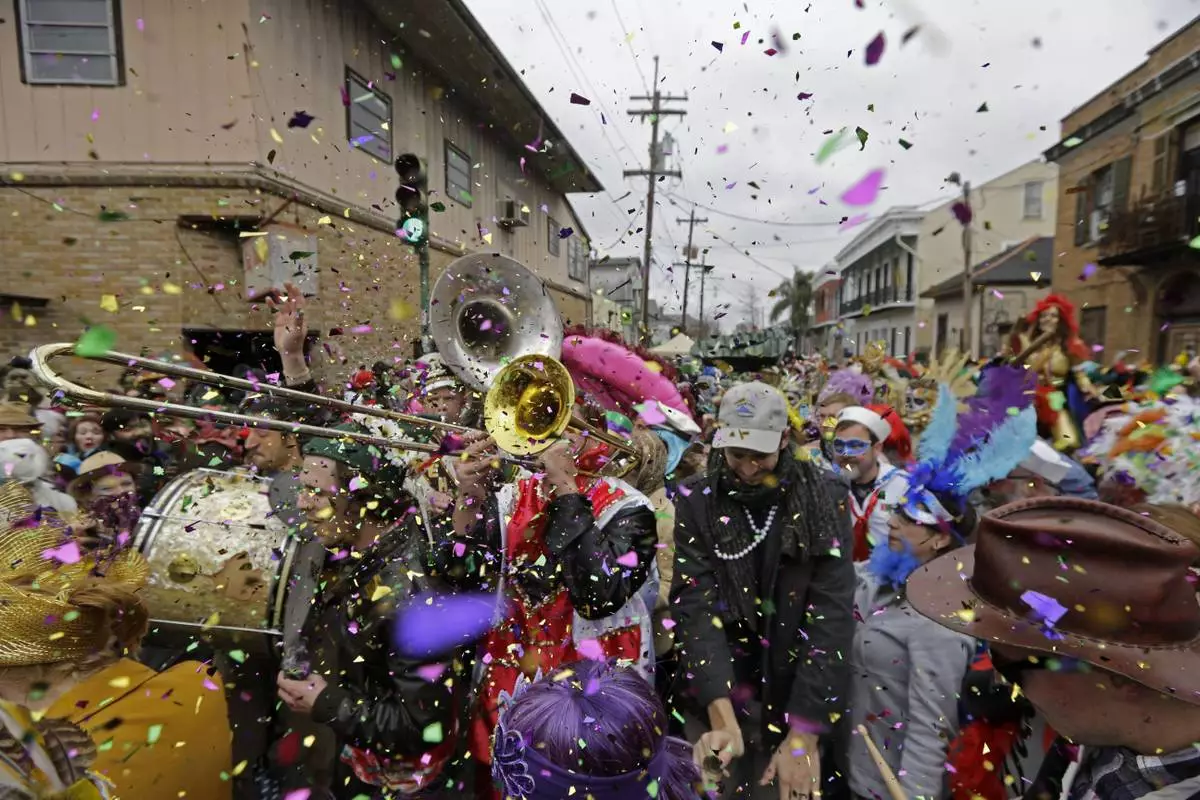
FILE - Revelers play brass band music as they begin the march of the Society of Saint Anne Mardi Gras parade in New Orleans, Feb. 17, 2015. (AP Photo/Gerald Herbert, File)
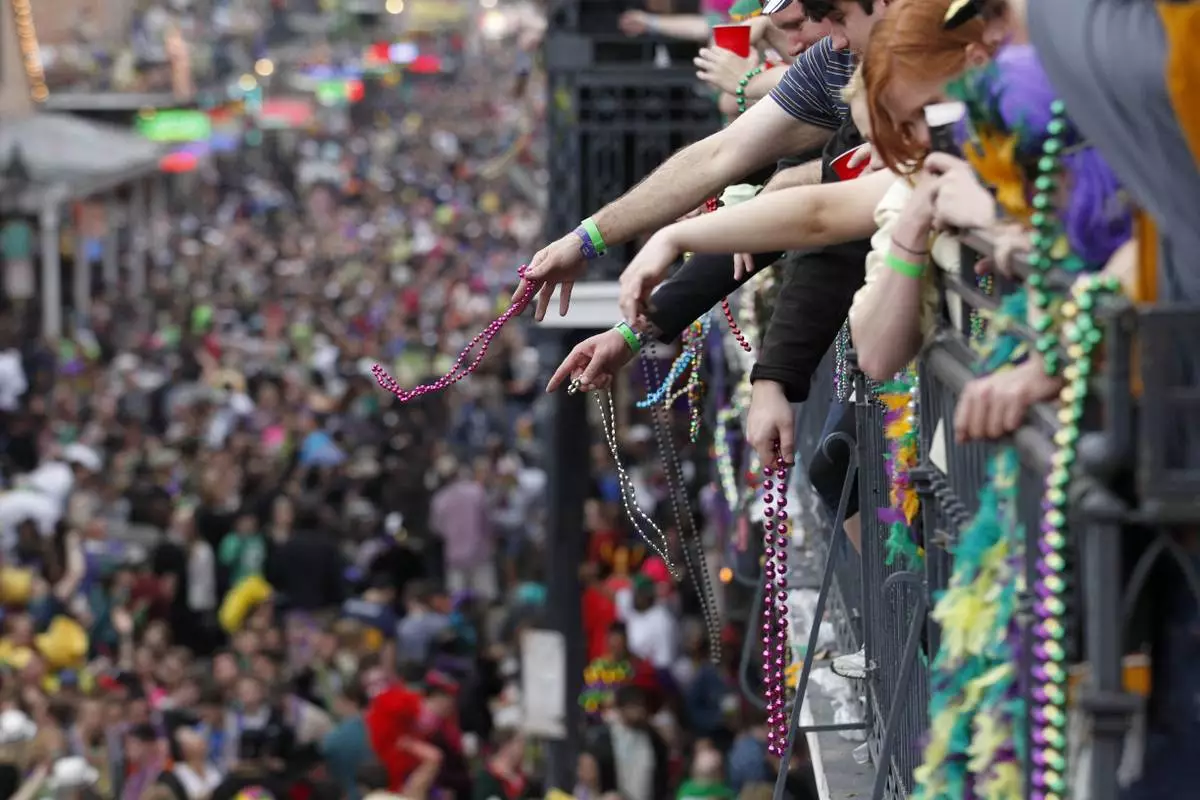
FILE - Revelers throw beads from the balcony of the Royal Sonesta Hotel onto crowds on Bourbon Street during Mardi Gras festivities in the French Quarter in New Orleans, March 8, 2011. (AP Photo/Gerald Herbert, File)
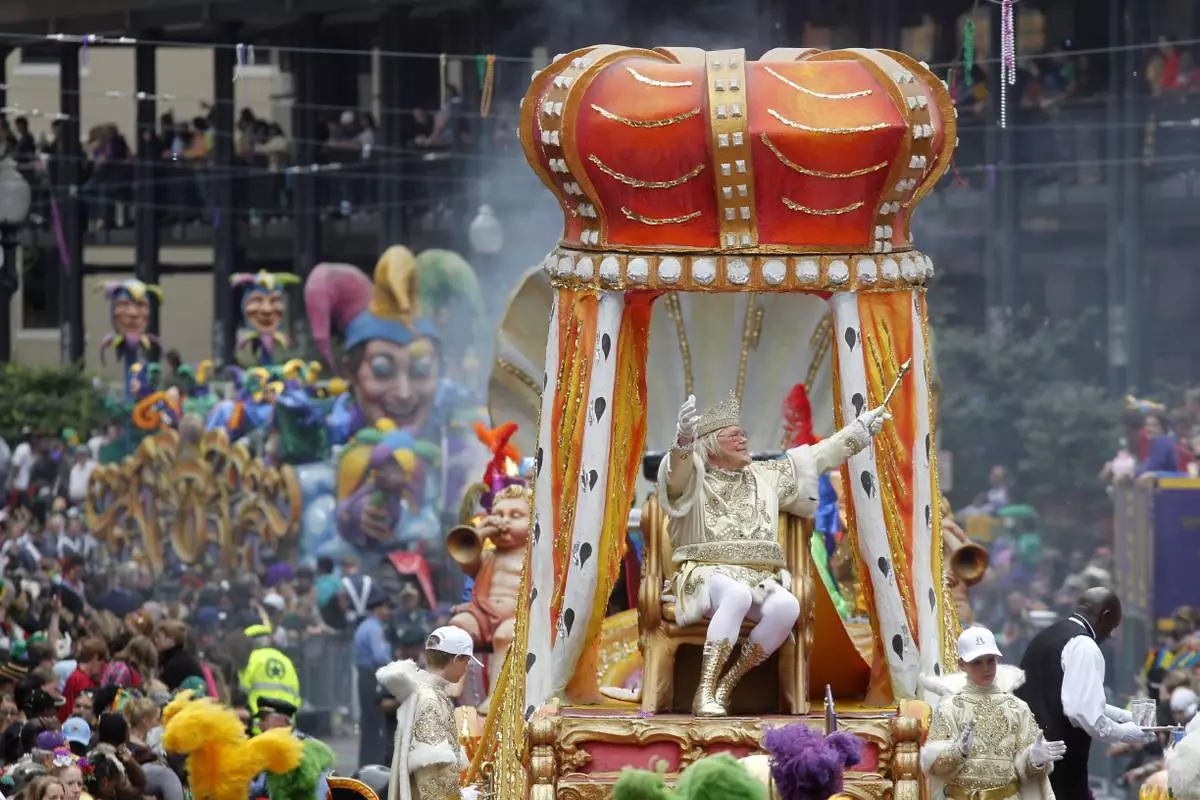
FILE - Rex, the King of Carnival, rides in the Krewe of Rex as he arrives at Canal St. on Mardi Gras day in New Orleans, March 8, 2011. (AP Photo/Gerald Herbert, File)
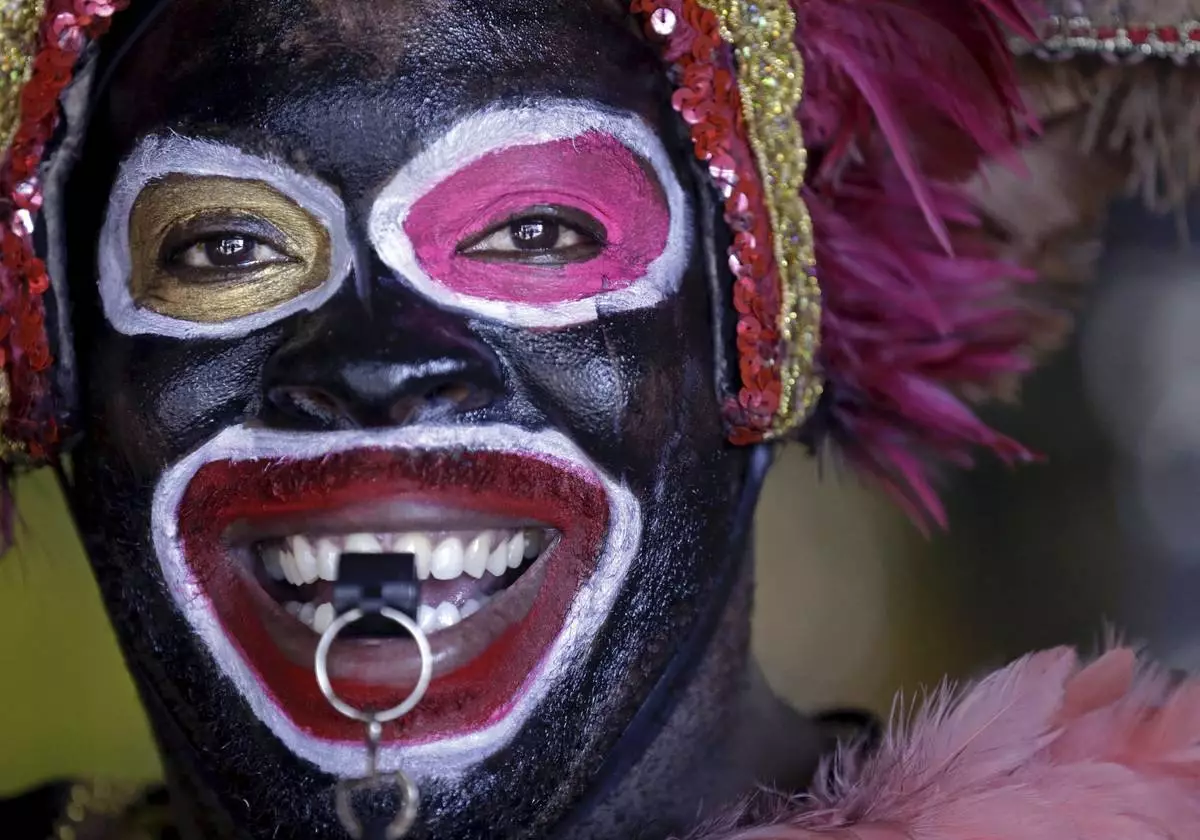
FILE - Maurice Lightfoot, a member of 'The Tramps,' the oldest unit of the Zulu Social Aid and Pleasure Club, a historic New Orleans Mardi Gras krewe, participates in King's Day festivities in New Orleans, Jan. 6, 2015. (AP Photo/Gerald Herbert, File)