Skip to Content Facebook Feature Image

As Trump's deadline to eliminate DEI nears, few schools openly rush to make changes

ENT

As Trump's deadline to eliminate DEI nears, few schools openly rush to make changes
ENT

ENT

As Trump's deadline to eliminate DEI nears, few schools openly rush to make changes

2025-02-28 06:31 Last Updated At:06:40

WASHINGTON (AP) — Schools and colleges across the U.S. face a Friday deadline to end diversity programs or risk having their federal money pulled by the Trump administration, yet few are openly rushing to make changes. Many believe they’re on solid legal ground, and they know it would be all but unprecedented — and extremely time-consuming — for the government to cut off funding.

State officials in Washington and California urged schools not to make changes, saying it doesn’t change federal law and doesn’t require any action. New York City schools have taken the same approach and said district policies and curriculum have not changed.

Leaders of some colleges shrugged the memo off entirely. Antioch University ’s chief said “most of higher education” won’t comply with the memo unless federal law is changed. Western Michigan University’s president told his campus to “please proceed as usual.”

A memo issued Feb. 14 by President Donald Trump's administration, formally known as a Dear Colleague Letter, gave schools two weeks to halt any practice that treats people differently because of their race.

On Thursday, the department launched a new “End DEI” portal inviting students, parents and others to report discrimination based on race or sex in public schools. The department said it will use submissions to identify investigation targets.

Opponents say the memo is an overreach meant to have a chilling effect. The guidance appears to forbid everything from classroom lessons on racism to colleges' efforts to recruit in diverse areas, and even voluntary student groups like Black student unions.

Education organizations have been urging a measured approach, warning institutions not to make any hasty cuts that would be difficult to undo. Ted Mitchell, president of the American Council on Education, is telling colleges that if they were in compliance with federal law before the memo, they still are.

“There’s nothing to act on until we see the administration or its agencies try to stop something,” Mitchell said. “And then we’ll have the argument.”

A loss of federal money would be devastating for schools and colleges, but imposing that penalty would not be quick or simple.

The Education Department office that conducts civil rights investigations had fewer than 600 employees last year — before the Trump administration began cutting staff — while the U.S. has more than 18,000 school districts and 6,000 colleges.

Even when a school or state faces an investigation, it can take years to terminate funding. Under former President Joe Biden, the Education Department tried to pull federal money from Michigan’s education agency after finding it violated the rights of students with disabilities. The investigation began in 2022 and is still tied up in federal court.

“I hope very much that schools charged with providing inclusive, equal education to every student in their school community will stand for that principle,” said Catherine Lhamon, who led the department’s Office for Civil Rights under Biden.

Still, some education leaders say resistance is too risky. At the University of Cincinnati, President Neville G. Pinto said officials are evaluating jobs related to diversity, equity and inclusion, and removing DEI references from school websites.

“Given this new landscape, Ohio public and federally supported institutions like ours have little choice but to follow the laws that govern us,” Pinto wrote.

Ohio State's president, Ted Carter, announced Thursday that it would close its Office of Diversity and Inclusion and cancel some of its services, effective Friday. With an anti-DEI bill also pending in Ohio's legislature, he said he concluded the best course was to act preemptively.

Tony Frank, chancellor of the Colorado State University system, wrote in a campus letter that he weighed taking a stand against the department. But he advised the system's campuses to comply, saying there’s too much at stake for students and staff. “If we gamble here and are wrong, someone else will pay the price,” he wrote.

In many Republican-led states, education chiefs applauded the memo.

“We never felt it was appropriate to use race in making these types of decisions in the first case, so I do not foresee any interruptions in our day-to-day business,” Alabama’s state superintendent, Eric G. Mackey, said in a statement released by the Trump administration.

The memo said schools have promoted DEI efforts often at the expense of white and Asian American students.

It doesn’t carry the weight of law but explains how the new administration will interpret nondiscrimination laws. It dramatically expands a 2023 Supreme Court decision barring the use of race in college admissions to all aspects of education — including, hiring, promotion, scholarships, housing, graduation ceremonies and campus life.

The guidance is being challenged in court by the American Federation of Teachers, which said the memo violates free speech laws.

Some districts already have struck language about equity goals from their websites. While some school leaders are keeping quiet out of fear of being targeted, many also are still struggling to grasp the memo's implications.

“We are looking to our attorney general for guidance because it’s very confusing,” said Christine Tucci Osorio, superintendent of the North St. Paul School District in Minnesota. When a teacher asked if their school could still mark African American History Month, she assured them they could.

Despite concerns that schools would rush to comply, it appears “cooler heads are largely prevailing,” said Liz King, senior director for the education equity program at the Leadership Conference on Civil and Human Rights.

“Once a school sends the message that they are not going to stand up for a member, a community within their school, that is broken trust, that is a lost relationship,” King said.

Trump has vowed to use education funding as political leverage on several fronts, threatening cuts for schools that do not get in line with his agenda on topics including transgender girls' participation in girls' sports and instruction related to race.

Usually, civil rights investigations by the Education Department take at least six months and often much longer. If a school is found in violation of federal law, department policy offers a chance to come into compliance and sign a resolution — typically a 90-day process.

Only if a school refuses to comply can the department move to revoke federal money. That can be done in the Education Department through a court-like process decided by an administrative law judge. If the judge decides the penalty is justified, the school can appeal it to the education secretary and, after that, challenge it in court.

Instead of handling it internally, the department can also refer cases to the Justice Department for prosecution. That route is no faster.

The last time the Education Department was granted approval to cut federal funding was in 1992, against the Capistrano Unified School District in California, which was found to have retaliated against a teacher for filing sex discrimination complaints.

Before the penalty was carried out, the district reinstated the teacher and effectively ended the case. It never lost any money.

Gecker reported from San Francisco, and Mumphrey from Phoenix.

The Associated Press’ education coverage receives financial support from multiple private foundations. AP is solely responsible for all content. Find AP’s standards for working with philanthropies, a list of supporters and funded coverage areas at AP.org.

FILE - President Donald Trump throws pens used to sign executive orders to the crowd during an indoor Presidential Inauguration parade event in Washington, Jan. 20, 2025. (AP Photo/Matt Rourke, File)

FILE - President Donald Trump throws pens used to sign executive orders to the crowd during an indoor Presidential Inauguration parade event in Washington, Jan. 20, 2025. (AP Photo/Matt Rourke, File)
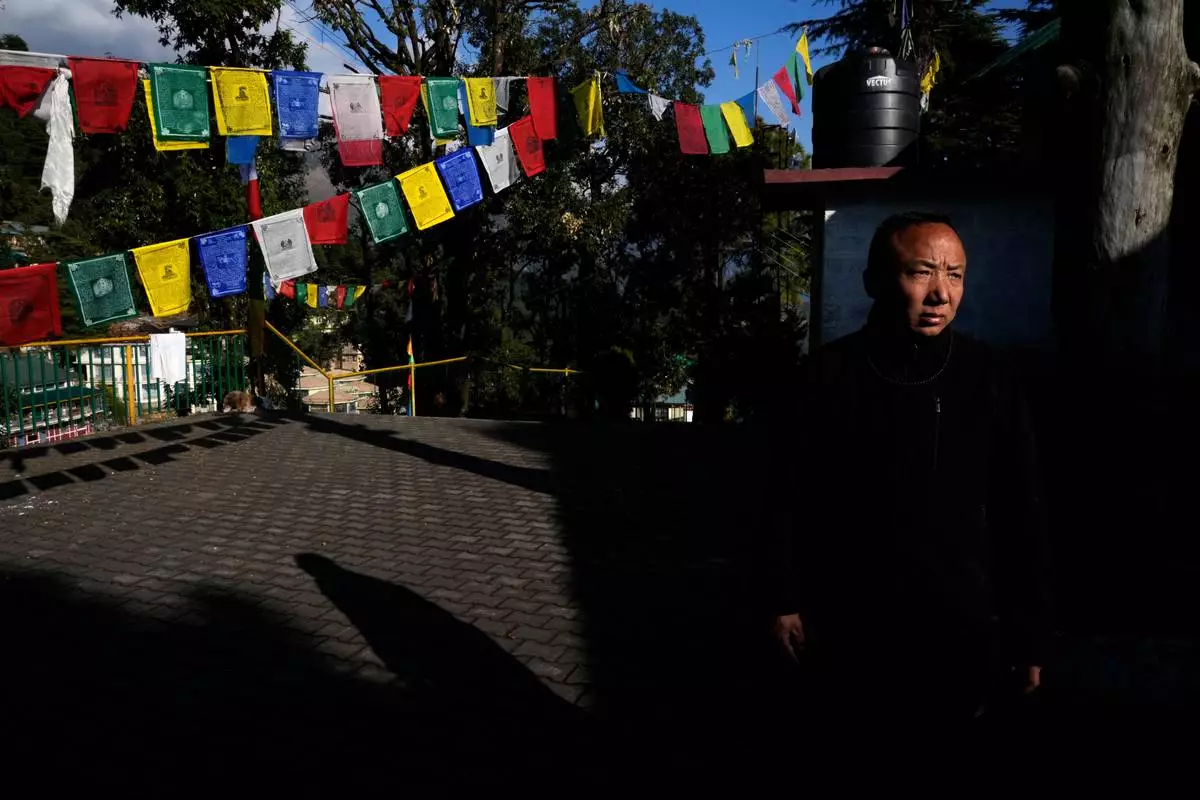
DHARAMSHALA, India (AP) — Sonam Tashi refuses to let his son inherit the same fear.

Once active in the Free Tibet movement in Kathmandu, he found himself silenced. Unable to secure identity papers for his son, he left for the Tibetan capital in exile in India this year where his son will begin an education he can't have at home.

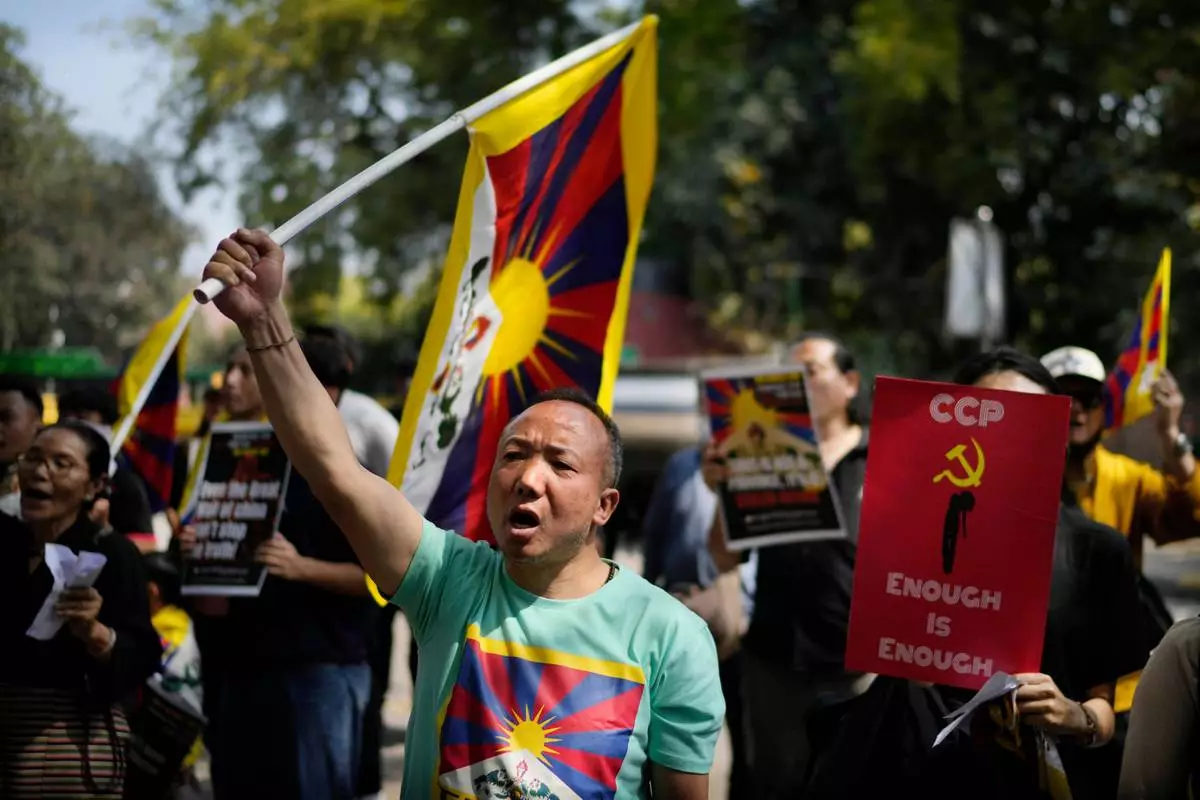
There he joined a rare protest in a city so reminiscent of what Kathmandu once was — where monks walk freely and the Dalai Lama’s portrait is not a risk.

An investigation by The Associated Press found that much of the Chinese technology used to surveil Tibetans in Nepal originally came from American companies. Despite warnings that Chinese firms were copying or outright stealing their designs, these firms built, customized, and expanded China’s surveillance apparatus over the past quarter-century.

Born in Nepal to Tibetan refugees, Tashi spent years on the frontlines of protest, a regular presence outside the Chinese embassy in Kathmandu. In the early days, arrests were brief — just a day or two — but by 2015, police were holding protesters for weeks. The crowds thinned. Eventually, Tashi was one of the last still showing up.

Surveillance trailed them beyond the protests.

Police began showing up hours before any gathering could start, demanding answers to questions they shouldn’t have known to ask: What are you doing tomorrow? Where are you going?

Cameras multiplied — around Tibetan settlements, in temples, even near private homes. In Boudha, the comfort of lingering beneath the stupa’s all-seeing eyes curdled.

Now 49, Tashi is focused on his 10-year-old son. Once an organizer, he’s now just a father trying to get his son out — before the net pulls tighter. On a winding bus ride toward the Indian border, Sonam stared out the window as terraced hills gave way to forest, thinking about what comes next.

“There are cameras everywhere,” he said. “There is no future.”

This surveillance has helped silence Nepal’s once-vibrant “Free Tibet” movement. Thousands of Tibetans once fled to Nepal every year, but last year, the number was down to the single digits, according to Tibetan officials in Nepal.

Across the world, in Washington, D.C., Namkyi’s eyes hold the loneliness that haunts Tibetans in exile.

Arrested at 15 and sentenced to three years in prison for protesting Chinese rule, Namkyi traveled to the U.S. to recount her story of what it means a lose a home.

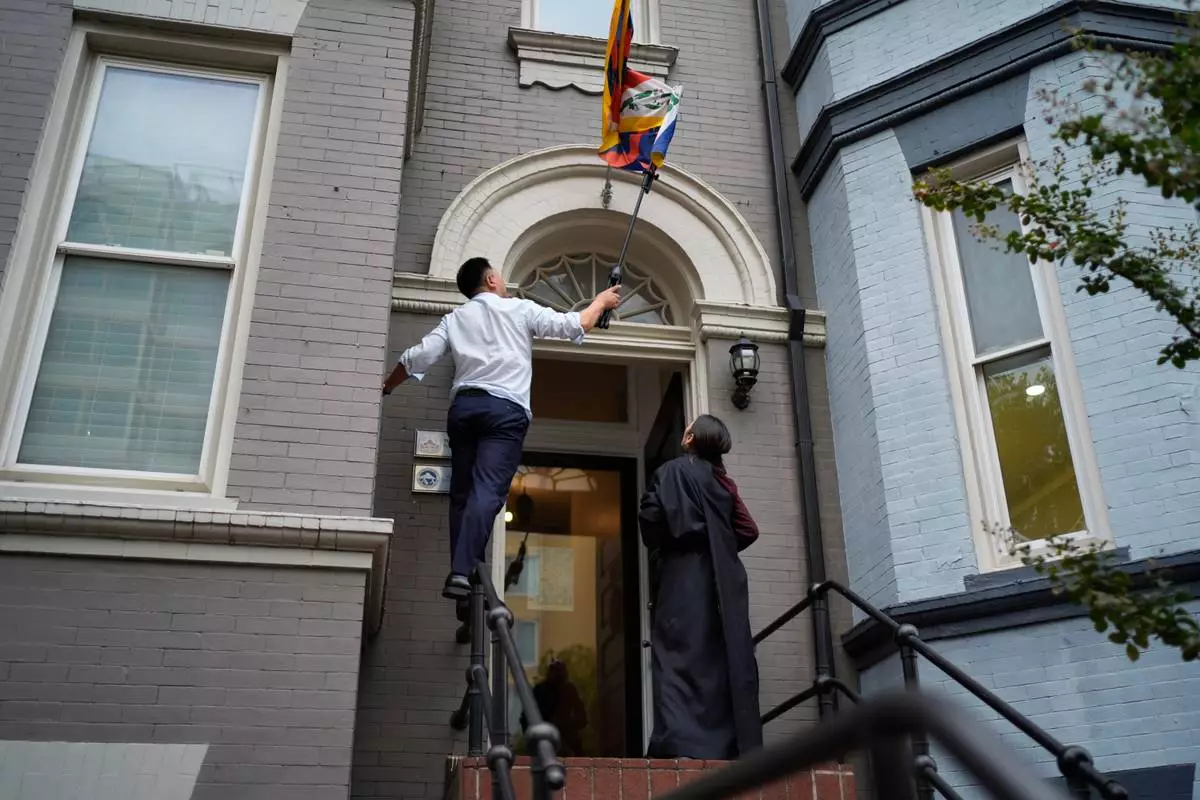
Dressed in black, with two small pins — Tibetan and American — on her coat, she recounts how under withering surveillance, silence has become survival for Nepal's dwindling Tibetan community.

“They know they are being watched,” she said.

Her eyes shine, not with certainty, but with the fragile hope that being heard might one day matter.

This is a documentary photo story curated by AP photo editors.

A tear rolls down the cheek of Namkyi, a Tibetan former political prisoner who was arrested at 15 an imprisoned for protesting Chinese rule, as she recounts her story during an interview at the Office of Tibet in Washington, Oct. 8, 2025. (AP Photo/David Goldman)

A tear rolls down the cheek of Namkyi, a Tibetan former political prisoner who was arrested at 15 an imprisoned for protesting Chinese rule, as she recounts her story during an interview at the Office of Tibet in Washington, Oct. 8, 2025. (AP Photo/David Goldman)

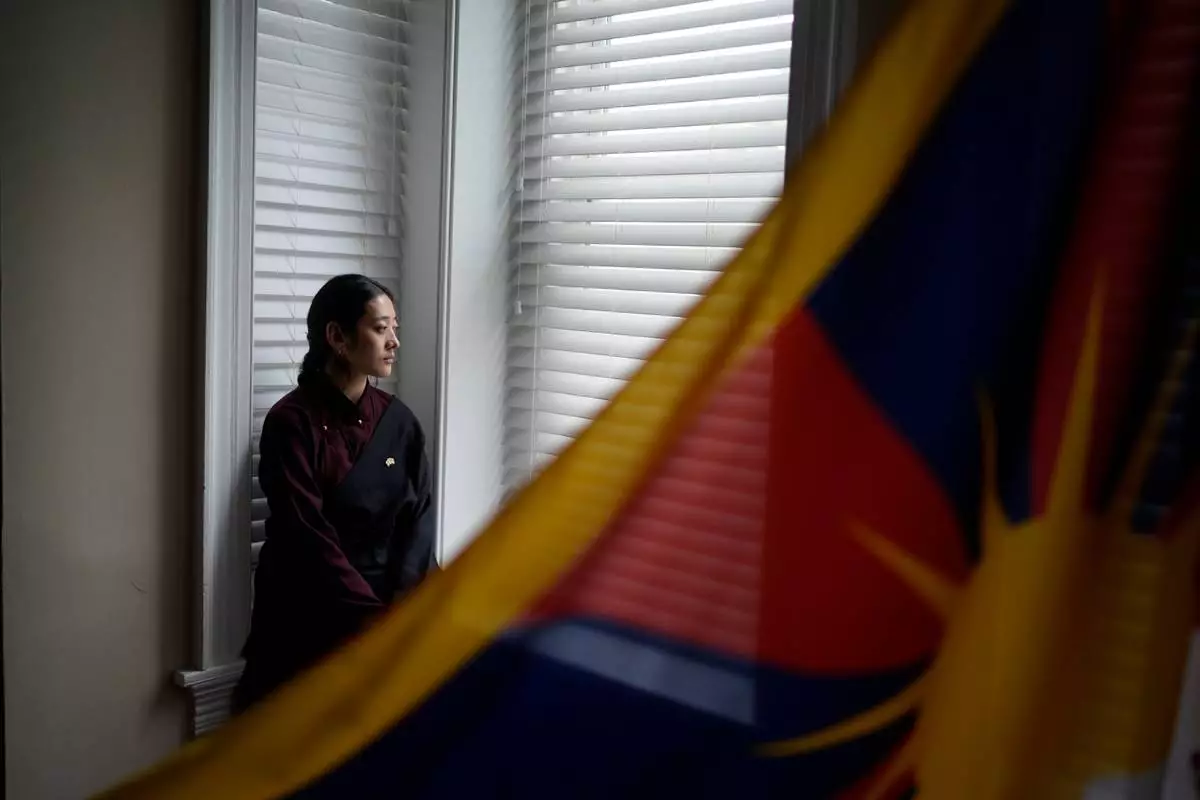
Namkyi, right, a Tibetan former political prisoner who was arrested at 15 for protesting Chinese rule, watches as Tsultrim Gyatso, China Director at Office of Tibet, untangles the Tibetan flag over the office entrance in Washington, Oct. 9, 2025. (AP Photo/David Goldman)

Namkyi, right, a Tibetan former political prisoner who was arrested at 15 for protesting Chinese rule, watches as Tsultrim Gyatso, China Director at Office of Tibet, untangles the Tibetan flag over the office entrance in Washington, Oct. 9, 2025. (AP Photo/David Goldman)

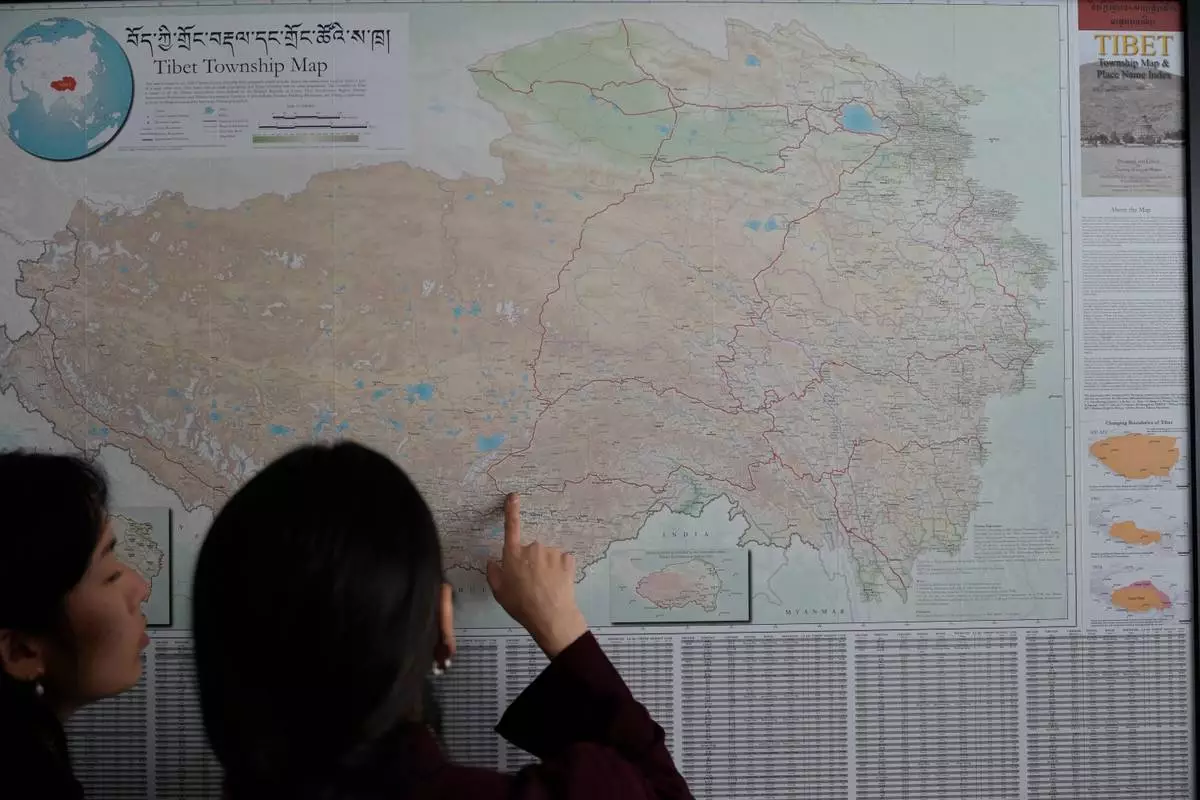
Namkyi, right, a Tibetan former political prisoner who was arrested at 15 for protesting Chinese rule, shows the route she took when she escaped and crossed into Nepal to Tsejin Khando, with the International Campaign for Tibet, Oct. 8, 2025, at the Office of Tibet in Washington. (AP Photo/David Goldman)

Namkyi, right, a Tibetan former political prisoner who was arrested at 15 for protesting Chinese rule, shows the route she took when she escaped and crossed into Nepal to Tsejin Khando, with the International Campaign for Tibet, Oct. 8, 2025, at the Office of Tibet in Washington. (AP Photo/David Goldman)

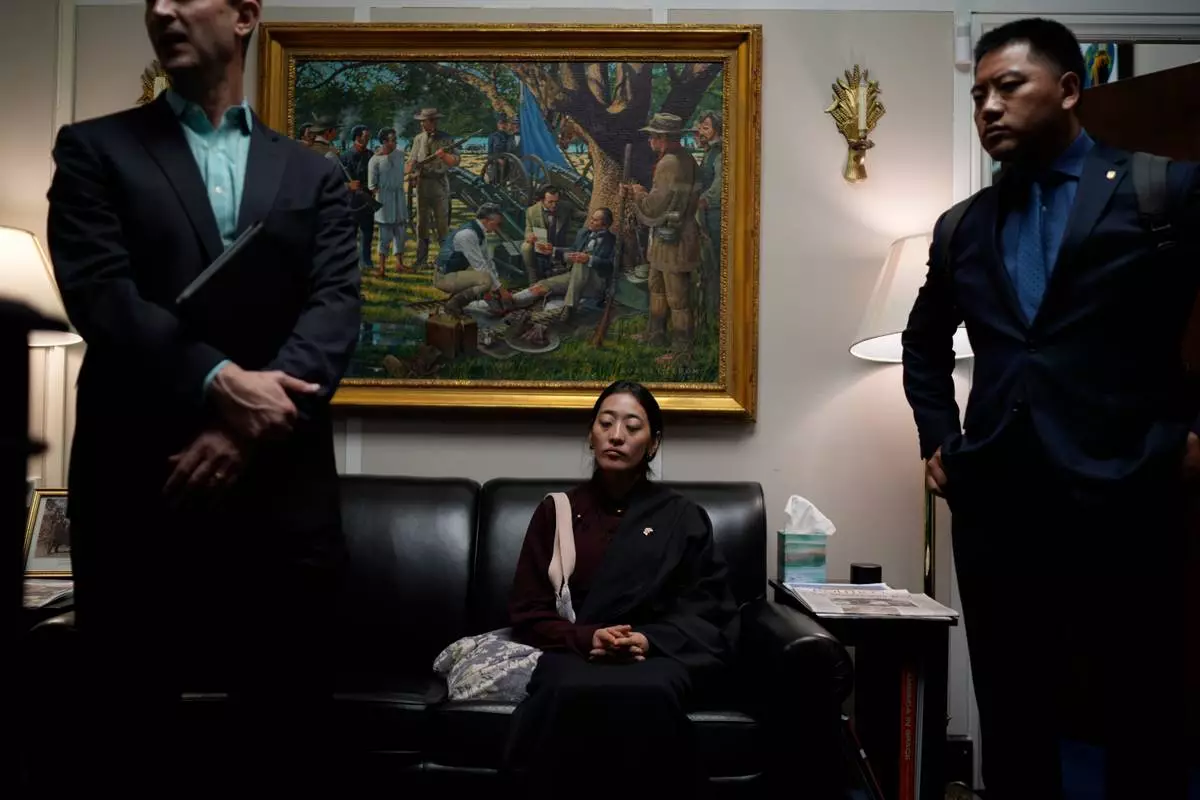
Namkyi, right, a Tibetan former political prisoner who was arrested at 15 for protesting Chinese rule, waits in the office of House Foreign Affairs Committee Chairman Michael McCaul, R-Texas, for a meeting with his staff while joined by Tsultrim Gyatso, right, China Director at Office of Tibet, in Washington, Oct. 8, 2025. (AP Photo/David Goldman)

Namkyi, right, a Tibetan former political prisoner who was arrested at 15 for protesting Chinese rule, waits in the office of House Foreign Affairs Committee Chairman Michael McCaul, R-Texas, for a meeting with his staff while joined by Tsultrim Gyatso, right, China Director at Office of Tibet, in Washington, Oct. 8, 2025. (AP Photo/David Goldman)

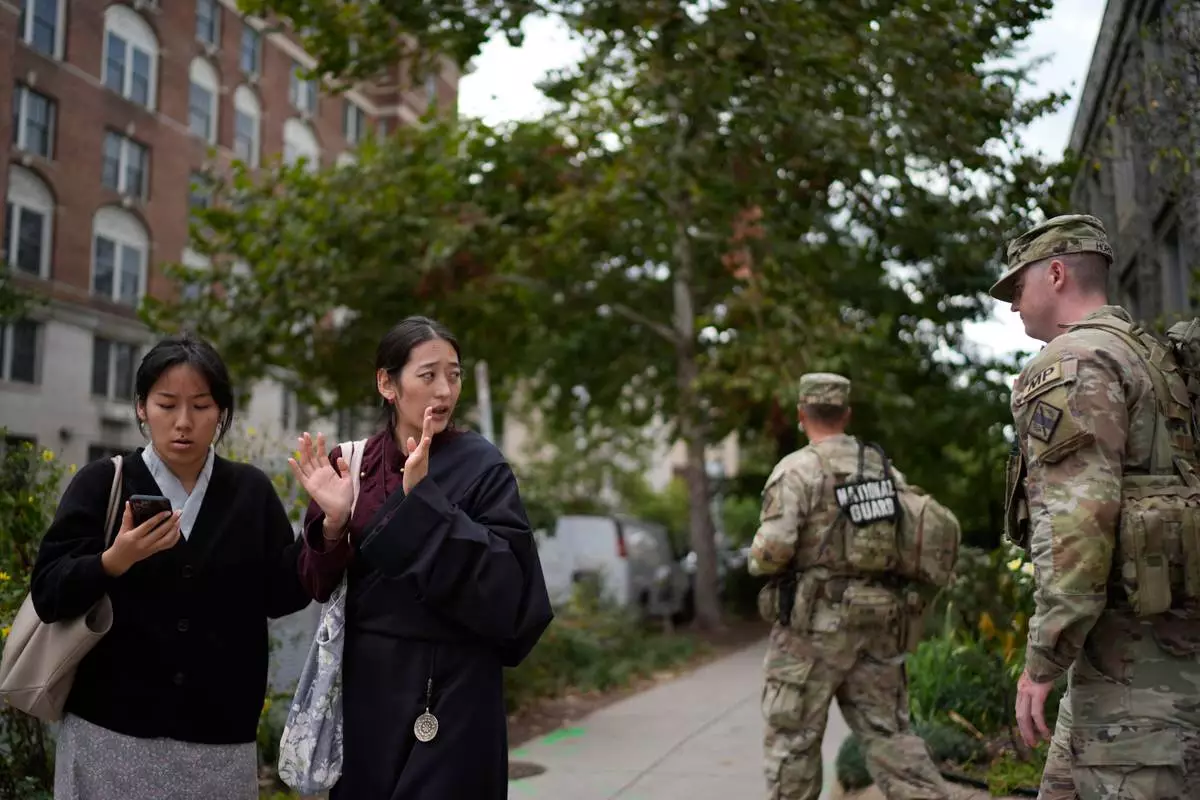
Namkyi, right, a Tibetan former political prisoner who was arrested at 15 for protesting Chinese rule, walks past National Guard troops on patrol with Tsejin Khando, with the International Campaign for Tibet, to a meeting, Oct. 7, 2025, in Washington. (AP Photo/David Goldman)

Namkyi, right, a Tibetan former political prisoner who was arrested at 15 for protesting Chinese rule, walks past National Guard troops on patrol with Tsejin Khando, with the International Campaign for Tibet, to a meeting, Oct. 7, 2025, in Washington. (AP Photo/David Goldman)

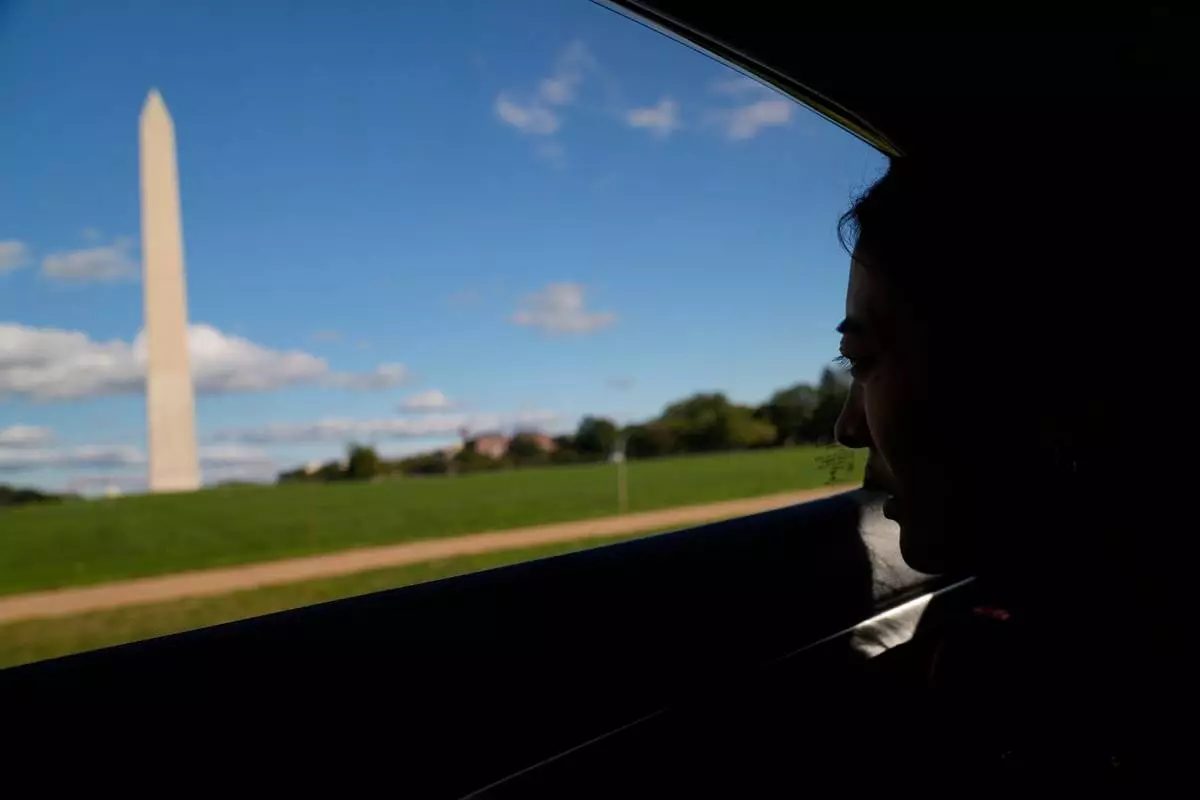
Namkyi, a Tibetan former political prisoner who was arrested at 15 for protesting Chinese rule, looks out toward the Washington Monument while driving to a meeting, Oct. 8, 2025, in Washington. (AP Photo/David Goldman)

Namkyi, a Tibetan former political prisoner who was arrested at 15 for protesting Chinese rule, looks out toward the Washington Monument while driving to a meeting, Oct. 8, 2025, in Washington. (AP Photo/David Goldman)

Namkyi, a Tibetan former political prisoner who was arrested at 15 and imprisoned for protesting Chinese rule, is photographed at the Office of Tibet, Oct. 7, 2025, in Washington. (AP Photo/David Goldman)

Namkyi, a Tibetan former political prisoner who was arrested at 15 and imprisoned for protesting Chinese rule, is photographed at the Office of Tibet, Oct. 7, 2025, in Washington. (AP Photo/David Goldman)

Sonam Tashi takes part in a demonstration to commemorate the anniversary of the 1959 uprising in Tibet against the Chinese rule, in New Delhi, India, March 10, 2025. (AP Photo/Manish Swarup)

Sonam Tashi takes part in a demonstration to commemorate the anniversary of the 1959 uprising in Tibet against the Chinese rule, in New Delhi, India, March 10, 2025. (AP Photo/Manish Swarup)

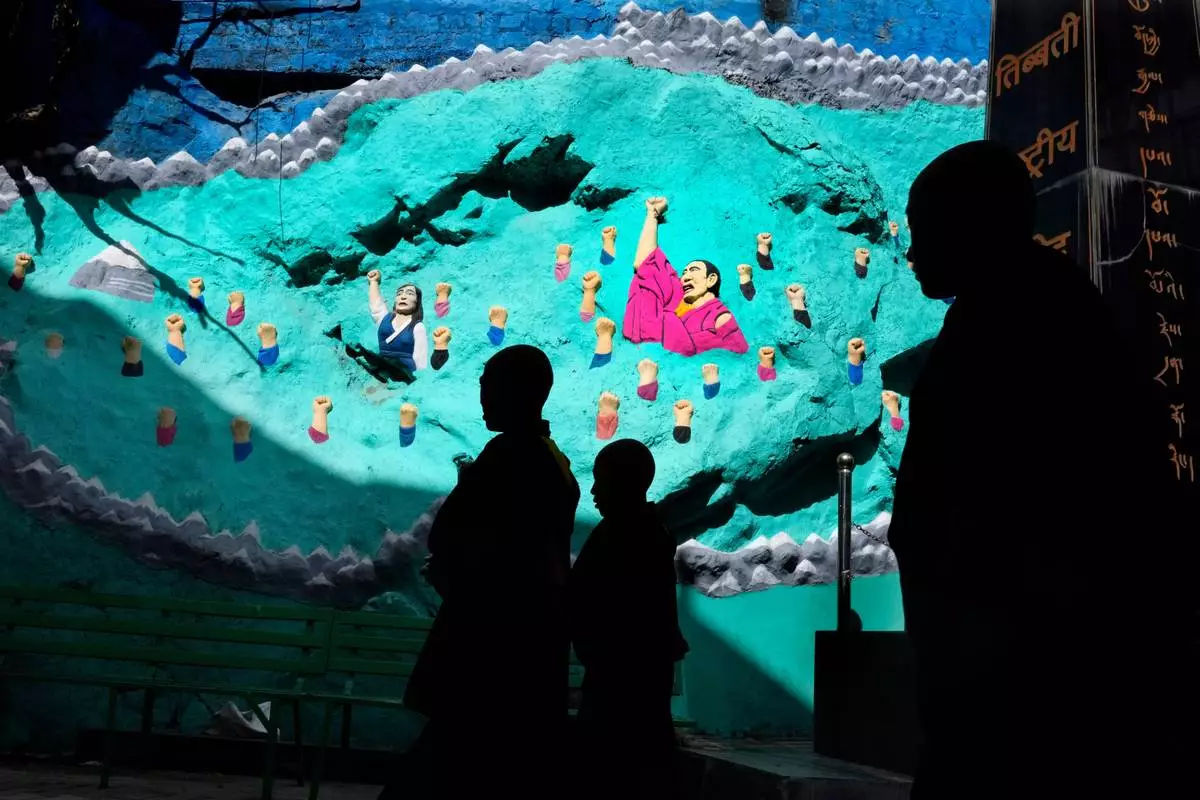
Tibetan monks are silhouetted as they walk past a mural at the Tsuglakhang temple in Mcleodganj near Dharamshala, India, March 6, 2025. (AP Photo/Manish Swarup)

Tibetan monks are silhouetted as they walk past a mural at the Tsuglakhang temple in Mcleodganj near Dharamshala, India, March 6, 2025. (AP Photo/Manish Swarup)

Sonam Tashi, right, and his son, Kunga Tenzin, pass photographs of Tibetan spiritual leader Dalai Lama at the entrance of the Tsuglakhang temple in Mcleodganj near Dharamshala, India, March 6, 2025. (AP Photo/Manish Swarup)

Sonam Tashi, right, and his son, Kunga Tenzin, pass photographs of Tibetan spiritual leader Dalai Lama at the entrance of the Tsuglakhang temple in Mcleodganj near Dharamshala, India, March 6, 2025. (AP Photo/Manish Swarup)

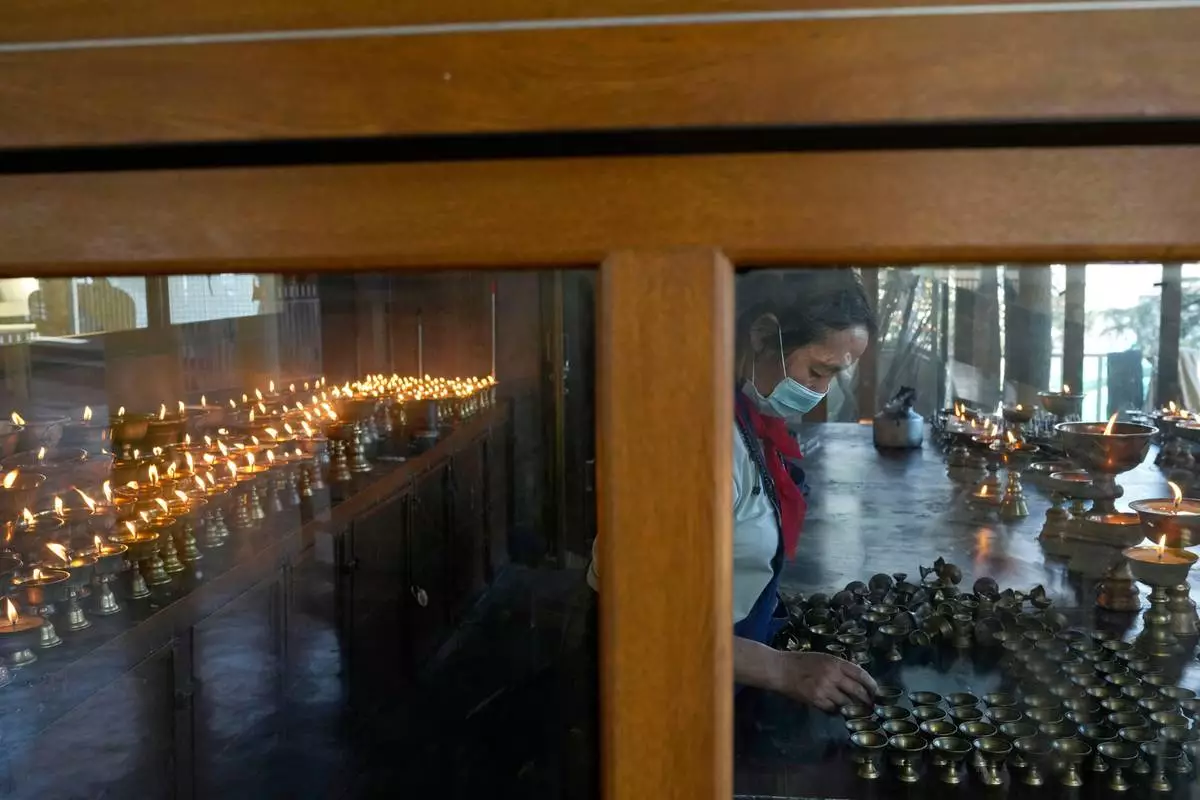
A Tibetan nun cleans copper lamps at Tsuglakhang temple in Mcleodganj near Dharamshala, India, March 6, 2025. (AP Photo/Manish Swarup)

A Tibetan nun cleans copper lamps at Tsuglakhang temple in Mcleodganj near Dharamshala, India, March 6, 2025. (AP Photo/Manish Swarup)

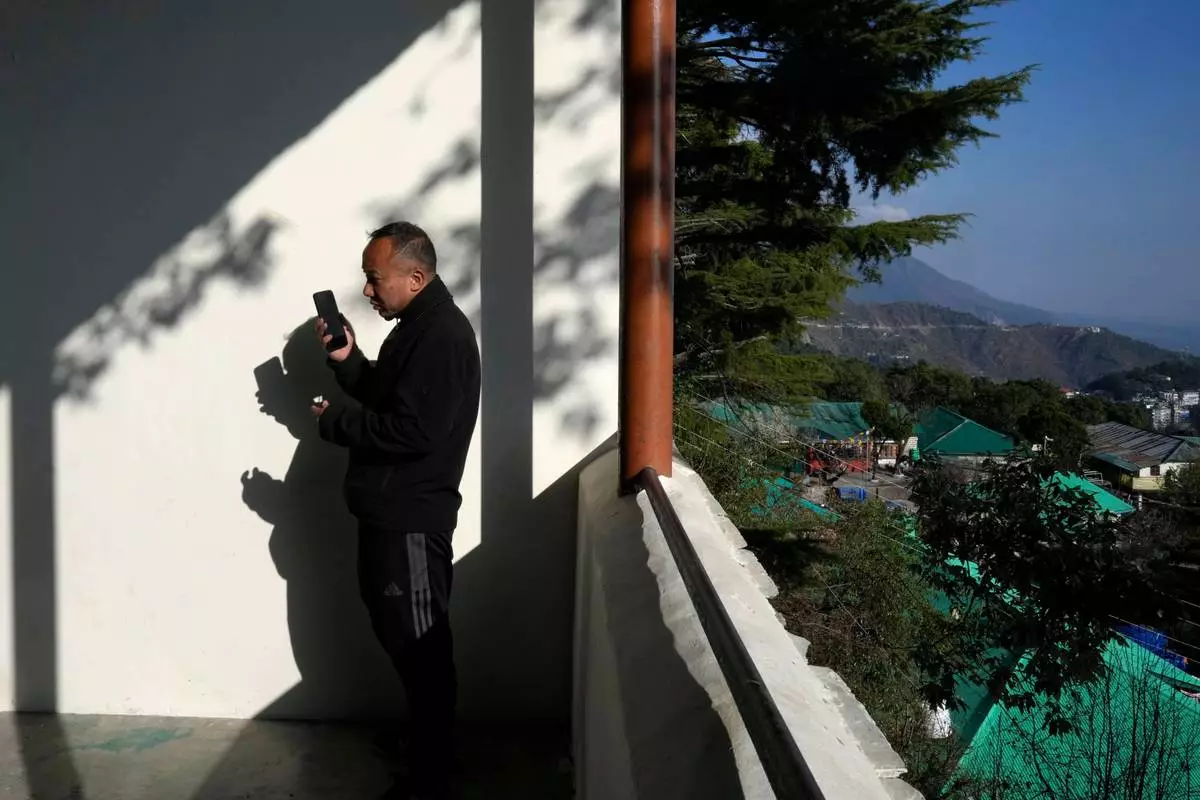
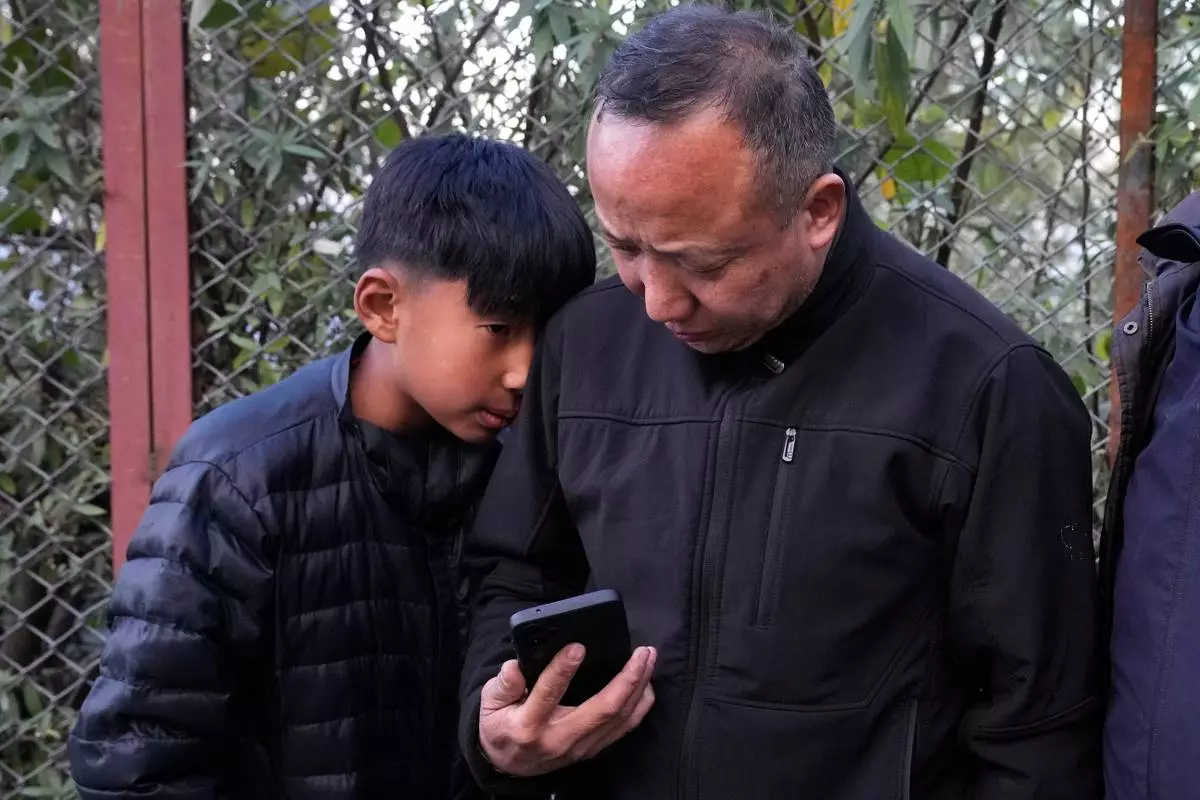
Sonam Tashi talks on his mobile phone from Tibetan Children's Village school in Mcleodganj near Dharamshala, India, March 6, 2025. (AP Photo/Manish Swarup)

Sonam Tashi talks on his mobile phone from Tibetan Children's Village school in Mcleodganj near Dharamshala, India, March 6, 2025. (AP Photo/Manish Swarup)

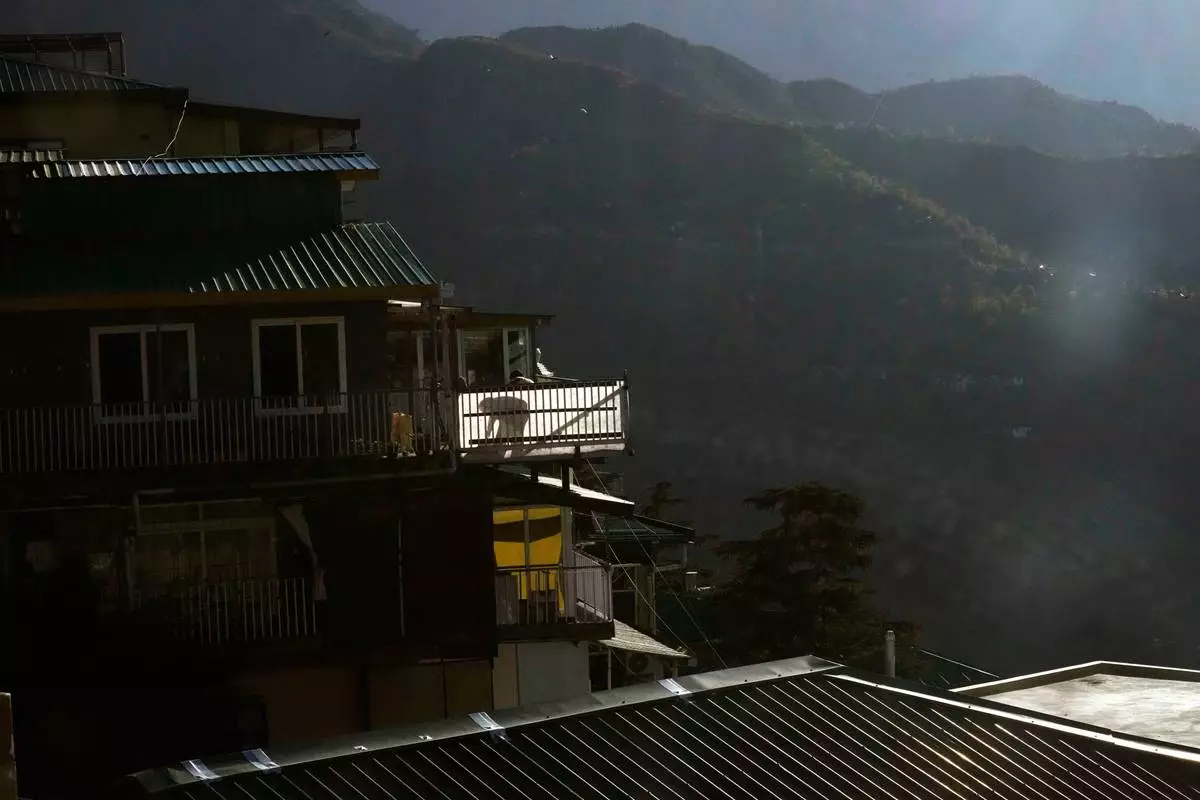
An exiled Tibetan cleans his balcony at Mcleodganj near Dharamshala, India, March 6, 2025. (AP Photo/Manish Swarup)

An exiled Tibetan cleans his balcony at Mcleodganj near Dharamshala, India, March 6, 2025. (AP Photo/Manish Swarup)

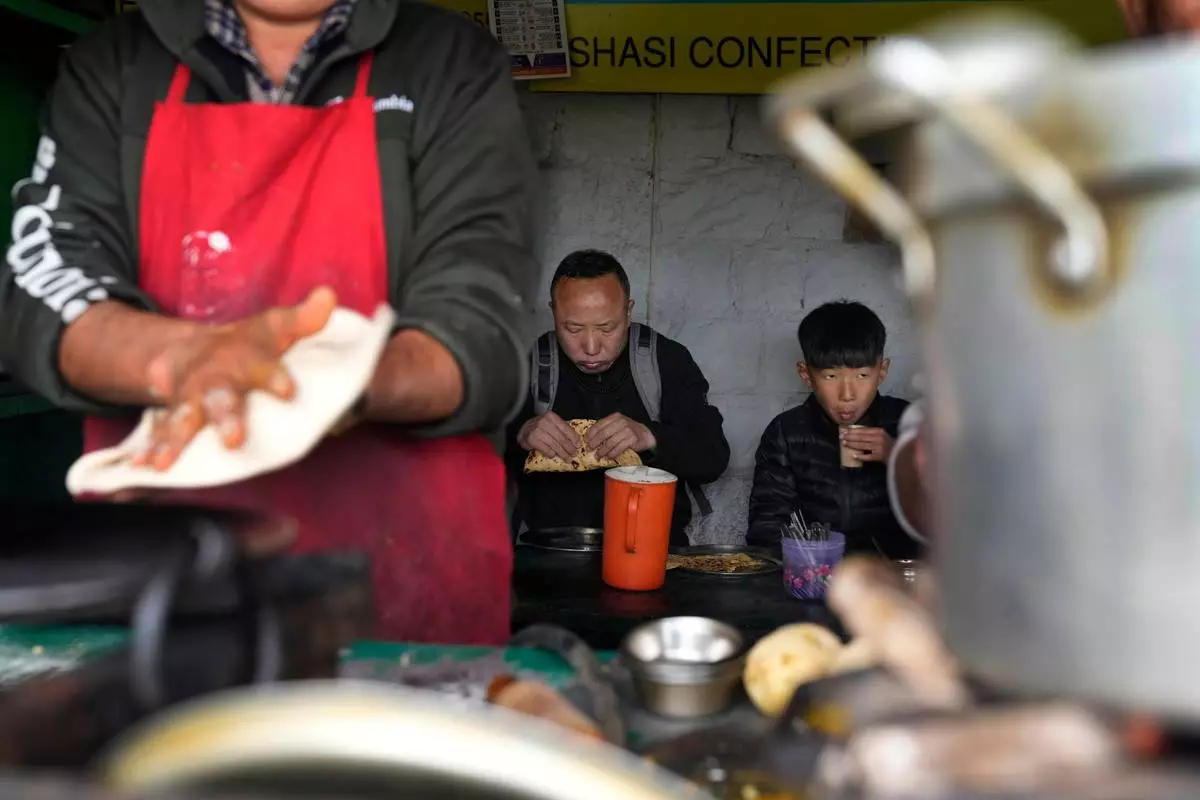
Sonam Tashi and his son, Kunga Tenzin, eat breakfast at a roadside stall in Mcleodganj near Dharamshala, India, March 7, 2025. (AP Photo/Manish Swarup)

Sonam Tashi and his son, Kunga Tenzin, eat breakfast at a roadside stall in Mcleodganj near Dharamshala, India, March 7, 2025. (AP Photo/Manish Swarup)

Sonam Tashi, right, and his son, Kunga Tenzin, wait for transportation for Mcleodganj after reaching Dharamshala, India, where Tashi hopes the Tibetan government in exile can help his son access education, March 5, 2025. (AP Photo/Manish Swarup)

Sonam Tashi, right, and his son, Kunga Tenzin, wait for transportation for Mcleodganj after reaching Dharamshala, India, where Tashi hopes the Tibetan government in exile can help his son access education, March 5, 2025. (AP Photo/Manish Swarup)

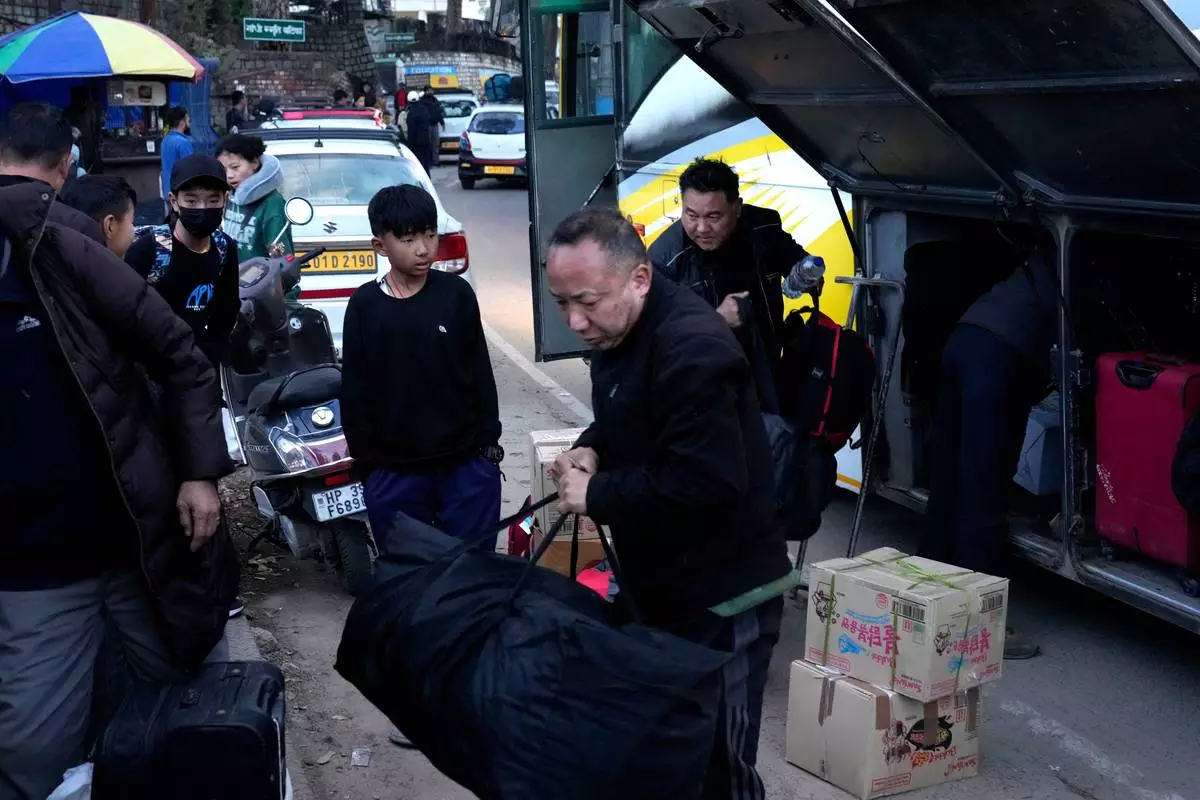
Sonam Tashi, right, and his son, Kunga Tenzin, take their luggage from a bus after reaching Dharamshala, India, where Tashi hopes the Tibetan government in exile can help his son access education, March 5, 2025. (AP Photo/Manish Swarup)

Sonam Tashi, right, and his son, Kunga Tenzin, take their luggage from a bus after reaching Dharamshala, India, where Tashi hopes the Tibetan government in exile can help his son access education, March 5, 2025. (AP Photo/Manish Swarup)

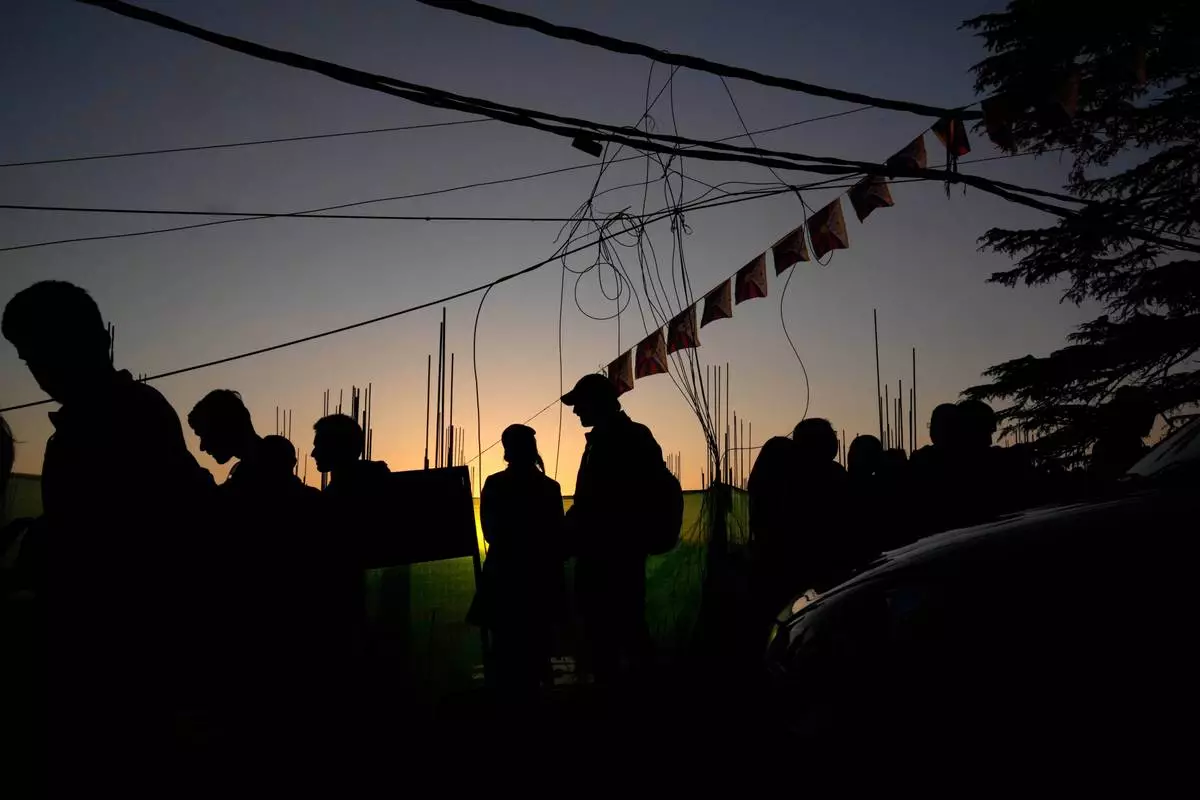
Tibetan flags hang above a street to commemorate the anniversary of the 1959 uprising in Tibet against the Chinese rule, in Mcleodganj near Dharamshala, India, March 6, 2025. (AP Photo/Manish Swarup)

Tibetan flags hang above a street to commemorate the anniversary of the 1959 uprising in Tibet against the Chinese rule, in Mcleodganj near Dharamshala, India, March 6, 2025. (AP Photo/Manish Swarup)

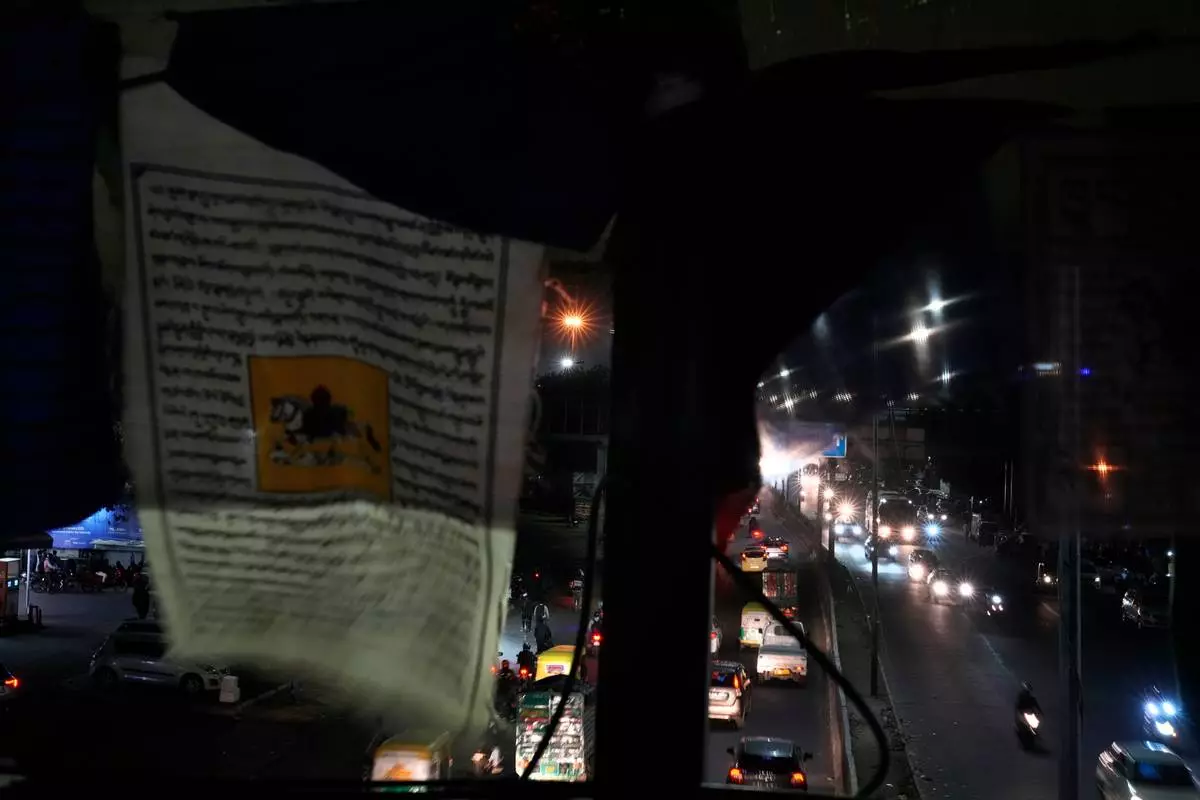
Tibetan prayers hang from a footbridge at Majanu ka Tila, an exile Tibetan settlement, in New Delhi, India, March 5, 2025. (AP Photo/Manish Swarup)

Tibetan prayers hang from a footbridge at Majanu ka Tila, an exile Tibetan settlement, in New Delhi, India, March 5, 2025. (AP Photo/Manish Swarup)

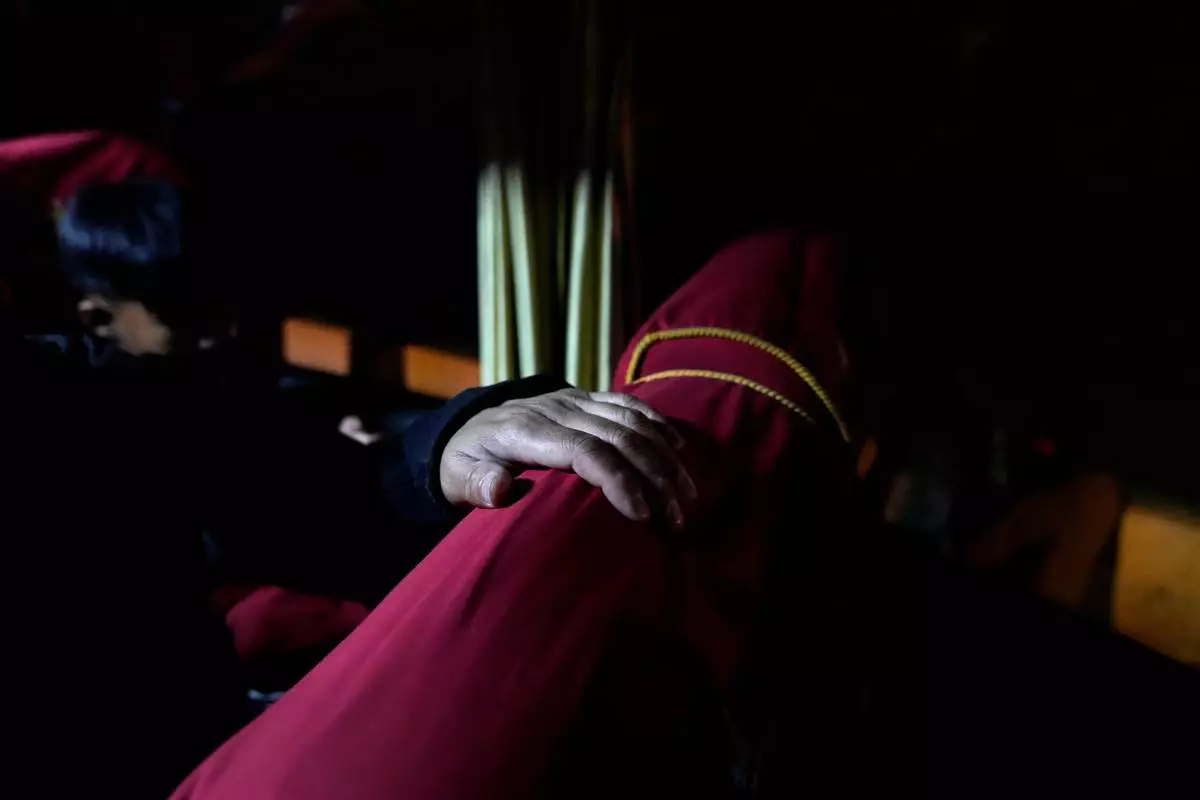
Sonam Tashi sits on a bus in New Delhi as it leaves for Dharamshala where he hopes the Tibetan government in exile there can help his son access education, March 5, 2025. (AP Photo/Manish Swarup)

Sonam Tashi sits on a bus in New Delhi as it leaves for Dharamshala where he hopes the Tibetan government in exile there can help his son access education, March 5, 2025. (AP Photo/Manish Swarup)

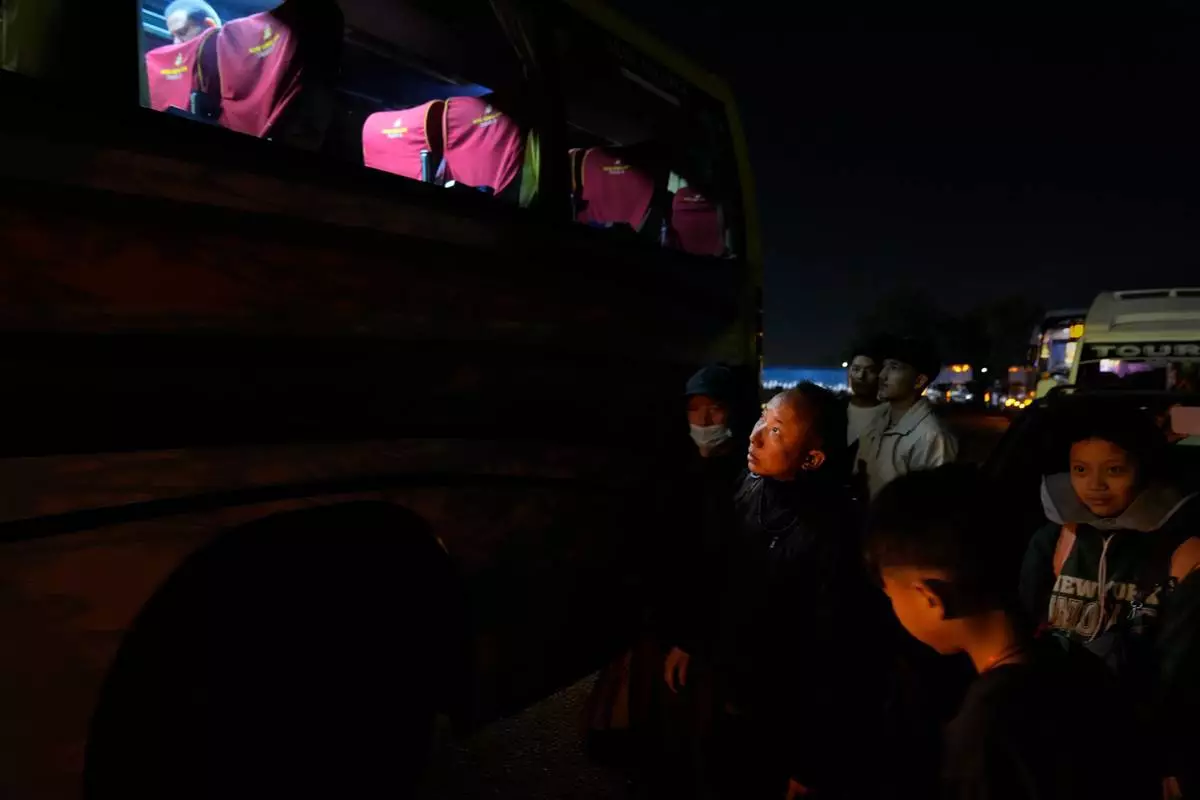
Sonam Tashi and his son, Kunga Tenzin, bottom right, prepare to board their bus to Dharamshala in New Delhi, India, March 5, 2025. (AP Photo/Manish Swarup)

Sonam Tashi and his son, Kunga Tenzin, bottom right, prepare to board their bus to Dharamshala in New Delhi, India, March 5, 2025. (AP Photo/Manish Swarup)

Sonam Tashi takes a walk in a temple at the Tibetan Children's Village school in Mcleodganj near Dharamshala, India, March 6, 2025. (AP Photo/Manish Swarup)

Sonam Tashi takes a walk in a temple at the Tibetan Children's Village school in Mcleodganj near Dharamshala, India, March 6, 2025. (AP Photo/Manish Swarup)

Recommended Articles