U.S. electric vehicle giant Tesla officially announced the rollout of its Full Self-Driving (FSD) software update for car owners across China on Tuesday, marking the official introduction of the much-anticipated feature on the Chinese market.
Tesla China began notifying its customers of the update via its mini-program on the social media app WeChat, with the main upgrades including city road automatic driving assistance, cabin camera functionality and map packages.
The automatic driving assistance features will help guide the vehicle to exit ramps and intersections according to the navigation route, recognize traffic lights at intersections and automatically change lanes based on speed and route. In addition, when no navigation route is set, the feature will select the optimal path for the vehicle based on the actual road conditions.
Unlike the previous description of "Full Self-Driving," Tesla has defined this update as "FSD (Supervised)." Currently, the update kit comes in two versions: an enhanced autopilot package priced at 32,000 yuan (about 4,400 U.S. dollars) and the FSD (supervised) package costing 64,000 yuan (over 8,800 U.S. dollars).
Additionally, due to hardware requirements, only Model Y and Model 3 cars produced after February 2024, along with the new Model S and Model X, are eligible for this update.
Due to differences in road conditions, regulations and the lack of local training, some believe Tesla's self-driving technology has shown some signs of incompatibility in China. However, experts expect it will still have a big influence on the broader smart driving market in the country.
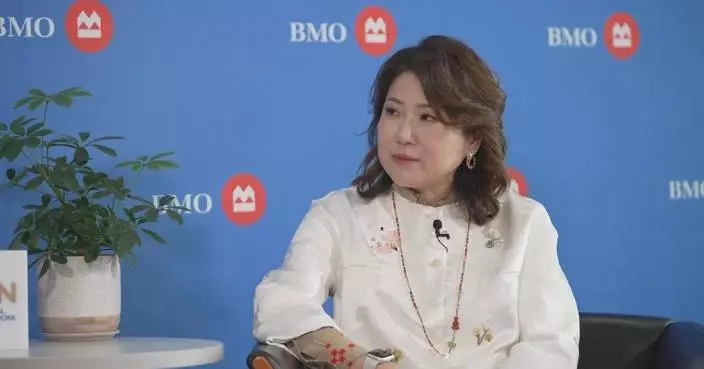
Liu Ge, a finance commentator for China Central Television (CCTV), said the automaker's FSD service will result in what he described a "catfish effect" on the Chinese market -- the idea that Tesla's competitiveness will help drive other smaller companies to up their game, which will help promote the country's auto sector on multiple fronts.
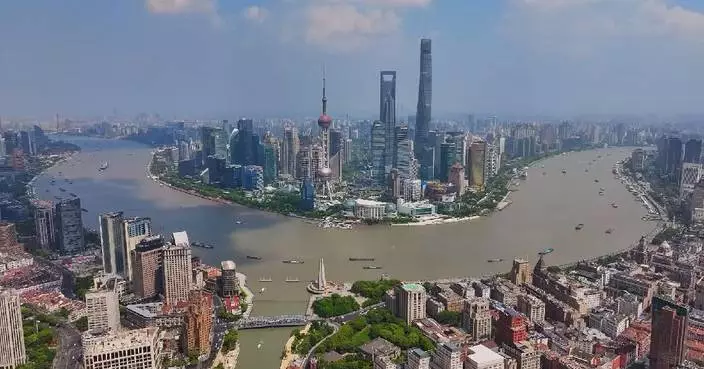
"When Tesla established its factory in Shanghai, it solved its own production capacity shortage at a time when it was facing its most difficult challenges. At the same time, it brought about a huge 'catfish effect,' driving competition in China’s new energy vehicle market and integrating the supply chain. I think at this moment, it’s another example of the 'catfish effect.' On one hand, with a new system coming in, it serves as an incentive for domestic companies involved in autonomous driving, whether legacy automakers or the so-called emerging players. It plays a motivating role for them," he said. "Additionally, Tesla's technology line is different from domestic companies. While many domestic firms use not only visual recognition but also lidar (light detection and ranging sensors) and millimeter-wave radar, Tesla relies solely on visual recognition. I think this provides a reference for establishing autonomous driving standards for our new energy vehicles. In other words, without such a reference, the standards will not be complete. Thus, it helps set up a more complete and more international set of standards. Furthermore, it helps promote consumer understanding and awareness of autonomous driving. After all, with a system that has already been successfully tested abroad, it will draw more attention to the technology and also assist in the promotion of autonomous driving in domestic vehicles."," added Liu.
Tesla rolls out 'full self-driving' mode update in Chinese market
Tesla rolls out 'full self-driving' mode update in Chinese market