A Chinese business delegation wrapped up a three-day visit to Germany on Thursday after exploring areas to deepen economic and trade cooperation while underscoring the important trade relationship between the two sides against a challenging global backdrop.
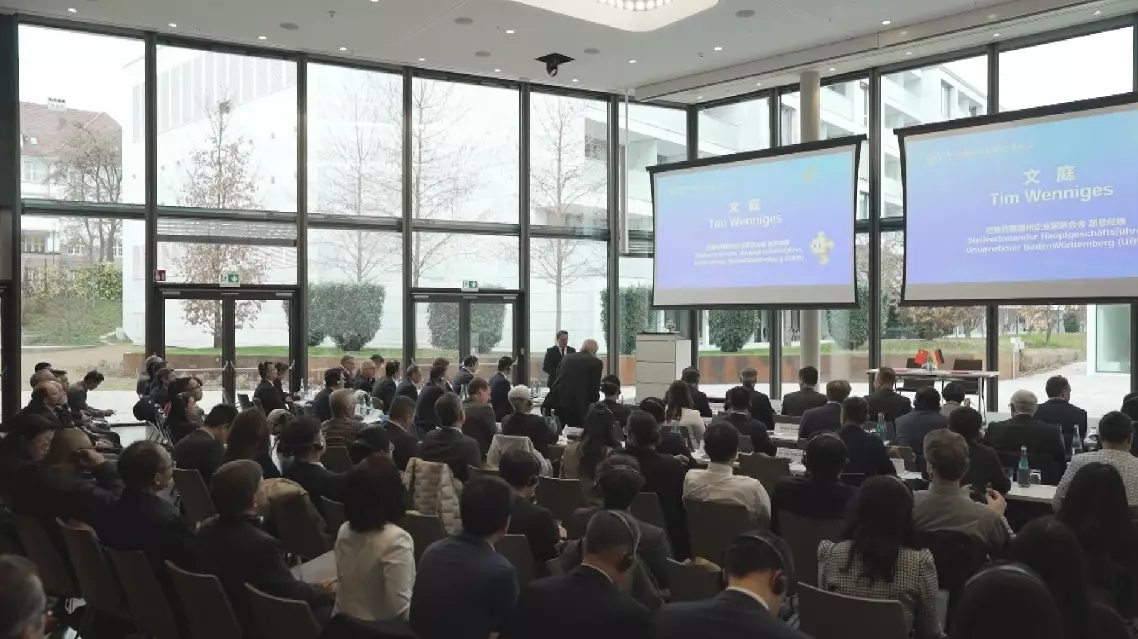
Organized by the China Council for the Promotion of International Trade (CCPIT), the exchange focused on the automotive sector and saw the delegation pay visits to German auto giants including Mercedes-Benz and BMW, as well as to several other leading enterprises.
"You are aware that you come to Germany at a very important time. China is of enormous importance for us, and this year, I'm always every month in China," Oliver Zipse, chairman of the BMW Group, said while meeting with the Chinese delegation.
During their meetings, business representatives from both sides also discussed how to drive new innovation, with German representatives saying they are keen to tap into China's vast market and development potential.
"China is not only just a large market, it's a driver of innovation for us in the automotive industry. We often refer to the Chinese market sort of as a powerhouse. It's always setting a higher standard or bar when it comes to new technologies. So you need to be successful in China. If you're successful in China, that will also ensure global success," said Glenn Schmidt, vice president of Government and External Affairs at the BMW Group.
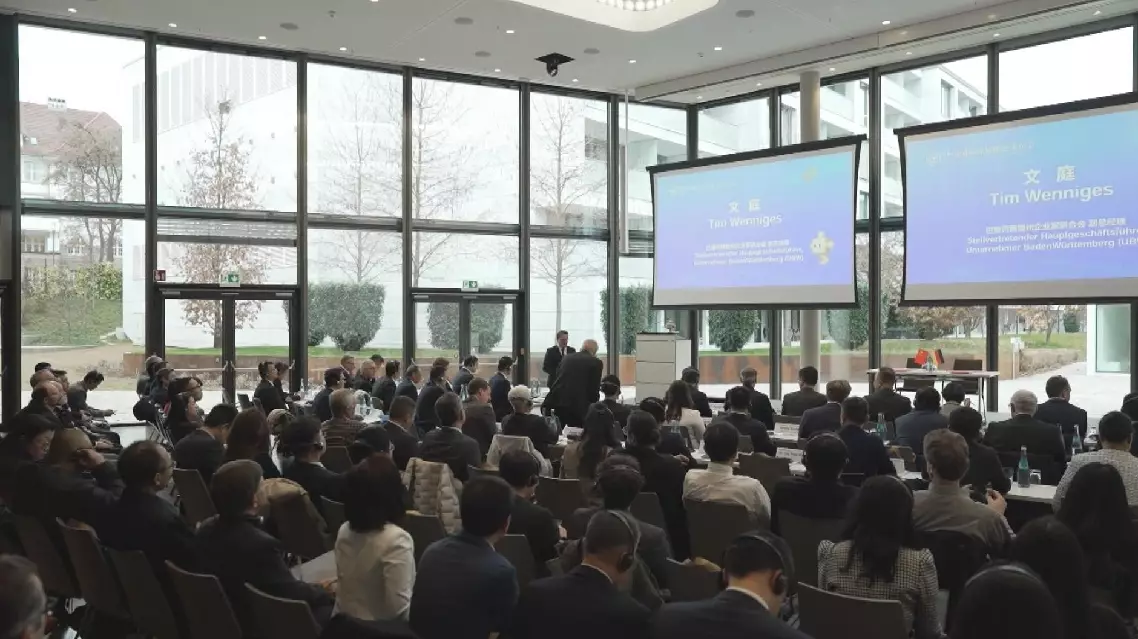
Meanwhile, the China-Germany Economic and Trade Cooperation Forum was also held in Stuttgart on Monday, attracting nearly 200 representatives from automobile manufacturing, transportation, financial and technology industries from the two countries.
Organized by the CCPIT, the forum was themed "New Opportunities for China-Germany Economic and Trade Cooperation in the Context of Global Supply Chain Restructuring."
With U.S. President Donald Trump announcing his intention to impose 25-percent tariffs on auto imports, German business executives have reaffirmed their commitment to the Chinese market. "We have an investment plan where we're over these next years investing 14 billion renminbi into new technologies, into new products, and we're also expanding our research and development footprint in China. But China now is a very firm pillar in that innovation network as far as Mercedes is concerned," said Ola Kaellenius, chief executive officer of Mercedes-Benz Group AG.
Chinese business delegation visits Germany to accelerate closer cooperation in auto sector
Chinese business delegation visits Germany to accelerate closer cooperation in auto sector
China's push toward a greener future is once again in the spotlight at this year's annual political "two sessions", as lawmakers are reviewing a draft ecological environment code, a significant step toward establishing a comprehensive legal framework for ecological protection.
The draft code was submitted on March 5 to the ongoing fourth session of the 14th National People's Congress (NPC), China's top legislature, for deliberation.
Once adopted, it will become China's second formal statutory code, after the Civil Code, which was adopted in 2020.
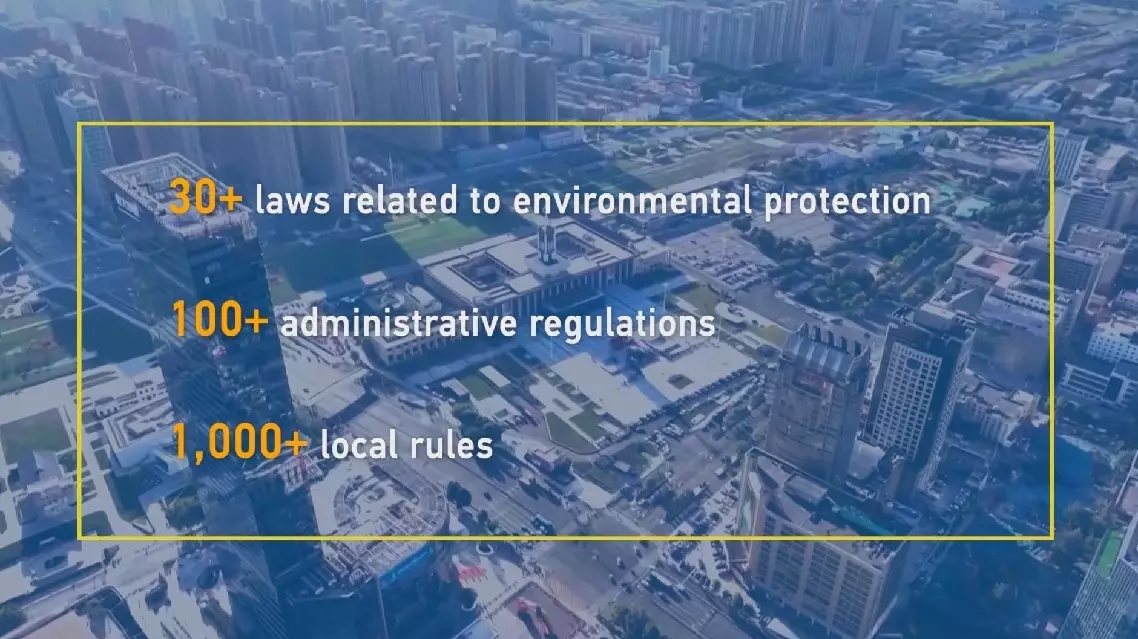
The rule of law has been continuously strengthened to support the country's green progress. China already has more than 30 laws related to environmental protection, along with over 100 sets of administrative regulations and more than 1,000 sets of local rules.
The latest legislative move comes amid China's historic gains in ecological conservation over the past decade or so. Championing green development, the country has recorded the world's fastest growth in forest resources and afforestation, led globally in renewable energy development, and achieved one of the fastest national reductions in energy intensity worldwide.
The 1,242-article draft has five chapters, covering areas including pollution control, ecological protection, and green and low-carbon development.
Scholars involved in drafting the legislation say the code goes beyond broad legal principles. It is also designed to address environmental issues that affect people's daily lives.
"Electric vehicles are becoming very common in China. My family has one. We all think it environment-friendly. But have you ever thought about this question: how do we deal with the first generation of EV batteries after they expire a few years later? The same goes for wind turbine blades and solar panels," said Ding Lin, assistant professor of the Renmin University of China.
China's environmental progress has drawn global attention in recent years, from improving air quality to expanding renewable energy. Yet amid geopolitical tensions and economic uncertainty, some observers have questioned whether the country will maintain the same pace of green transition.
"Last year during the COP30, even some friends who are very familiar with China asked me whether China will continue its green development path. I told them we have gradually worked out new policies. We have a very clear direction and goal. In a world full of uncertainties, we are providing the most certainty," said Wang Yi, an NPC deputy from east China's Zhejiang Province and professor of the Chinese Academy of Sciences.
In a country pursuing modernization, taking the time to codify environmental laws sends a clear message: economic growth and environmental protection are not a trade-off to be managed, but a commitment to be upheld. For China, a beautiful environment is not a luxury for the future, it is a right for the present, and a responsibility to the next generation.
"This code reflects China's vision of harmonious coexistence between humanity and nature. It shows how development and environmental protection can move forward together," said Lyu Zhongmei, vice chair of the NPC Environmental Protection and Resources Conservation Committee.
China will accelerate the green transition across the board and cut carbon dioxide emissions per unit of the GDP by a total of 17 percent in the 2026-2030 period, according to a draft outline of the 15th Five-Year Plan (2026-30) for national economic and social development submitted to the NPC for deliberation on March 5.
Chinese lawmakers review draft ecological environment code in major green legislative push