LONG BEACH, Calif.--(BUSINESS WIRE)--Feb 28, 2025--
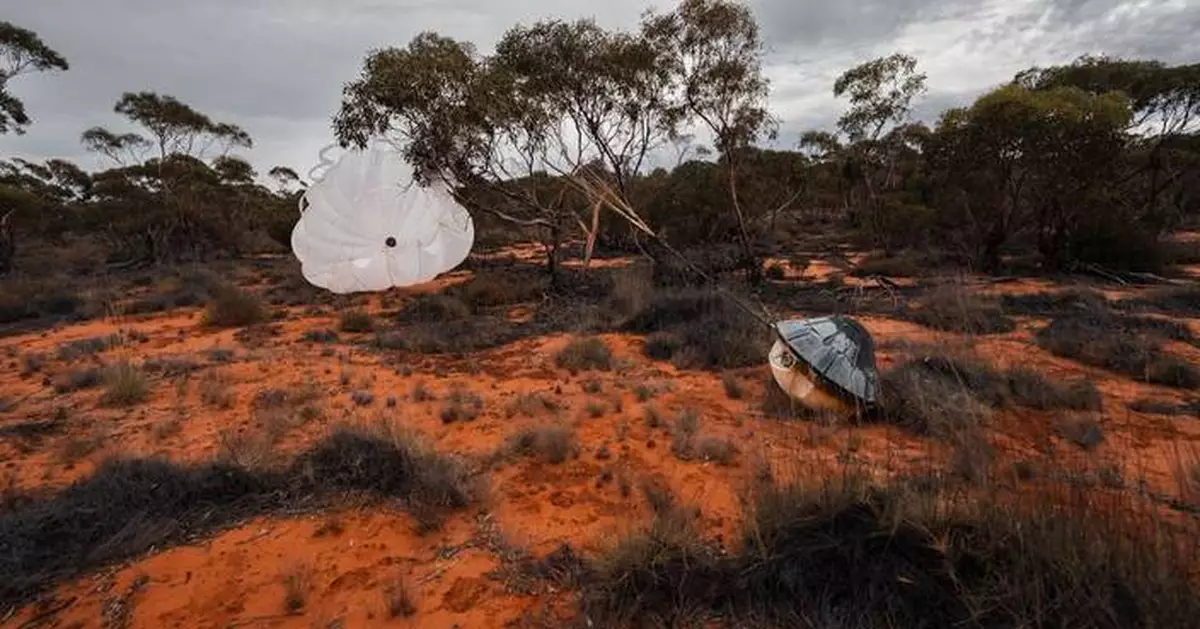
Rocket Lab USA, Inc (Nasdaq: RKLB) (“Rocket Lab” or “the Company”), a leading launch and space systems company, today announced its custom Pioneer spacecraft for Varda Space Industries (“Varda”), a leading orbital pharmaceuticals and hypersonic re-entry logistics company, successfully positioned Varda’s capsule for return to Earth at 1:52 pm UTC on February 27. The capsule landed at the Koonibba Test Range in South Australia, operated by Southern Launch.
This press release features multimedia. View the full release here: https://www.businesswire.com/news/home/20250228229452/en/
Rocket Lab’s Pioneer spacecraft delivered Varda’s W-2 mission that included a hypersonic re-entry capsule carrying a spectrometer from the Air Force Research Laboratory (AFRL) and a heatshield with a Thermal Protection System (TPS) developed in collaboration with NASA’s Ames Research Center. The mission also carried an expanded bioreactor which will increase Varda’s capacity for processing pharmaceuticals in orbit. The W2 mission is a follow-on from the companies’ first mission, W-1, which operated on orbit for eight months before successfully returning Varda’s capsule to Earth in early 2024. W-1 was a successful demonstration of the world’s first space manufacturing mission conducted outside of the International Space Station.
Following the launch of the W-2 mission on January 14, Rocket Lab operated the spacecraft on orbit for six weeks, delivering critical mission functions for Varda’s 120kg capsule including power, communications, propulsion, and attitude control. The Pioneer spacecraft was designed, built, and tested at Rocket Lab’s Spacecraft Production Complex and headquarters in Long Beach, California. It integrates Rocket Lab’s vertically developed components and systems, including star trackers, propulsion systems, reaction wheels, solar panels, flight software, radios, composite structures, tanks, separation systems, and more.
To return the capsule to Earth, Rocket Lab conducted deorbit, and re-entry targeting maneuvers of the Pioneer spacecraft, setting Varda’s capsule on a precise course to land in the Koonibba Test Range operated by Southern Launch. Rocket Lab successfully executed a series of three propulsion maneuvers or “burns” to align the vehicle for its re-entry path. Starting from a 500km circular orbit, Pioneer initiates a burn to slow things down, dropping out perigee to Earth to 300km. A second engine burn raised the orbits apogee to 900km aligning the spacecraft for its re-entry path. Next, the Pioneer spacecraft conducts a third and final burn that releases Varda’s capsule from approximately 470km altitude. The Varda team led the final mission phase, including parachute deployment, touchdown and recovery. Varda will now analyze the payloads and mission results to inform future missions.
“When Rocket Lab was founded, our initial focus was getting things to space. Now our team have become experts in returning them to Earth too,” said Rocket Lab founder and CEO Sir Peter Beck. “We’re immensely proud to continue our support of Varda’s inspiring vision with a second successful in-orbit mission and re-entry using our Pioneer spacecraft. Missions like W-2 underscore our exceptional capabilities as an end-to-end space company enabling unique and complex programs that unlock the full potential of space.”
"Varda is a leader in repeatable, reliable reentry from orbit to Earth, and the W-2 mission further solidifies this,” said Wendy Shimata, VP of autonomous systems. “With more re-entries coming on the heels of this one, the team at Varda is excited to continue to build toward a thriving orbital economy.”
The W-2 mission is the second of four Rocket Lab Pioneer spacecraft ordered by Varda to support orbital processing, with the third spacecraft complete and shipped to Vandenberg Space Force Base ready for launch in the coming weeks.
+ About Rocket Lab
Founded in 2006, Rocket Lab is an end-to-end space company with an established track record of mission success. We deliver reliable launch services, satellite manufacture, spacecraft components, and on-orbit management solutions that make it faster, easier, and more affordable to access space. Headquartered in Long Beach, California, Rocket Lab designs and manufactures the Electron small orbital launch vehicle, a family of spacecraft platforms, and the Company is developing the large Neutron launch vehicle for constellation deployment. Since its first orbital launch in January 2018, Rocket Lab’s Electron launch vehicle has become the second most frequently launched U.S. rocket annually and has delivered more than 200 satellites to orbit for private and public sector organizations, enabling operations in national security, scientific research, space debris mitigation, Earth observation, climate monitoring, and communications. Rocket Lab’s spacecraft platforms have been selected to support NASA missions to the Moon and Mars, as well as the first private commercial mission to Venus. Rocket Lab has three launch pads at two launch sites, including two launch pads at a private orbital launch site located in New Zealand and a third launch pad in Virginia. To learn more, visit www.rocketlabusa.com.
+ Forward Looking Statements
This press release contains forward-looking statements within the meaning of the Private Securities Litigation Reform Act of 1995. We intend such forward-looking statements to be covered by the safe harbor provisions for forward looking statements contained in Section 27A of the Securities Act of 1933, as amended (the “Securities Act”) and Section 21E of the Securities Exchange Act of 1934, as amended (the “Exchange Act”). All statements contained in this press release other than statements of historical fact, including, without limitation, statements regarding our launch and space systems operations, launch schedule and window, safe and repeatable access to space, Neutron development, operational expansion and business strategy are forward-looking statements. The words “believe,” “may,” “will,” “estimate,” “potential,” “continue,” “anticipate,” “intend,” “expect,” “strategy,” “future,” “could,” “would,” “project,” “plan,” “target,” and similar expressions are intended to identify forward-looking statements, though not all forward-looking statements use these words or expressions. These statements are neither promises nor guarantees, but involve known and unknown risks, uncertainties and other important factors that may cause our actual results, performance or achievements to be materially different from any future results, performance or achievements expressed or implied by the forward-looking statements, including but not limited to the factors, risks and uncertainties included in our Annual Report on Form 10-K for the fiscal year ended December 31, 2024, as such factors may be updated from time to time in our other filings with the Securities and Exchange Commission (the “SEC”), accessible on the SEC’s website at www.sec.gov and the Investor Relations section of our website at www.rocketlabusa.com, which could cause our actual results to differ materially from those indicated by the forward-looking statements made in this press release. Any such forward-looking statements represent management’s estimates as of the date of this press release. While we may elect to update such forward-looking statements at some point in the future, we disclaim any obligation to do so, even if subsequent events cause our views to change.
+ About Varda:
Varda Space Industries is expanding the economic bounds of humankind by designing and building the infrastructure needed to make low Earth orbit accessible to industry, from in-orbit production equipment to reliable and economical reentry capsules. The company operates out of El Segundo, California with office and industrial production space. You can follow Varda on X (@vardaspace) and LinkedIn.
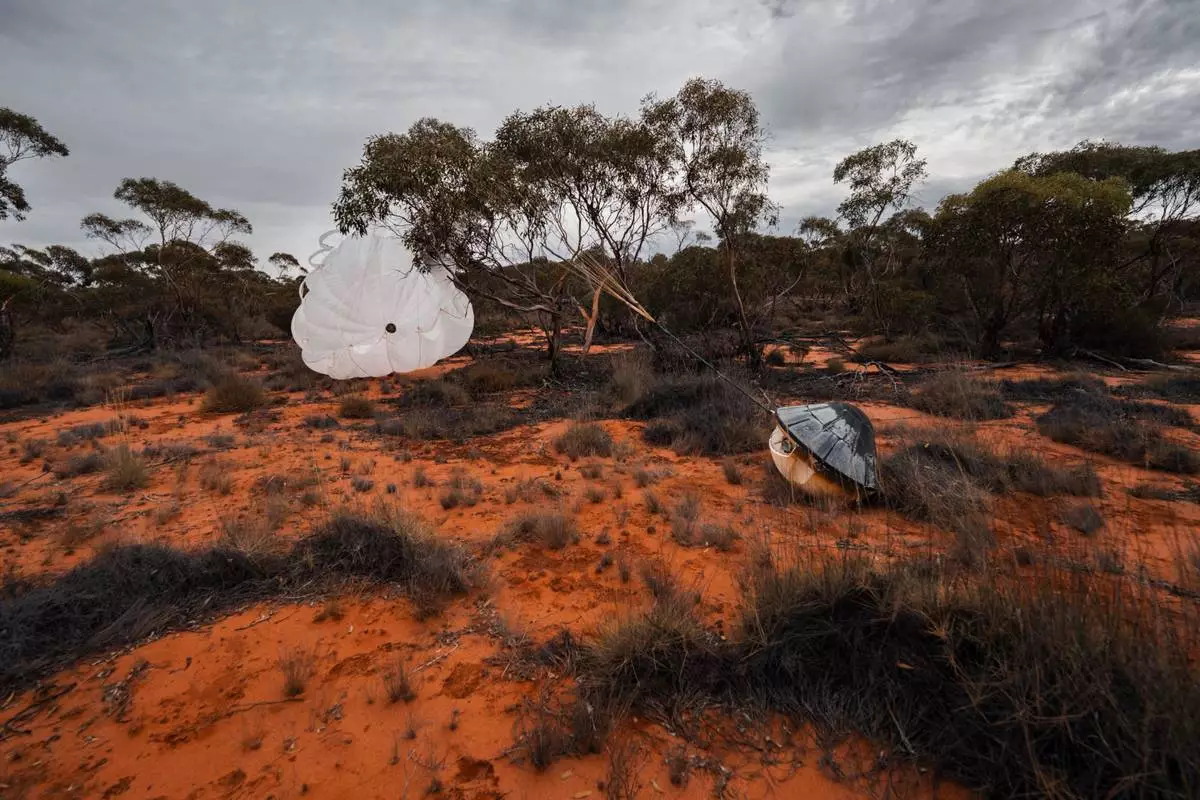
Rocket Lab’s Pioneer Spacecraft Delivers Re-Entry for Varda’s In-Space Manufacturing Capsule in South Australia. Credit: William Godwin, courtesy Varda Space Industries