Cultural professionals in China have provided valuable insights on how to enhance the country's film industry, building on the global success of the animated blockbuster Ne Zha 2 after it secured a position among the top seven films of all time worldwide.
The Tianfu Long Island Digital Cultural and Creative Park in the southwestern Chinese city of Chengdu, where most of the key companies involved in the production chain of Ne Zha 2 are located within a hundred meters, has attracted a constant stream of visitors since the film became an unprecedented smash hit.
Chengdu's success in the creation of Ne Zha 2 is inseparable from its cultivation of talents over the course of many years. Sichuan University, and University of Electronic Science and Technology of China have set up digital cultural and creative majors, providing a large number of professionals in the domestic animation industry.
At present, more than 100,000 people are employed in the film and television industry in Chengdu, while 220,000 students are studying film and television majors in the city. However, according to an industry insider, there is still a talent gap.
"We are short of professions such as animators and special effects artists. The explosive popularity of Ne Zha 2 has also shown everyone that the animation industry actually has a bright future. I think it is a great help to pool more talents in this industry," said Sun Lu, co-founder and CEO of Chengdu Qianniao Cultural Communication, which is responsible for art design for the hugest-grossing animated film worldwide.
As the third session of the 14th National People's Congress (NPC), China's top legislature, and the third session of the 14th National Committee of the Chinese People's Political Consultative Conference (CPPCC), China's top political advisory body, will kick off on March 5 and March 4, respectively, NPC deputy Shao Li and CPPCC member Fu Ruoqing shed light on how to fix the gap and enhance China's cultural appeal on the global stage.
"My suggestion is to encourage universities and film companies to establish closer cooperation, jointly formulate talent training programs, improve talent incentive mechanisms, commend and reward outstanding film talents and works, and provide more creative opportunities and financial support for young film talents," said Shao, a celebrated female Chinese author.
"So I think we need to continue to promote Chinese films abroad. That is, we need to create new films with an international perspective and a language system that is internationally understood. This allows audiences from different cultures to experience the values and understanding of new Oriental culture," said Fu, also chairman of the China Film Group Corporation.
They also believe the boom in the film market cannot rely solely on a few blockbuster films, stressing that more efforts should be made to further unleash the potential of film consumption and promote the healthier development of the film ecosystem through systematic policy innovation.
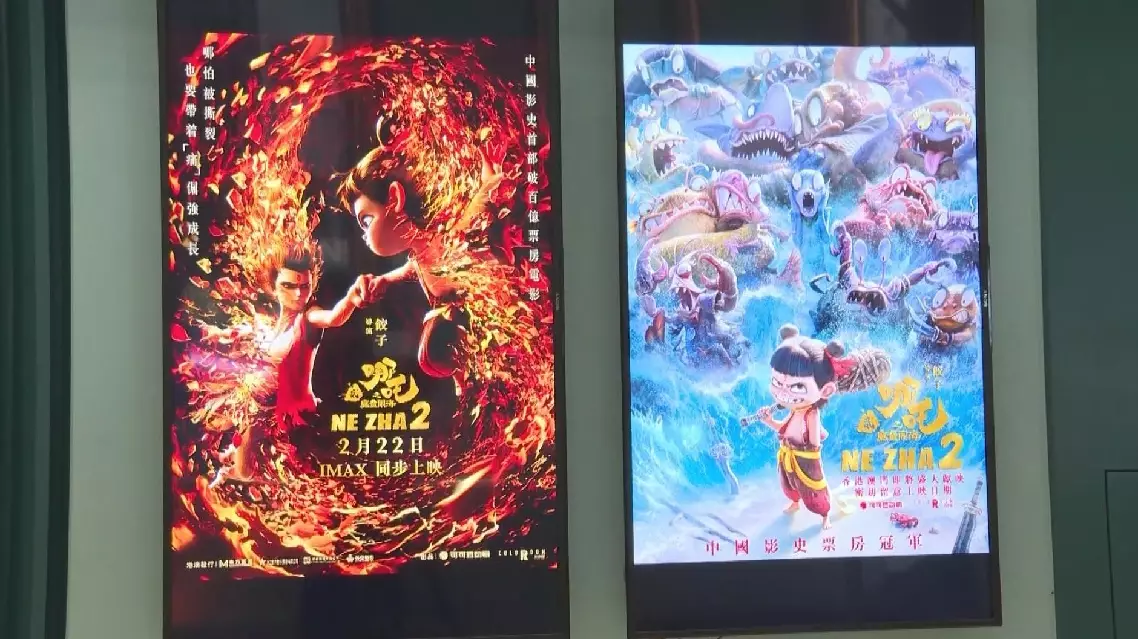
Creative professionals envision path forward for China's booming film industry
U.S. President Donald Trump said on Friday that he estimates a deal with Iran will be signed "in the next day or two."
Trump said in an interview with Israel's Channel 12 News that the United States and Iran will probably meet over the weekend to finalize a deal to end the war. "The Iranians want to meet and make a deal," he said.
He said "the naval blockade on Iran is helping to make a deal. I will not lift it until we make a deal," adding that "the biggest part of this deal is that it will make Israel safer. This deal is good for Israel."
According to the channel, one component of the deal under discussion is that the United States will release 20 billion U.S. dollars in frozen Iranian funds.
In exchange, Iran would give up its stockpile of enriched uranium, and would be only allowed to have nuclear research reactors to produce medical isotopes, all above ground.
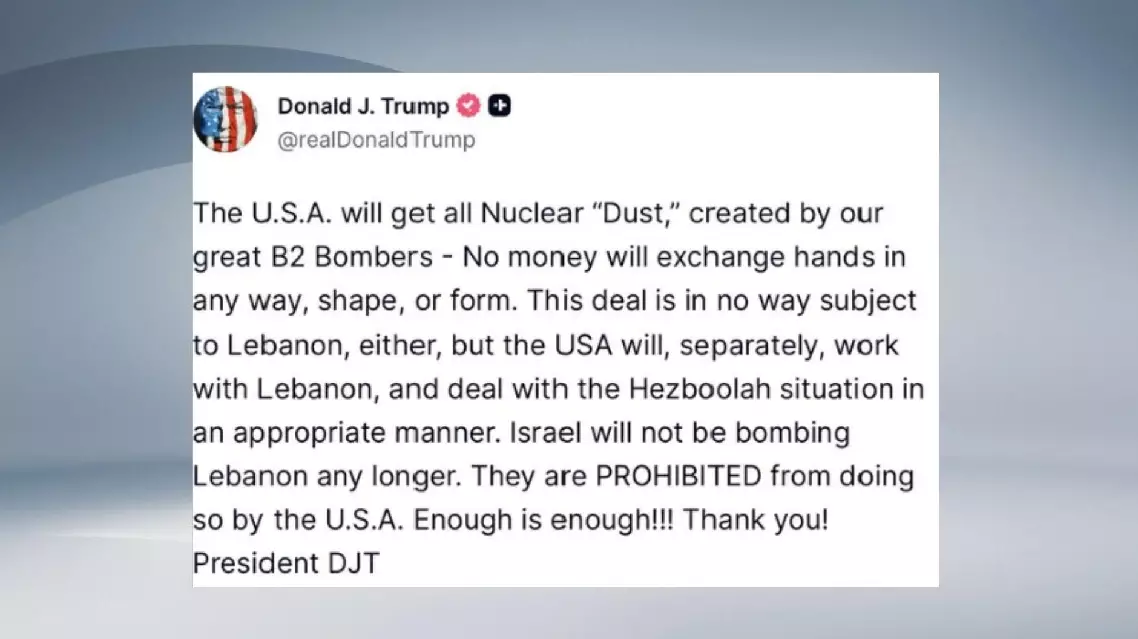
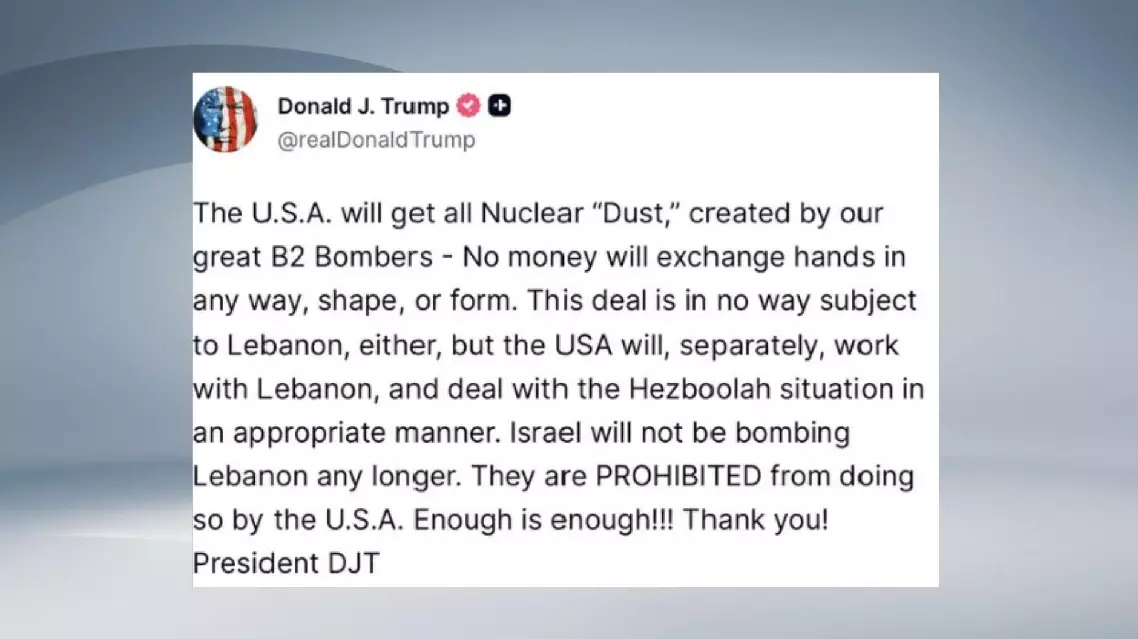
Trump also stressed that Israel must stop the strikes on Lebanon, saying, "They can't keep blowing up buildings. I'm not going to allow that."
Also on Friday, Trump said in a phone interview with Bloomberg that a deal to end the U.S.-Israeli war with Iran is mostly complete as talks over a lasting peace deal will "probably" be held this weekend in Pakistan.
Trump said in the phone interview that Iran agreed to suspend its nuclear program indefinitely, and will not receive any frozen funds from the United States.
"Most of the main points are finalized. It'll go pretty quickly," Trump said.
Asked if he would travel to Pakistan to sign the potential deal, Trump said: "I may."
Trump again denied that the moratorium on Iran's nuclear program would expire after 20 years. "No years, unlimited," Trump said.
The United States will get all of Iran's nuclear "dust" with no money having exchanged hands "in any way, shape, or form," Trump wrote on social media earlier on Friday. Multiple Western media outlets have interpreted Trump's reference to nuclear "dust" as meaning Iran's stockpile of enriched uranium.
Iran has yet to comment on any deal beyond the reopening of the Strait of Hormuz, nor on claims made by Trump that Tehran had offered concessions, including over the key issue of its nuclear program.
If the United States continues its naval blockade of the Strait of Hormuz, Iran will consider it a violation of the ceasefire between the two countries and will close the waterway, the semi-official Tasnim news agency reported Friday, citing an informed source close to the Supreme National Security Council.
The Iranian side has yet to respond to the media report on the enriched uranium issue.
The United States and Iran had their first round of negotiations in Pakistan's Islamabad last weekend to ease tension in the Middle East. The talks, which failed to produce an agreement, took place after a ceasefire was announced on April 8 between Iran, the United States, and Israel, following 40 days of fighting.
Iran tightened control over the Strait of Hormuz after the United States and Israel launched joint attacks on the country on Feb. 28. The United States also imposed a naval blockade on the strait following the failed negotiations in Islamabad.
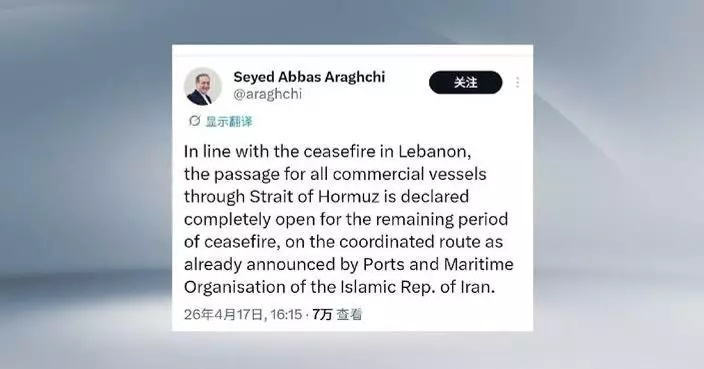
Earlier on Friday, both Washington and Tehran confirmed that the strait had been completely open for all commercial vessels. However, Trump said on Truth Social that the U.S. naval blockade would "remain in full force." In response, Iran warned of closing the waterway again if the U.S. blockade continues.
Trump says may sign deal with Iran "in the next day or two": Israeli media
Trump claims peace deal with Iran mostly complete: report