TORVAIANICA, Italy (AP) — Moira Camila Garnica and a group of fellow migrant transgender women have been gathering at their parish church to pray for Pope Francis as he continues to battle pneumonia in a Rome hospital, about an hour away from this modest seaside town.
Many grew up Catholic in Argentina like Francis, and their prayers encompass gratitude for his outreach – several met him in person – as well as hope that the door he opened toward a doubly marginalized community will not be shut in the future.
Click to Gallery
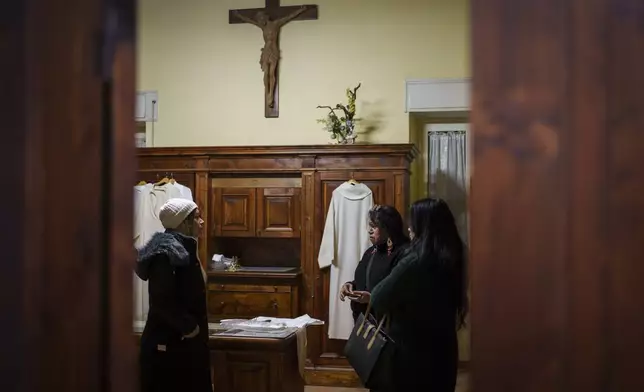
From left to right: Transgenders Camila Romero, Minerva, and Carla Segovia talk in the sacristy of the Beata Vergine Immacolata parish church in Torvaianica, Italy, Thursday, Feb. 27, 2025. (AP Photo/Bernat Armangue)
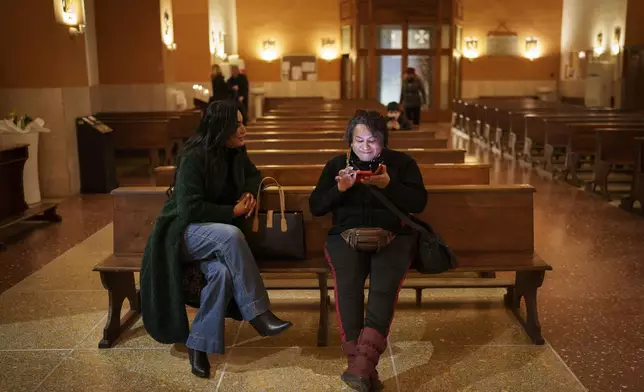
Transgenders Carla Segovia, left, and Minerva sit inside Beata Vergine Immacolata parish church in Torvaianica, Italy, Thursday, Feb. 27, 2025. (AP Photo/Bernat Armangue)
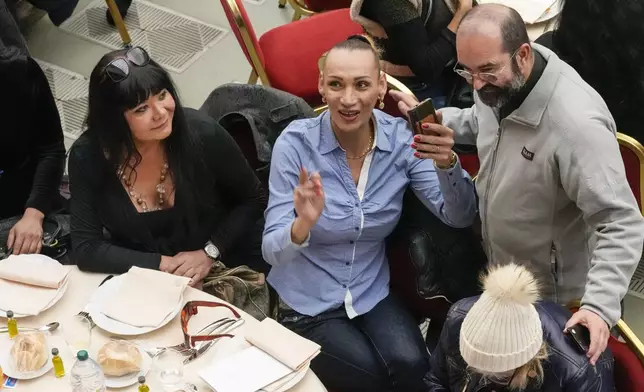
FILE- Priest Andrea Conocchia, right, with members of a group of transgender women he accompanied at a lunch for the poor with Pope Francis, in the Paul VI Hall at the Vatican, Sunday, Nov. 19, 2023. (AP Photo/Andrew Medichini, File)
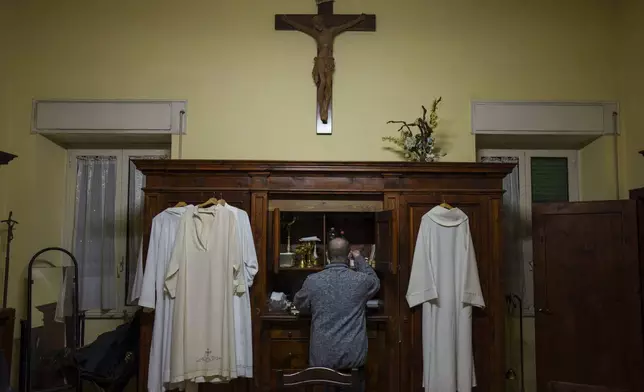
Priest Andrea Conocchia in the sacristy of the Beata Vergine Immacolata parish church in Torvaianica, Italy, Thursday, Feb. 27, 2025. (AP Photo/Bernat Armangue)
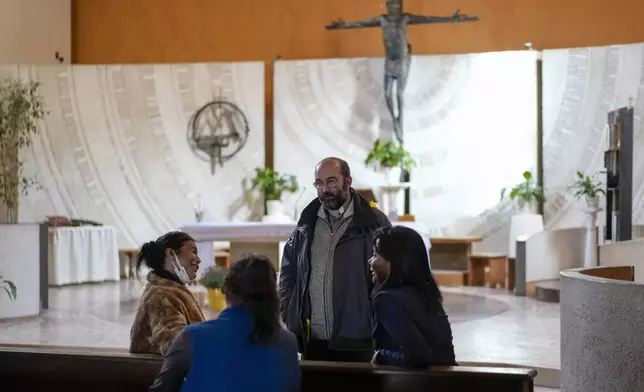
FILE - Priest Andrea Conocchia, third from left, speaks with transgender women, from left, Andrea Paola Torres Lopez from Colombia, also known as Consuelo, Claudia Vittoria Salas from Argentina and Carla Segovia from Argentina as they sit in the Beata Vergine Immacolata parish church in Torvaianica, Italy, Thursday, Nov. 16, 2023. (AP Photo/Andrew Medichini, File)
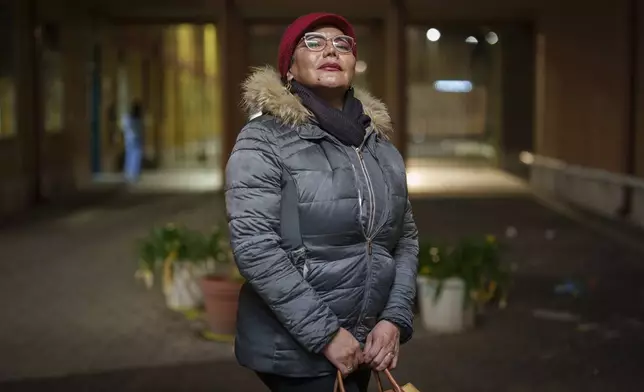
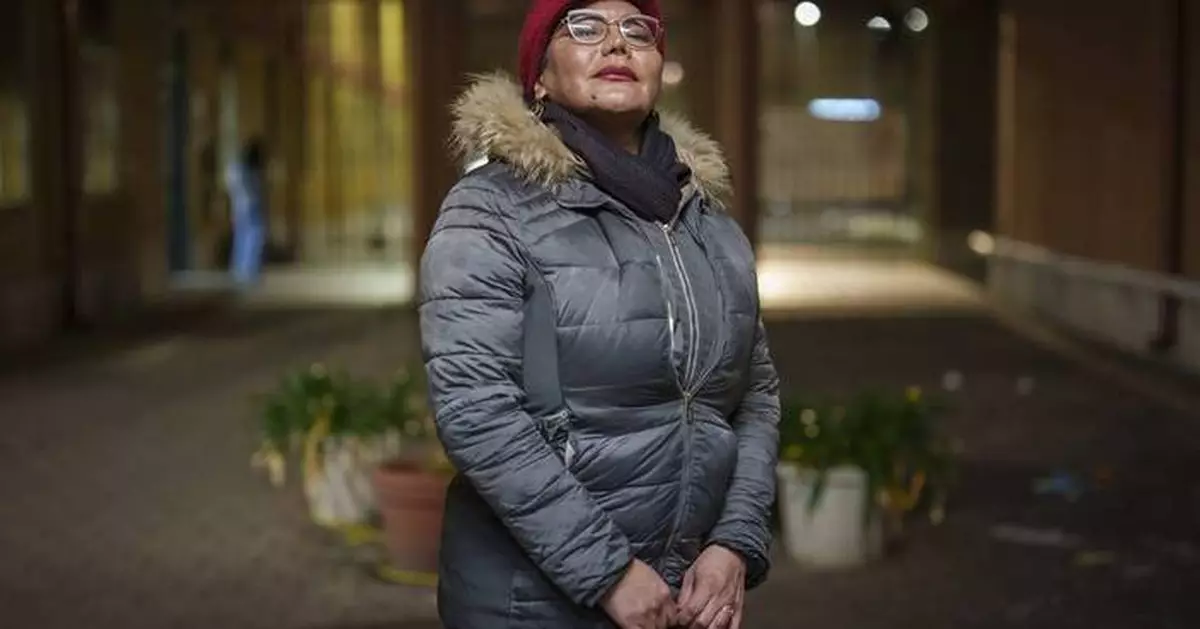
Transgender Moira Camila Garnica poses for a portrait outside the Beata Vergine Immacolata parish church in Torvaianica, Italy, Thursday, Feb. 27, 2025. (AP Photo/Bernat Armangue)
“The biggest fear is that you never know how things will be in the future, should he no longer lead the church, that it might go backwards,” said Garnica, 47. “We hope that the church will continue with this empathy, continue to be open to everyone, continue to help, because sometimes one person can take a big step forward and then others take three steps back.”
Garnica and several other Latin American women, most sex workers who have been in Italy for a couple of decades, gathered for evening Mass in late February at the Blessed Immaculate Virgin Church. It was here they found food, medicine and basic financial assistance when Italy’s strict COVID-19 lockdown rendered them unable to work, isolated and destitute.
The parish priest, the Rev. Andrea Conocchia, invited them to write letters to Francis outlining their needs. The Vatican’s almoner office not only provided money but brought a few dozen of them to the Vatican for vaccines. Years later, some were invited to a lunch for the poor with the pope.
“In this Covid period, it was important that Pope Francis got inside the mind of transgender women, in the mind of the human beings that we are, and started to treat us like human beings, and that I think is the moment when faith or Christianity could embrace us,” said Carla Segovia.
The 48-year-old woman, of Indigenous Bolivian descent, left her native Argentina as a college student during its financial crisis more than 20 years ago. She has been working as a prostitute since she started to pay for her gender surgeries as a youth, and calls the violence and discrimination she has faced a tough test of “your potential to survive.”
Now that Francis is ill, she said she wants to “transmit to him our strength, the same thing that he brought to us in the difficult time of the pandemic. We want to inoculate him with this strength that is so crucial – the fact that you need to fight for your life.”
Gender transition is a controversial issue in many countries including the United States, where Catholic bishops reject it, and immigration is also roiling politics on both sides of the Atlantic. But Francis has made inclusion a hallmark of his papacy; specifically, the Vatican has stated it’s permissible, under certain circumstances, for trans people to be baptized as Catholics and serve as godparents.
Segovia and other women in their community were involved in the church as children but later felt their identity and work pushed them away – until they came to the Torvaianica parish’s food distribution site, during the pandemic lockdown.
“We Latin Americans are very Catholic, but being trans, many doors close, and people walk away from us, and we walk away too,” Garnica said. “The word-of-mouth was that this church welcomed you, helped you, and I came to ask for help because I felt so alone.”
So did Minerva, a Peruvian 54-year-old who asked only her professional name be used, her voice shaking with emotion as she recounted how the experience changed her life in town.
“We had no work, we had no money to buy food. A friend through word of mouth told me, go to the parish and knock, ask for Father Andrea. I came, I knocked, and like never before he opened his arms, he provided a support so big that still today he’s helping us,” Minerva said.
“He opened for us so many doors. At the beginning even here people didn’t pay attention to us. Now, when they see us, they greet us.”
For the Rev. Conocchia, helping this group of women is perfectly in line with the model of an open church reaching out to the margins that Francis has promoted, as well as the pope’s famous “ who am I to judge” approach to LGBTQ+ issues.
“We put the poor back at the center, we put people back at the center, and that’s the Gospel,” Conocchia said. “What matters to me is a person, a person’s life and their story … a person is never what they do.”
He said the Vatican’s more open attitude, as well as its concrete welcome for this group of women, can help abolish prejudices that religious people hold – since it’s possible the women’s clients might include people who attend Mass, he wryly noted.
For the women, who often are rejected by their own families, it’s a moment of grace that went straight to the heart.
“A trans girl would have never imagined in her life that she could see the pope receive her, welcome her, and help her,” Garnica said. “Already here people mistreat you for being Latin American, imagine Latin America and trans. … But thanks to Father Andrea, people understood that we also have a heart, we also can contribute, we need the church, too.”
Minerva was a First Communion catechist in her parish in Peru, until she said she was kicked out for her identity. In the Torvaianica sacristy, under a picture of Francis, she practiced singing a Spanish-language version of “Amazing Grace” in hopes of joining the local choir. One verse, that she likes to sing to Mary, is about coming out of the shadows and into the light.
“I am church – not part of the church, I am church because each one of us is church,” she said.
Associated Press religion coverage receives support through the AP’s collaboration with The Conversation US, with funding from Lilly Endowment Inc. The AP is solely responsible for this content.
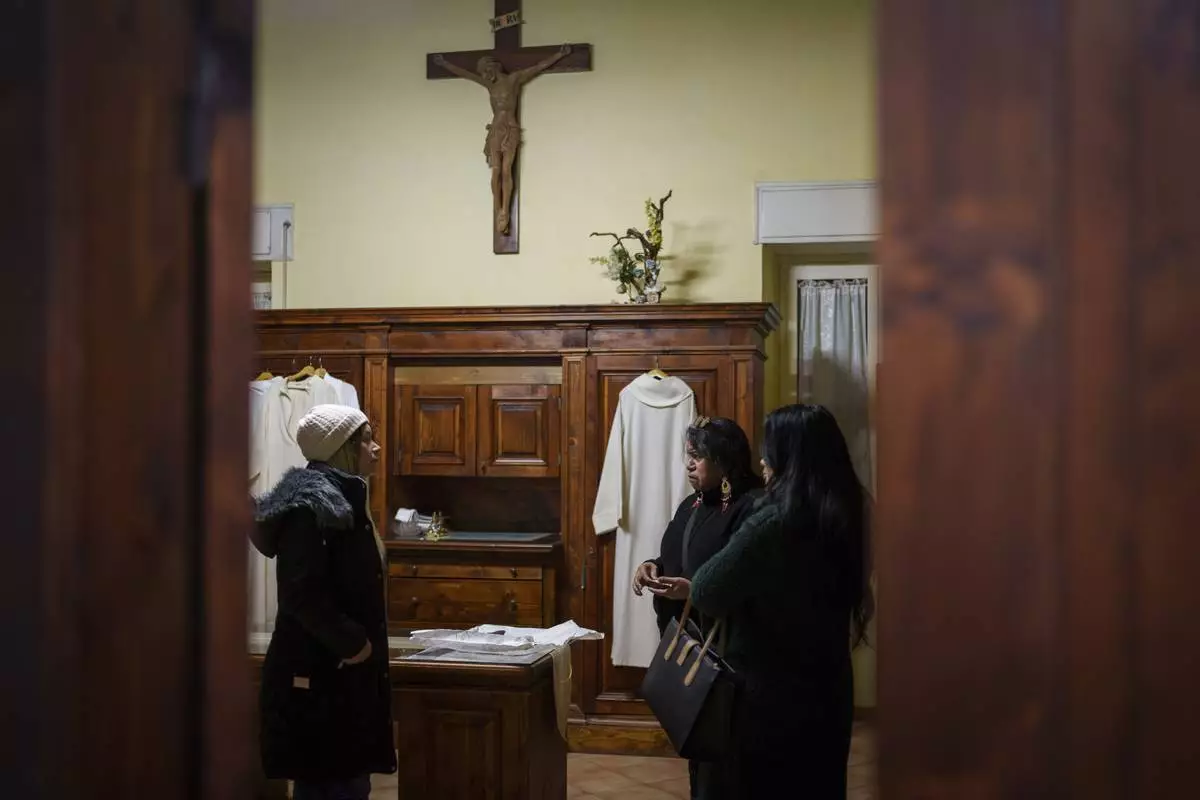
From left to right: Transgenders Camila Romero, Minerva, and Carla Segovia talk in the sacristy of the Beata Vergine Immacolata parish church in Torvaianica, Italy, Thursday, Feb. 27, 2025. (AP Photo/Bernat Armangue)
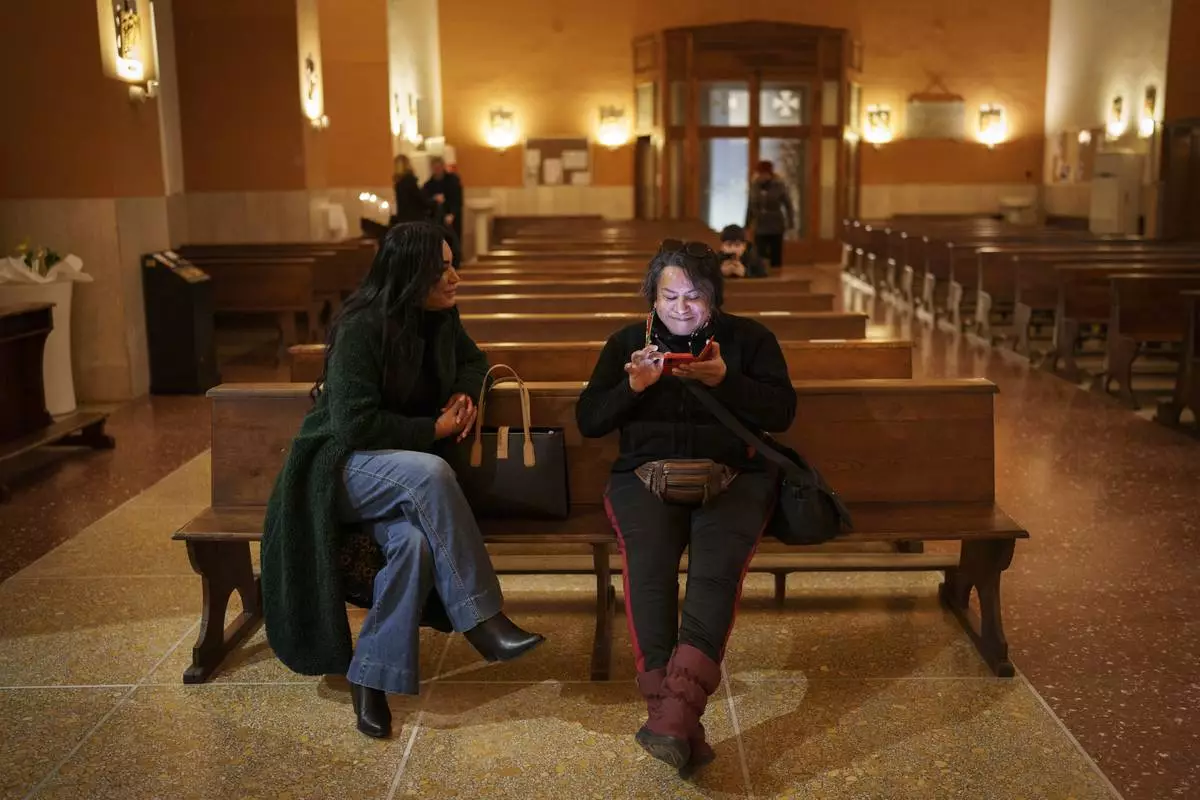
Transgenders Carla Segovia, left, and Minerva sit inside Beata Vergine Immacolata parish church in Torvaianica, Italy, Thursday, Feb. 27, 2025. (AP Photo/Bernat Armangue)
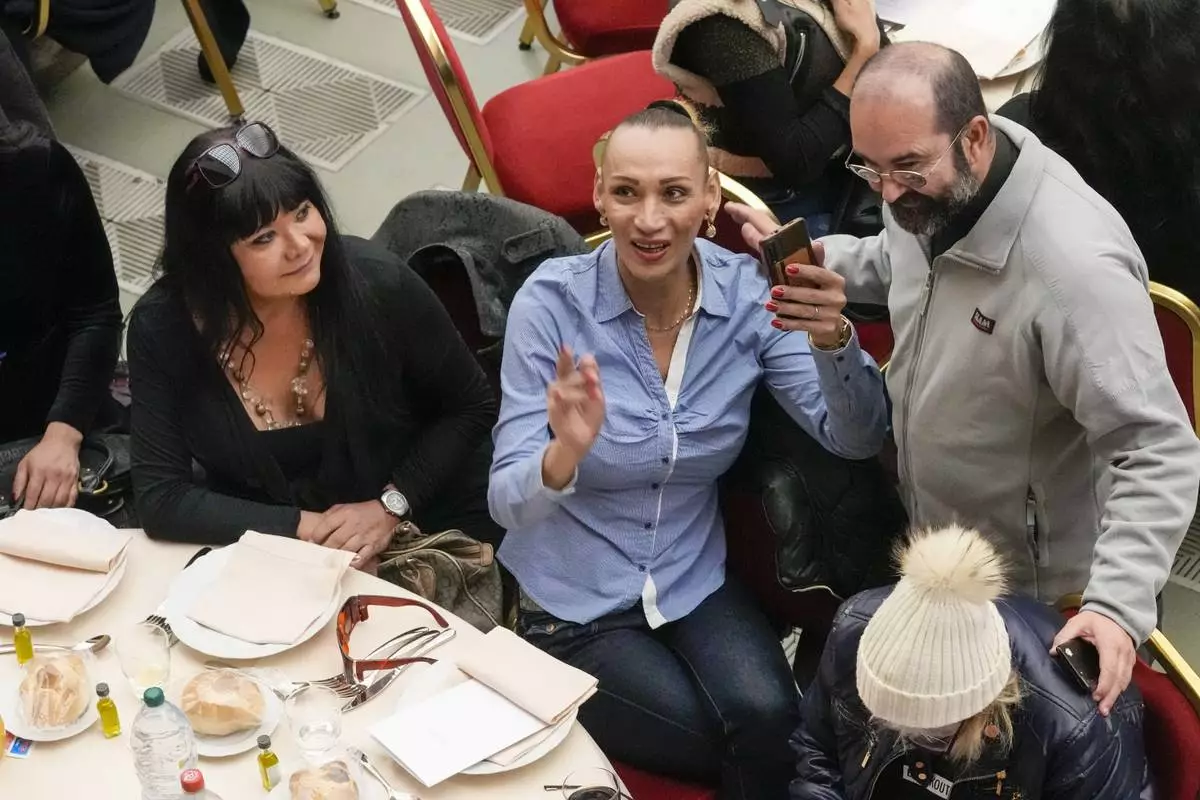
FILE- Priest Andrea Conocchia, right, with members of a group of transgender women he accompanied at a lunch for the poor with Pope Francis, in the Paul VI Hall at the Vatican, Sunday, Nov. 19, 2023. (AP Photo/Andrew Medichini, File)
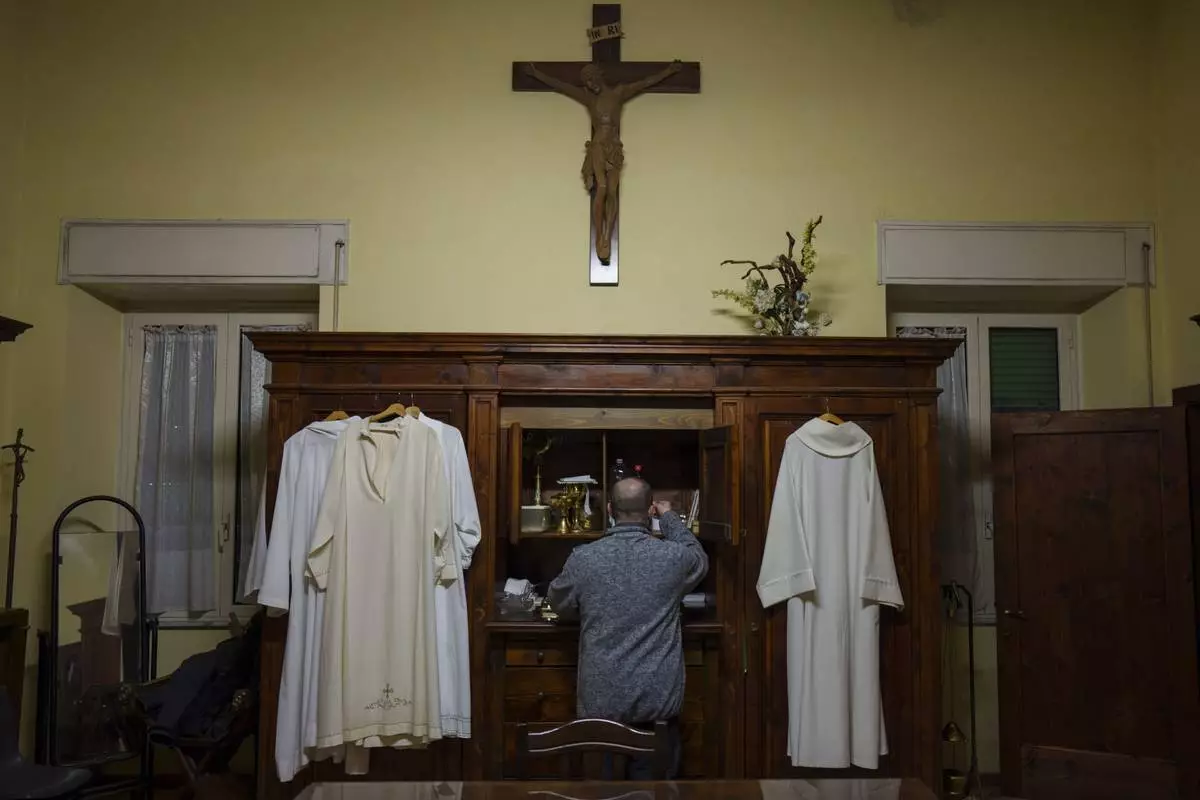
Priest Andrea Conocchia in the sacristy of the Beata Vergine Immacolata parish church in Torvaianica, Italy, Thursday, Feb. 27, 2025. (AP Photo/Bernat Armangue)
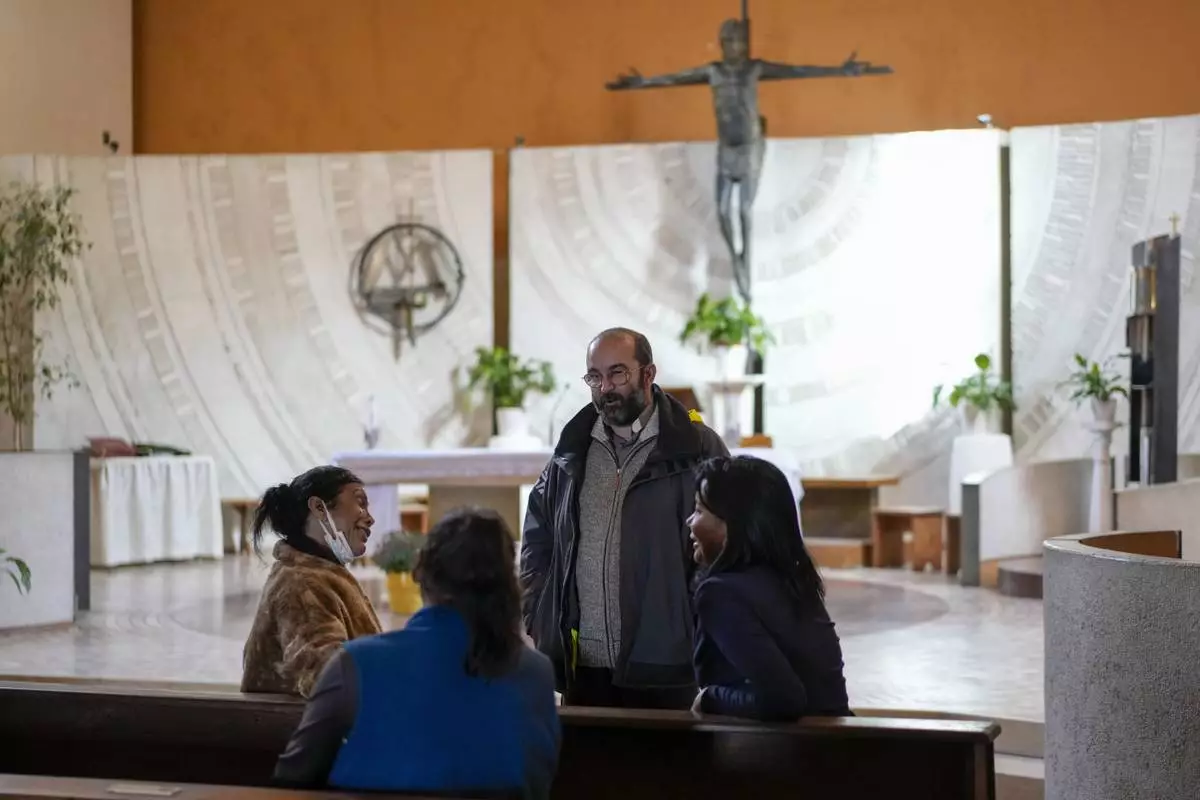
FILE - Priest Andrea Conocchia, third from left, speaks with transgender women, from left, Andrea Paola Torres Lopez from Colombia, also known as Consuelo, Claudia Vittoria Salas from Argentina and Carla Segovia from Argentina as they sit in the Beata Vergine Immacolata parish church in Torvaianica, Italy, Thursday, Nov. 16, 2023. (AP Photo/Andrew Medichini, File)
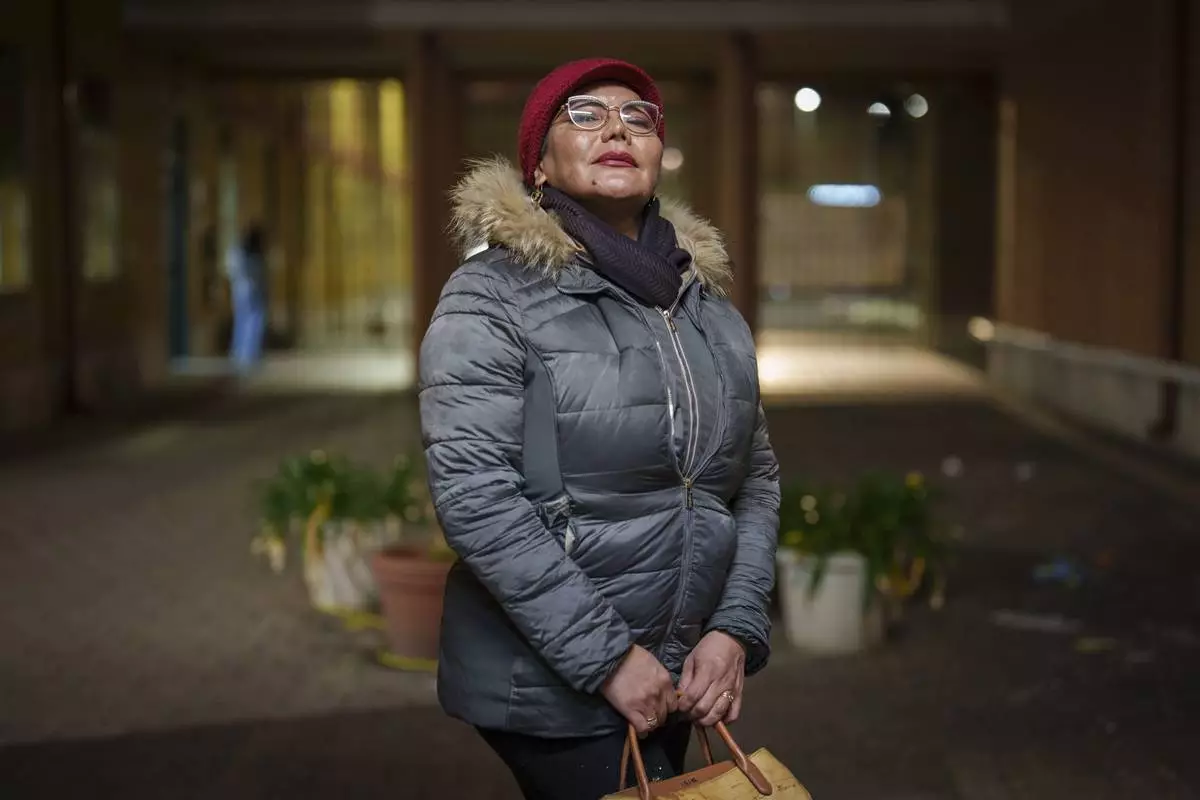
Transgender Moira Camila Garnica poses for a portrait outside the Beata Vergine Immacolata parish church in Torvaianica, Italy, Thursday, Feb. 27, 2025. (AP Photo/Bernat Armangue)