EDINBURGH, Scotland--(BUSINESS WIRE)--Mar 3, 2025--
pureLiFi, the global leader in LiFi technology, has announced the launch of its ground-breaking LINXC Bridge system, at Mobile World Congress Barcelona. Developed with Solace Power, this innovative solution empowers Fixed Wireless Access ( FWA) broadband providers to deliver self-installable, higher quality and more reliable connectivity to consumers using outdoor Customer Premises Equipment (CPE). With this solution broadband customers will experience much faster installation times, more reliable speeds and an improved user experience.
This press release features multimedia. View the full release here: https://www.businesswire.com/news/home/20250303993916/en/
The LINXC Bridge streamlines broadband deployment, eliminating complex installations, significantly reducing subscriber acquisition cost, shortening time to revenue and increasing customer satisfaction. The LINXC Bridge system will be showcased live at the pureLiFi booth (7B27) alongside the latest cutting-edge CPE equipment from demonstration collaborators, Sonim Technologies.
The LINXC Bridge has received significant market interest since pureLiFi and Solace introduced the concept in 2024 and is available today for carrier trials.
"The enthusiastic response from our collaborations with leading global telecom brands validates the transformative potential of the LINXC Bridge System," said Alistair Banham, CEO of pureLiFi. "This latest technology is poised to revolutionise the economics of FWA and broadband deployment worldwide, making high-speed connectivity more accessible, affordable and efficient for broadband suppliers, ultimately improving service and user satisfaction. The market is clearly moving towards LiFi as it will solve connectivity challenges of today and tomorrow."
LINXC Bridge Makes Broadband Deployment Better
The LINXC Bridge leverages pureLiFi's innovative technology, which uses invisible light to transmit data, alongside Solace Power's wireless power capabilities. This unique combination allows for a seamless installation process for outdoor CPE, whether 5G FWA or any other broadband signal, eliminating the time-consuming and expensive need for drilling holes or running cables through walls. Instead, the LINXC Bridge system establishes LiFi communications and wireless power links through a window. Additionally, with the combination of LINXC Bridge and outdoor CPE, network operators benefit from much more efficient use of network infrastructure, increasing capacity many times on sub-6 GHz 5G networks and even more on mmWave.
Leading-Edge Multi-Gigabit LiFi Tech Unveiled
pureLiFi will also showcase its latest multi-gigabit LiFi capabilities, featuring a high speed, low latency 5 Gbps LiFi connection. This demonstration highlights the potential for new consumer and enterprise applications, including ultra-fast gaming, wireless audio/video for soundbars, immersive VR/AR and real-time AI collaborations. The technology is ready for evaluation and promises to deliver ultra-high speeds, ultra-low latency, military grade security and reliability.
A Commitment to Excellence & Innovation
pureLiFi's commitment to innovation and excellence is evident in the development of the LINXC Bridge and the wider ecosystem of LiFi solutions on show. The company continues to push the boundaries of what is possible with LiFi technology, ensuring that its products remain at the forefront of the industry.
For more information and images visit: http://www.pureLiFi.com/MWC25

LINXC Bridge System. (Photo: Business Wire)
HAVANA (AP) — Officials in Cuba reported an islandwide blackout Monday in the country of some 11 million people as its energy and economic crises deepen and its power grid continues to crumble.
The Ministry of Energy and Mines on X noted a “complete disconnection” of the country’s electrical system and said it was investigating, noting there were no failures in the units that were operating when the grid collapsed.
Lázaro Guerra, the ministry's electricity director, told state media late Monday that crews were trying to restart several thermoelectric plants, which are key to restoring power.
“It must be done gradually to avoid setbacks,” he said. “Because systems, when very weak, are more susceptible to failure.”
As night fell, candles began to burn in some homes while the sounds of children playing and singing with their mother filled one dark house in Havana.
“We have to prepare a mattress for the girls here so that they can sleep here because we have no choice,” said Yuneici Cecilia Riviaux, as she motioned to an open door. “I don’t have a rechargeable fan or a generator.”
It was the third major blackout in Cuba over the past four months.
Tomás David Velázquez Felipe, a 61-year-old resident of Havana, said the relentless outages make him think that Cubans who can should just pack up and leave the island. “What little we have to eat spoils,” he said. “Our people are too old to keep suffering.”
By Monday night, state-owned media reported that crews had restored power to 5% of Havana's residents, representing some 42,000 customers, as well as several hospitals across the island. Officials said they would prioritize the communications sector next, all while warning that the small circuits restored so far could fail again.
Cuba’s aging grid has drastically eroded in recent years, leading to daily outages and an increase in islandwide blackouts. But the government also has blamed its woes on a U.S. energy blockade after U.S. President Donald Trump in January warned of tariffs on any country that sells or provides oil to Cuba. The Trump administration is demanding that Cuba release political prisoners and move toward political and economic liberalization in return for a lifting of sanctions. Trump also has raised the possibility of a "friendly takeover of Cuba."
On Monday, he said he believes he’ll have the “honor of taking Cuba.”
“I mean, whether I free it, take it. I think I could do anything I want with it,” Trump said about Cuba, calling it a “very weakened nation.”
The Trump administration is looking for Cuban President Miguel Díaz-Canel to leave power as the United States continues to negotiate with the Cuban government about the island nation’s future, according to a U.S. official and a source with knowledge of talks between Washington and Havana.
Both spoke on condition of anonymity to describe the sensitive talks and did not offer any detail about who the administration might like to see come to power.
They confirmed the Trump administration’s desire to see Díaz-Canel leave power days after the Cuban president publicly confirmed for the first time that his government has held talks with the Trump administration. The administration’s push for the ouster of Díaz-Canel was first reported by The New York Times earlier Monday.
William LeoGrande, a professor at American University who has tracked Cuba for years, said the country's energy grid hasn't been maintained properly and its infrastructure is “way past its normal useful life.”
“The technicians working on the grid are magicians to keep it running at all given the shape that it’s in," LeoGrande said.
LeoGrande said that if the island drastically reduces consumption and expands renewables, it can struggle along for a while without oil shipments. “But it would be constant misery for the general population, and eventually, the economy could collapse just completely and then you would have social chaos and probably mass migration,” he said.
To ramp up solar power even faster than Cuba did last year, LeoGrande said other countries, principally China, would have to be willing to double or more their provision of such equipment.
Díaz-Canel on Friday said the island had not received oil shipments in three months and was operating on solar power, natural gas and thermoelectric plants, and that the government has had to postpone surgeries for tens of thousands of people.
Yaimisel Sánchez Peña, 48, said she was upset that the food she buys with money that her son in the U.S. sends keeps spoiling, adding that the outages also affect her 72-year-old mother: “Every day, she suffers."
Mercedes Velázquez, a 71-year-old Cuban resident, lamented yet another blackout. “We’re here waiting to see what happens,” she said, adding that she recently gave away part of a soup she made while it was still fresh so as not to throw it out. “Everything goes bad.”
A massive outage over a week ago affected the island’s west, leaving millions without power. Another major blackout affected western Cuba in early December.
Critical oil shipments from Venezuela were halted after the U.S. attacked the South American country in early January and arrested its then-president, Nicolás Maduro.
While Cuba produces 40% of its petroleum and has been generating its own power, it hasn’t been sufficient to meet demand as its electric grid continues to crumble.
“And on top of all that, the Cuban government doesn’t have the hard currency to import spare parts or upgrade the plant or grid itself. It’s just a perfect storm of collapse," LeoGrande said.
He noted that the thermoelectric plants also have been using heavy oil, whose sulfur content is corroding the equipment.
The deputy prime minister of the Ministry of Foreign Trade and Foreign Investment, Óscar Pérez-Oliva Fraga, told reporters Monday that Cuba is open to trading with U.S. companies while noting the embargo’s limitations.
He said he’s also implementing new measures aimed at boosting the island’s economy. Among those is the possibility of allowing Cubans residing abroad to be partners or owners of private companies in the country and to be involved in large-scale projects, including those related to infrastructure, according to state media.
He said those Cubans will be allowed to partner with Cuban private companies and establish ties with both state-owned and private Cuban entities.
Pérez-Oliva added that the government also will grant land under usufruct for the development of certain projects.
He said Cubans residing abroad also will be able to open foreign currency bank accounts in Cuban banks, which will facilitate transactions.
Coto reported from San José, Costa Rica. Associated Press writers Seung Min Kim, Aamer Madhani and Darlene Superville in Washington contributed.
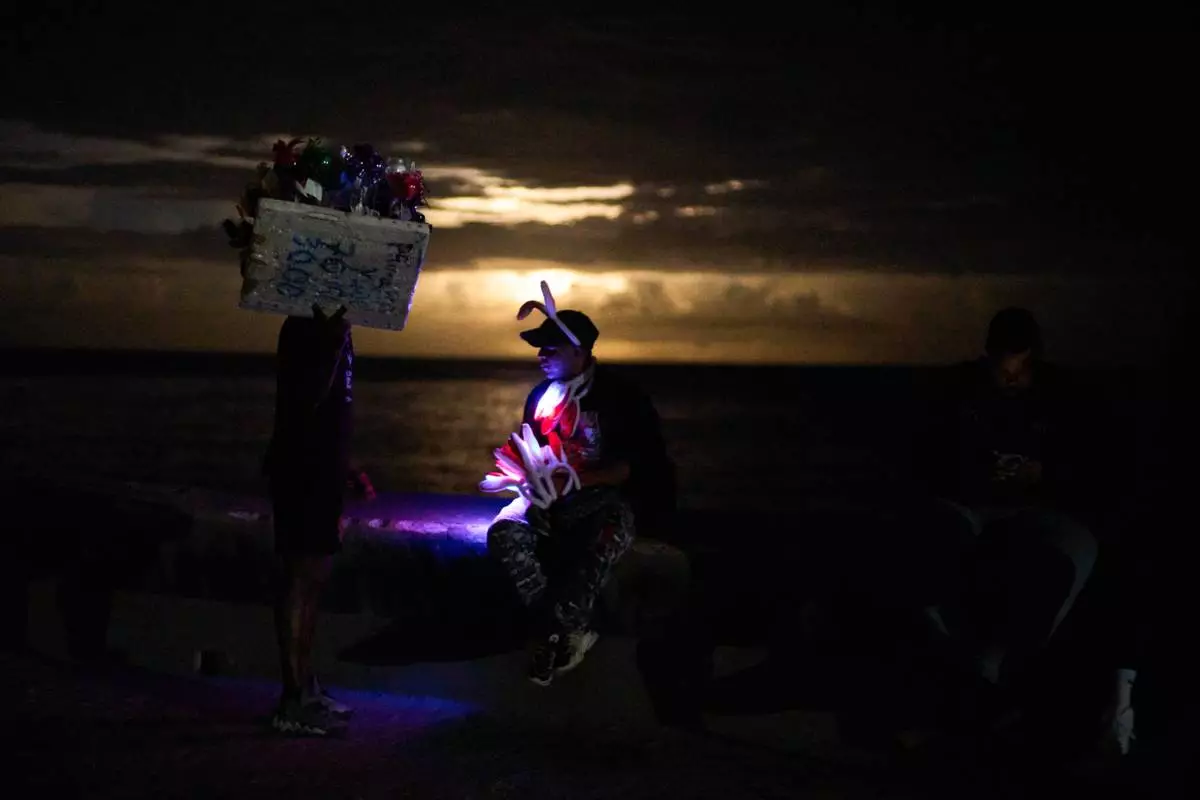
Street vendors chat on the Malecón during a blackout in Havana, Monday, March 16, 2026. (AP Photo/Ramon Espinosa)
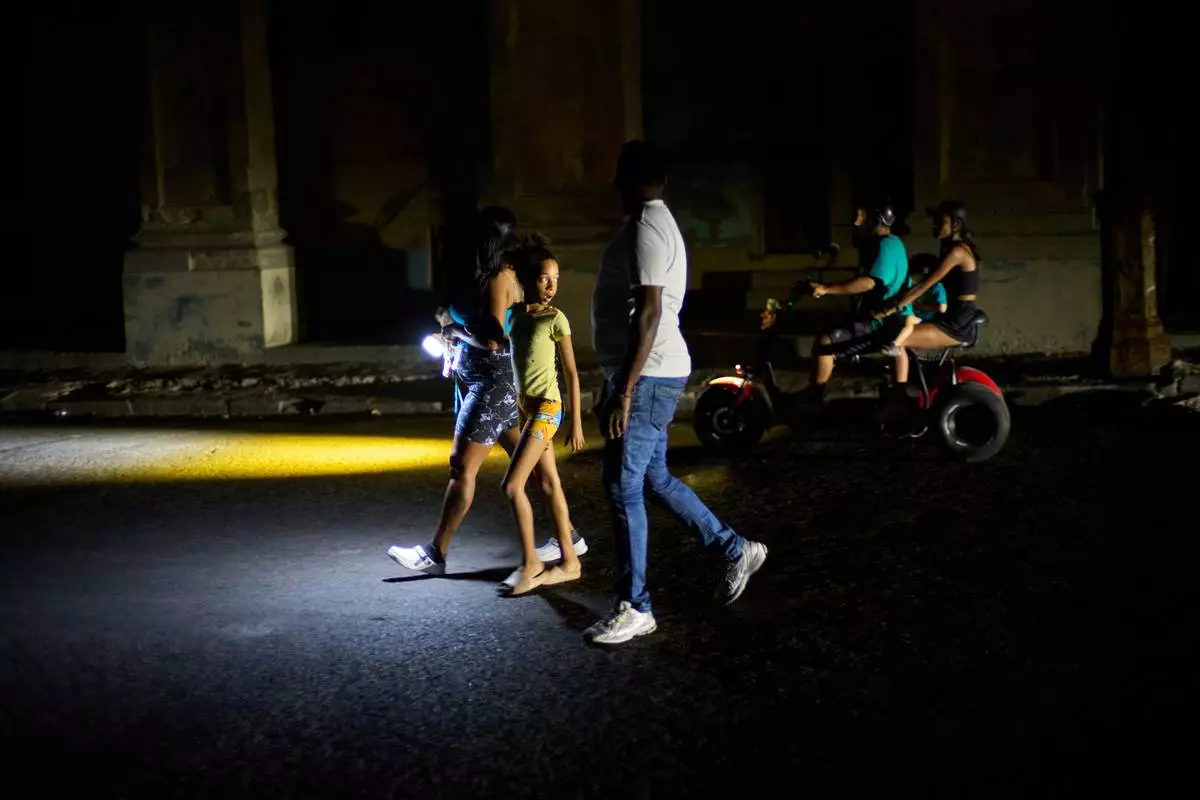
People walk on a street during a blackout in Havana, Monday, March 16, 2026. (AP Photo/Ramon Espinosa)
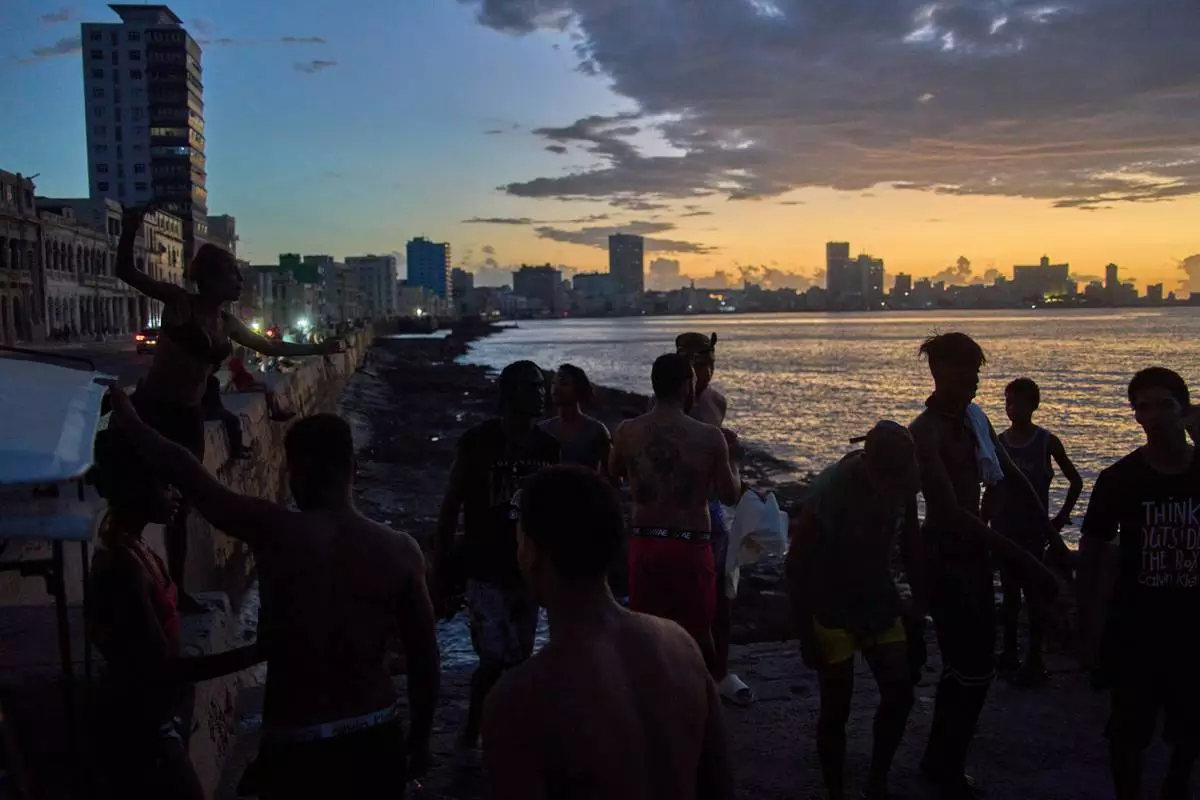
People watch the sunset from the Malecón during a blackout in Havana, Monday, March 16, 2026. (AP Photo/Ramon Espinosa)
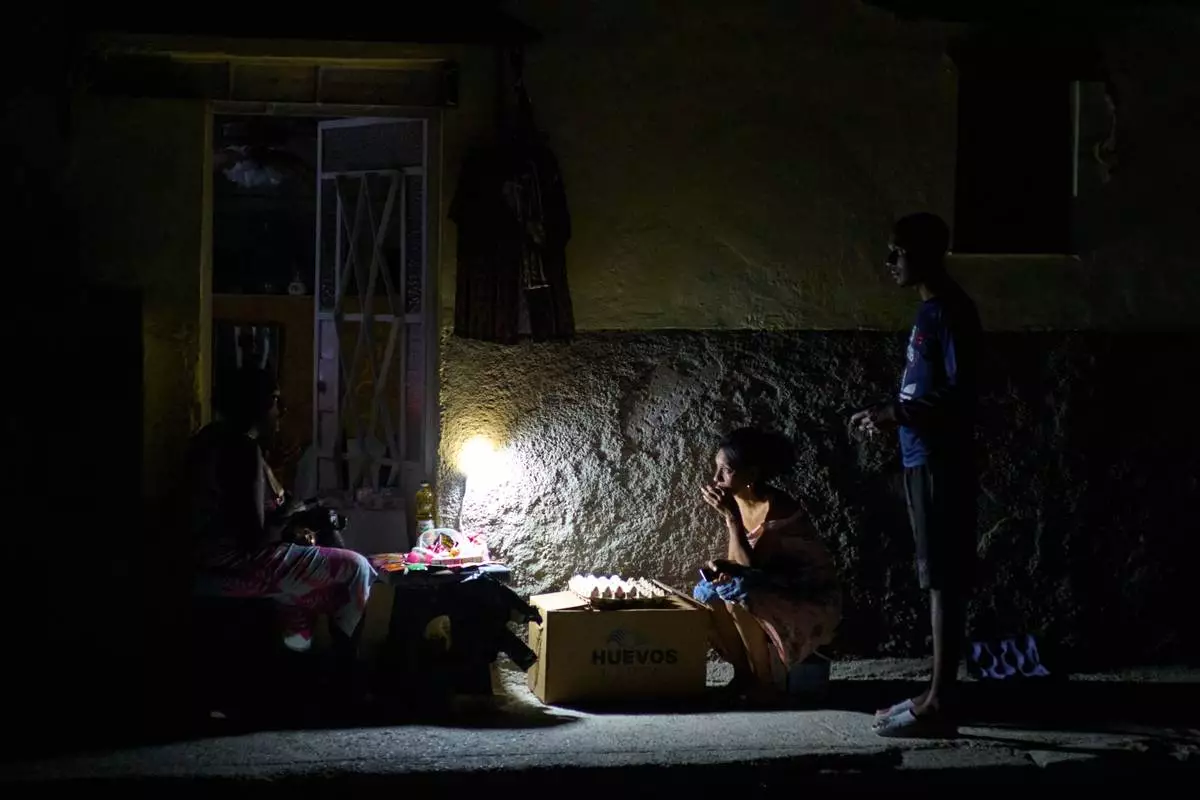
Street vendors chat during a blackout in Havana, Monday, March 16, 2026. (AP Photo/Ramon Espinosa)
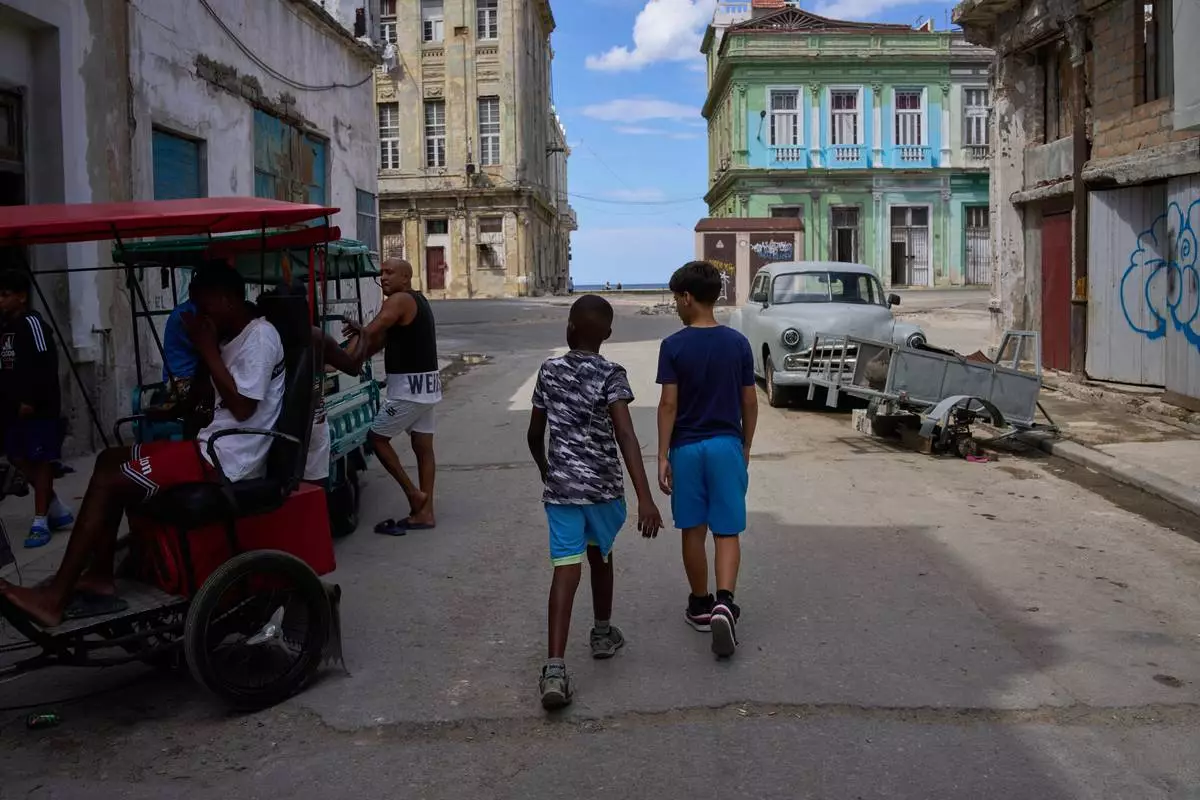
People walk outside during a blackout in Havana, Cuba, Monday, March 16, 2026. (AP Photo/Ramon Espinosa)
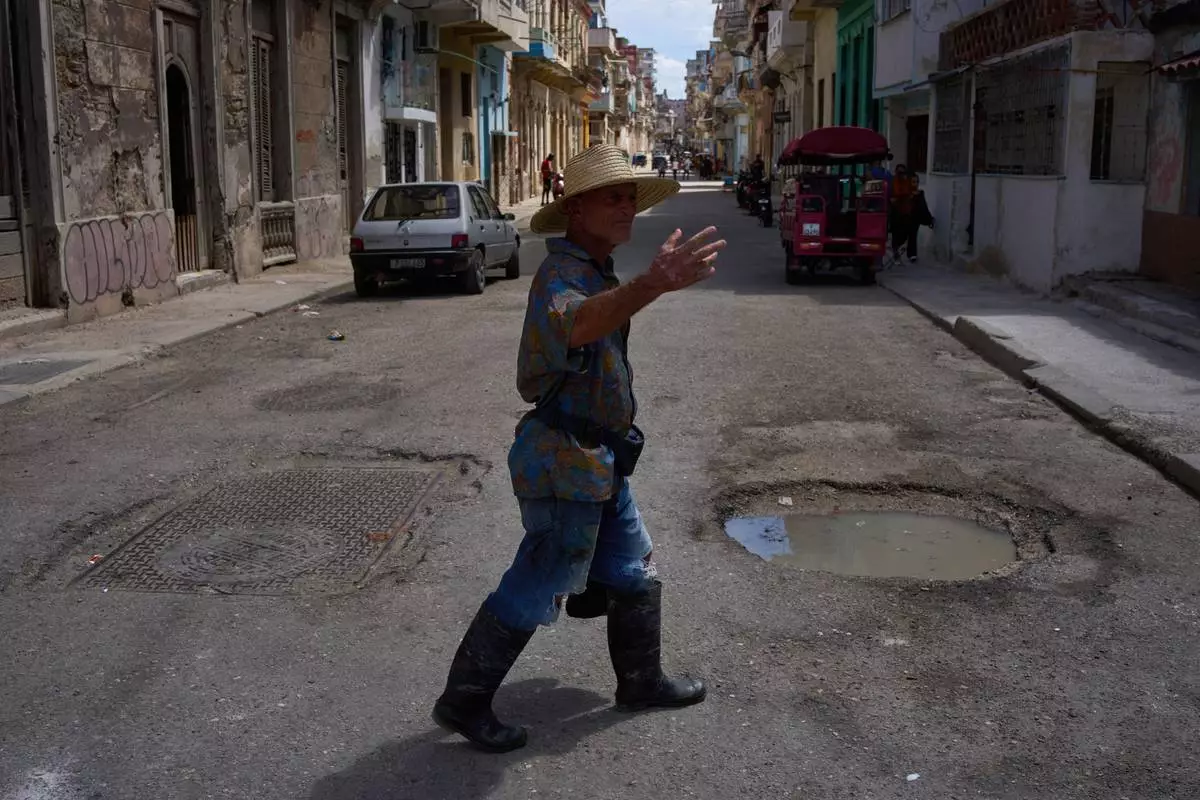
A man walks outside during a blackout in Havana, Cuba, Monday, March 16, 2026. (AP Photo/Ramon Espinosa)
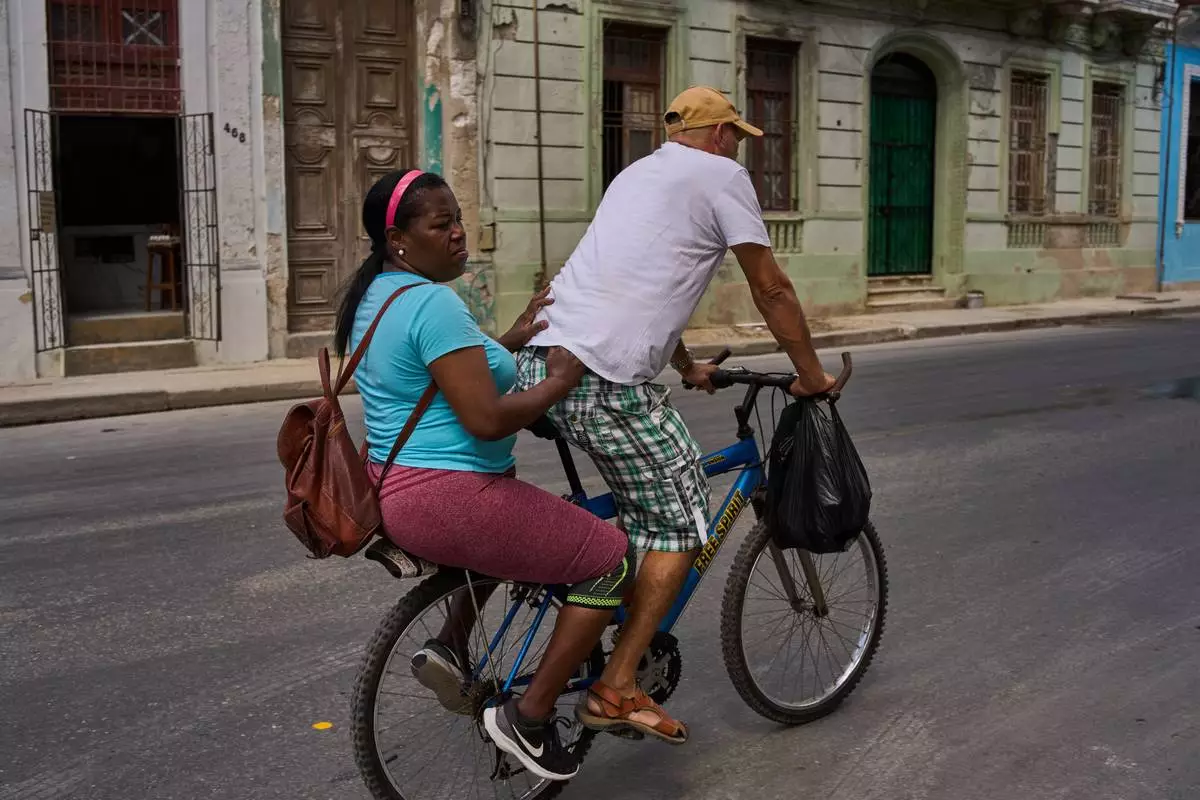
People ride a bicycle during a blackout in Havana, Cuba, Monday, March 16, 2026. (AP Photo/Ramon Espinosa)
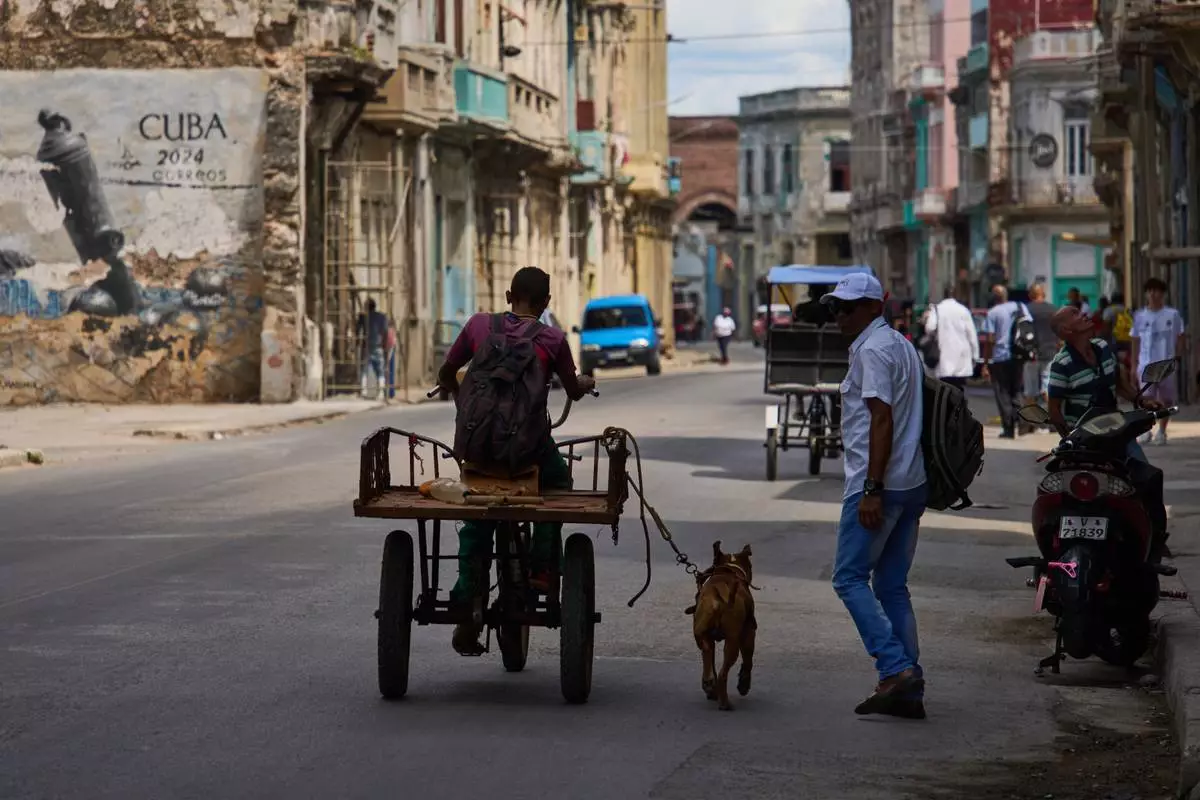
A man rides a tricycle with his leashed dog running alongside him during a blackout in Havana, Cuba, Monday, March 16, 2026. (AP Photo/Ramon Espinosa)
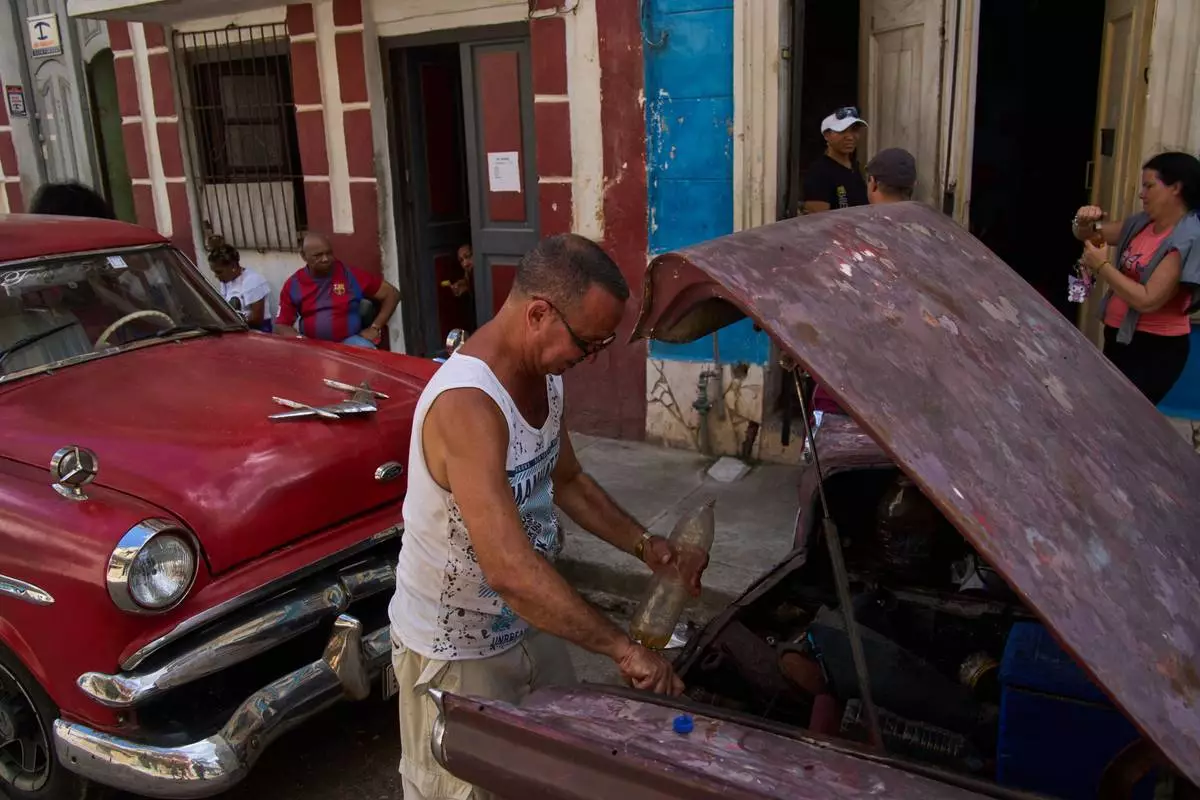
A man finishes putting fuel in his car's tank, located in the back of the car, during a blackout in Havana, Cuba, Monday, March 16, 2026. (AP Photo/Ramon Espinosa)
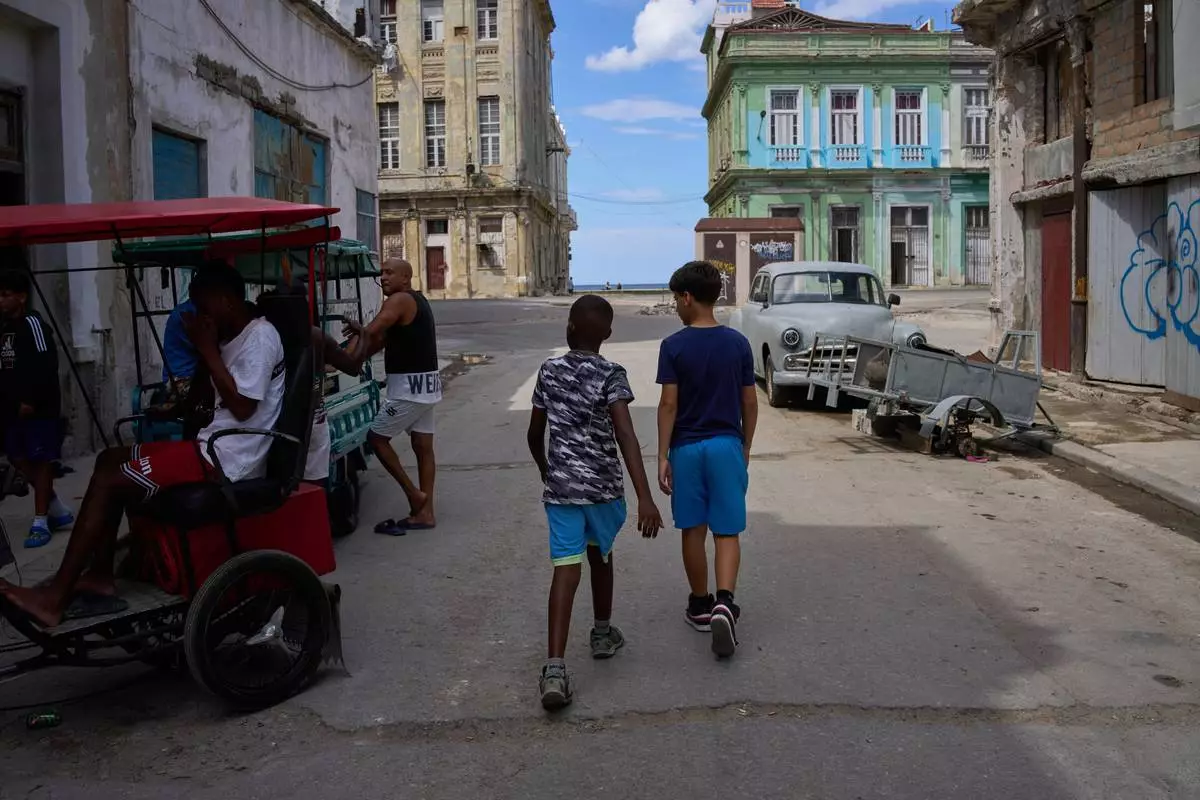
People walk outside during a blackout in Havana, Cuba, Monday, March 16, 2026. (AP Photo/Ramon Espinosa)

A man speaks with a person in a car during a blackout in Havana, Cuba, Monday, March 16, 2026. (AP Photo/Ramon Espinosa)
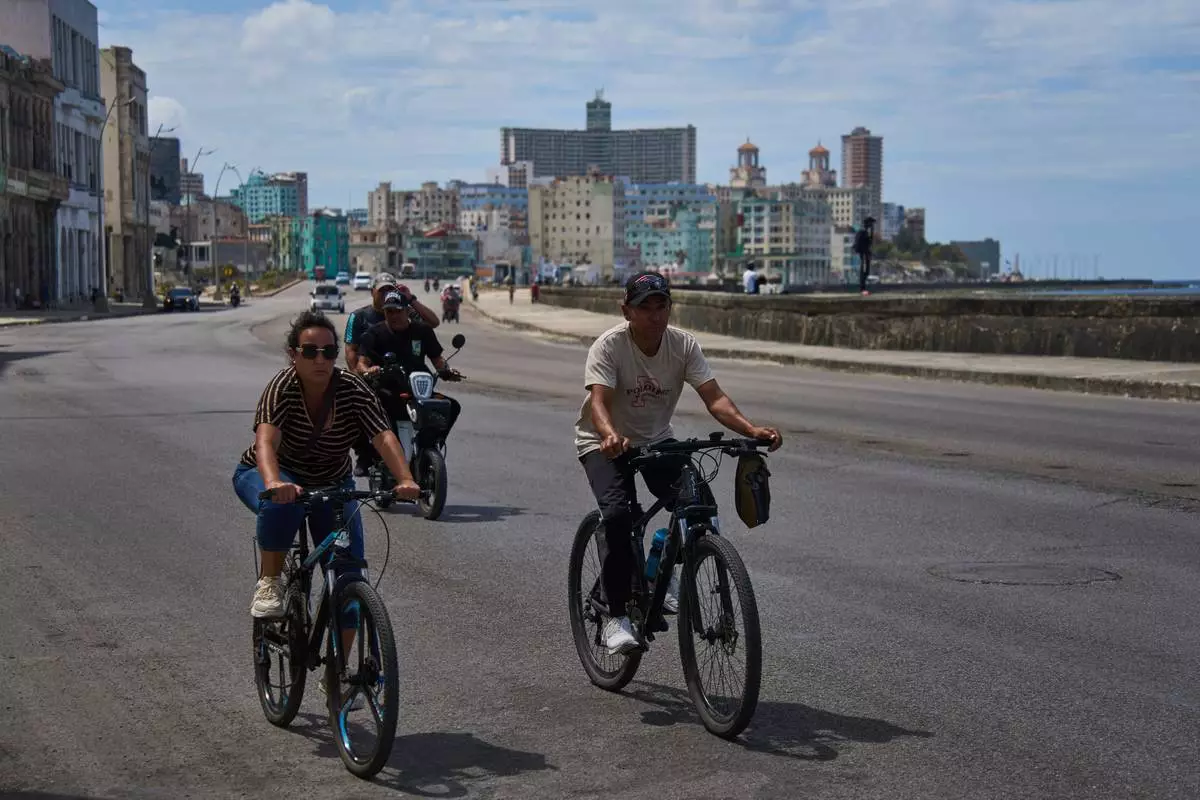
People ride their bicycles along the Malecón during a blackout in Havana, Cuba, Monday, March 16, 2026. (AP Photo/Ramon Espinosa)
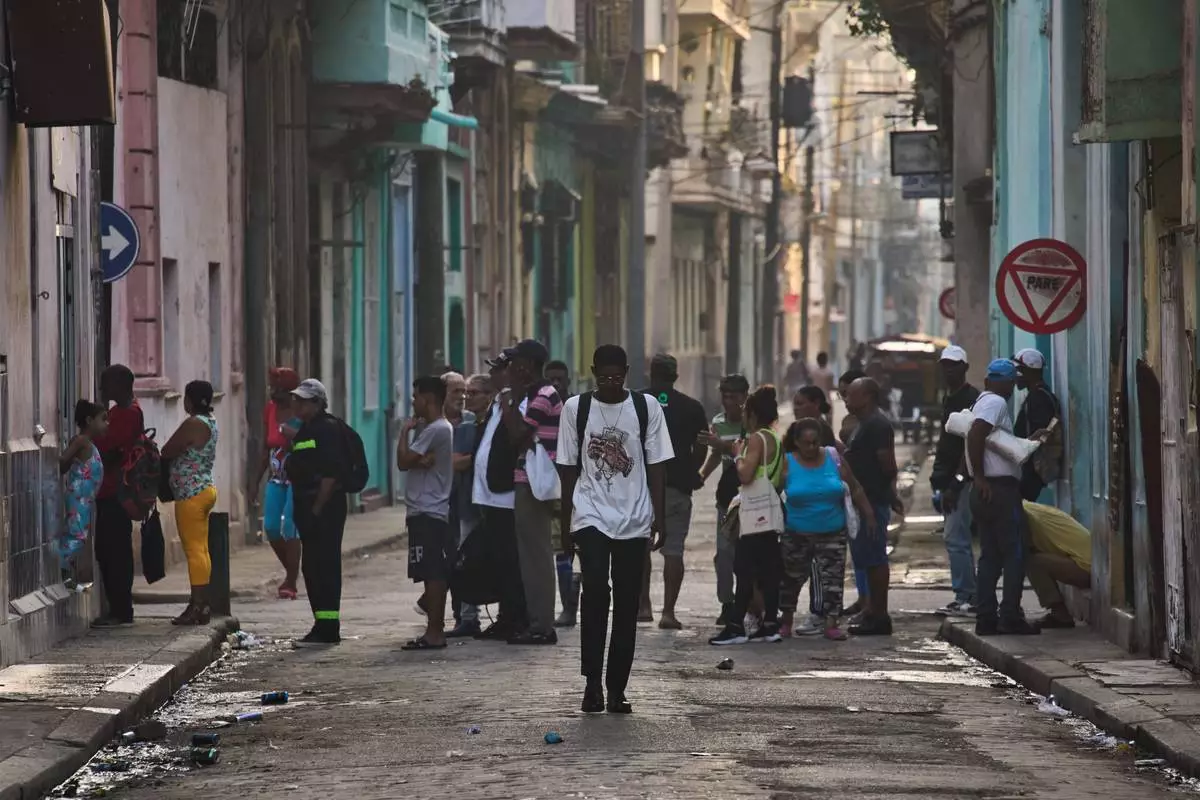
People line up in the street to buy bread in Havana, Cuba, Friday, March 13, 2026. (AP Photo/Ramon Espinosa)