CHICAGO--(BUSINESS WIRE)--Mar 4, 2025--
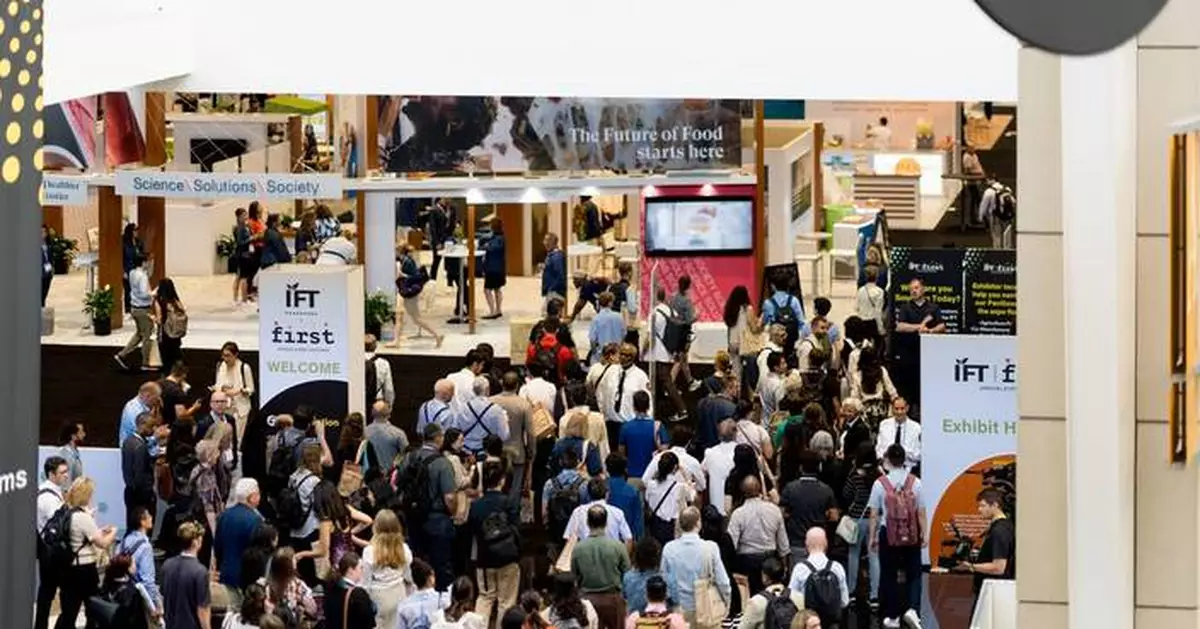
The Institute of Food Technologists (IFT), a nonprofit scientific organization committed to advancing the science of food and its application across the global food system, is pleased to announce that registration is now open for IFT FIRST: Annual Event and Expo, which is being held July 13-16, 2025, at McCormick Place in Chicago.
This press release features multimedia. View the full release here: https://www.businesswire.com/news/home/20250304635067/en/
The world of food is evolving, driving a new era fueled by healthy innovation for people and planet. From food additives and ultra-processed foods to safety recalls and nutritional shifts, attendees at IFT FIRST (Food Improved by Research, Science, and Technology) will see how the global food system is adapting to a changing food environment as leading companies and top experts provide a glimpse at the future of food.
IFT FIRST unites top experts throughout the science of food disciplines across academia, industry, and government. Through cutting-edge scientific programming and multi-disciplinary discussions, IFT FIRST addresses the biggest issues impacting the food industry across novel technology and innovation, health and nutrition, sustainability and climate, food safety, and consumer insights. The dynamic expo floor, a celebration of the latest food innovations and technologies, features some of the top food, health, and wellness companies in the world launching or showcasing the products and solutions that will help usher in a new era of food.
“As we see a broader focus on the science of food and its place in the food system, collaboration and innovation have never been more critical,” said IFT CEO Christie Tarantino-Dean. “IFT FIRST is where the world’s leading experts come together to tackle the food system’s biggest challenges and share groundbreaking research. For those who want to be at the forefront of innovation and make connections that drive real progress, IFT FIRST is the place to be.”
Keynotes will focus on critical food topics including:
Meanwhile, popular features including the Startup Pavilion and rapid-pitch competition known as The Pitch!, networking events and opportunities that include exhibitor-to-attendee matchmaking, as well as student product development and research competitions return once again as the latest iteration of IFT’s longstanding annual meeting is guaranteed to be one of its most memorable.
Register for IFT FIRST before April 19, 2025, and receive an early bird discount. IFT members also receive a special discount. To learn more, email membershipinfo@ift.org.
About IFT FIRST
IFT FIRST: Annual Event and Expo is one of the most influential food technology events in the world as it unites instrumental leaders across the global food system to help shape the future of food. Each year, IFT FIRST (Food Improved by Research, Science, and Technology) convenes prominent food, health, and nutrition professionals across industry, academia, and government to collaborate, innovate, and educate. IFT FIRST features a dynamic expo floor that connects many of the top global food and wellness companies with buyers and those with purchasing influence, while also offering cutting-edge scientific programming that explores the hottest topics across the science of food. IFT FIRST also offers valuable networking opportunities, unique food competitions, and engaging interactive experiences to connect, enrich, and empower attendees in their missions to transform the global food system. For more information, go to www.iftevent.org.
About Institute of Food Technologists
Since 1939, the Institute of Food Technologists (IFT) has served as the voice of the global food science community. IFT advocates for science, technology, and research to address the world’s greatest food challenges, guiding our community of more than 200,000. IFT convenes professionals from around the world – from producers and product developers to innovators and researchers across food, nutrition, and public health – with a shared mission to help create a global food supply that is sustainable, safe, nutritious, and accessible to all. IFT provides its growing community spanning academia, industry, and government with the resources, connections, and opportunities necessary to stay ahead of a rapidly evolving food system as IFT helps feed the minds that feed the world. For more information, please visit ift.org.

Registration is now open for IFT FIRST: Annual Event and Expo, one of the most influential food technology events in the world. The popular showcase of food innovation, hosted by the Institute of Food Technologists, returns to McCormick Place in Chicago July 13-16, 2025. (Photo: Business Wire)
SIDON, Lebanon (AP) — Israel’s air force struck areas in southern and eastern Lebanon on Monday and early Tuesday, including in the country's third-largest city.
A strike around 1 a.m. Tuesday leveled a three-story commercial building in the southern coastal city of Sidon, a few days before Lebanon’s army commander is scheduled to brief the government on its mission of disarming militant group Hezbollah in areas along the border with Israel.
Lebanese President Joseph Aoun in a statement Tuesday condemned the attacks as counter to both international efforts to deescalate hostilities and Lebanon’s efforts to extend the government's authority into areas long dominated by Hezbollah and to disarm militants.
An Associated Press photographer at the scene in Sidon said the area was in a commercial district containing workshops and mechanic shops and the building was uninhabited.
At least one person was transported by ambulance and rescue teams were searching the site for others, but no deaths have been reported.
Israel's military said Tuesday they targeted weapons storage sites and infrastructure belonging to the militant groups Hezbollah and Hamas. They acknowledged the sites were located in civilian areas but blamed the groups for operating there.
The strikes were the latest in near-daily Israeli military action since a ceasefire signed more than a year ago that included a Lebanese pledge to disarm militant groups, which Israel says has not been fulfilled.
They took place nearly two hours after Israel’s military Arabic language spokesman Avichay Adraee posted warnings on X that the military would strike targets in two villages in the eastern Bekaa Valley and two others in southern Lebanon.
Lebanon's state-run National News Agency said a home struck in the village of Manara in the Bekaa Valley belonged to Sharhabil al-Sayed, a Hamas military commander who was killed in an Israeli drone strike in May 2024.
The areas were evacuated after Israel's warning. There were no reports of casualties in those strikes. Earlier Monday, Lebanon’s Health Ministry said a drone strike on a car in the southern village of Braikeh earlier Monday wounded two people. The Israeli military said the strike targeted two Hezbollah members.
The Lebanese army last year began the disarmament process of Palestinian groups while the government has said that by the end of 2025 all the areas close to the border with Israel — known as the south Litani area — will be clear of Hezbollah’s armed presence.
The Lebanese government is scheduled to discuss Hezbollah’s disarmament during a meeting Thursday that will be attended by army commander Gen. Rudolph Haikal.
Monday’s airstrikes were in villages north of the Litani river and far from the border with Israel.
The disarmament of Hezbollah and other Palestinian groups by the Lebanese government came after a 14-month war between Israel and Hezbollah in which much of the political and military leadership of the Iran-backed group was killed.
The latest Israel-Hezbollah war began Oct. 8, 2023, a day after Hamas attacked southern Israel, when Hezbollah fired rockets into Israel in solidarity with Hamas. Israel launched a widespread bombardment of Lebanon in September 2024 that severely weakened Hezbollah, followed by a ground invasion.
The war ended in November 2024 with a ceasefire brokered by the U.S.
Israel has carried out almost daily airstrikes since then, mainly targeting Hezbollah members but also killing at least 127 civilians, according to the office of the U.N. High Commissioner for Human Rights.
Mroue reported from Beirut. Associated Press writer Abby Sewell in Beirut contributed to this report.
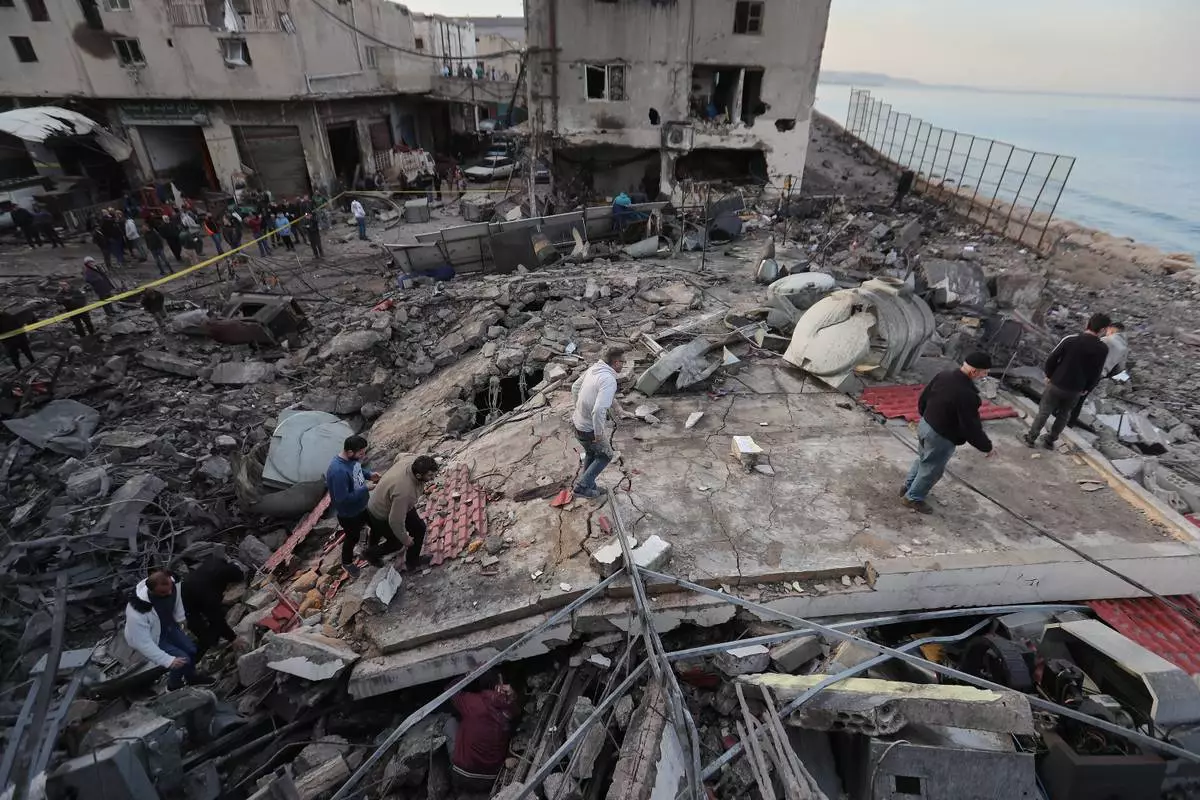
People check a destroyed building that was hit by an Israeli airstrike at a commercial district, in the southern port city of Sidon, Lebanon, Tuesday, Jan. 6, 2026. (AP Photo/Mohammed Zaatari)
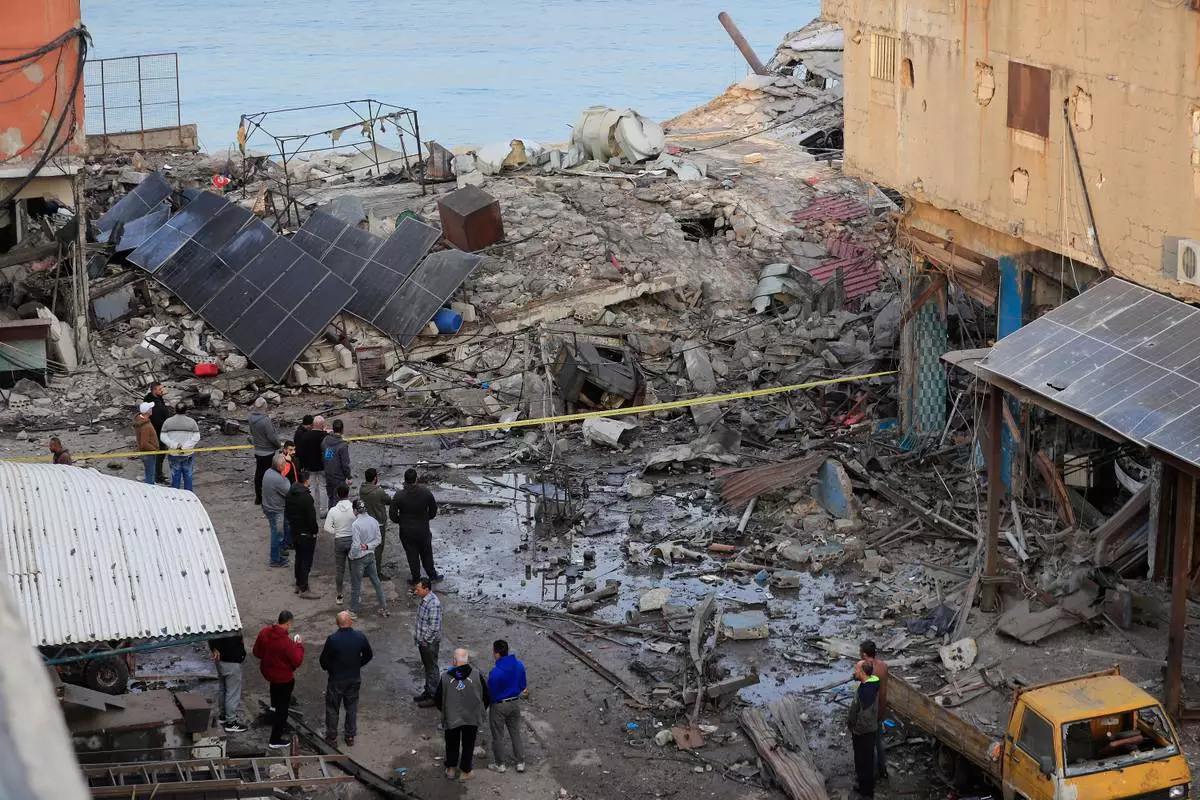
People check a destroyed building that was hit by an Israeli airstrike at a commercial district in the southern port city of Sidon, Lebanon, Tuesday, Jan. 6, 2026. (AP Photo/Mohammed Zaatari)
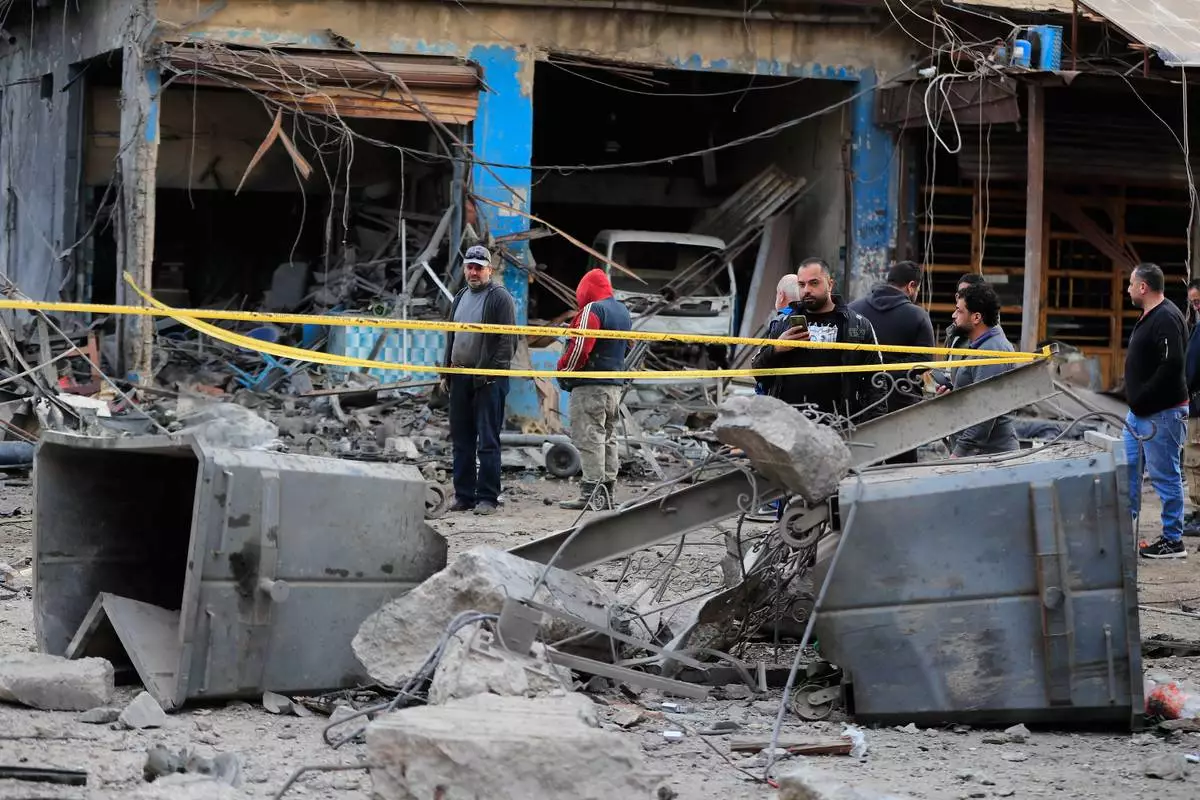
People check the site where an Israeli strike destroyed a building at a commercial district in the southern port city of Sidon, Lebanon, Tuesday, Jan. 6, 2026. (AP Photo/Mohammed Zaatari)
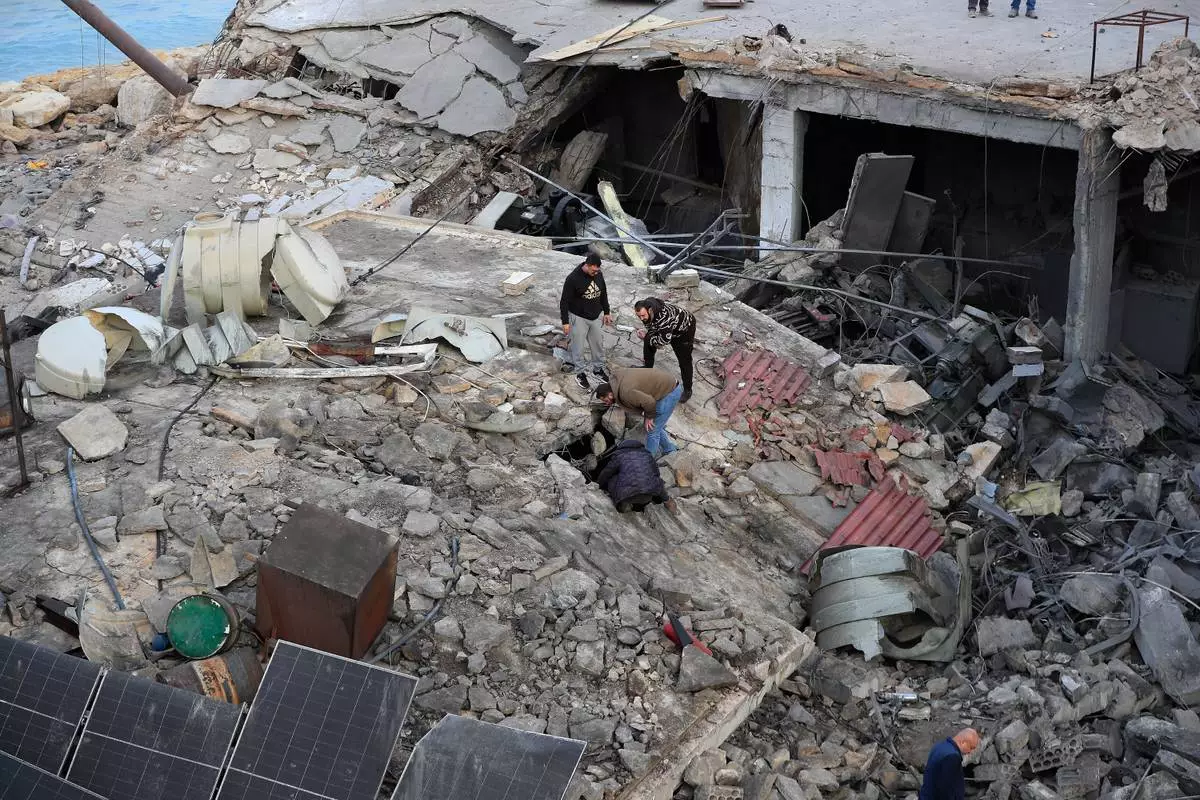
People look through the rubble of a destroyed building that was hit by an Israeli airstrike at a commercial district in the southern port city of Sidon, Lebanon, Tuesday, Jan. 6, 2026. (AP Photo/Mohammed Zaatari)

Lebanese fire fighter extinguish a building destroyed by an Israeli airstrike in the southern port city of Sidon, Lebanon, early Tuesday, Jan. 6, 2026. (AP Photo/Mohammed Zaatari)
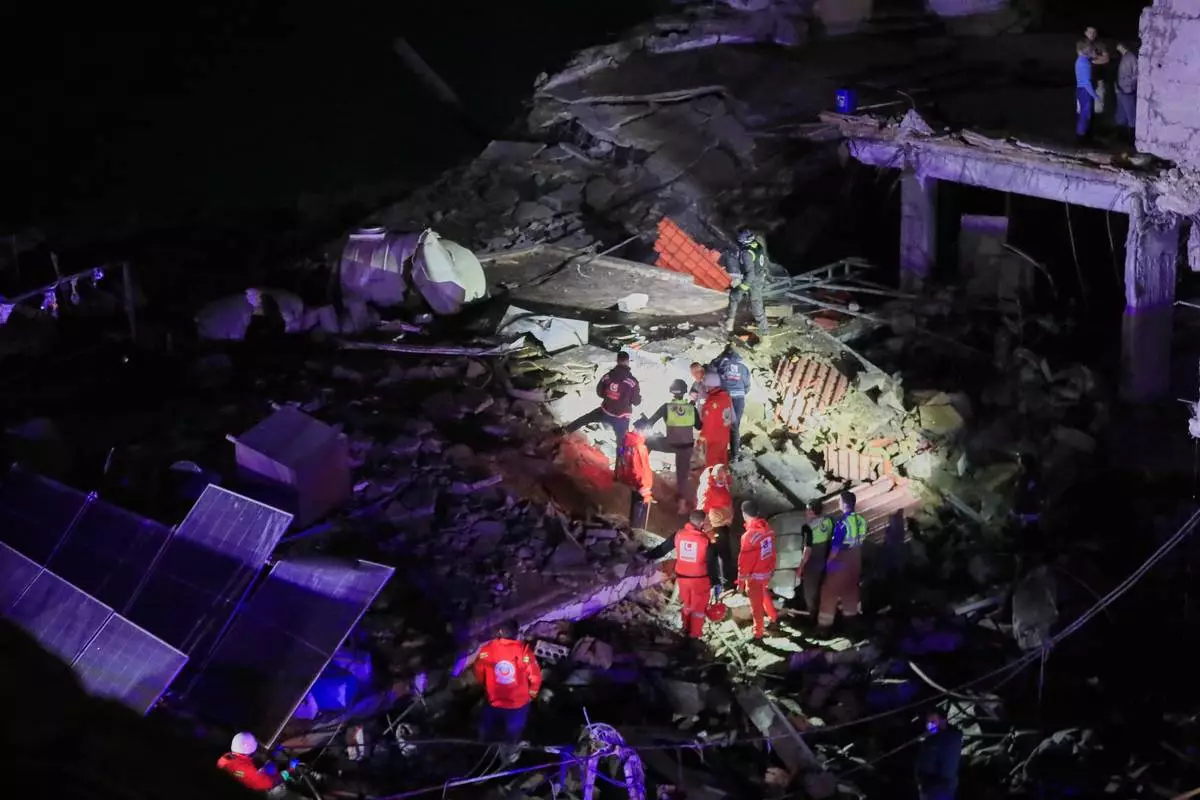
Rescue workers search for possible victims in a building destroyed by an Israeli airstrike in the southern port city of Sidon, Lebanon, early Tuesday, Jan. 6, 2026. (AP Photo/Mohammed Zaatari)
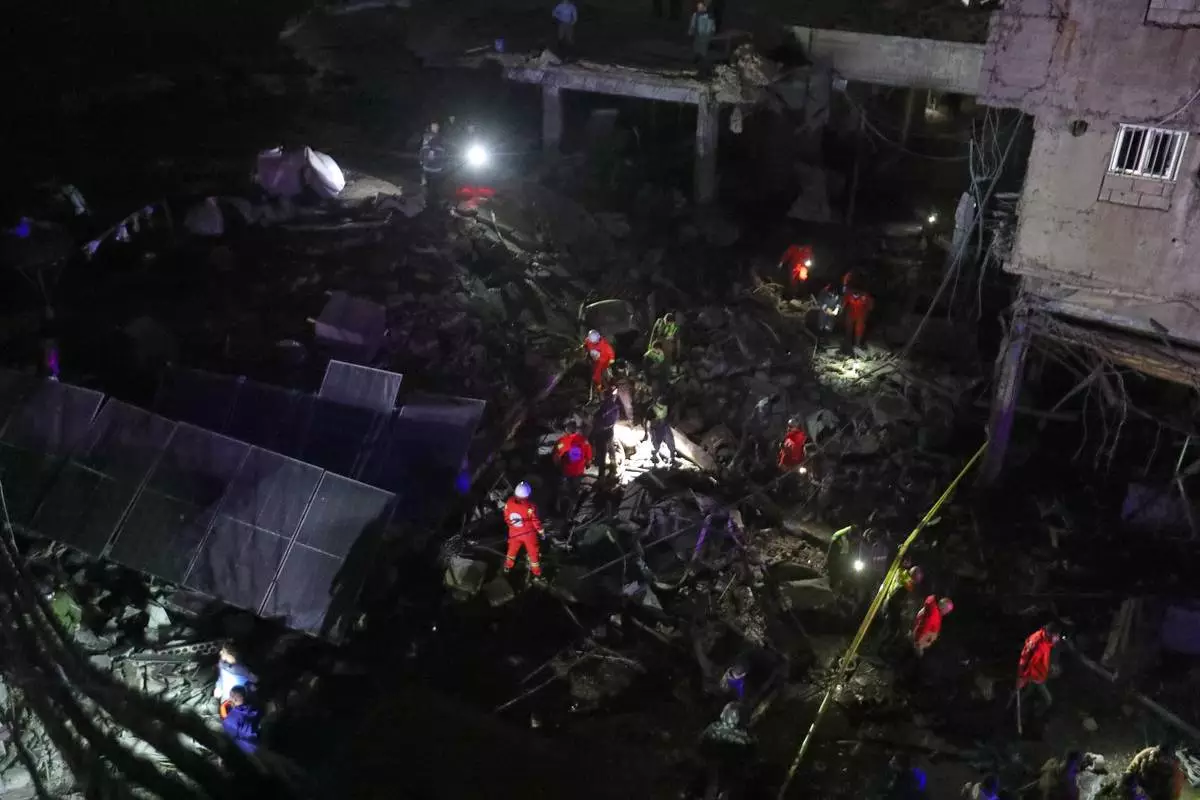
Lebanese Red Cross volunteers search for possible victims in a building destroyed by an Israeli airstrike in the southern port city of Sidon, Lebanon, early Tuesday, Jan. 6, 2026. (AP Photo/Mohammed Zaatari)