Lionel Messi likes to play padel in his free time with his Inter Miami teammates.
Rafael Nadal was recently seen playing shots off the glass on a padel court at his academy in Spain.
So what’s all the fuss about this other racket sport?
Well, an American audience is about to find out as the Premier Padel tour makes its debut in the U.S. this month with a tournament in Miami.
And it’s not just an exhibition featuring retired tennis players as has been the case with pickleball.
Premier Padel is a worldwide circuit and similarly to the pro tennis tours it features four major tournaments at venues like Roland Garros in Paris and the Foro Italico in Rome.
The Miami tournament is a P1-level event that lies just below the majors in terms of importance — kind of like the Miami Open tennis tournament.
“I am convinced that there will be a before and an after with Premier Padel coming to Miami. Just like in Paris and Rome and everywhere that Premier Padel goes,” Fernando Belasteguín, the recently retired padel standout who is the Miami tournament director, told The Associated Press.
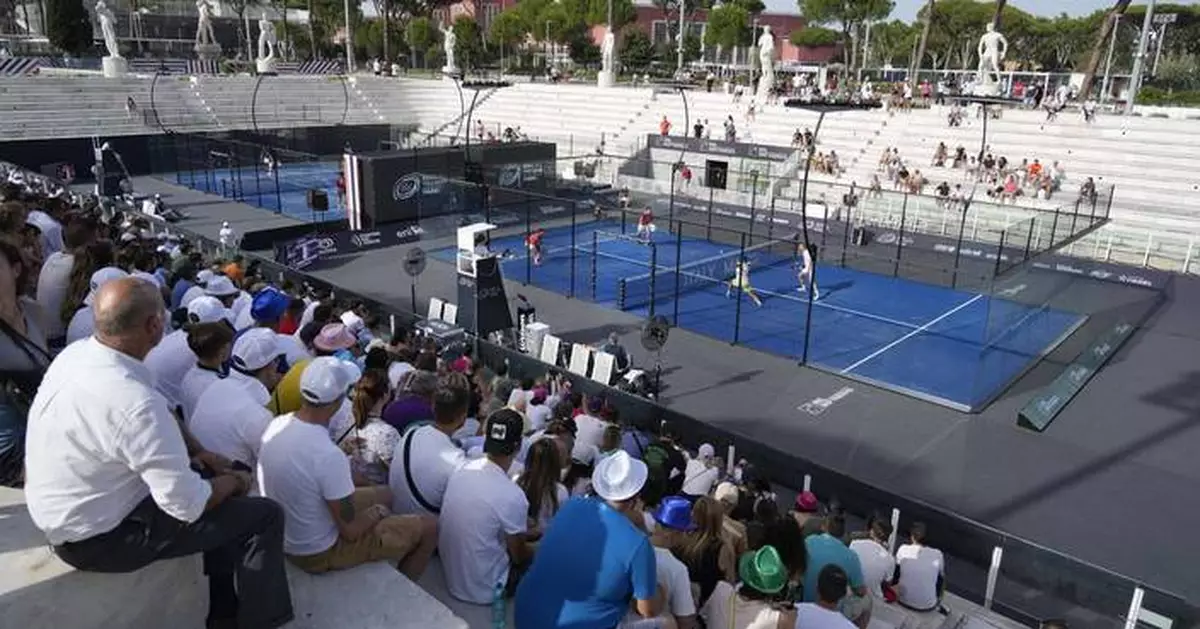
Played in doubles inside a cage that is smaller than a tennis court, padel is a cross between tennis and squash with players allowed to hit the ball off the glass and metallic mesh walls that surround the court.
The tournament will be played March 18-23 at the Miami Beach Convention Center.
While this is not the first elite padel event in the U.S., it’s the first since Premier Padel and the World Padel Tour merged to form a single streamlined global tour that started last year.
The World Padel Tour held tournaments in Miami in 2017 and 2022 — ancient history in the rapidly growing world of padel.
The number of padel courts in the U.S. has increased by 186% over the past two years, according to a study by the International Padel Federation, with more than 650 courts spread across 31 states.
“It’s not just year to year, it’s month by month that padel is growing in the U.S,” Belasteguín said.
Florida is a padel hotbed and features nearly half of the nation’s courts.
“The Latin community is the pulsating heart of the sport in Miami,” Belasteguín said. “But every American who gets to know padel stays with it. Because it’s a sport that you fall in love with very quickly. The Latinos brought the sport to the U.S. and now Americans are falling in love with it, too.”
AP sports: https://apnews.com/sports

FILE - Paula Josemaria, right, talks with teammate Ariana Sanchez, both of Spain, during their match against compatriots Alejandra Alonso De Villa and Andrea Ustero Prieto at the Italy Major Premier Padel tournament in Rome, Wednesday, July 12, 2023. (AP Photo/Gregorio Borgia, File)
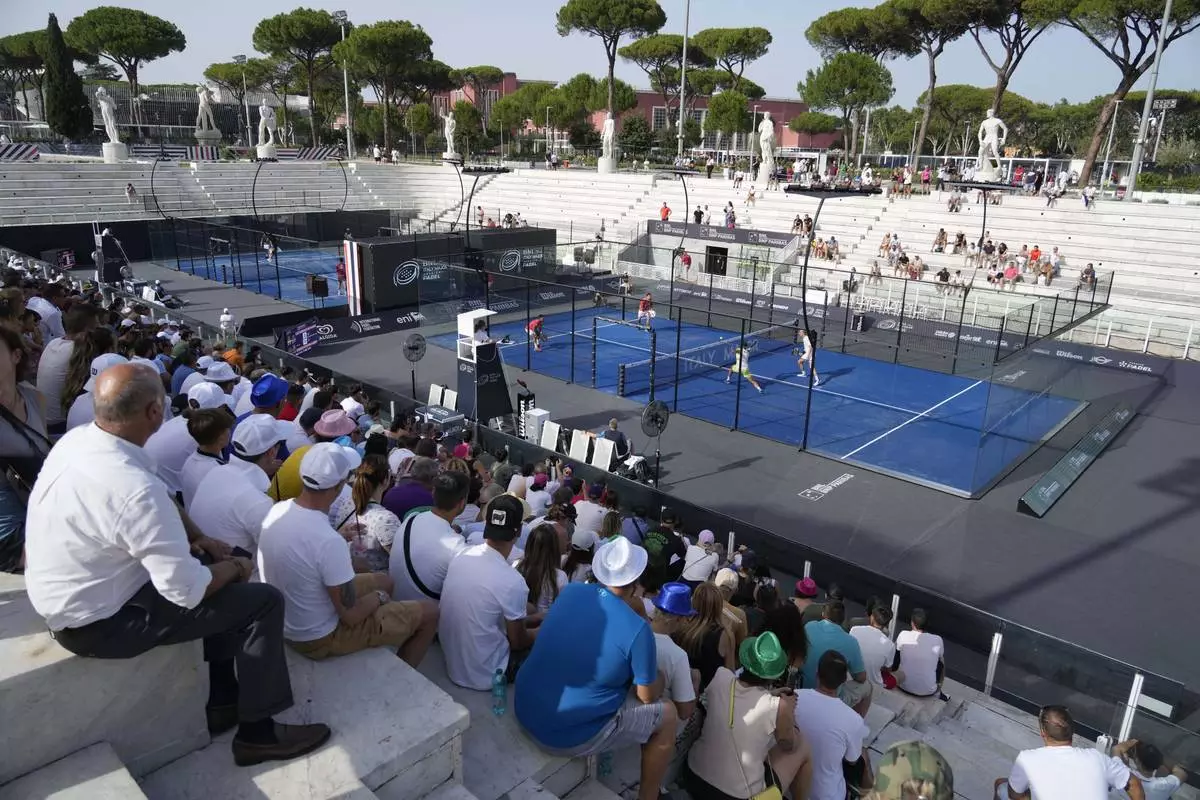
FILE - Spectators watch a match at the Italy Major Premier Padel tournament in Rome, Wednesday, July 12, 2023. A successful debut at the European Games with matches played before enthusiastic crowds in Krakow's central square last month. Record prize money of nearly $1 million at this week's tournament in Rome. (AP Photo/Gregorio Borgia, File)
Trading on Wall Street was subdued and oil prices retreated modestly as Israel and the United States carried out a wave of attacks that killed 25 people in Iran on Monday ahead of U.S. President Donald Trump's deadline for Tehran to reopen the Strait of Hormuz.
Futures for the S&P 500 ticked up 0.1%, while futures for the Dow Jones Industrial Average fell 0.2%. Nasdaq futures gained 0.3%.
Iran's South Pars natural gas field was among the targets hit Monday. Iran responded with missile fire on Israel and its Gulf Arab neighbors while mediators circulated a new ceasefire proposal.
Among those killed in one of the attacks on Tehran was the head of intelligence for Iran’s paramilitary Revolutionary Guard, Maj. Gen. Majid Khademi, according to Iranian state media and Israel’s defense minister.
Trump, whose deadline expires Monday night Washington time, said that if no deal was reached to reopen the strait, the U.S. would hit Iran’s power plants and other infrastructure targets and send the country “back to the stone ages.”
“Tuesday will be Power Plant Day, and Bridge Day, all wrapped up in one, in Iran,” he threatened in a social media post on Easter Sunday, adding that if Iran did not open the strait “you’ll be living in Hell.”
In an effort to stop the fighting, Egyptian, Pakistani and Turkish mediators have sent Iran and the U.S. a proposal calling for a 45-day ceasefire and the reopening of the Strait of Hormuz to give time to try and find a way to end the war, two Mideast officials have told The Associated Press.
Iran and the U.S. have not responded to the proposal, sent late Sunday night to both Iranian Foreign Minister Abbas Araghchi and U.S. Mideast envoy Steve Witkoff, the officials said.
Despite the new attacks, threats and Trump's looming deadline, oil prices fell early Monday.
Benchmark U.S. crude dropped $1.40 to $110.14 a barrel. Brent crude, the international standard, lost 45 cents to $108.58 a barrel. Energy markets were closed Friday, but prices have been surging for weeks on fears that the Iran war will drag on longer than expected. U.S. crude is up more than 60% since the war started five weeks ago, while Brent is up close to 50%.
Japan's benchmark Nikkei 225 finished 0.6% higher at 53,413.68. South Korea's Kospi gained 1.4% to 5,450.33. Trading was closed in Australia for Easter; in Hong Kong and Shanghai for a traditional Chinese holiday, and in France, Germany and Britain in observance of Easter.
The U.S. relies on the Persian Gulf for only a fraction of the oil it imports, but oil is a commodity and prices are set in a global market. Some nations, like resource-poor Japan, import a large portion of their energy needs and rely heavily on access to the Strait of Hormuz.
Japan's Prime Minister Sanae Takaichi told lawmakers recently that Japan was releasing its reserves and was working on alternative routes. South Korea's trade ministry said it plans to send at least five ships to Saudi Arabi in the coming weeks to establish new oil transport routes in the Red Sea.
“As we kick off the first full trading week of April, the word uncertainty is paramount. Last year it was centered on the impact of ‘Liberation Day’ tariffs, this year it's uncertainty surrounding the ongoing Iranian War,” said Jay Woods, analyst at Freedom Capital Markets in New York.
Yuri Kageyama is on Threads: https://www.threads.com/@yurikageyama
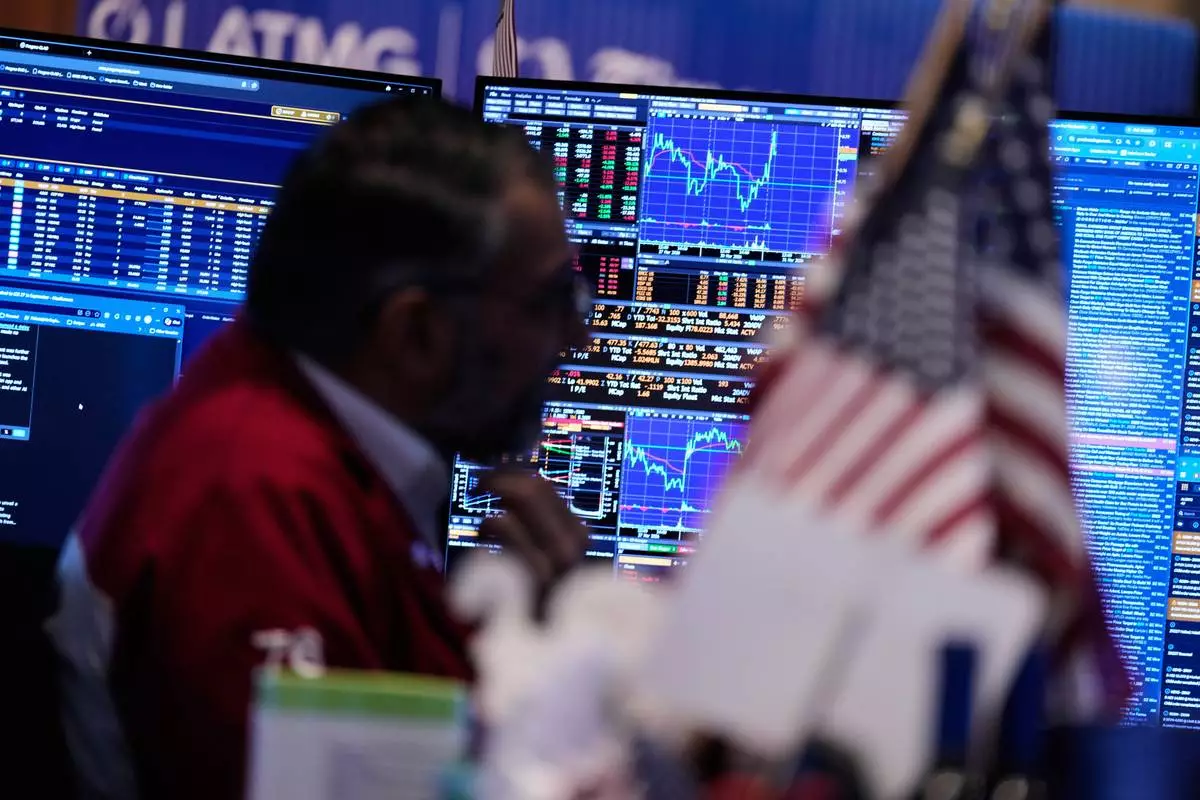
Screens display financial information on the floor at the New York Stock Exchange in New York, Tuesday, March 31, 2026. (AP Photo/Seth Wenig)
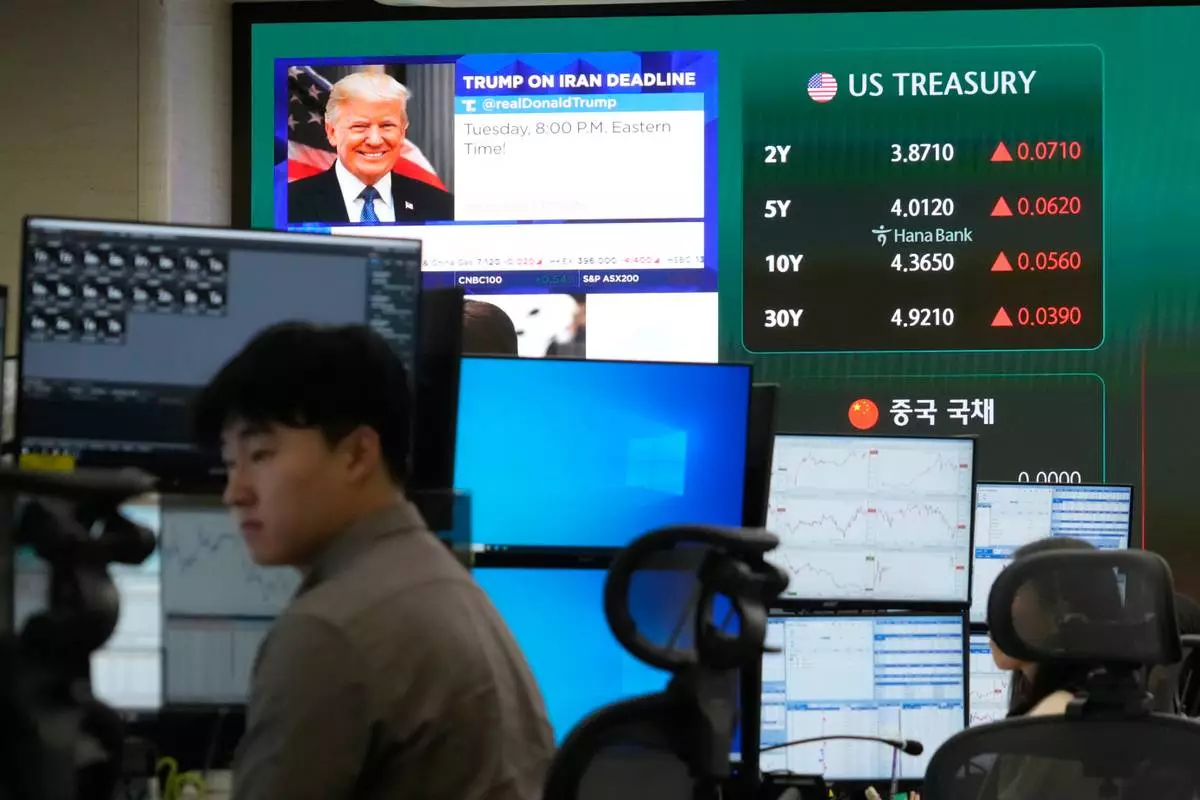
U.S. President Donald Trump is seen on a screen as traders work at the foreign exchange dealing room of the Hana Bank headquarters in Seoul, South Korea, Monday, April 6, 2026. (AP Photo/Ahn Young-joon)
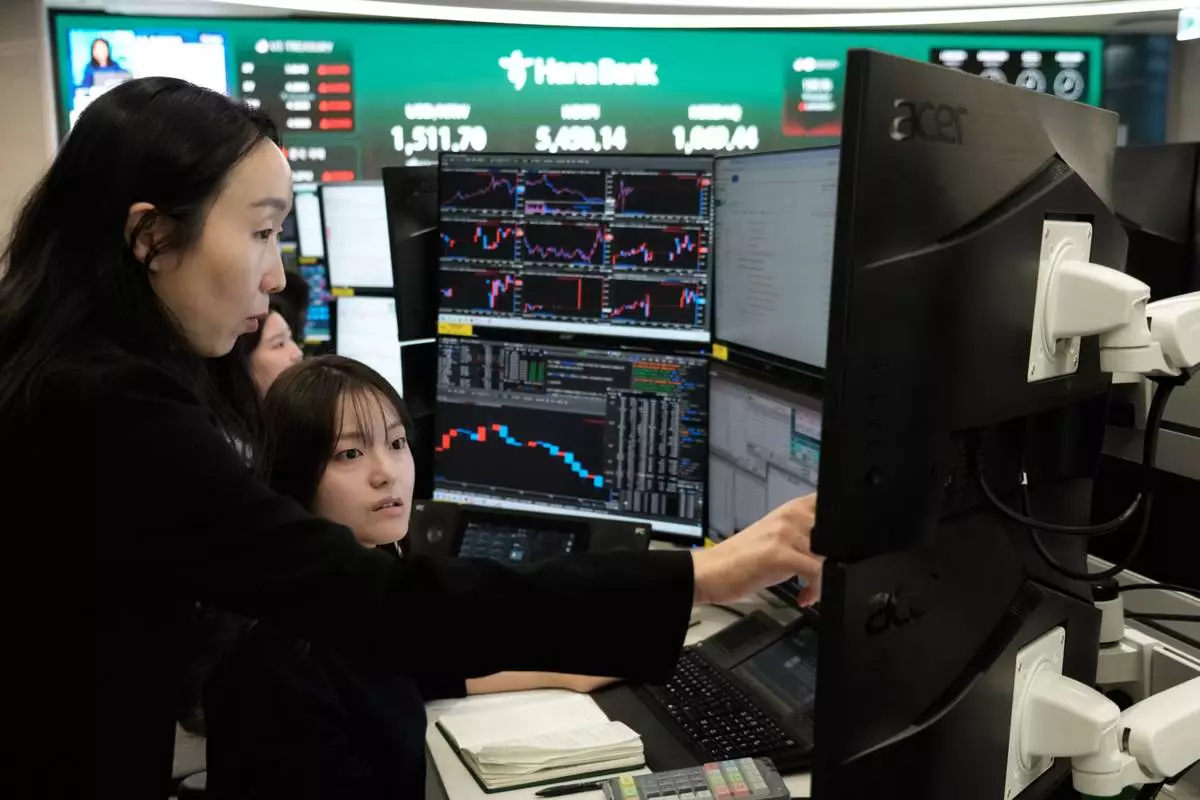
Currency traders watch monitors at the foreign exchange dealing room of the Hana Bank headquarters in Seoul, South Korea, Monday, April 6, 2026. (AP Photo/Ahn Young-joon)