PARIS (AP) — French President Emmanuel Macron is back at the center of global diplomacy, seeking to ease relations with President Donald Trump, championing a Ukraine peace plan alongside his British counterpart, and seeing his longstanding desire to boost European defense turning into reality.
Six months ago, Macron seemed weaker than ever after his call for early legislative elections produced a hung parliament, sparking an unprecedented crisis. Known for his nonstop political activism, Macron shifted his focus to foreign policy, leaving domestic struggles largely to the prime minister.
Click to Gallery
Britain's Prime Minister Keir Starmer, right, greets French President Emmanuel Macron as he arrives for a summit on Ukraine at Lancaster House in London, Sunday, March 2, 2025. (AP Photo/Christophe Ena, Pool)
Ukraine's President Volodymyr Zelenskyy, left, meets French President Emmanuel Macron on the sidelines of the European Council to discuss continued support for Ukraine and European defense, in Brussels, Thursday, March 6, 2025. (Ludovic Marin, Pool via AP)
French President Emmanuel Macron speaks during a media conference at an EU Summit in Brussels, Thursday, March 6, 2025. (AP Photo/Omar Havana)
FILE - French President Emmanuel Macron speaks during a media conference at an EU Summit in Brussels, Thursday, March 6, 2025. (AP Photo/Omar Havana, File)
Ukraine's President Volodymyr Zelenskyy, left, meets French President Emmanuel Macron on the sidelines of the European Council to discuss continued support for Ukraine and European defense, in Brussels, Thursday, March 6, 2025. (Ludovic Marin, Pool via AP)
President Donald Trump, right, shakes the hand of France's President Emmanuel Macron during a joint press conference in the East Room of the White House in Washington, Monday, Feb. 24, 2025. (Ludovic Marin/Pool via AP)
France's President Emmanuel Macron, from second left, speaks with President Donald Trump as Vice President JD Vance and Secretary of State Marco Rubio react during a meeting in the Oval Office of the White House in Washington, Monday, Feb. 24, 2025. (Ludovic Marin/Pool via AP)
Now, he appears as the one leader who speaks to Trump several times per week and takes the lead in European support for Ukraine, while positioning himself as the commander-in-chief of the European Union’s only nuclear power.
Macron, 47, is one of the few leaders who knew Trump during his first term in office, maintaining despite disagreements a cordial relationship, which both describe as “friendship.”
He was the first European leader to visit Trump since his reelection, seeking to persuade him not to abandon Ukraine in pursuit of a peace deal with Russia.
Macron is also a heavyweight of European politics, and shifting U.S. policies gave momentum to his longstanding views.
Since he was first elected in 2017, Macron has pushed for a stronger, more sovereign Europe. That same year, in a sweeping speech at Sorbonne University, he called for a common European defense policy, with increased military cooperation and joint defense initiatives.
He later lamented the “brain death” of the NATO military alliance, insisting the EU should step up and start acting as a strategic world power.
On Thursday, EU leaders committed to strengthening defenses and freeing up hundreds of billions of euros for security in the wake of Trump’s warnings that they might face the Russian threat alone.
In a resounding declaration last week, Macron announced he would discuss extending France’s nuclear deterrent to European partners to help protect the continent.
France's nuclear power is inherited from the strategy set by wartime hero Gen. Charles de Gaulle, president from 1958 to 1969, who sought to maintain France’s independence from the U.S. and assert the country's role as a global power. That went through the development of an independent French nuclear arsenal.
Poland and Baltic nations welcomed the proposal.
France's Minister for European affairs Benjamin Haddad praised Macron's efforts, saying they were aimed at ensuring that "in the face of this world upheaval, Europeans are not spectators but players.”
Some other key players appear to back Macron's approach.
British Prime Minister Keir Starmer, in office for eight months, has sought closer defense cooperation with Europe as part of a “reset” with the EU after years of bitterness over Brexit.
Macron and Starmer are now spearheading a desperate diplomatic drive to bolster Ukraine’s defenses, drawing up a peace plan with Kyiv at its core. That plan includes the possibility of sending European troops to Ukraine to enforce a potential peace agreement.
Meanwhile, Germany's conservative election winner Friedrich Merz said his top priority would be to “strengthen Europe as soon as possible” and gradually move toward “real independence” from the U.S.
Only three days after his victory last month, Merz, who has called for a discussion on “nuclear sharing” with France, traveled to Paris for a working dinner with Macron.
No statement was released after the meeting, but French officials with knowledge of the matter said both men's visions for Europe align. They spoke anonymously because the talks were not to be made public.
Russia’s foreign ministry accused Macron of "demonstrative militarism dictated by the domestic agenda.”
The ministry said that Macron seeks to distract the French public from “worsening socio-economic problems in France and the European Union."
Moscow dismissed Macron’s nuclear deterrent offer as “extremely confrontational,” saying the remarks reflected Paris’ ambitions to “become the nuclear ‘patron’ of all of Europe,” despite the fact that France’s nuclear forces are far smaller than those of the U.S.
Russian President Vladimir Putin drew a comparison with Napoleon, saying that some people “want to return to the times of Napoleon, forgetting how it ended” — a reference to the emperor’s failed invasion of Russia in 1812. Macron responded by calling Putin “an imperialist.”
Reelected in 2022, Macron last year struggled not to become a lame duck after his call for early legislative elections led to a chaotic situation in parliament, delaying the approval of the state budget and forcing the quick replacement of the prime minister.
However, the French Constitution grants the president some substantial powers over foreign policy, European affairs and defense. Macron has a presidential mandate until 2027 and he has said he won't step down before the end of his term.
Macron's activism on the global stage drew criticism from opposition leaders.
Far-right National Rally party vice president Sébastien Chenu described Macron’s “moody” character as “one of the biggest issues” for French diplomacy. "He offended many people, he often changed his mind,” Chenu said.
The head of the hard-left France Unbowed group at the National Assembly, Mathilde Panot, also voiced concerns.
“The situation is too serious and the President of the Republic is too weakened for him to decide on his own," she said. "We don’t just want to be consulted. ... It’s up to the parliament to decide on such serious issues.”
Associated Press writer Vladimir Isachenkov in Moscow contributed to the story.

Britain's Prime Minister Keir Starmer, right, greets French President Emmanuel Macron as he arrives for a summit on Ukraine at Lancaster House in London, Sunday, March 2, 2025. (AP Photo/Christophe Ena, Pool)

Ukraine's President Volodymyr Zelenskyy, left, meets French President Emmanuel Macron on the sidelines of the European Council to discuss continued support for Ukraine and European defense, in Brussels, Thursday, March 6, 2025. (Ludovic Marin, Pool via AP)

French President Emmanuel Macron speaks during a media conference at an EU Summit in Brussels, Thursday, March 6, 2025. (AP Photo/Omar Havana)

FILE - French President Emmanuel Macron speaks during a media conference at an EU Summit in Brussels, Thursday, March 6, 2025. (AP Photo/Omar Havana, File)

Ukraine's President Volodymyr Zelenskyy, left, meets French President Emmanuel Macron on the sidelines of the European Council to discuss continued support for Ukraine and European defense, in Brussels, Thursday, March 6, 2025. (Ludovic Marin, Pool via AP)

President Donald Trump, right, shakes the hand of France's President Emmanuel Macron during a joint press conference in the East Room of the White House in Washington, Monday, Feb. 24, 2025. (Ludovic Marin/Pool via AP)

France's President Emmanuel Macron, from second left, speaks with President Donald Trump as Vice President JD Vance and Secretary of State Marco Rubio react during a meeting in the Oval Office of the White House in Washington, Monday, Feb. 24, 2025. (Ludovic Marin/Pool via AP)
Voters across Maine, Nevada, South Carolina and North Dakota cast ballots Tuesday in another day of primary elections in America, but much of the political world was focused on Maine’s high-stakes U.S. Senate contest.
The results aren't in question. Neither Republican incumbent Sen. Susan Collins nor Democratic challenger Graham Platner faces serious opposition for their party’s nomination. And yet Tuesday marks an especially significant moment for Platner, the embattled veteran and oyster farmer, who's fighting to rebuild his credibility in a campaign rocked by controversy.
Elsewhere, President Donald Trump’s clout within his party was being tested anew in states like South Carolina and Nevada, where he’s endorsed his favored candidates. Democrats hope to build momentum in Nevada in their broader push to reclaim key governor’s seats.
Here's the latest:
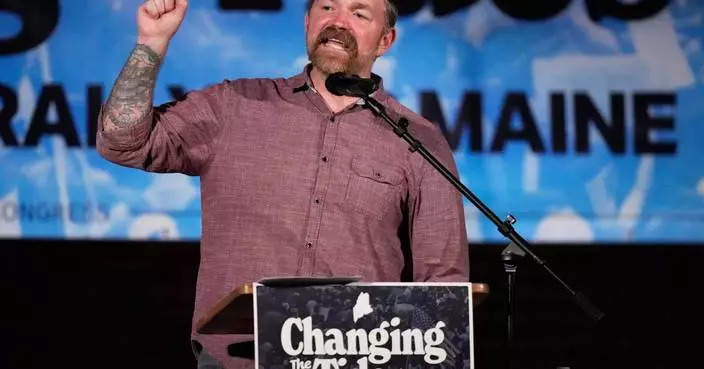
It’s a high-stakes Senate campaign that pits the veteran Collins, the only Republican senator from New England, against a progressive with no experience in high office. Platner, a brash political newcomer who has energized crowds, has faced a series of controversies that the GOP will focus on throughout the campaign.
An oyster farmer and former chair of the planning board in the small town of Sullivan, Platner has drawn hundreds of people to rallies around the state.
He was endorsed by Vermont Sen. Bernie Sanders, who campaigned with him in the run-up to the primary. He has said he plans to focus on economic issues such as housing and healthcare.
The mother of the Maine Senate candidate told those gathered at his election night watch party that she’s proud of her son and hopeful for a big win.
“Graham has always been very passionate about serving others and making life better for the people around him,” Leslie Harlow said at the event in the small town of Blue Hill.
Harlow, who has been a fixture at Platner’s campaign events, told the cheering crowd that her son has been a dedicated worker since his younger days as a blueberry raker and supermarket grocery bagger. She said he’ll bring that dedication to the Senate.
The president called Evette as she advanced to a runoff to congratulate her.
A person with knowledge of Evette’s primary night activities but not authorized to publicly speak about them said Trump also told his chosen pick in the governor’s race he would lend his support over the next two weeks.
Trump endorsed Evette less than two weeks before Tuesday’s votes in South Carolina’s five-way GOP gubernatorial primary. He is also a close supporter of current Gov. Henry McMaster.
— By Meg Kinnard
Wilson moved forward despite not securing Trump’s endorsement in a race in which the top contenders vied for the president’s support.
Wilson has served as the state’s attorney general since 2011, taking actions to support Trump’s political and personal moves. In 2024, Wilson traveled to New York to support Trump as he stood trial in a hush money case.
He is the son of longtime U.S. Rep. Joe Wilson.
Evette’s achievement came about a week after securing Trump’s backing.
The Ohio native has for eight years served as lieutenant governor to current Gov. Henry McMaster, who is term-limited and was among Trump’s earliest supporters in his first presidential campaign.
In-person Election Day voting concluded in North Dakota at 9 p.m. ET. Some polls located in Central time closed an hour earlier, at 8 p.m. ET.
Comparable primaries from past elections can offer clues about when to expect the first vote results and how long the vote count might take.
In the 2024 state primary, the AP first reported results at 9 p.m. ET, just as the last polls closed. The last vote update of the night was at 11:56 p.m. ET, with about 99% of total votes counted.
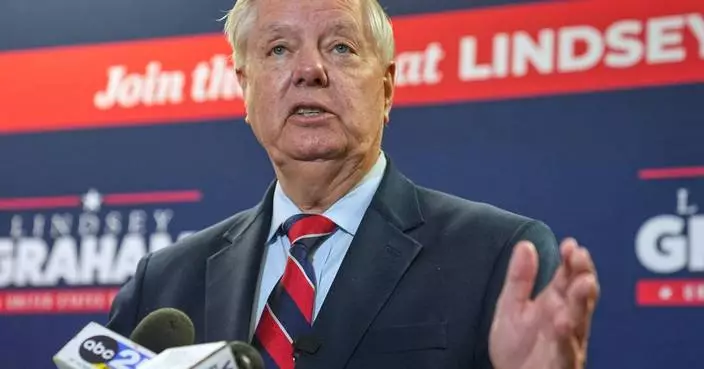
The key Trump ally defeated challengers including businessman Mark Lynch, who said Graham wasn’t conservative enough for the state.
Trump early on endorsed Graham, his political confidant and regular golfing partner, despite their on-again-off-again relationship.
In announcing he would seek a fifth term in the Senate, Graham also secured the state’s leading Republicans, Sen. Tim Scott and Gov. Henry McMaster, to chair his 2026 run.
No Democrat has won a U.S. Senate seat in South Carolina in decades, and Republicans in recent history typically take statewide seats by double-digit margins. When he last ran in 2020, Graham defeated his Democratic opponent, Jaime Harrison, by a 10 percentage point margin.
A number of Republican challengers are vying against Graham, but one voter said he’s not worried about arguments the incumbent isn’t conservative enough.
“I think he’s perfectly fine,” said Jimmy Hunt, a Spartanburg businessman, as he watched returns come in at Lt. Gov. Pamela Evette’s election night headquarters in Greenville.
“He navigates pretty well with President Trump,” Hunt said. He’s kind of always on the edge of being in trouble, but that’s a tough game — really tough.”
The state lawmaker who has represented a district in the Columbia area for three terms defeated businessman Billy Webster and attorney Mullins McLeod.
Seen as a rising star in the state party, Johnson was tapped to give this year’s Democratic response to Republican Gov. Henry McMaster’s state of the state address.
The winner of the November general election will succeed McMaster, who has been in office since Nikki Haley left her term early to join the first Trump administration.
Democrats have not won a general election for governor in South Carolina since 1998, and Republicans have controlled all statewide elected offices for more than a decade.
The Charleston pediatrician secured the nomination in her campaign to keep Republican U.S. Sen. Lindsey Graham from a fifth term.
Andrews, who unsuccessfully challenged U.S. Rep. Nancy Mace in 2022, has challenged what she’s characterized as Graham’s waffling positions over the course of his political career.
No Democrat has won a U.S. Senate seat in South Carolina in decades, and Republicans in recent history typically take statewide seats by double-digit margins.
When he last ran in 2020, Graham defeated his Democratic opponent, Jaime Harrison, by a 10 percentage point margin.
Platner is holding his event at Blue Hill YMCA in the town of Blue Hill, about 30 miles from his hometown of Sullivan. Supporters were gathering to hear a speech from Platner, which is expected after results come in.
Platner is expected to win the primary because his main competition, Democratic Gov. Janet Mills, suspended her campaign weeks ago. The winner will face longtime Republican Sen. Susan Collins.
The mood at his event is high, with the crowd expecting a victory and beginning to assemble in front of a podium where Platner will speak.
Las Vegas resident Laurie Trowbridge voted for Alexis Hill because of Hill’s stance on data centers. Hill has pledged to stop new tax abatements on data centers and require them to implement renewable energy policies.
“We don’t have enough water for data centers,” Trowbridge said. “And they pollute everything, and we can’t have it. We have enough problems in the state without adding that to it.”
Teresa Ray, also a Las Vegas resident, voted for Attorney General Aaron Ford because of his experience as a leader.
“He has shown me since he’s been attorney general that he’s going to be the one that should be able to lead Nevada into a better place than where we are now,” Ray said.
She hopes that if he is elected, he will be able to encourage other Democrats to “grow some spine” and send a better message to voters.
Juliana Palyak studied the Republican candidates for South Carolina governor for months. She didn’t like any of them.
Finally as primary day came, she said she decided to vote for self-funded businessman Rom Reddy.
“I do not want career politicians any more. I am tried of it,” Paylak said of the other four candidates who are all currently in elected office.
Her disgust extends to Trump, who has lost her support by going to war in Iran and not keeping other promises made during his campaign.
“His social media. It’s ridiculous,” Paylak said.
In-person Election Day voting concluded in Maine at 8 p.m. ET.
Comparable primaries from past elections can offer clues about when to expect the first vote results and how long the vote count might take.
In the 2024 general election, the AP first reported results at 8:44 p.m. ET, or 44 minutes after polls closed. About 50% of the total vote had been counted by 12:54 a.m. ET, and counting stopped for the night at 4:11 a.m. ET. By 3:13 p.m. ET the day after Election Day, about 90% of the vote had been counted.
Some of Maine’s primary elections could advance to ranked choice voting if no candidate wins a majority of first-choice votes. This could delay the release of final results for another week or two.
Hilton has made the case that the state desperately needs new leadership following more than 15 years of Democratic dominance.
He’ll face Democrat Xavier Becerra, a former state attorney general and Biden administration health secretary, whom The Associated Press previously determined had won enough votes. Election day was a week ago.
Hilton faces a challenging electorate in the November election, as California has nearly twice as many registered Democrats as Republicans. If elected he would be the first GOP candidate to win statewide office since 2006.
Gov. Joe Lombardo thanked campaign volunteers Tuesday afternoon in front of a Las Vegas polling location, taking pictures and signing supporters’ shirts as people huddled under a tent in the 94 degree heat.
The Republican governor, who is expected to easily win his primary, touted his record on improving education and “expanding upon the economy and the jobs front, healthcare, and public safety.” He said next on the list is working on affordable housing.
“We’re running again because we still got a lot of work to do in that space,” Lombardo said at his campaign’s booth. Along the sidewalk leading to the polling location, campaigns sent up booths in a last effort to sway voters.
Lombardo will likely face either Attorney General Aaron Ford or Washoe County Commissioner Alexis Hill in November.
Election day in California was one week ago, but candidates in the race for governor are still waiting to find out who will be paired in a November runoff for the state’s highest office.
Democrat Xavier Becerra qualified last week, but it’s still not clear if the second spot will be claimed by Republican Steve Hilton or Democrat Tom Steyer.
Becerra told reporters Tuesday that he was “anxious to find out who … is going to be in there with me.”
California has a notoriously slow vote count, and Becerra said, “I don’t think it’s a great thing that it takes such a long time.” But he also defended the system, saying he would oppose “anything that reduces a Californian’s chance to vote.”
Earlier in the day, Hilton said the vote-counting system that can sometimes take weeks or longer to determine a winner desperately needed a complete overhaul.
“It’s insane,” Hilton said.
Two of the GOP candidates said they felt the use of ranked choice voting in the GOP primary made for an uglier election season.
Maine uses the ranked the style of voting for some races, including governor primaries, though it will not be used in the general election for governor. Ranked voting could factor heavily in Tuesday’s results because there are seven Republican candidates and five Democrats.
Jonathan Bush, one of the Republican candidates, said the role of ranked choice voting is to “make people less trusting of our democracy right now.” Another Republican, Owen McCarthy, said it led to candidates attacking each other.
“The thing with ranked choice voting is it’s supposed to make the race nicer. It didn’t make the race nicer,” he said.
The state’s primaries seemed to be on the verge of being upended over Trump’s push to reshape congressional districts ahead of the November elections.
However, the Republican-controlled state Senate rejected a plan to cancel congressional votes and schedule a new primary under revised districts.
The new lines had been designed to help Republicans oust U.S. Rep. Jim Clyburn, currently seeking his 18th term and the state’s sole congressional Democrat.
Some senators, including Republicans, said it was simply too late to make a change. Last weekend, South Carolina Democrats celebrated during their annual fundraising dinner and convention.
The Maine Democratic Senate candidate has been scrutinized recently after reports that he sent sexually explicit text messages with several women while married to his wife, Amy Gertner.
Gertner has called news coverage of the issue “gossip.”
Genevieve McDonald, a then-campaign staffer for Platner, told The Associated Press that Platner was “sexting multiple women while married” and “the campaign tried to assess that as an election vulnerability.”
According to The Wall Street Journal, Gertner told the campaign in August about the messages, which she had discovered on Platner’s phone last year. Platner’s campaign team reportedly decided that the texts were private and being handled by the couple, who were married in 2023.
The two are in counseling, Gertner has said, and Platner has his own therapist.
Graham often faces primary challengers, and he’s vying against several on Tuesday. But leading up to this year’s primary, several Republicans bowed out before voting began.
André Bauer, a former South Carolina lieutenant governor nominated as ambassador to Belize in both of Trump’s terms, ended up shuttering his bid after only a month as an announced candidate.
And Paul Dans, a chief architect of Project 2025, bailed on the last day to remove his name from ballots.
Mark Lynch, a Greenville businessman, is still running. On social media, Trump has said Lynch “would be a DISASTER for the Republican Party” if elected.
Maine supporters of Graham Platner said Tuesday that ousting incumbent Republican Sen. Susan Collins was on their mind.
Merrill Poddle of Ellsworth, Maine, said he voted for Platner. He questioned how much Collins actually stands up to President Donald Trump.
“The only time that she’s ever voted against him, what he wants, is when she knew it was gonna pass anyway,” he said. “She always has concerns, but that’s about all she ever has.”
Anne Dickens, also of Ellsworth, said she’s backing Platner as well. She questioned whether Collins had a vision for Maine.
“I think that Susan Collins has had her chance. She’s been too conservative and too much with the Trump view,” she said.
Among the several quirks about Maine, it’s one of just two states that uses ranked choice voting for its statewide elections.
It’s a system, adopted in 2016, that allows Maine voters to rank their lesser choices.
If no candidate wins a majority of first-place votes, then other rounds of tabulation begin without the last-place finisher. That candidate’s votes are reallocated to other candidates based on the second-place choices of their voters. The process continues until one candidate has a majority.
The Senate Democratic primary election isn’t expected to head to ranked choice voting, but other races might, including the one for governor.
Democratic governor candidate Nirav Shah has campaigned asking to be voters’ second choice if he can’t be their first, joking in a recent ad that “second choices are still pretty good … most of the time!”
▶ Read more
No Democrat has held the congressional seat that represents Reno and rural northern Nevada, but Democrats aren’t ruling it out this year after longtime GOP Rep. Mark Amodei announced his retirement.
“A lot of things have to go our way in November, and I think we should be honest about that,” said Erik Jimenez, chair of the Democratic Party of Washoe County, the most populous county in the district. “But I’ll say from our volunteer base in Washoe and just rank-and-file voters across the district, we have never seen more people excited about Congressional District 2 than we do now.”
Former state lawmaker Teresa Benitez-Thompson and businessman and investor Greg Kidd are among those on the Democratic primary ballot. They've focused on the economy, healthcare and artificial intelligence regulations.
Democrats are banking on Trump’s growing unpopularity and the district’s large number of nonpartisan voters. In the Republican primary, they're hoping that Trump-backed candidate David Flippo will defeat James Settelmeyer, a former lawmaker with the backing of Gov. Joe Lombardo, believing it would be easier to draw a contrast.
North Dakota’s lone U.S. House member faces a partial rematch of her 2024 nomination race in a state primary Tuesday. Also on the ballot is a proposed amendment to the state constitution, while residents of Fargo will elect a new mayor.
Republican U.S. Rep. Julie Fedorchak seeks a second term. She faces another primary challenge from former foreign service officer Alex Balazs, who placed fourth in the 2024 contest with 4% of the vote behind her and others. Fedorchak went on to win the general election with 69% of the vote against Democrat Trygve Hammer, who also is running again and will face the winner of this year’s Republican primary.
Voters will also choose nominees for several top statewide offices, although candidates for most of those offices, such as secretary of state, state attorney general and state agriculture commissioner, are running unopposed.
Many of the state’s top elected offices, such governor, lieutenant governor, treasurer and both U.S. Senate seats, won’t be up for election until 2028 or later.
▶ Read more
More than a year before filing even opened for this year’s contests, Graham’s campaign said Sen. Tim Scott and Gov. Henry McMaster would chair his 2026 run.
Scott, South Carolina’s junior senator, chairs the National Republican Senatorial Committee.
McMaster is the state’s longest-serving governor, having been elected twice after serving the remaining two years of Nikki Haley’s term after she became Trump’s first ambassador to the United Nations.
Democrats and Republicans will pick nominees for governor to replace Mills as the Democrat’s time in office is winding to a close.
It’s a crowded field. Democrats are choosing between Maine Secretary of State Shenna Bellows; former Maine Senate President Troy Jackson; former Speaker of the Maine House of Representatives Hannah Pingree; energy executive Angus King III; and former director of the Maine Center for Disease Control and Prevention Nirav Shah.
Republicans will choose between former U.S. Assistant Secretary of State Bobby Charles; healthcare executive Jonathan Bush; former Maine Senate Majority Leader Garrett Mason; University of Maine System trustee Owen McCarthy; former Paris, Maine, selectman Robert Wessels; and businessmen David Jones and Ben Midgley.
Mills is termed out and will appear on the Democratic ballot for U.S. Senate, although she suspended her campaign weeks ago.
As Nevada voters participate in primary elections Tuesday, the state Democratic Party has launched a website — www.thelombardotrumpway.com/ — to highlight GOP Gov. Joe Lombardo’s connections to the White House.
The site is an effort to connect the governor to the economic fallout from Trump’s tariffs and the Iran war. Lombardo is considered one of the most vulnerable governors in the country.
The Democrats vying to challenge Lombardo include state Attorney General Aaron Ford, who has the backing of the Democratic congressional delegation and former Vice President Kamala Harris. He would be the first Black man elected governor of Nevada. He’s facing Democrat Alexis Hill, a county commissioner in northern Nevada who campaigned as a candidate willing to shake things up.
Platner’s campaign has spent months navigating controversies about a tattoo of a Nazi symbol that he had covered up and his history of inflammatory online postings.
Platner has said he was drunk on leave with some fellow Marines many years ago when he got a skull and crossbones tattoo on his chest. He had it covered up last year after saying he learned that it was a Nazi image.
There has also been much attention on his former social media and Reddit posts, which were dismissive of military sexual assaults, insulting of police and rural residents and used homophobic slurs, for which he's apologized.

A person walks past a sign for a drive-through ballot drop-off outside the city hall in Las Vegas, Tuesday, June 9, 2026. (AP Photo/Jae C. Hong)
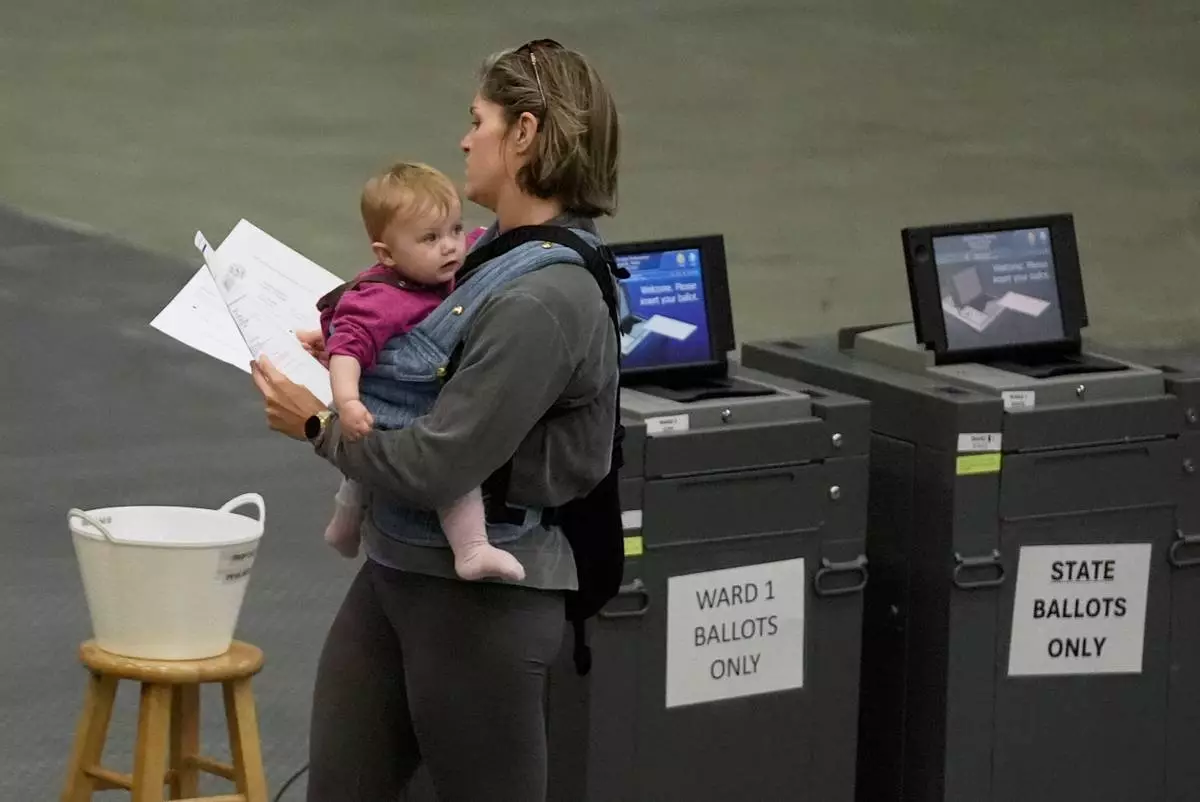
Lindsay Robinson, with daughter Scottie, walks to cast her ballots in the Maine Primary, Tuesday, June 9, 2026, in Augusta, Maine. (AP Photo/Robert F. Bukaty)
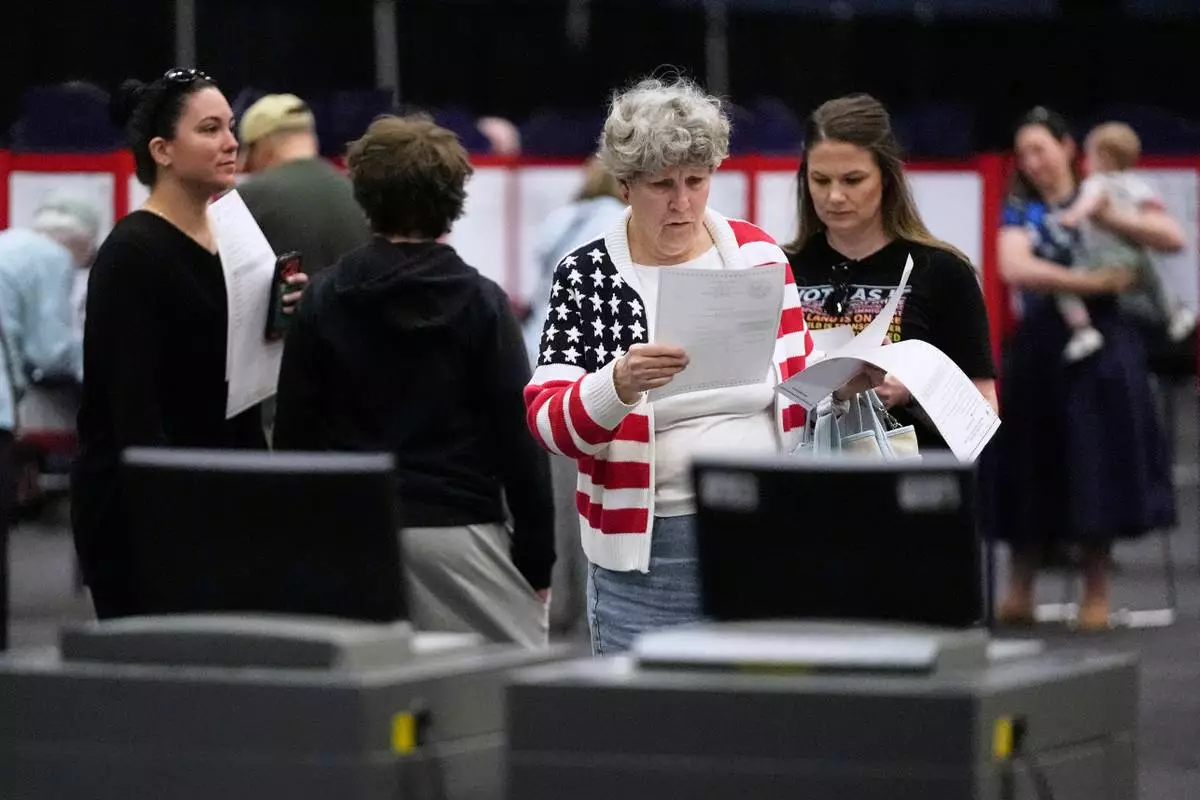
Mary Saunders looks over her choices one last time before casting her ballots in the Maine Primary, Tuesday, June 9, 2026, in Augusta, Maine. (AP Photo/Robert F. Bukaty)