YOKOHAMA, Japan (AP) — The van makes its way slowly but surely through the city streets, braking gently when a car swerves into its lane. But its steering wheel is turning on its own, and there's no one in the driver’s seat.
The driverless technology from Nissan Motor Corp., which uses 14 cameras, nine radars and six LiDar sensors installed in and around the vehicle, highlights Japan's eagerness to catch up with players like Google’s Waymo that have taken the lead in the U.S.
Click to Gallery
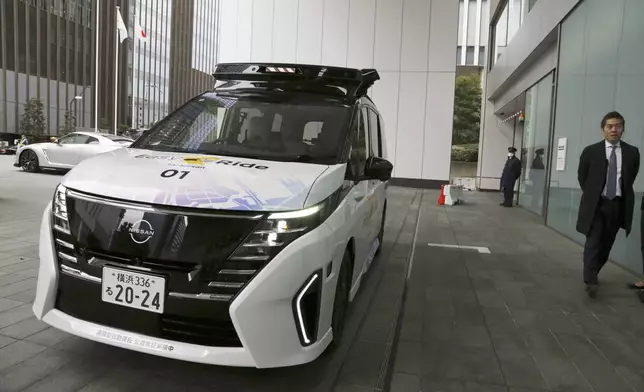
Nissan’s self-driving car moves from a road into the headquarters entrance way in a demonstration for reporters in Yokohama, near Tokyo, on March 6, 2025. (AP Photo/Yuri Kageyama)
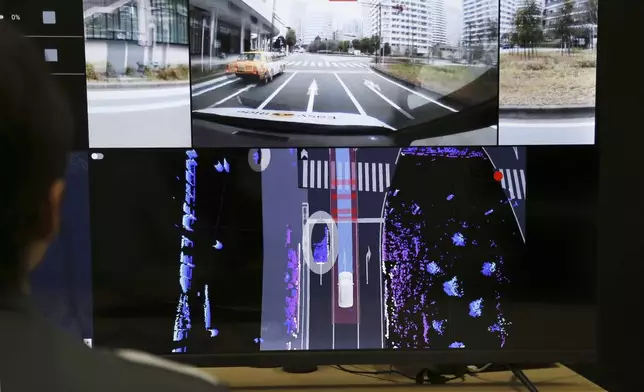
Nissan officials remotely monitor on screens the path and surroundings of the self-driving vehicle being tested on regular roads, so they can step in if problems happen, at Nissan headquarters in Yokohama, near Tokyo, on March 6, 2025. (AP Photo/Yuri Kageyama)
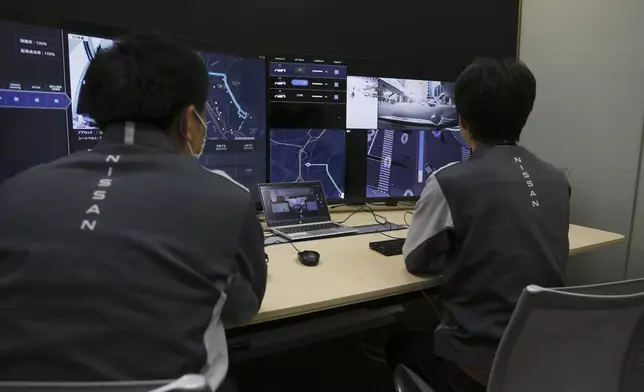
Nissan officials remotely monitor on screens the path and surroundings of the self-driving vehicle being tested on regular roads, so they can step in if problems happen, at Nissan headquarters in Yokohama, near Tokyo on March 6, 2025. (AP Photo/Yuri Kageyama)
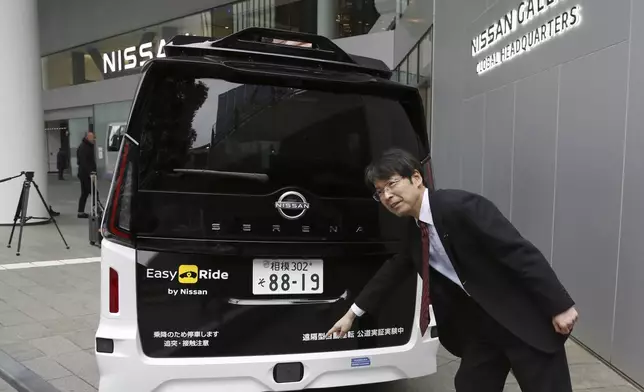
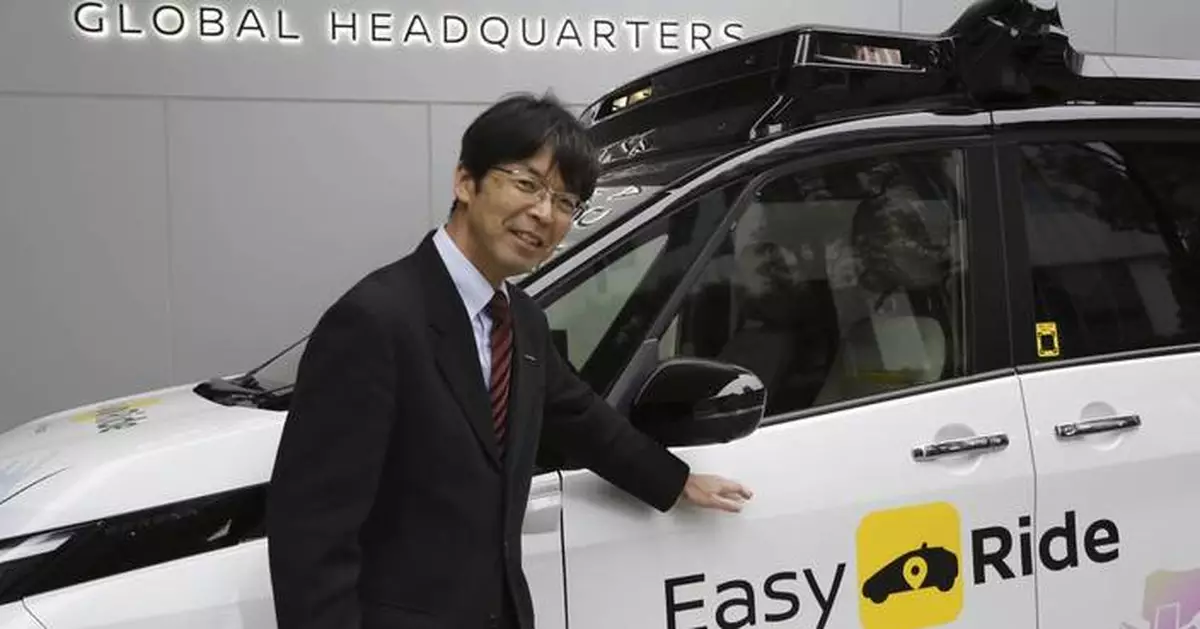
Takeshi Kimura, a Nissan engineer overseeing the Japanese automaker’s self-driving technology, shows the car packed with the technology to reporters at Nissan headquarters in Yokohama, near Tokyo, on March 6, 2025. (AP Photo/Yuri Kageyama)
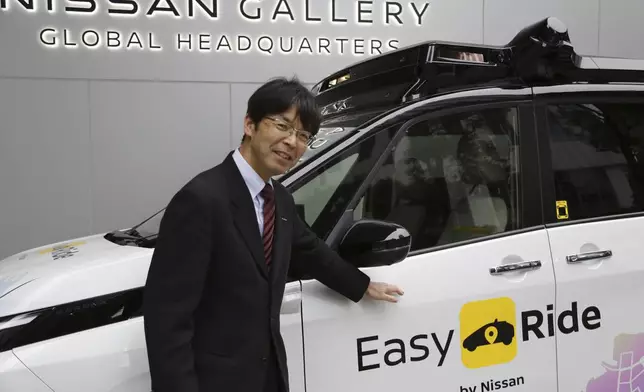
Takeshi Kimura, a Nissan engineer overseeing the Japanese automaker’s self-driving technology, shows the car packed with the technology to reporters at Nissan headquarters in Yokohama, near Tokyo, on March 6, 2025. (AP Photo/Yuri Kageyama)
Japan, home to the world’s top automakers, has not kept pace with the global shift to autonomous driving, so far led by China and the U.S. But momentum is building.
Waymo is going to land in Japan this year. Details haven't been disclosed, but it has a partnership with major cab company Nihon Kotsu, which will oversee and manage their all-electric Jaguar I-PACE sport-utility vehicles, first in the Tokyo area, still with a human cab driver riding along.
During Nissan's demonstration, the streets were bustling with other cars and pedestrians. The vehicle stayed within the maximum speed limit in the area of 40 kph (25 mph), its destination set with a smartphone app.
Takeshi Kimura, the Mobility and AI Laboratory engineer at Nissan, insists an automaker is more adept at integrating self-driving technology with the overall workings of a car — simply because it knows cars better.
“How the sensors must be adapted to the car’s movements, or to monitor sensors and computers to ensure reliability and safety requires an understanding of the auto system overall,” he said during a recent demonstration that took reporters on a brief ride.
Nissan’s technology, being tested on its Serena minivan, is still technically at the industry's Level Two because a person sits before a remote-control panel in a separate location outside the vehicle, in this case, at the automaker's headquarters, and is ready to step in if the technology fails.
Nissan also has a human sitting in the front passenger seat during the test rides, who can take over the driving, if needed. Unless there is a problem, the people in the remote control room and the passenger seat are doing nothing.
Nissan plans to have 20 such vehicles moving in the Yokohama area in the next couple of years, with the plan to reach Level Four, which means no human involvement even as backup, by 2029 or 2030.
Autonomous vehicles can serve a real need given the nation’s shrinking population, including a shortage of drivers.
Other companies are working on the technology in Japan, including startups like Tier IV, which is pushing an open source collaboration on autonomous driving technology.
So far, Japan has approved the use of so-called Level Four autonomous vehicles in a rural area in Fukui Prefecture, but those look more like golf carts. A Level Four bus is scuttling around a limited area near Tokyo’s Haneda airport. But its maximum speed is 12 kmph (7.5 mph). Nissan's autonomous vehicle is a real car, capable of all its mechanical workings and speed levels.
Toyota Motor Corp. recently showed its very own “city” or living area for its workers and partnering startups, near Mount Fuji, being built especially to test various technology, including autonomous driving.
Progress has been cautious.
University of Tokyo Professor Takeo Igarashi, who specializes in computer and information technology, believes challenges remain because it’s human nature to be more alarmed by accidents with driverless vehicles than regular crashes.
“In human driving, the driver takes responsibility. It’s so clear. But nobody is driving so you don’t know who will take responsibility,” Igarashi told The Associated Press.
“In Japan, the expectation for commercial services is very high. The customer expects perfect quality for any service — restaurants or drivers or anything. This kind of auto-driving is a service form a company, and everybody expects high quality and perfection. Even a small mistake is not acceptable.”
Nissan says its technology is safe. After all, a human can’t be looking at the front, the back and all around at the same time. But the driverless car can, with all its sensors.
When a system failure happened during the recent demonstration, the car just came to a stop and all was well.
Phil Koopman, professor of electrical and computer engineering at Carnegie Mellon University, believes the autonomous vehicle industry is just getting started.
The main problem is what’s known as “edge cases,” those rare but dangerous situations that the machine has not yet been taught to respond to. Using autonomous fleets of a significant size for some time is needed for such edge cases to be learned, he said.
“We will see each city require special engineering efforts and the creation of a special remote support center. This will be a city-by-city deployment for many years,” said Koopman.
“There is no magic switch.”
Yuri Kageyama is on Threads: https://www.threads.net/@yurikageyama
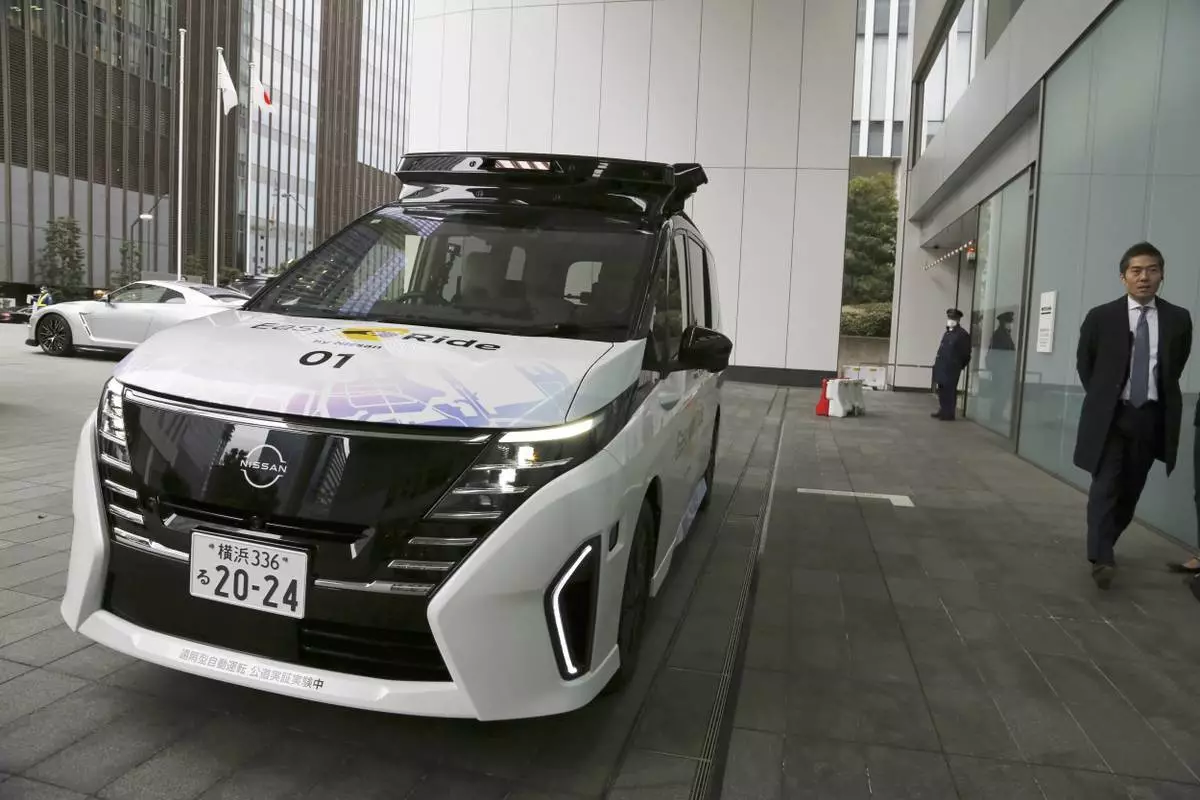
Nissan’s self-driving car moves from a road into the headquarters entrance way in a demonstration for reporters in Yokohama, near Tokyo, on March 6, 2025. (AP Photo/Yuri Kageyama)
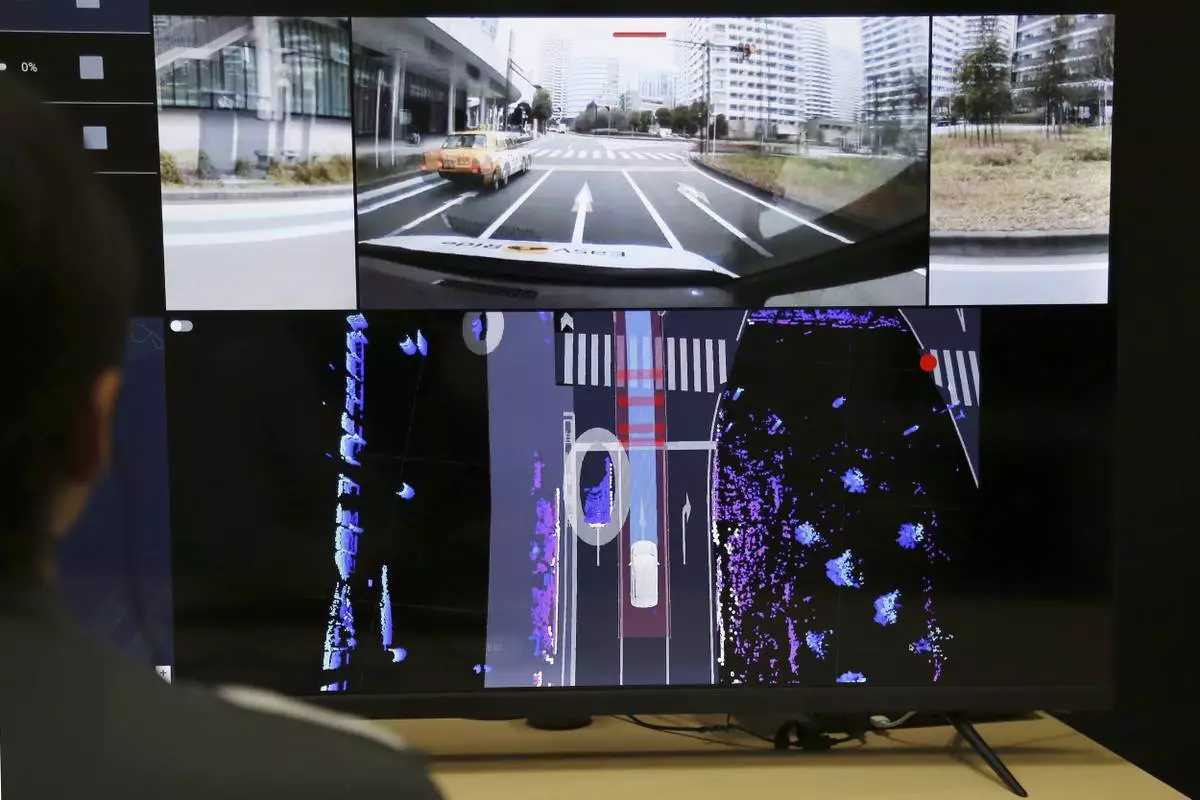
Nissan officials remotely monitor on screens the path and surroundings of the self-driving vehicle being tested on regular roads, so they can step in if problems happen, at Nissan headquarters in Yokohama, near Tokyo, on March 6, 2025. (AP Photo/Yuri Kageyama)
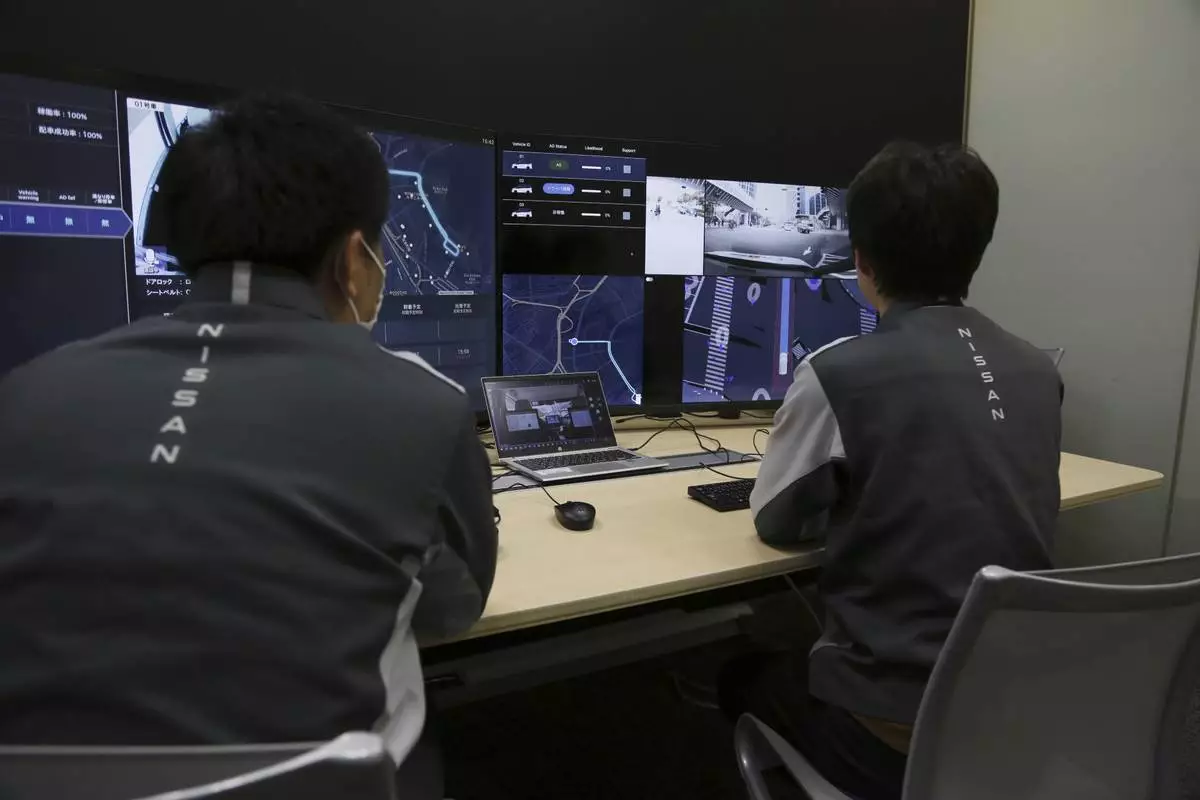
Nissan officials remotely monitor on screens the path and surroundings of the self-driving vehicle being tested on regular roads, so they can step in if problems happen, at Nissan headquarters in Yokohama, near Tokyo on March 6, 2025. (AP Photo/Yuri Kageyama)
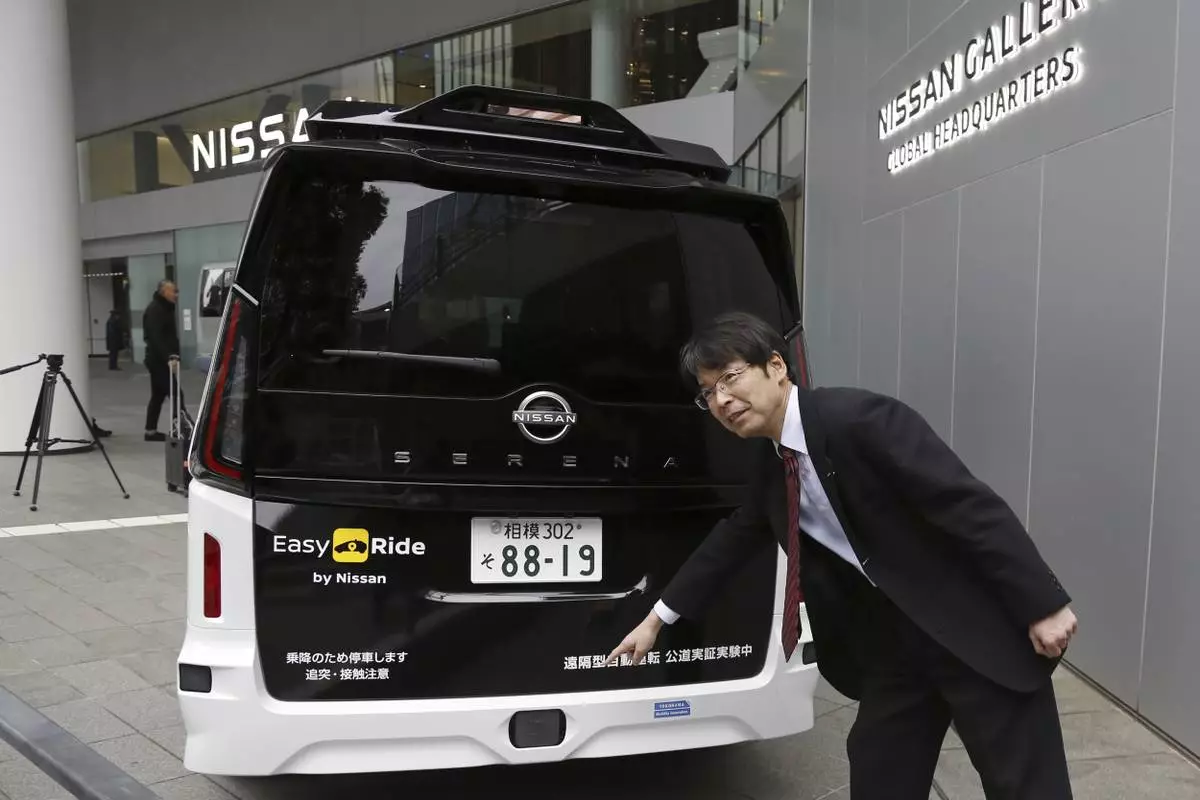
Takeshi Kimura, a Nissan engineer overseeing the Japanese automaker’s self-driving technology, shows the car packed with the technology to reporters at Nissan headquarters in Yokohama, near Tokyo, on March 6, 2025. (AP Photo/Yuri Kageyama)
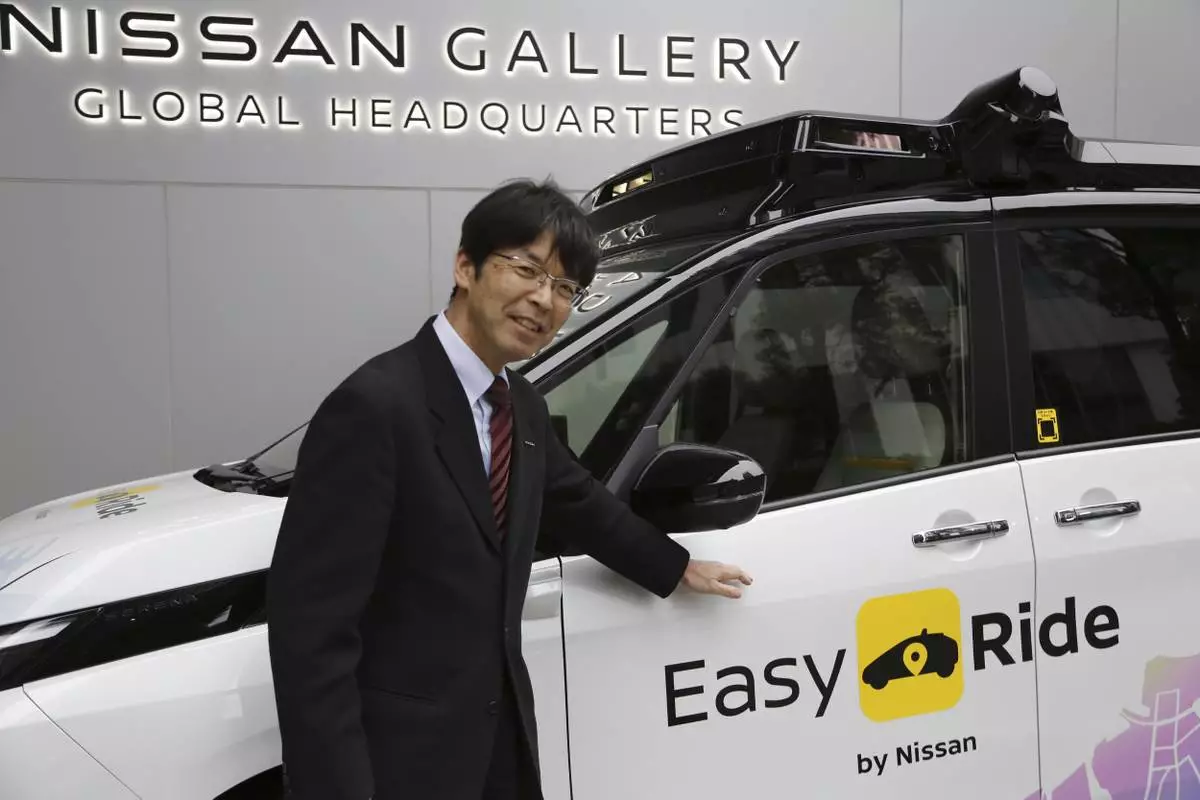
Takeshi Kimura, a Nissan engineer overseeing the Japanese automaker’s self-driving technology, shows the car packed with the technology to reporters at Nissan headquarters in Yokohama, near Tokyo, on March 6, 2025. (AP Photo/Yuri Kageyama)