Response on donation of medical devices to local healthcare institutions
In view of media enquiries on the donation of histotripsy medical devices to local healthcare institutions, the Health Bureau, the Department of Health (DH) and the Hospital Authority (HA) provide a consolidated response today (March 12) as follows:
The Government of the Hong Kong Special Administrative Region is committed to complementing technological innovation with institutional innovation. Through a series of measures such as the establishment of the Greater Bay Area Clinical Trial Collaboration Platform and the setting up of the Hong Kong Centre for Medical Products Regulation for the purpose of establishing the "primary evaluation", the Government has been enhancing Hong Kong's drug and medical device approval and clinical trial capabilities on all fronts, so as to facilitate the translation of innovative biomedical research results into clinical applications, expedite patients'access to advanced diagnostic and treatment services, and foster new quality productive forces in biomedical technology.
Innovative research and development of the most advanced, effective and up-to-date medical products can benefit the public. However, innovative medical products must be scientifically proven, including proven by clinical trials that they are safe and effective before they can be translated to clinical applications and at the same time form the basis for industrial development.
Regulation of medical devices
------------------------------------
At present, the DH provides support to the Pharmacy and Poisons Board of Hong Kong in assessing applications for registration of pharmaceutical products (including advanced therapy products) and approving applications for registration of pharmaceutical products after proving the relevant safety, efficacy and quality requirements have been met. In addition, the Board also approves applications for clinical trials / medicinal tests in relation to pharmaceutical products.
Unlike pharmaceutical products of which registration and clinical trials are governed by legislation, there is no specific legislation to regulate medical devices in Hong Kong, including the clinical trials and use. Making reference to the recommendation of the Global Harmonization Task Force (now known as the International Medical Device Regulators Forum), the DH has introduced a voluntary Medical Device Administrative Control System (MDACS), under which a listing system for medical devices and traders as well as a post-market monitoring system are in place to ensure that medical devices supplied in Hong Kong meet the requirements on safety, quality and performance. Information of listed medical devices is uploaded to the website of the DH's Medical Device Division (www.mdd.gov.hk/en/mdacs/search-database/list-md/index.html). The HA has also implemented the priority procurement strategy since 2024, giving preference in considering the procurement of medical devices listed under the MDACS.
The medical devices donated to the local healthcare institutions have not been listed under the MDACS. The DH has recently received an application for listing a histotripsy medical device, and the application is being processed.
Trial of medical devices
--------------------------
Clinical trials carry a certain degree of risk to the participants and should be conducted by registered healthcare professionals after informing the participants of the associated risks and obtaining their explicit informed consent. At present, even though there is no statutory provision prohibiting healthcare professionals from using new medical devices on patients, healthcare professionals have the professional responsibility to act in the best interests of patients and ensure that all trials are conducted with the explicit informed consent of patients.
It is understood that the LKS Faculty of Medicine of the University of Hong Kong, the Faculty of Medicine of the Chinese University of Hong Kong and the Hong Kong Sanatorium & Hospital are using the donated histotripsy medical devices for clinical trials on liver cancer treatment. These clinical trials can effectively assess the safety and efficacy of the devices for the Asian population, in particular patients in Hong Kong. The Government and the HA are paying attention to the results of these clinical studies, and expect that the data will provide a scientific basis for wider application in the future.
Application of medical devices
---------------------------------
Regarding the application of new drugs and medical devices in the public healthcare system, the HA has established robust mechanisms for evaluating and deciding on the introduction of new drugs, devices and other innovative treatments for public healthcare services. The safety of the treatment methods, whether there is sufficient evidence supporting their therapeutic effectiveness, the cost-effectiveness of such introduction, as well as comprehensive comparisons with existing treatment services have to be considered. When making consideration according to these mechanisms, the HA must ensure fairness and objectivity as well as prudent use of public resources. Also, the consideration process will not and should not be influenced by whether the treatment method is provided or sponsored by individual pharmaceutical or device manufacturers.
The application in the public healthcare system of new drugs and medical devices, and methods for treatment that are still in the clinical trial phase without sufficient clinical data should be handled in a very careful and prudent manner. The HA will closely monitor medical technology developments, with experts regularly studying and reviewing treatment options for patients and the latest developments in clinical and scientific evidence of related technologies, while considering healthcare professionals' opinions and overseas developments to plan for the introduction of medical technologies. Meanwhile, the availability of relevant expertise, manpower and facilities, as well as complementarity with government policy directions, will also be taken into account.
Concerning the research and development (R&D) of medical devices and drugs, clinical trials should be distinguished from clinical services. No clinical service may be provided when clinical trial is still unfinished. Citizens who need to seek medical services due to illnesses should consult professionals including medical practitioners, and should not be influenced by other online advertisements or publicity through endorsements.
As announced in the Chief Executive's 2024 Policy Address, the Government is expediting the reform of the approval mechanism for drugs and medical devices, including devising the timetable for the establishment of the Hong Kong Centre for Medical Products Regulation and the roadmap towards adoption of "primary evaluation", formulating strategies and measures to facilitate R&D of drugs and medical devices, and taking forward the preparatory work for legislating for the statutory regulation of medical devices, so as to further enhance the overall regulatory regime of medical products in Hong Kong, thereby facilitating Hong Kong's development into an international health and medical innovation hub, and at the same time benefitting local patients.
Government announces short-term targeted measures to address rising fuel prices
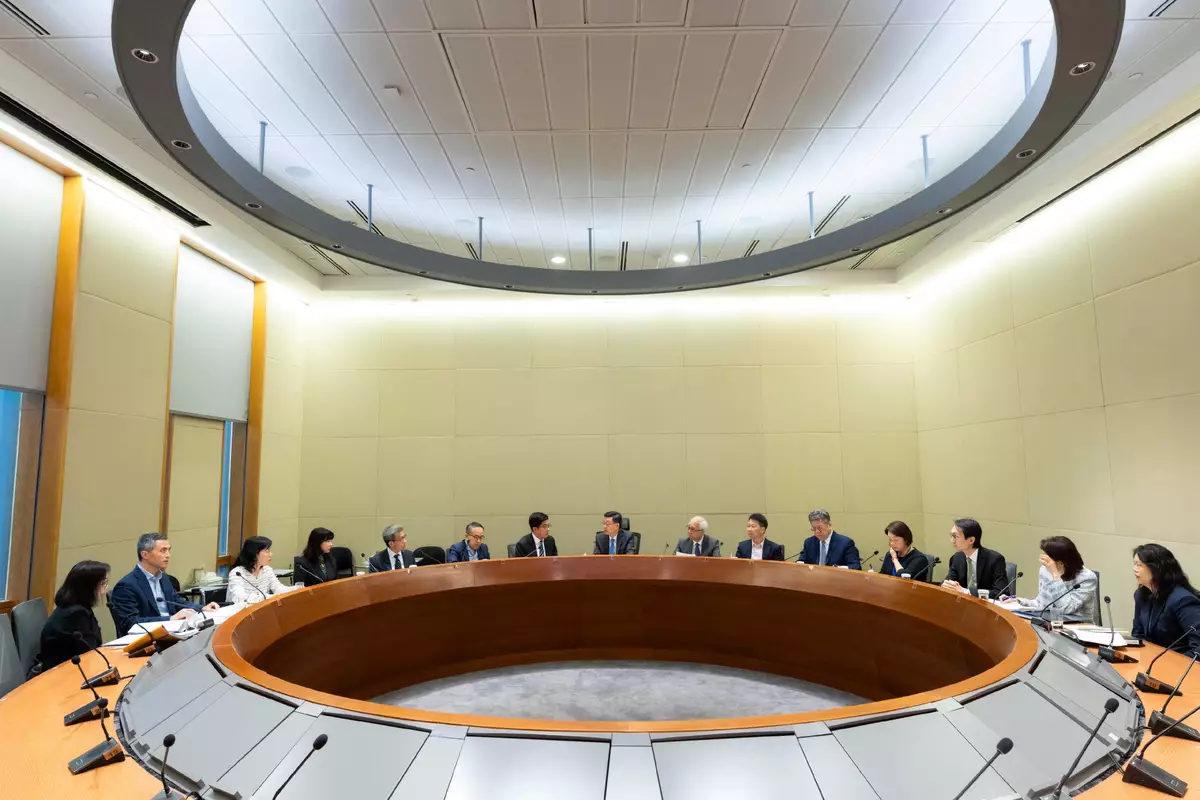
The Chief Executive, Mr John Lee, chaired a special meeting today (April 9) and was briefed by the Inter-departmental Task Force on Monitoring Fuel Supply (the Task Force), which was earlier established by the Hong Kong Special Administrative Region (HKSAR) Government in response to the conflict in the Middle East region. The fluctuations in international oil prices and their impact on Hong Kong's overall economy, trade and various industries, as well as the Government's work and recommendations, were reported.
In view of the outbreak of the conflict in the Middle East region, the Chief Executive has earlier directed the establishment of the Task Force to monitor and assess geopolitical changes and fuel supply and prices, to ensure the stability of Hong Kong's energy supply, and to examine the impact of oil price fluctuations on various industries. The Task Force is led by the Financial Secretary, and its members include the Deputy Financial Secretary, the Secretary for Financial Services and the Treasury, the Secretary for Environment and Ecology, the Secretary for Commerce and Economic Development, the Secretary for Transport and Logistics, the Government Economist, and the Chairman of the Competition Commission.
The Acting Financial Secretary, Mr Michael Wong, briefed the Chief Executive at the meeting on the local fuel supply situation and the trend movements of international energy price, as well as the measures already taken by the HKSAR Government. The key points of the briefing and related measures are as follows:
(1) Ensure a robust energy supply. Currently, around 80 per cent of Hong Kong's oil products come from the Chinese Mainland. The HKSAR Government has maintained close communication with the Central Government and various Mainland authorities to ensure that Hong Kong's energy supply remains stable with the country's support.
(2) Request local stakeholders to maintain a stable fuel supply. The Environment and Ecology Bureau (EEB) has met with major local auto-fuel suppliers, requesting them to maintain a stable auto-fuel supply in Hong Kong. All suppliers indicated that the auto-fuel supply in Hong Kong is currently normal and that they will continue to strive to maintain a stable supply. The EEB has also confirmed with the two power companies and the Hong Kong and China Gas Company Limited that the fuel supplies for electricity and town gas production remains normal.
(3) Facilitate the public to monitor changes of local retail auto-fuel prices. Starting from April 1, the EEB releases, on a weekly basis, the trend movements of the seven-day moving average retail prices, after walk-in discounts, of unleaded petrol and diesel from local oil companies, together with the trends in international benchmark prices of refined oil products for the same period, to enhance the transparency of market and price. The Competition Commission has also met with the fuel companies, emphasising the importance of fair competition and information transparency. The Competition Commission will continue to closely monitor the market for any instances of price collusion or unfair competition to ensure fair market operations.
(4) Continue to closely monitor the international situation and energy price trends. The situation in the Middle East has driven up international oil prices. The price of crude oil at one point surged to nearly US$120 per barrel. As the situation has developed further this week, crude oil prices have shown a gradual decline. However, the price of refined oil remained high, and the market is closely monitoring the latest developments in the Middle East.
The Task Force recommended that in formulating support measures, the Government shall have regard to the following principles:
(1) Given that fluctuations in crude oil prices have a broad impact across society and considering the Government's fiscal constraints, priority should be given to the operational sectors that are most severely affected and that involve public services;
(2) If the service prices of the operational sectors are subject to regulatory approvals by the Government, these matters shall be addressed through the existing approval mechanism;
(3) The use of private vehicles for self-use, being a matter of personal decision with alternative options available, shall not be considered a primary priority;
(4) Given the unpredictability of the military conflict and the ongoing ceasefire negotiations, any support measures shall be temporary and short-term in nature, so as to avoid creating risks to public finances; and
(5) It is considered that public transport services (including franchised and non-franchised buses, minibuses and ferries) as well as school buses and residential buses, whose operating costs are highly susceptible to fluctuations in diesel prices, should be regarded as priority sectors for consideration of support.
As the short-term trajectory of oil prices remains uncertain, the Task Force, after considering the above principles and prudently balancing various factors, including the Government's fiscal position and the principle of prudent use of public funds, recommends implementing four targeted temporary measures. They are:
(1) Subsidising diesel prices to alleviate the impact of high oil prices on public services provided by relevant industries. Although international crude oil prices have slightly receded recently, the pump prices of motor vehicle diesel remains high, and the future price movements is highly uncertain. This has placed an additional burden on commercial vehicles (including trucks, franchised and non-franchised buses, and minibuses) and vessels (including ferries, passenger ships, work boats and fishing vessels) that mainly run on diesel, exerting a substantial impact on the economy and people's livelihood. Therefore, the Task Force has proposed a two-month subsidy of HK$3 per litre of diesel to support public and commercial vehicles and vessels and related industries that use diesel as fuel, with a view to reducing their operating costs and alleviating pressure to raise prices. The relevant subsidy measures is estimated to cost approximately HK$1.8 billion. The EEB will work with the Competition Commission to monitor the pricing practices of each fuel company to ensure that they do not take advantage of the occasion.
As for the majority of taxis and public light buses, they primarily use liquefied petroleum gas (LPG) as fuel, the price of which currently remains stable. The Task Force will continue to monitor price movements and consider the matter further where appropriate.
(2) Tunnel toll reduction for non-private cars. The government will reduce tunnel tolls by 50 per cent for all commercial vehicles (including goods vehicles, buses, minibuses, and taxis) using government-operated toll tunnels, excluding private cars and motorcycles. The measure will last for two months and is expected to result in a revenue reduction of approximately HK$160 million. The government will work with toll service providers to adjust the toll collection systems in order to implement the reduction as soon as possible.
(3) Establishing a Working Group on Public Transport Service Special Applications to expedite and assist public transport operators (including public buses and ferries) in their applications relating to responding flexibly to rising fuel costs
The Task Force recommends establishing a Working Group on Public Transport Service Special Applications under its purview. The Working Group will maintain communication with public transport service operators. Taking into account the overall operating environment, operators' costs, and public affordability, while maintaining the stability and normal operations of public transport services, the Working Group will assist in expediting the approval of relevant applications submitted by public transport operators in response to rising fuel costs. This includes considering ways to enhance overall operational efficiency through service integration and introducing energy-saving measures. The Working Group will be chaired by the Secretary for Transport and Logistics, with the Secretary for Environment and Ecology as deputy chair. Members include the Commissioner for Transport and the Government Economist.
(4) Dynamically monitoring the evolving situation and changes in oil prices, and adjusting measures according to actual circumstances
The impact of the situation in the Middle East on Hong Kong's overall economy largely depends on whether the military conflict continues, expands, or escalates. The Task Force will continue to conduct dynamic assessments, co-ordinate bureaux and departments to prepare contingency plans, and formulate forward-looking strategies. The Task Force will also study different measures to alleviate the impact of rising oil prices.
The Chief Executive has accepted the four recommendations of the Task Force and has instructed the Task Force to implement the measures as soon as possible, while continuing to monitor developments and the latest situation.
The relevant subsidy measure requires the funding approval by the Finance Committee of the Legislative Council (LegCo). The Government will liaise with the LegCo with a view to scheduling a meeting under the Finance Committee as soon as possible so as to facilitate the early implementation of the concerned measure.
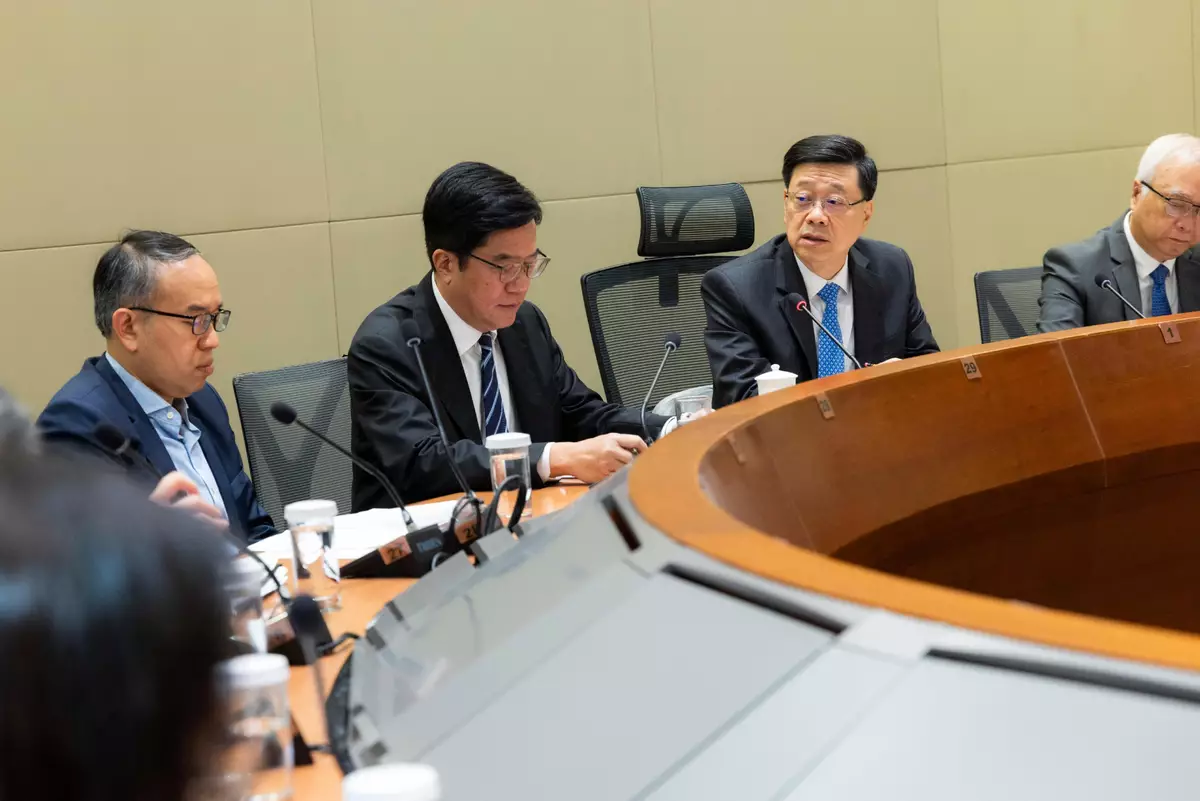
Government announces short-term targeted measures to address rising fuel prices Source: HKSAR Government Press Releases
Government announces short-term targeted measures to address rising fuel prices Source: HKSAR Government Press Releases