Skip to Content Facebook Feature Image

'We will just die in silence': US aid cuts hit Ethiopia's fragile Tigray region

News

'We will just die in silence': US aid cuts hit Ethiopia's fragile Tigray region
News

News

'We will just die in silence': US aid cuts hit Ethiopia's fragile Tigray region

2025-03-13 13:26 Last Updated At:13:31

MEKELE, Ethiopia (AP) — As a displaced person in Ethiopia’s northern Tigray region, 76-year-old Haile Tsege is no stranger to hunger.

During its war with Tigray fighters that devastated the region in 2020-2022, Ethiopian government restrictions on the rebellious region reduced aid flows to a trickle. Then in 2023, U.S. and U.N. aid distributions of grain were halted for months over a corruption scandal.

More Images
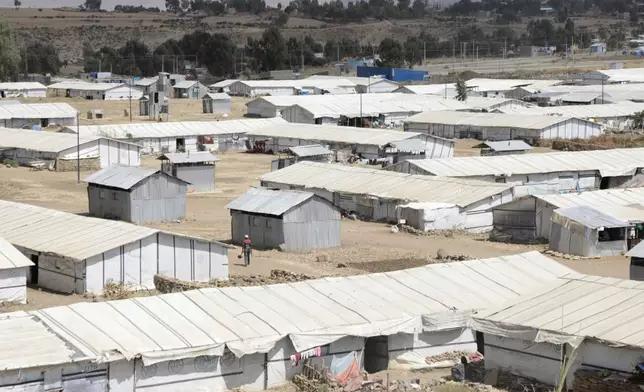
A man walks through the Sebacare internally displaced persons (IDPs) camp, on the outskirts of Mekele, Tigray region, Ethiopia, Wednesday, Feb. 12, 2025. (AP Photo/Alexander Mamo)
A man walks through the Sebacare internally displaced persons (IDPs) camp, on the outskirts of Mekele, Tigray region, Ethiopia, Wednesday, Feb. 12, 2025. (AP Photo/Alexander Mamo)
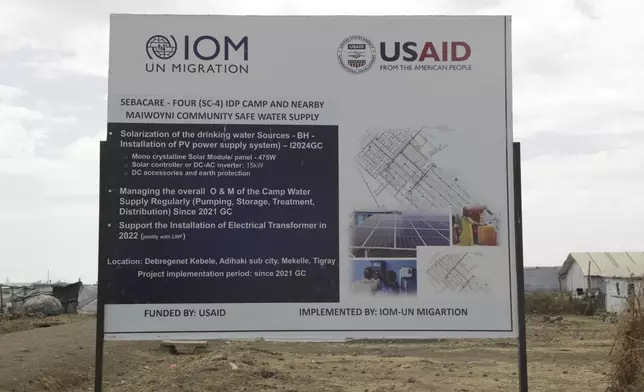
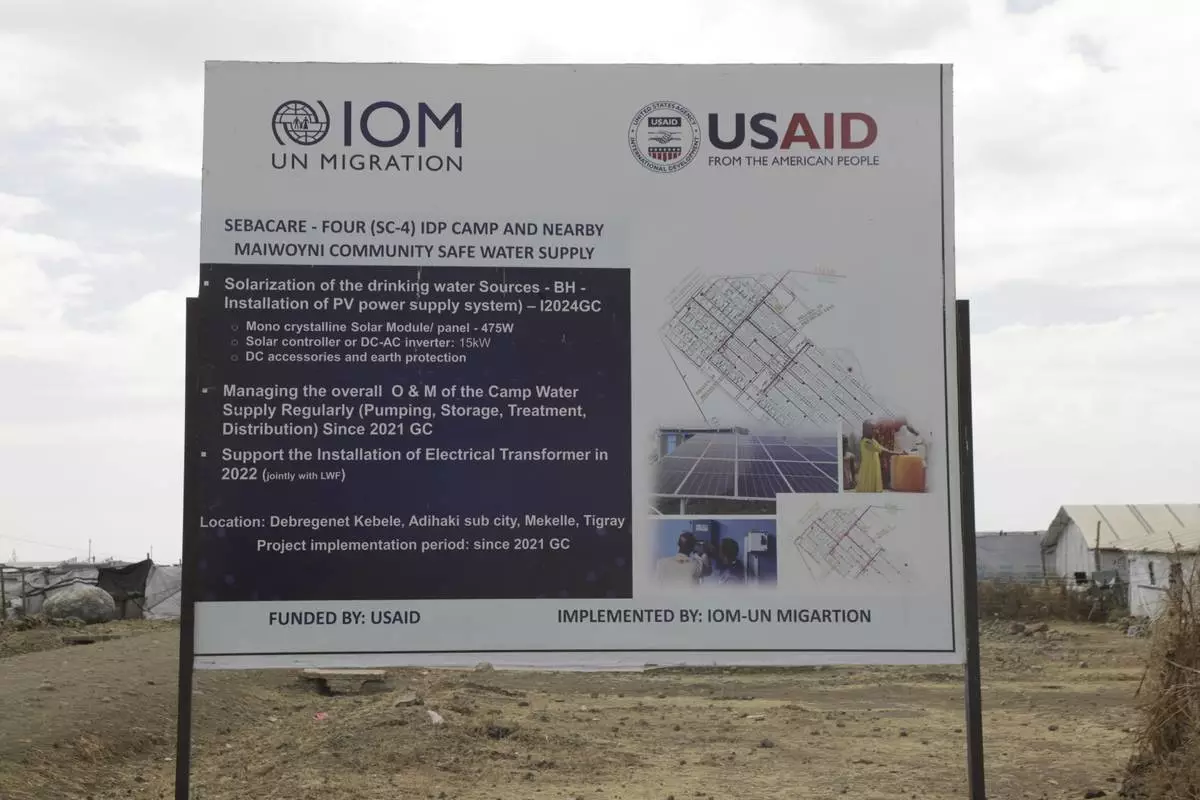
A sign reading 'USAID' stands at the entrance of the Sebacare internally displaced persons (IDPs) camp, on the outskirts of Mekele, Tigray region, Ethiopia, Wednesday, Feb. 12, 2025. (AP Photo/Alexander Mamo)
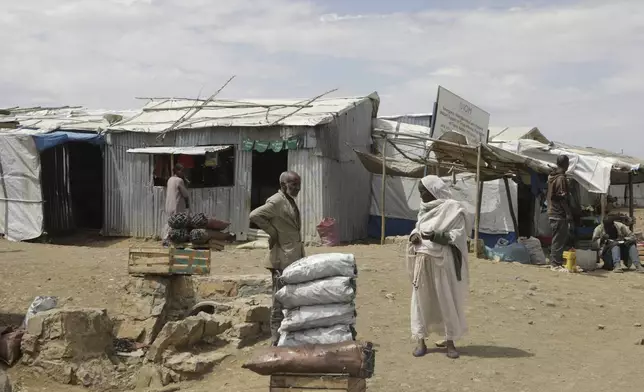
A sign reading 'USAID' stands at the entrance of the Sebacare internally displaced persons (IDPs) camp, on the outskirts of Mekele, Tigray region, Ethiopia, Wednesday, Feb. 12, 2025. (AP Photo/Alexander Mamo)
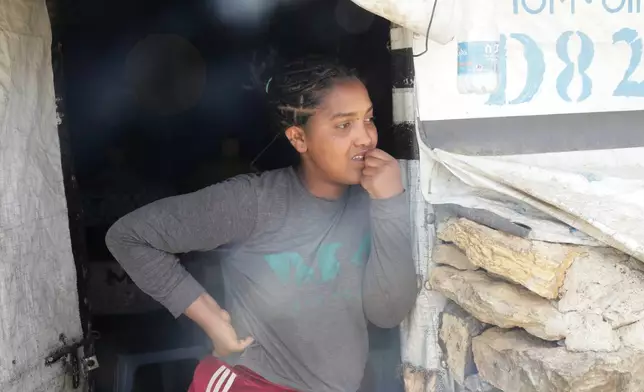
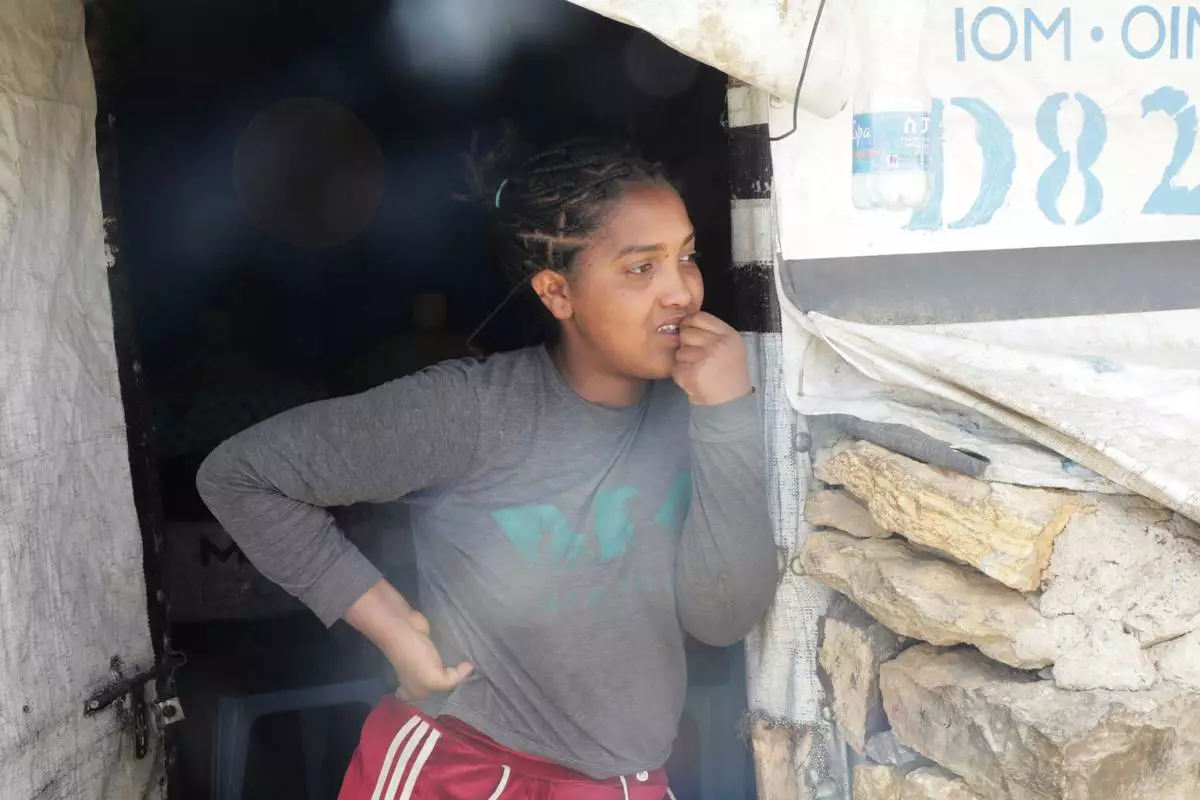
An internally displace woman stands outside her makeshift home in the Sebacare camp, on the outskirts of Mekele, Tigray region, Ethiopia, Wednesday, Feb. 12, 2025. (AP Photo/Alexander Mamo)

An internally displace woman stands outside her makeshift home in the Sebacare camp, on the outskirts of Mekele, Tigray region, Ethiopia, Wednesday, Feb. 12, 2025. (AP Photo/Alexander Mamo)

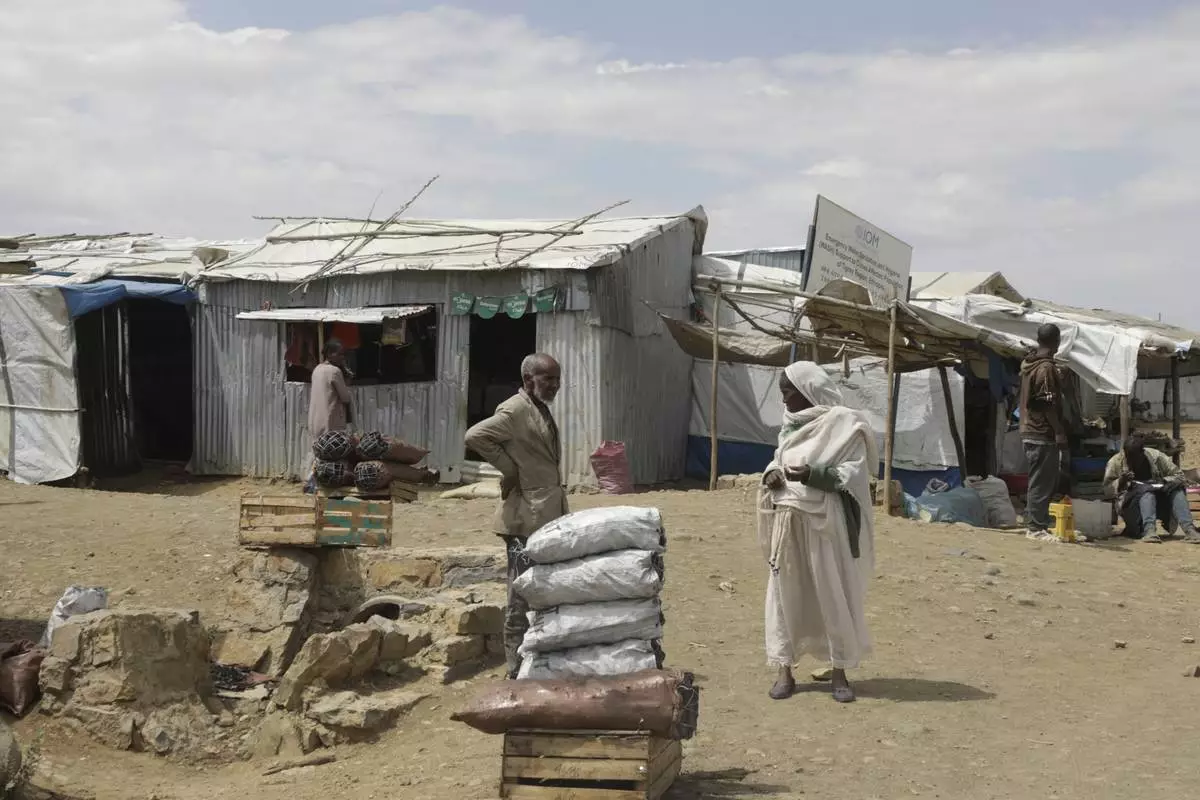
Internally displaced people walk through the Sebacare camp on the outskirts of Mekele, Tigray region, Ethiopia, Wednesday, Feb. 12, 2025. (AP Photo/Alexander Mamo)

Internally displaced people walk through the Sebacare camp on the outskirts of Mekele, Tigray region, Ethiopia, Wednesday, Feb. 12, 2025. (AP Photo/Alexander Mamo)

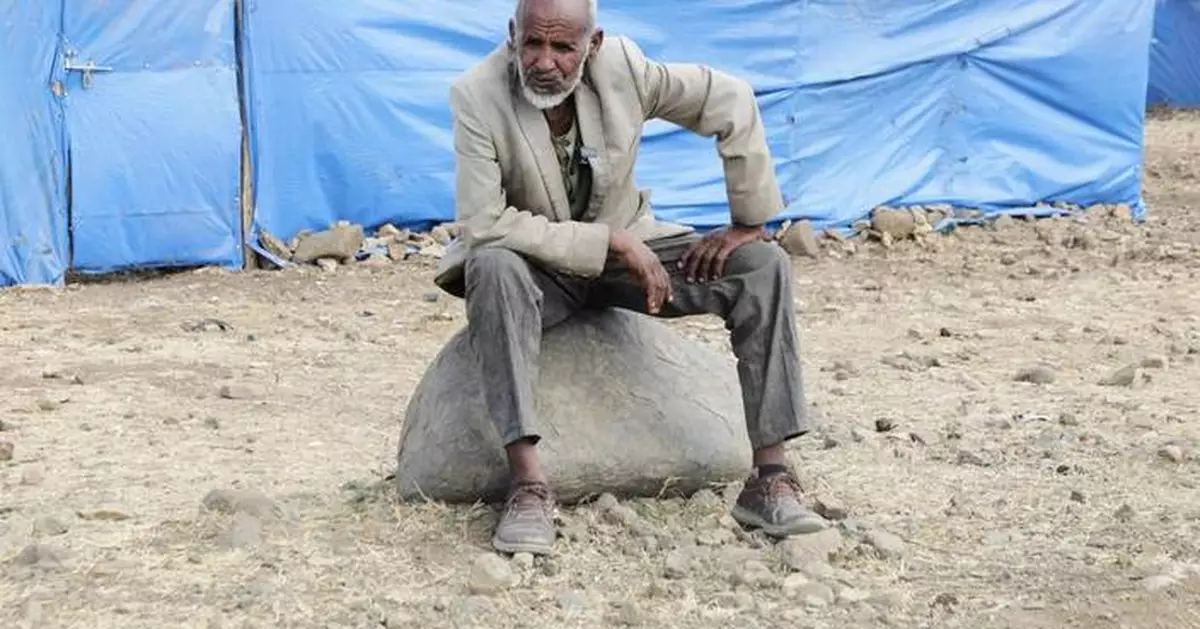
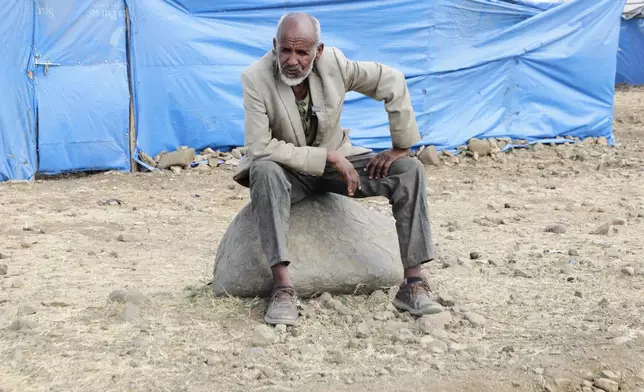
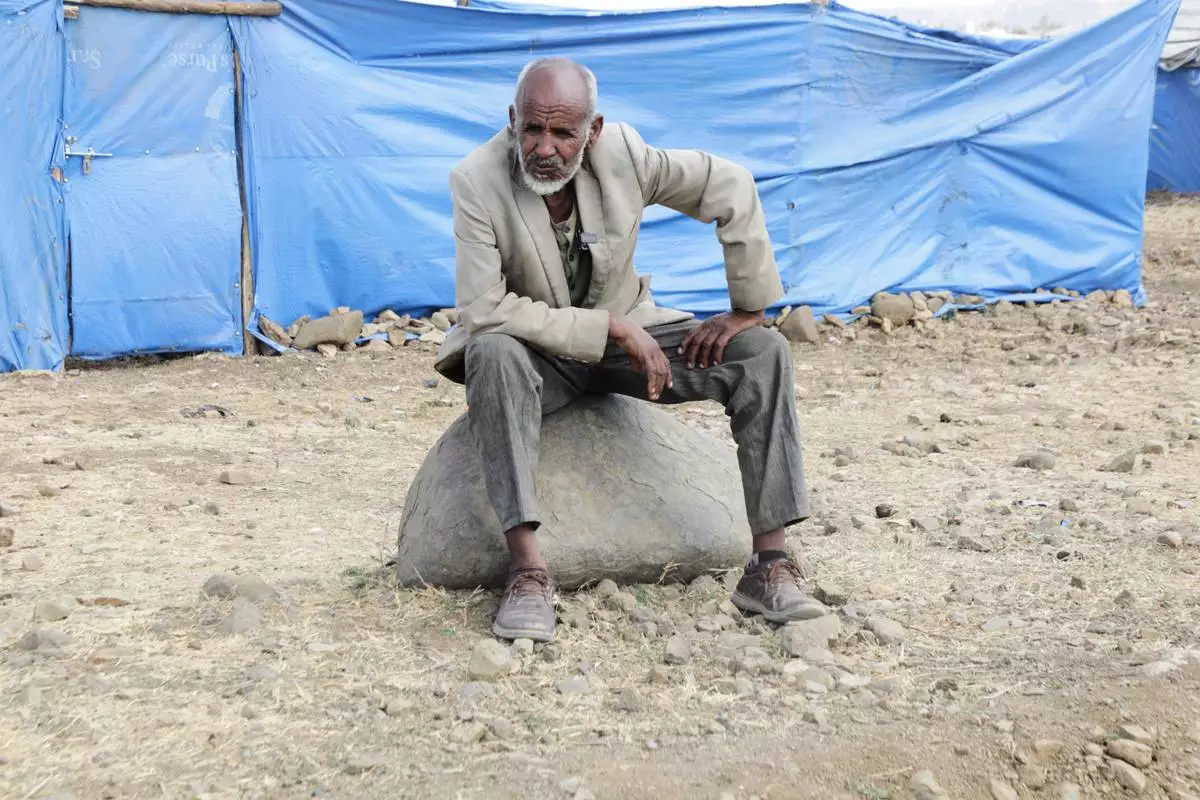
Haile Tsege, 76, sits on a rock in the Sebacare internally displaced persons (IDPs) camp, on the outskirts of Mekele, Tigray region, Ethiopia, Wednesday, Feb. 12, 2025. (AP Photo/Alexander Mamo)

Haile Tsege, 76, sits on a rock in the Sebacare internally displaced persons (IDPs) camp, on the outskirts of Mekele, Tigray region, Ethiopia, Wednesday, Feb. 12, 2025. (AP Photo/Alexander Mamo)

Now the Trump administration’s dismantling of the U.S. Agency for International Development, or USAID, has again halted food deliveries to a sprawling camp of over 20,000 people outside Tigray’s regional capital, Mekele.

“We will just die in silence,” said Tsege, one of the 2.4 million people in Tigray who depend on humanitarian grain, most of it provided by the U.S.

Ethiopia with its over 125 million people had been the biggest beneficiary of U.S. aid in sub-Saharan Africa, receiving $1.8 billion in the 2023 financial year. In addition to life-saving food, the funds were spent on HIV medications, vaccines, literacy programs and jobs creation, as well as services for 1 million refugees hosted by Ethiopia.

Most of these programs have been stopped. The USAID staffers who oversaw them have been placed on administrative leave and told not to work, as they face the threat of termination. The U.S. Embassy didn't respond to questions.

Emergency food was exempted from President Donald Trump’s executive order, signed on his first day in office, suspending foreign aid during a 90-day review amid the administration's allegations of waste.

Aid agencies in Ethiopia had to apply to USAID for waivers to continue handing out U.S. grain. These have been secured, but USAID’s payments system is still not functioning.

As a result, a consortium of aid agencies in Tigray has had to stop distributions to the over 1 million people it has been responsible for feeding with U.S.-provided grain. It has no money to pay for fuel, trucks and drivers to distribute existing food stockpiles.

That includes 5,000 metric tons of sorghum – enough to feed 300,000 people for a month – stuck in a storage facility in Mekele that could rot before it reaches those in need.

“This is just one warehouse. There are several others across the region,” said Teklewoini Assefa, head of the Relief Society of Tigray, part of the consortium. “This will create malnutrition, disease. If this situation continues, what follows? Death.”

He added: “Everything boils down to the payment system.”

The effects of the aid cuts are widespread, with many USAID contracts terminated. Already, Ethiopia has been forced to lay off 5,000 local healthcare workers who were working on its HIV response.

Tigray relied heavily on U.S. funds. More than two years after the war killed hundreds of thousands, full-scale recovery efforts are yet to start. The region’s health system is in ruins and hundreds of schools remain closed.

In 2024, child malnutrition stood at 21% in some areas, according to a survey reviewed by The Associated Press — far above the World Health Organization’s threshold of 15% at which a situation is classified as an emergency.

Now, aid workers say many programs to improve nutrition have halted. Projects to deliver medicines and vaccines have stopped. Dozens of camps for displaced people have had water sources cut off.

“The impact has been huge,” said Ashenafi Asmelash, executive director of Mums for Mums, which has had two USAID- funded programs terminated. One helped build long-term resilience among farmers. The other helped improve the nutrition of children and new mothers.

Management Sciences for Health, another Tigray organization, has halted a project to combat tuberculosis and told its staff to expect mass layoffs in March, according to a senior executive, who spoke on condition of anonymity for fear of reprisals.

Efforts to assist thousands of women who were raped during the war have been derailed, said Rigat Bishaw at Ayder Hospital, Tigray’s biggest healthcare facility.

This includes counseling and physiotherapy sessions for survivors run by the U.S.-based Center for Victims of Torture, which received a stop-work order from the Trump administration in February and furloughed its staff.

CVT also halted a program to train health workers to recognize sexual abuse cases and refer survivors to appropriate health services.

“This sudden disruption is having a huge impact on the healing of traumatized people,” said Yohannes Fisseha, a CVT manager.

Major projects to support people living with HIV, improve access to life-saving nutrition services and improve relations between war-affected communities have also been cut off, said Yirga Gebregziabher, the Tigray branch manager of an Ethiopian organization called OSSHD, which helped implement the projects.

The organization has been forced to fire dozens of expert staff.

“Our picture of America was as a protector of rights, a positive force in the world,” Yigra said. “That image has now been broken. If there was a process, maybe the shock would have been less. But there was no consultation, no engagement.”

The Associated Press receives financial support for global health and development coverage in Africa from the Gates Foundation. The AP is solely responsible for all content. Find AP’s standards for working with philanthropies, a list of supporters and funded coverage areas at AP.org.

For more on Africa and development: https://apnews.com/hub/africa-pulse
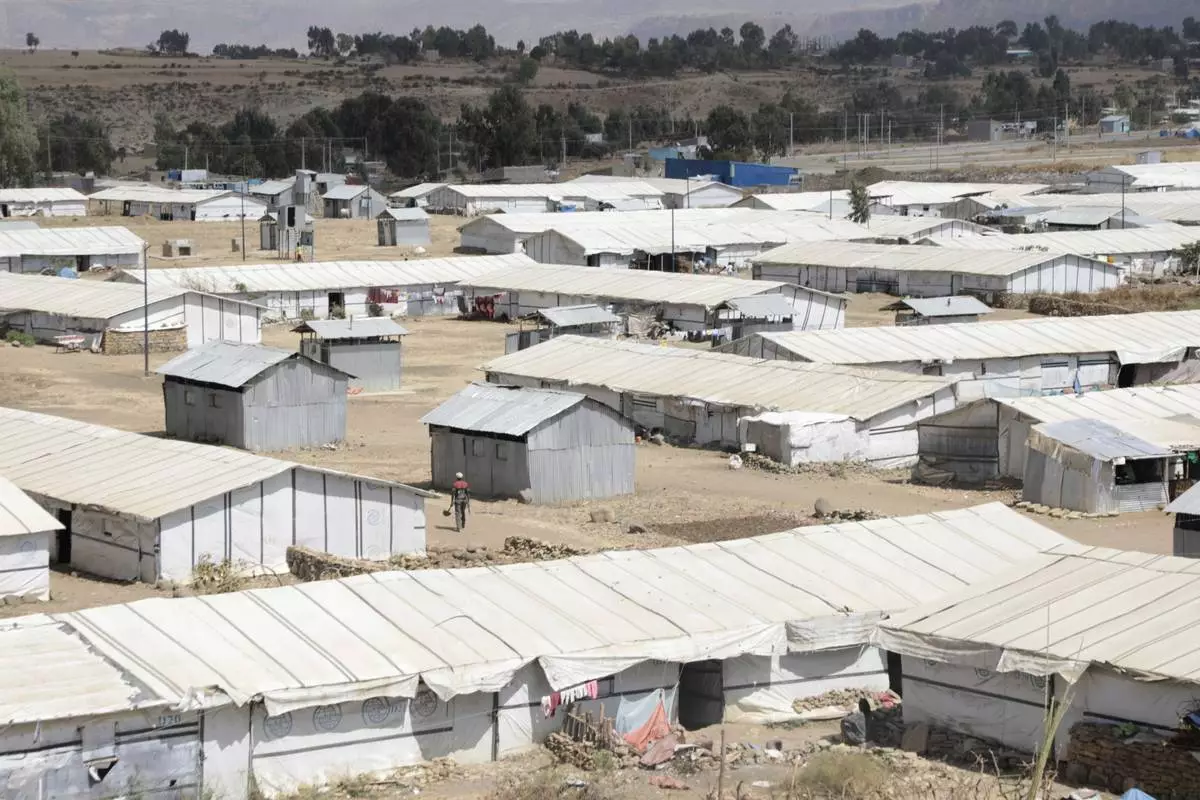
A man walks through the Sebacare internally displaced persons (IDPs) camp, on the outskirts of Mekele, Tigray region, Ethiopia, Wednesday, Feb. 12, 2025. (AP Photo/Alexander Mamo)
A man walks through the Sebacare internally displaced persons (IDPs) camp, on the outskirts of Mekele, Tigray region, Ethiopia, Wednesday, Feb. 12, 2025. (AP Photo/Alexander Mamo)
A sign reading 'USAID' stands at the entrance of the Sebacare internally displaced persons (IDPs) camp, on the outskirts of Mekele, Tigray region, Ethiopia, Wednesday, Feb. 12, 2025. (AP Photo/Alexander Mamo)
A sign reading 'USAID' stands at the entrance of the Sebacare internally displaced persons (IDPs) camp, on the outskirts of Mekele, Tigray region, Ethiopia, Wednesday, Feb. 12, 2025. (AP Photo/Alexander Mamo)
An internally displace woman stands outside her makeshift home in the Sebacare camp, on the outskirts of Mekele, Tigray region, Ethiopia, Wednesday, Feb. 12, 2025. (AP Photo/Alexander Mamo)
An internally displace woman stands outside her makeshift home in the Sebacare camp, on the outskirts of Mekele, Tigray region, Ethiopia, Wednesday, Feb. 12, 2025. (AP Photo/Alexander Mamo)
Internally displaced people walk through the Sebacare camp on the outskirts of Mekele, Tigray region, Ethiopia, Wednesday, Feb. 12, 2025. (AP Photo/Alexander Mamo)

Internally displaced people walk through the Sebacare camp on the outskirts of Mekele, Tigray region, Ethiopia, Wednesday, Feb. 12, 2025. (AP Photo/Alexander Mamo)

Haile Tsege, 76, sits on a rock in the Sebacare internally displaced persons (IDPs) camp, on the outskirts of Mekele, Tigray region, Ethiopia, Wednesday, Feb. 12, 2025. (AP Photo/Alexander Mamo)
Haile Tsege, 76, sits on a rock in the Sebacare internally displaced persons (IDPs) camp, on the outskirts of Mekele, Tigray region, Ethiopia, Wednesday, Feb. 12, 2025. (AP Photo/Alexander Mamo)

DUBAI, United Arab Emirates (AP) — U.S. President Donald Trump said Iran wants to negotiate with Washington after his threat to strike the Islamic Republic over its bloody crackdown on protesters, a move coming as activists said Monday the death toll in the nationwide demonstrations rose to at least 544.

Iran had no immediate reaction to the news, which came after the foreign minister of Oman — long an interlocutor between Washington and Tehran — traveled to Iran this weekend. It also remains unclear just what Iran could promise, particularly as Trump has set strict demands over its nuclear program and its ballistic missile arsenal, which Tehran insists is crucial for its national defense.

Meanwhile Monday, Iran called for pro-government demonstrators to head to the streets in support of the theocracy, a show of force after days of protests directly challenging the rule of 86-year-old Supreme Leader Ayatollah Ali Khamenei. Iranian state television aired chants from the crowd, who shouted “Death to America!” and “Death to Israel!”

Trump and his national security team have been weighing a range of potential responses against Iran including cyberattacks and direct strikes by the U.S. or Israel, according to two people familiar with internal White House discussions who were not authorized to comment publicly and spoke on condition of anonymity.

“The military is looking at it, and we’re looking at some very strong options,” Trump told reporters on Air Force One on Sunday night. Asked about Iran’s threats of retaliation, he said: “If they do that, we will hit them at levels that they’ve never been hit before.”

Trump said that his administration was in talks to set up a meeting with Tehran, but cautioned that he may have to act first as reports of the death toll in Iran mount and the government continues to arrest protesters.

“I think they’re tired of being beat up by the United States,” Trump said. “Iran wants to negotiate.”

He added: “The meeting is being set up, but we may have to act because of what’s happening before the meeting. But a meeting is being set up. Iran called, they want to negotiate.”

Iran through country's parliamentary speaker warned Sunday that the U.S. military and Israel would be “legitimate targets” if America uses force to protect demonstrators.

More than 10,600 people also have been detained over the two weeks of protests, said the U.S.-based Human Rights Activists News Agency, which has been accurate in previous unrest in recent years and gave the death toll. It relies on supporters in Iran crosschecking information. It said 496 of the dead were protesters and 48 were with security forces.

With the internet down in Iran and phone lines cut off, gauging the demonstrations from abroad has grown more difficult. The Associated Press has been unable to independently assess the toll. Iran’s government has not offered overall casualty figures.

Those abroad fear the information blackout is emboldening hard-liners within Iran’s security services to launch a bloody crackdown. Protesters flooded the streets in the country’s capital and its second-largest city on Saturday night into Sunday morning. Online videos purported to show more demonstrations Sunday night into Monday, with a Tehran official acknowledging them in state media.

In Tehran, a witness told the AP that the streets of the capital empty at the sunset call to prayers each night. By the Isha, or nighttime prayer, the streets are deserted.

Part of that stems from the fear of getting caught in the crackdown. Police sent the public a text message that warned: “Given the presence of terrorist groups and armed individuals in some gatherings last night and their plans to cause death, and the firm decision to not tolerate any appeasement and to deal decisively with the rioters, families are strongly advised to take care of their youth and teenagers.”

Another text, which claimed to come from the intelligence arm of the paramilitary Revolutionary Guard, also directly warned people not to take part in demonstrations.

“Dear parents, in view of the enemy’s plan to increase the level of naked violence and the decision to kill people, ... refrain from being on the streets and gathering in places involved in violence, and inform your children about the consequences of cooperating with terrorist mercenaries, which is an example of treason against the country,” the text warned.

The witness spoke to the AP on condition of anonymity due to the ongoing crackdown.

The demonstrations began Dec. 28 over the collapse of the Iranian rial currency, which trades at over 1.4 million to $1, as the country’s economy is squeezed by international sanctions in part levied over its nuclear program. The protests intensified and grew into calls directly challenging Iran’s theocracy.

Nikhinson reported from aboard Air Force One.

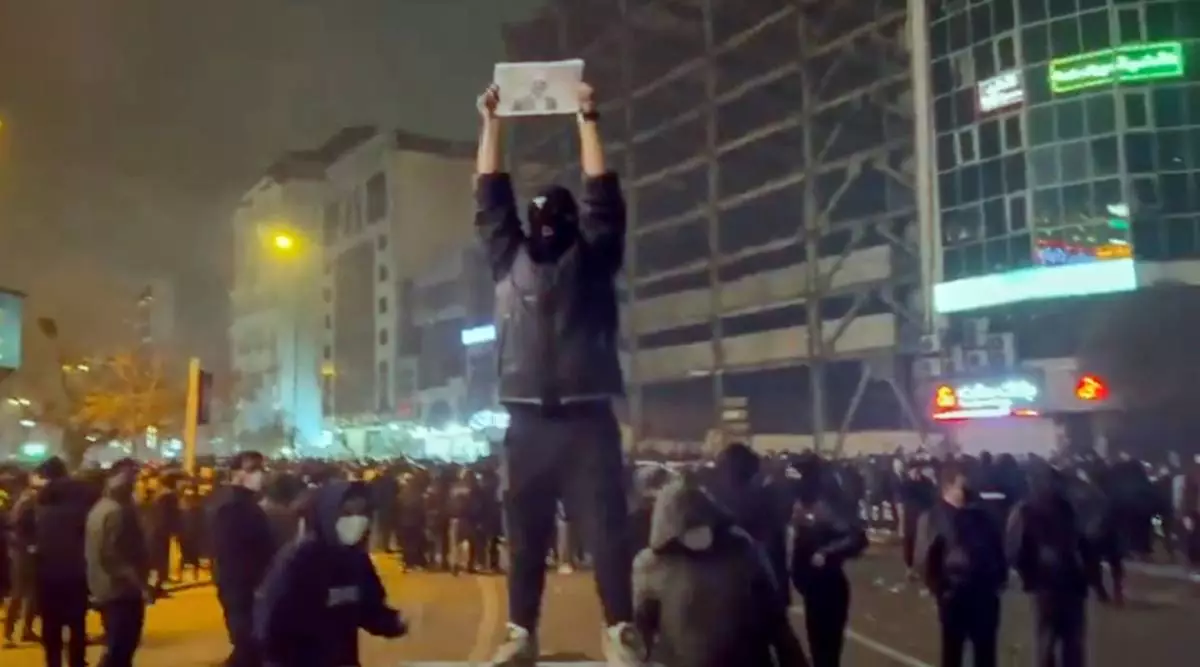
In this frame grab from video obtained by the AP outside Iran, a masked demonstrator holds a picture of Iran's Crown Prince Reza Pahlavi during a protest in Tehran, Iran, Friday, January. 9, 2026. (UGC via AP)

In this frame grab from video obtained by the AP outside Iran, a masked demonstrator holds a picture of Iran's Crown Prince Reza Pahlavi during a protest in Tehran, Iran, Friday, January. 9, 2026. (UGC via AP)

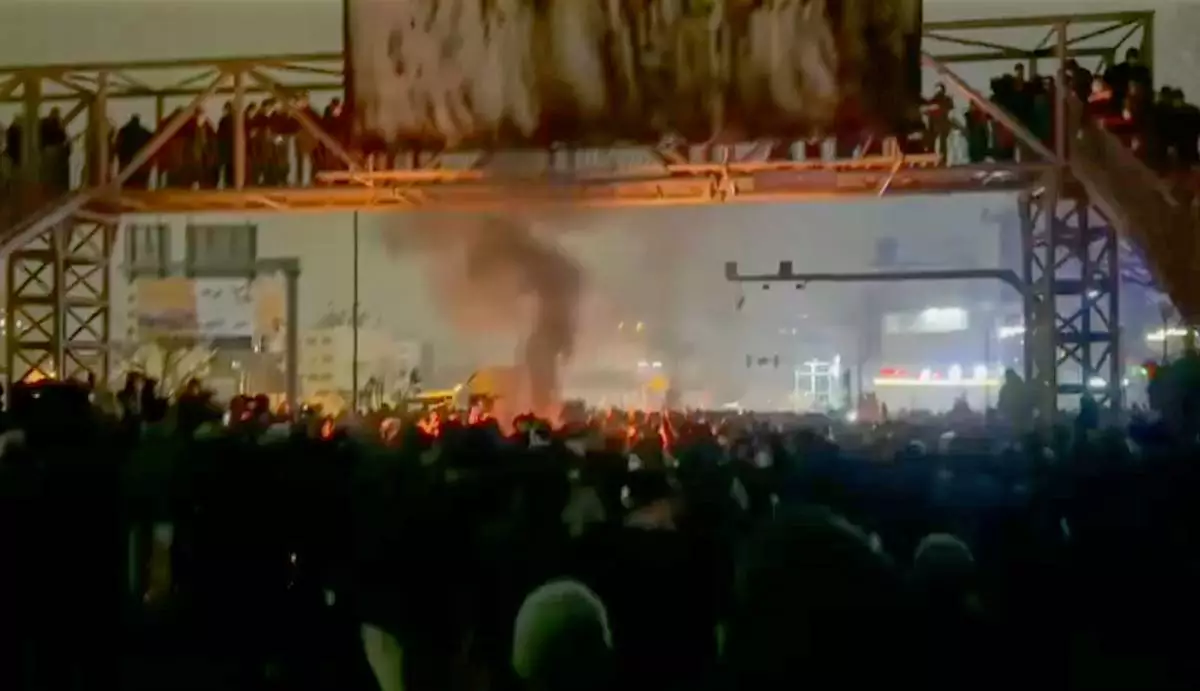
In this frame grab from footage circulating on social media from Iran shows protesters taking to the streets despite an intensifying crackdown as the Islamic Republic remains cut off from the rest of the world in Tehran, Iran, Friday, Jan. 9, 2026.(UGC via AP)

In this frame grab from footage circulating on social media from Iran shows protesters taking to the streets despite an intensifying crackdown as the Islamic Republic remains cut off from the rest of the world in Tehran, Iran, Friday, Jan. 9, 2026.(UGC via AP)

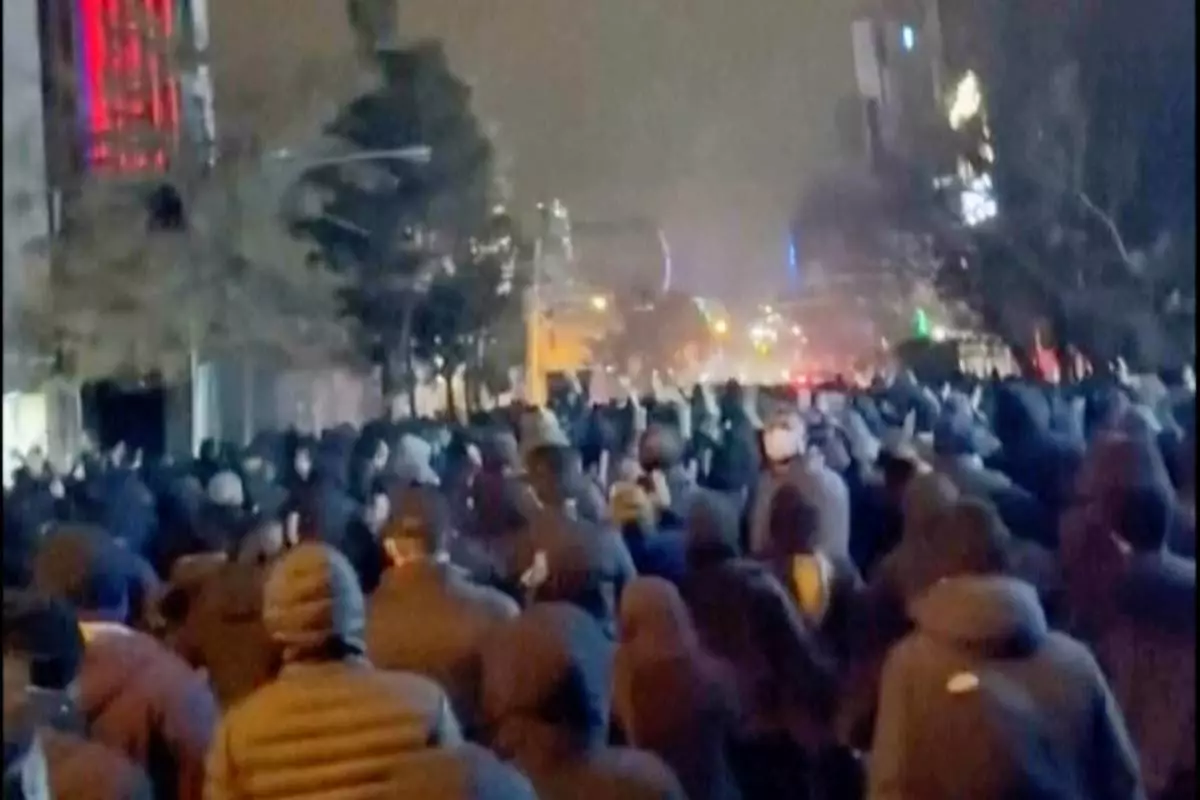
In this frame grab from footage circulating on social media from Iran showed protesters once again taking to the streets of Tehran despite an intensifying crackdown as the Islamic Republic remains cut off from the rest of the world in Tehran, Iran, Saturday Jan. 10, 2026. (UGC via AP)

In this frame grab from footage circulating on social media from Iran showed protesters once again taking to the streets of Tehran despite an intensifying crackdown as the Islamic Republic remains cut off from the rest of the world in Tehran, Iran, Saturday Jan. 10, 2026. (UGC via AP)

Recommended Articles