Skip to Content Facebook Feature Image

China's museums receive record-high visits in 2024

China

China

China

China's museums receive record-high visits in 2024

2025-03-13 20:13 Last Updated At:23:17

Driven by technological innovations, China’s museums have received a record high of over 1.4 billion visits in 2024, according to the latest National Cultural Heritage Administration data.

Data also showed that approximately 72.65 million visits to museums have been recorded during the Spring Festival holiday from Jan. 28 to Feb. 4 this year.

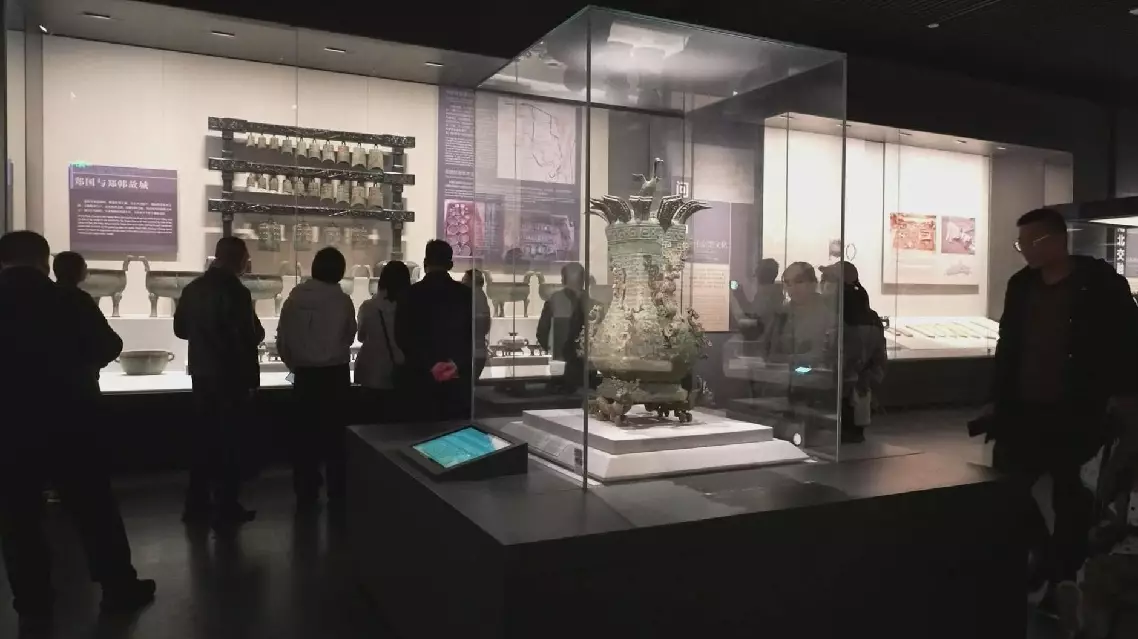
Museums across the country are drawing massive crowds daily, with visitors lingering in awe before iconic treasures.

"I came specifically for the museum's star treasures. The bronze artifacts are enormous. I was truly shocked when I saw them," said Huang Huiling, a tourist.

Beyond permanent displays, major museums are curating special temporary exhibitions that showcase rare artifacts gathered from cultural institutions nationwide.

In recent years, the rapid development of technologies like big data, cloud computing, and artificial intelligence has spurred museums to innovate, enhancing the "museum experience" through creative exhibition designs.

At the Jingdezhen China Ceramics Museum in east China's Jiangxi Province, an immersive digital light and shadow exhibition uses cutting-edge AR and AI techniques to offer visitors a unique experience.

"Inside this light-and-shadow kiln room, I can experience the process of firing ceramics, seeing the kiln bricks and furnace flames, and feeling the heat blowing toward me," said Xiong Yan, a visitor.

The new Yinxu Museum in Anyang City, Henan Province, employs glasses-free 3D technology to display over 20 precious Shang Dynasty (1600BC-1046BC) artifacts. At the same time, visitors can interact with virtual porcelain relics on electronic touch screens at the Changsha Museum in Hunan Province.

"We use 3D laser scanning, 3D modeling, and animated shorts to present key artifacts from the Changsha kiln in multiple dimensions, allowing visitors to experience the poetry inscribed on the ceramics immersively," said Wan Longxin, guide at the museum.

By deeply integrating "culture and technology" and "digital innovation with cultural heritage," museums and other cultural institutions across the country are expanding the supply of high-quality cultural products, fueling the sustained surge of the museum craze.
China's museums receive record-high visits in 2024


China's museums receive record-high visits in 2024

Artificial intelligence and robotics, both major topics of discussion at the ongoing Boao Forum this year, are also being widely adopted at the event as ways to improve the service inside and outside the venue.

The BFA Annual Conference 2026 is being held in Boao, south China's Hainan Province. Running from March 24 to 27, this year's conference is themed "Shaping a Shared Future: New Dynamics, New Opportunities, New Cooperation."

A water generator at the venue cools and condenses moisture from the air into water, then filters and sterilizes it. It can also run on solar power for a completely off-grid, zero-carbon operation.

Meanwhile, a special robot barista operates a coffee stand where guests can order a drink with the press of a button, prompting the robotic arm to get to work -- grabbing a cup, brewing, and frothing -- all in one smooth motion.

The venue has also adopted an AI-based management system, which can automatically adjust a range of factors based on current conditions and detect and respond to anomalies when they occur.

These sorts of systems are already being adopted at a wider scale across Hainan.

"This is our operational management center for the zero-carbon demonstration zone. It’s powered by an AI-driven system that manages all energy consumption and carbon emissions. From here, we can remotely control over three thousand devices across the island with a click, including air conditioners and lighting. It's smart management, done remotely," said Zeng Youwen, chief general engineer of the China Academy of Urban Planning and Design Hainan Branch.

Outside the venue, some smart equipment is also sharing the workload. On Boao's coastline, a beach-cleaning robot moves along the shore, sweeping up cigarette butts, debris, and coconut shells.

The robots can work before visitors arrive or after sunset, cleaning up to 3,000 square meters of beach per hour. In the water, a diving robot that clears debris and even has emergency rescue capabilities.

These on-site applications of emerging technologies have helped spur discussions at the forum on how the deep integration of technology and industry is gaining momentum as China enters the 15th Five-Year Plan period.

"Industries can only be upgraded by applying the new technologies, by applying AI, by applying other innovative technology, science and technology, there should all be injected into industries. And that's how the industries are going to produce high quality products. And you will have high quality productive forces that will change the lifestyle, the living standard of the Chinese people and the people living beyond," said Sohail Khan, deputy secretary-general of Shanghai Cooperation Organization.

Founded in 2001, the BFA is a non-governmental and non-profit international organization committed to promoting regional economic integration and bringing Asian countries closer to their development goals.

Robots, AI facilitate guest services at Boao Forum venue

Robots, AI facilitate guest services at Boao Forum venue

Recommended Articles