Skip to Content Facebook Feature Image

Deputy Secretary for Justice Concludes Climate Change and Trade Conference, Highlights Urgent Need for Global Cooperation

HK

Deputy Secretary for Justice Concludes Climate Change and Trade Conference, Highlights Urgent Need for Global Cooperation
HK

HK

Deputy Secretary for Justice Concludes Climate Change and Trade Conference, Highlights Urgent Need for Global Cooperation

2025-03-14 18:45 Last Updated At:18:58

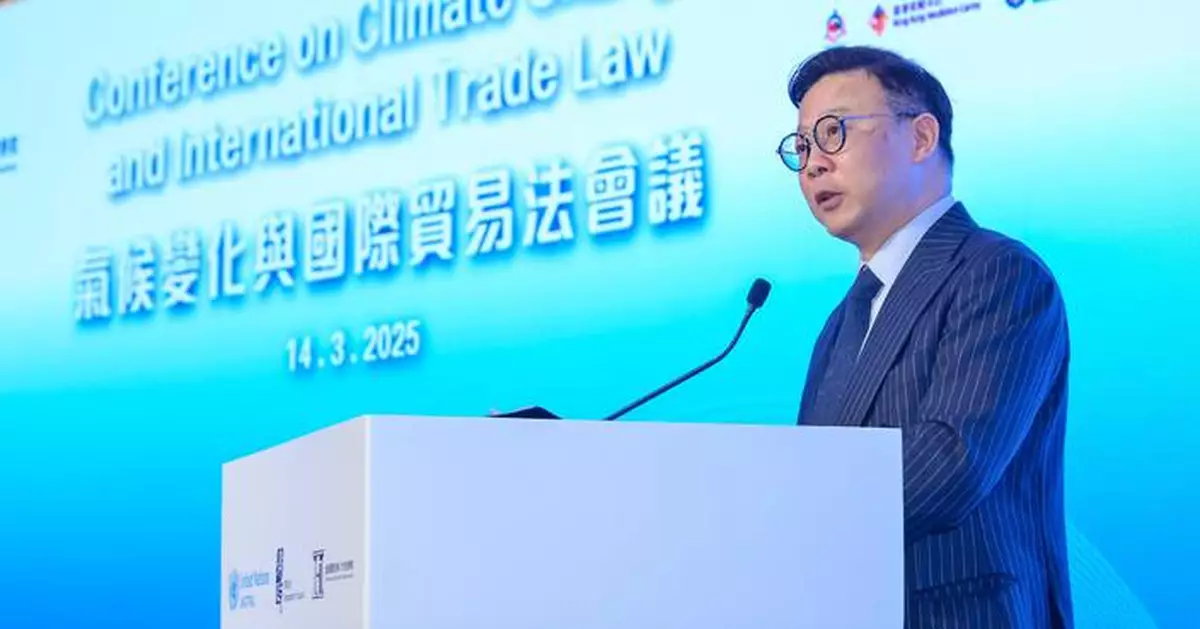
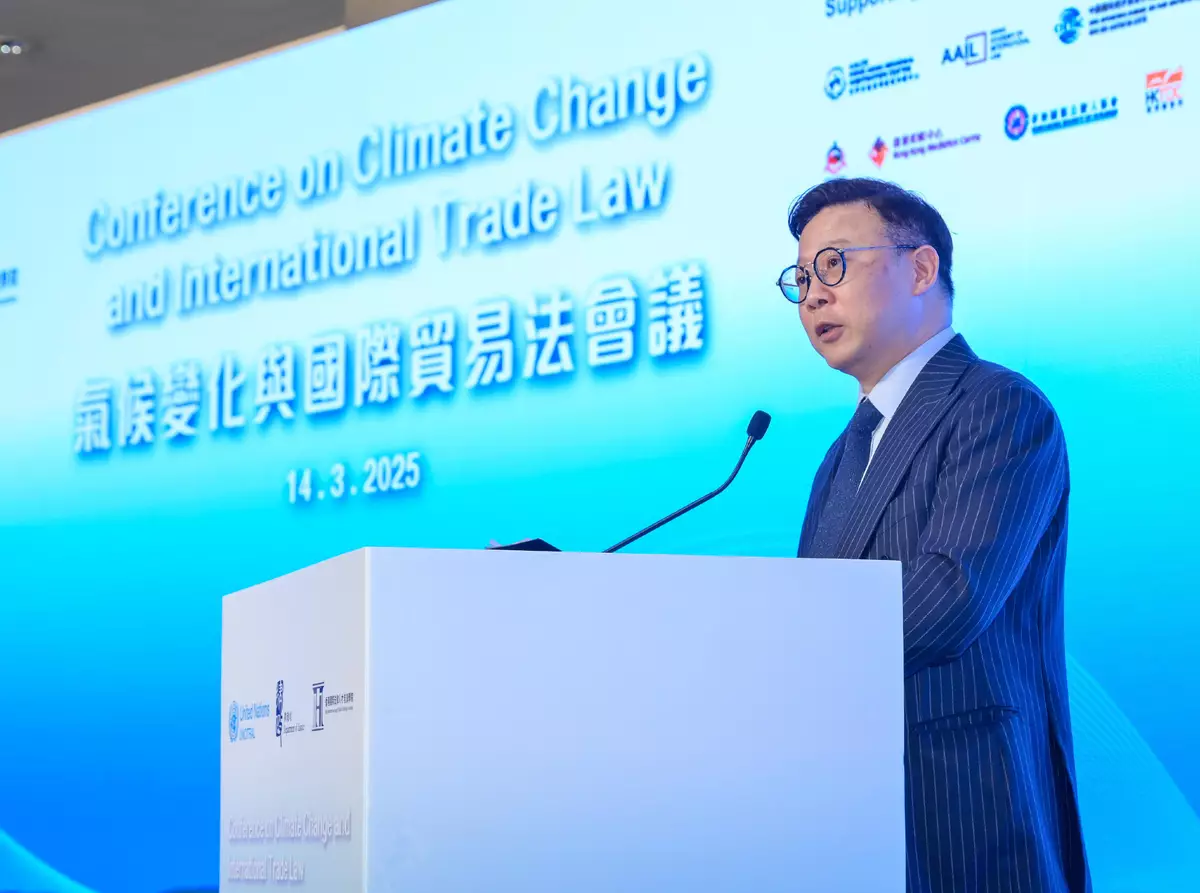
Speech by DSJ at Conference on Climate Change and International Trade Law

Following are the closing remarks by the Deputy Secretary for Justice, Dr Cheung kwok-kwan, at the Conference on Climate Change and International Trade today (March 14):

Esteemed speakers, distinguished guests, ladies and gentlemen,

Good afternoon. It is my honour to stand before you today as we draw to a close this significant Conference on Climate Change and International Trade Law, co-organised by the United Nations Commission on International Trade Law (UNCITRAL), the Department of Justice of the Hong Kong Special Administrative Region and the Hong Kong International Legal Talents Training Academy.

Today's Conference has been nothing short of inspiring, and it has been so due to the wealth of knowledge and expertise that has been shared throughout the day. Over the course of this intensive and productive day, we have navigated complex issues, and engaged in thought-provoking discussions. From the key takeaways from the UNCITRAL Colloquiums to the intricacies of sustainable supply chains, and from the potential impacts of climate change on insolvency to the vital mechanisms for dispute prevention and settlement, we have explored a complex and multifaceted landscape. I trust that the discussions we have had today will serve as a catalyst for continued dialogues and collaborations among legal experts, policymakers, and stakeholders in addressing the critical issues of climate change and international trade.

Before moving to the summary of each Panel, I would like to first express my heartfelt gratitude to each and every one of our speakers, moderators, and attendees. The depth and quality of the presentations have been truly commendable, shedding light on how UNCITRAL instruments and international trade law can effectively support the achievement of climate action goals. Your contributions have been invaluable, and the insights shared will undoubtedly resonate far beyond the walls of this conference hall.

As we reflect on today's Conference, it is clear that our work here is far from over. Today's discussions have underscored the urgent need for a paradigm shift in how we approach climate change and international trade. The conclusions and recommendations from this Conference will be presented to UNCITRAL at its 58th session later this year.

Main takeaways

Our Conference began with the inspiring keynote address of Mr Ma Xinmin, the Director-General of the Department of Treaty and Law of the Ministry of Foreign Affairs of the People's Republic of China and a distinguished member of the International Law Commission, discussing the State Obligations and Responsibilities under the Paris Agreement: Implications for International Trade Law, followed by an overview of the main takeaways from the UNCITRAL Colloquium last year in our first panel. This session provided a crucial foundation for our discussions, highlighting the significant work being done at the international level to address the intersection of climate change and trade law. There were discussions surrounding the legal nature of verified carbon credits from the perspective of a multilateral development bank, and also from the perspective of China being an UNCITRAL member state.

Panel 2 explored the complexities of greening supply chains, covering both commercial goods and public procurement. Building on an overview of international standards including the OECD (Organisation for Economic Co-operation and Development) guidelines, the panel examined sustainability risks in the supply chains of critical minerals and natural resources essential for the energy transition. Discussions covered due diligence approaches to mitigate these risks, as well as the role of CISG (United Nations Convention on Contracts for the International Sale of Goods), EBRD (European Bank for Reconstruction and Development) and CSDDD (Corporate Sustainability Due Diligence Directive) in achieving sustainable supply chains and combating climate change or contributing to sustainability efforts.

In our third panel, the experts focused on novel climate change aspects including mitigation, adaptation and resilience arising from the 2015 Paris Agreement. The discussion began with the intersection of climate change and insolvency law agendas, taxonomy of climate-linked insolvency risks, with analysis on practical examples illustrating how relevant issues could arise. While insolvency alone cannot resolve climate challenges, the panel raised some practical questions for consideration.

The final panel on dispute prevention and settlement looked into some practical examples of climate change and discussed the characteristics of climate change disputes, with reference to value and challenges of applying UNCITRAL dispute resolution instruments for resolving climate change disputes. Some useful suggestions on the way forward were also explored.

Conclusion

Ladies and gentlemen, the issues surrounding climate change and international trade are interlinked and not straight-forward, but the fruitful and insightful discussions today have given us a clearer understanding of where we are and possible directions ahead. The Conference also highlighted the importance of concerted efforts and the need for international co-operation, given that climate change is a global issue, which poses rising challenges to international trade that no single body can address alone. By harnessing the use of various international law instruments, sharing of experience and collaboration at the international level, we can work together to address the challenges to international trade caused by climate change and build a more resilient and environmentally responsible global economy. In this connection, capacity building is also of critical importance so that people will be better acquainted with the issues and equipped with the skills or instruments to address the issues. This Conference is an exemplary capacity-building initiative in this regard, and our Hong Kong International Legal Talents Training Academy will continue to work on capacity building in different areas of international concerns or interests.

Before I officially close this Conference, I would like to extend a final word of thanks to our co-organiser UNCITRAL, for their efforts and supports. I would also like to thank our supporting organisations, and all those who worked tirelessly behind the scenes to make this Conference a success. On behalf of the Department of Justice of the Hong Kong Special Administrative Region, I look forward to collaborating with you all in our future events and activities.

Once again, thank you very much for your engagement and participation in this Conference. I hope you leave here feeling inspired, empowered, and ready to help create a better future for all. To those of you travelling from abroad, I wish you safe travels home. Have a nice weekend. Thank you very much.
Speech by DSJ at Conference on Climate Change and International Trade Law Source: HKSAR Government Press Releases
Speech by DSJ at Conference on Climate Change and International Trade Law Source: HKSAR Government Press Releases

EDB reminds parents to choose primary schools under Central Allocation process for their children

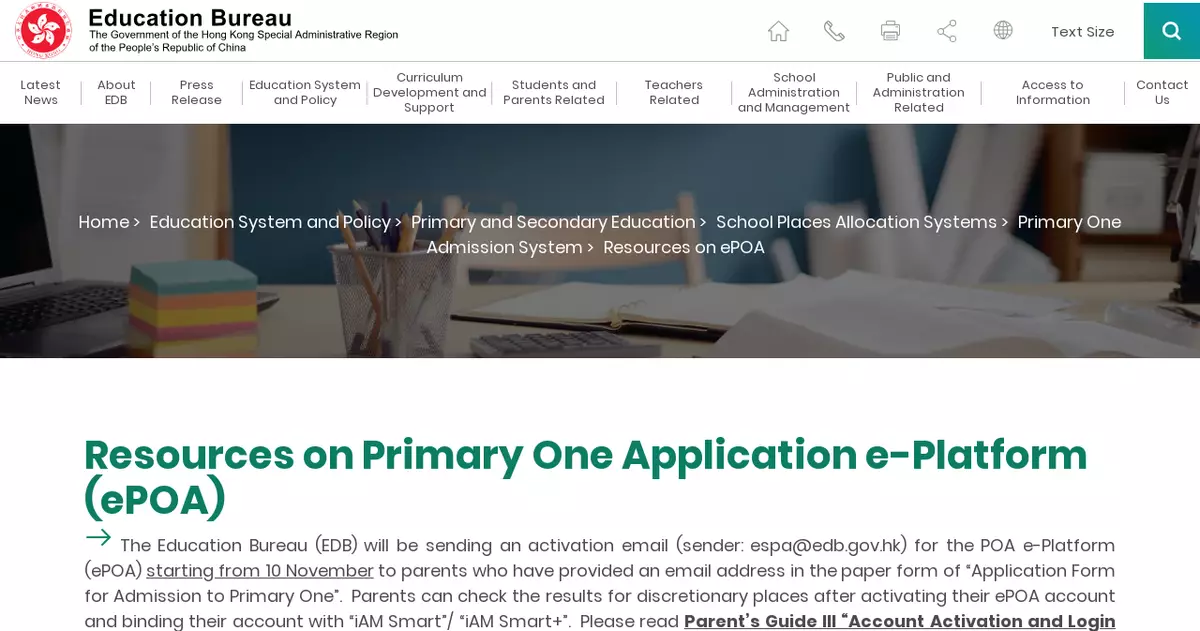
The Education Bureau (EDB) today (January 12) reminded parents that children who have joined the Primary One Admission (POA) System for 2026 but have not yet secured a discretionary place can take part in the Central Allocation process for a Primary One (P1) place in a government or aided primary school. Parents concerned should make their choice of schools within the period from January 19 to 25.

Digitalisation of POA

---------------------------

In line with the Smart Government strategy, the EDB has fully implemented digitalisation of the POA. Parents who have registered as POA e-Platform (ePOA) users and have bound their account to "iAM Smart+" may submit the Choice of Schools Form for Central Allocation from January 19 to 25 through the ePOA. Please refer to the related videos and Parent's Guide on the EDB's website (www.edb.gov.hk/en/edu-system/primary-secondary/spa-systems/primary-1-admission/poa_eplatform/index.html) for details of the procedures for activating and logging into an ePOA account and for making school choices for the Central Allocation of POA via the e-Platform.

Making school choices at Central Allocation Centres

-----------------------------------------------------------------

The EDB will send letters to parents on January 14 inviting them to make their choice of schools. To cater for the needs of different parents, parents can still submit the Choice of Schools Form in paper form by visiting the designated Central Allocation Centre at the suggested time slot (i.e. 9.30am to 12.30pm or 1.30pm to 4.30pm on January 24 (Saturday) or 9.30am to 12.30pm on January 25 (Sunday)) stated in the letter.

Parents who are ePOA users may choose to submit the Central Allocation Application via the ePOA or in paper form to the Central Allocation Centre but should not submit duplicate applications. Parents who have not yet received the letter by January 19 should call the School Places Allocation Section of the EDB (Hotline: 2832 7700) as soon as possible.

Only one parent of an applicant child is required to complete the school choice-making procedures. Parents are advised not to take their children to the Central Allocation Centre if possible. Parents who cannot make school choices within the suggested time slot can go to the designated Central Allocation Centre from 1.30pm to 4.30pm on January 25. The Choice of Schools Form will be sent together with the letter to parents who have submitted a paper Application Form at the Discretionary Places stage for filling out in advance.

In the event of adverse weather or other special conditions on any day during the period of making school choices, please pay heed to radio or television announcements on the relevant special arrangements.

Unable to submit application within specified choice-making period

------------------------------------------------------------------------------------

For individual parents who are unable to use the ePOA or go to the Central Allocation Centre to make school choices, they can authorise in writing a representative to bring the completed Choice of Schools Form and their signed Letter of Authorisation to the Central Allocation Centre to proceed with the related procedures.

To apply for POA 2026 for their children after January 25, parents need to complete necessary procedures with the School Places Allocation Section, which will separately arrange P1 places for the applicant children in June.

Change of residential address

--------------------------------------

An EDB spokesman reminded parents that, if they have recently moved their residence or have such plans in the near future, they are required to inform the School Places Allocation Section as soon as possible so that they can make school choices in the POA School Net where their new home is located. Parents should fill in the actual residential address of their child. If they provide a false address for securing a P1 place, the POA application of their child will be rendered void and the P1 place allocated will be withdrawn.

The EDB has put in place a monitoring mechanism to verify the residential addresses of applicant children as given by the parents. Random checks have also been stepped up. The public may call the School Places Allocation Section to report suspected cases of using a false address by parents for their children's POA application. The EDB will take action against false address cases.

Mechanism of Central Allocation

----------------------------------------

Central Allocation is composed of two parts. Part A, which takes up 10 per cent of the P1 places earmarked for Central Allocation, is for unrestricted school choices. Parents can choose up to three government or aided primary schools in any school net. Part B takes up the remaining 90 per cent of the P1 places earmarked for Central Allocation. Parents of applicant children residing in the school net concerned are to select schools from the "Choice of Schools List for Central Allocation (Primary One Admission 2026)" of their school net, while parents of applicant children who intend to commute daily to schools in Hong Kong are to select schools from the "2026 Choice of Schools List for Central Allocation (For Applicant Children who intend to commute daily to schools in Hong Kong)". Parents should fill in the Choice of Schools Form in the order of their preference.

The mechanism of the Central Allocation is based on parents' choices in general. The computer-programmed allocation will first process the school choices in Part A and then the school choices in Part B. For oversubscribed schools, the order of priority in allocating places will be determined by random numbers generated by the computer for individual applicants to ensure fairness.

For information about the procedures for Central Allocation, please call the EDB's 24-hour automatic telephone enquiry service at 2891 0088.

Release of Central Allocation results

----------------------------------------------

For parents who have already activated their ePOA account via "iAM Smart" or "iAM Smart+", they will receive their Central Allocation results through the ePOA from 10am on June 3. Parents who wish to receive the allocation results via SMS on June 3 may choose such an option in the Choice of Schools Form. In addition, the allocation results will be sent to parents by post on June 3 and 4.

Source: AI-found images

Source: AI-found images

Recommended Articles