Skip to Content Facebook Feature Image

Mark Carney is sworn in as Canada's new prime minister as country deals with Trump's trade war

News

Mark Carney is sworn in as Canada's new prime minister as country deals with Trump's trade war
News

News

Mark Carney is sworn in as Canada's new prime minister as country deals with Trump's trade war

2025-03-15 06:56 Last Updated At:11:08

TORONTO (AP) — Former central banker Mark Carney was sworn in as Canada’s new prime minister on Friday, and will now try to steer his country through a trade war brought by U.S. President Donald Trump, annexation threats and an expected federal election.

Carney, 59, replaces Prime Minister Justin Trudeau, who announced his resignation in January but remained in power until the Liberal Party elected a new leader. Carney is widely expected to trigger a general election in the coming days or weeks.

More Images
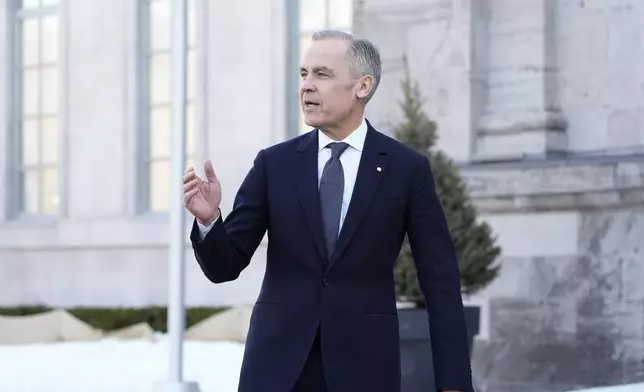
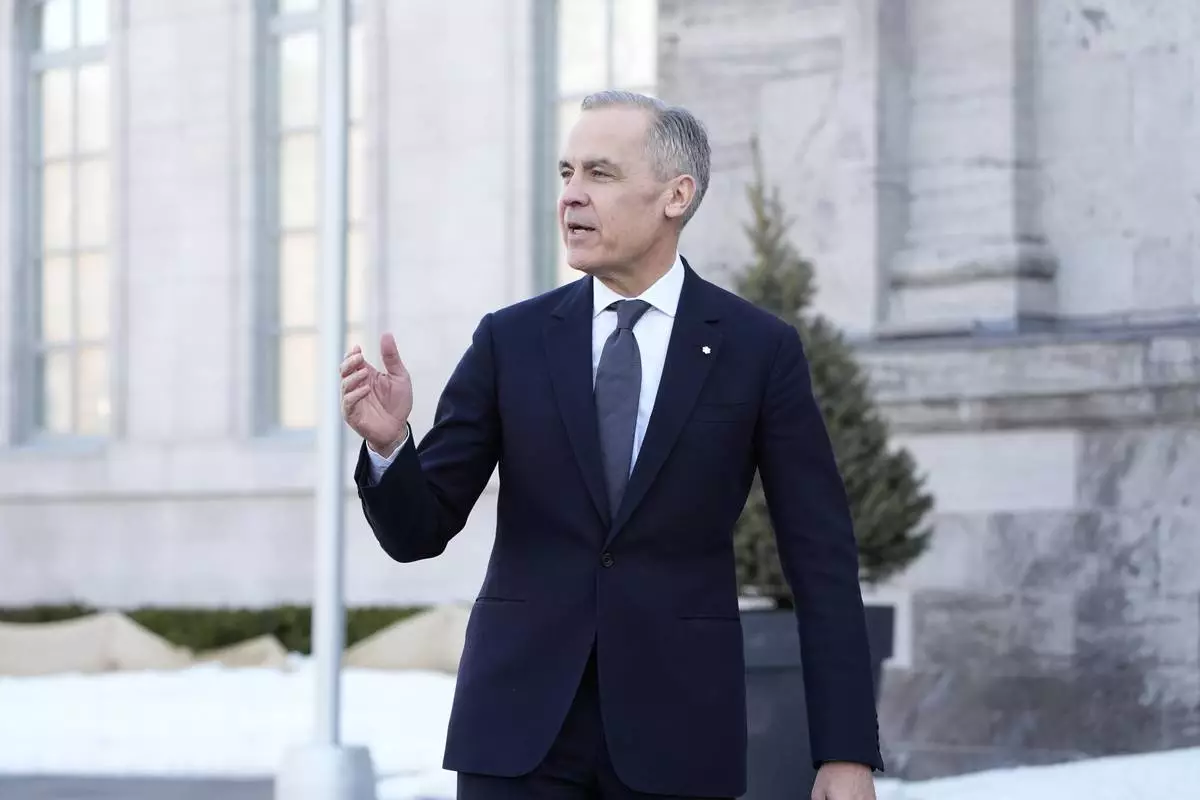
Canada's Prime Minister Mark Carney speaks at a news conference following a cabinet swearing in ceremony at Rideau Hall in Ottawa, on Friday, March 14, 2025. (Adrian Wyld/The Canadian Press via AP)
Canada's Prime Minister Mark Carney speaks at a news conference following a cabinet swearing in ceremony at Rideau Hall in Ottawa, on Friday, March 14, 2025. (Adrian Wyld/The Canadian Press via AP)

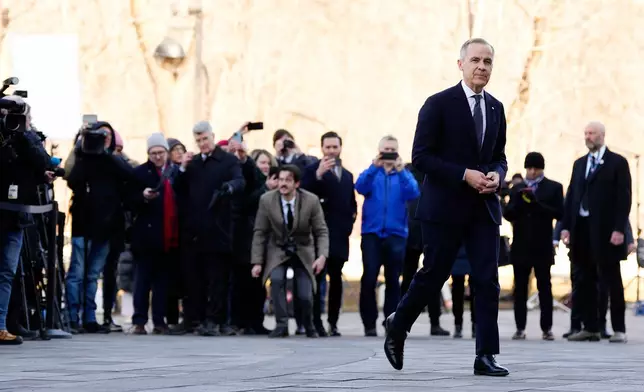
Canada's Prime minister-designate Mark Carney arrives for a swearing in ceremony at Rideau Hall in Ottawa on Friday, March 14, 2025. (Justin Tang/The Canadian Press via AP)
Canada's Prime minister-designate Mark Carney arrives for a swearing in ceremony at Rideau Hall in Ottawa on Friday, March 14, 2025. (Justin Tang/The Canadian Press via AP)

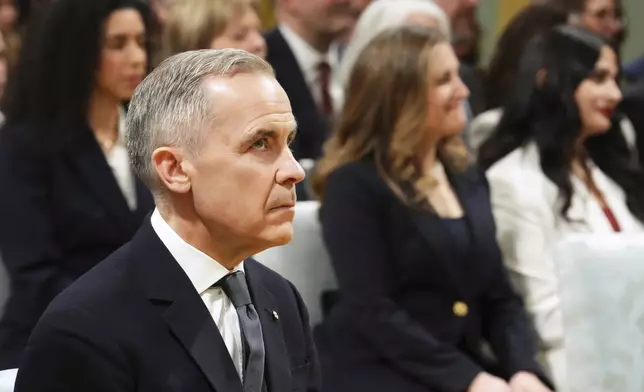
Prime minister-designate Mark Carney, left, and Chrystia Freeland look on ahead of a swearing in ceremony at Rideau Hall in Ottawa on Friday, March 14, 2025. (Sean Kilpatrick/The Canadian Press via AP)
Prime minister-designate Mark Carney, left, and Chrystia Freeland look on ahead of a swearing in ceremony at Rideau Hall in Ottawa on Friday, March 14, 2025. (Sean Kilpatrick/The Canadian Press via AP)

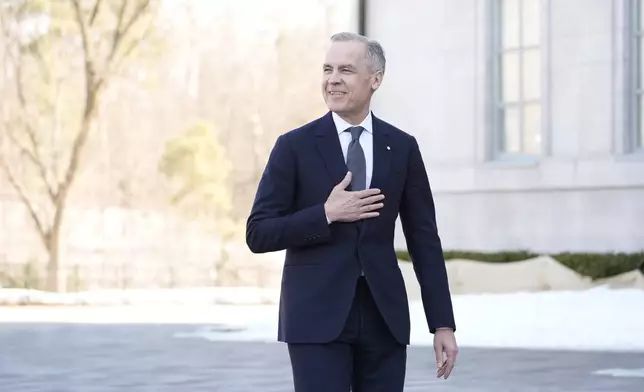
Prime minister-designate Mark Carney arrives for a swearing in ceremony at Rideau Hall in Ottawa on Friday, March 14, 2025. (Adrian Wyld /The Canadian Press via AP)

Prime minister-designate Mark Carney arrives for a swearing in ceremony at Rideau Hall in Ottawa on Friday, March 14, 2025. (Adrian Wyld /The Canadian Press via AP)

Canadian Prime Minister designate Mark Carney tours the ArcelorMittal Dofasco steel plant in Hamilton, Ontario, on Wednesday, March 12, 2025. (Nathan Denette/The Canadian Press via AP)
Canadian Prime Minister designate Mark Carney tours the ArcelorMittal Dofasco steel plant in Hamilton, Ontario, on Wednesday, March 12, 2025. (Nathan Denette/The Canadian Press via AP)

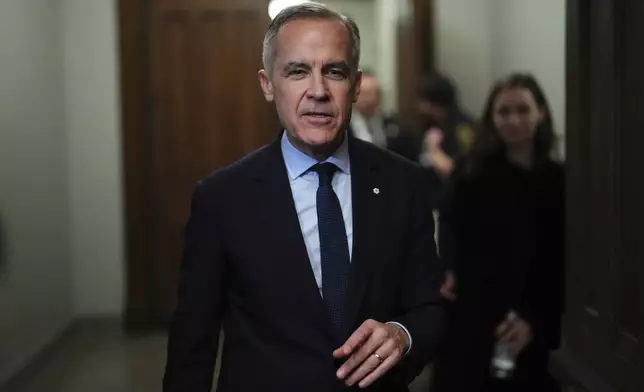
Prime minister-designate Mark Carney arrives for a swearing in ceremony at Rideau Hall in Ottawa on Friday, March 14, 2025. (Adrian Wyld /The Canadian Press via AP)
Prime minister-designate Mark Carney arrives for a swearing in ceremony at Rideau Hall in Ottawa on Friday, March 14, 2025. (Adrian Wyld /The Canadian Press via AP)

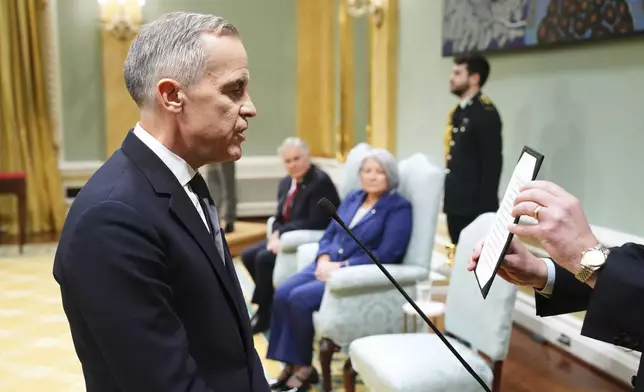
Mark Carney is sworn in as prime minister during a ceremony at Rideau Hall in Ottawa on Friday, March 14, 2025. (Sean Kilpatrick/The Canadian Press via AP)
Mark Carney is sworn in as prime minister during a ceremony at Rideau Hall in Ottawa on Friday, March 14, 2025. (Sean Kilpatrick/The Canadian Press via AP)

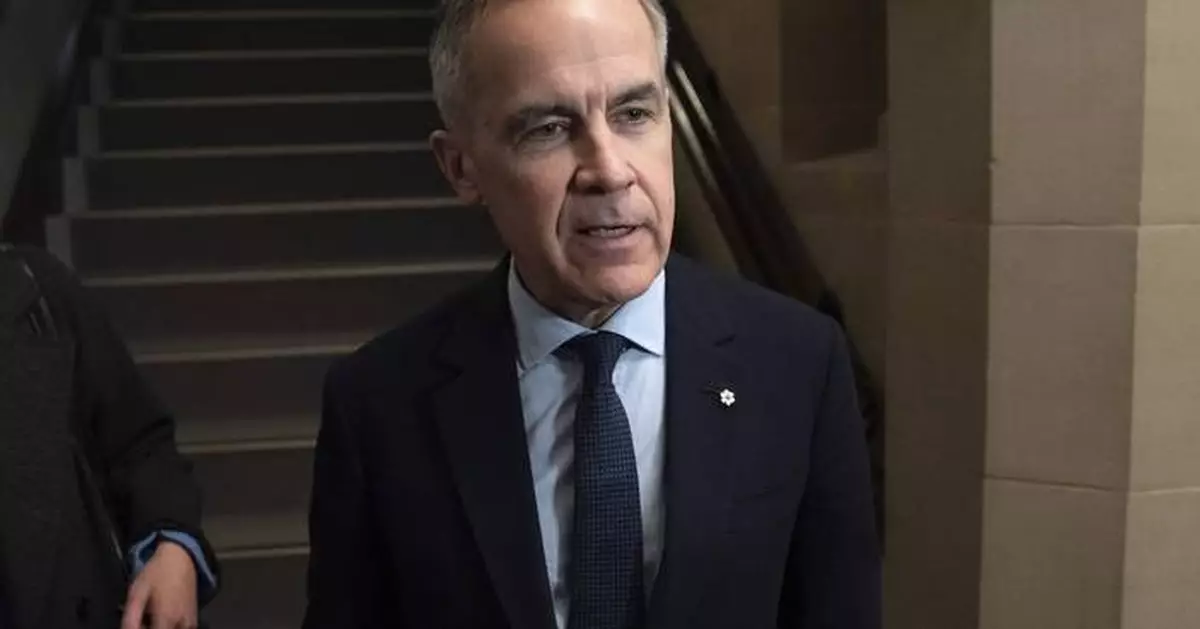
Canada Liberal Leader Mark Carney leaves a caucus meeting in Ottawa, Monday, March 10, 2025. (Sean Kilpatrick/The Canadian Press via AP)
Canada Liberal Leader Mark Carney leaves a caucus meeting in Ottawa, Monday, March 10, 2025. (Sean Kilpatrick/The Canadian Press via AP)

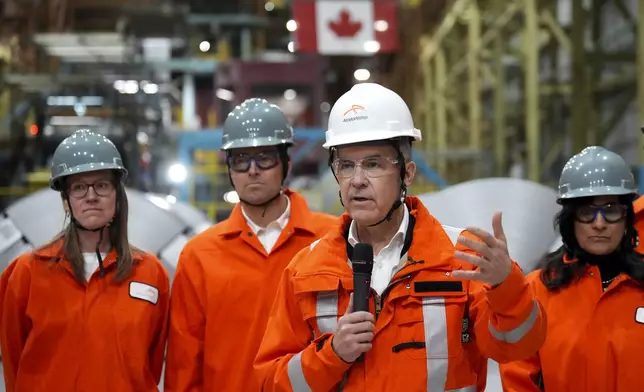
Canadian Prime Minister designate Mark Carney, second right, speaks to steel workers after touring the ArcelorMittal Dofasco steel plant in Hamilton, Ont., on Wednesday, March 12, 2025. (Nathan Denette /The Canadian Press via AP)
Canadian Prime Minister designate Mark Carney, second right, speaks to steel workers after touring the ArcelorMittal Dofasco steel plant in Hamilton, Ont., on Wednesday, March 12, 2025. (Nathan Denette /The Canadian Press via AP)

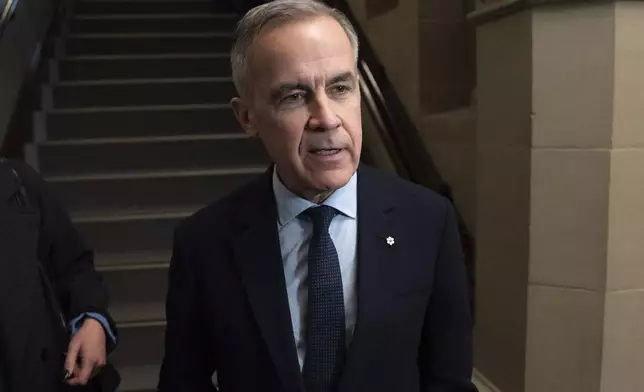
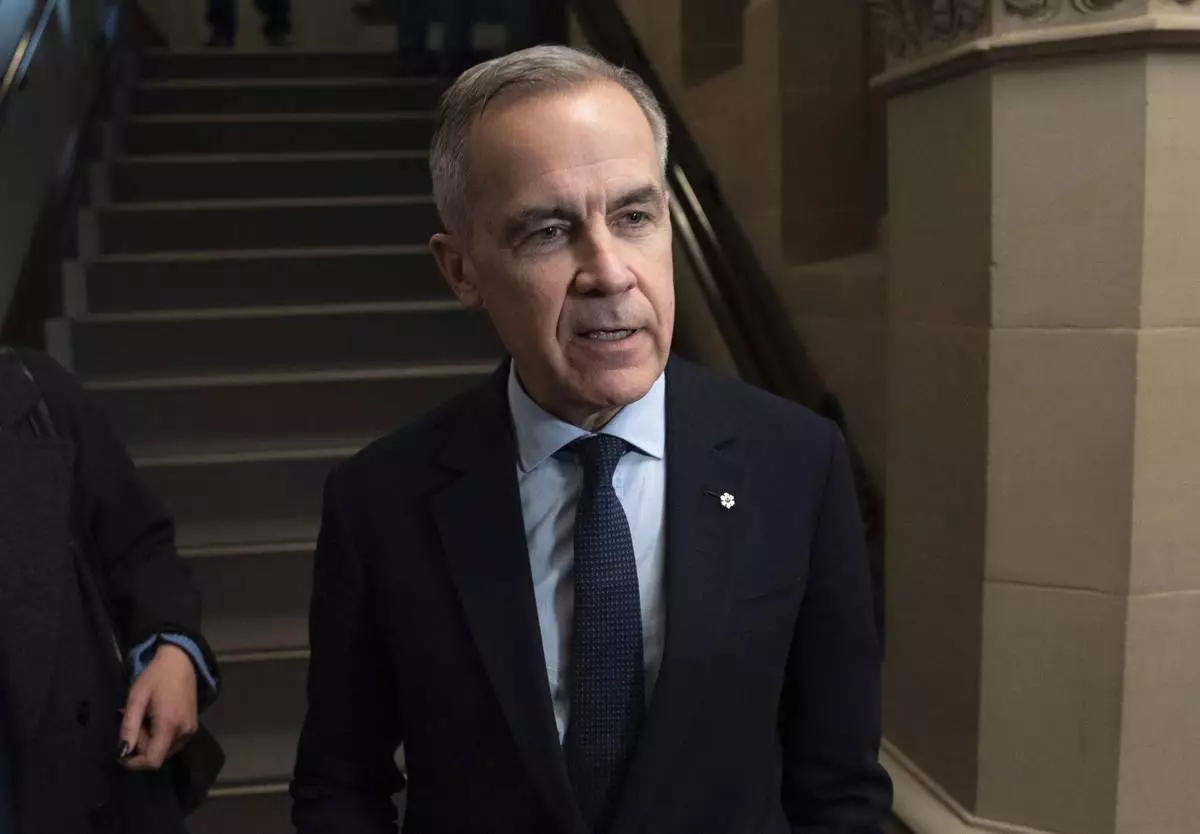
Canada Liberal leader Mark Carney speaks briefly with media as he makes his way to a caucus meeting on Monday, March 10, 2025, in Ottawa. (Adrian Wyld/The Canadian Press via AP)

Canada Liberal leader Mark Carney speaks briefly with media as he makes his way to a caucus meeting on Monday, March 10, 2025, in Ottawa. (Adrian Wyld/The Canadian Press via AP)

“We will never, ever, in any way shape or form, be part of the United States. America is not Canada,” Carney said. “We are very fundamentally a different country.”

The governing Liberal Party had appeared poised for a historic election defeat this year until Trump declared economic war and repeatedly has said Canada should become the 51st state. Now the party and its new leader could come out on top.

Carney has said he’s ready to meet with Trump if he shows respect for Canadian sovereignty. He said he doesn't plan to visit Washington at the moment but hopes to have a phone call with the president soon.

“The president is a successful businessman and deal maker. We’re his largest client in so many industries,” Carney said. “Clients expect respect and working together in a proper commercial way.”

Carney navigated crises when he was the head of the Bank of Canada during the 2008 financial crisis, and then in 2013 when he became the first noncitizen to run the Bank of England — helping to manage the worst impacts of Brexit in the U.K.

Carney, a former Goldman Sachs executive with no experience in politics, becomes Canada’s 24th prime minister. He said protecting Canadian workers and their families in the face of unjustified trade actions and growing the economy will be his top priorities.

Carney said he will travel to Europe to visit French President Emmanuel Macron and U.K. Prime Minister Keir Starmer in the coming days. He received invitations from both.

“We must diversify our trade partners and strengthen our security in so doing,” Carney said.

Trump put 25% tariffs on Canada’s steel and aluminum and is threatening sweeping tariffs on all Canadian products April 2. He has threatened economic coercion in his annexation threats and suggested the border is a fictional line.

Carney called the idea “crazy.”

The U.S. trade war and Trump's talk of making Canada the 51st U.S. state have infuriated Canadians, who are booing the American anthem at NHL and NBA games. Some are canceling trips south of the border, and many are avoiding buying American goods when they can.

Carney said he’s worked with Trump before at G7 and G20 summits during Trump’s first presidency.

“We share some experiences. I have been in the private sector. I have worked in the real estate sector. I have done large transactions,” Carney said. “We will both be looking out for our countries but he knows, and I know from long experience, that we can find mutual solutions that win for both.”

The opposition Conservatives hoped to make the election about Trudeau, whose popularity declined as food and housing prices rose and immigration surge.

But after decades of bilateral stability, the vote on Canada’s next leader now is expected to focus on who is best equipped to deal with the U.S.

“He will do very well. He’s respected internationally,” former Prime Minister Jean Chrétien told reporters Friday. But, he added: “There is no magic solution. This is not a normal situation. We’ve never seen someone who changes his mind every five minutes as president of the United States."

A new Cabinet of 13 men and 11 women was sworn in, smaller than Trudeau's 37-member team. François-Philippe Champagne becomes Canada's new finance minister, the government's second most powerful position. Champagne has said a new prime minister offers a chance of a reset with Trump.

Dominic LeBlanc goes from finance to to intergovernmental affairs. Mélanie Joly remains foreign minister. Chrystia Freeland, a former deputy prime minister and finance minister who lost to Carney in the Liberal Party leadership race, becomes minister of transport and internal trade.

Carney met his Cabinet and eliminated a consumer carbon price on his first day, undoing Trudeau’s signature climate policy. He called his government “Canada's new government” in an effort to distance himself from Trudeau.

Carney also took aim at opposition Conservative leader Pierre Poilievre, a career politician who Carney said is always negative.

“Negativity won't pay the rent or the mortgage. Negativity won't bring down the price of groceries. Negativity won't win a trade war,” he said.

Poilievre urged Canadians not to give the Liberals a fourth mandate, saying it's the same Liberal government and that Carney is “just like Justin.”
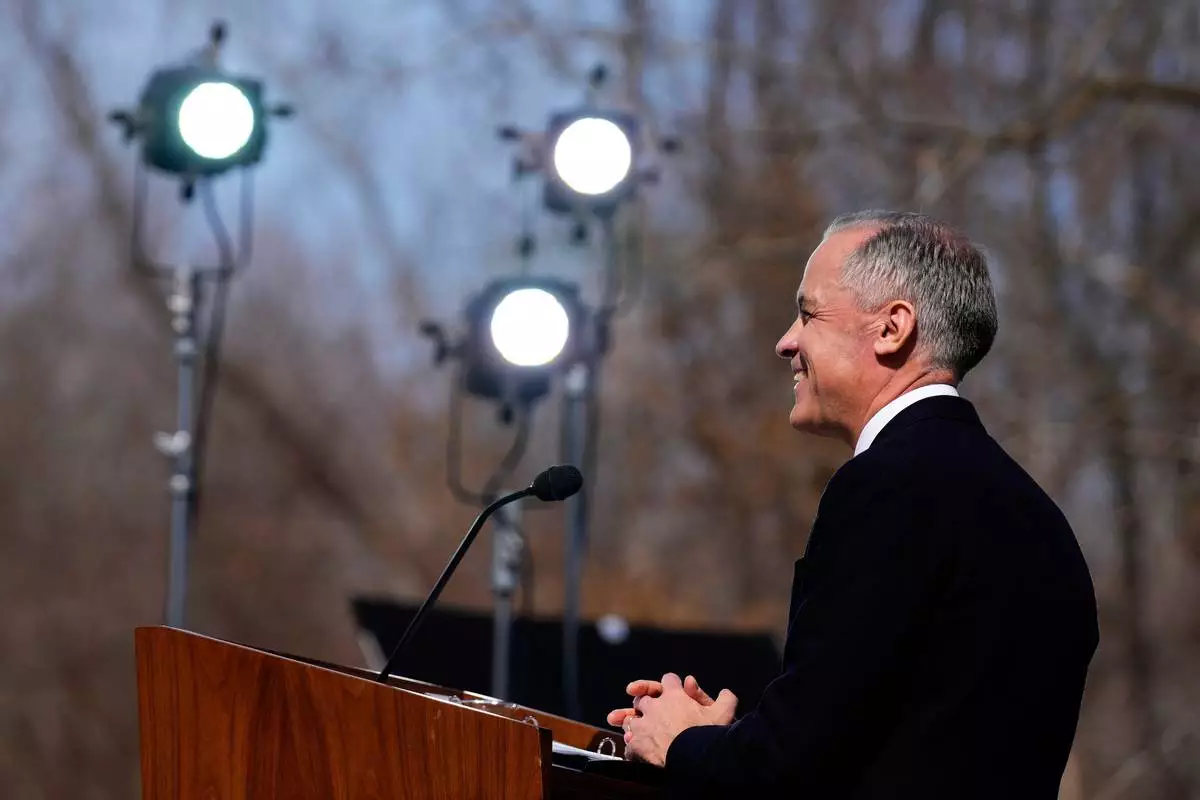
Canada's Prime Minister Mark Carney speaks at a news conference following a cabinet swearing in ceremony at Rideau Hall in Ottawa, on Friday, March 14, 2025. (Adrian Wyld/The Canadian Press via AP)
Canada's Prime Minister Mark Carney speaks at a news conference following a cabinet swearing in ceremony at Rideau Hall in Ottawa, on Friday, March 14, 2025. (Adrian Wyld/The Canadian Press via AP)

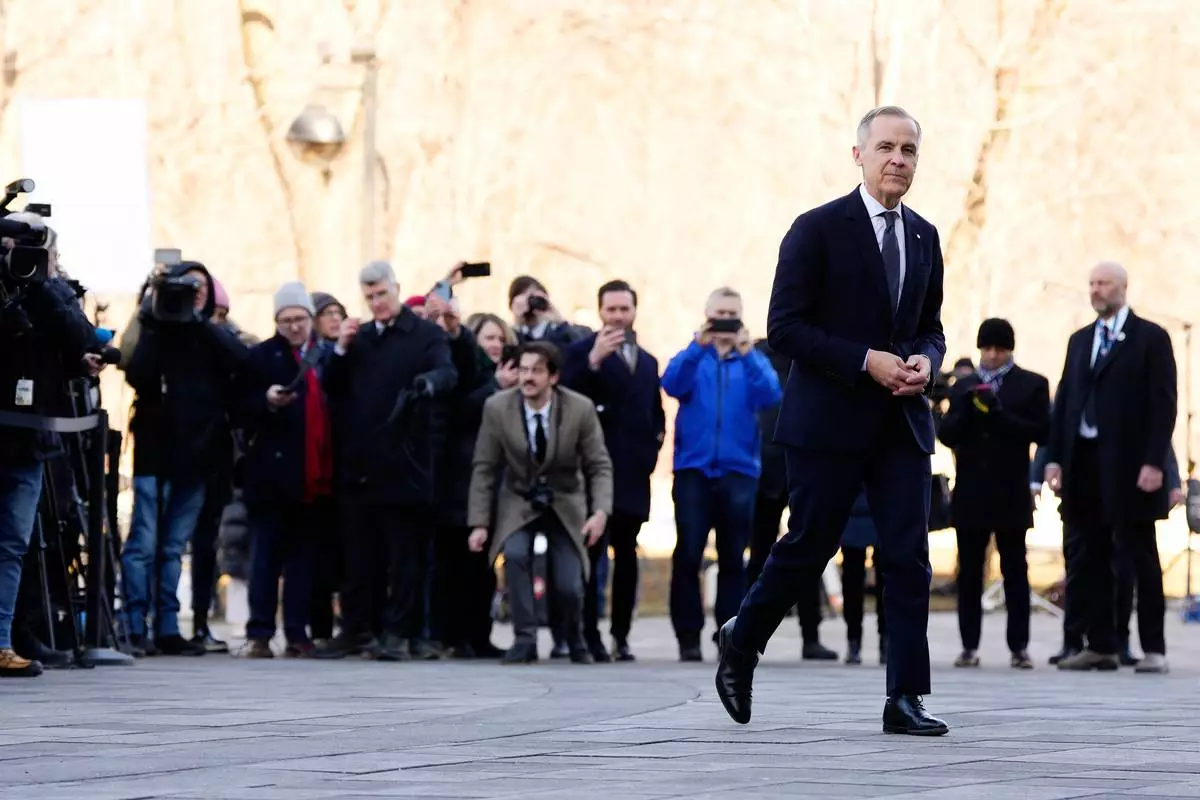
Canada's Prime minister-designate Mark Carney arrives for a swearing in ceremony at Rideau Hall in Ottawa on Friday, March 14, 2025. (Justin Tang/The Canadian Press via AP)
Canada's Prime minister-designate Mark Carney arrives for a swearing in ceremony at Rideau Hall in Ottawa on Friday, March 14, 2025. (Justin Tang/The Canadian Press via AP)

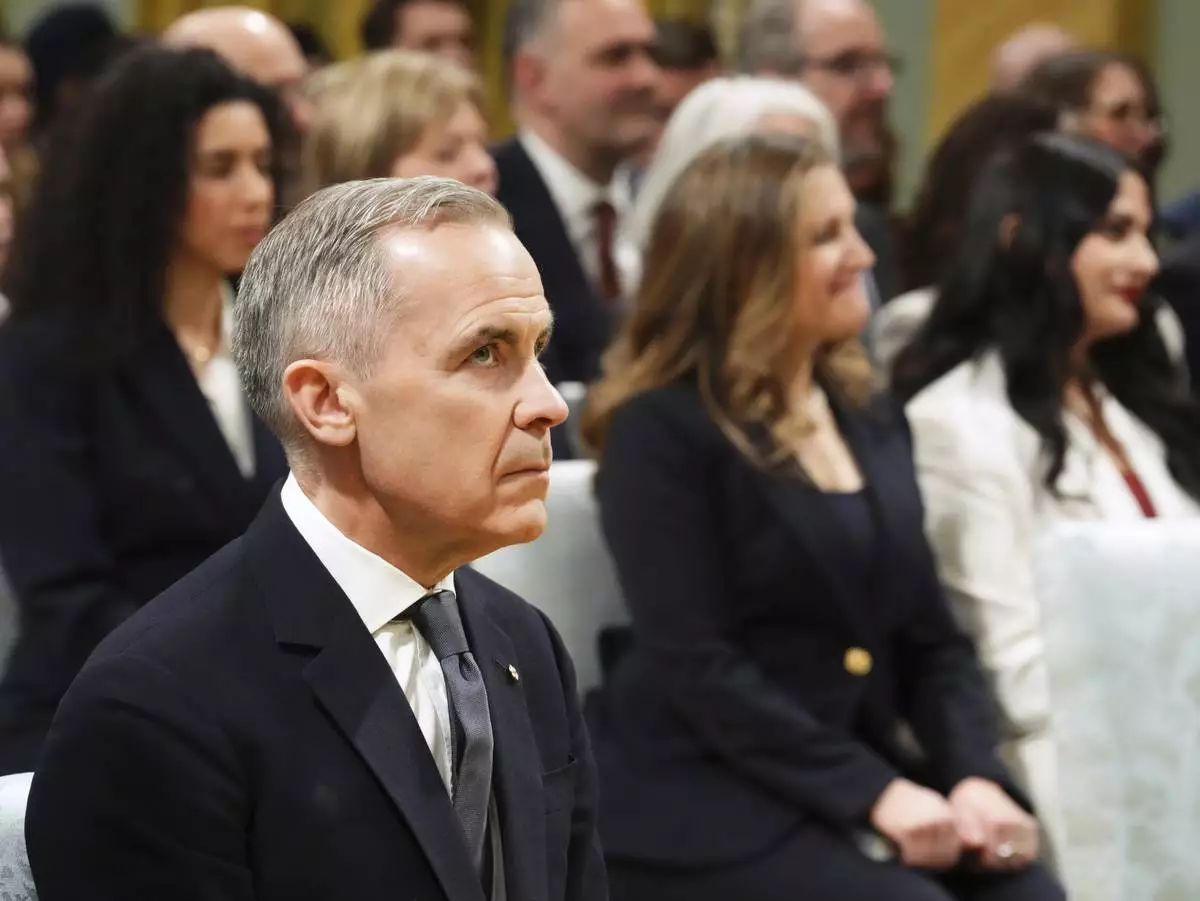
Prime minister-designate Mark Carney, left, and Chrystia Freeland look on ahead of a swearing in ceremony at Rideau Hall in Ottawa on Friday, March 14, 2025. (Sean Kilpatrick/The Canadian Press via AP)
Prime minister-designate Mark Carney, left, and Chrystia Freeland look on ahead of a swearing in ceremony at Rideau Hall in Ottawa on Friday, March 14, 2025. (Sean Kilpatrick/The Canadian Press via AP)

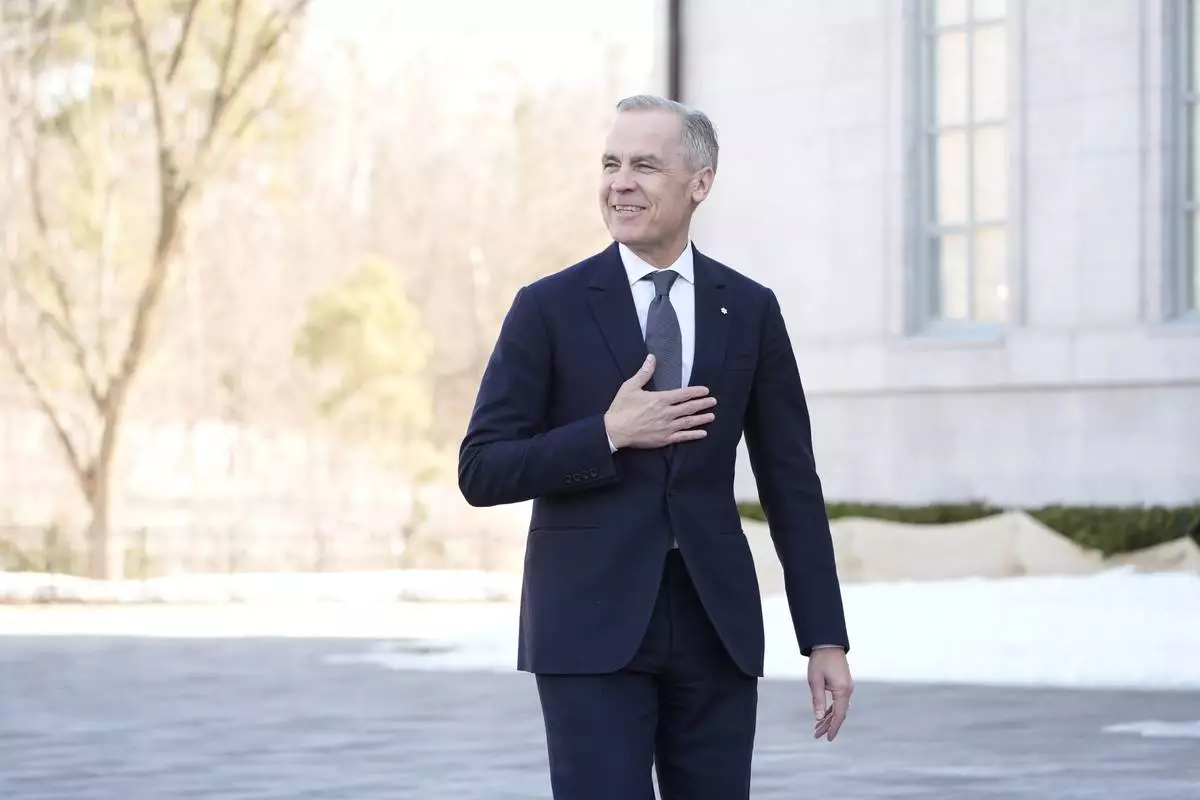
Prime minister-designate Mark Carney arrives for a swearing in ceremony at Rideau Hall in Ottawa on Friday, March 14, 2025. (Adrian Wyld /The Canadian Press via AP)

Prime minister-designate Mark Carney arrives for a swearing in ceremony at Rideau Hall in Ottawa on Friday, March 14, 2025. (Adrian Wyld /The Canadian Press via AP)

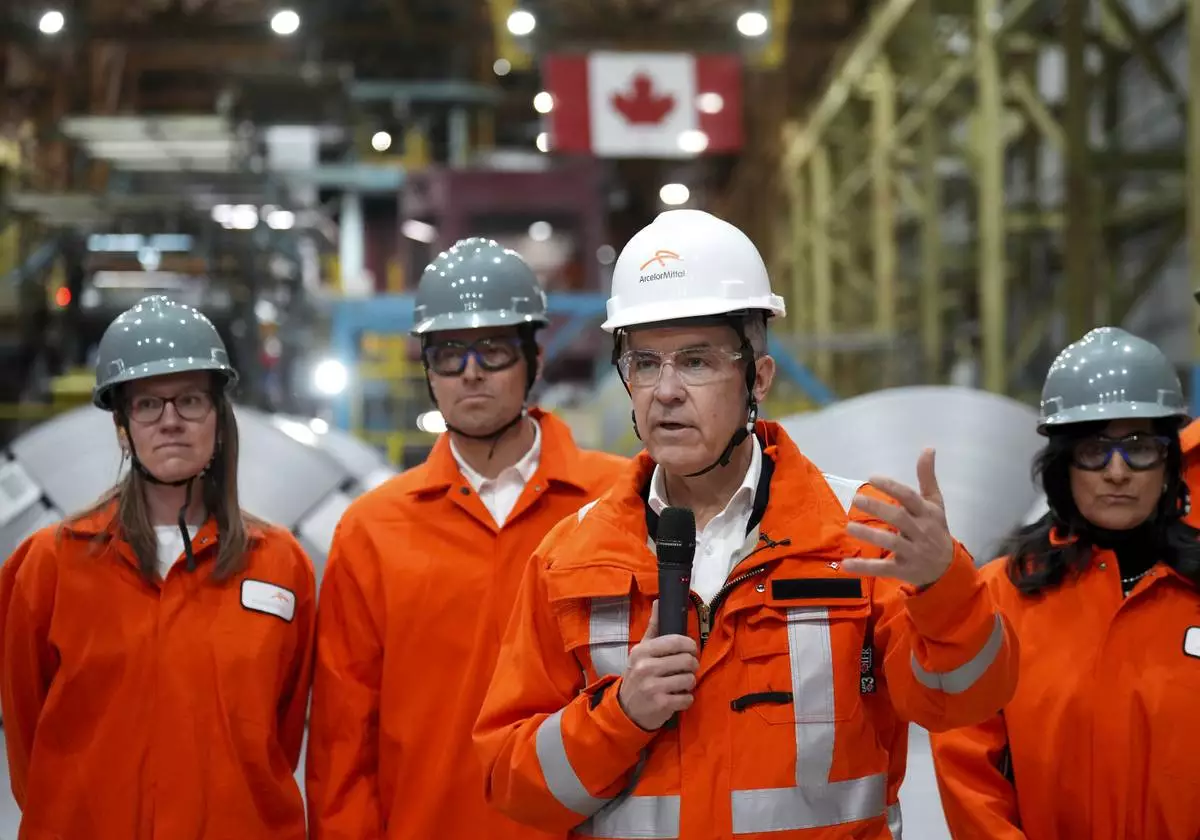
Canadian Prime Minister designate Mark Carney tours the ArcelorMittal Dofasco steel plant in Hamilton, Ontario, on Wednesday, March 12, 2025. (Nathan Denette/The Canadian Press via AP)
Canadian Prime Minister designate Mark Carney tours the ArcelorMittal Dofasco steel plant in Hamilton, Ontario, on Wednesday, March 12, 2025. (Nathan Denette/The Canadian Press via AP)

Prime minister-designate Mark Carney arrives for a swearing in ceremony at Rideau Hall in Ottawa on Friday, March 14, 2025. (Adrian Wyld /The Canadian Press via AP)
Prime minister-designate Mark Carney arrives for a swearing in ceremony at Rideau Hall in Ottawa on Friday, March 14, 2025. (Adrian Wyld /The Canadian Press via AP)

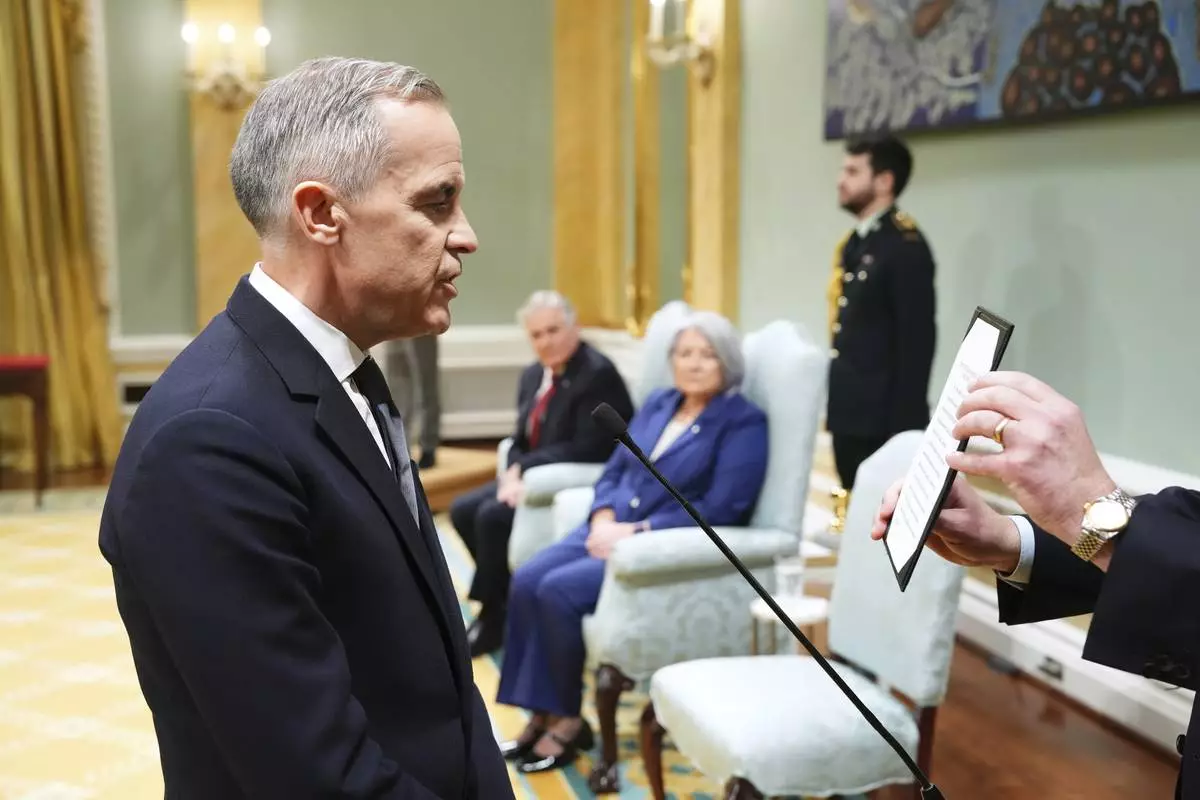
Mark Carney is sworn in as prime minister during a ceremony at Rideau Hall in Ottawa on Friday, March 14, 2025. (Sean Kilpatrick/The Canadian Press via AP)
Mark Carney is sworn in as prime minister during a ceremony at Rideau Hall in Ottawa on Friday, March 14, 2025. (Sean Kilpatrick/The Canadian Press via AP)

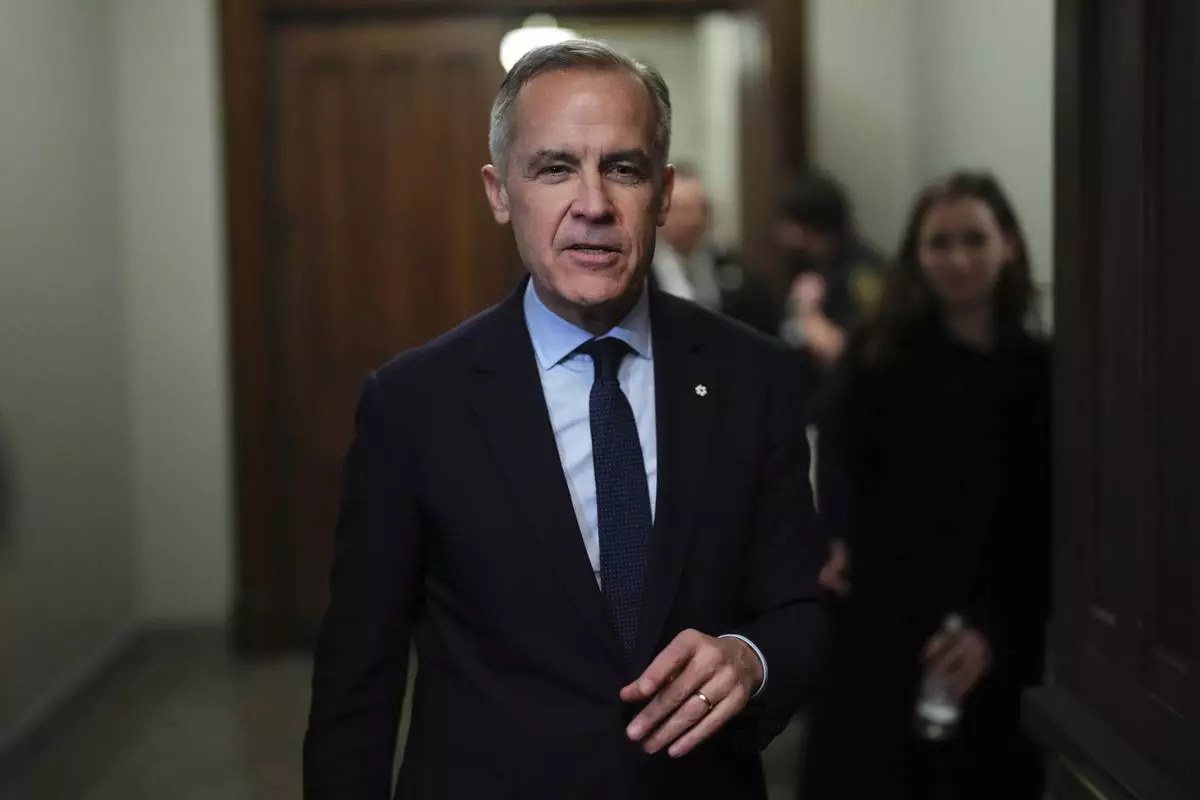
Canada Liberal Leader Mark Carney leaves a caucus meeting in Ottawa, Monday, March 10, 2025. (Sean Kilpatrick/The Canadian Press via AP)
Canada Liberal Leader Mark Carney leaves a caucus meeting in Ottawa, Monday, March 10, 2025. (Sean Kilpatrick/The Canadian Press via AP)

Canadian Prime Minister designate Mark Carney, second right, speaks to steel workers after touring the ArcelorMittal Dofasco steel plant in Hamilton, Ont., on Wednesday, March 12, 2025. (Nathan Denette /The Canadian Press via AP)
Canadian Prime Minister designate Mark Carney, second right, speaks to steel workers after touring the ArcelorMittal Dofasco steel plant in Hamilton, Ont., on Wednesday, March 12, 2025. (Nathan Denette /The Canadian Press via AP)

Canada Liberal leader Mark Carney speaks briefly with media as he makes his way to a caucus meeting on Monday, March 10, 2025, in Ottawa. (Adrian Wyld/The Canadian Press via AP)
Canada Liberal leader Mark Carney speaks briefly with media as he makes his way to a caucus meeting on Monday, March 10, 2025, in Ottawa. (Adrian Wyld/The Canadian Press via AP)
NEW YORK (AP) — Reviving a campaign pledge, President Donald Trump wants a one-year, 10% cap on credit card interest rates, a move that could save Americans tens of billions of dollars but drew immediate opposition from an industry that has been in his corner.

Trump was not clear in his social media post Friday night whether a cap might take effect through executive action or legislation, though one Republican senator said he had spoken with the president and would work on a bill with his “full support.” Trump said he hoped it would be in place Jan. 20, one year after he took office.

Strong opposition is certain from Wall Street in addition to the credit card companies, which donated heavily to his 2024 campaign and have supported Trump's second-term agenda. Banks are making the argument that such a plan would most hurt poor people, at a time of economic concern, by curtailing or eliminating credit lines, driving them to high-cost alternatives like payday loans or pawnshops.

“We will no longer let the American Public be ripped off by Credit Card Companies that are charging Interest Rates of 20 to 30%,” Trump wrote on his Truth Social platform.

Researchers who studied Trump’s campaign pledge after it was first announced found that Americans would save roughly $100 billion in interest a year if credit card rates were capped at 10%. The same researchers found that while the credit card industry would take a major hit, it would still be profitable, although credit card rewards and other perks might be scaled back.

About 195 million people in the United States had credit cards in 2024 and were assessed $160 billion in interest charges, the Consumer Financial Protection Bureau says. Americans are now carrying more credit card debt than ever, to the tune of about $1.23 trillion, according to figures from the New York Federal Reserve for the third quarter last year.

Further, Americans are paying, on average, between 19.65% and 21.5% in interest on credit cards according to the Federal Reserve and other industry tracking sources. That has come down in the past year as the central bank lowered benchmark rates, but is near the highs since federal regulators started tracking credit card rates in the mid-1990s. That’s significantly higher than a decade ago, when the average credit card interest rate was roughly 12%.

The Republican administration has proved particularly friendly until now to the credit card industry.

Capital One got little resistance from the White House when it finalized its purchase and merger with Discover Financial in early 2025, a deal that created the nation’s largest credit card company. The Consumer Financial Protection Bureau, which is largely tasked with going after credit card companies for alleged wrongdoing, has been largely nonfunctional since Trump took office.

In a joint statement, the banking industry was opposed to Trump's proposal.

“If enacted, this cap would only drive consumers toward less regulated, more costly alternatives," the American Bankers Association and allied groups said.

Bank lobbyists have long argued that lowering interest rates on their credit card products would require the banks to lend less to high-risk borrowers. When Congress enacted a cap on the fee that stores pay large banks when customers use a debit card, banks responded by removing all rewards and perks from those cards. Debit card rewards only recently have trickled back into consumers' hands. For example, United Airlines now has a debit card that gives miles with purchases.

The U.S. already places interest rate caps on some financial products and for some demographics. The Military Lending Act makes it illegal to charge active-duty service members more than 36% for any financial product. The national regulator for credit unions has capped interest rates on credit union credit cards at 18%.

Credit card companies earn three streams of revenue from their products: fees charged to merchants, fees charged to customers and the interest charged on balances. The argument from some researchers and left-leaning policymakers is that the banks earn enough revenue from merchants to keep them profitable if interest rates were capped.

"A 10% credit card interest cap would save Americans $100 billion a year without causing massive account closures, as banks claim. That’s because the few large banks that dominate the credit card market are making absolutely massive profits on customers at all income levels," said Brian Shearer, director of competition and regulatory policy at the Vanderbilt Policy Accelerator, who wrote the research on the industry's impact of Trump's proposal last year.

There are some historic examples that interest rate caps do cut off the less creditworthy to financial products because banks are not able to price risk correctly. Arkansas has a strictly enforced interest rate cap of 17% and evidence points to the poor and less creditworthy being cut out of consumer credit markets in the state. Shearer's research showed that an interest rate cap of 10% would likely result in banks lending less to those with credit scores below 600.

The White House did not respond to questions about how the president seeks to cap the rate or whether he has spoken with credit card companies about the idea.

Sen. Roger Marshall, R-Kan., who said he talked with Trump on Friday night, said the effort is meant to “lower costs for American families and to reign in greedy credit card companies who have been ripping off hardworking Americans for too long."

Legislation in both the House and the Senate would do what Trump is seeking.

Sens. Bernie Sanders, I-Vt., and Josh Hawley, R-Mo., released a plan in February that would immediately cap interest rates at 10% for five years, hoping to use Trump’s campaign promise to build momentum for their measure.

Hours before Trump's post, Sanders said that the president, rather than working to cap interest rates, had taken steps to deregulate big banks that allowed them to charge much higher credit card fees.

Reps. Alexandria Ocasio-Cortez, D-N.Y., and Anna Paulina Luna, R-Fla., have proposed similar legislation. Ocasio-Cortez is a frequent political target of Trump, while Luna is a close ally of the president.

Seung Min Kim reported from West Palm Beach, Fla.

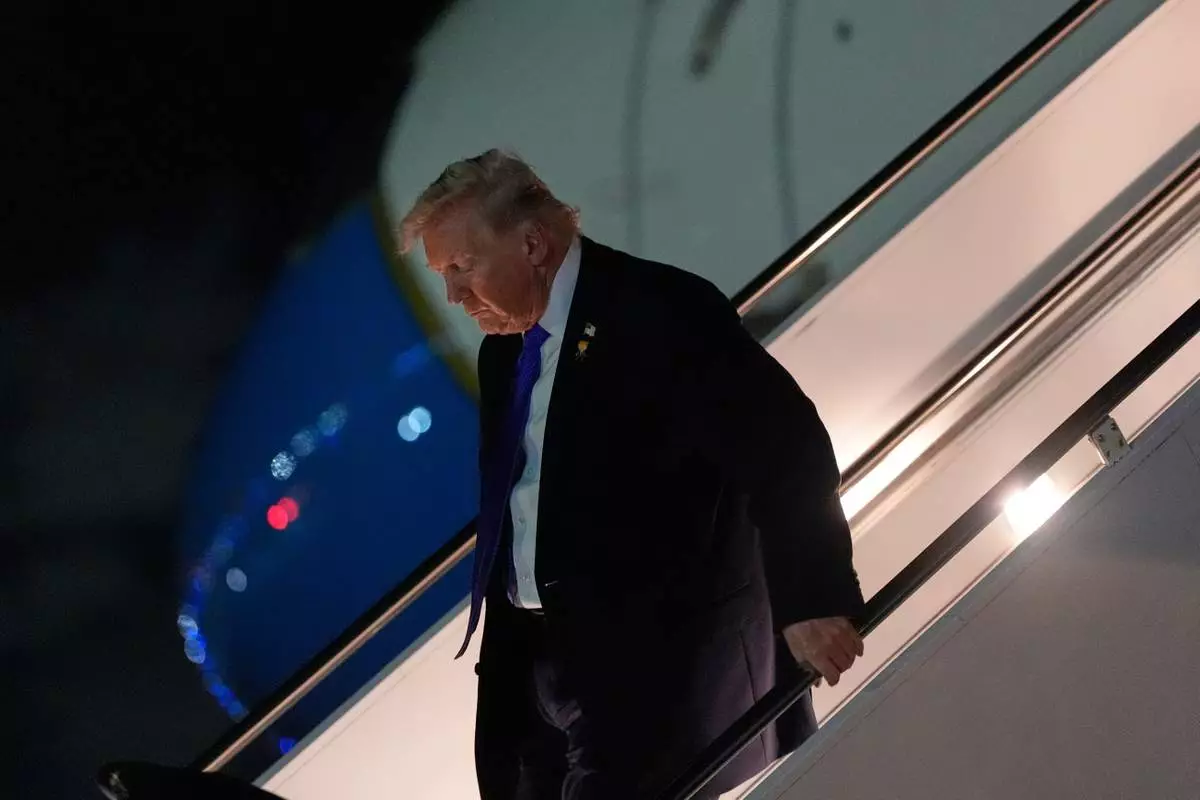
President Donald Trump arrives on Air Force One at Palm Beach International Airport, Friday, Jan. 9, 2025, in West Palm Beach, Fla. (AP Photo/Julia Demaree Nikhinson)

President Donald Trump arrives on Air Force One at Palm Beach International Airport, Friday, Jan. 9, 2025, in West Palm Beach, Fla. (AP Photo/Julia Demaree Nikhinson)

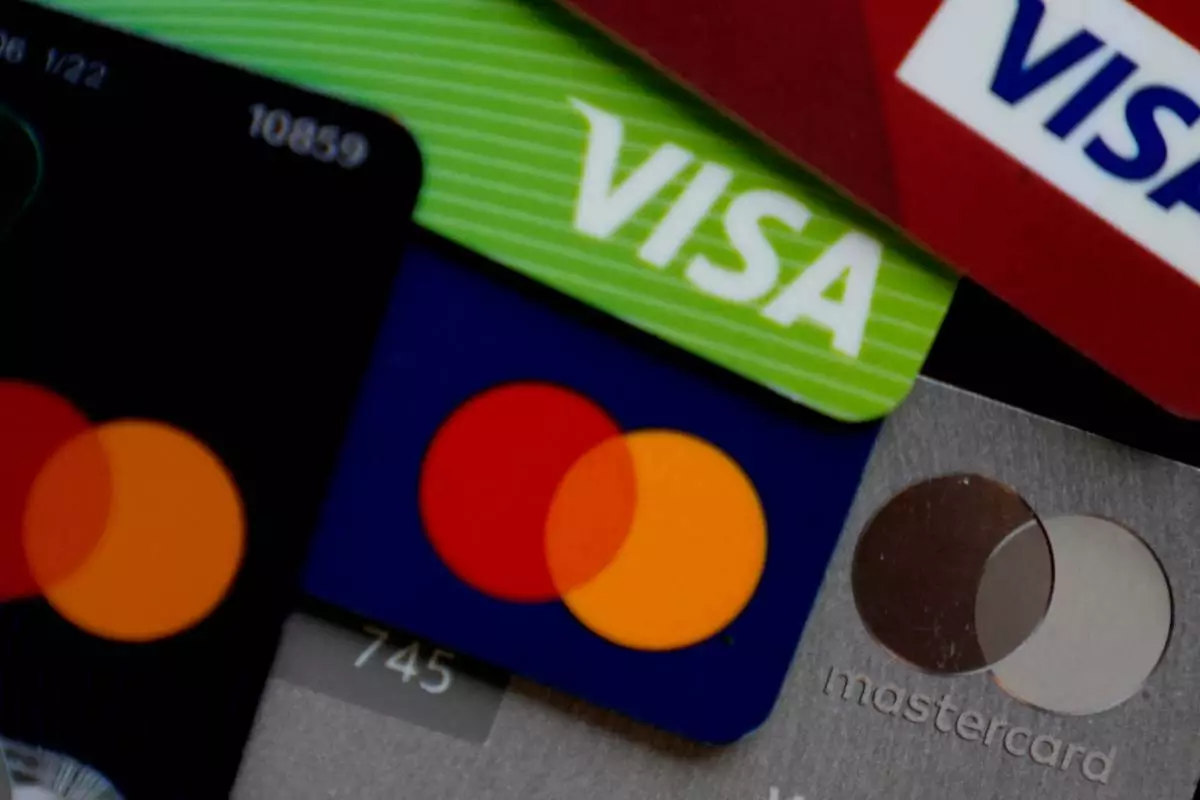
FILE - Visa and Mastercard credit cards are shown in Buffalo Grove, Ill., Feb. 8, 2024. (AP Photo/Nam Y. Huh, File)

FILE - Visa and Mastercard credit cards are shown in Buffalo Grove, Ill., Feb. 8, 2024. (AP Photo/Nam Y. Huh, File)

Recommended Articles