Chances are, if you’re reading this, you got some sleep last night. But are you feeling rested?
Experts say it's an important question to consider.
Most of us spend a third of our lives sleeping, but you may need more or less than eight hours a night. The number of hours needed changes throughout your life, with babies and kids needing more sleep and people 65 and older able to function on slightly less than seven to nine hours.
Here’s what sleep scientists and doctors say about how much you really need — and whether your gender plays a role.
Sleep is still a mystery, despite how critical it is for our health.
“The reasons aren’t entirely clear, but it’s an essential thing that we all do,” said Dr. Rafael Pelayo, a sleep specialist at Stanford University. “Something remarkable happens when you sleep. It’s the most natural form of self-care that we have.”
Most of the population gets between seven to nine hours — and that particular category has the lowest association with health problems, said Molly Atwood, a behavioral sleep medicine clinician at Johns Hopkins.
Once people either dip into less than six hours of sleep or get more than nine hours on average, the risk of health problems inches up, Atwood said, but everybody is different.
When you’re trying to figure out how much sleep you need, it’s important to think about the quality of it, Pelayo said: “What you really want to do is wake up feeling refreshed — that’s what it’s about.”
“If somebody tells me that they sleep many hours but they wake up tired, something is wrong," Pelayo said. "You shouldn’t leave your favorite restaurant feeling hungry.”
The amount of sleep we need changes throughout our lives. Newborns need the most — somewhere between 14 to 17 hours.
“Definitely when we’re babies and children, because we are growing so rapidly, we do need a lot more sleep,” Atwood said.
The National Sleep Foundation recommends most adults between 26 and 64 get between seven to nine hours of sleep. People who are 65 and older can get slightly less, and young adults between ages 16 and 25 can get slightly more.
Humans cycle through sleep stages roughly every 90 minutes. In the first portion of the night, Atwood said that more of the cycle is slow wave sleep, or deep sleep, which is essential to repairing and restoring the body. It’s also when “growth hormone” is released.
In the latter hours of the night, more of the sleep cycle is spent in rapid-eye movement sleep, or dream sleep, which is important for learning and memory consolidation, or the process in which short-term memory gets turned into long-term memory.
Kids get more “deep sleep,” with about 50% of the night in that realm, she said. That drops at adolescence, Atwood said, because our body doesn’t need the same kind of repair and restoration.
Something else interesting happens around puberty: Gender-based differences in sleep start to crop up.
Research doesn’t show that women need more sleep — but women do get slightly more sleep on average than men, Atwood said.
It starts at a young age. Though they have the same sleep needs, teenage girls seem to get less sleep than teenage boys, Pelayo said. Additionally, teenage girls tend to complain of insomnia more frequently.
When women become first-time mothers, they often care for newborns throughout the night more frequently, which means less sleep, said Allison Harvey, a clinical psychologist and professor who studies sleep at UC Berkeley.
Hormones may also impact women's sleep quantity and quality during pregnancy and menopause.
“With menopause in particular, women can develop deterioration in their sleep with an increased number and duration of nighttime awakenings,” said Dr. Mithri Junna, a Mayo Clinic neurologist who specializes in sleep.
Atwood said women may also need more sleep right before their menstrual cycle.
“There are definitely times that your body’s telling you that you need more sleep,” she said. “It’s important to listen.”
You'll know if you’re not getting enough sleep if you're feeling grumpy, irritable and inattentive. Long-term, those minor symptoms can become serious problems — even deadly.
“If you’re not getting enough sleep or you have untreated insomnia or sleep apnea, your risk of depression increases,” Atwood said. “Your risk of cardiovascular issues like high blood pressure, risk of heart attack and stroke increases. Your immune system is compromised. You’re at greater risk for Alzheimer’s.”
If you’re getting the recommended amount of sleep every night but still waking up feeling tired, you might consider going to your primary care physician. They can rule out other health conditions that may affect your sleep, Atwood said. But if problems persist, seeking out a sleep specialist could be helpful.
The Associated Press Health and Science Department receives support from the Howard Hughes Medical Institute’s Science and Educational Media Group and the Robert Wood Johnson Foundation. The AP is solely responsible for all content.
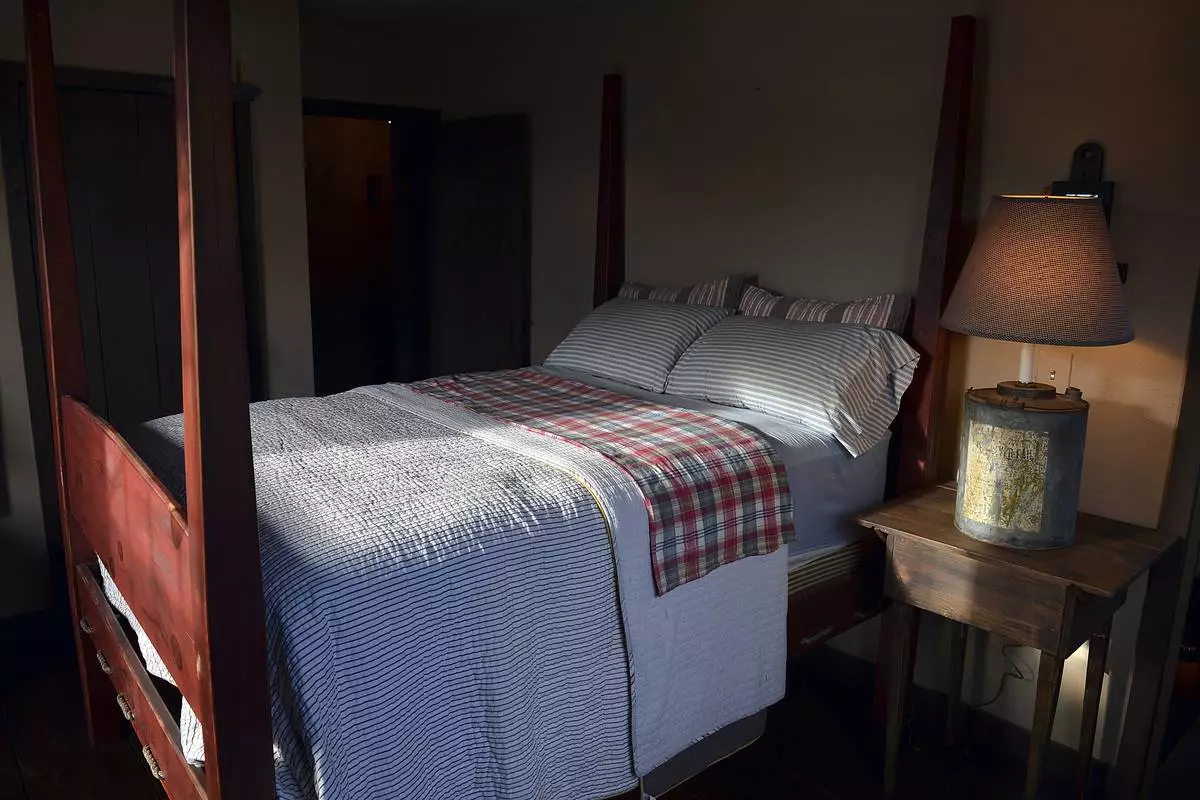
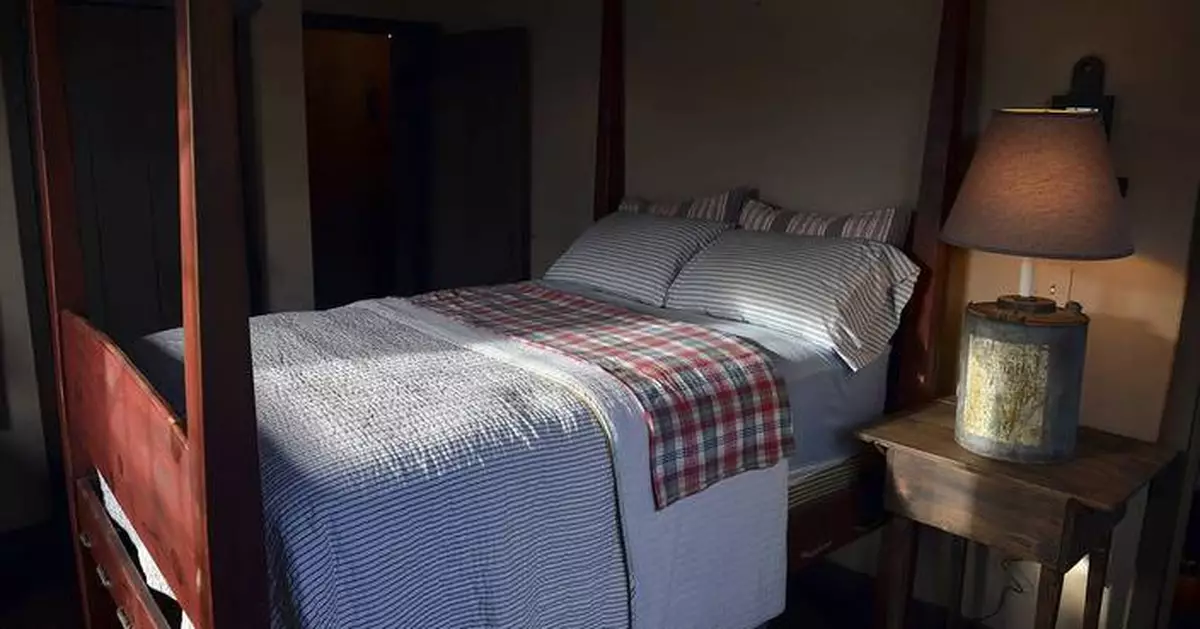
FILE - A shaft of light shines into a bedroom in Belle, W.Va., on Nov. 11, 2013. (Craig Cunningham/The Daily Mail via AP, File)
NEW YORK (AP) — Reviving a campaign pledge, President Donald Trump wants a one-year, 10% cap on credit card interest rates, a move that could save Americans tens of billions of dollars but drew immediate opposition from an industry that has been in his corner.
Trump was not clear in his social media post Friday night whether a cap might take effect through executive action or legislation, though one Republican senator said he had spoken with the president and would work on a bill with his “full support.” Trump said he hoped it would be in place Jan. 20, one year after he took office.
Strong opposition is certain from Wall Street in addition to the credit card companies, which donated heavily to his 2024 campaign and have supported Trump's second-term agenda. Banks are making the argument that such a plan would most hurt poor people, at a time of economic concern, by curtailing or eliminating credit lines, driving them to high-cost alternatives like payday loans or pawnshops.
“We will no longer let the American Public be ripped off by Credit Card Companies that are charging Interest Rates of 20 to 30%,” Trump wrote on his Truth Social platform.
Researchers who studied Trump’s campaign pledge after it was first announced found that Americans would save roughly $100 billion in interest a year if credit card rates were capped at 10%. The same researchers found that while the credit card industry would take a major hit, it would still be profitable, although credit card rewards and other perks might be scaled back.
About 195 million people in the United States had credit cards in 2024 and were assessed $160 billion in interest charges, the Consumer Financial Protection Bureau says. Americans are now carrying more credit card debt than ever, to the tune of about $1.23 trillion, according to figures from the New York Federal Reserve for the third quarter last year.
Further, Americans are paying, on average, between 19.65% and 21.5% in interest on credit cards according to the Federal Reserve and other industry tracking sources. That has come down in the past year as the central bank lowered benchmark rates, but is near the highs since federal regulators started tracking credit card rates in the mid-1990s. That’s significantly higher than a decade ago, when the average credit card interest rate was roughly 12%.
The Republican administration has proved particularly friendly until now to the credit card industry.
Capital One got little resistance from the White House when it finalized its purchase and merger with Discover Financial in early 2025, a deal that created the nation’s largest credit card company. The Consumer Financial Protection Bureau, which is largely tasked with going after credit card companies for alleged wrongdoing, has been largely nonfunctional since Trump took office.
In a joint statement, the banking industry was opposed to Trump's proposal.
“If enacted, this cap would only drive consumers toward less regulated, more costly alternatives," the American Bankers Association and allied groups said.
Bank lobbyists have long argued that lowering interest rates on their credit card products would require the banks to lend less to high-risk borrowers. When Congress enacted a cap on the fee that stores pay large banks when customers use a debit card, banks responded by removing all rewards and perks from those cards. Debit card rewards only recently have trickled back into consumers' hands. For example, United Airlines now has a debit card that gives miles with purchases.
The U.S. already places interest rate caps on some financial products and for some demographics. The Military Lending Act makes it illegal to charge active-duty service members more than 36% for any financial product. The national regulator for credit unions has capped interest rates on credit union credit cards at 18%.
Credit card companies earn three streams of revenue from their products: fees charged to merchants, fees charged to customers and the interest charged on balances. The argument from some researchers and left-leaning policymakers is that the banks earn enough revenue from merchants to keep them profitable if interest rates were capped.
"A 10% credit card interest cap would save Americans $100 billion a year without causing massive account closures, as banks claim. That’s because the few large banks that dominate the credit card market are making absolutely massive profits on customers at all income levels," said Brian Shearer, director of competition and regulatory policy at the Vanderbilt Policy Accelerator, who wrote the research on the industry's impact of Trump's proposal last year.
There are some historic examples that interest rate caps do cut off the less creditworthy to financial products because banks are not able to price risk correctly. Arkansas has a strictly enforced interest rate cap of 17% and evidence points to the poor and less creditworthy being cut out of consumer credit markets in the state. Shearer's research showed that an interest rate cap of 10% would likely result in banks lending less to those with credit scores below 600.
The White House did not respond to questions about how the president seeks to cap the rate or whether he has spoken with credit card companies about the idea.
Sen. Roger Marshall, R-Kan., who said he talked with Trump on Friday night, said the effort is meant to “lower costs for American families and to reign in greedy credit card companies who have been ripping off hardworking Americans for too long."
Legislation in both the House and the Senate would do what Trump is seeking.
Sens. Bernie Sanders, I-Vt., and Josh Hawley, R-Mo., released a plan in February that would immediately cap interest rates at 10% for five years, hoping to use Trump’s campaign promise to build momentum for their measure.
Hours before Trump's post, Sanders said that the president, rather than working to cap interest rates, had taken steps to deregulate big banks that allowed them to charge much higher credit card fees.
Reps. Alexandria Ocasio-Cortez, D-N.Y., and Anna Paulina Luna, R-Fla., have proposed similar legislation. Ocasio-Cortez is a frequent political target of Trump, while Luna is a close ally of the president.
Seung Min Kim reported from West Palm Beach, Fla.
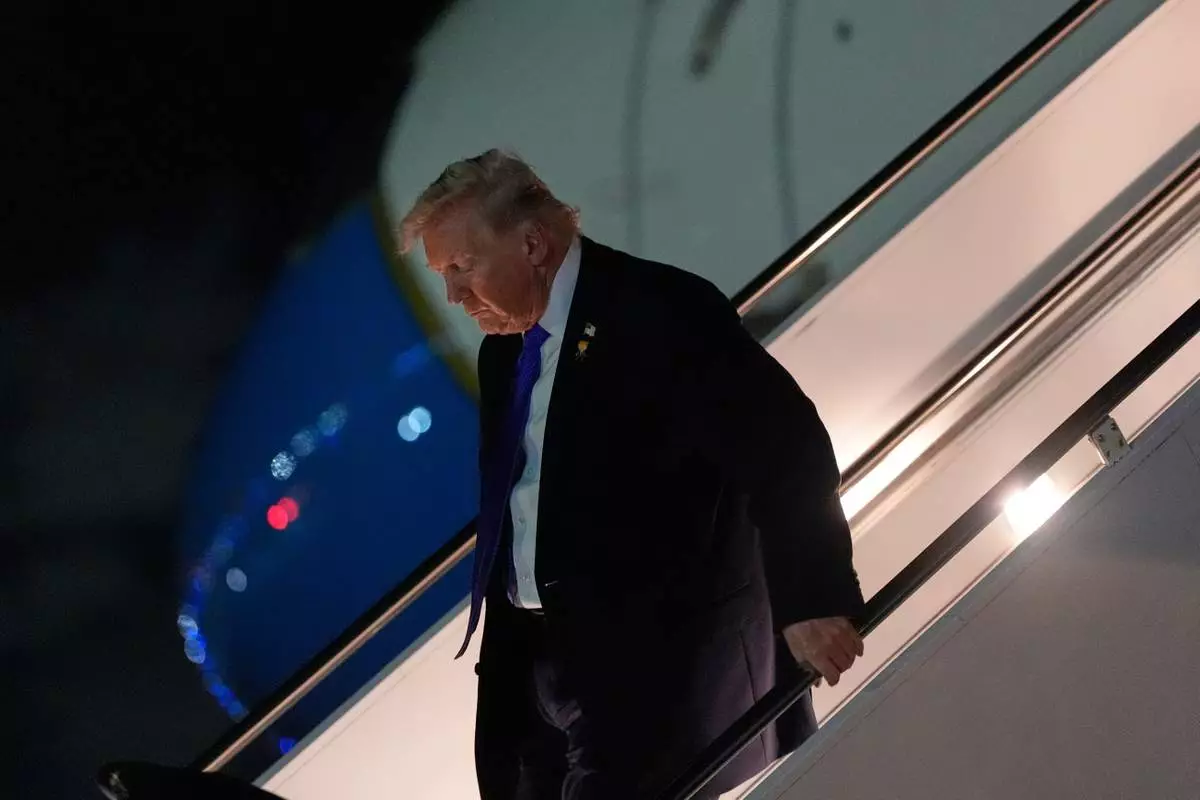
President Donald Trump arrives on Air Force One at Palm Beach International Airport, Friday, Jan. 9, 2025, in West Palm Beach, Fla. (AP Photo/Julia Demaree Nikhinson)
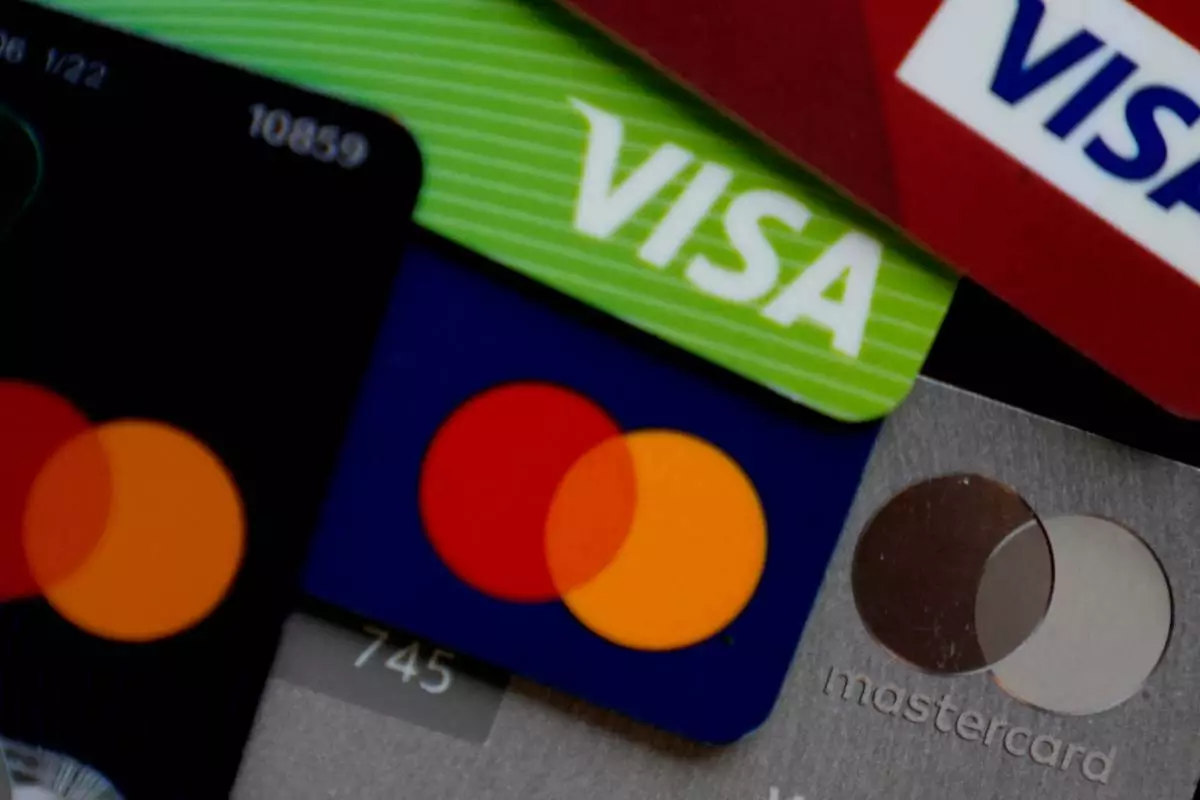
FILE - Visa and Mastercard credit cards are shown in Buffalo Grove, Ill., Feb. 8, 2024. (AP Photo/Nam Y. Huh, File)