Skip to Content Facebook Feature Image

Trump demands unprecedented control at Columbia, alarming scholars and speech groups

News

Trump demands unprecedented control at Columbia, alarming scholars and speech groups
News

News

Trump demands unprecedented control at Columbia, alarming scholars and speech groups

2025-03-15 09:24 Last Updated At:09:31

NEW YORK (AP) — The Trump administration brushed aside decades of precedent when it ordered Columbia University to oust the leadership of an academic department, a demand seen as a direct attack on academic freedom and a warning of what’s to come for other colleges facing federal scrutiny.

Federal officials told the university it must immediately place its Middle Eastern, South Asian, and African Studies Department under “academic receivership for a minimum of five years.” The demand was among several described as conditions for receiving federal funding, including $400 million already pulled over allegations of antisemitism.

More Images
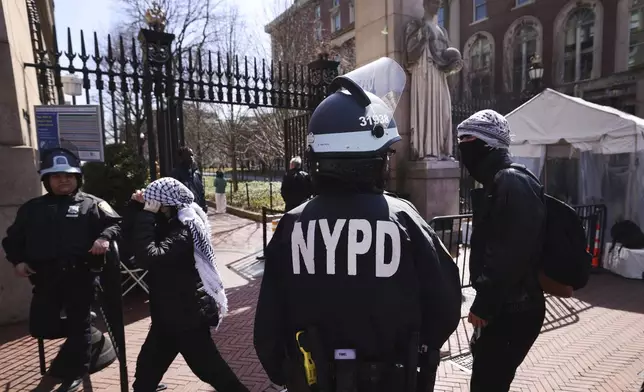
Police guard the entrance to Columbia University as protesters rally in support of detained Palestinian activist Mahmoud Khalil, Friday, March 14, 2025, in New York. (AP Photo/Jason DeCrow)
Police guard the entrance to Columbia University as protesters rally in support of detained Palestinian activist Mahmoud Khalil, Friday, March 14, 2025, in New York. (AP Photo/Jason DeCrow)

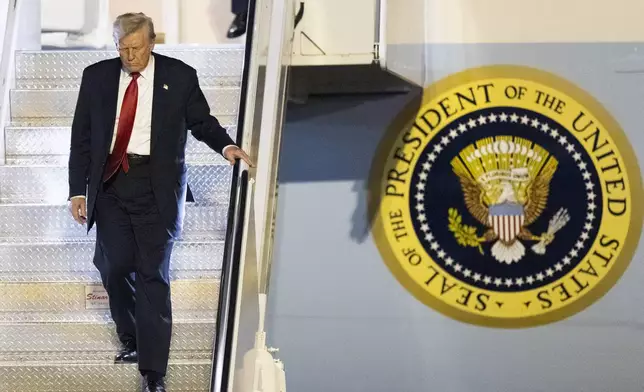
President Donald Trump arrives on Air Force One at Palm Beach International Airport, Friday, March 14, 2025, in West Palm Beach, Fla. (AP Photo/Manuel Balce Ceneta)
President Donald Trump arrives on Air Force One at Palm Beach International Airport, Friday, March 14, 2025, in West Palm Beach, Fla. (AP Photo/Manuel Balce Ceneta)

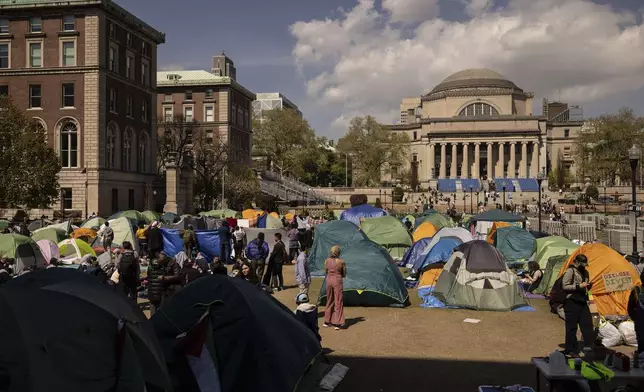
FILE - Pro-Palestinian demonstration encampment is seen at the Columbia University, April 26, 2024, in New York. (AP Photo/Yuki Iwamura, File)
FILE - Pro-Palestinian demonstration encampment is seen at the Columbia University, April 26, 2024, in New York. (AP Photo/Yuki Iwamura, File)

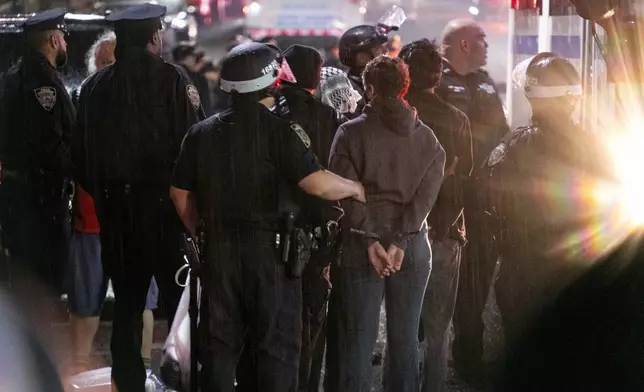
FILE - As light rain falls, New York City police officers take people into custody near the Columbia University campus in New York, Tuesday, April 30, 2024, after a building taken over by pro-Palestinian protesters earlier in the day was cleared, along with a tent encampment. (AP Photo/Craig Ruttle, File)
FILE - As light rain falls, New York City police officers take people into custody near the Columbia University campus in New York, Tuesday, April 30, 2024, after a building taken over by pro-Palestinian protesters earlier in the day was cleared, along with a tent encampment. (AP Photo/Craig Ruttle, File)

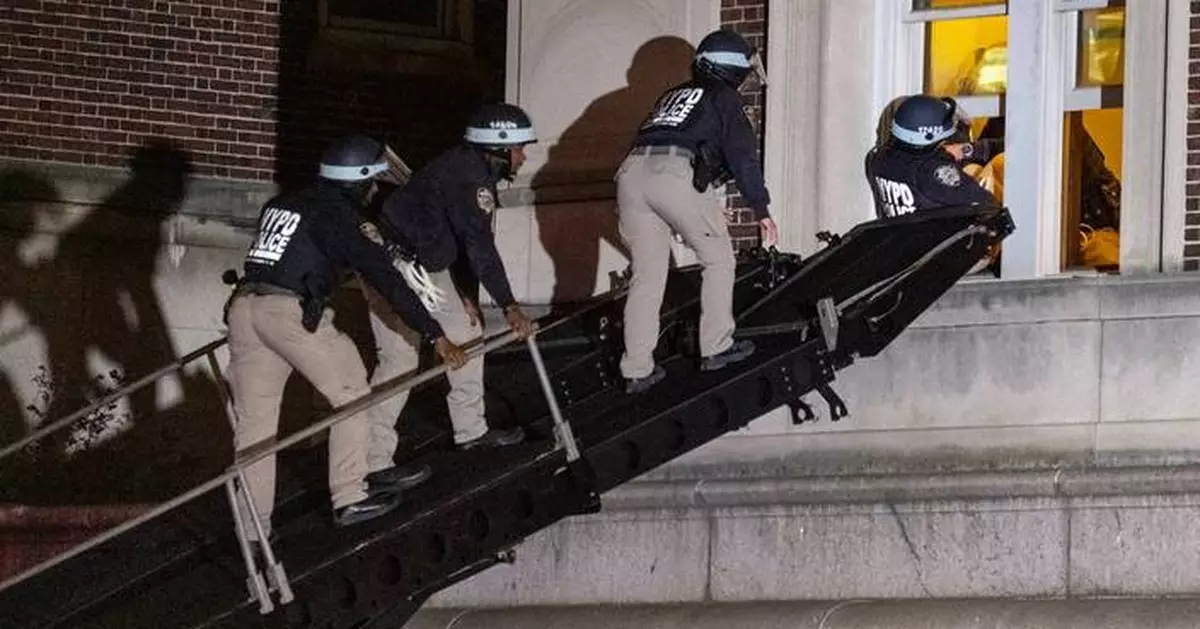
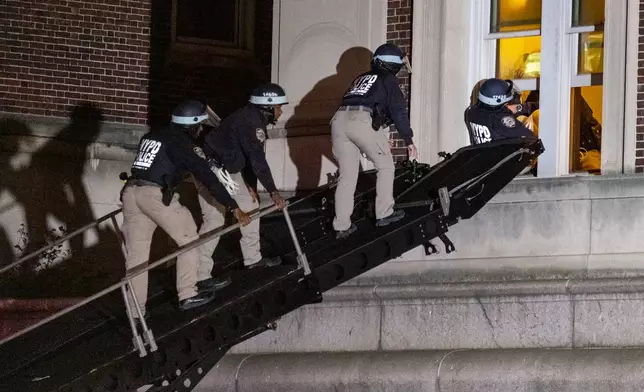
FILE - Using a tactical vehicle, New York City police enter an upper floor of Hamilton Hall on the Columbia University campus in New York, Tuesday, April 30, 2024, after the building was taken over by protesters earlier in the day. (AP Photo/Craig Ruttle, File)

FILE - Using a tactical vehicle, New York City police enter an upper floor of Hamilton Hall on the Columbia University campus in New York, Tuesday, April 30, 2024, after the building was taken over by protesters earlier in the day. (AP Photo/Craig Ruttle, File)

Across academia, it was seen as a stunning intrusion.

“It’s an escalation of a kind that is unheard of,” said Joan Scott, a historian and member of the academic freedom committee of the American Association of University Professors. “Even during the McCarthy period in the United States, this was not done.”

President Donald Trump has been threatening to withhold federal funding from colleges that do not get in line with his agenda, from transgender athletes’ participating in women’s sports to diversity, equity and inclusion programs. On Friday, his administration announced investigations into 52 universities as part of his DEI crackdown.

But he has held particular fervor for Columbia, the Ivy League campus where a massive pro-Palestinian protest movement began with a tent encampment last spring. Officials continued to ratchet up pressure on the school Friday, with Deputy Attorney General Todd Blanche saying the Justice Department is investigating whether it hid students sought by the U.S. over their roles in the demonstrations.

Trump and other officials have accused the protesters as being “pro-Hamas,” referring to the militant group that attacked Israel on Oct. 7, 2023.

The letter also demands that Columbia ban masks on campus meant to conceal the wearer’s identity “or intimidate others,” adopt a new definition of antisemitism, abolish its current process for disciplining students and deliver a plan to ”reform undergraduate admissions, international recruiting, and graduate admissions practices.”

The letter “obliterates the boundary between institutional autonomy and federal control,” said Ted Mitchell, president of the American Council on Education.

For generations, the federal government has given colleges space to manage their own affairs, within the constraints of federal law. The Supreme Court has long treated academic freedom as an extension of the First Amendment. Higher education leaders say autonomy is what sets America’s colleges apart and makes them a destination for top international scholars.

Trump has never hidden his contempt for the country’s most prestigious colleges, and he’s aggressively pressing his will. The federal government has almost never used its authority to cut off money from schools and colleges. But along with the initial action at Columbia, a Trump administration letter sent Monday to 60 colleges promised that penalty if they fail to make their campuses safer for Jewish students.

Still, few predicted the Trump administration would pursue the type of control it’s demanding at Columbia.

Putting an academic department under receivership is “beyond the authority of the federal government and would violate academic freedom and the First Amendment,” said Erwin Chemerinsky, a constitutional law scholar and dean of the Berkeley School of Law.

“It is chilling to see the government try to control universities in this way,” he said.

Academic receivership is a rarely used practice that puts an academic department under the oversight of a professor or administrator outside the department. It’s sometimes used to reset a department in financial or political turmoil.

The letter didn’t specify who should take control of the department at Columbia. Scott, of the AAUP, said the department appeared to be singled out because it was viewed as being overly critical of Israel.

“Receivership is a nice way of basically saying get rid of the department,” Scott said.

The Trump administration announced last week it was pulling $400 million in contracts from Columbia and reviewing another $5 billion in grants over complaints of antisemitism. The cuts have already affected research studies at Columbia’s medical center, which has long relied on grants from the National Institutes of Health.

U.S. government agencies said they made the cuts because of the school’s "continued inaction in the face of persistent harassment of Jewish students.” Some Jewish groups and the president's supporters have argued the government should be free to condition funding to colleges as it does other entities.

The university said it’s reviewing the Trump administration’s letter. “We are committed at all times to advancing our mission, supporting our students, and addressing all forms of discrimination and hatred on our campus,” it said in a statement.

Meanwhile, it’s leaving college leaders across the U.S. on edge. Mitchell, of the American Council on Education, said college presidents he spoke with were aghast at the letter.

“It doesn’t matter whether they’re in red states or blue states or whether they’re religious institutions or sectarian institutions. This is not the government’s role,” he said.

The letter was condemned by some faculty members and free speech groups.

“Half of this stuff you can’t just do and the other half is insane,” said Joseph Howley, a Columbia professor of classics. “If the federal government can show up and demand a university department be shut down or restructured, then we don’t have universities in this country.”

The Foundation for Individual Rights and Expression called it “a blueprint to supercharge censorship” at colleges.

Binkley reported from Washington, D.C.

The Associated Press’ education coverage receives financial support from multiple private foundations. The AP is solely responsible for all content. Find the AP’s standards for working with philanthropies, a list of supporters and funded coverage areas at AP.org.
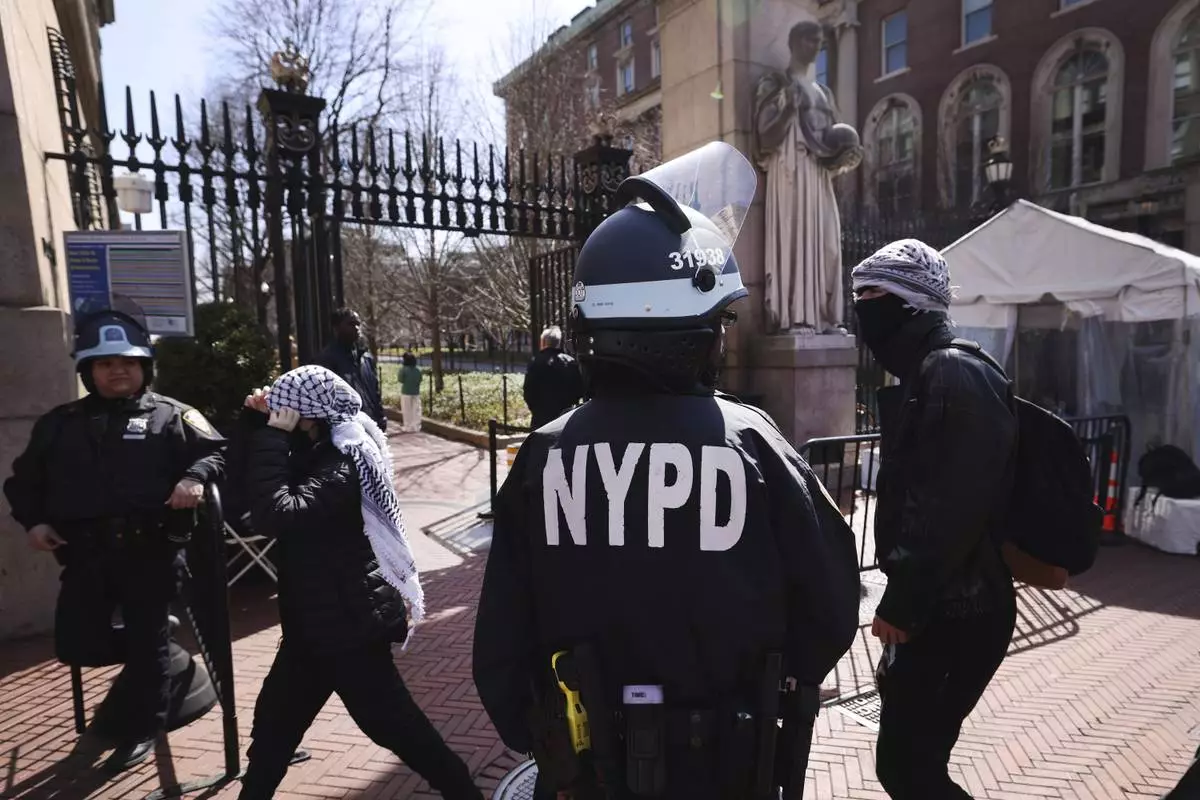
Police guard the entrance to Columbia University as protesters rally in support of detained Palestinian activist Mahmoud Khalil, Friday, March 14, 2025, in New York. (AP Photo/Jason DeCrow)
Police guard the entrance to Columbia University as protesters rally in support of detained Palestinian activist Mahmoud Khalil, Friday, March 14, 2025, in New York. (AP Photo/Jason DeCrow)

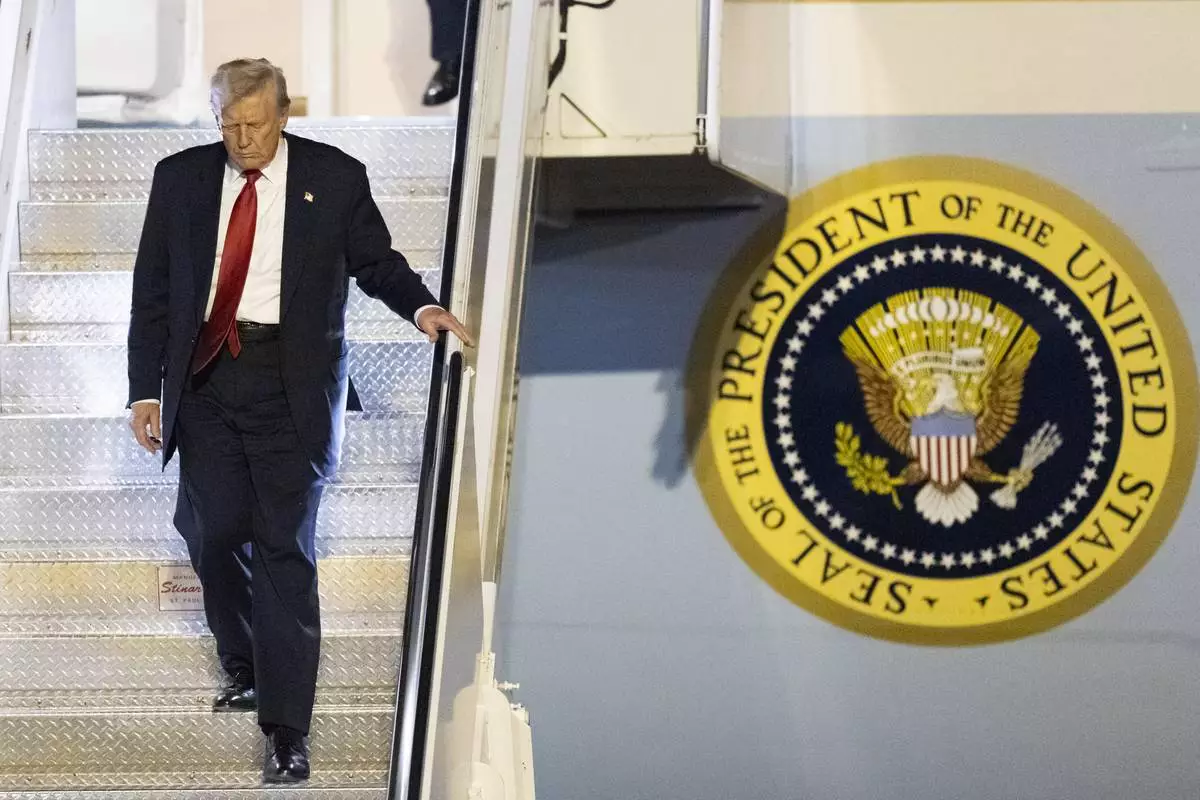
President Donald Trump arrives on Air Force One at Palm Beach International Airport, Friday, March 14, 2025, in West Palm Beach, Fla. (AP Photo/Manuel Balce Ceneta)
President Donald Trump arrives on Air Force One at Palm Beach International Airport, Friday, March 14, 2025, in West Palm Beach, Fla. (AP Photo/Manuel Balce Ceneta)

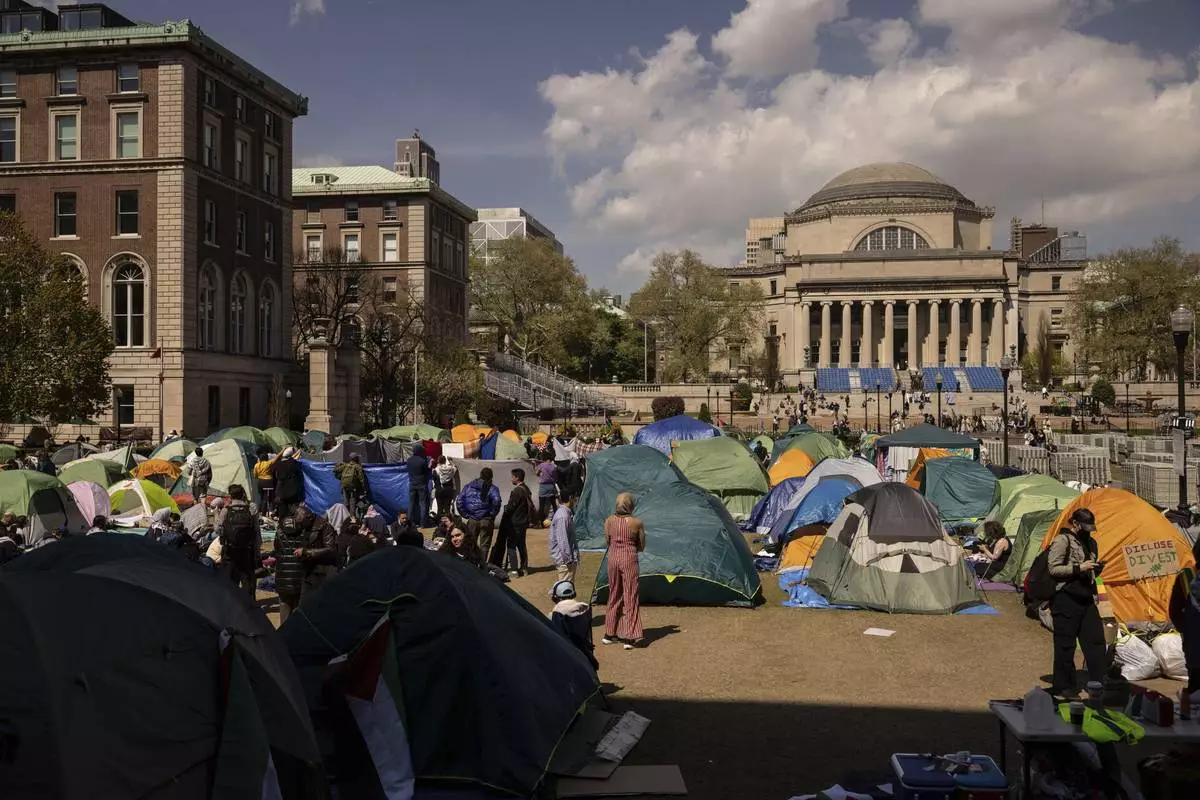
FILE - Pro-Palestinian demonstration encampment is seen at the Columbia University, April 26, 2024, in New York. (AP Photo/Yuki Iwamura, File)
FILE - Pro-Palestinian demonstration encampment is seen at the Columbia University, April 26, 2024, in New York. (AP Photo/Yuki Iwamura, File)

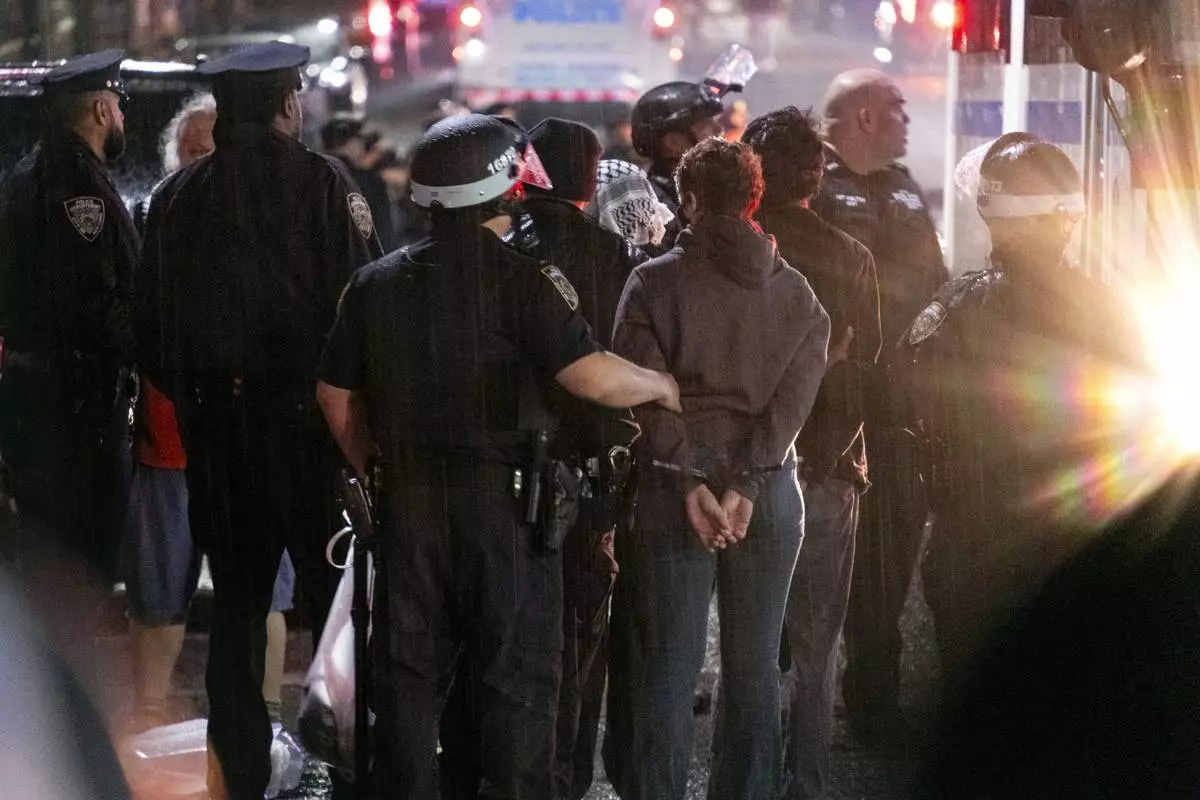
FILE - As light rain falls, New York City police officers take people into custody near the Columbia University campus in New York, Tuesday, April 30, 2024, after a building taken over by pro-Palestinian protesters earlier in the day was cleared, along with a tent encampment. (AP Photo/Craig Ruttle, File)
FILE - As light rain falls, New York City police officers take people into custody near the Columbia University campus in New York, Tuesday, April 30, 2024, after a building taken over by pro-Palestinian protesters earlier in the day was cleared, along with a tent encampment. (AP Photo/Craig Ruttle, File)

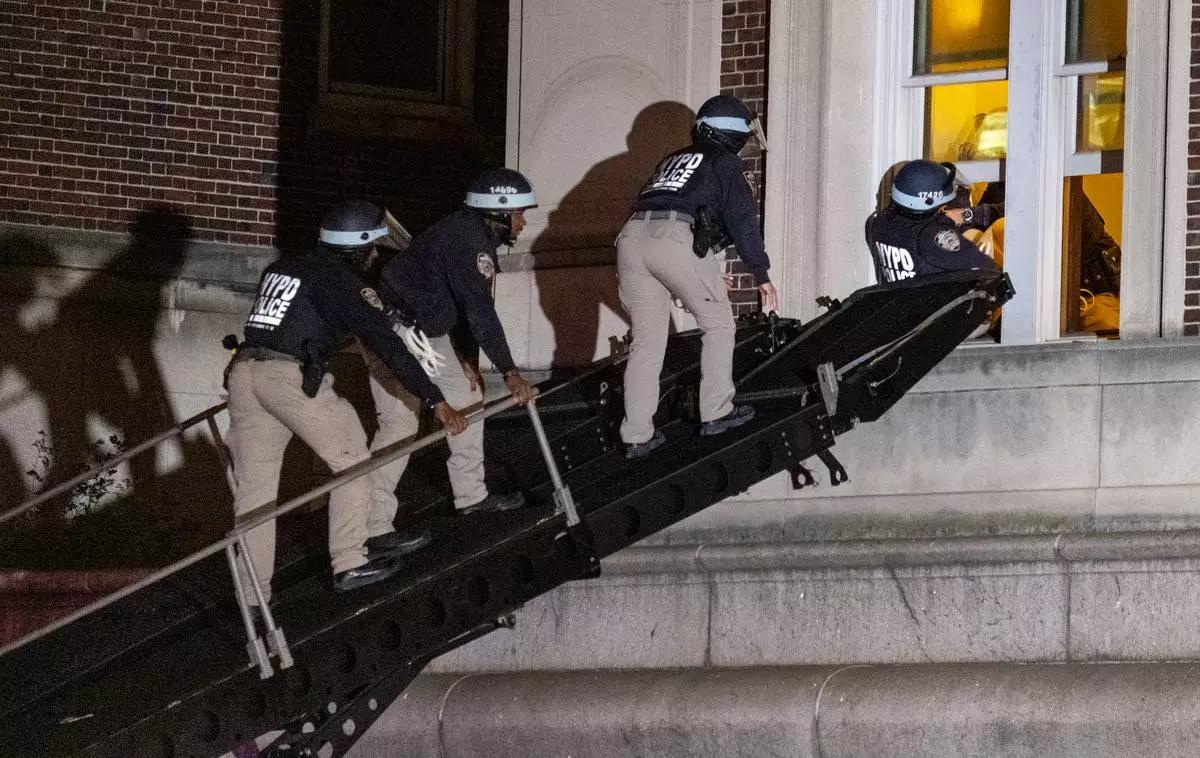
FILE - Using a tactical vehicle, New York City police enter an upper floor of Hamilton Hall on the Columbia University campus in New York, Tuesday, April 30, 2024, after the building was taken over by protesters earlier in the day. (AP Photo/Craig Ruttle, File)
FILE - Using a tactical vehicle, New York City police enter an upper floor of Hamilton Hall on the Columbia University campus in New York, Tuesday, April 30, 2024, after the building was taken over by protesters earlier in the day. (AP Photo/Craig Ruttle, File)
DUBAI, United Arab Emirates (AP) — U.S. President Donald Trump said Iran wants to negotiate with Washington after his threat to strike the Islamic Republic over its bloody crackdown on protesters, a move coming as activists said Monday the death toll in the nationwide demonstrations rose to at least 544.

Iran had no immediate reaction to the news, which came after the foreign minister of Oman — long an interlocutor between Washington and Tehran — traveled to Iran this weekend. It also remains unclear just what Iran could promise, particularly as Trump has set strict demands over its nuclear program and its ballistic missile arsenal, which Tehran insists is crucial for its national defense.

Meanwhile Monday, Iran called for pro-government demonstrators to head to the streets in support of the theocracy, a show of force after days of protests directly challenging the rule of 86-year-old Supreme Leader Ayatollah Ali Khamenei. Iranian state television aired chants from the crowd, who shouted “Death to America!” and “Death to Israel!”

Trump and his national security team have been weighing a range of potential responses against Iran including cyberattacks and direct strikes by the U.S. or Israel, according to two people familiar with internal White House discussions who were not authorized to comment publicly and spoke on condition of anonymity.

“The military is looking at it, and we’re looking at some very strong options,” Trump told reporters on Air Force One on Sunday night. Asked about Iran’s threats of retaliation, he said: “If they do that, we will hit them at levels that they’ve never been hit before.”

Trump said that his administration was in talks to set up a meeting with Tehran, but cautioned that he may have to act first as reports of the death toll in Iran mount and the government continues to arrest protesters.

“I think they’re tired of being beat up by the United States,” Trump said. “Iran wants to negotiate.”

He added: “The meeting is being set up, but we may have to act because of what’s happening before the meeting. But a meeting is being set up. Iran called, they want to negotiate.”

Iran through country's parliamentary speaker warned Sunday that the U.S. military and Israel would be “legitimate targets” if America uses force to protect demonstrators.

More than 10,600 people also have been detained over the two weeks of protests, said the U.S.-based Human Rights Activists News Agency, which has been accurate in previous unrest in recent years and gave the death toll. It relies on supporters in Iran crosschecking information. It said 496 of the dead were protesters and 48 were with security forces.

With the internet down in Iran and phone lines cut off, gauging the demonstrations from abroad has grown more difficult. The Associated Press has been unable to independently assess the toll. Iran’s government has not offered overall casualty figures.

Those abroad fear the information blackout is emboldening hard-liners within Iran’s security services to launch a bloody crackdown. Protesters flooded the streets in the country’s capital and its second-largest city on Saturday night into Sunday morning. Online videos purported to show more demonstrations Sunday night into Monday, with a Tehran official acknowledging them in state media.

In Tehran, a witness told the AP that the streets of the capital empty at the sunset call to prayers each night. By the Isha, or nighttime prayer, the streets are deserted.

Part of that stems from the fear of getting caught in the crackdown. Police sent the public a text message that warned: “Given the presence of terrorist groups and armed individuals in some gatherings last night and their plans to cause death, and the firm decision to not tolerate any appeasement and to deal decisively with the rioters, families are strongly advised to take care of their youth and teenagers.”

Another text, which claimed to come from the intelligence arm of the paramilitary Revolutionary Guard, also directly warned people not to take part in demonstrations.

“Dear parents, in view of the enemy’s plan to increase the level of naked violence and the decision to kill people, ... refrain from being on the streets and gathering in places involved in violence, and inform your children about the consequences of cooperating with terrorist mercenaries, which is an example of treason against the country,” the text warned.

The witness spoke to the AP on condition of anonymity due to the ongoing crackdown.

The demonstrations began Dec. 28 over the collapse of the Iranian rial currency, which trades at over 1.4 million to $1, as the country’s economy is squeezed by international sanctions in part levied over its nuclear program. The protests intensified and grew into calls directly challenging Iran’s theocracy.

Nikhinson reported from aboard Air Force One.

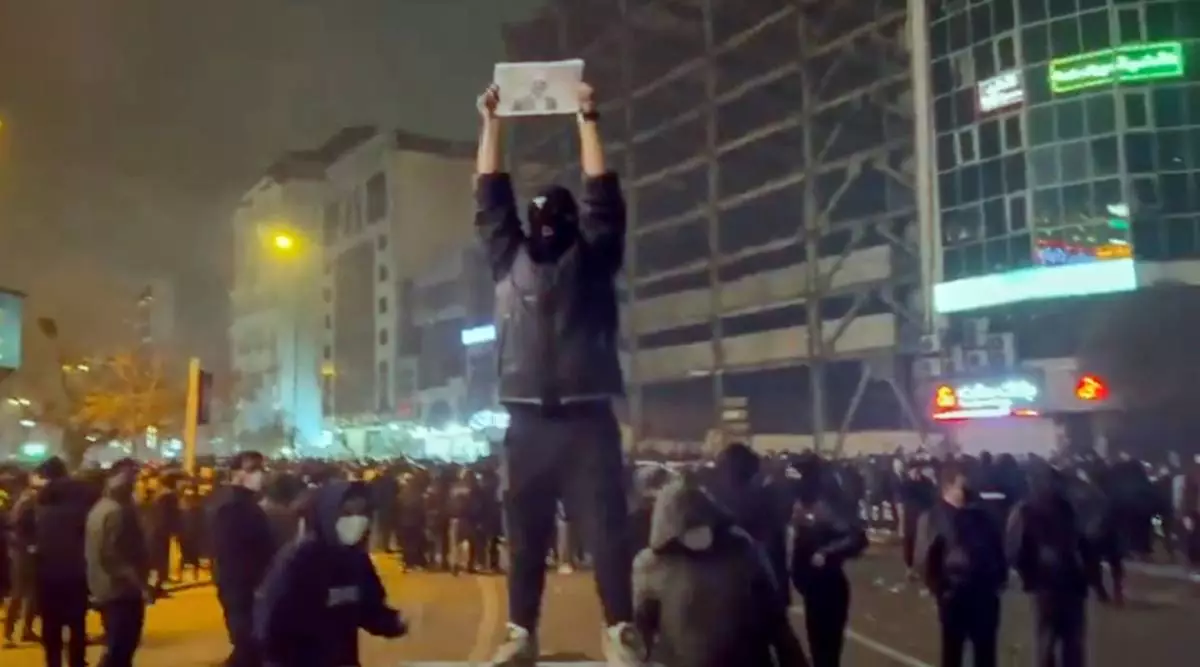
In this frame grab from video obtained by the AP outside Iran, a masked demonstrator holds a picture of Iran's Crown Prince Reza Pahlavi during a protest in Tehran, Iran, Friday, January. 9, 2026. (UGC via AP)

In this frame grab from video obtained by the AP outside Iran, a masked demonstrator holds a picture of Iran's Crown Prince Reza Pahlavi during a protest in Tehran, Iran, Friday, January. 9, 2026. (UGC via AP)

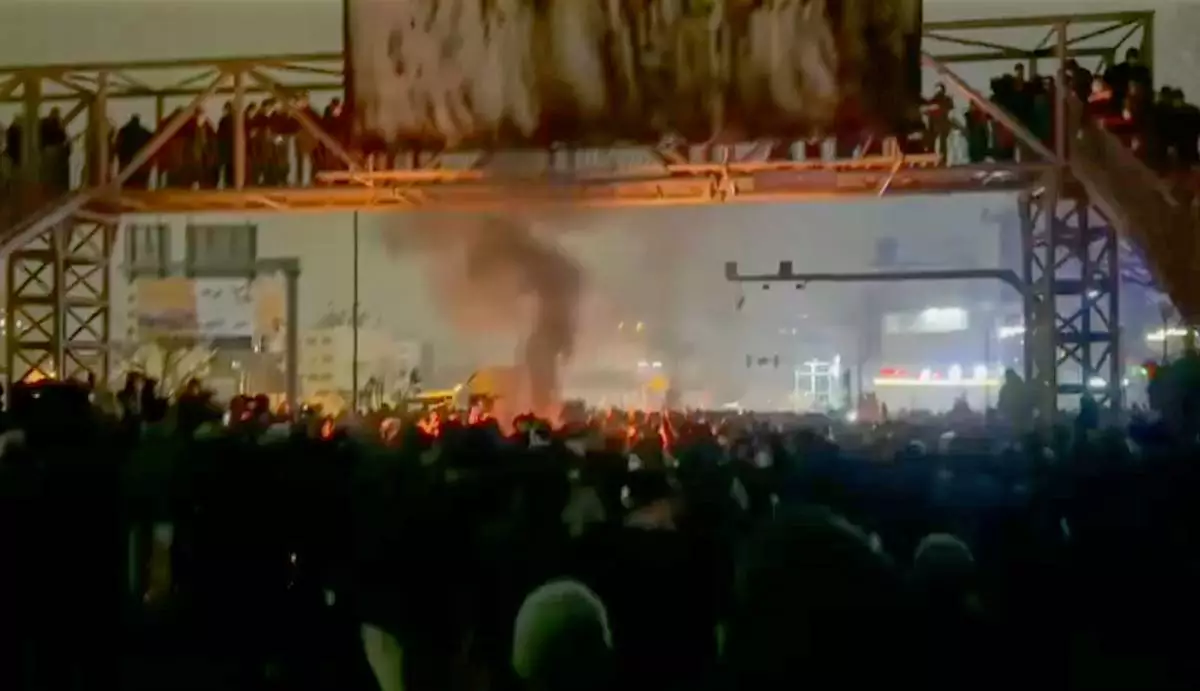
In this frame grab from footage circulating on social media from Iran shows protesters taking to the streets despite an intensifying crackdown as the Islamic Republic remains cut off from the rest of the world in Tehran, Iran, Friday, Jan. 9, 2026.(UGC via AP)

In this frame grab from footage circulating on social media from Iran shows protesters taking to the streets despite an intensifying crackdown as the Islamic Republic remains cut off from the rest of the world in Tehran, Iran, Friday, Jan. 9, 2026.(UGC via AP)

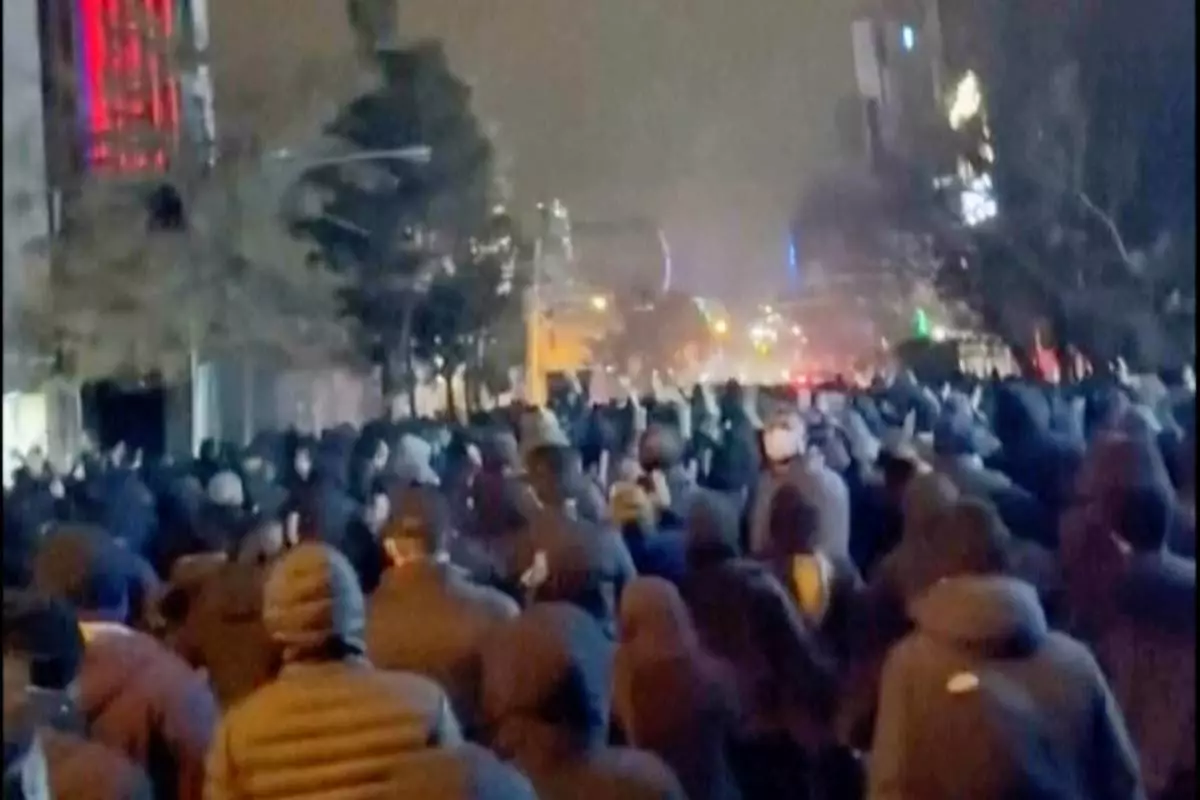
In this frame grab from footage circulating on social media from Iran showed protesters once again taking to the streets of Tehran despite an intensifying crackdown as the Islamic Republic remains cut off from the rest of the world in Tehran, Iran, Saturday Jan. 10, 2026. (UGC via AP)

In this frame grab from footage circulating on social media from Iran showed protesters once again taking to the streets of Tehran despite an intensifying crackdown as the Islamic Republic remains cut off from the rest of the world in Tehran, Iran, Saturday Jan. 10, 2026. (UGC via AP)

Recommended Articles