BAGHDAD (AP) — The head of the Islamic State in Iraq and Syria has been killed in Iraq in an operation by members of the Iraqi national intelligence service along with U.S.-led coalition forces, the Iraqi prime minister announced Friday.
“The Iraqis continue their impressive victories over the forces of darkness and terrorism,” Prime Minister Minister Mohammed Shia al-Sudani said in a statement posted on X, formerly known as Twitter.
Abdallah Maki Mosleh al-Rifai, or “Abu Khadija,” was “deputy caliph” of the militant group and as “one of the most dangerous terrorists in Iraq and the world," the statement said.
On his Truth Social platform Friday night, U.S. President Donald Trump said: “Today the fugitive leader of ISIS in Iraq was killed. He was relentlessly hunted down by our intrepid warfighters” in coordination with the Iraqi government and the Kurdish regional government.
“PEACE THROUGH STRENGTH!” Trump posted.
A security official said the operation was carried out by an airstrike in Anbar province, in western Iraq. A second official said the operation took place Thursday night but that al-Rifai's death was confirmed Friday. They spoke on condition of anonymity because they were not authorized to comment publicly.
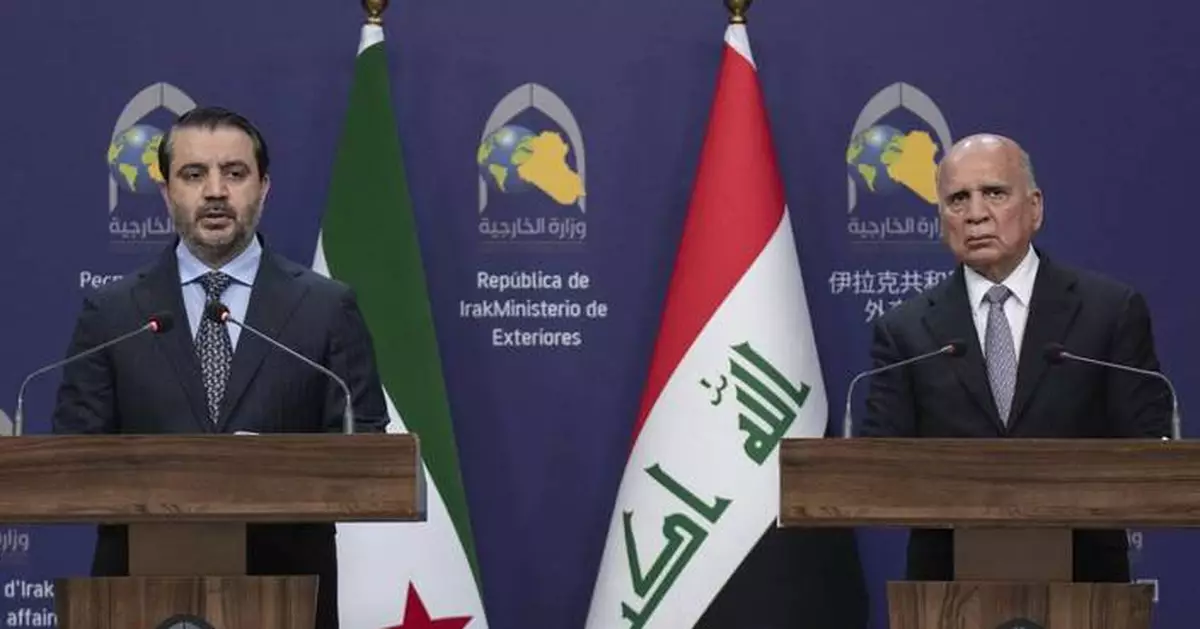
The announcement came on the same day as the first visit by Syria’s top diplomat to Iraq, during which the two countries pledged to work together to combat IS.
Iraqi Foreign Minister Fouad Hussein said at a news conference that “there are common challenges facing Syrian and Iraqi society, and especially the terrorists of IS.” He said the officials had spoken “in detail about the movements of ISIS, whether on the Syrian-Iraqi border, inside Syria or inside Iraq” during the visit.
Hussein referred to an operations room formed by Syria, Iraq, Turkey, Jordan and Lebanon at a recent meeting in Amman to confront IS, and said it would soon begin work.
The relationship between Iraq and Syria is somewhat fraught after the fall of former Syrian President Bashar Assad. Al-Sudani came to power with the support of a coalition of Iran-backed factions, and Tehran was a major backer of Assad. The current interim president of Syria, Ahmad al-Sharaa, was previously known as Abu Mohammed al-Golani and fought as an al-Qaida militant in Iraq after the U.S. invasion of 2003, and later fought against Assad's government in Syria.
But Syrian interim Foreign Minister Asaad Hassan al-Shibani focused on the historic ties between the two countries.
“Throughout history, Baghdad and Damascus have been the capitals of the Arab and Islamic world, sharing knowledge, culture and economy,” he said.
Strengthening the partnership between the two countries “will not only benefit our peoples, but will also contribute to the stability of the region, making us less dependent on external powers and better able to determine our own destiny,” he said.
The operation and the visit come at a time when Iraqi officials are anxious about an IS resurgence in the wake of the fall of Assad in Syria.
While Syria’s new rulers - led by the Islamist former insurgent group Hayat Tahrir al-Sham - have pursued IS cells since taking power, some fear a breakdown in overall security that could allow the group to stage a resurgence.
The U.S. and Iraq announced an agreement last year to wind down the military mission in Iraq of an American-led coalition fighting the Islamic State group by September 2025, with U.S. forces departing some bases where they have stationed troops during a two-decade-long military presence in the country.
When the agreement was reached to end the coalition’s mission in Iraq, Iraqi political leaders said the threat of IS was under control and they no longer needed Washington’s help to beat back the remaining cells.
But the fall of Assad in December led some to reassess that stance, including members of the Coordination Framework, a coalition of mainly Shiite, Iran-allied political parties that brought current Iraqi Prime Minister Mohammad Shia al-Sudani to power in late 2022.
———-
Associated Press staff writer Abby Sewell in Beirut contributed to this report.
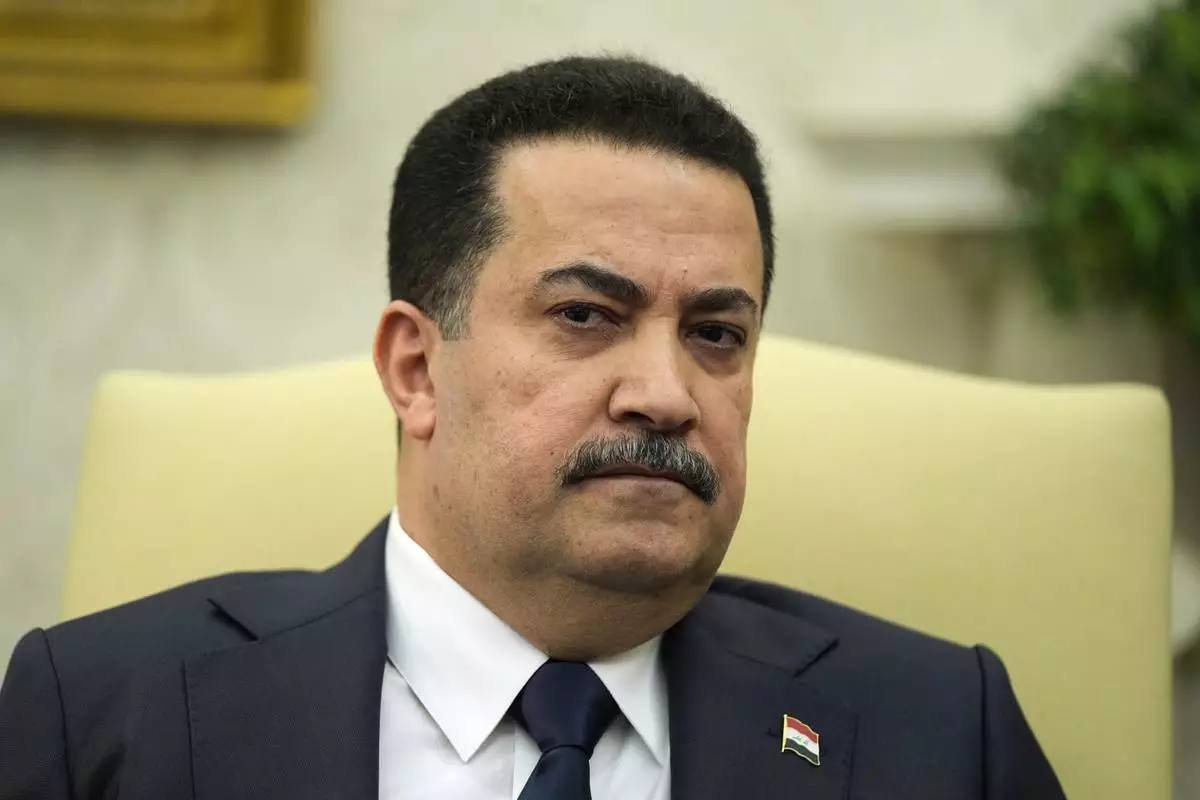
FILE - Iraq's Prime Minister Mohammed Shia al-Sudani listens during a meeting with President Joe Biden in the Oval Office of the White House, Monday, April 15, 2024, in Washington. (AP Photo/Alex Brandon, File)
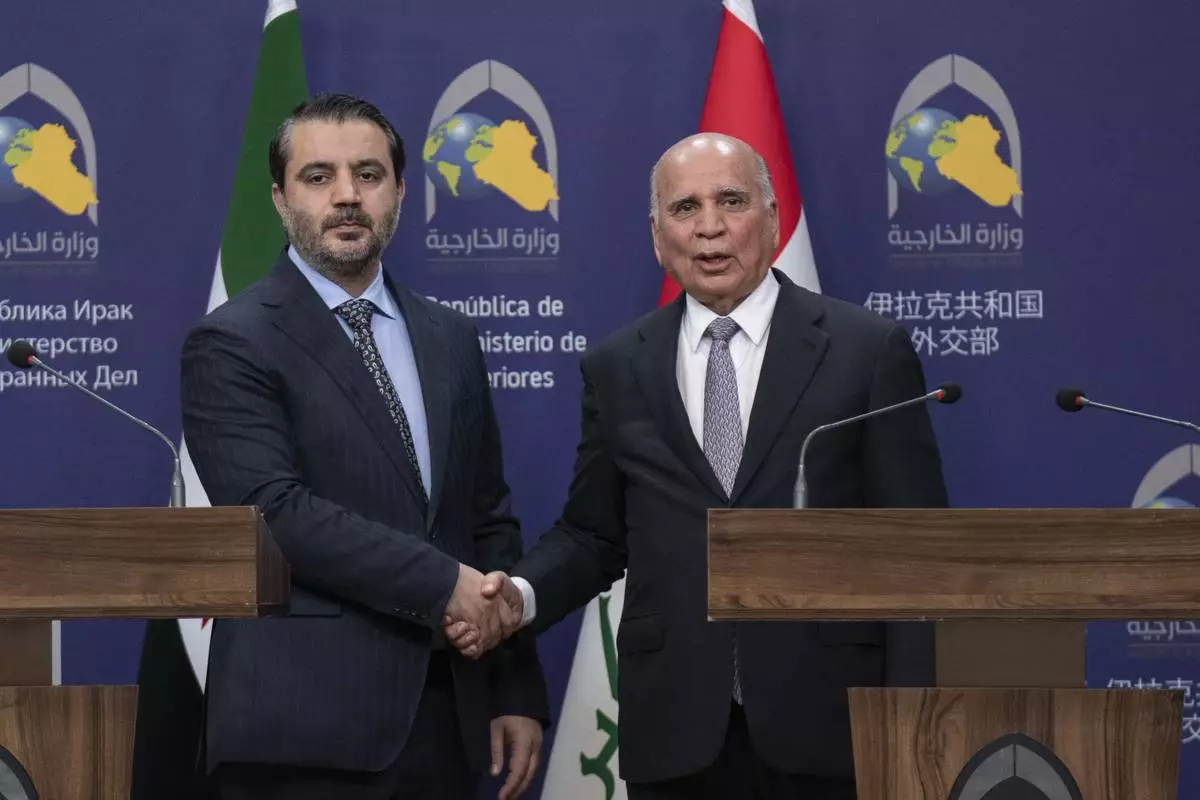
Iraqi Foreign Minister Fouad Hussein, right, shakes hands with Syrian Foreign Minister Asaad al-Shaybani, left, in Baghdad, Iraq, Friday, March.14, 2025. (AP Photo/Hadi Mizban)
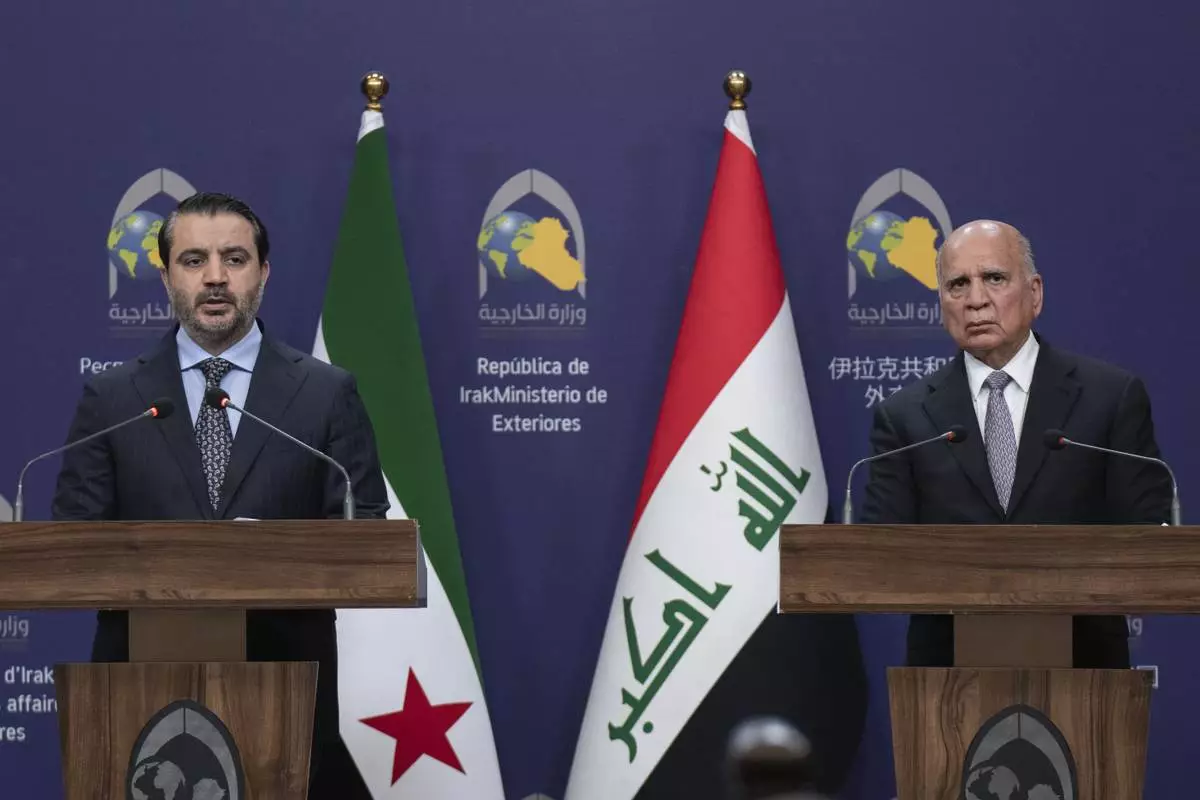
Syrian Foreign Minister Asaad al-Shaybani, left, speaks during a news conference with his Iraqi counterpart Fouad Hussein following their meeting, in Baghdad, Iraq, Friday, March.14, 2025. (AP Photo/Hadi Mizban)
NEW YORK (AP) — Thousands of nurses in three hospital systems in New York City went on strike Monday after negotiations through the weekend failed to yield breakthroughs in their contract disputes.
The strike was taking place at The Mount Sinai Hospital and two of its satellite campuses, with picket lines forming. The other affected hospitals are NewYork-Presbyterian and Montefiore Medical Center in the Bronx.
About 15,000 nurses are involved in the strike, according to New York State Nurses Association.
“After months of bargaining, management refused to make meaningful progress on core issues that nurses have been fighting for: safe staffing for patients, healthcare benefits for nurses, and workplace violence protections,” the union said in a statement issued Monday. “Management at the richest hospitals in New York City are threatening to discontinue or radically cut nurses’ health benefits.”
The strike, which comes during a severe flu season, could potentially force the hospitals to transfer patients, cancel procedures or divert ambulances. It could also put a strain on city hospitals not involved in the contract dispute, as patients avoid the medical centers hit by the strike.
The hospitals involved have been hiring temporary nurses to try and fill the labor gap during the walkout, and said in a statement during negotiations that they would “do whatever is necessary to minimize disruptions.” Montefiore posted a message assuring patients that appointments would be kept.
“NYSNA’s leaders continue to double down on their $3.6 billion in reckless demands, including nearly 40% wage increases, and their troubling proposals like demanding that a nurse not be terminated if found to be compromised by drugs or alcohol while on the job," Montefiore spokesperson Joe Solmonese said Monday after the strike had started. "We remain resolute in our commitment to providing safe and seamless care, regardless of how long the strike may last.”
New York-Presbyterian accused the union of staging a strike to “create disruption,” but said in a statement that it has taken steps to ensure patients receive the care they need.
"We’re ready to keep negotiating a fair and reasonable contract that reflects our respect for our nurses and the critical role they play, and also recognizes the challenging realities of today’s healthcare environment,” the statement said.
The work stoppage is occurring at multiple hospitals simultaneously, but each medical center is negotiating with the union independently. Several other hospitals across the city and in its suburbs reached deals in recent days to avert a possible strike.
The nurses’ demands vary by hospital, but the major issues include staffing levels and workplace safety. The union says hospitals have given nurses unmanageable workloads.
Nurses also want better security measures in the workplace, citing incidents like a an incident last week, when a man with a sharp object barricaded himself in a Brooklyn hospital room and was then killed by police.
The union also wants limitations on hospitals’ use of artificial intelligence.
The nonprofit hospitals involved in the negotiations say they’ve been working to improve staffing levels, but say the union’s demands overall are too costly.
Nurses voted to authorize the strike last month.
Both New York Gov. Kathy Hochul and Mayor Zohran Mamdani had expressed concern about the possibility of the strike. As the strike deadline neared, Mamdani urged both sides to keep negotiating and reach a deal that “both honors our nurses and keeps our hospitals open.”
“Our nurses kept this city alive through its hardest moments. Their value is not negotiable,” Mamdani said.
State Attorney General Letitia James voiced similar support, saying "nurses put their lives on the line every day to keep New Yorkers healthy. They should never be forced to choose between their own safety, their patients’ well-being, and a fair contract.”
The last major nursing strike in the city was only three years ago, in 2023. That work stoppage, at Mount Sinai and Montefiore, was short, lasting three days. It resulted in a deal raising pay 19% over three years at those hospitals.
It also led to promised staffing improvements, though the union and hospitals now disagree about how much progress has been made, or whether the hospitals are retreating from staffing guarantees.
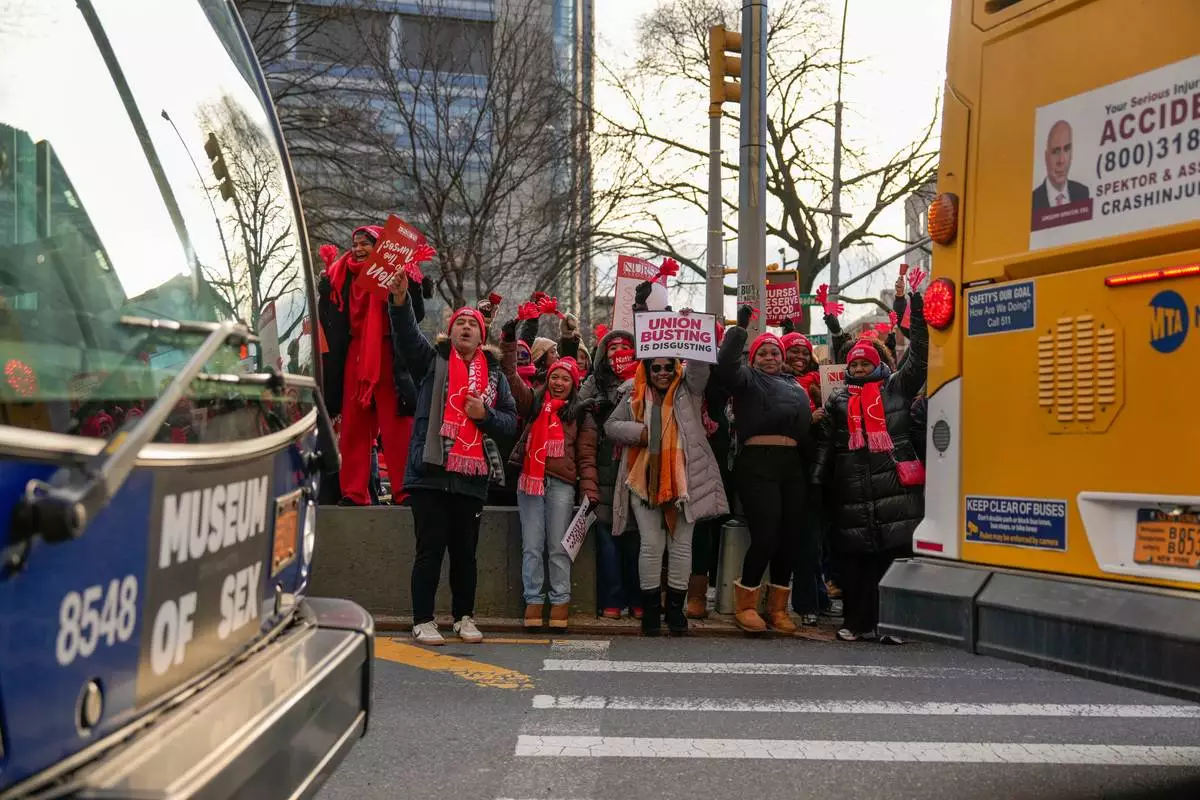
Nurses strike outside New York-Presbyterian Hospital, Monday, Jan. 12, 2026, in New York. (AP Photo/Yuki Iwamura)
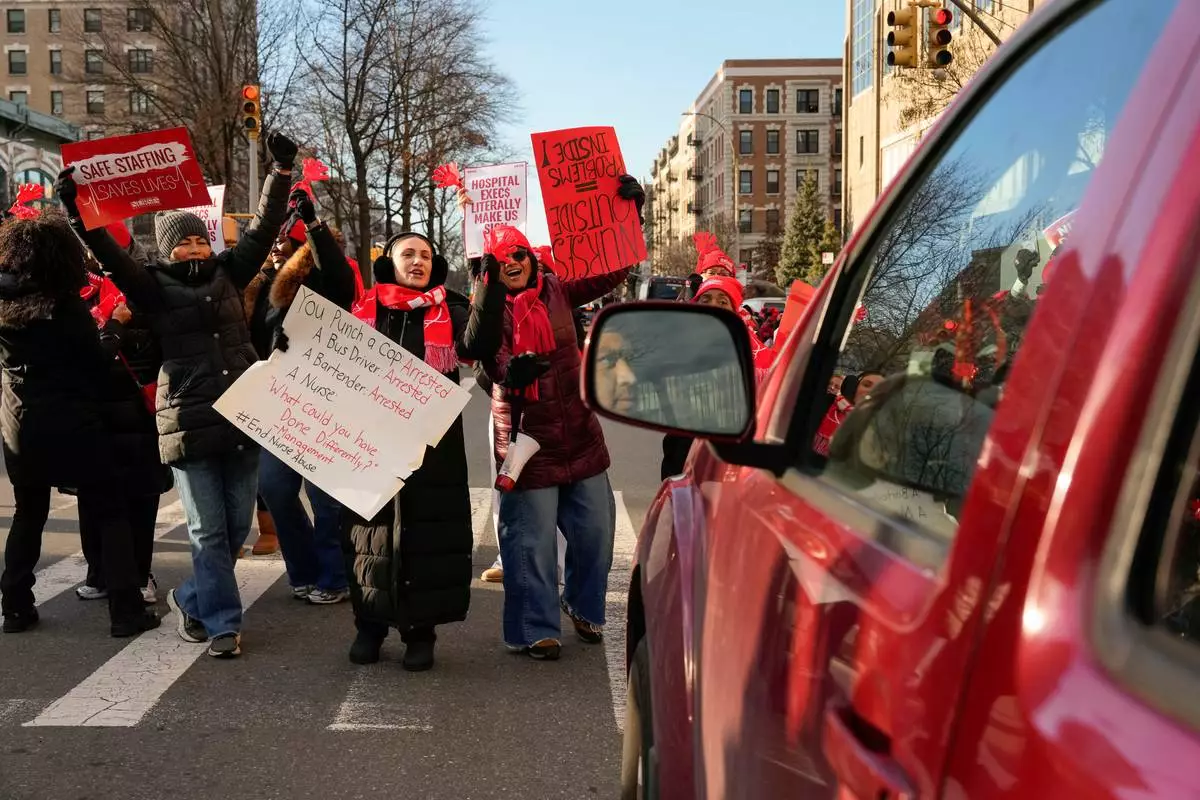
Nurses strike outside New York-Presbyterian Hospital, Monday, Jan. 12, 2026, in New York. (AP Photo/Yuki Iwamura)
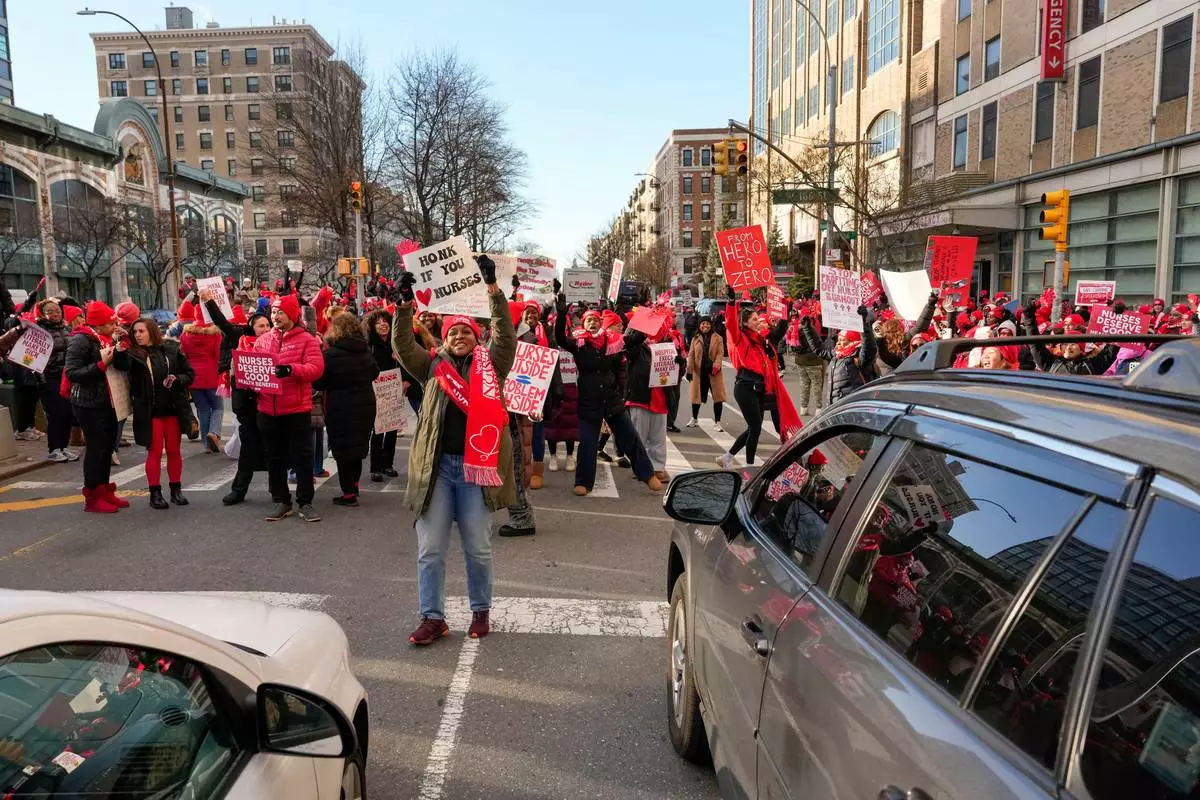
Nurses strike outside New York-Presbyterian Hospital, Monday, Jan. 12, 2026, in New York. (AP Photo/Yuki Iwamura)
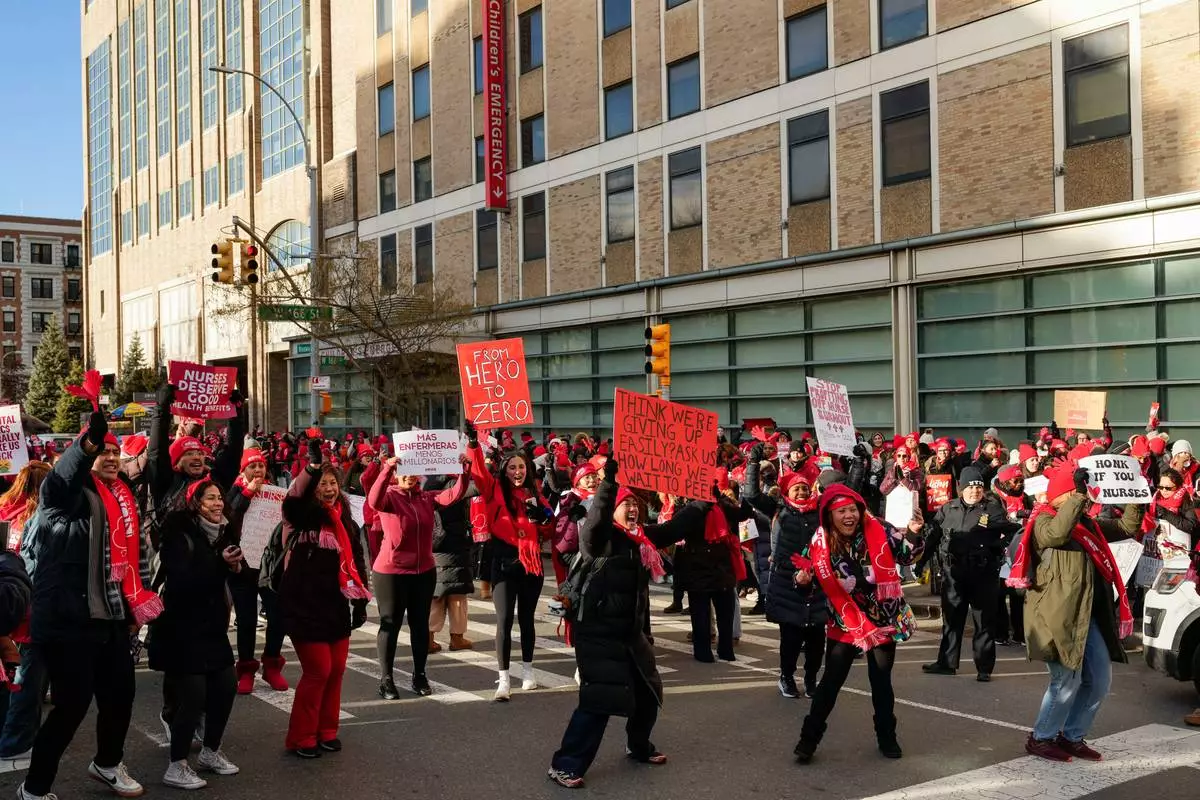
Nurses strike outside New York-Presbyterian Hospital, Monday, Jan. 12, 2026, in New York. (AP Photo/Yuki Iwamura)
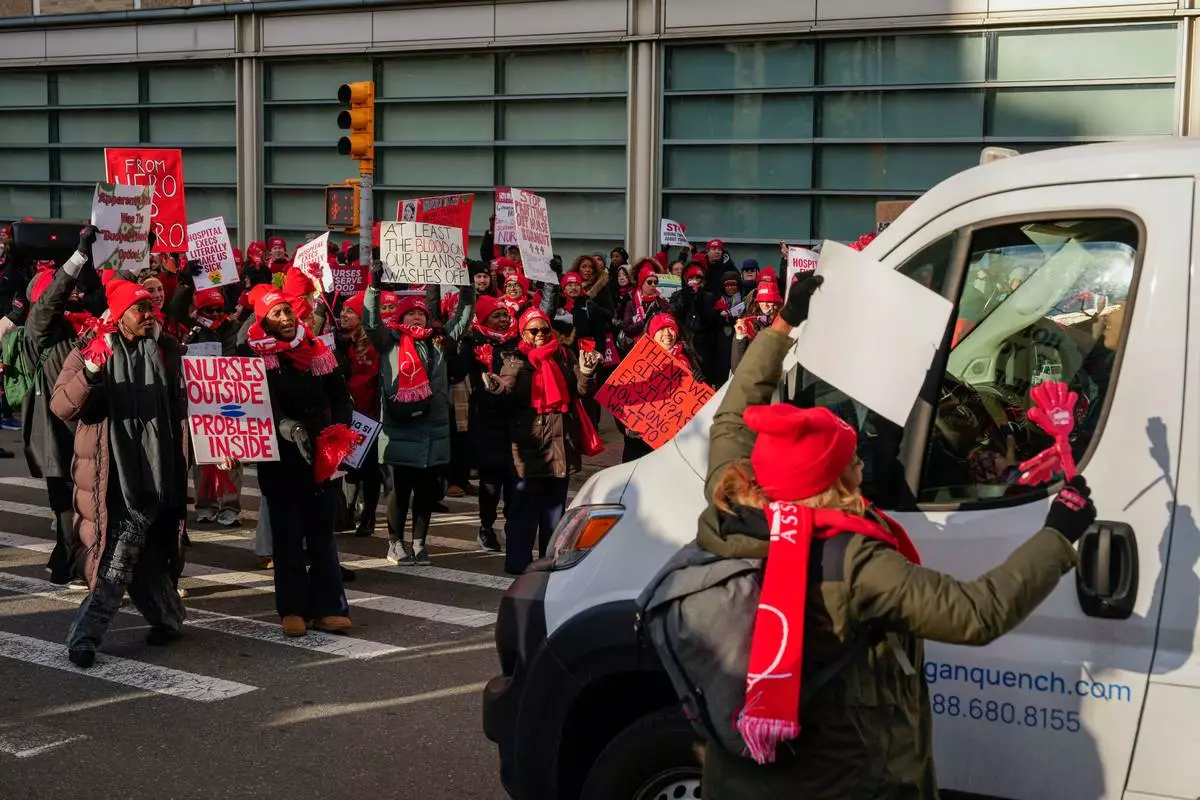
Nurses strike outside New York-Presbyterian Hospital, Monday, Jan. 12, 2026, in New York. (AP Photo/Yuki Iwamura)
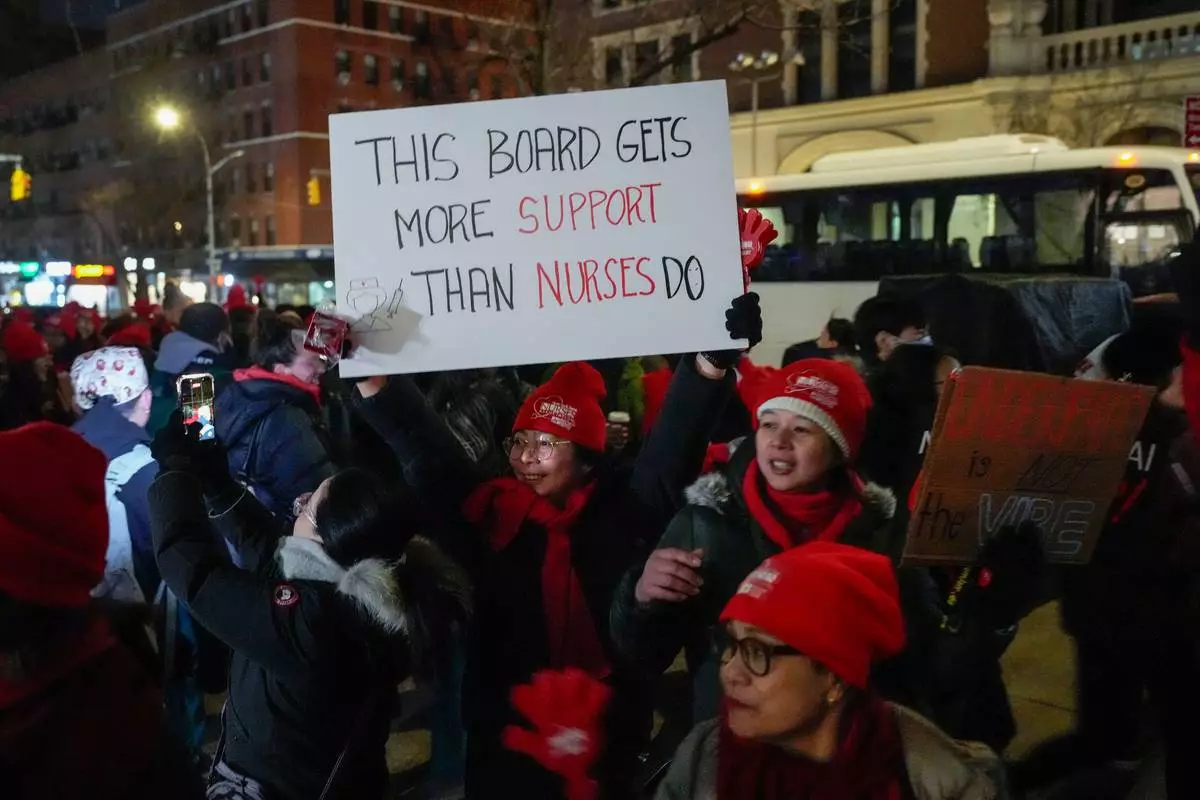
Nurses strike outside Mount Sinai West Hospital, Monday, Jan. 12, 2026, in New York. (AP Photo/Yuki Iwamura)
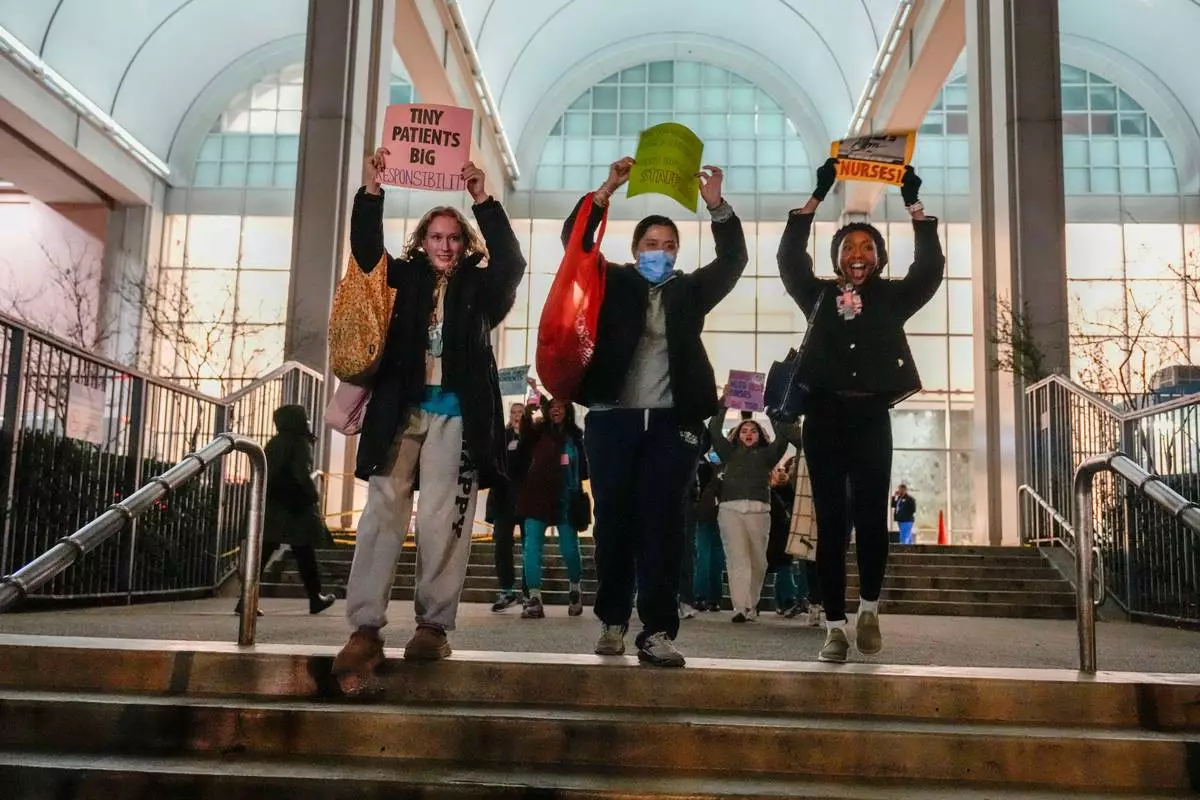
Nurses strike outside Mount Sinai West Hospital, Monday, Jan. 12, 2026, in New York. (AP Photo/Yuki Iwamura)
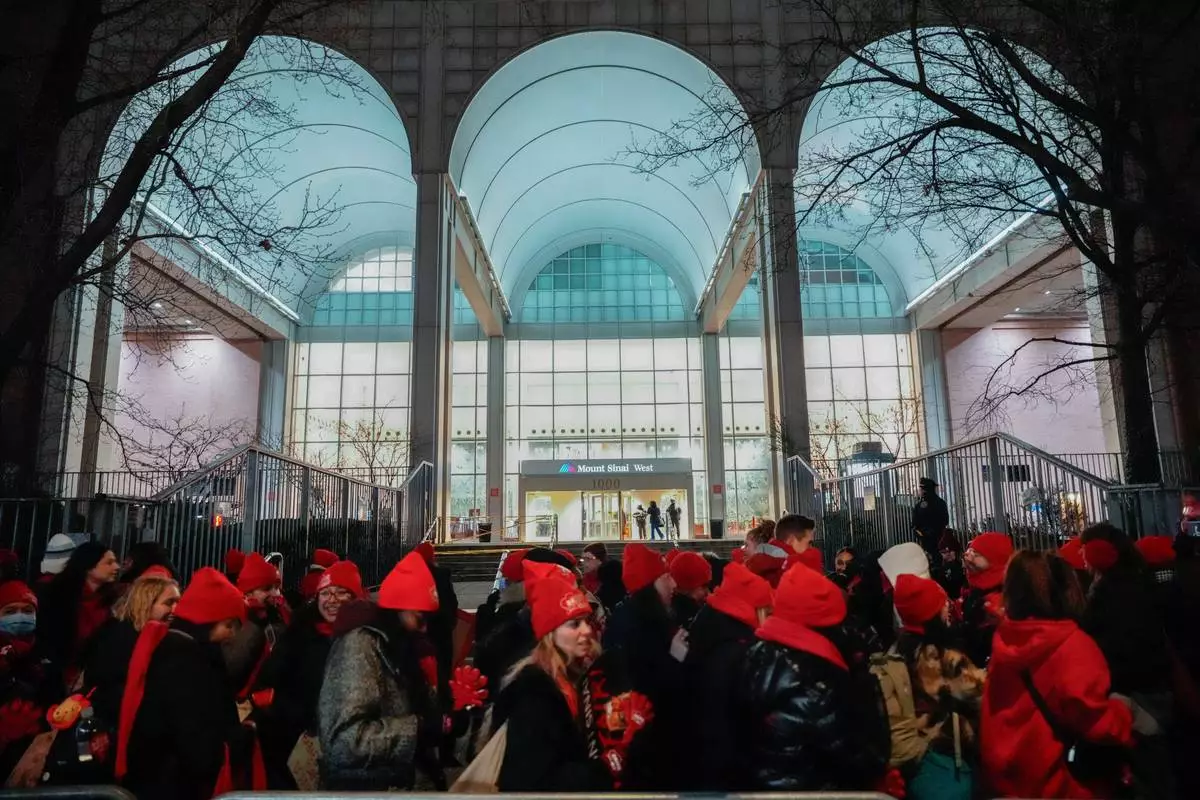
Nurses strike outside Mount Sinai West Hospital, Monday, Jan. 12, 2026, in New York. (AP Photo/Yuki Iwamura)
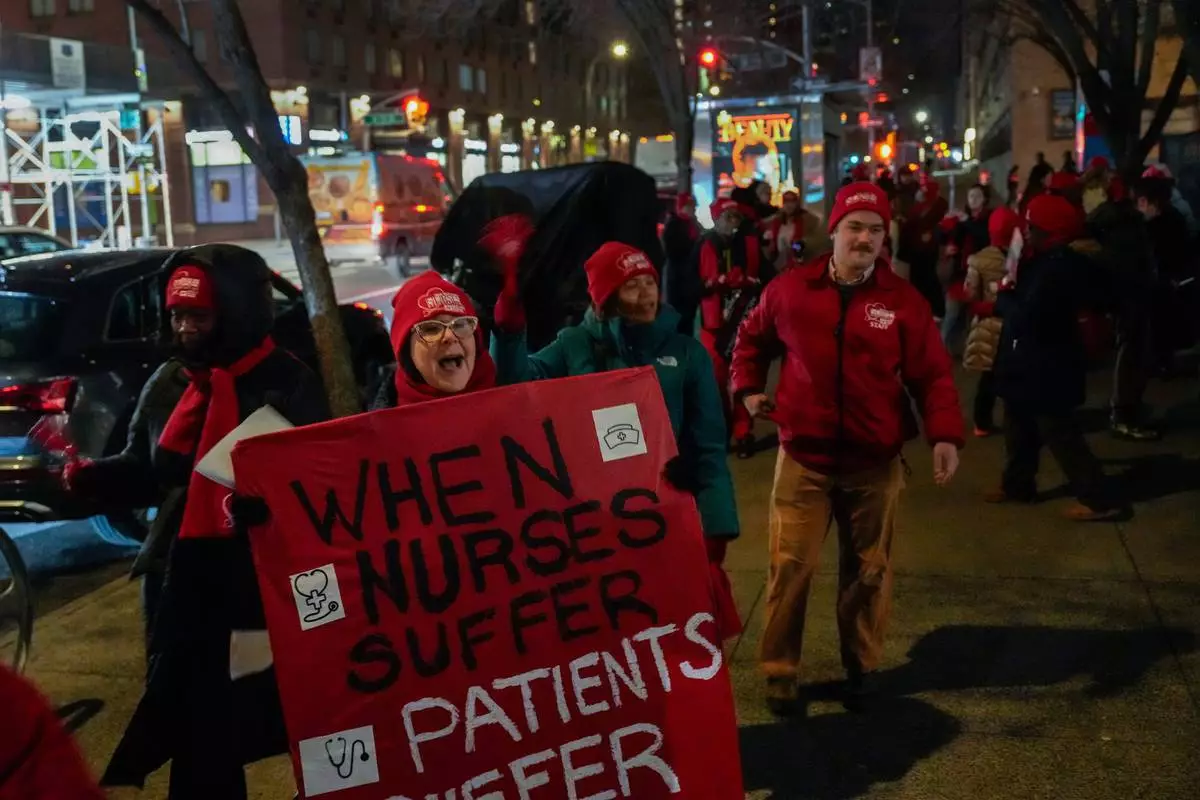
Nurses strike outside Mount Sinai West Hospital, Monday, Jan. 12, 2026, in New York. (AP Photo/Yuki Iwamura)

FILE - A medical worker transports a patient at Mount Sinai Hospital, April 1, 2020, in New York. (AP Photo/Mary Altaffer, File)