CAPE CANAVERAL, Fla. (AP) — The replacements for NASA’s two stuck astronauts launched to the International Space Station on Friday night, paving the way for the pair’s return after nine long months.
Butch Wilmore and Suni Williams need SpaceX to get this relief team to the space station before they can check out. Arrival is set for late Saturday night.
Click to Gallery
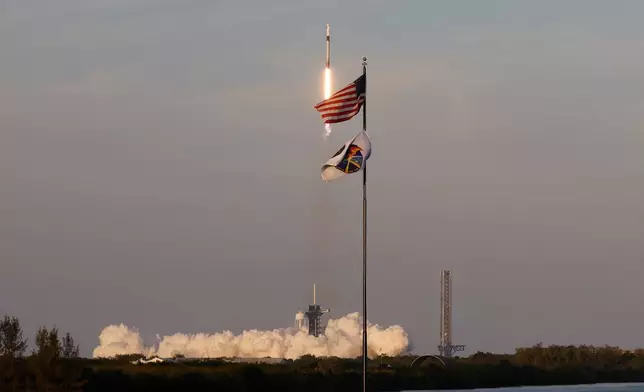
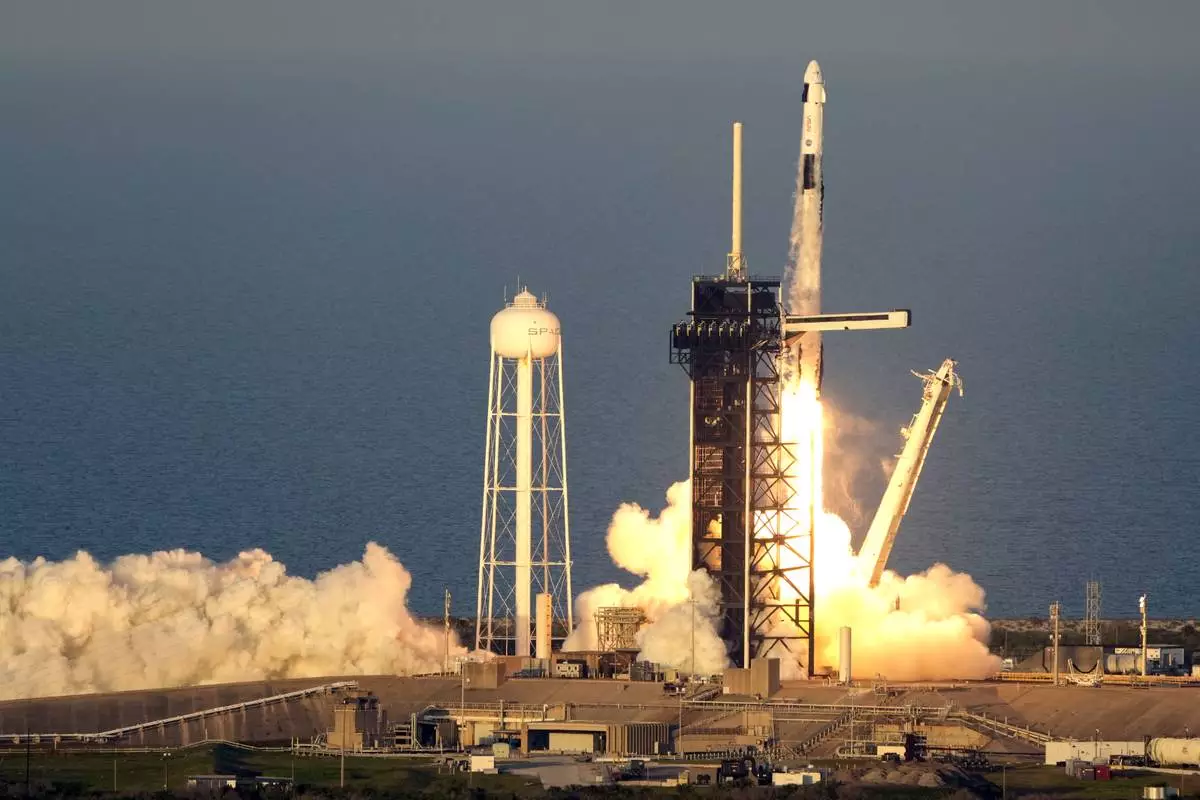
A SpaceX Falcon 9 rocket with a crew of four aboard the Crew Dragon spacecraft lifts off on a mission to the International Space Station from pad 39A at the Kennedy Space Center in Cape Canaveral, Fla., Friday, March 14, 2025. (AP Photo/Terry Renna)
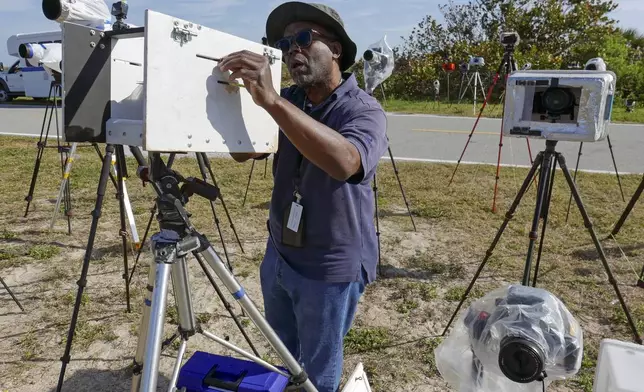
Photographer Craig Bailey resets his remote cameras with fresh batteries to cover this evening's scheduled launch of a SpaceX Falcon 9 rocket with the Crew Dragon spacecraft for a mission to the International Space Station on pad 39A at the Kennedy Space Center in Cape Canaveral, Fla., Friday, March 14, 2025. (AP Photo/John Raoux)
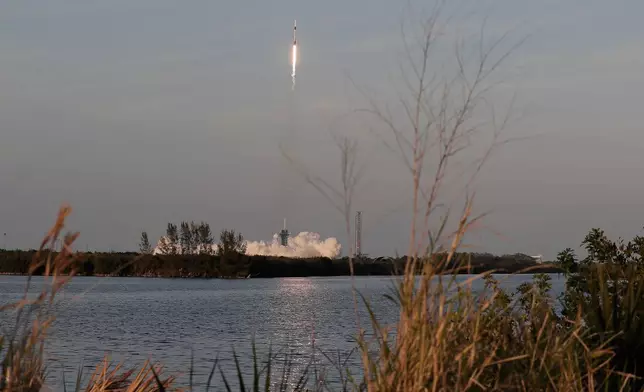
A SpaceX Falcon 9 rocket with a crew of four aboard the Crew Dragon spacecraft lifts off on a mission to the International Space Station from pad 39A at the Kennedy Space Center in Cape Canaveral, Fla., Friday, March 14, 2025. (AP Photo/Terry Renna)
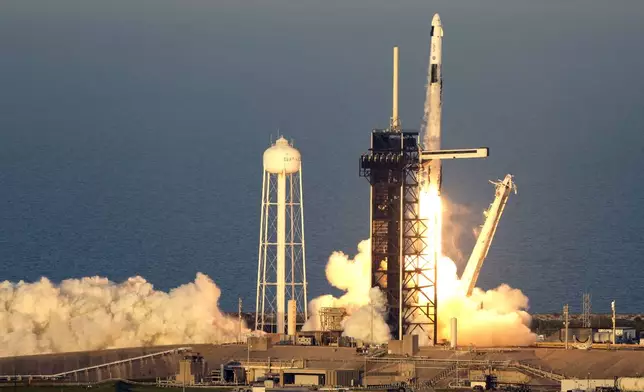
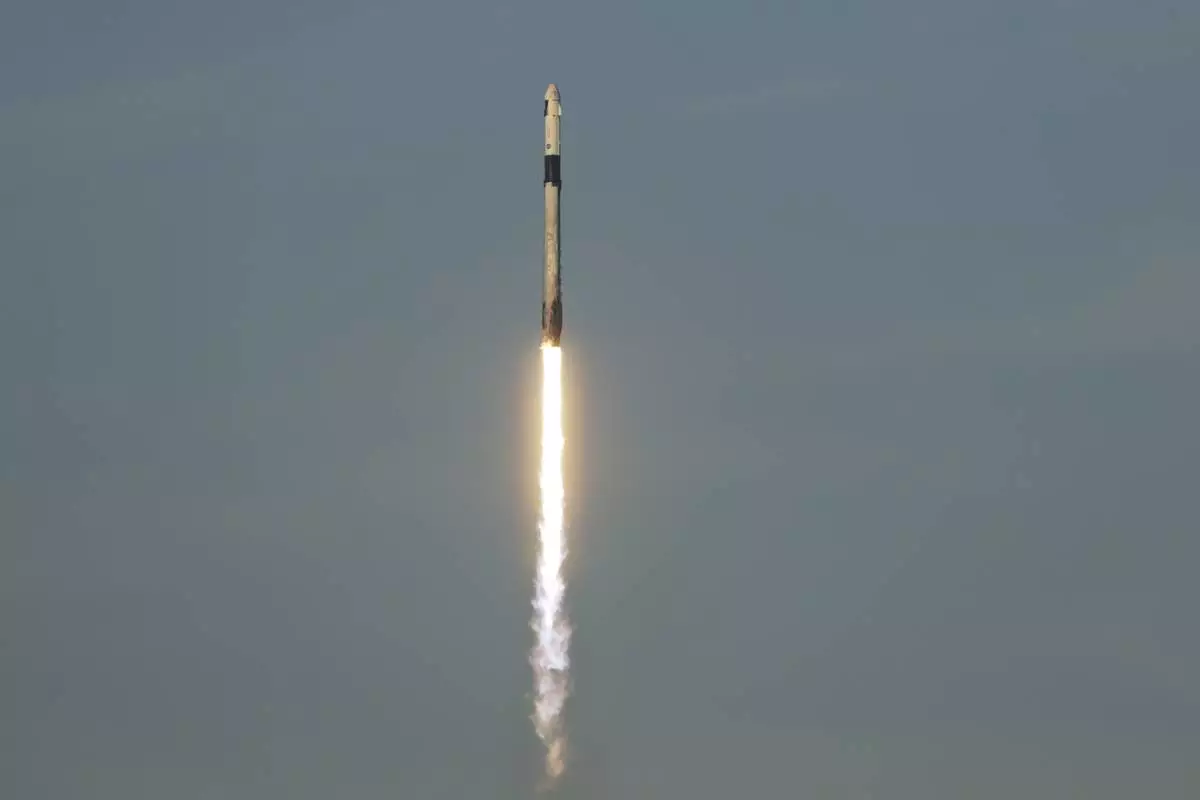
A SpaceX Falcon 9 rocket, with a crew of four aboard the Crew Dragon spacecraft, lifts off on a mission to the International Space Station lifts off from pad 39A at the Kennedy Space Center in Cape Canaveral, Fla., Friday, March 14, 2025. (AP Photo/John Raoux)
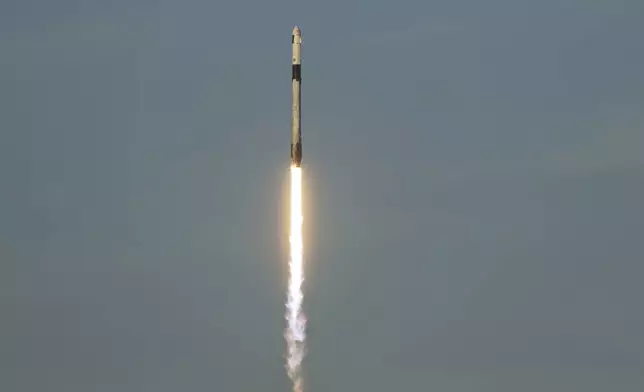
A SpaceX Falcon 9 rocket with a crew of four aboard the Crew Dragon spacecraft lifts off on a mission to the International Space Station from pad 39A at the Kennedy Space Center in Cape Canaveral, Fla., Friday, March 14, 2025. (AP Photo/Terry Renna)
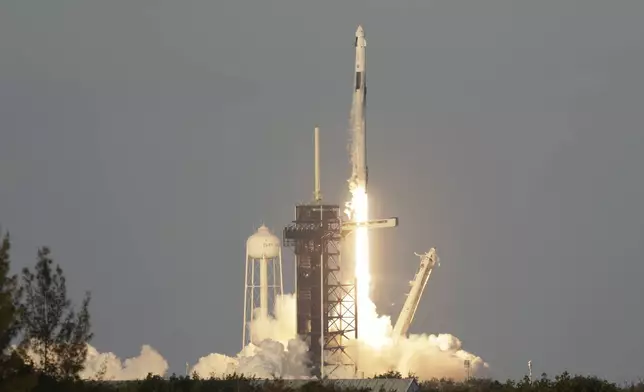
A SpaceX Falcon 9 rocket with a crew of four aboard the Crew Dragon spacecraft lifts off on a mission to the International Space Station from pad 39A at the Kennedy Space Center in Cape Canaveral, Fla., Friday, March 14, 2025. (AP Photo/Terry Renna)
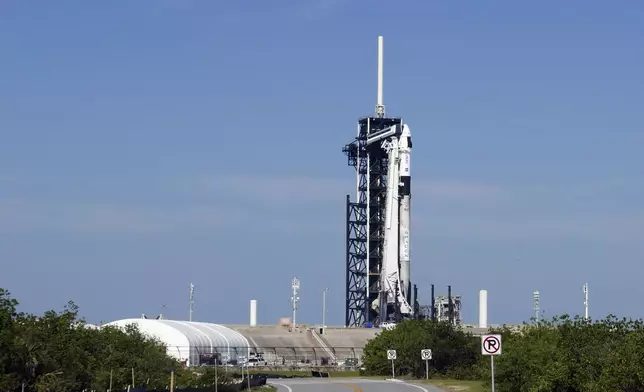
A SpaceX Falcon 9 rocket with the Crew Dragon spacecraft stands ready for a mission to the International Space Station on pad 39A at the Kennedy Space Center in Cape Canaveral, Fla., Friday, March 14, 2025. (AP Photo/John Raoux)

JAXA astronaut Takuya Onishi leaves the Operations and Checkout building before heading to Launch Pad 39-A at the Kennedy Space Center in Cape Canaveral, Fla., for a mission to the International Space Station in Cape Canaveral, Fla., Friday, March 14, 2025. (AP Photo/John Raoux)
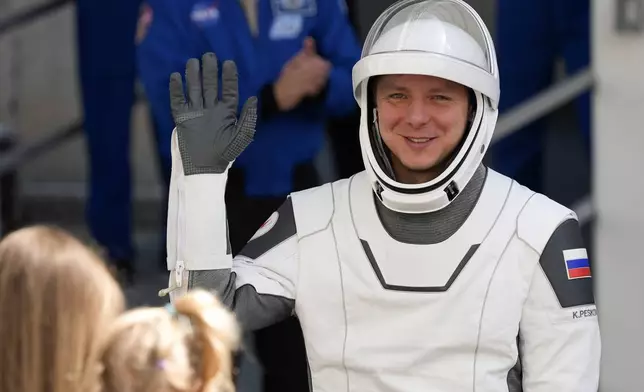
Cosmonaut Kirill Peskov waves as he leaves the Operations and Checkout building before heading to Launch Pad 39-A at the Kennedy Space Center in Cape Canaveral, Fla., for a mission to the International Space Station in Cape Canaveral, Fla., Friday, March 14, 2025. (AP Photo/John Raoux)
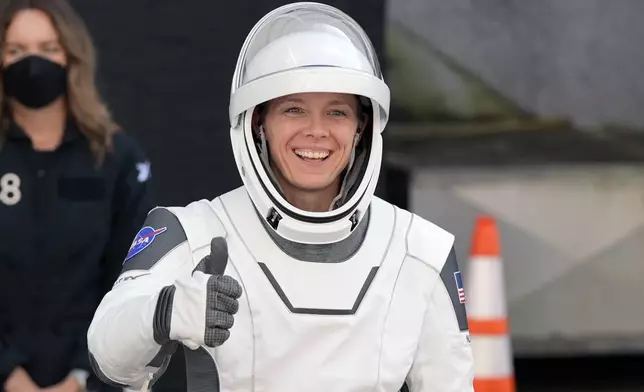
Astronaut Nichole Ayers leaves the Operations and Checkout building before heading to Launch Pad 39-A at the Kennedy Space Center in Cape Canaveral, Fla., for a mission to the International Space Station in Cape Canaveral, Fla., Friday, March 14, 2025. (AP Photo/John Raoux)
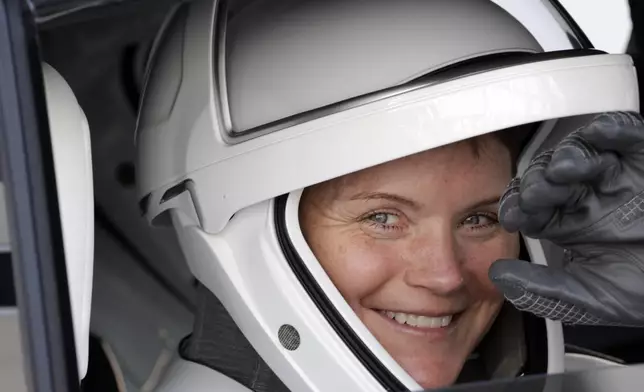
Astronaut Anne McClain leaves the Operations and Checkout building before heading to Launch Pad 39-A at the Kennedy Space Center in Cape Canaveral, Fla., for a mission to the International Space Station in Cape Canaveral, Fla., Friday, March 14, 2025. (AP Photo/Terry Renna)
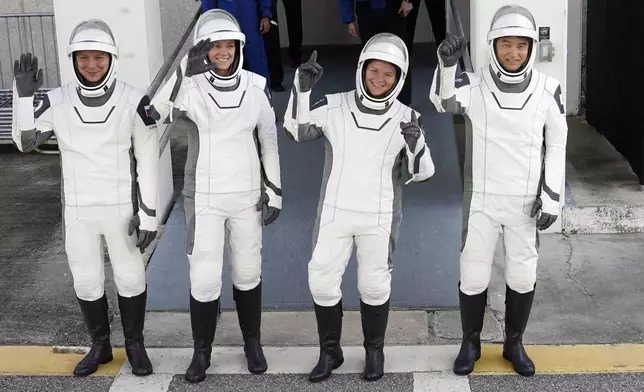
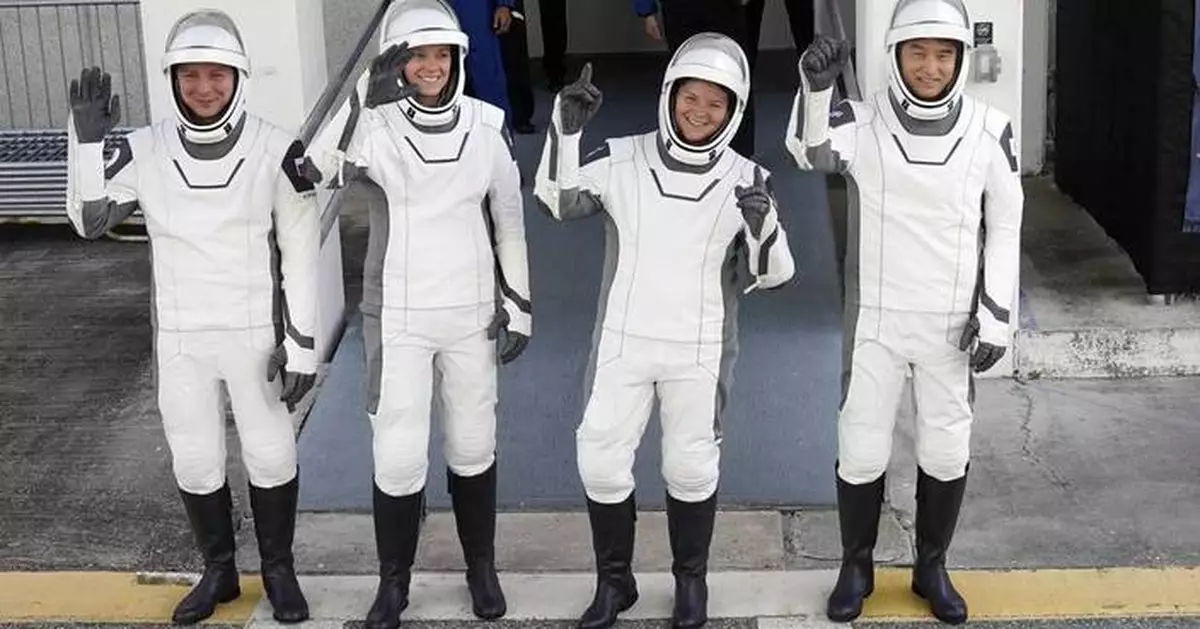
Crew10 members, from left, cosmonaut Kirill Peskov, astronaut Nichole Ayers, astronaut Anne McClain and JAXA astronaut Takuya Onishi leave the Operations and Checkout building before heading to Launch Pad 39-A at the Kennedy Space Center in Cape Canaveral, Fla., for a mission to the International Space Station in Cape Canaveral, Fla., Friday, March 14, 2025. (AP Photo/John Raoux)
NASA wants overlap between the two crews so Wilmore and Williams can fill in the newcomers on happenings aboard the orbiting lab. That would put them on course for an undocking next week and a splashdown off the Florida coast, weather permitting.
The duo will be escorted back by astronauts who flew up on a rescue mission on SpaceX last September alongside two empty seats reserved for Wilmore and Williams on the return leg.
Reaching orbit from NASA’s Kennedy Space Center, the newest crew includes NASA’s Anne McClain and Nichole Ayers, both military pilots; and Japan’s Takuya Onishi and Russia’s Kirill Peskov, both former airline pilots. They will spend the next six months at the space station, considered the normal stint, after springing Wilmore and Williams free.
“Spaceflight is tough, but humans are tougher," McClain said minutes into the flight.
As test pilots for Boeing’s new Starliner capsule, Wilmore and Williams expected to be gone just a week or so when they launched from Cape Canaveral on June 5. A series of helium leaks and thruster failures marred their trip to the space station, setting off months of investigation by NASA and Boeing on how best to proceed.
Eventually ruling it unsafe, NASA ordered Starliner to fly back empty last September and moved Wilmore and Williams to a SpaceX flight due back in February. Their return was further delayed when SpaceX’s brand new capsule needed extensive battery repairs before launching their replacements. To save a few weeks, SpaceX switched to a used capsule, moving up Wilmore and Williams’ homecoming to mid-March.
Already capturing the world’s attention, their unexpectedly long mission took a political twist when President Donald Trump and SpaceX’s Elon Musk vowed earlier this year to accelerate the astronauts’ return and blamed the former administration for stalling it.
Retired Navy captains who have lived at the space station before, Wilmore and Williams have repeatedly stressed that they support the decisions made by their NASA bosses since last summer. The two helped keep the station running — fixing a broken toilet, watering plants and conducting experiments — and even went out on a spacewalk together. With nine spacewalks, Williams set a new record for women: the most time spent spacewalking over a career.
A last-minute hydraulics issue delayed Wednesday's initial launch attempt. Concern arose over one of the two clamp arms on the Falcon rocket’s support structure that needs to tilt away right before liftoff. SpaceX later flushed out the arm's hydraulics system, removing trapped air.
The duo's extended stay has been hardest, they said, on their families — Wilmore’s wife and two daughters, and Williams’ husband and mother. Besides reuniting with them, Wilmore, a church elder, is looking forward to getting back to face-to-face ministering and Williams can’t wait to walk her two Labrador retrievers.
“We appreciate all the love and support from everybody,” Williams said in an interview earlier this week. “This mission has brought a little attention. There’s goods and bads to that. But I think the good part is more and more people have been interested in what we’re doing” with space exploration.
The Associated Press Health and Science Department receives support from the Howard Hughes Medical Institute’s Science and Educational Media Group and the Robert Wood Johnson Foundation. The AP is solely responsible for all content.
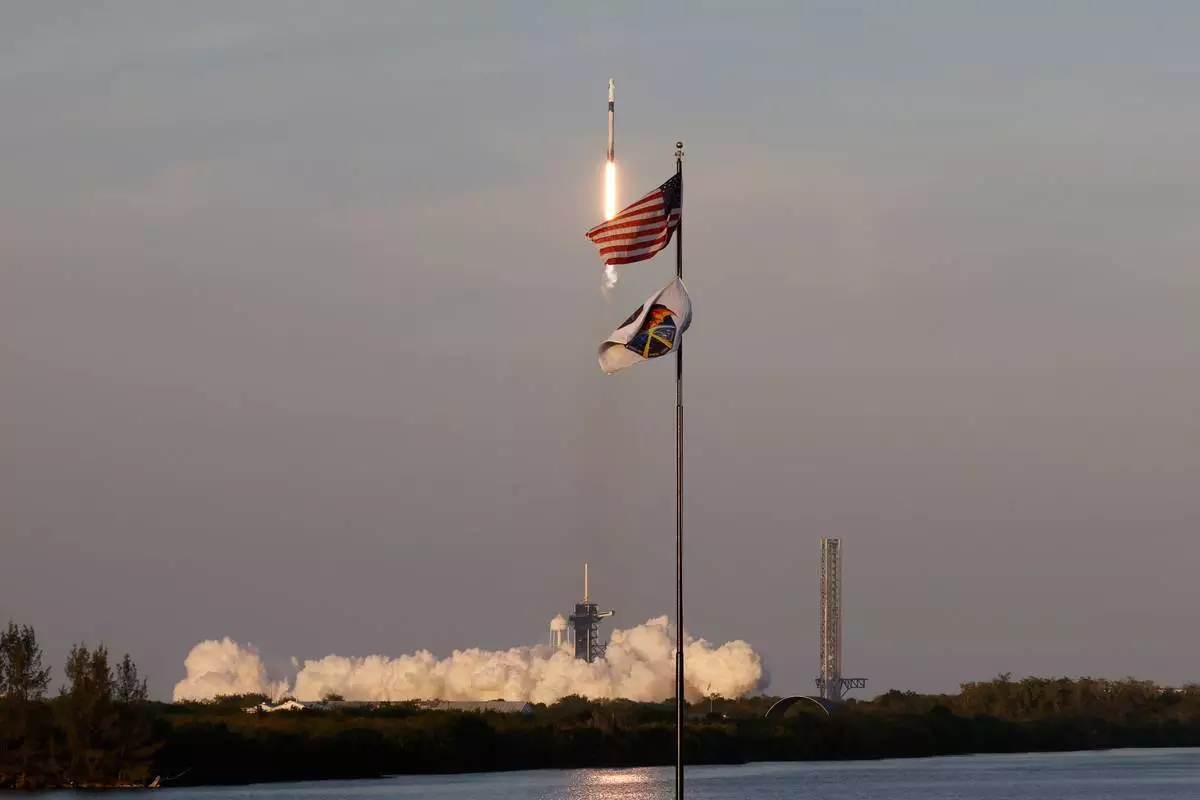
A SpaceX Falcon 9 rocket with a crew of four aboard the Crew Dragon spacecraft lifts off on a mission to the International Space Station from pad 39A at the Kennedy Space Center in Cape Canaveral, Fla., Friday, March 14, 2025. (AP Photo/Terry Renna)
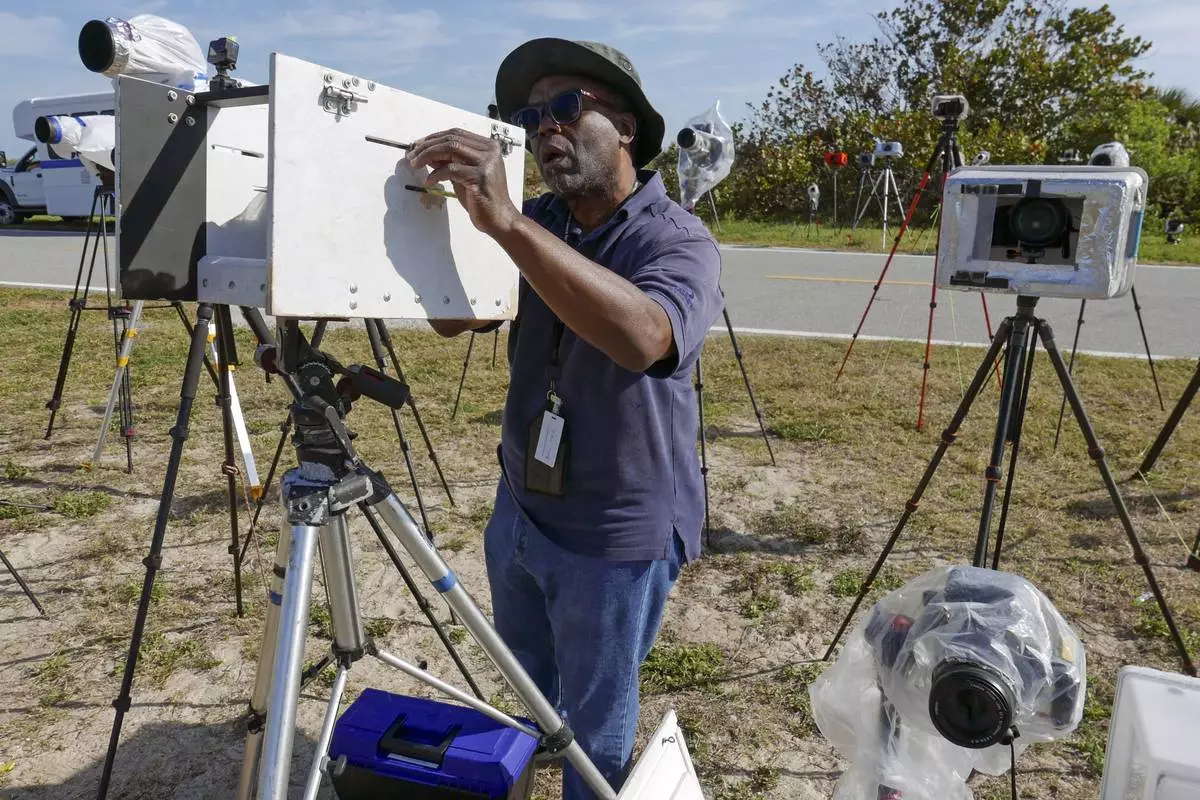
Photographer Craig Bailey resets his remote cameras with fresh batteries to cover this evening's scheduled launch of a SpaceX Falcon 9 rocket with the Crew Dragon spacecraft for a mission to the International Space Station on pad 39A at the Kennedy Space Center in Cape Canaveral, Fla., Friday, March 14, 2025. (AP Photo/John Raoux)
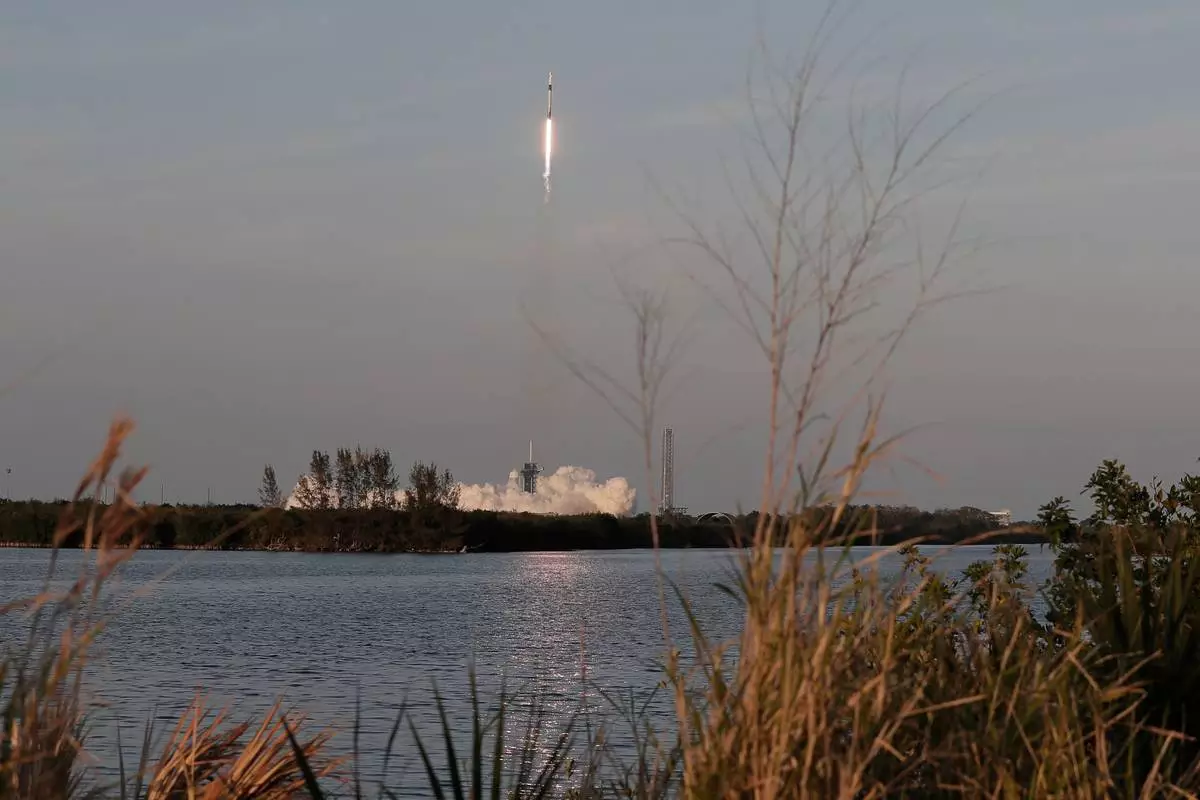
A SpaceX Falcon 9 rocket with a crew of four aboard the Crew Dragon spacecraft lifts off on a mission to the International Space Station from pad 39A at the Kennedy Space Center in Cape Canaveral, Fla., Friday, March 14, 2025. (AP Photo/Terry Renna)
A SpaceX Falcon 9 rocket, with a crew of four aboard the Crew Dragon spacecraft, lifts off on a mission to the International Space Station lifts off from pad 39A at the Kennedy Space Center in Cape Canaveral, Fla., Friday, March 14, 2025. (AP Photo/John Raoux)
A SpaceX Falcon 9 rocket with a crew of four aboard the Crew Dragon spacecraft lifts off on a mission to the International Space Station from pad 39A at the Kennedy Space Center in Cape Canaveral, Fla., Friday, March 14, 2025. (AP Photo/Terry Renna)
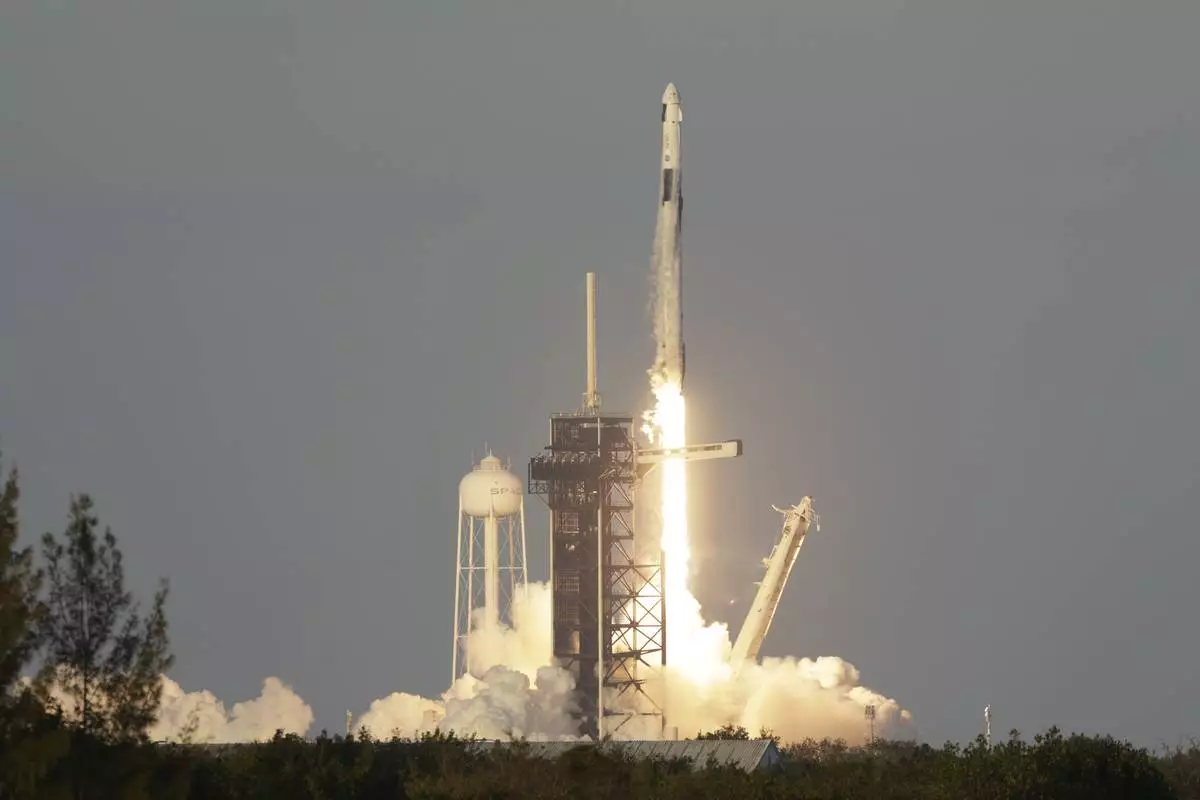
A SpaceX Falcon 9 rocket with a crew of four aboard the Crew Dragon spacecraft lifts off on a mission to the International Space Station from pad 39A at the Kennedy Space Center in Cape Canaveral, Fla., Friday, March 14, 2025. (AP Photo/Terry Renna)
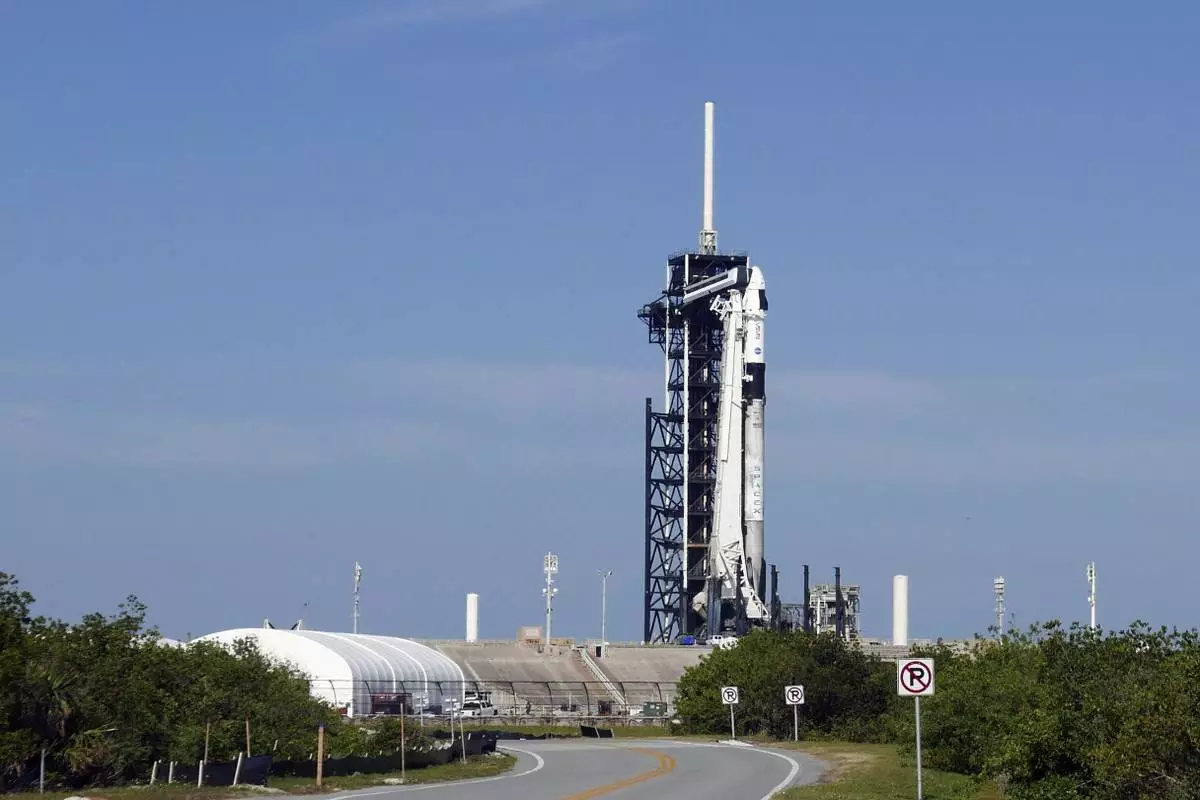
A SpaceX Falcon 9 rocket with the Crew Dragon spacecraft stands ready for a mission to the International Space Station on pad 39A at the Kennedy Space Center in Cape Canaveral, Fla., Friday, March 14, 2025. (AP Photo/John Raoux)

JAXA astronaut Takuya Onishi leaves the Operations and Checkout building before heading to Launch Pad 39-A at the Kennedy Space Center in Cape Canaveral, Fla., for a mission to the International Space Station in Cape Canaveral, Fla., Friday, March 14, 2025. (AP Photo/John Raoux)
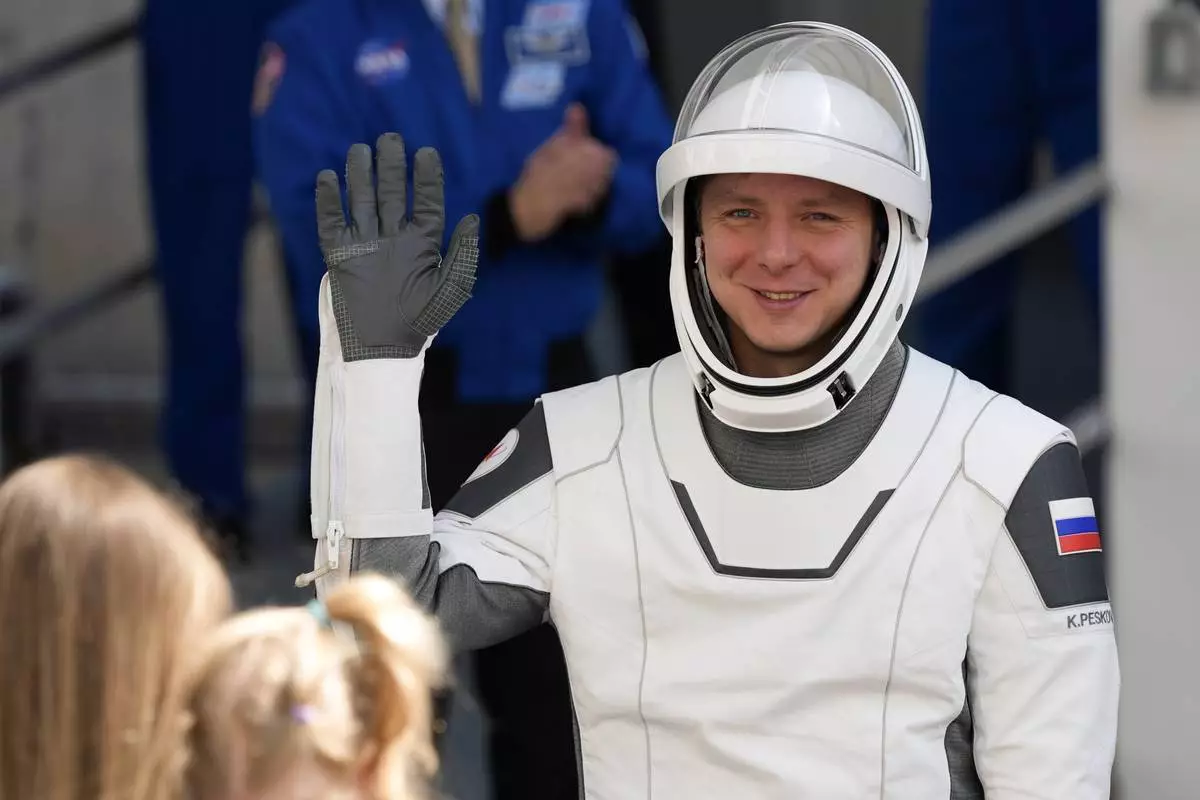
Cosmonaut Kirill Peskov waves as he leaves the Operations and Checkout building before heading to Launch Pad 39-A at the Kennedy Space Center in Cape Canaveral, Fla., for a mission to the International Space Station in Cape Canaveral, Fla., Friday, March 14, 2025. (AP Photo/John Raoux)
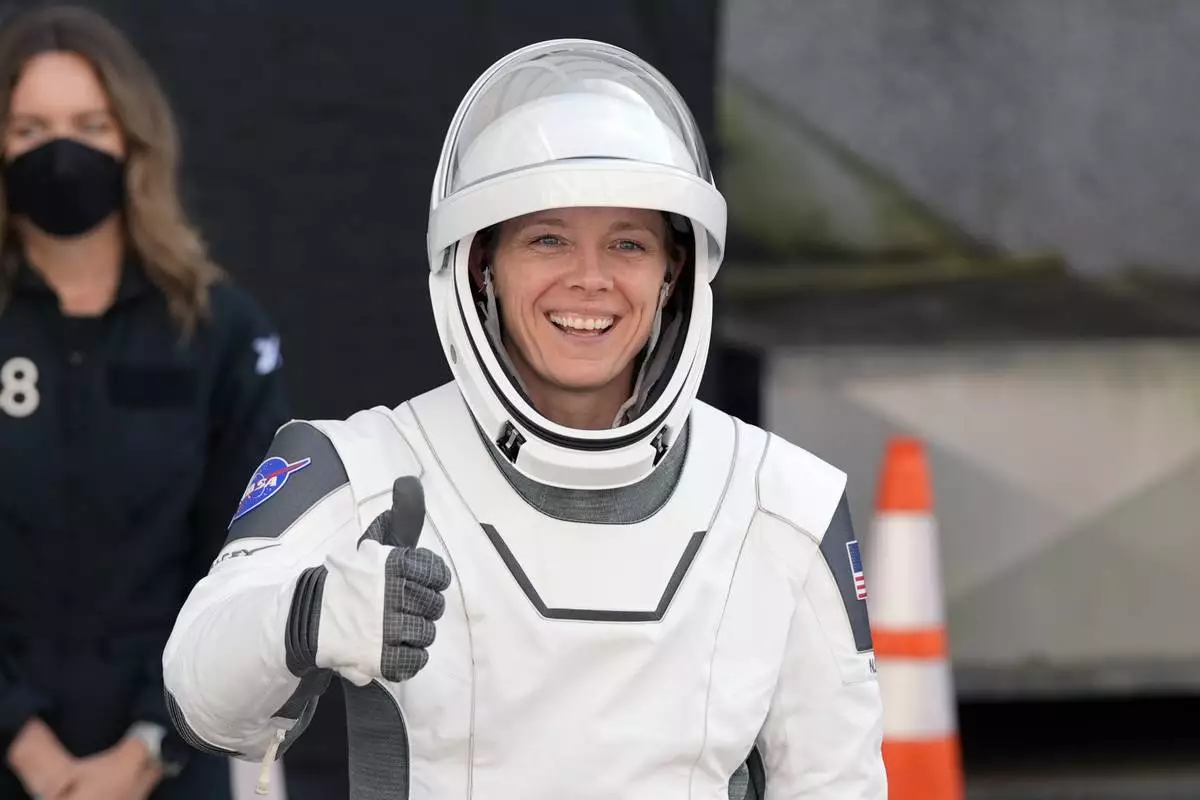
Astronaut Nichole Ayers leaves the Operations and Checkout building before heading to Launch Pad 39-A at the Kennedy Space Center in Cape Canaveral, Fla., for a mission to the International Space Station in Cape Canaveral, Fla., Friday, March 14, 2025. (AP Photo/John Raoux)
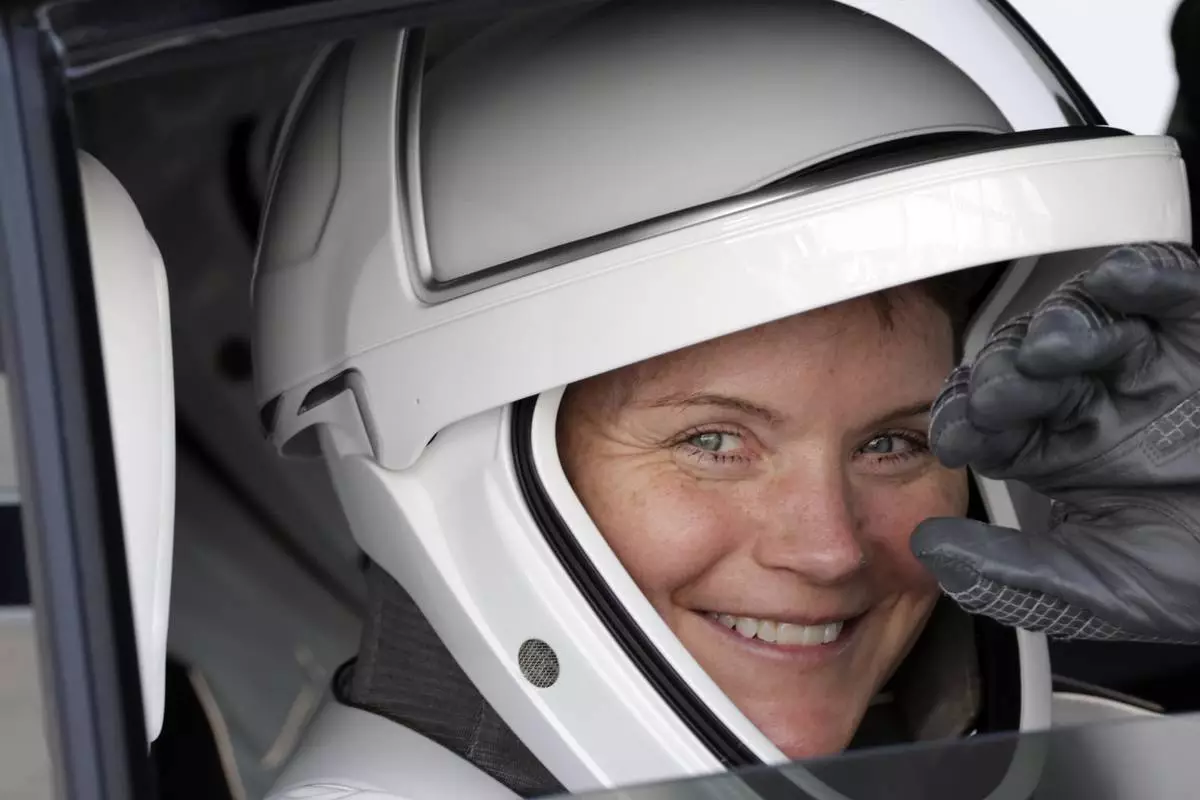
Astronaut Anne McClain leaves the Operations and Checkout building before heading to Launch Pad 39-A at the Kennedy Space Center in Cape Canaveral, Fla., for a mission to the International Space Station in Cape Canaveral, Fla., Friday, March 14, 2025. (AP Photo/Terry Renna)
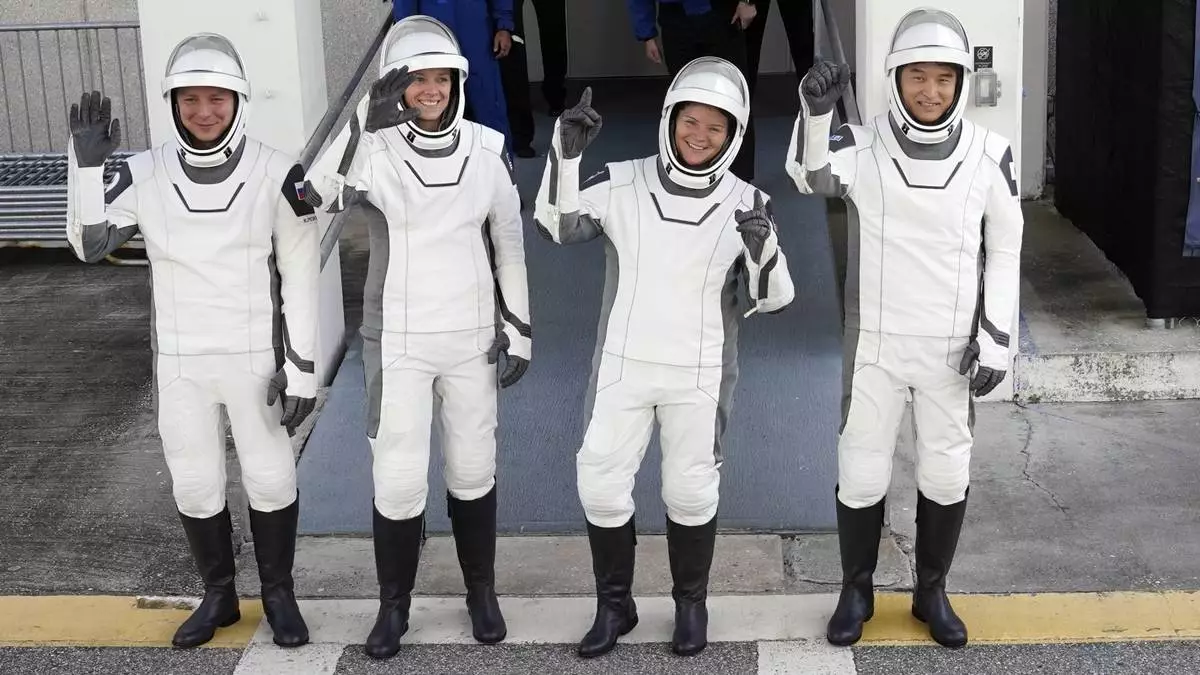
Crew10 members, from left, cosmonaut Kirill Peskov, astronaut Nichole Ayers, astronaut Anne McClain and JAXA astronaut Takuya Onishi leave the Operations and Checkout building before heading to Launch Pad 39-A at the Kennedy Space Center in Cape Canaveral, Fla., for a mission to the International Space Station in Cape Canaveral, Fla., Friday, March 14, 2025. (AP Photo/John Raoux)