China's first large cargo drone capable of carrying a 1-ton payload, the TP1000, successfully completed its maiden flight on Saturday morning in Qingdao City, east China's Shandong province.
This innovative aircraft is notable for being the country's first large unmanned transport aircraft equipped with airdrop capabilities.
Developed fully in accordance with China's civil aviation standards for large cargo drones, the TP1000 has a takeoff weight of 3.3 tons and a maximum payload capacity of 1,000 kilograms. Compared to its predecessor, the TP500, the new model boasts increased cargo capacity and extended range, with a maximum range of 1,000 kilometers when fully loaded.
Together, these drones will form a complementary product lineup designed to meet the rapidly growing demand for low-altitude cargo transport.
Crucially, the TP1000 is also equipped with smart airdrop functionality, enhancing its capabilities in emergency response and disaster relief operations.
"The maiden flight lasted 26 minutes, and the aircraft's performance was stable throughout. All performance metrics met our expectations. During the flight, the drone exhibited excellent stability, maneuverability, and power system performance, with all parameters remaining within ideal ranges," said Jin Ge, the leader of the TP1000 research and development team.
The TP1000 is expected to enter operational service by 2026, representing a significant advancement in China's unmanned aerial vehicle technology and its applications in logistics and emergency response.
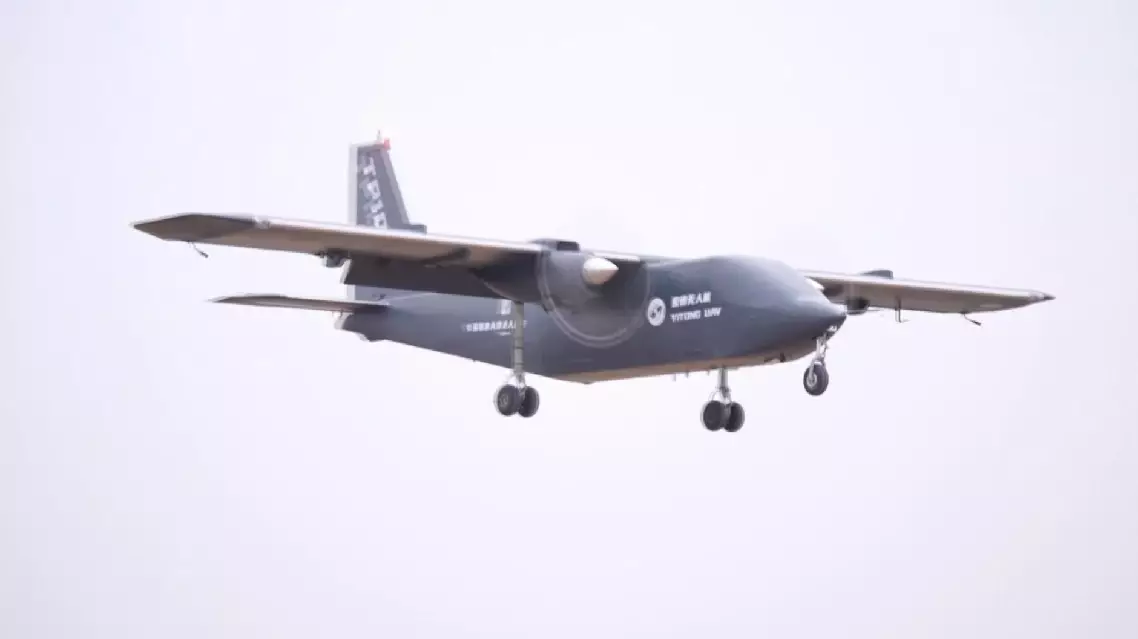
China's first 1-ton payload cargo drone completes maiden flight
A longstanding Mid-Autumn Festival staple, mooncakes are seeing shifting market trends this year, driven largely by young consumers.
The Mid-Autumn Festival, celebrated annually on the 15th day of the eighth month on the Chinese lunar calendar, fell on Sept. 25 this year. As one of China's most important traditional holidays, it is a joyous time when families come together, appreciate the full moon and share mooncakes, to mark the harvest season.
Among the most iconic foods of the festival, mooncakes traditionally symbolize reunion and togetherness. As the market evolves, elaborate gift boxes are giving way to simpler packaging, while individually sold mooncakes are becoming more common. The focus is shifting from mooncakes as gifts to treats people can enjoy themselves.
"Our customers are mainly between 18 and 35 years old. As we understand it, they are quite self-focused. They tend to be more individualistic and care more about their shopping experience. They're less concerned about product labeling," said Tang Lingyan, a planning manager of Xin Yin 1950.
As consumer preferences shift, brands are responding with eye-catching designs, fresh flavors and more intricate details.
"Young consumers possess a keen sense for new flavors and are highly receptive to them. They also care more about whether the ingredients are healthy. So we're bringing ingredients like matcha and rose into mooncakes. For the packaging, we focus on the idea of reunion and creating a festive atmosphere," said Yang Jieting, founder of T.matata Dessert.
Industry data shows that during the 2026 Mid-Autumn Festival season, 50.4 percent of consumers bought mooncakes for their own consumption, reflecting a growing preference for smaller, lighter products.
Health-conscious choices are also gaining ground. Searches for "low-sugar mooncakes" on JD.com surged 320 percent year on year, prompting traditional brands to rethink their recipes and develop products that better fit changing consumer preferences.
"This year, we launched a reduced-sugar version of our red pastry, known as the low-sugar red pastry. It's been very well received, and it's almost sold out," said Zhang Chao, director of Logistics and Services Center at Guizhou TV.
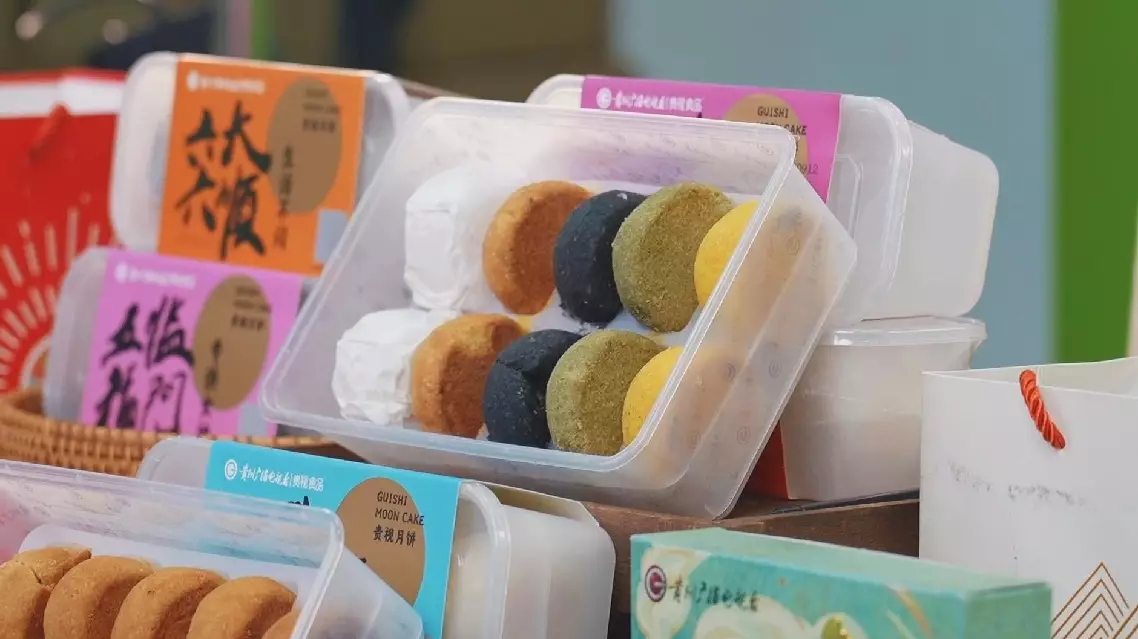
Young Chinese consumers look for mooncakes with unique designs, fresh flavors