Since its launch by Chinese President Xi Jinping two years ago, the Global Civilization Initiative has been at the forefront of China's efforts to foster a world where civilizations engage in dialogue rather than conflict. As it marked its second anniversary on Saturday, the initiative continues to promote mutual understanding and cooperation among civilizations.
Xi first proposed the initiative on March 15, 2023, at a conference between the Communist Party of China (CPC) and global political parties, where he emphasized that tolerance, coexistence, exchanges, and mutual learning among civilizations play an irreplaceable role in advancing humanity's modernization process, especially as the future of all countries is closely interconnected.
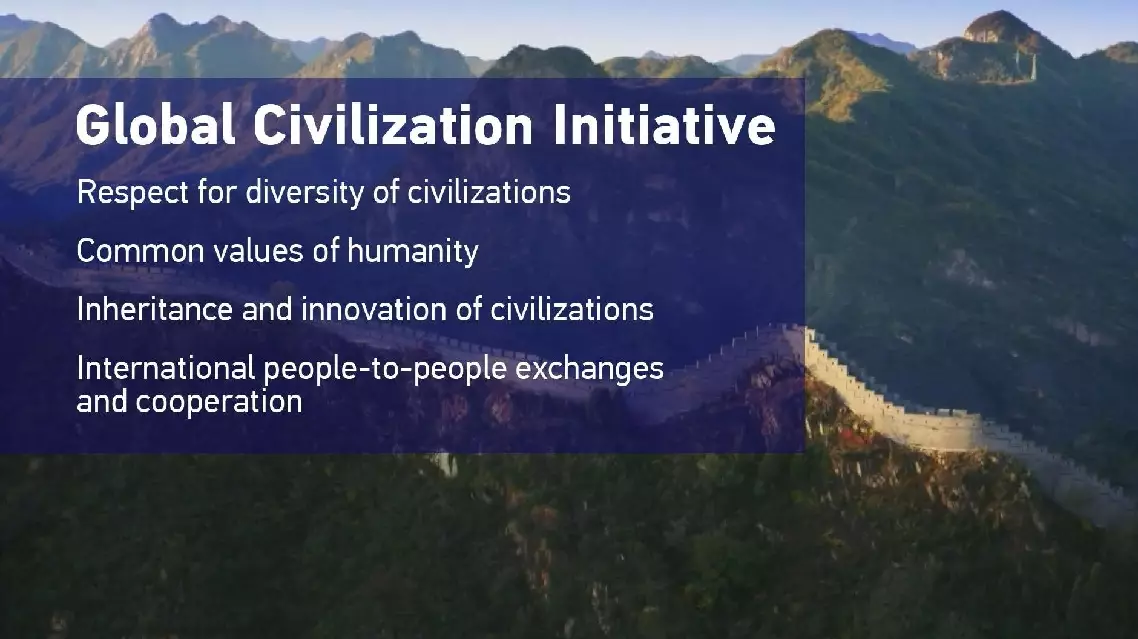
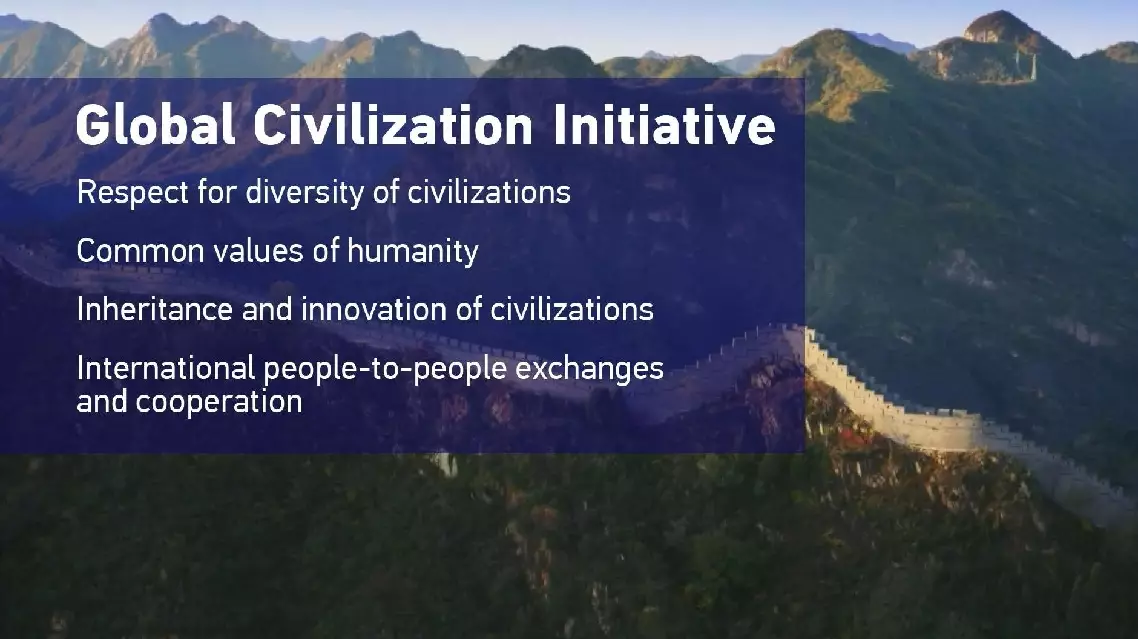
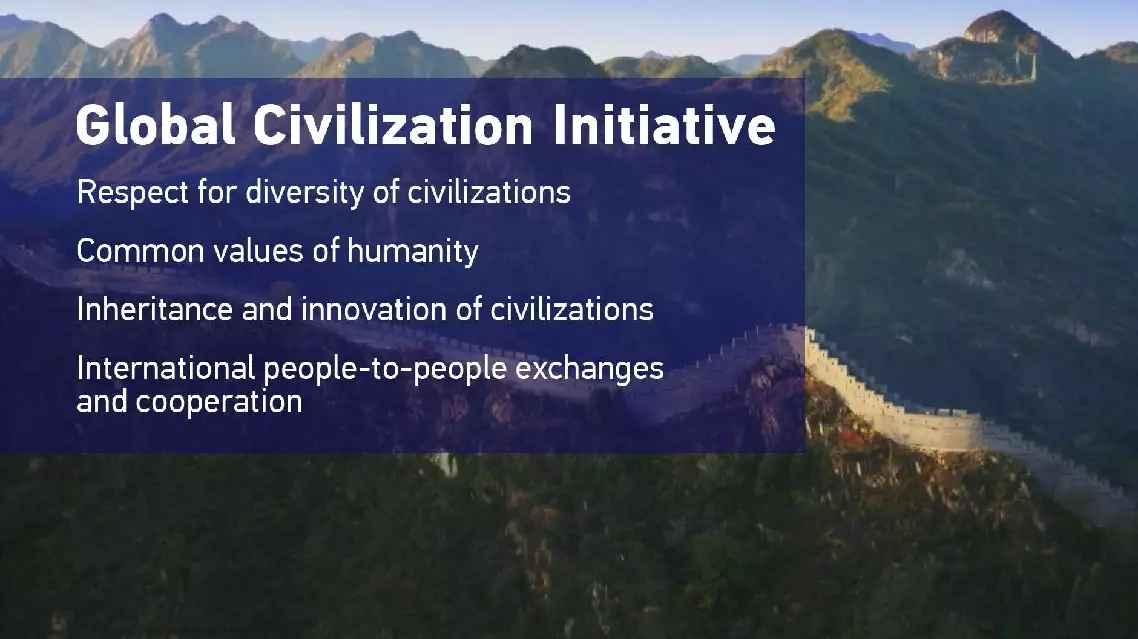
The initiative advocates respect for the diversity of civilizations. It promotes the common values of humanity, emphasizes the importance of civilizational inheritance and innovation, encourages robust international people-to-people exchanges, and calls for equality, mutual learning, dialogue, and inclusiveness among civilizations to advance humanity's modernization in an interconnected world.
It also states that peace, development, equity, justice, democracy, and freedom are the common aspirations of all people. The initiative urges countries to keep an open mind in appreciating civilizational differences and to refrain from imposing their own values or models on others or fueling ideological confrontation.
The initiative also highlights the need to harness the relevance of history and culture in contemporary times. It encourages countries to creatively transform and innovate their traditional cultures.
Additionally, the initiative calls for building a global network for inter-civilizational dialogue and cooperation. It urges deeper exchanges and collaboration to foster mutual understanding and friendship among peoples of different nations.
Over the past two years, China has made significant efforts to turn the initiative's vision into reality.
In November 2024, Beijing hosted the first World Conference of Classics, where over 400 experts discussed classical civilizations. The conference served as a platform to encourage nations to draw wisdom from ancient traditions, fostering greater mutual understanding. Since then, China has organized international forums such as the Nishan Forum on World Civilizations and the International Chinese Language Conference, bringing together scholars, policymakers, and cultural experts to explore shared values.
In June 2024, the United Nations General Assembly adopted a resolution proposed by China, designating June 10 as the International Day for Dialogue among Civilizations.
A resolution to establish a mechanism for implementing the Global Civilization Initiative was adopted at the Third Plenary Session of the 20th Central Committee of the Communist Party of China in July 2024, emphasizing the promotion of inbound and outbound travel as well as the expansion of international cultural exchanges and cooperation.
In recent years, China has established various platforms for civilizational dialogue with its international partners, including the Conference on Dialogue of Asian Civilizations, the China-Italy Year of Culture and Tourism, the China-Greece Year of Culture and Tourism, and the China-Spain Year of Culture and Tourism.
These initiatives have facilitated the ongoing development of 16 multilateral exchange and cooperation mechanisms, such as the BRICS culture ministers' meetings and 25 bilateral cooperation mechanisms, further expanding opportunities for cultural dialogue.
International travel, regarded as a key driver of cultural exchange and cross-cultural communication, has been a focus for China. Since 2024, the country has continued to expand the list of nations whose citizens are eligible for visa-free entry. Last year, more than 20 million international visitors entered China under visa-free policies, marking a 112 percent year-on-year increase.
This spring, the Chinese animated blockbuster "Ne Zha 2" is igniting a global frenzy with its seamless fusion of traditional Chinese mythology and innovative animation storytelling. As of Saturday afternoon, Ne Zha 2 has surpassed 15 billion yuan (about 2.07 billion U.S. dollars) in global box office earnings. The film is currently showing on silver screens across North and South America, France, Germany, the United Kingdom, and beyond.
Experts say the film highlights the enduring appeal of traditional Chinese cultural heritage and its potential to foster people-to-people exchanges among audiences worldwide.
International experts have praised China's efforts in fostering communication among civilizations.
"It's a demonstration of global civilization. We need such ideas to guide us into the future. So, President Xi was maybe well ahead of time. He could see the future, where there is the need to bring more tolerance and better understanding," said Shahbaz Khan, director of the UNESCO Multisectoral Regional Office for East Asia.
"Putting Global Civilization Initiative with the -- at the same rank I would say -- with other initiatives like the security and the prosperity, economy and all this is really a very strong sign of commitment to the dialogue, to the notion, the role of culture, the role of the protection of heritage, intercultural dialogue. And it kind of continues the same idea that President Xi launched when he came to UNESCO 10 years ago. So, I do hope that these initiatives will bring more cultural exchanges, will bring more cooperation," said Irina Bokova, former director-general of UNESCO.
As part of China's efforts to contribute to global governance, the Global Civilization Initiative follows the Global Development Initiative, launched in 2021, and the Global Security Initiative, introduced in 2022.
China’s Global Civilization Initiative marks two years of fostering harmonious coexistence among civilizations
China’s Global Civilization Initiative marks two years of fostering harmonious coexistence among civilizations
China’s Global Civilization Initiative marks two years of fostering harmonious coexistence among civilizations