MURPHYSBORO, Ill. (AP) — From Logan School's top floor, 11-year-old Othella Silvey should have been able to see her house easily — it was less than two blocks away.
But after a monstrous tornado ripped through the Illinois town of Murphysboro on March 18, 1925, Othella saw nothing but flattened wasteland.
Click to Gallery
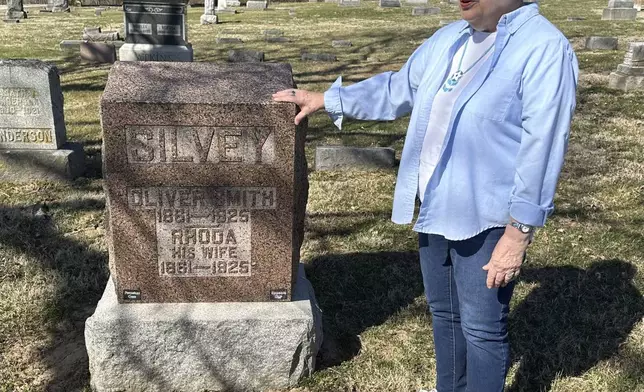
Sylvia Carvell, 81, of Murphybsoro, appears in this March 11, 2025 photo near the grave in Tower Grove Cemetery of her great-grandparents, (AP Photo/John O'Connor)
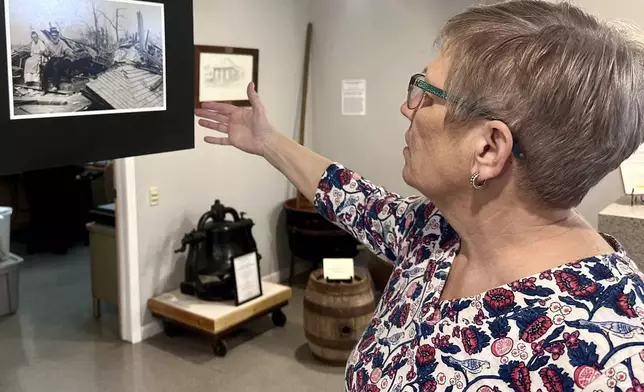
Jackson County Historical Society President Laura Cates Duncan describes a photo on display at the society's office of an elderly couple sitting on the ruins of their home after the March 18, 1925 Tri-State Tornado on March 11, 2025 in Murphysboro, Ill. (AP Photo/John O'Connor)
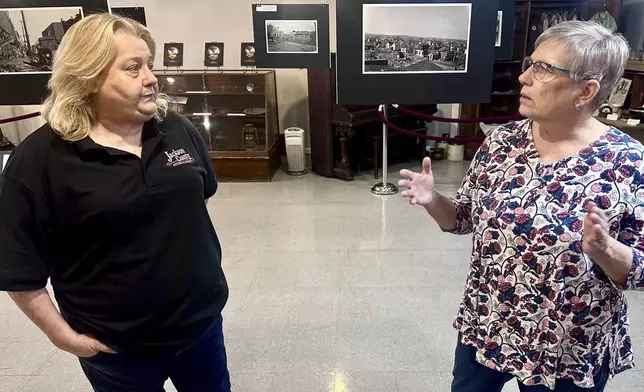
Jackson County Historical Society President Laura Cates Duncan, right, and Mary Riseling, a society board member and coordinator of the 100th anniversary commemoration of the Tri-State Tornado, discuss the March 18, 1925 cataclysm while standing among a gallery of photos on display at the society's office on March 11, 2025 in Murphysboro, Ill. (AP Photo/John O'Connor)
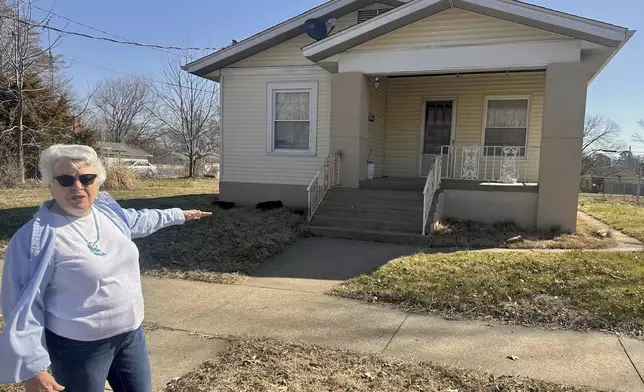
Sylvia Carvell describes her mother's childhood home in Murphysboro that was rebuilt to match the one destroyed in the March 18, 1925 Tri-State Tornado on March 11, 2025 in Murphysboro, Ill. (AP Photo/John O'Connor)
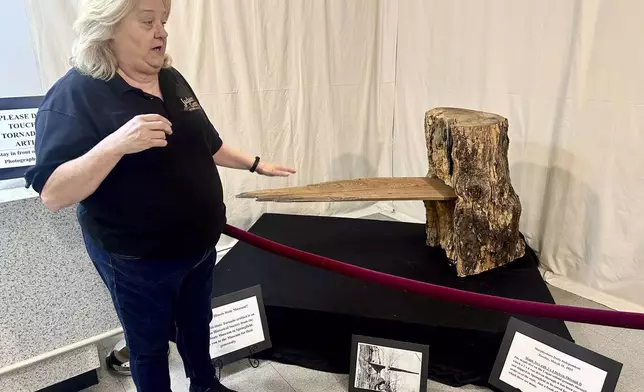
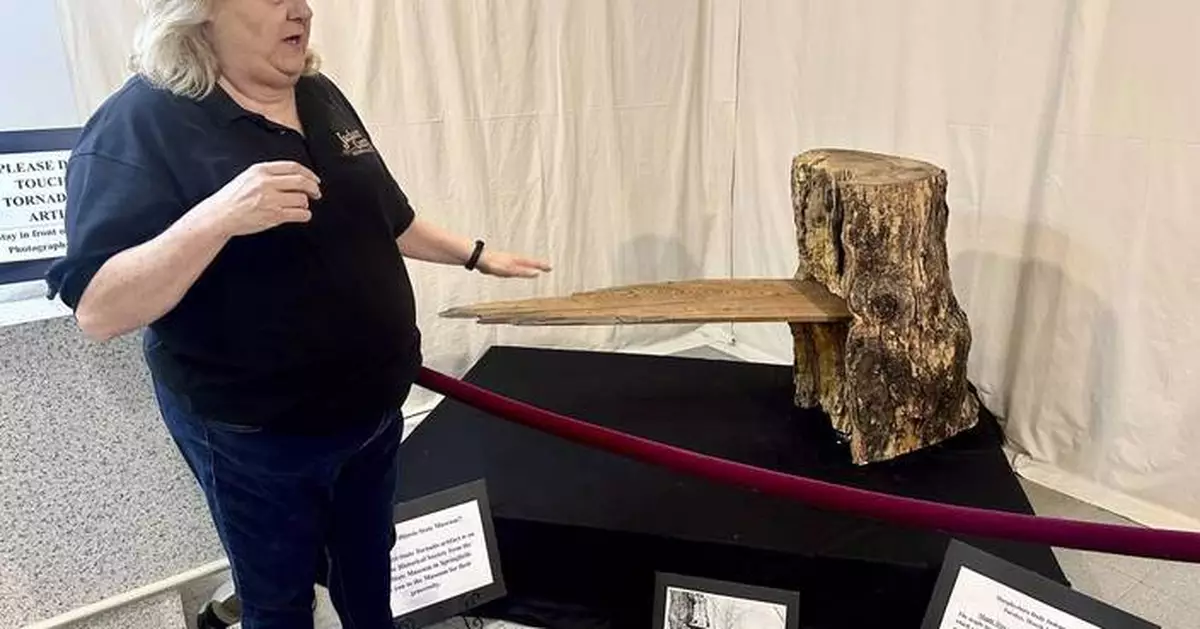
Mary Riseling, coordinator of the commemoration of the 100th anniversary of the March 18 Tri-State Tornado, shows how winds drove a board into the trunk of a maple tree on display at the Jackson County Historical Society on March 11, 2025 in Murphysboro, Ill. (AP Photo/John O'Connor)
“She couldn't tell which direction was home,” said Othella's daughter, 81-year-old Sylvia Carvell.
The deadliest twister in recorded U.S. history struck 100 years ago Tuesday, touching down in southeastern Missouri and tearing up everything in its 219-mile (352-kilometer) path for nearly four hours through southern Illinois and into Indiana.
It left 695 people dead and more than 2,000 injured, not counting the casualties from at least seven other twisters that the main storm spawned which spun off through Kentucky and into Alabama.
Modern standards qualify the so-called Tri-State Tornado as an F5, a mile-wide funnel with wind speeds greater than 260 mph (418 kph).
Perhaps the best evidence of its destructive handiwork was found on the Logan School grounds: A wooden board measuring 4 feet (1.22 meters) long by 8 inches (20.32 centimeters) wide driven so deeply into the trunk of a maple tree that it could hold the weight of a man.
It's on display this month as part of the Jackson County Historical Society's centennial commemoration of the disaster.
“You know the numbers: 200 mph winds. It was a mile wide. But the force that it took to put that pine board into that maple tree, it really puts it all in perspective,” said Mary Riseling, coordinator of the six-day remembrance. “To have one item that was witness to the force of those winds, it’s a story all its own.”
The atmospheric stew that gave birth to the ferocious cataclysm was literally a perfect storm. A surface low pressure system located over the Arkansas-Missouri border moved northeast, blending with a warm front moving north, said Christine Wielgos, warning coordination meteorologist for the National Weather Service.
That churn “provided the warmth, the instability, the moisture" which, when “married perfectly,” produce long-track, violent tornadoes, Wielgos said.
Adding to the terror was the lack of notice. There was no reliable storm forecasting in 1925 and no warning system anyway.
“All they had was they looked off to the West and went, ‘Looking a little dark out there,’ and didn’t even know what it was until it was right up on them and then you're scrambling to find shelter,” Wielgos said.
The storm took out 40% of the city of Murphysboro, 97 miles (156 kilometers) southeast of St. Louis. Its 234 deaths were the most of any municipality, with entire neighborhoods flattened. Other towns were virtually obliterated, too, including Annapolis, Missouri; Gorham, Illinois; and Griffith, Indiana.
The Mobile & Ohio Railroad yards, employing close to 1,100, were wiped out. At the twister’s next stop, it ravaged the DeSoto School, killing 38 children.
Sheet music for “After the Tornado is Over,” a morbid dirge written locally, reflects the mood of the odious aftermath:
“I once had a ‘Home Sweet Home’ here/With families so kind and dear/The Red Cross tells me they are dead/Among the debris straight ahead/Death seems to come to every door/The strong and weak, the rich and poor."
In Murphysboro, Pullman rail cars arrived to house visiting medical professionals and cleanup crews. The Red Cross supplied tents for the homeless.
With reports that the Silvey family had been killed and their home destroyed, Othella and her younger sister, Helen Silvey, 7, were shipped to Carbondale as orphans. However, it was their grandparents — who lived a block away — who had died, Carvell said. The sisters were eventually reunited with their parents.
The city rebuilt. Othella Silvey's family erected a home identical to the one that had been leveled. First, they built a chicken coop, which supplied not only their primary dietary staple for months, but their shelter until the primary residence was finished, Carvell said.
To this day, the west side of Murphysboro is peppered with small backyard structures that were temporary quarters until families could rebuild larger homes at the front of their lots.
Dozens of families who toughed it out remain in Murphysboro, Riseling said. Jackson County Historical Society President Laura Cates Duncan said the commemoration honors those who died but also celebrates the resilience of those who carried on.
“They could have gone elsewhere, but they wanted to stay here," Duncan said. "Their roots were here.”
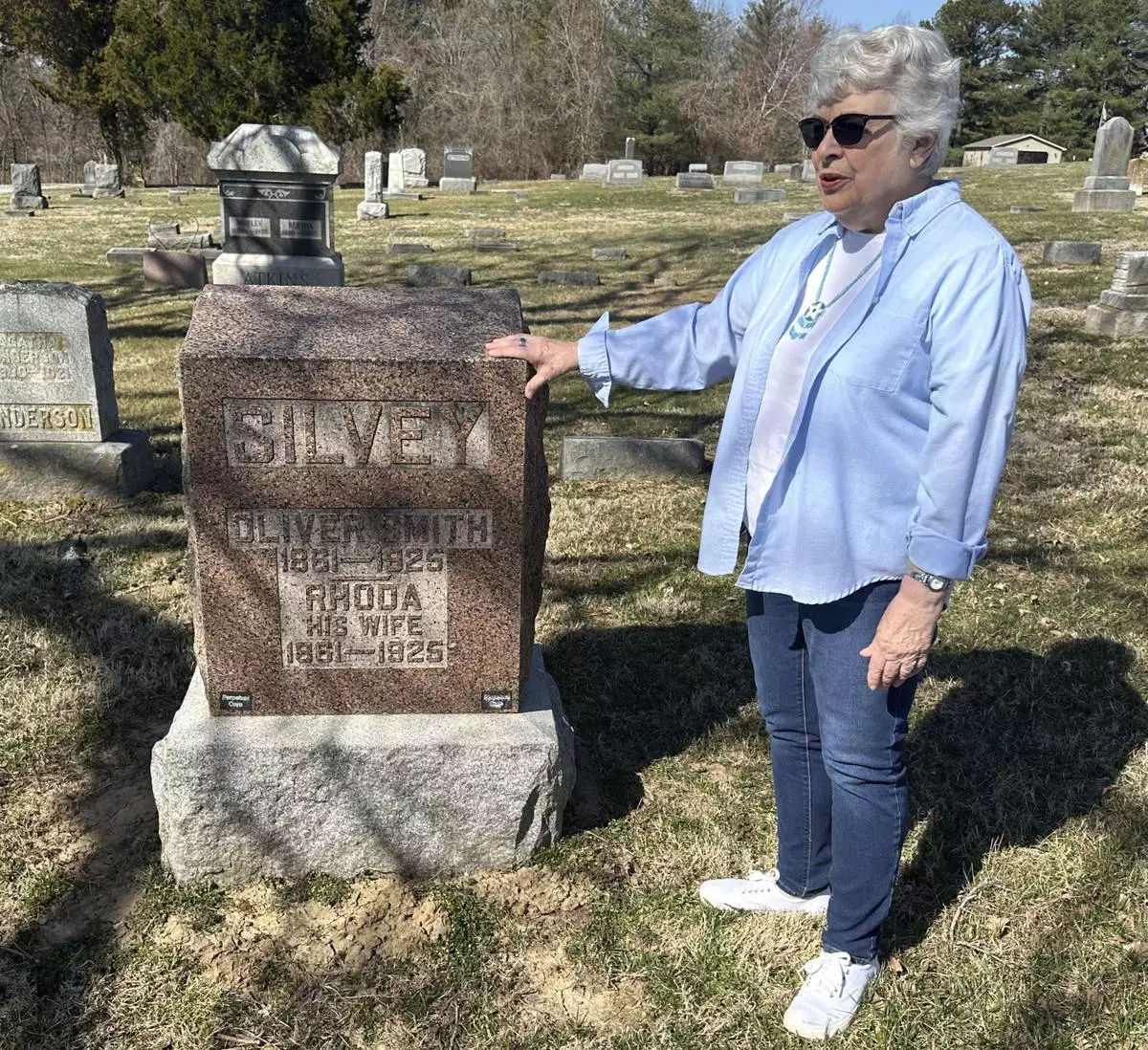
Sylvia Carvell, 81, of Murphybsoro, appears in this March 11, 2025 photo near the grave in Tower Grove Cemetery of her great-grandparents, (AP Photo/John O'Connor)
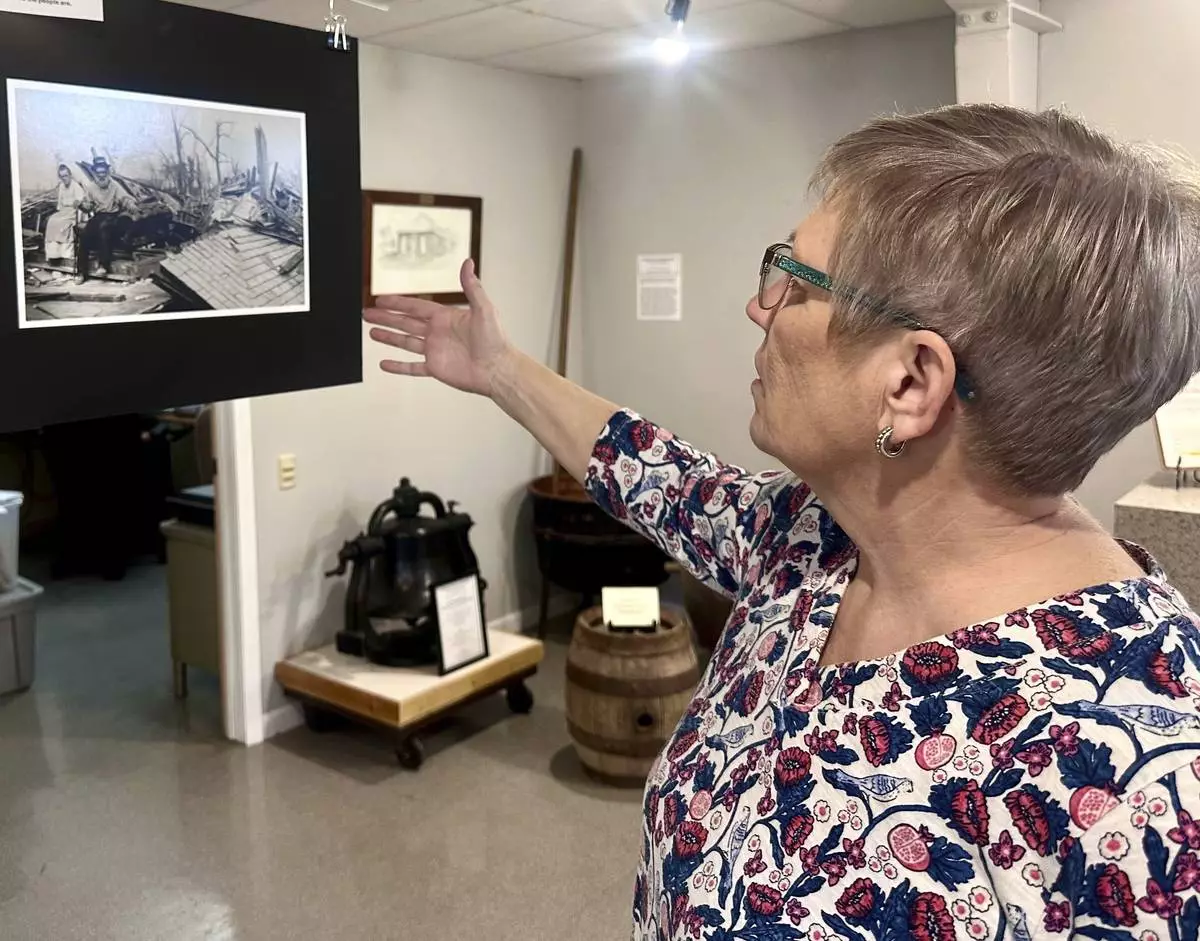
Jackson County Historical Society President Laura Cates Duncan describes a photo on display at the society's office of an elderly couple sitting on the ruins of their home after the March 18, 1925 Tri-State Tornado on March 11, 2025 in Murphysboro, Ill. (AP Photo/John O'Connor)
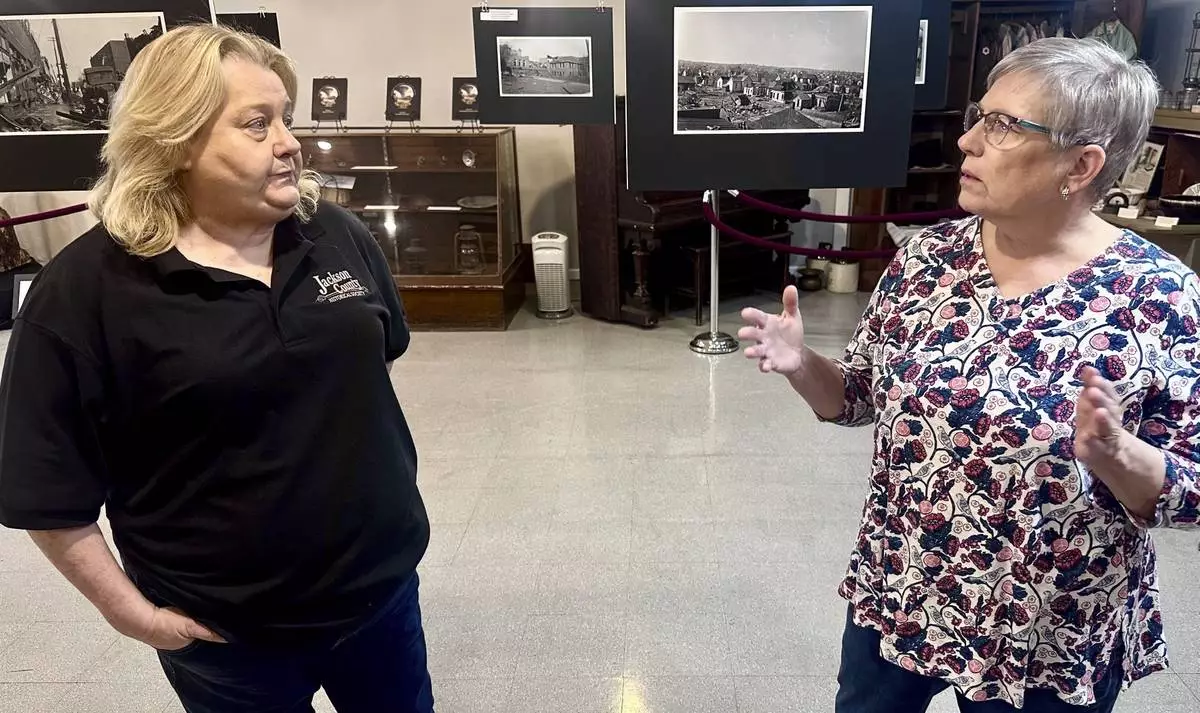
Jackson County Historical Society President Laura Cates Duncan, right, and Mary Riseling, a society board member and coordinator of the 100th anniversary commemoration of the Tri-State Tornado, discuss the March 18, 1925 cataclysm while standing among a gallery of photos on display at the society's office on March 11, 2025 in Murphysboro, Ill. (AP Photo/John O'Connor)
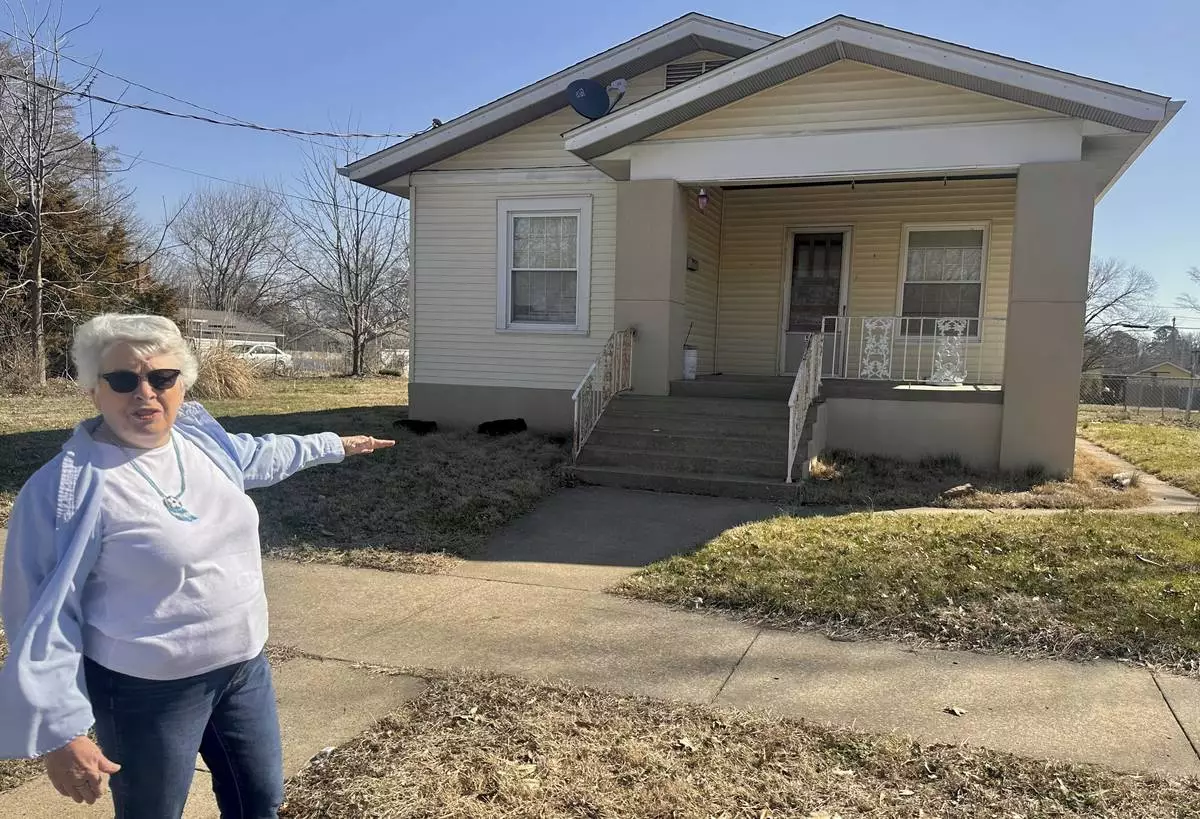
Sylvia Carvell describes her mother's childhood home in Murphysboro that was rebuilt to match the one destroyed in the March 18, 1925 Tri-State Tornado on March 11, 2025 in Murphysboro, Ill. (AP Photo/John O'Connor)
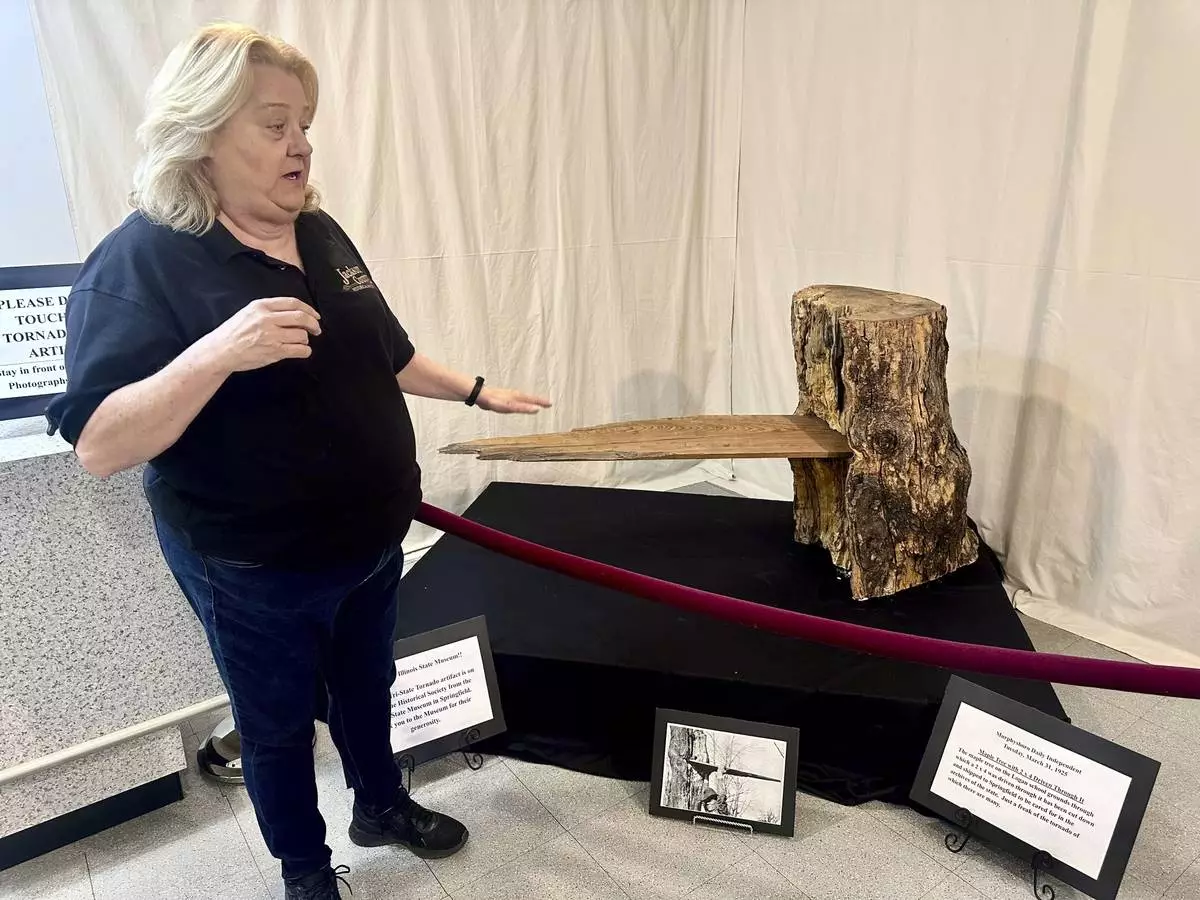
Mary Riseling, coordinator of the commemoration of the 100th anniversary of the March 18 Tri-State Tornado, shows how winds drove a board into the trunk of a maple tree on display at the Jackson County Historical Society on March 11, 2025 in Murphysboro, Ill. (AP Photo/John O'Connor)