Forever 21 has filed for bankruptcy protection for a second time and plans to close down its U.S. business as traffic in U.S. shopping malls fades and competition from online retailers like Amazon, Temu and Shein intensifies.
F21 OpCo, which runs Forever 21 stores, said late Sunday that it will wind down the business in the U.S. under Chapter 11 bankruptcy protection while determining if it can continue as a business with a partner, or if it will sell some or all of its assets.
“While we have evaluated all options to best position the company for the future, we have been unable to find a sustainable path forward, given competition from foreign fast fashion companies, which have been able to take advantage of the de minimis exemption to undercut our brand on pricing and margin,” Chief Financial Officer Brad Sell said in a statement.
The de minimis tax exemption lets shipments headed to U.S. businesses and consumers valued at less than $800 to enter the country tax free and duty free.
Forever 21 stores in the U.S. will hold liquidation sales and the website will continue to run while operations wind down. The retailer's locations outside of the U.S. are run by other licensees and are not included in the bankruptcy filing. International store locations and websites will continue operating as normal.
Authentic Brands Group owns the international intellectual property associated with the Forever 21 brand and may license the brand to other operators, F21OpCo said.
Jarrod Weber, Global President, Lifestyle at Authentic Brands Group, said the restructuring lets Forever 21 “accelerate the modernization of the brand’s distribution model, setting it up to compete and lead in fast fashion for decades to come. We’re building a direct creation-to-shelf model that moves faster.”
He added that, “We are receiving lots of interest from strong brand operators and digital experts who share our vision and are ready to take the brand to the next level.”
Forever 21 first filed for bankruptcy protection in 2019. The following year, it was acquired by a consortium of parties including Authentic Brands Group and mall owners Simon Property Group and Brookfield Property Partners. In early January, Forever 21’s parent company, Sparc Group, merged with JCPenney to form Catalyst Brands, a new entity that also includes brands like Aéropostale, Brooks Brothers, Eddie Bauer, Lucky Brand, and Nautica.
In 2023, Forever 21 teamed up with Chinese e-commerce player Shein. The partnership allowed Shein to carry Forever 21’s items on its platform. It also offered the opportunity to return Shein online orders at a couple hundred physical Forever 21 stores across the U.S.
Forever 21 joins a slew of other retailers that have filed for Chapter 11 or are liquidating in recent months as retailers face a slowdown in consumer spending and are navigating rising operating costs amid inflationary pressures. They include fabric and crafts retailer Joann Inc and Party City. In February, Outdoor apparel seller Liberated Brands, which has operated stores for surfer and skater-inspired labels like Quiksilver, Billabong and Volcom, filed for bankruptcy — and said it plans to shutter its locations across the U.S.
From Jan. 1 through March 14, U.S. retailers have so far announced 3,735 store closures, according to Coresight Research's weekly tracker.
Forever 21 had been battling a host of macroeconomic challenges as well as its own issues.
Forever 21 was founded in 1984 and, along with other fast-fashion chains like H&M and Zara, rode a wave of popularity among young customers in the mid-1990s. Their popularity grew during the Great Recession, when shoppers were seeking bargains. But Forever 21 went on an aggressive expansion just as shoppers were moving more online. Critics have said that Forever 21 was too slow to embraice online shopping.
The company also faced stiff competition from the likes of Shein and Temu, which churn out trendy items that are cheaper than what Forever 21 offers. For example, Forever 21 sells T-shirts for around $10. Temu has them for $5.
Neil Saunders, managing director of GlobalData, said in a statement that part of the problem now is that Forever 21's stores are too big for its current needs and it's in malls with not enough foot traffic.
“Forever 21 was always a retailer living on borrowed time. Over recent years it has been hit with dual headwinds from a weak apparel market and stiff competition from cheap Chinese marketplaces,” he said. “Both things have eroded its standing and depleted its market share.”

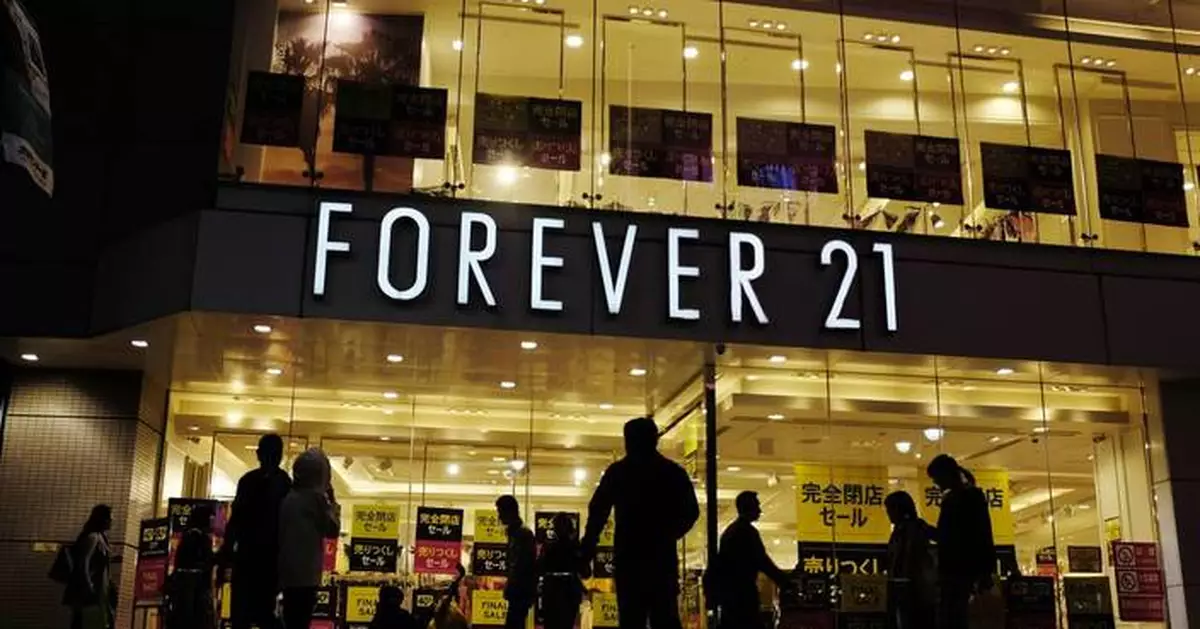
FILE - Shoppers walk by a Forever 21 clothing store, Thursday, Oct. 24, 2019, in Tokyo, as the liquidation sale signs are posted on the storefront. (AP Photo/Kiichiro Sato, file)
DALLAS (AP) — A California couple in an escalating fight with their surrogate over a newborn with a life-threatening heart defect told a Texas court Tuesday that the child's condition has worsened and they are anguished by attempts to deny them parental rights because they previously wanted an abortion.
“He's our child,” Nausheen Gilkar said, wiping away tears on the witness stand.
“She's unstable,” Gilkar said of surrogate McKenna West, who was sitting across from her in the Dallas courtroom. “She's trying to take him from us.”
The hearing offered the fullest public airing to date of a deepening and high-profile dispute over surrogacy and abortion that has rushed right-to-life groups and GOP officeholders to the side of West, a nurse who flew from Alaska to have the baby on Aug. 12 in Texas, where most abortions are banned.
Gilkar and her husband, Omar Ahmed, say they named the newborn Rumi. Attorneys for West, who has called the child Gabriel, said she is seeking sole conservatorship to make medical decisions for the child.
It was not clear when the judge would issue an order in the case.
West told the court that she was 23 weeks pregnant when she made an appointment for an abortion at the couple's urging but was not comfortable with it.
“I knew that this baby, despite the diagnosis, had a great chance at survival and a great chance at leading a long life,” West said.
After West gave birth, the couple obtained a restraining order barring her from seeing or holding the child.
The judge did not rule on final custody or conservatorship Tuesday, and the restraining order was left in effect.
Court documents filed by the couple's attorney prior to the hearing said Rumi was in critical condition and appeared to be “suffering from potential complications” from a procedure after he was born.
The child has hypoplastic left heart syndrome, a congenital defect in which one side of the organ is underdeveloped, preventing normal blood flow.
Fewer than 1,000 newborns each year have the condition, according to the Centers for Disease Control and Prevention. Without treatment, death can come within days or weeks.
Gilkar told the court that the baby had no blood flow to the left side of his heart. Since surgery, she said, he has gasped for air, choked on tubes and needed a blood transfusion.
“He’s the most beautiful person I’ve never seen,” Gilkar said. “He’s the love of our lives. He’s suffering a lot.”
West and her attorneys have argued that Gilkar and Ahmed were not committed to guaranteeing that the baby would undergo surgeries or “life-saving care.” They say West should have conservatorship because the couple asked her to terminate the pregnancy after learning of the baby's diagnosis.
On the stand, West told their attorney, Lee Budner, that if the court finds that the couple are committed to the baby receiving the surgeries, she would drop any custody claims.
Jeff Domen, an attorney for West, repeatedly pressed Gilkar on the couple's desire to terminate the pregnancy, asking her to confirm that she requested it. Asked if she regretted the decision, Gilkar responded that she did not.
“Would you trust somebody to care for your child that wanted your child dead?” Domen asked.
Gilkar said she did not know how to respond to the question.
Gilkar and Ahmed say West violated the surrogacy contract they entered in August 2025.
Gilkar told the court that she entered the contract after going through eight rounds of in vitro fertilization in Los Angeles and her body “gave up.” She had to undergo a hysterectomy, she said.
“It was not my first choice, it was my only option,” Gilkar said.
West stayed in the couple's home in Los Angeles, Gilkar said, and she was there with West for the IVF transfer.
“I was holding her hand,” Gilkar said, crying.
The couple’s attorney referenced court records from California that determined West has no rights to legal or physical custody. West said she wanted the judge to disregard that ruling, saying she was willing to fight for him since the diagnosis.
Surrogacy is not regulated on a federal level, and experts say each state has its own laws, which can leave room for gaps in interpretation.
“We believe Ms. West is the mother of this child,” Domen said.
Wilder is a corps member for The Associated Press/Report for America Statehouse News Initiative. Report for America is a nonprofit national service program that places journalists in local newsrooms to report on undercovered issues.

Nausheen Gilkar, center, walks in a hallway at family court in Dallas, Tuesday, Aug. 25, 2026. (AP Photo/LM Otero)
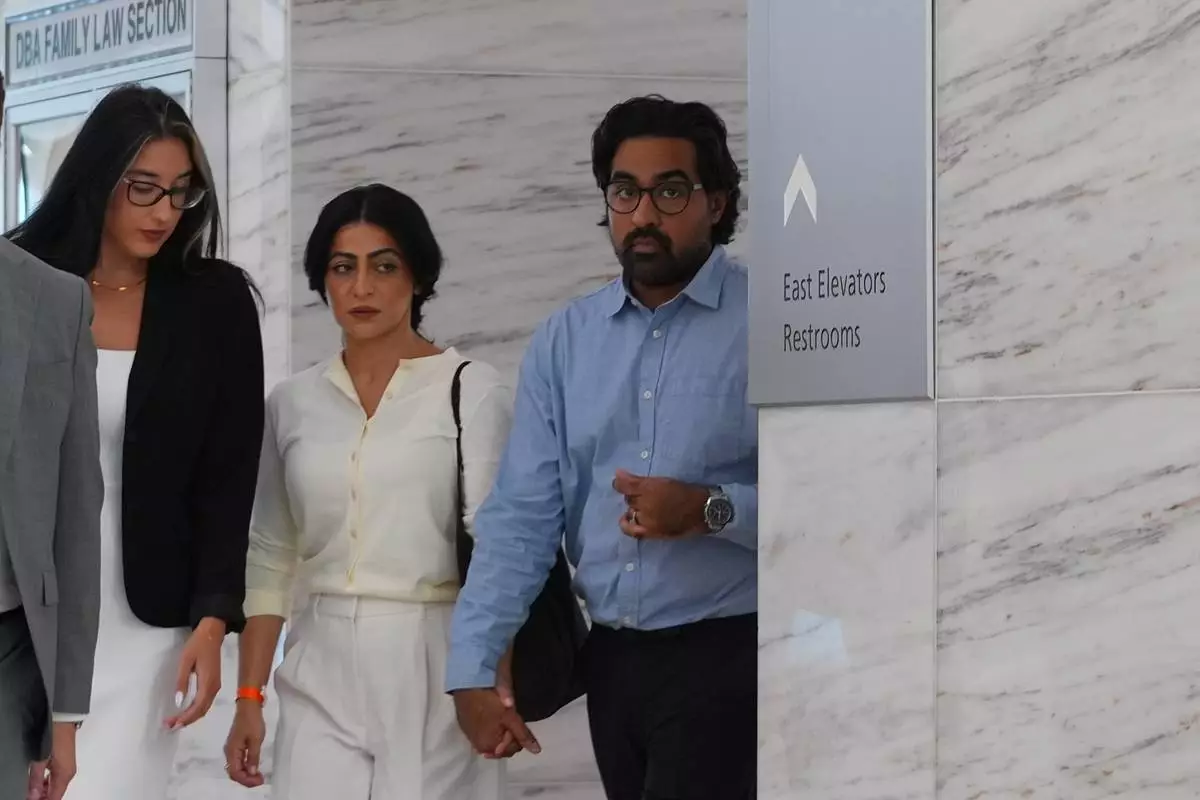
Omar Ahmed, right, and his wife Nausheen Gilkar, center, arrive for a court hearing in Dallas, Tuesday, Aug. 25, 2026. (AP Photo/LM Otero)

McKenna West, left, arrivers with her legal team for a court hearing in Dallas, Tuesday, Aug. 25, 2026. (AP Photo/LM Otero)

McKenna West, center, walks in a hallway before a court hearing in Dallas, Tuesday, Aug. 25, 2026. (AP Photo/LM Otero)
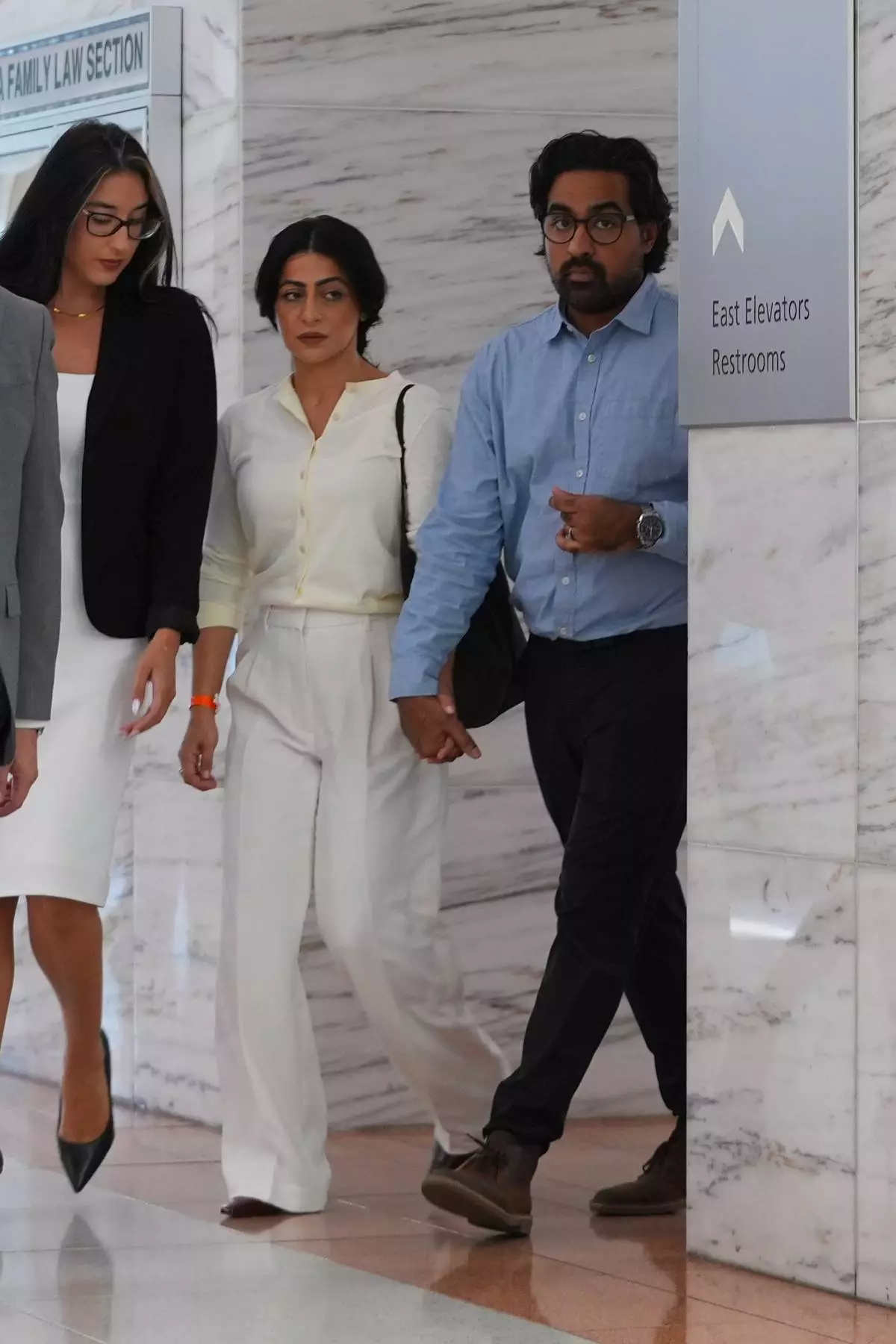
Omar Ahmed, right, and his wife Nausheen Gilkar, center, arrive for a court hearing in Dallas, Tuesday, Aug. 25, 2026. (AP Photo/LM Otero)
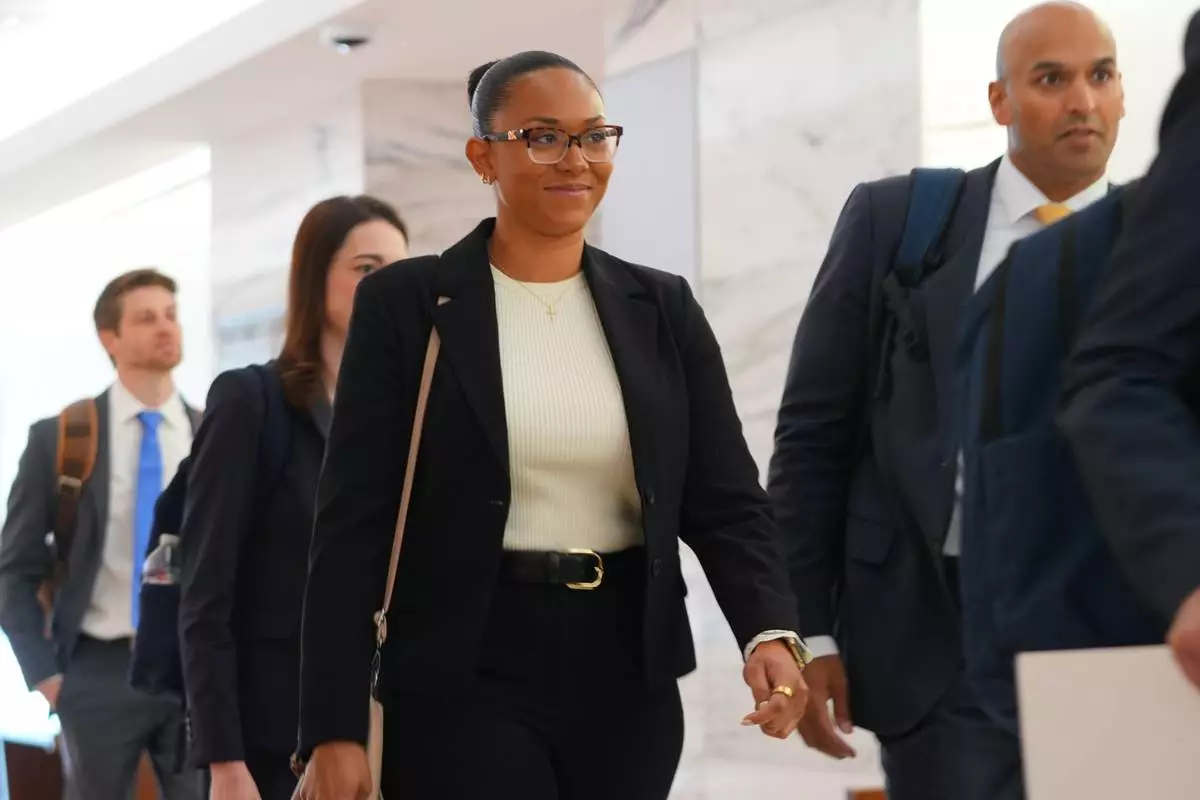
McKenna West, left, arrivers with her legal team for a court hearing in Dallas, Tuesday, Aug. 25, 2026. (AP Photo/LM Otero)

Nausheen Gilkar, left, and her husband Omar Ahmed arrive for a court hearing in Dallas, Tuesday, Aug. 25, 2026. (AP Photo/LM Otero)