Global gross domestic product (GDP) growth is projected to moderate from 3.2 percent in 2024 to 3.1 percent in 2025 and 3.0 percent in 2026, the Organization for Economic Cooperation and Development (OECD) said in its latest economic outlook released on Monday.
In its previous economic outlook published in December 2024, the OECD projected that global GDP growth would be 3.3 percent in both 2025 and 2026.
The Paris-based OECD's projections were based primarily on weaker expected growth in the United States and the eurozone.
According to the OECD, the downward adjustment from its previous forecast is due to "higher trade barriers in several G20 economies and increased geopolitical and policy uncertainty weighing on investment and household spending."
The OECD emphasized that "significant risks remain" as further tit-for-tat tariffs between major global economies "would hit growth around the world and add to inflation."
Higher-than-expected inflation would prompt more restrictive monetary policy and could give rise to disruptive repricing in financial markets, according to the organization.
U.S. annual GDP growth is projected to be 2.2 percent in 2025, down from the OECD's 2.4 percent projection in December, before falling to 1.6 percent in 2026 -- a drop of 0.5 percentage points on the organization's previous forecast.
Likewise, the eurozone growth projection is 1.0 percent in 2025 and 1.2 percent in 2026, as heightened uncertainty keeps growth subdued.
Headline inflation in the G20 is now projected to fall from 5.3 percent in 2024, to 3.8 percent in 2025 and 3.2 percent in 2026, with core inflation in the advanced G20 economies projected to decline to 2.6 percent in 2025 and 2.4 percent in 2026 from 2.7 percent in 2024.
U.S. headline inflation in 2025 and 2026 is expected to be 2.8 percent and 2.6 percent, respectively, up 0.7 and 0.6 percentage points from the previous forecast.
The report also noted that central banks should remain vigilant given heightened uncertainty and the potential for higher trade costs to push up wage and price pressures.
Countries need to observe fiscal discipline to ensure debt sustainability and maintain the ability for governments to react to future shocks and accommodate current and future spending pressures, the report said.
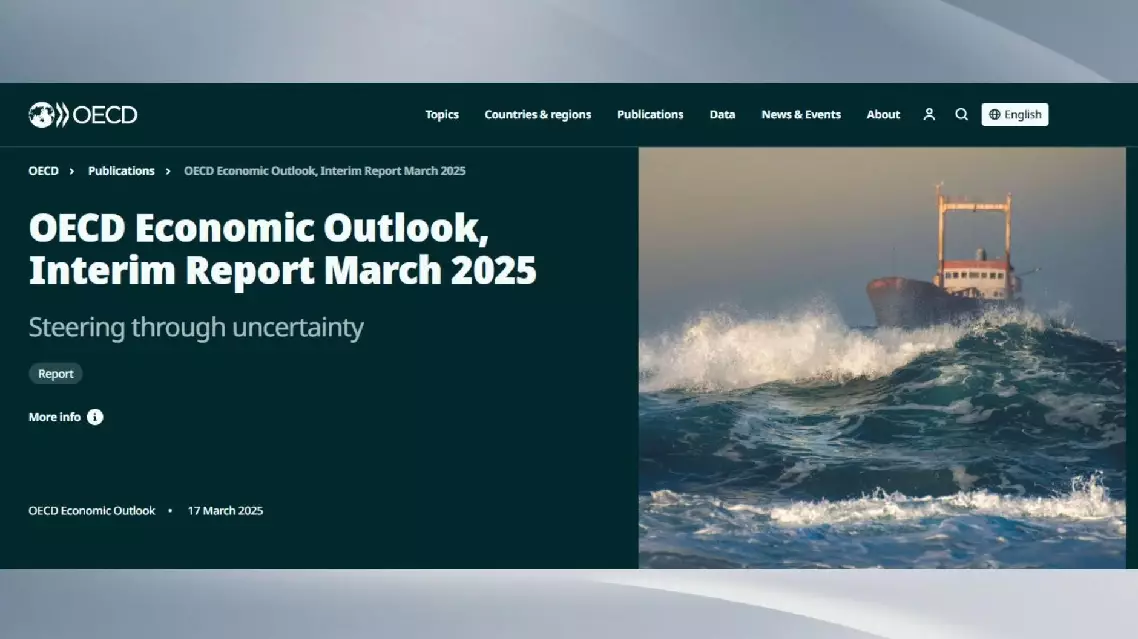
Global GDP growth projected to slow down to 3.1 pct in 2025, 3 pct in 2026
Russian President Vladimir Putin and U.S. President Donald Trump held a phone conversation on Wednesday, discussing the recent shooting at the White House press dinner, the situation in Iran and the Ukraine crisis, the Kremlin said.
The Russian president informed his U.S. counterpart of Russia's readiness to declare a truce with Ukraine for the period of Victory Day commemorations.
Trump voiced strong support for the initiative, noting that "the holiday marks our common victory over Nazism in World War II," said Russian presidential aide Yuri Ushakov after the phone conversation that lasted over an hour and a half.
At Trump's request, Putin described the current situation along the contact line with Ukraine, where Russian troops maintain the strategic initiative and are pushing back enemy positions, said Ushakov.
Putin reaffirmed that the goals of the special military operation will be achieved in any case, the aide said. Russia would prefer this to be achieved through negotiations, for which Ukrainian President Volodymyr Zelenskymust respond positively to the well-known proposals that have been repeatedly put forward, including by the U.S. side, he said. Russia has handed over more than 20,000 bodies of the deceased to Ukraine, Putin told Trump, adding that Ukraine has returned just over 500 bodies to Russia since the beginning of 2025.
Among the issues on the international agenda, the two leaders focused primarily on the situation in Iran and the Persian Gulf, according to the Kremlin.
Putin viewed Trump's decision to extend the ceasefire with Iran as the right move, as it will help stabilize the situation, Ushakov said, adding that Putin drew attention to the inevitable, extremely dire consequences not only for Iran and its neighbors, but also for the entire international community should the United States and Israel resort to force again.
Russia remains firmly determined to fully support diplomatic efforts aimed at finding a peaceful settlement to the crisis, and has put forward a number of proposals intended to resolve differences over the Iranian nuclear program, said the presidential aide.
Ushakov noted that to this end, Moscow will maintain active contacts with Iranian representatives, leaders of Persian Gulf states, as well as with Israel and the U.S. negotiating team.
For his part, Trump also outlined his assessment of the Middle East situation to Putin.

Putin, Trump hold phone call on issues of Iran, Ukraine