The United Nations peacekeeping chief has called for an immediate ceasefire in the Democratic Republic of Congo (DRC) amid escalating tensions between the March 23 Movement (M23) and the DRC government, which have led to significant civilian casualties and widespread displacement.
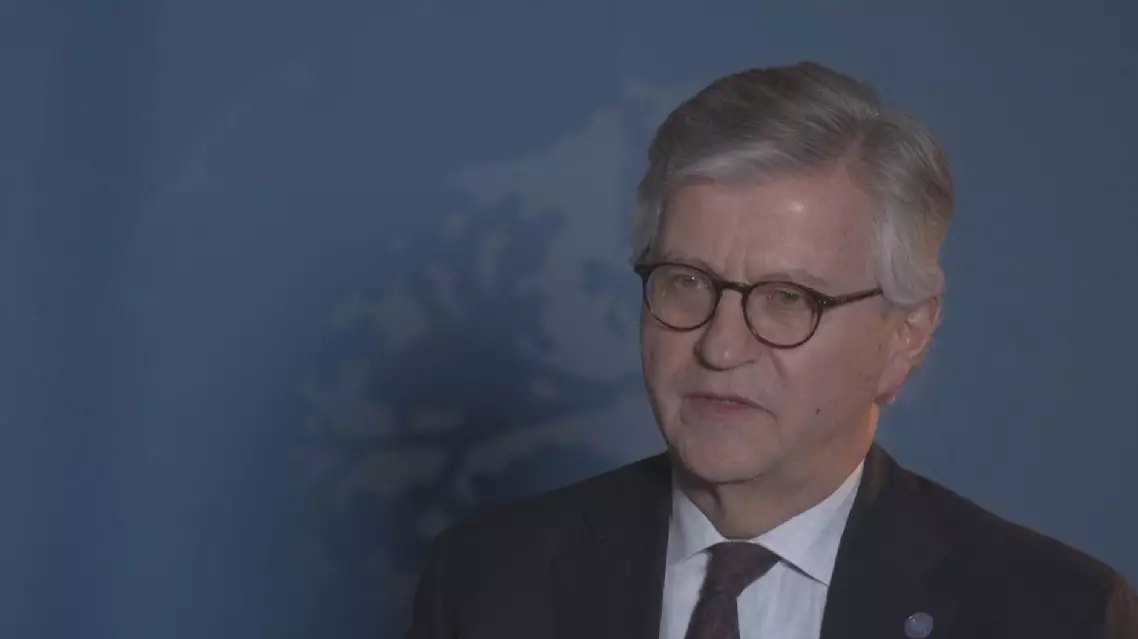
In an exclusive interview with China Central Television in New York, Jean-Pierre Lacroix, the U.N. Under-Secretary-General for Peace Operations, expressed deep concern over the ongoing violence in the DRC, highlighting the risks of further instability in the region and the dire humanitarian crisis unfolding in the African country.
Fighting between the DRC government and the M23 has intensified in recent months, with M23 forces launching major offensives and seizing large chunks of land in the eastern North Kivu and South Kivu provinces. The Congo River Alliance, a politico-military group allied to the M23, has established a parallel provincial administration in these provinces.
On Monday, the M23 movement announced that it would not participate in direct peace talks with the DRC government, scheduled to take place on Tuesday in Luanda, the capital of Angola. "You have the M23 offensive which continues, albeit maybe at a slower pace, but certainly continues. And it has the potential to generate more instability, more violence in the DRC and the region, and potentially triggering a regional conflict. So we need to avoid this. The humanitarian consequences of all these have been already very dire," said Lacroix.
When asked whether peace was still possible, Lacroix affirmed that the U.N. mission would continue to prioritize civilian protection despite the challenging situation.
"First of all, we have mandates, so we continue to implement the mandate. The mandate is very much about protection of civilians and we continue to do this. As I say, every single day, hundreds of thousands of civilians are being protected by MONUSCO (the UN Organization Stabilization Mission in the Democratic Republic of the Congo). In addition to that, the good news is that there are diplomatic efforts," said Lacroix.
On a more optimistic note, Lacroix pointed to ongoing diplomatic efforts by regional organizations such as the Southern African Development Community (SADC) and the East African Community (EAC), which are actively engaged in peace negotiations.
The U.N. Security Council also recently adopted Resolution 2773, calling for an immediate ceasefire and the withdrawal of foreign armed forces from the DRC. The resolution also emphasizes that both the DRC and Rwanda must fulfill their respective commitments and adhere to the Luanda Process, and work to resolve the conflict by diplomatic means.
"The first step is to achieve a ceasefire, and I think that it's important that all diplomatic efforts and everything possible need to be done to achieve that goal of ceasefire. MONUSCO is ready to play a role in monitoring the respect of the ceasefire. We're preparing for that. We have plans for that. I think time is of the essence. We cannot wait to achieve a ceasefire because the risk, as I say, of a further, very serious deterioration in the situation, is very much there," said Lacroix.
U.N. peacekeeping chief calls for immediate ceasefire in DRC