Film-makers behind the historical documentary "The Sinking of the Lisbon Maru," say the challenging production was worth the years of effort in order to shed more light on a relatively little-known incident of World War II, when Chinese fishermen helped save hundreds of British prisoner of wars (POWs) from a sinking Japanese ship.
The documentary, which had its UK premiere in London on Monday, chronicles the dramatic 1942 sinking of the Lisbon Maru, a Japanese ship carrying over 1,816 British POWs from Hong Kong towards Japan.
After being struck by a torpedo launched by a U.S. submarine in waters near the Dongji Islands in east China's Zhejiang Province, Japanese soldiers cruelly battened the POWs down below deck, leaving them to drown and even shooting at them, leading to the deaths of 828 prisoners.
Braving bullets, local Chinese fishermen risked their own lives as they helped rescue 384 POWs from the waters of the East China Sea.
British historian Tony Banham, who also authored a book on the incident and served as an advisor for the documentary project, shared his thoughts on this extraordinary act of heroism.
"Ordinary Chinese fishermen, when they saw this big ship coming out of nowhere and sinking, and then these strange people floating in the water, they did go out and they rescued hundreds of them," said Banham.
The making of the documentary became a years-long undertaking for Chinese director Fang Li, who is also an expert in geophysical exploration and marine technology. He had become fascinated with the tale of the Lisbon Maru after speaking with local fisherman in Zhejiang Province in 2014, and later led a team to locate the wreckage of the sunken ship in 2016.
He went on to interview many of the last-surviving witnesses and, alongside his crew, he then traveled to the UK to visit the families of the POWs and to speak to many historians, where they uncovered many powerful stories connected to the tragic Lisbon Maru incident. The documentary brings together rare footage and decades of painstaking research to tell this unforgettable story of sacrifice and survival.
Reflecting on the long and challenging journey of creating the film, Fang said he was determined to complete what he described as the most important project of his career.
"Because nobody can help me, because it takes so long. First of all who has time for so many years? A minimum of six years. That's one thing, the other thing is, nobody knows how to do this film. How to tell the story. We have so much footage. Even for editing, it took us two years. This is my lifetime project. I have to do it. If I don't do it, I will be blamed by god, really," said Fang.
The premiere was attended by over a hundred relatives of British prisoners of war who had been aboard the Lisbon Maru, a testament to the deep personal connection many have with this powerful historical moment.
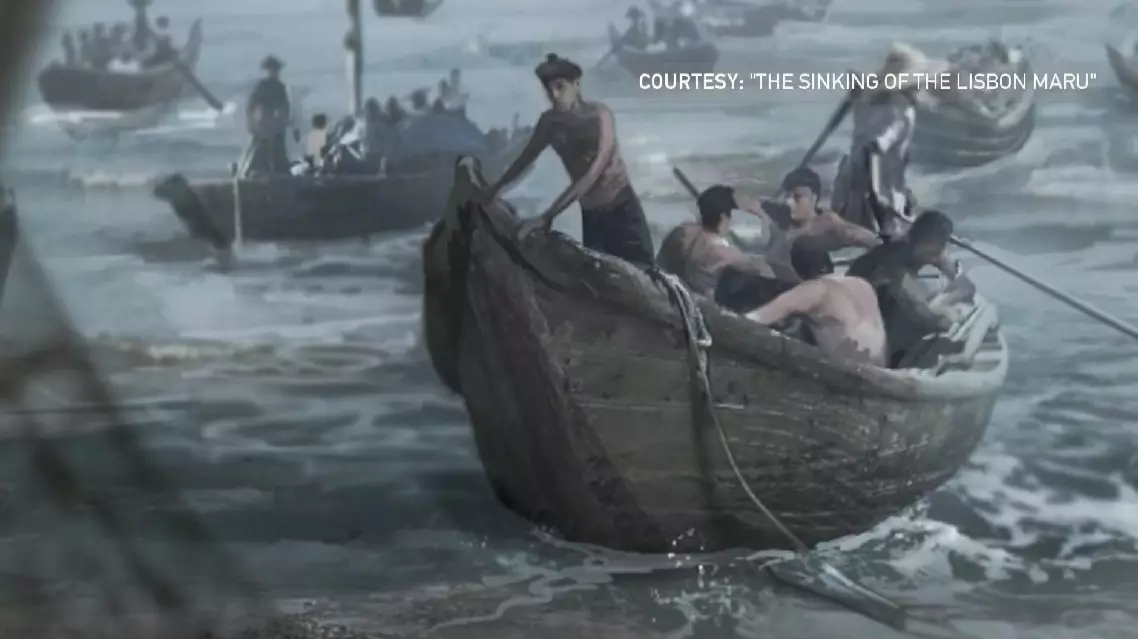
Documentary film-makers reflect on "lifetime project" to share story of historic WWII incident
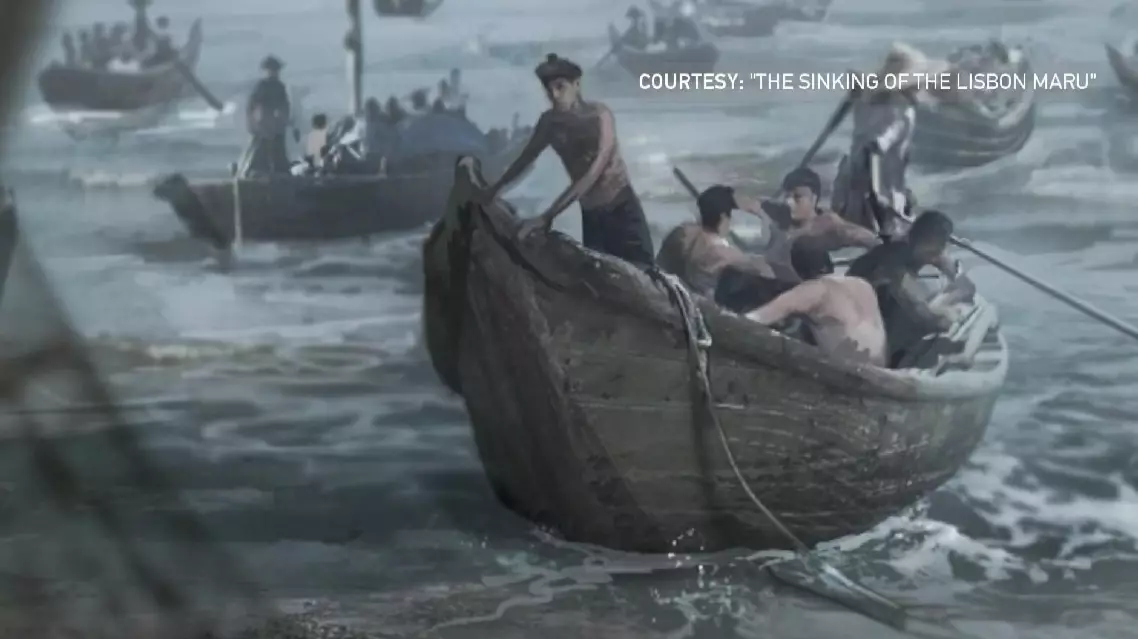
'Sinking of the Lisbon Maru' creators reflect on heroic moment in WWII history