Skip to Content Facebook Feature Image

Fear at isolated Antarctica base as a man is accused of attacking a colleague and making threats

News

Fear at isolated Antarctica base as a man is accused of attacking a colleague and making threats
News

News

Fear at isolated Antarctica base as a man is accused of attacking a colleague and making threats

2025-03-18 19:34 Last Updated At:19:51

CAPE TOWN, South Africa (AP) — A member of a South African research team that is confined for more than a year at an isolated Antarctica base was put under psychological evaluation there after he allegedly assaulted and sexually harassed colleagues, government officials said.

The problems at the SANAE IV base were first reported by South Africa's Sunday Times newspaper, which said it had seen an email from a team member to authorities last month claiming the man had attacked the base leader and made threats.

The email pleaded for help.

“His behavior has escalated to a point that is deeply disturbing,” the email said, according to The Sunday Times. “I remain deeply concerned about my own safety, constantly wondering if I might become the next victim.” The report said the man allegedly made a death threat.

South Africa’s Ministry of Environment, which oversees the research missions, said in a statement Monday night that the alleged assault on the base leader was reported on Feb. 27, and officials and counselors intervened remotely “to mediate and restore relationships at the base.” They were speaking with team members almost daily, it said.

“The alleged perpetrator has willingly participated in further psychological evaluation, has shown remorse and is willingly cooperative,” the ministry said, adding that he had written a formal apology to the victim of the alleged assault. It said the allegations were being investigated. No one was identified.

The nine-member team, which includes scientists, a doctor and engineers, is expected to stay at the base for about 13 months until next year, authorities said, living in close quarters through the hostile Antarctic winter, whose six months of darkness begin in June.

The base is on a cliff in Queen Maud Land and is surrounded by a glacial ice sheet, more than 4,000 kilometers (2,485 miles) from South Africa.

The next planned visit by a supply ship is in December, according to the South African National Antarctic Program. It takes the ship around 10 days to travel from Cape Town.

Authorities said they had decided not to evacuate anyone from SANAE IV, where the onset of unpredictable weather conditions meant the team was now confined to the base.

The ministry said all team members had undergone evaluations ahead of the trip to ensure they are able to cope with the “extreme nature of the environment in Antarctica” and the isolation and confinement, and no problems were identified.

“It is not uncommon that once individuals arrive at the extremely remote areas where the scientific bases are located, an initial adjustment to the environment is required,” it said.

Previous problems have been reported at another of South Africa's remote research bases on Marion Island, a South African territory near Antarctica.

In 2017, a member of a research team there smashed a colleague's room with an ax over an apparent love triangle, according to a report to South Africa's Parliament. Lawmakers said it appeared the researchers were living in highly stressful conditions.

The National Science Foundation, the federal agency that oversees the U.S. Antarctic Program, published a report in 2022 in which 59% of women in the U.S. program said they’d experienced harassment or assault while on research trips in Antarctica.

AP Africa news: https://apnews.com/hub/africa
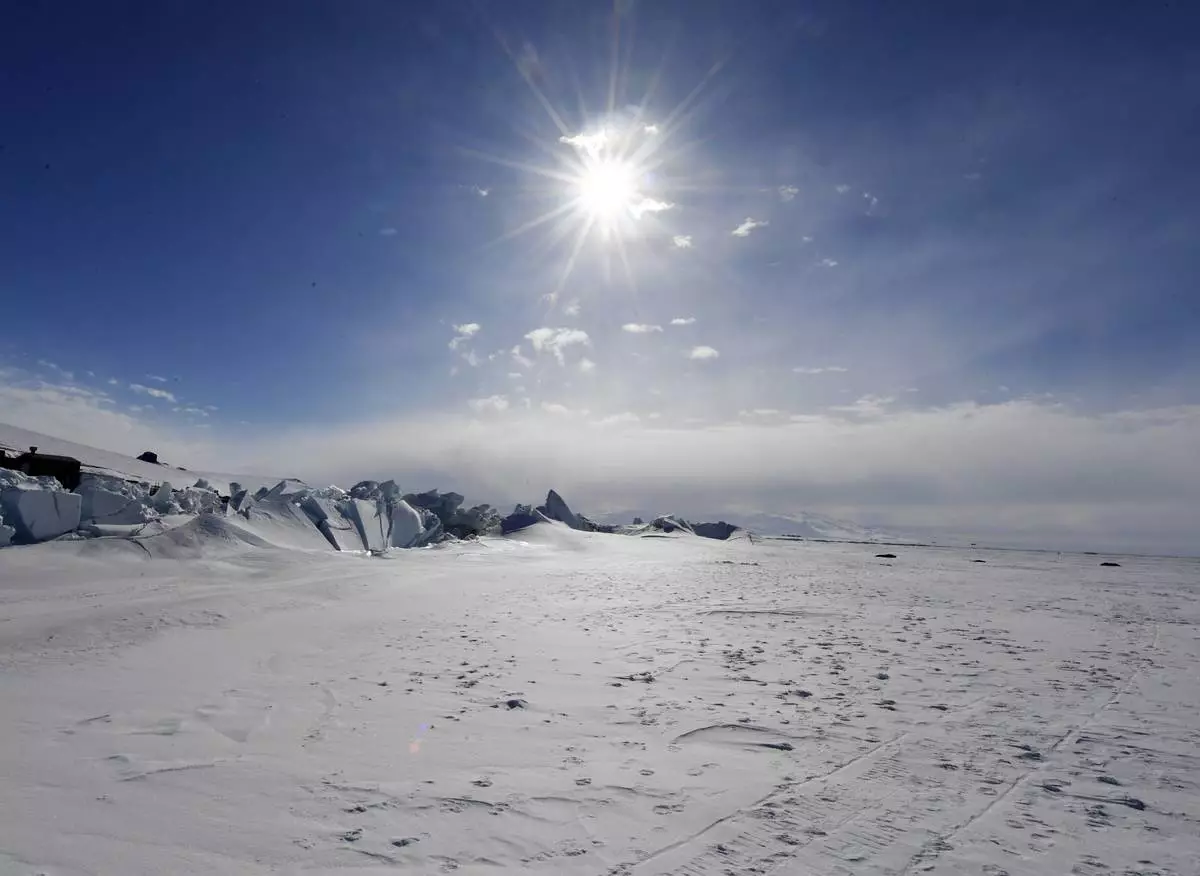
FILE - A frozen section of the Ross Sea is pictured at the Scott Base in Antarctica Saturday, Nov. 12, 2016. (Mark Ralston/Pool Photo via AP, File)
FILE - A frozen section of the Ross Sea is pictured at the Scott Base in Antarctica Saturday, Nov. 12, 2016. (Mark Ralston/Pool Photo via AP, File)

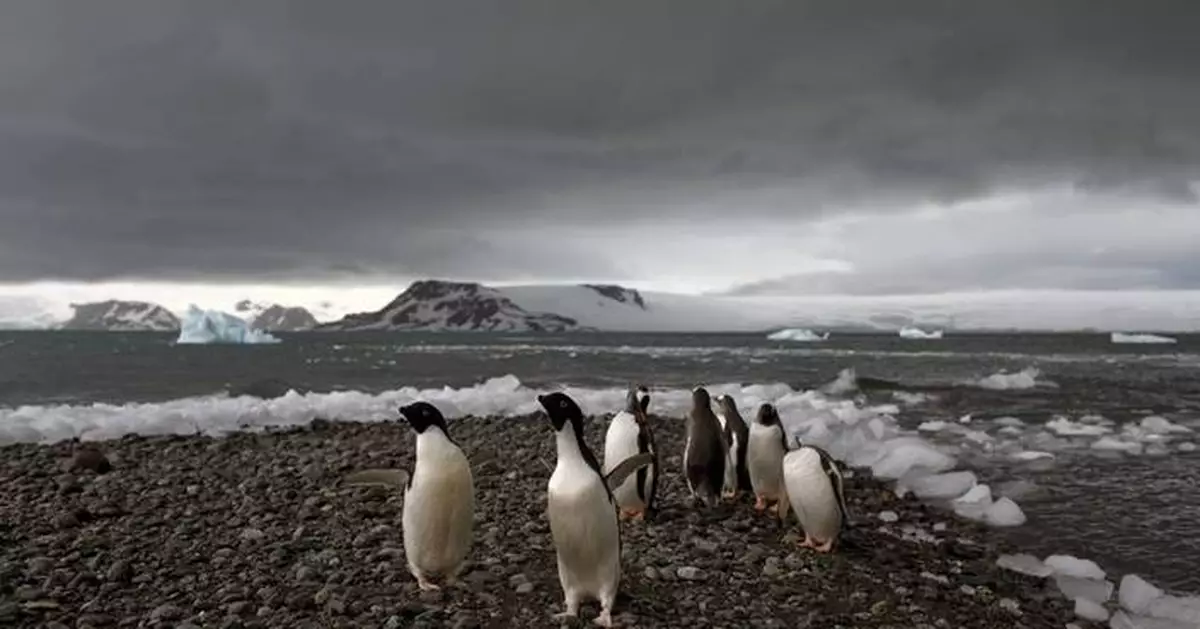
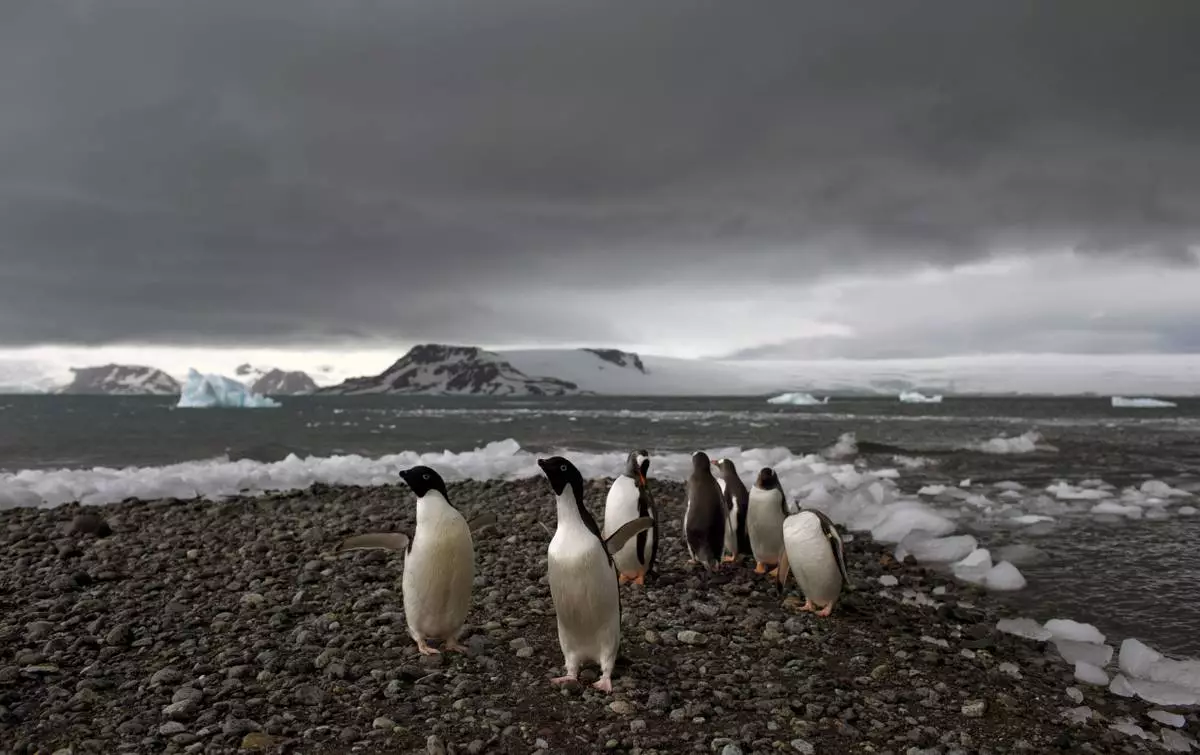
FILE - Penguins walk on the shore of Bahia Almirantazgo in Antarctica on Jan. 27, 2015. (AP Photo/Natacha Pisarenko, File)
FILE - Penguins walk on the shore of Bahia Almirantazgo in Antarctica on Jan. 27, 2015. (AP Photo/Natacha Pisarenko, File)

President Donald Trump made a lot of tariff threats and trade promises this year. Many materialized into a barrage of new import taxes that overturned decades of U.S. economic policy — but others have yet to be fulfilled as 2025 comes to a close.

Some of Trump’s unrealized threats reflect a broader approach from a president with a track record of using sky-high levies to pressure other countries into new trade deals, one-up retaliatory measures or even punish political critics. At the same time, they arrived as growing list of tariffs did go into effect — from Trump's punishing new taxes on imported metals, to tit-for-tat levies with top U.S. trading partners like China — plunging consumers and businesses worldwide into uncertainty.

Here’s what Trump said when announcing some of his biggest (but still unrealized) tariff threats and promises this year, and where things stand today.

In his words:

What happened: The External Revenue Service has yet to be established as of the end of December. While administration officials continued to reiterate plans for launching the External Revenue Service during Trump's first months back in office, the entity does not yet exist.

In his words:

What happened: The EU's planned levy on American whiskey — which it unveiled as part of broader retaliation in response to Trump's new steel and aluminum tariffs — was postponed, with the latest delay reportedly running until at least February.

Trump's 200% tariff threat on European alcohol never materialized. But spirits were not included in the EU-U.S. trade deal struck over the summer, which set a 15% rate on most European imports.

In his words:

What happened: Despite Trump's repeated threats, the U.S. has yet to impose a 100% tariff on foreign films. After his initial May promise to initiate the process, the White House said no final decision had been made. Also still unclear is how the U.S. would tax a movie made overseas.

In his words:

What happened: The president did not sign an executive order imposing a 100% tariff on pharma products on Oct. 1 and, as of today, no levy has been put into place. But Trump previously suggested that steep levies on pharmaceutical drugs could arrive further down the road, telling CNBC in August that he would start by charging a “small tariff” and potentially raise the rate as high as 250%. Meanwhile, trade agreements with specific countries set their own rates or exemptions — with the U.K., for example, securing a 0% tariff on all British medicine exported to the U.S. for three years. The administration also announced deals with specific companies with promises of lower drug prices.

In his words:

What happened: A sweeping 100% on computer chips has yet to go into effect. When announcing his plans to impose the levy back in August, Trump was not specific about the timing. And other details have remained scarce.

In his words:

What happened: Details about how, when and if a tariff dividend will reach Americans are still scarce. Budget experts have said that the math doesn't add up. And Treasury Secretary Scott Bessent suggested that it might not mean checks from the government. Instead, Bessent told ABC in November, the rebate might take the form of tax cuts. White House National Economic Council Director Kevin Hassett also told CBS News that it's up to Congress.

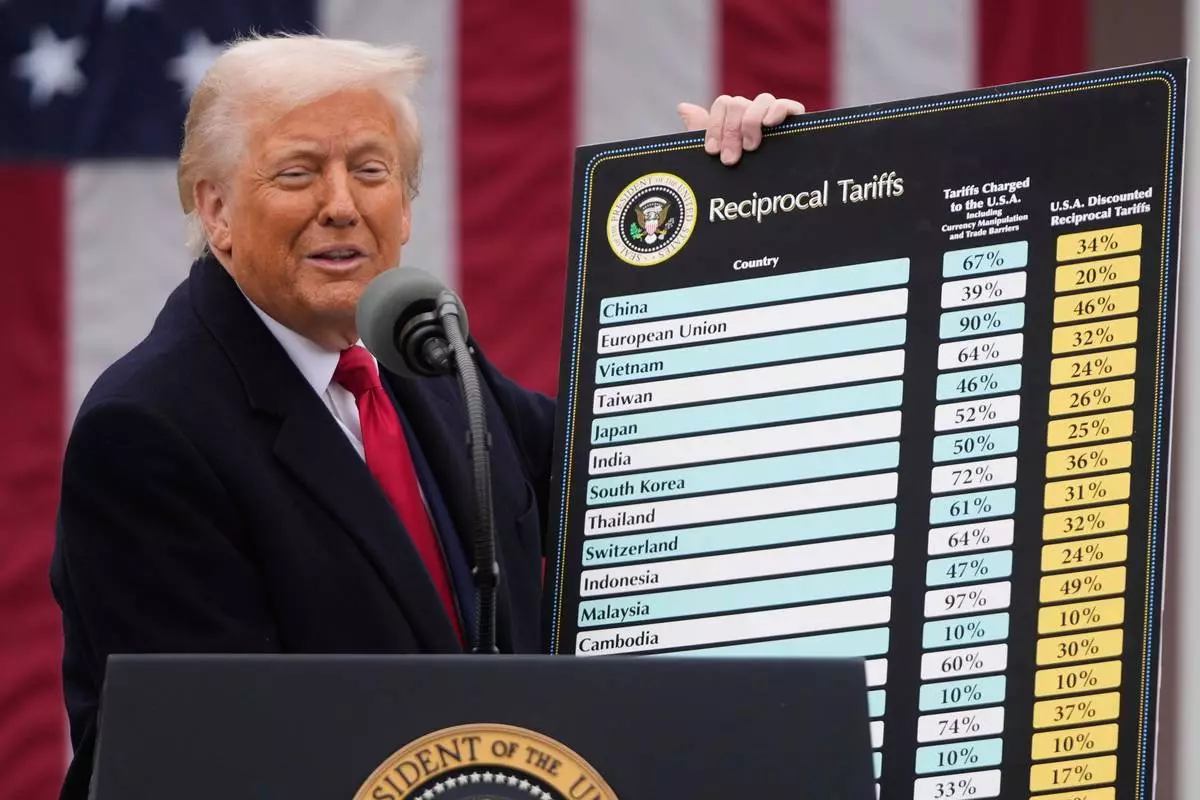
FILE - President Donald Trump speaks during an event to announce new tariffs in the Rose Garden at the White House, on April 2, 2025, in Washington. (AP Photo/Mark Schiefelbein, File)

FILE - President Donald Trump speaks during an event to announce new tariffs in the Rose Garden at the White House, on April 2, 2025, in Washington. (AP Photo/Mark Schiefelbein, File)

Recommended Articles