The entry of private capital into China's nuclear power sector is set to create win-win results for both private enterprises and the country's nuclear energy development, according to industry insiders.
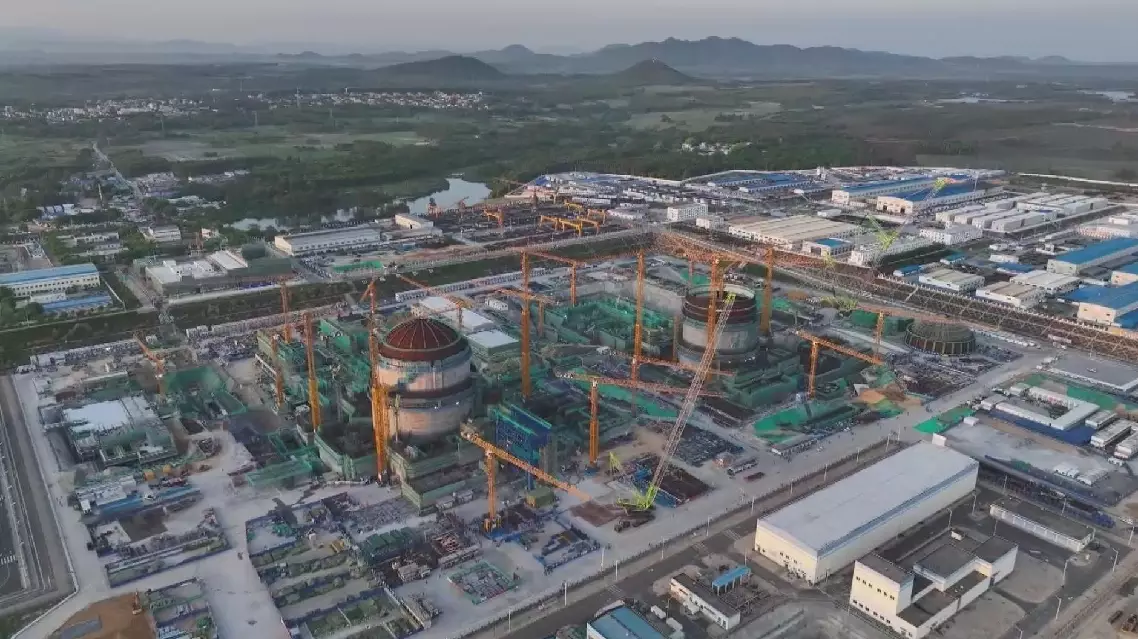
During this year's "two sessions" earlier this month, Zheng Shanjie, chairman of the National Development and Reform Commission, highlighted that China successfully introduced private capital into the nuclear power sector last year, yielding impressive outcomes. Nuclear power, a crucial part of the national economy and energy security, is highly specialized and has a high investment threshold due to its long construction cycle and stringent safety requirements. For years, these projects have been primarily invested in and operated by state-owned enterprises. Located in Wenzhou City, east China's Zhejiang Province, the San'ao nuclear power plant is home to the first project equipped with Hualong One reactors in the Yangtze River Delta, and also the first nuclear plant invested by private capital. The first power unit of the project is scheduled to start operation by the end of this year, while the second unit has already completed its dome installation. Shan Simeng, manager of the Comprehensive Management Department at China General Nuclear Power Group (CGN) Cangnan Nuclear Power Company, explained that the San'ao plant plans to build six nuclear reactors, with the first phase involving two reactors and an estimated investment of 40 billion yuan (about 5.53 billion U.S. dollars). With the entry of private capital into nuclear power, construction has now broken new ground. Geely Technology Group, a private enterprise, has acquired a two-percent stake in the first phase of the San'ao nuclear power project.
"It is definitely a win-win process. From the perspective of nuclear power investment, the involvement of private capital also helps control the project's investment costs. For private enterprises, investing in nuclear power also provides stable income. However, what we hope for even more is that private enterprises in the related industrial chain can join in the nuclear power construction, make breakthroughs in technological innovation, and help us achieve the high-quality commissioning of the Hualong One reactors. I believe this is what both sides want to see," said Shan. The participation of private capital in nuclear power construction reflects China's determination to involve private enterprises in major national projects. In 2024, China approved five nuclear power projects, including Phase II of the San'ao power plant, to include private capital. The proportion of private capital participation is expected to grow from two percent to 10 percent. The Zhejiang Provincial Development and Reform Commission, in collaboration with other relevant organizations, held a targeted promotion meeting for private enterprises across the province to better help private businesses understand nuclear power projects. During the event, representatives from state-owned enterprises presented the investment plans for the nuclear power plants, with a return on investment period of over 60 years and an annualized return rate of around eight percent. Over half of the companies in attendance expressed interest in investing. Li Zhengzhou, a director of Jiuli Group, a company in Zhejiang's Huzhou City, specializing in specialty materials with more than 60 products related to the nuclear power industry, expressed strong interest in participating in the nuclear power sector. After the promotional meeting, the company decided to invest in the Guangdong Lufeng Nuclear Power Plant, contributing a total of 1.35 billion yuan (about 190 million U.S. dollars), equivalent to the company's annual tax revenue. "It's certainly a large investment, and it might take 15 to 20 years to recoup the costs. But this is a long-term investment that is very meaningful. As an enterprise in the nuclear power industry chain, we hope this collaboration will not only yield returns but also strengthen our ties with the nuclear energy sector, creating more opportunities to generate value in the future," said Li.
Private investment in China's nuclear power to foster win-win outcomes: insiders