ATLANTA (AP) — Georgia Republican Gov. Brian Kemp's priority bill to limit lawsuits and large jury verdicts cleared another hurdle amid mounting pushback and is set for a House vote this week.
A number of House Republicans were skeptical, and not just trial lawyers. But Kemp made concessions, and the bill advanced out of the House Rules committee Tuesday.
Crowds of business owners and doctors swarmed the Capitol to back Kemp when he announced the proposal, also called tort reform. People who had sued businesses in recent weeks rallied as Democrats argue the bill is a handout to businesses and insurance companies.
Millions of dollars have gone into lobbying for and against Kemp’s package. Here are some reasons are people are concerned and how Kemp tried to address them.
Kemp’s bill would require anyone who sues a business or property owner over misconduct or injuries on their property to prove the owner knew about a specific security risk and physical condition on the property, but didn’t provide adequate security. Business owners, trucking companies and others say they are threatened by expensive court verdicts or settlements.
Women who were sex trafficked and raped at hotels begged lawmakers to oppose the bill as written.
“Surely, the hotel would notice, with 40 cars coming in and out at any given moment ... the girls walking around in their underwear, never alone, never speaking unless spoken to,” Michal Roseberry, a human trafficking survivor, said at a news conference Thursday.
University of Georgia law professor Jonathan Tonge, who litigates human trafficking cases, said nobody would have filed sex trafficking cases in Georgia under the previous bill. It made an exception for human trafficking victims, but it limited the kinds of complaints they could bring. That exception was expanded.
Kemp has signed several laws backed by his wife, Marty Kemp, to crack down on sex trafficking.
A man in a wheelchair testified at a news conference last week that he was paralyzed after people attacked him at an apartment complex that ignored pleas for stronger security. A lawyer and a mother shared stories of children who were abused at child care and recreational facilities where they said staff turned a blind eye to abuse.
Lawyers said the revised bill would still thwart many lawsuits for other victims, which have helped pay for health care and therapy.
“There has been no compromise, no matter what they're telling you,” trial attorney Miguel Dominguez said. “Can you imagine just being raped at a hotel and not being able to have the same rights as someone who was kidnapped and trafficked out of that same hotel?”
Atlanta Democrats and lawyers Rep. Tanya Miller and Rep. Stacey Evans proposed a series of changes to the bill, including one to include other victims in the sex trafficking carve-out, but they were rejected.
The new version still makes some cases have separate trial processes for determining damages and liability, but it tries to make sure they happen quickly. Judges could also scrap the separate processes in a sex offense case if the plaintiff would suffer emotionally or if the lawsuit is for less than $150,000.
The bill also says that lawyers can offer monetary values to noneconomic damages such as pain and suffering if they bring the same values up in their opening argument and lets them ask prospective jurors about what they would be willing to award. It would let lawyers say whether someone wore a seat belt in a car accident in certain cases if a judge allows.
“Since the bill was introduced, our aim was to craft a bill to provide relief while preserving the opportunity for plaintiffs to have their full day in court,” Senate President Pro Tem John Kennedy said Tuesday.
The bill still makes people show whether they had health insurance or other assistance paying a medical bill. Lawyers and doctors dispute whether fair compensation is the face value of a medical bill or only the portion an individual directly paid.
Opponents still question whether a number of problems the bill claims to address exist, and if it would actually solve them. For example, Kemp has said his plan will stabilize insurance rates, but many experts say the evidence for that assertion is shaky.
“It's the same talking points, same manufactured crisis, same players that come in,” said Miller, the Atlanta Democrat. “The problem with the anecdotal evidence is that's not actually how you study a complex problem.”
Kramon is a corps member for The Associated Press/Report for America Statehouse News Initiative. Report for America is a nonprofit national service program that places journalists in local newsrooms to report on undercovered issues. Follow Kramon on X: @charlottekramon.

FILE - Georgia Gov. Brian Kemp addresses the Chamber of Commerce at the Georgia World Congress Center in Atlanta, Jan. 14, 2025. (AP Photo/Jeff Amy, File)

Michal Roseberry, a victim of human trafficking,speaks against Georgia Gov. Brian Kemp's proposal to limit lawsuits on Thursday, March 13, 2025 at the Georgia Capitol in Atlanta, Ga. (AP Photo/Charlotte Kramon)
NEW YORK (AP) — Reviving a campaign pledge, President Donald Trump wants a one-year, 10% cap on credit card interest rates, a move that could save Americans tens of billions of dollars but drew immediate opposition from an industry that has been in his corner.
Trump was not clear in his social media post Friday night whether a cap might take effect through executive action or legislation, though one Republican senator said he had spoken with the president and would work on a bill with his “full support.” Trump said he hoped it would be in place Jan. 20, one year after he took office.
Strong opposition is certain from Wall Street in addition to the credit card companies, which donated heavily to his 2024 campaign and have supported Trump's second-term agenda. Banks are making the argument that such a plan would most hurt poor people, at a time of economic concern, by curtailing or eliminating credit lines, driving them to high-cost alternatives like payday loans or pawnshops.
“We will no longer let the American Public be ripped off by Credit Card Companies that are charging Interest Rates of 20 to 30%,” Trump wrote on his Truth Social platform.
Researchers who studied Trump’s campaign pledge after it was first announced found that Americans would save roughly $100 billion in interest a year if credit card rates were capped at 10%. The same researchers found that while the credit card industry would take a major hit, it would still be profitable, although credit card rewards and other perks might be scaled back.
About 195 million people in the United States had credit cards in 2024 and were assessed $160 billion in interest charges, the Consumer Financial Protection Bureau says. Americans are now carrying more credit card debt than ever, to the tune of about $1.23 trillion, according to figures from the New York Federal Reserve for the third quarter last year.
Further, Americans are paying, on average, between 19.65% and 21.5% in interest on credit cards according to the Federal Reserve and other industry tracking sources. That has come down in the past year as the central bank lowered benchmark rates, but is near the highs since federal regulators started tracking credit card rates in the mid-1990s. That’s significantly higher than a decade ago, when the average credit card interest rate was roughly 12%.
The Republican administration has proved particularly friendly until now to the credit card industry.
Capital One got little resistance from the White House when it finalized its purchase and merger with Discover Financial in early 2025, a deal that created the nation’s largest credit card company. The Consumer Financial Protection Bureau, which is largely tasked with going after credit card companies for alleged wrongdoing, has been largely nonfunctional since Trump took office.
In a joint statement, the banking industry was opposed to Trump's proposal.
“If enacted, this cap would only drive consumers toward less regulated, more costly alternatives," the American Bankers Association and allied groups said.
Bank lobbyists have long argued that lowering interest rates on their credit card products would require the banks to lend less to high-risk borrowers. When Congress enacted a cap on the fee that stores pay large banks when customers use a debit card, banks responded by removing all rewards and perks from those cards. Debit card rewards only recently have trickled back into consumers' hands. For example, United Airlines now has a debit card that gives miles with purchases.
The U.S. already places interest rate caps on some financial products and for some demographics. The Military Lending Act makes it illegal to charge active-duty service members more than 36% for any financial product. The national regulator for credit unions has capped interest rates on credit union credit cards at 18%.
Credit card companies earn three streams of revenue from their products: fees charged to merchants, fees charged to customers and the interest charged on balances. The argument from some researchers and left-leaning policymakers is that the banks earn enough revenue from merchants to keep them profitable if interest rates were capped.
"A 10% credit card interest cap would save Americans $100 billion a year without causing massive account closures, as banks claim. That’s because the few large banks that dominate the credit card market are making absolutely massive profits on customers at all income levels," said Brian Shearer, director of competition and regulatory policy at the Vanderbilt Policy Accelerator, who wrote the research on the industry's impact of Trump's proposal last year.
There are some historic examples that interest rate caps do cut off the less creditworthy to financial products because banks are not able to price risk correctly. Arkansas has a strictly enforced interest rate cap of 17% and evidence points to the poor and less creditworthy being cut out of consumer credit markets in the state. Shearer's research showed that an interest rate cap of 10% would likely result in banks lending less to those with credit scores below 600.
The White House did not respond to questions about how the president seeks to cap the rate or whether he has spoken with credit card companies about the idea.
Sen. Roger Marshall, R-Kan., who said he talked with Trump on Friday night, said the effort is meant to “lower costs for American families and to reign in greedy credit card companies who have been ripping off hardworking Americans for too long."
Legislation in both the House and the Senate would do what Trump is seeking.
Sens. Bernie Sanders, I-Vt., and Josh Hawley, R-Mo., released a plan in February that would immediately cap interest rates at 10% for five years, hoping to use Trump’s campaign promise to build momentum for their measure.
Hours before Trump's post, Sanders said that the president, rather than working to cap interest rates, had taken steps to deregulate big banks that allowed them to charge much higher credit card fees.
Reps. Alexandria Ocasio-Cortez, D-N.Y., and Anna Paulina Luna, R-Fla., have proposed similar legislation. Ocasio-Cortez is a frequent political target of Trump, while Luna is a close ally of the president.
Seung Min Kim reported from West Palm Beach, Fla.
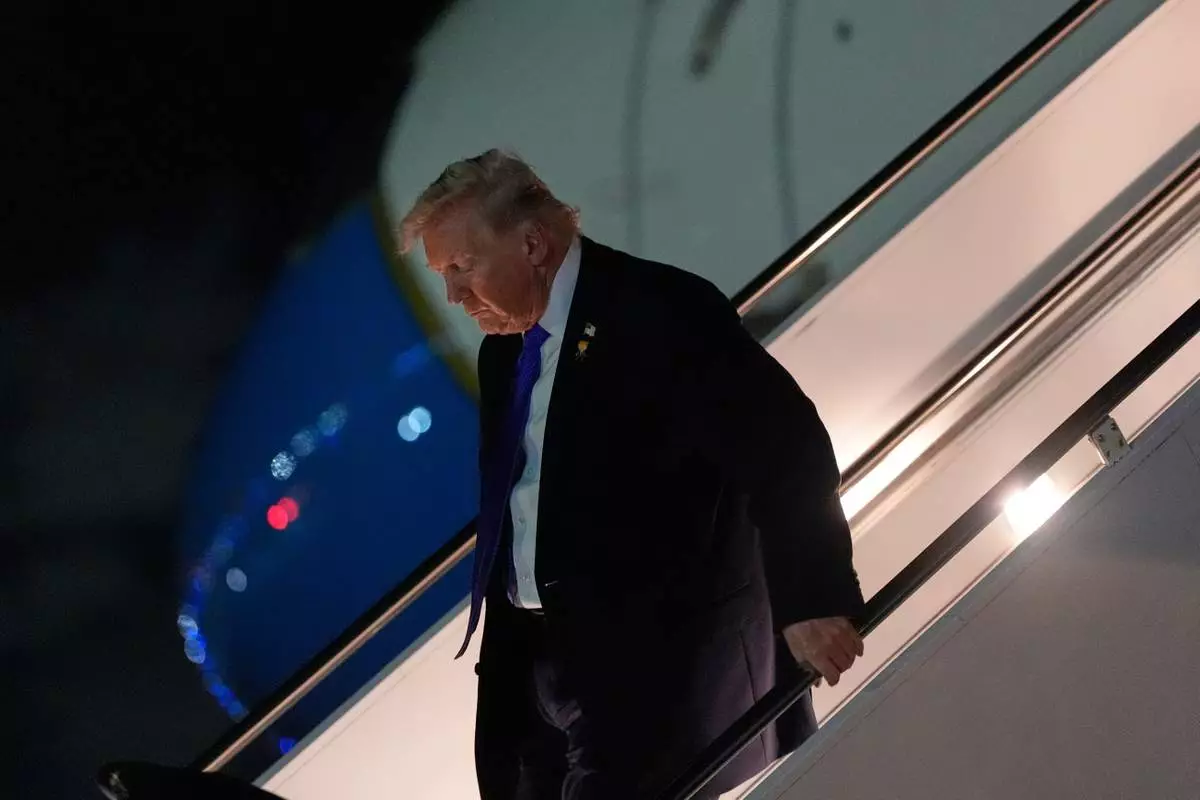
President Donald Trump arrives on Air Force One at Palm Beach International Airport, Friday, Jan. 9, 2025, in West Palm Beach, Fla. (AP Photo/Julia Demaree Nikhinson)
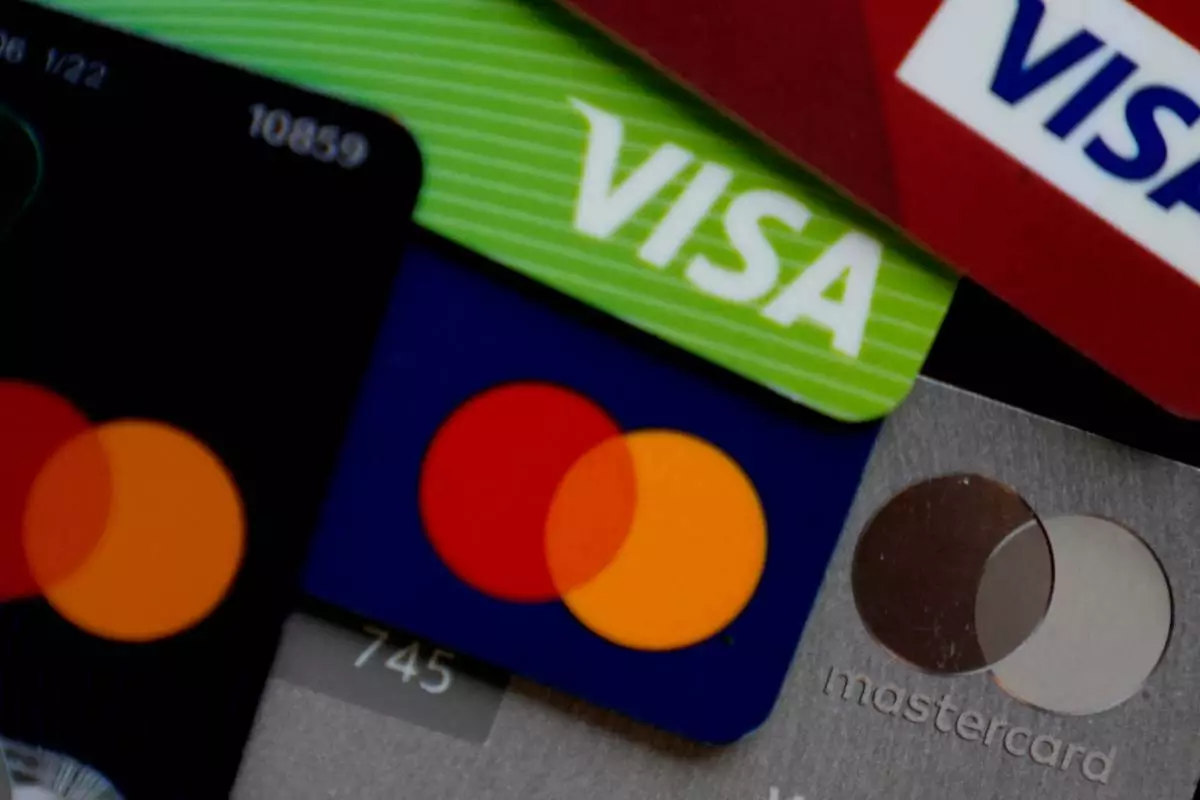
FILE - Visa and Mastercard credit cards are shown in Buffalo Grove, Ill., Feb. 8, 2024. (AP Photo/Nam Y. Huh, File)