Skip to Content Facebook Feature Image

They worked to prevent violence and terrorism at the agency created after 9/11. Then they got fired

News

They worked to prevent violence and terrorism at the agency created after 9/11. Then they got fired
News

News

They worked to prevent violence and terrorism at the agency created after 9/11. Then they got fired

2025-03-19 02:26 Last Updated At:02:52

WASHINGTON (AP) — A federal program designed to prevent targeted violence and terrorism in the United States has lost 20% of its staff after layoffs hit its probationary staffers.

The Center for Prevention Programs and Partnerships was a redefined version of programs created after the Sept. 11, 2001, attacks as a way to identify people who could pose new terrorism threats or carry out violence and prevent tragedies by getting them help. It has a mission enlisting parents, coaches, teachers and ministers to head off trouble before it starts by training them to look for signs of trouble in advance.

That job became far more difficult after eight members of the center's staff were fired in early March as part of the Trump administration's efforts to trim the government by getting rid of probationary staffers. According to a Department of Homeland Security employee and a center employee who was fired, the staffers were rehired late Monday but were then put on administrative leave, following two March 13 court decisions ordering the Republican administration to rehire fired probationary staffers.

The administration vowed to fight the decisions. The staffers spoke on the condition of anonymity out of concerns they might be targeted for retribution.

The center's director confirmed the terminations in a statement to The Associated Press. William Braniff said that with his appointment to the director's job ending soon, he decided the best thing he could do for the staffers and for the center was to “resign alongside of them, as some agencies and departments have rehired people in mission critical offices once they were made aware of the implications of those terminations.”

Braniff said there is a huge demand for the assistance provided by the center, called CP3 for short.

“CP3 is the inheritor of the primary and founding mission of DHS — to prevent terrorism,” he said, adding that the center's approach "is as effective for preventing school shootings as it is for terrorism prevention.”

In a post on LinkedIn before he resigned, Braniff said grant applications last year increased 82% and 27 states were lined up to work with the center to create plans to address targeted violence and prevent terrorism; 16 states already had plans in place or were creating them.

The employees terminated included former social workers, mental health professionals and state public health officials. Before the layoffs there had been more than 40 staff members at the center, with most based in Washington, D.C.

In a statement, Homeland Security spokeswoman Tricia McLaughlin said President Donald Trump is leading an effort to make “sweeping cuts and reforms” across the federal government to get rid of “ egregious waste and incompetence.”

She said leaders at the department “identified non-mission-critical personnel in probationary status” and added: “DHS remains focused on supporting law enforcement and public safety through funding, training, increased public awareness, and partnerships.”

Tom Warrick, a former counterterrorism official at Homeland Security who's now at the Atlantic Council, said the center, launched in 2021 under the Biden administration, was intended to develop projects that try to identify people before they turn violent, regardless of ideology or motivation, and steer them toward help through community health programs.

Warrick said that the center has been doing “pioneering” work and that the payoff is “enormous” in terms of shootings and attacks averted.

“What they really need to do is to expand it, not cut it back,” he said.

The grants provide funding to state, local, tribal and territorial governments, nonprofits and education institutions to help them establish or grow their own programs to address targeted violence and terrorism.

The center replaced the Trump-era Office for Targeted Violence and Terrorism Prevention, which itself replaced an Obama-era program called Countering Violent Extremism. Earlier iterations of the program were criticized for unfairly targeting Muslim and minority communities, and critics said it was difficult to measure results.

Some of those concerns still remain, said Spencer Reynolds, senior counsel to the Brennan Center's Liberty and National Security Program. He said the Brennan Center has long had concerns about the program's civil liberties protections. Even with the emphasis on bringing in public health providers, he said, there's still too much of an emphasis on law enforcement.

Last year, the center announced $18 million in grant funding to 35 recipients.

Those grants included $700,000 to the Palm Beach County Sheriff’s Office in Florida as it worked to “increase community awareness of the signs that someone may be on a pathway to violence.” Another $344,982 went to the Southwest Texas Fusion Center to help it expand its behavioral threat assessment and management team to cover more counties in southwest Texas, where it works to help schools reduce violence.
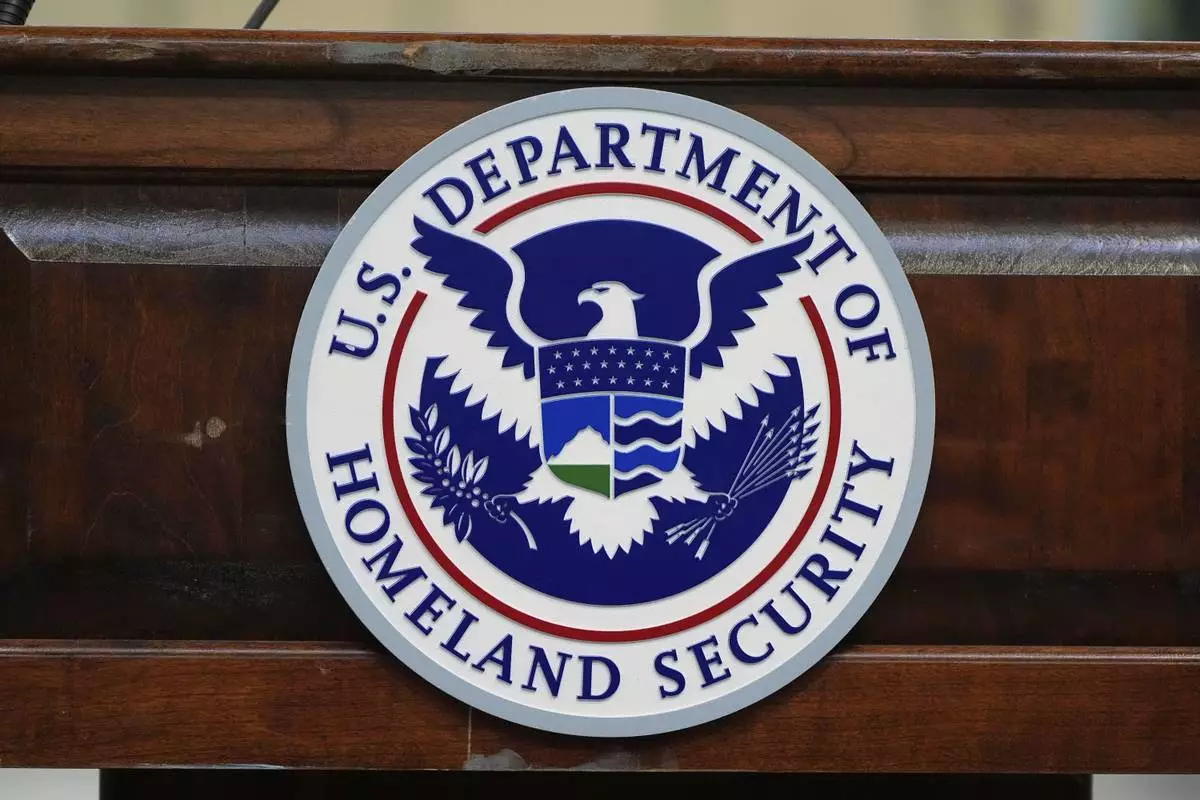
The Department of Homeland Security seal is pictured as Homeland Security Secretary Kristi Noem tours U.S. Coast Guard Air Station Kodiak, Monday, March 17, 2025, in Kodiak, Alaska. (AP Photo/Alex Brandon)
The Department of Homeland Security seal is pictured as Homeland Security Secretary Kristi Noem tours U.S. Coast Guard Air Station Kodiak, Monday, March 17, 2025, in Kodiak, Alaska. (AP Photo/Alex Brandon)
ADEN, Yemen (AP) — Saudi warplanes have reportedly struck on Friday forces in southern Yemen backed by the United Arab Emirates, a separatist leader says.

This comes as a Saudi-led operation attempts to take over camps of the Southern Transitional Council, or STC, in the governorate of Haramout that borders Saudi Arabia.

Tensions between Saudi Arabia and the UAE rose after the STC moved last month into Yemen’s governorates of Hadramout and Mahra and seized an oil-rich region. The move pushed out forces affiliated with the Saudi-backed National Shield Forces, a group aligned with the coalition in fighting the Iran-backed Houthis in Yemen.

Meanwhile, the Saudi ambassador to Yemen accused the head of the STC of blocking a Saudi mediation delegation from landing in the southern city of Aden.

The STC deputy and former Hamdrmout governor, Ahmed bin Breik, said in a statement that the Saudi-backed National Shield Forces advanced toward the camps, but the separatists refused to withdraw, apparently leading to the airstrikes.

Mohamed al-Nakib, spokesperson for the STC-backed Southern Shield Forces, also known as Dera Al-Janoub, said Saudi airstrikes caused fatalities, without providing details. The Associated Press couldn’t independently verify that claim.

Al-Nakib also accused Saudi Arabia in a video on X of using “Muslim Brotherhood and al-Qaeda militias” in a "large-scale attack " early Friday that he claimed sepratists were able to repel.

He likened the latest developments to Yemen’s 1994 civil war, “except that this time it is under the cover of Saudi aviation operations.”

Salem al-Khanbashi, the governor of Hadramout who was chosen Friday by Yemen's internationally recognized government to command the Saudi-led forces in the governorate, refuted STC claims, calling them “ridiculous” and showing intentions of escalation instead of a peaceful handover, according Okaz newspaper, which is aligned with the Saudi government.

Earlier on Friday, al-khanbashi called the current operation of retrieving seized areas “peaceful.”

“This operation is not a declaration of war and does not seek escalation,” al-Khanbashi said in a speech aired on state media. “This is a responsible pre-emptive measure to remove weapons and prevent chaos and the camps from being used to undermine the security in Hadramout,” he added.

The Saudi-led coalition in Yemen demands the withdrawal of STC forces from the two governorates as part of de-escalation efforts. The STC has so far refused to hand over its weapons and camps.

The coalition's spokesperson Brig. Gen. Turki al-Maliki said Friday on X that Saudi-backed naval forces were deployed across the Arabian Sea to carry out inspections and combat smuggling.

In his post on X, the Saudi ambassador to Yemen, Mohammed al-Jaber, said the kingdom had tried “all efforts with STC” for weeks "to stop the escalation" and to urge the separatists to leave Hadramout and Mahra, only to be faced with “continued intransigence and rejection from Aidarous al-Zubaidi," the STC head.

Al-Jaber said the latest development was not permitting the Saudi delegation's jet to land in Aden, despite having agreed on its arrival with some STC leaders to find a solution that serves “everyone and the public interest.”

Yemen’s transport ministry, aligned with STC, said Saudi Arabia imposed on Thursday requirements mandating that flights to and from Aden International Airport undergo inspection in Jeddah. The ministry expressed “shock” and denounced the decision. There was no confirmation from Saudi authorities.

ِA spokesperson with the transport ministry told the AP late Thursday that all flights from and to the UAE were suspended until Saudi Arabia reverses these reported measures.

Yemen has been engulfed in a civil war for more than a decade, with the Houthis controlling much of the northern regions, while a Saudi-UAE-backed coalition supports the internationally recognized government in the south. However, the UAE also helps the southern separatists who call for South Yemen to secede once again from Yemen. Those aligned with the council have increasingly flown the flag of South Yemen, which was a separate country from 1967-1990.

Associated Press writers Bassem Mroue in Beirut and Fatma Khaled in Cairo contributed to this report.

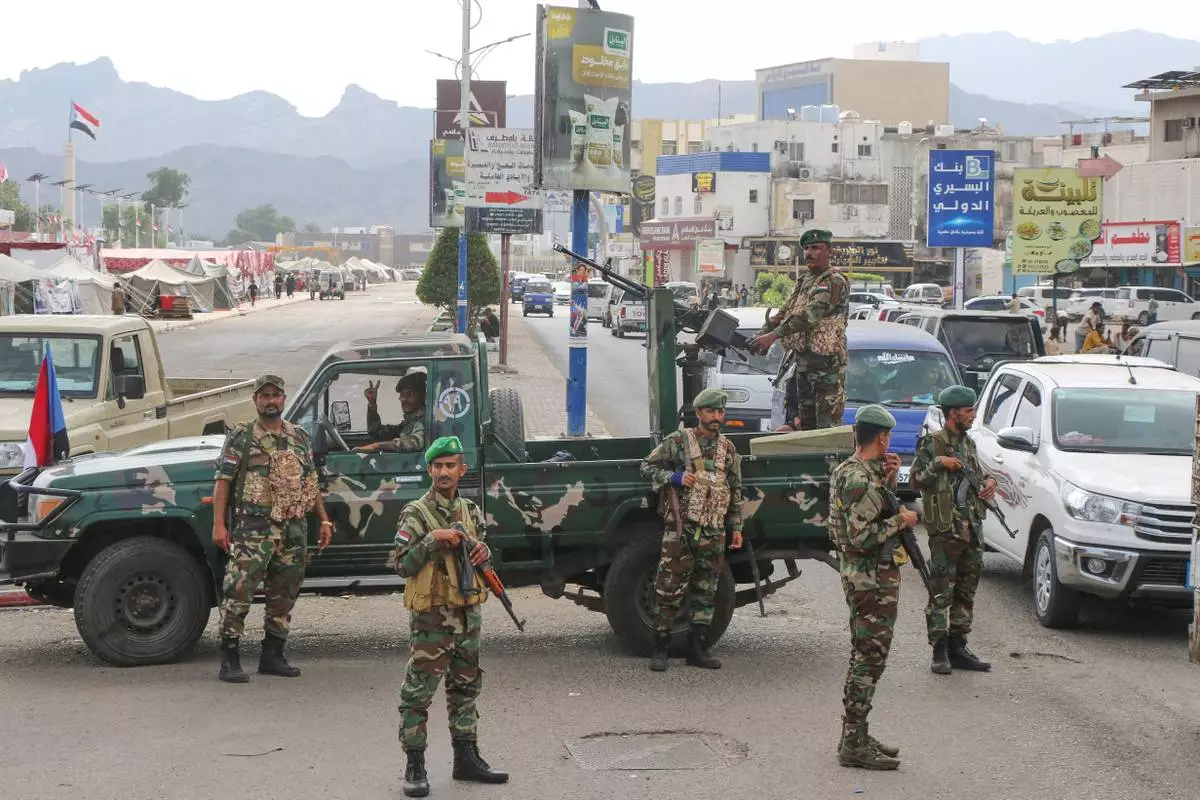
Southern Yemen soldiers of Southern Transitional Council (STC) at a check point, in Aden, Yemen, Wednesday, Dec. 31, 2025. (AP Photo)

Southern Yemen soldiers of Southern Transitional Council (STC) at a check point, in Aden, Yemen, Wednesday, Dec. 31, 2025. (AP Photo)

Recommended Articles